[Original MSRP $349.99, on sale from Costco for $219.99 regularly and $199.99 for Memorial Day 2025, $180-200 at Amazon in December 2025.]
[Tl;dr: These are a perfectly good pair of ANC headphones that will serve most people very well. They’re not super resolving and their slightly bassy consumer tuning and their layering and instrument separation leave a lot to be desired from an audiophile standpoint, but they sound perfectly nice and the ANC functionality is great; exactly what I’ve come to expect from Bose. They’re also a distinct step up from some of their competitors with regards to their controls and app-accessible tools. They’re my new recommendation for anyone trolling in that market; if I didn’t already own similar products that I like better, I would probably keep a pair of these for travel. Unfortunately, they have to compete with the Airpods Max and Bose 700s in my collection, and those are headphones that I REALLY, REALLY like for this use case.
Whole-hearted recommendation for most people, they’re just not for me.

Cost-agnostic: 6 out of 10 Denalis
Cost-sensitive: 7 out of 10 Denalis]
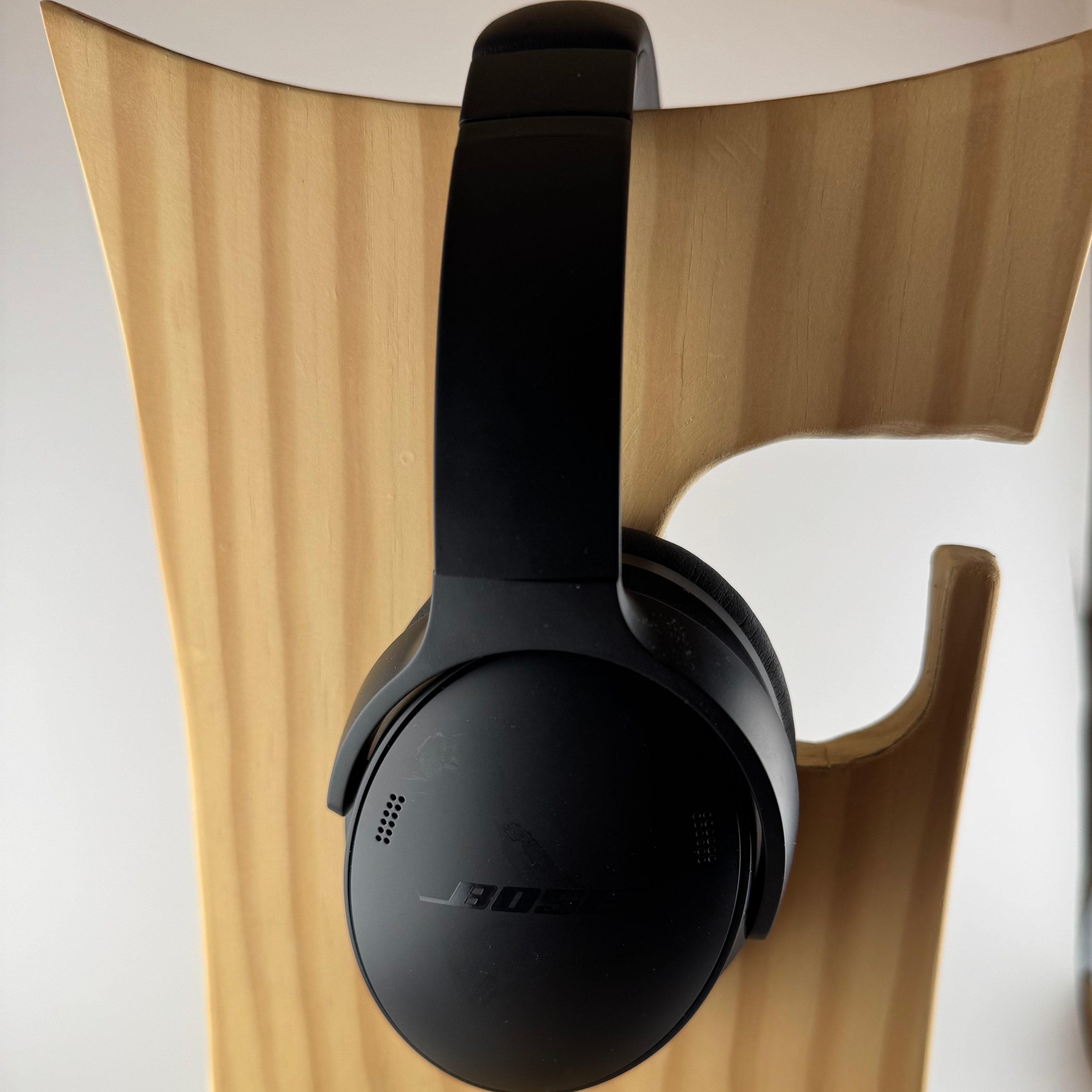
Intro. I have a long and glorious history with Bose’s various active noise canceling headphones. They were the first ANC headphones that didn’t hurt my ears with overpressure and that had decent audio quality even with ANC running. When I was in either college or law school, my dad bought himself a pair of Bose QC15 headphones. They were … remarkable. So remarkable, in fact, that as soon as I got a reasonable paycheck in 2009, I went out and bought a pair of the QC25, the then-updated version of the QC15. A decade later, before a work trip to San Diego and tiring of the tuning of the Bose Studio Wireless (predecessor to the Studio 3 Wireless I reviewed here), I splurged on the QC35 at Costco, the then-new wireless offering in the QC line. I … didn’t love them, and ended up returning them almost immediately. I thought the sound quality and the ANC were a distinct step down from the QC25, and the battery life was less than stellar. A few years later, when I started traveling a little more for work, I decided to give the Bose 700, Bose’s then-flagship (and now discontinued) consumer ANC offering a try. To my surprise … they were pretty great. Along the way, I’ve tried a few of their earbud offerings and haven’t been particularly impressed. Anyway, Costo has these on sale and I find myself wanting to lend my 700s to a traveling companion these days so I decided to give these a shot.

[Review note: Unlike *most* of the headphones I review, these are wireless headphones connecting to a source via Bluetooth (and I have THOUGHTS on Bluetooth). Because of this, unless otherwise noted I’m not using a DAC or amplifier for this review: I have the Quietcomfort connected to my iPhone 15 running Roon, and I’m controlling the music via Roon from my Mac Studio. For a comfortable listening volume, I’m around 40/100 on the Phone, so plenty of headroom. Also unless otherwise noted, I’m listening with ANC turned on because that’s why you buy these headphones.]
The basics. The Quietcomfort is Bose’s current generation over-ear, internal-battery-drive, active noise canceling (ANC) offering. They’re the successor to the Quietcomfort 45 headphones,1 themselves the successors to the QC35 (their first-generation wireless ANC headset, which I did not love in 2018 when I tried them out) and the wired, AAA-battery driven QC 25 and QC 15 (which I did love). The Quietcomfort offers both “Quiet” (ANC) and “Aware” (i.e. adaptive, what Apple calls transparency) modes, and boast an up to 24-hour battery life (which feels about right after a few weeks with them). While they are primarily designed to be used wirelessly, they do come with a 3.5 mm-terminated, single-ended cable that does not require the battery to be charged to be used. They do permit the use of voice assistants like Siri, but it requires pressing a button instead of just talking.
The Quietcomfort SC appears to be the model packaged (or manufactured?) specifically for Costco, and come with a soft case, a USB A-to-C charging cable, and a 3.5 mm-terminated audio cable for wiring to an amp or source when you want to.
Sound. You don’t buy consumer-grade ANC headphones looking for audiophile grade-sound,2 but I’m not going to grade these on a curve. Overall, I will say that the audio quality on these is … fine. The biggest let down with them is layer and instrument separation; for lack of a better descriptor, everything is sort of squished together in particular frequency ranges while using the Quietcomfort.3 To some extent this is ameliorated when you switch to adaptive mode; for example, the tom pattern in “Thunder Lightning” disappears into the mix on Quiet mode but stands out a little more in Aware mode, but it still is lacking compared to similarly priced wired headphones (particularly open backs) and some of their competitors in this market space.
The resolution is actually pretty good for a consumer ANC headset, but again, that’s just not what you are looking for with these. They’re definitely better with louder, more active tracks like “Face-to-Face” and struggle a bit with quiet acoustic music like “Out of My Hands” where you’re more likely to notice a lack of seperation. As an example, on “What Did I Do?” you can’t hear any of the hiss early in the track, and will struggle to hear Meshelle Ndegeocello’s fingers sliding along the strings. You’ll also never get silence out of these headphones; the occlusion effect is always present, even without the ANC turned on.
The soundstage/stereo separation is surprisingly good; you get decent rotational soundstage on “Love Can Damage Your Health (Laid Remix)”, though it’s definitely better left-to-right than front-to-back, and you get decent snapping to the side on most electronic tracks.
The dynamics are fine, but not exceptional. The volume builds over “It’s All So Incredibly Loud”, but not as much as it does on other headsets. Microdynamics are acceptable; you don’t get a lot of punch on either bass (“Angel (Blur Remix)”) or treble (“Intro”) hits, but you do get some accenting on most tracks.
The bass is quite strong, which isn’t particularly surprising on a headphone with a pretty consumer-focused tune. It’s one of the better presentations of the isolated bassline coming in around 2:49 on “Out of My Hands”, and reproduces the thumpy, splattery base on “Self-Love” pretty handily. It even does a pretty good job with “Got ‘Til It’s Gone”, a pretty challenging bassline, though you lose some precision and clarity especially in Quiet mode.
Mid-range is okay. The timbre is generally correct, especially with vocals, but the lack of separation in particular ranges is very apparent with voices on tracks like “Calls”, where Jill Scott’s voice blurs a little with some of the instruments in the same frequency range, particularly later in the song where the instrumental portions are a little more elevated. Similarly, Christine Hoberg’s voice doesn’t stand out well from the background on the choruses on “Clair De Lune.” Sampha’s voice is a little better on “Like the Piano,” and Justin Hicks’ voice is beautifully reproduced on “What Did I Do” in sections where there are no instruments in his general vocal range.
Treble is fine, but not great. Everything is flat enough that nothing jumps out or is harsh, but you also lose some detail and separation. On “Will O’ the Wisp” Miles Davis’ solo sometimes fades into the other trumpet lines rather than standing out. This actually can help with a poorly recorded track like “2021”, where the harsh-trending guitar lines are recessed just enough to keep them in a comfortable range at a reasonable volume. The isolated bells in “Coffee” are still clear and crisp, so I’m inclined to think it’s a separation issue rather than purely a resolution issue. Even listening for it, the jangly guitar counter melody around 2:16 on “Fresh Tendrils” is almost non-existent via the Quietcomfort, even running out o of a layer-discerning DAC like the Mojo 2.
Gaming. I mean, you probably shouldn’t be using Bluetooth headsets for any competitive gaming,4 but the soundstage is decent and consistent and the sound profile is … fine, if a consumer-friendly slightly-bassy tune, so these would be usable for very casual gaming. They’ll never be my first choice, but they’d be okay.
Amplifier compatibility. Not doing much listening with an amplifier other than the built-in one. I did play around with a couple of them, wired, to try to address some of the layering and separation issues, but even with a Chord Mojo 2 (a DAC/amp that I find provides INCREDIBLE layering and separation) can’t do more than add a tiny bit more layering. And, like many powered headphones, I find that nothing else plays as well with the headphone’s transducers as the ones designed specifically for them and built into their chassis.5 I’m just generally not a big fan of running wireless headphones (or powered monitors) via a traditional amp; it rarely feels like it brings out the best in either.
Noise canceling/isolation. The noise canceling on these is generally pretty good; certainly a step up from the QC35, and I would say slightly better even than the QC15/25 (which were excellent), though these also have slightly larger ear cups and MUCH newer pads than my decades-old QC25 which doesn’t hurt. I’d put Quietcomfort about on par with the 700s for pure ANC. They’re particularly good at canceling consistent, droning noise like an airplane or a lawn mower running over consistent length grass, though they struggle a lot more with intermittent or modulating sounds, and fluctuating ANC overpressure gets uncomfortable for me after a little bit. I still prefer the ANC from Airpods Pro 2 or Max for both consistent and intermittent noise, but that’s more an endorsement of Apple’s incredible engineering than a criticism of Bose’s. I’d definitely take these over the Airpods Gen 4 ANC in a noisy environment, though, because they do at least have some passive noise isolation.
The Aware mode is … less great. It seems to struggle more with figuring out what to amplify vs. cancel than any of the Apple ANC products. Apple’s transparency mode is so good that I might have unrealistic expectations at this point, but as it is, I probably won’t ever use the adaptive mode even if the sound quality is slightly better that way. The intermittent spikes where the headphones confuse what it should be amplifying are really unpleasant, and they don’t seem to have the same kind of built-in hearing protection as Apple products. The Bose 700 approached this differently, with level 0, 5, and 10 ANC providing different levels of noise-canceling rather than trying to determine what to let through and what to cancel. I definitely prefer that approach within the Bose ecosystem.
Spatial audio. Nope!
Controls. Like the QC45, the Quietcomfort offers a number of buttons on the right ear cup (volume up and down, and the multifunction button), as well as one button on the left ear cup. Bose generally follows the Apple conventions for playback control, with the multifunction button serving as pause/play with a single press, double press to skip forward, triple press to skip back, etc. I actually don’t love having the pause button in the middle of the volume controls; I find myself occasionally hitting it when trying to change the volume or vice versa. I do prefer it to the touch controls of the 700 where swiping on the cup changed the music.6 The button on the left ear cup toggles between modes, with Quiet and Aware available by default, though you can add more via the Bose app. The app also provides access to a simple three-band EQ system. There’s also a physical on/off toggle on the outside of the right cup (like the prior iterations of the QC line), which I really appreciate compared to either the Bose 700’s single button or the Airpods Maxes’ ridiculous “put it in the case to turn it off” functionality.

Overall, the controls on the Quietcomfort are a step up from the Bose 700, and more flexible than even my beloved volume wheel on the Airpods Max. And I don’t know what Apple is thinking, not having an on/off button on them. Bose at least figured that out.
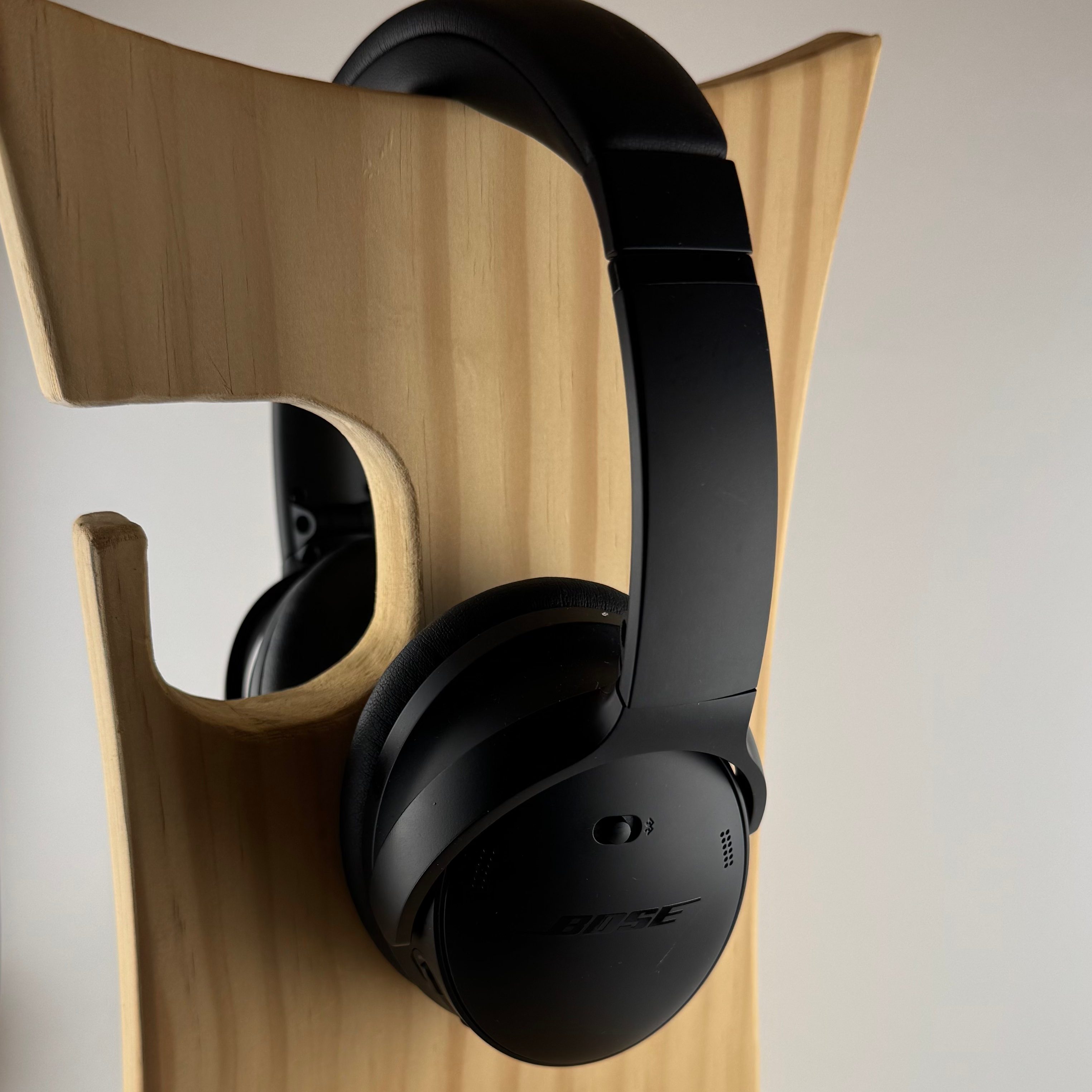
Connectivity. The Quietcomfort connect via Bluetooth by default, but they do come with a 3.5 mm-terminated cable that plugs into the left ear cup. The Bluetooth connection process is pretty straight forward, though my phone initially had a hard time detecting the Quietcomfort. Bose recommends using their app for pairing, but it is not required.
Comfort. The Quietcomfort are reasonably comfortable headphones; they’re pretty light, and the cups are both pretty accommodating and at least feel larger than the QC25. The cups also swivel probably left and right at least 110 degrees (from flat to slightly beyond perpendicular, and they fold up into the band making it pretty easy to get the seal that you need for proper ANC.
I can wear these for pretty long periods without getting any hotspots, and they clamp well enough that they don’t move around when I’m working in the yard or even while shaking my head pretty aggressively. The pads even flex reasonably well while wearing glasses or sunglasses to avoid pinching. The pleather on the ear cups do get unpleasantly warm when you’re moving around, but that’s true of most ANC headphones.
Construction. Like all of the other Bose headphones I’ve tried other than the 700s, the Quietcomforts feel cheap and plasticky and the pleather ear pads are acceptable but not great. This is reinforced by how light they are, around 240 grams. They do flex reasonably well, and I’m never worried about inadvertently breaking them during regular use. I appreciate that the cups fold flat and swing up into the headband for storage; they’re certainly easier to carry around in a bag than either the Bose 700 or the Airpods Max. Overall, they feel more like a $30 pair of headphones than a $350 pair (or even the $200 pair they are right now), even if they generally sound better than they look/feel.
Unlike most of the Bose over-ears I’ve owned, the Quietcomfort come with a soft, slightly-neoprene-y feeling case rather than a the rigid cases that the QC15, 25, 45, and 700 came with.


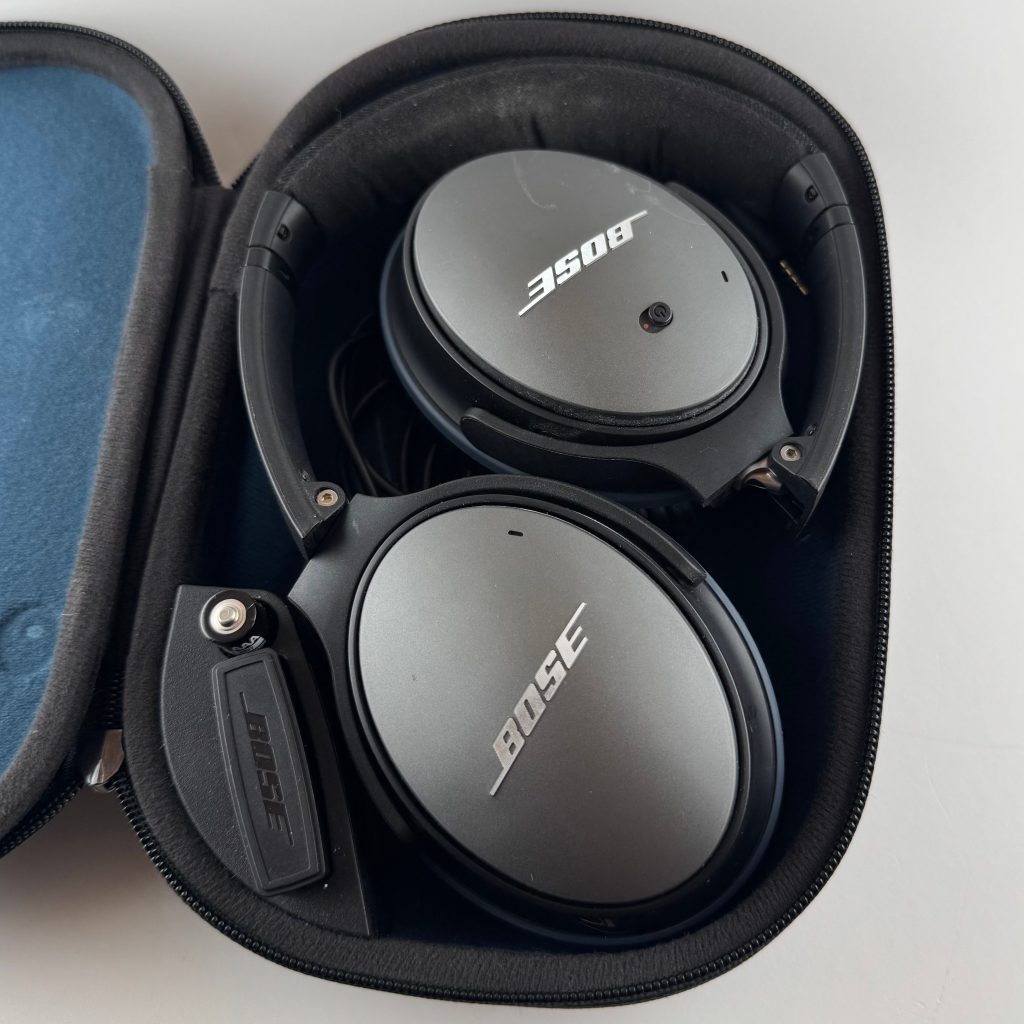

Appearance. I’ve never been wild about the appearance of the QC line; they’re fine, and they’re certainly no worse than the current generation Sonys or Sennheisers, but I really prefer the more organic lines of the Bose 700 or the more industrial look of the Airpods Max (or even the pseudo-retro look of the old Momentums). But these aren’t statement headphones; they’re functional and they aren’t so ugly that I won’t wear them.
You can get the non-SC versions of the Quietcomfort in a couple of different colors, though not at Costco, including a pretty cool purple (or “chilled lilac”) color.
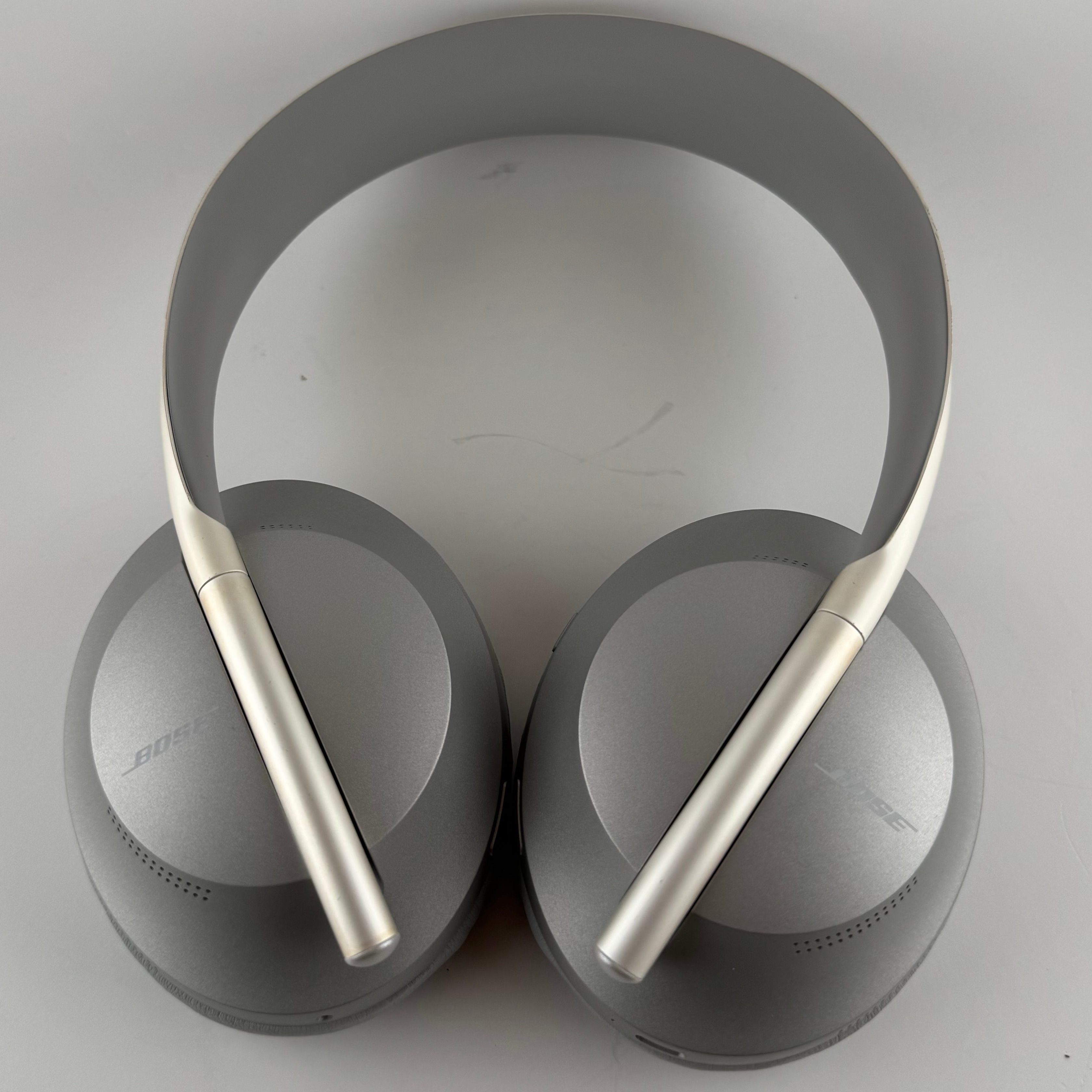
Value/Comparisons. The obvious comparisons are to the other Bose offerings, the ANC-capable Apple offerings, the Sennheiser Momentums, and the Sony WH1000X family.
These are functionally identical to the Bose QC45, and a step up from the QC35 when we’re talking about wireless ANC headphones. While I think that the sound quality is very slightly better with the QC25, that may just be a personal preference for a slightly less bassy tuning, and the ANC is better on the Quietcomfort despite being wireless (and the QC25 have been out of production for years anyway). I still prefer the Bose 700 over the Quietcomfort; it’s equivalent in terms of ANC, and I think the sound quality is markedly better, but the 700s are also out of production and may not be available (even refurbished) in the near future. I personally would rather buy the refurbished Bose 700s from Amazon for $250 than the Quietcomfort SC for $200, but I could make an argument for the superior battery life (24 hours vs. 20 hours), controls, and portability of the Quietcomfort. Six of one, half a dozen the other; either one would serve you well. If you use them very irregularly, like I do, the controls on the Quietcomfort are way more intuitive and easy to remember.
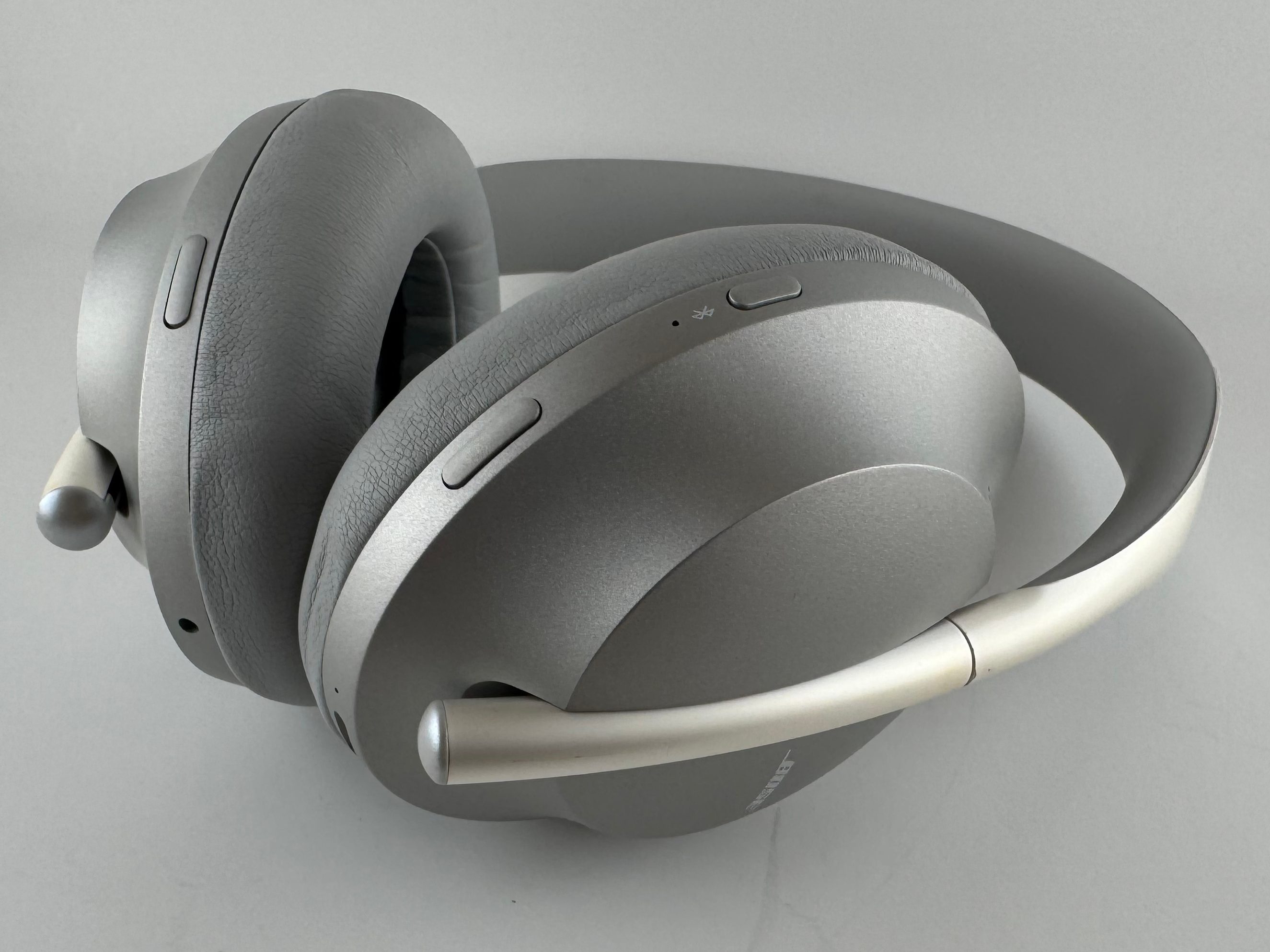
The Airpods Max are a much better headphone, as they should be at almost twice the price at MSRP ($550 vs. $350).7 Better sound quality, better build quality, better ANC, better compatibility (unsurprisingly) with the Apple ecosystem. The Maxes are actually a really nice headphone in my opinion, if a bit overpriced at their MSRP. If offered a choice between a refurbished original Max at $380 or these at $200 … I’m probably leaning towards the Max, just for audio quality and because of how heavily I am in the Apple ecosystem. But if you don’t want to spend $380 or you just need an ANC pair to get you through a flight, the Quietcomfort are a perfectly reasonable choice. Personally, I think I’d rather have even the really impressive Pro2 over the Quietcomfort, despite their being in-ear vs. over ear. I think you get better noise cancellation with a well-fitted pair of Pro2 compared to the Quietcomfort at this point (though, again, that’s more a reflection of how good that product is than an indictment of Bose’s). The Airpods Gen 4 ANC are … okay headphones.8 A step up from prior non-Pro and non-Max Airpods, but the ANC leaves a lot to be desired (the software seems to be fine, but the lack of a seal means that they just can’t do a lot about plane noise, let alone anything more intermittent or loud). I would take the Quietcomfort over the Gen 4 in a heartbeat.

The Quietcomfort are better than the Beats Studio Wireless, especially at the same starting price point. These days, the Studio Wireless have dropped to $120-130 on Amazon and that’s a much closer argument. I think in the end that the Quietcomfort edge the Beats out even at $120 vs. $200, because the sound is of similar quality (and tuning choices!) and the ANC is definitely better on the Quietcomfort. Some people will prefer the Beats form factor and color options, but to each their own.

I haven’t spent a lot of time with either the Sennheiser Momentum 4 or the Sony WH-1000XM5/6 lately, so I’m reluctant to try to opine on their relative virtues and vices. I will say that I have been deeply unimpressed with the Sonys anytime I’ve demoed them, to the point where I haven’t been willing to spend the $300/450 necessary to give them a real serious listen, which if you’re following this blog at all is a somewhat damning statement. As for the Momentum … I really, really liked the OG Momentum.9 They were really nice Bluetooth headphones, with good sound quality and pleasant ANC, and a very stylish look. I don’t know why Sennheiser decided to turn them into a Sony clone, but I’ve been pretty disappointed by the sound quality and ANC on them. I would skip both the Sony and Sennheiser offerings in lieu of these, given the option. They’re also substantially cheaper.
The Spoiler

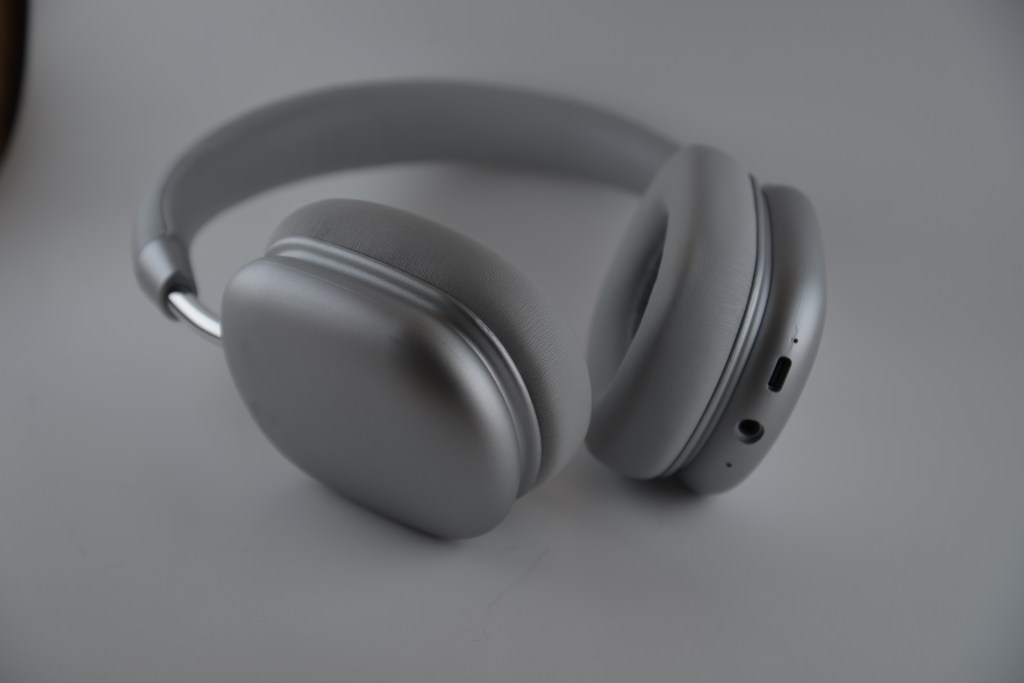
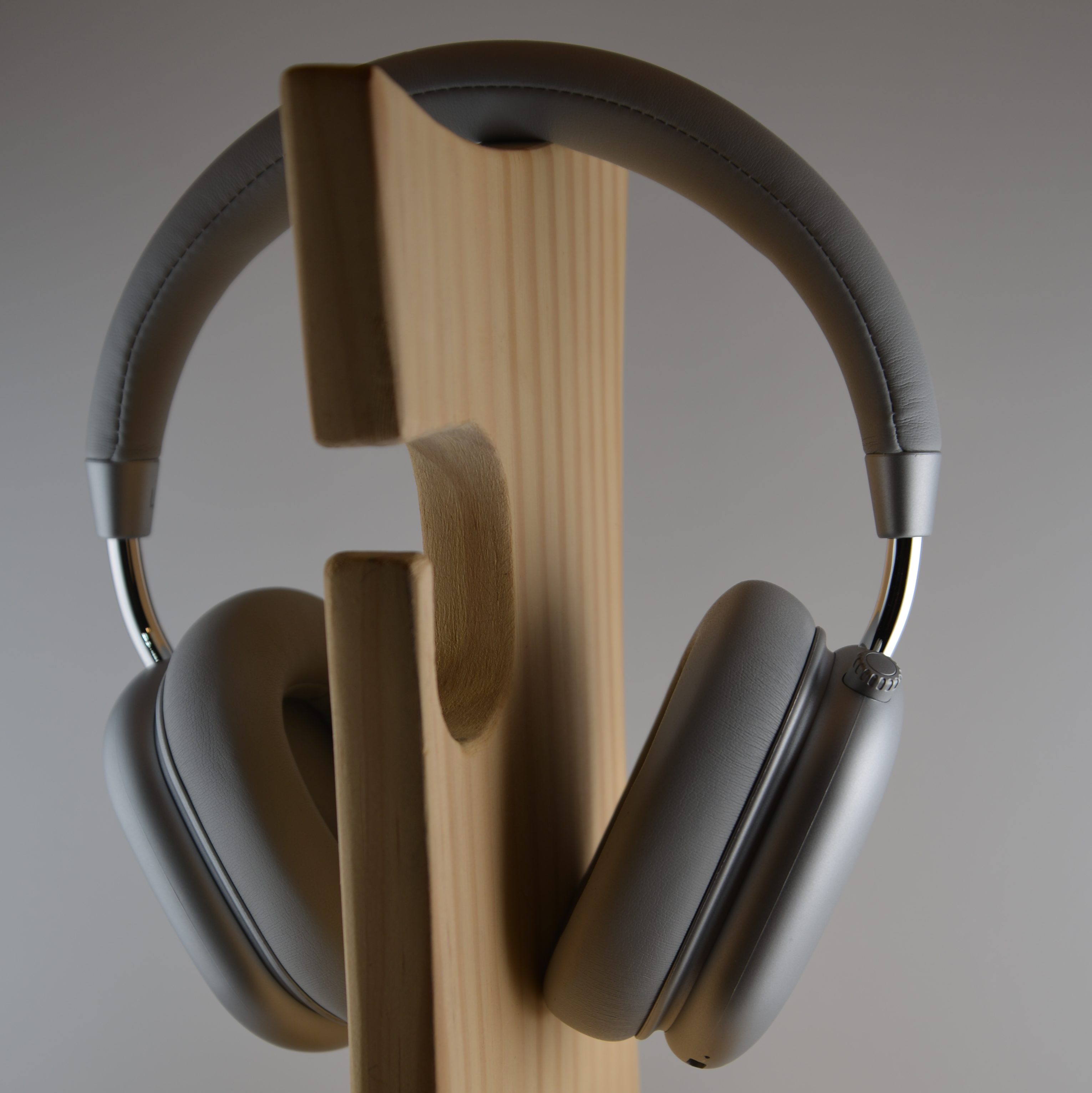
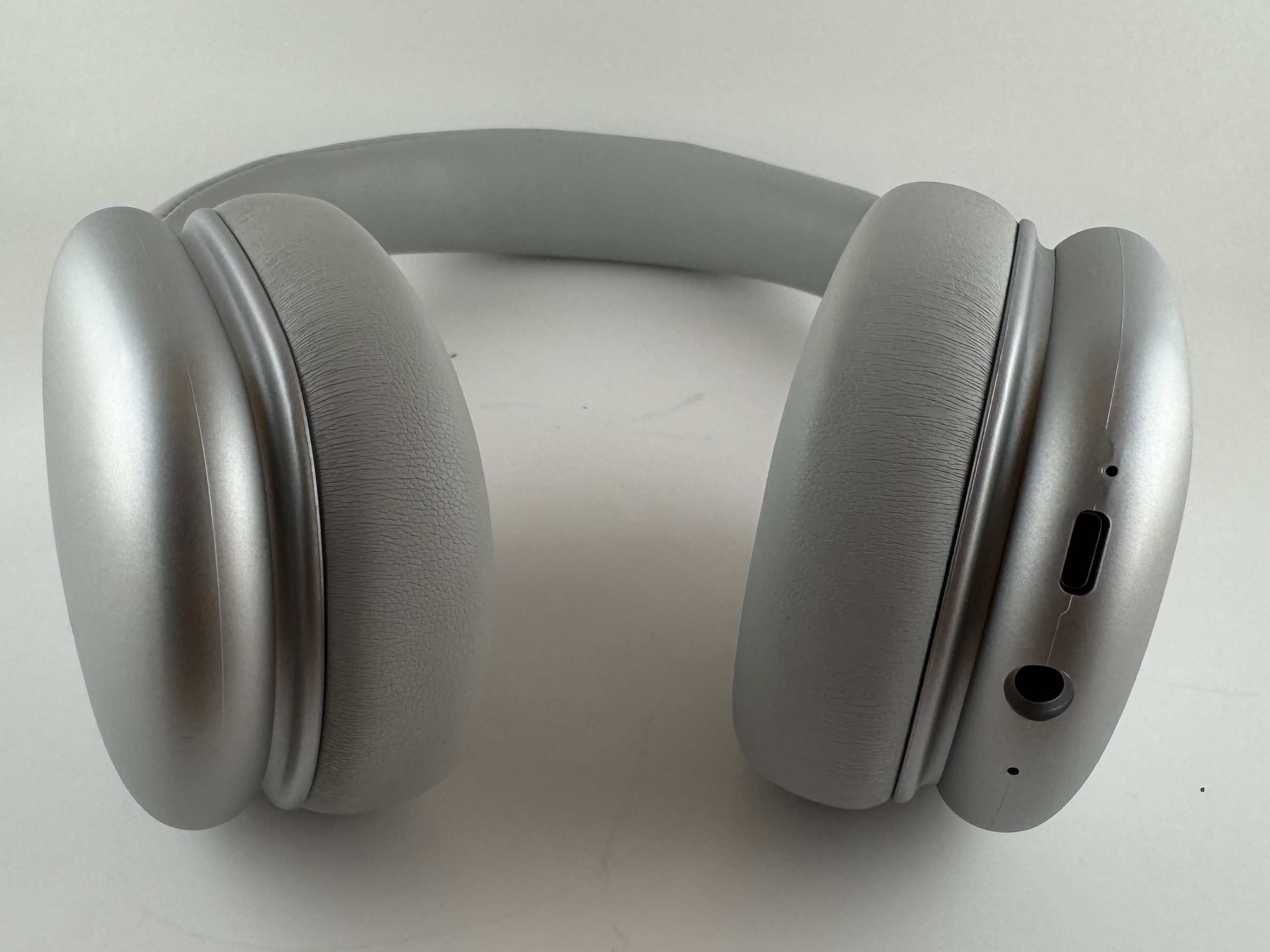
Just to throw one more wrinkle out there, I spent some time this week comparing the $35 Picun F5 (the Tiktok Airpods Max knockoff) to the Quietcomfort.10 I didn’t expect it to be much of a comparison, but … the F5 are weirdly okay, especially at that price. I 100% don’t trust them over the long term, and they feel waaaaay cheaper than anything Bose has ever made, but the sound quality is pretty damned close, and the ANC is not that far behind either. And for 72% less of the price, and the concomitant not having to give a damn about breaking or losing them … it’s a much closer call than I would have expected. I mean, who knows if the manufacturer is building secret listening devices into the F5, but if you’re in the market for a pair of ANC headphones, they might be worth the $35 cost of entry.


Phil’s Hierarchy of ANC
For my money, and based on current prices for new/refurbished, if I were buying an ANC headphone for use on flights, commutes, or consistently loud environments, I’d take them in this order: Airpods Max, Airpods Pro2, Bose 700, Quietcomfort SC, Picun F5, Sennheiser Momentum 4, Beats Studio Wireless, Sony WH-1000XM5/6, Airpods Gen 4 ANC. If I were particularly concerned about breakaage or loss, I’d probably go with the F5, straight-up.
Overall. These are a perfectly good product for most people. They’re really tuned for the average consumer rather than an audiophile (which is totally fine! We’re weird! We spend too much money on and care too much about these things!), and they have pretty good ANC for what they are. Because the Bose 700 is out of production and increasingly both hard to find and relatively more expensive, these would probably be my recommendation for anyone looking at ANC headphones in the current market. Given the options I already have, though, they’re probably not for me, though the ability to build custom profiles and do some basic EQ on them is interesting and a definite mark in their favor; one I wish Apple would adopt.
These are, unfortunately for me, something that I just won’t use very much. For most headphones I’ve spent time with and reviewed, there are at least some circumstances where they’d be the best option, or at least a good fit. These are kind of the exception because of their niche role. In almost all circumstances where one would want to use something like the Quietcomfort, I’m going to prefer the Airpods Max or Pro 2 for sound quality and ANC reasons, and if I want something cheaper that I won’t care about potentially damaging or losing, the Picun F5 is right there. There’s a reason that the QC15 and QC25 are collecting dust in my closet despite my appreciation for them.
Huh. I think I’ve talked myself out of keeping these, which is weird. Particularly for a product that I’d genuinely recommend to most people looking for an ANC headphone. They just don’t compete with the things I already have, though I think they’re quite competitive (especially at this price!) in the current market. You won’t be disappointed if you get them, unless you already have the Maxes or a pair of 700s kicking around.
#reviews #headphones #sennheiser #6XX #anc #spatialaudio #meh #2025 #99noir #meze #overear #cans #hifiman #arya #stealth #editionxs #budget #hahahaha #fiio #ft1 #closedback #beyerdynamic #dt770 #bose #700 #quietcomfort #qc15 #qc25 #qc35 #qc45 #picun #f5 #airpods #airpodsmax
- Apparently functionally identical, except for a slightly better battery. ↩︎
- Or if you do you want audiophile grade sound out of an ANC headset, you buy the Focal Bathys at $650. Something I’m not willing to do. 🤷♂️ Yet. ↩︎
- I.e. if a person singing and an instrument playing are in the same general pitch range, they tend to blend together into a mush. ↩︎
- Even according to Bose; here’s what they have to say about whether they’re suitable for gaming: “No. In general, the audio/video delay will be excessive and most noticeable in games where action and audio are supposed to be synchronized.” ↩︎
- The Bose 700 is sort of the exception, where I find them perfectly acceptable running wired to a tablet while watching movies or TV shows on a plane. ↩︎
- I use the 700 rarely enough that I can never remember which gestures do what until I look them up again. ↩︎
- I’m comparing here to the original, H1-driven Airpods Max rather than the new one which I haven’t spent any time with. ↩︎
- Probably a review of these coming soon; I generally avoid reviewing products that I don’t love, but I get asked regularly to compare and contrast the different Airpods and I want to get my thoughts recorded. They’re not bad, per se, just no where near as good as the Pro2 and their only marginally cheaper at this point. ↩︎
- I kind of wish I’d bargained with my brother re: my dad’s pair, but the last thing I need is another pair of headphones. But … ↩︎
- I will do at least a quick review of this in the next week or two; they’re … impressive for the price. ↩︎
 Phil's Superpower of Enthusiasm
Leave a comment