
[Original MSRP $399.99, currently $339 on Amazon, purchased open-box from Headphones.com for $300 with store credit.]
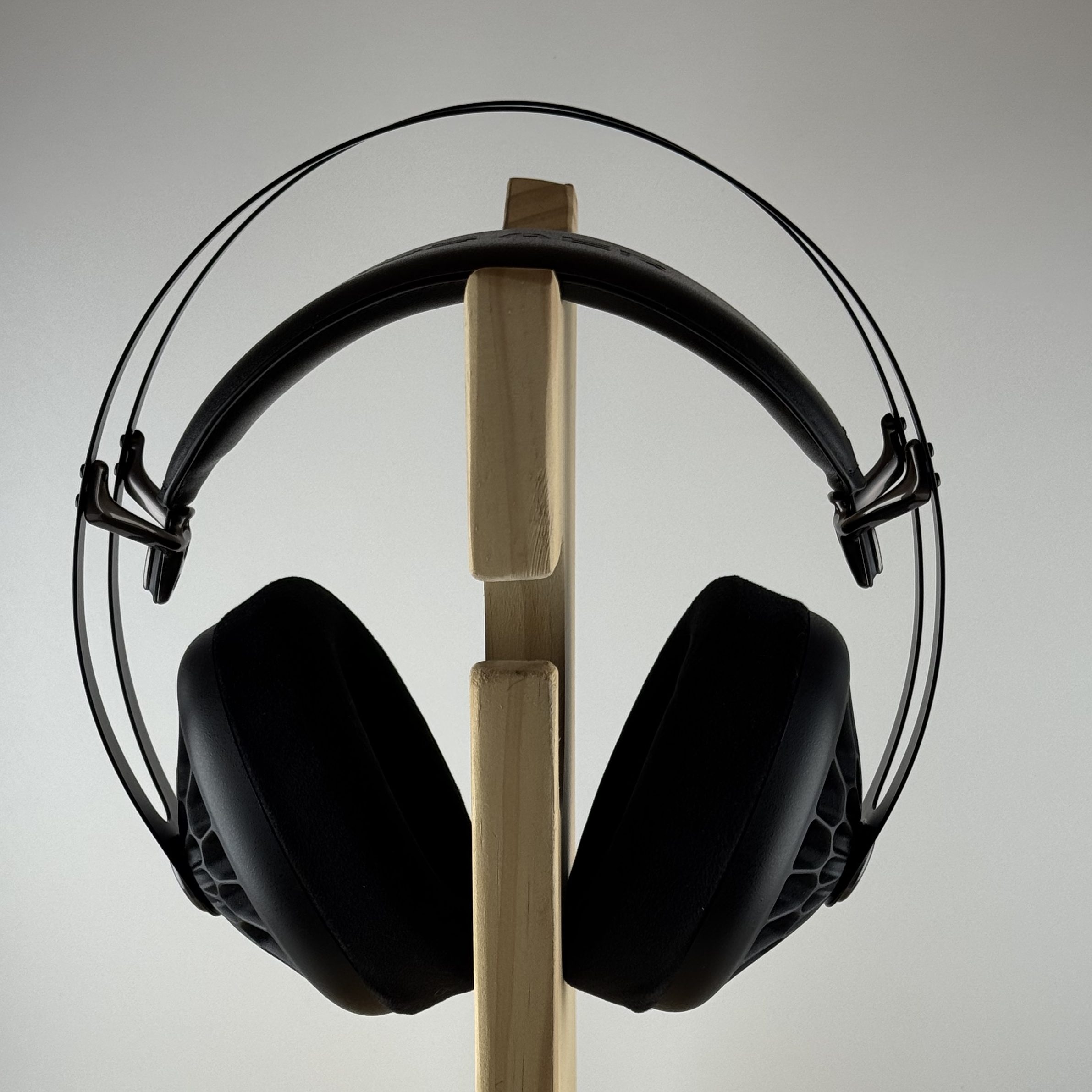


[Tl;dr: The Meze 105 AER are a genuinely impressive pair of headphones. While they’re not quite as good as the 109 Pro as an overall headphone to my ears, they correct the one notable tuning flaw in the 109 (occasionally spicy treble) and will be a better fit for many people. I would say that they get you 90-95% of the performance of the 109, and at half the price. I think these have displaced the Edition XS and Fiio FT1 Pro from my rotation and may even edge the 6XX out over time.
If you want a warm, rich sound with good detail retrieval and don’t want to drop almost $800 on a pair of 109s, I recommend these to you whole-heartedly.
Cost-agnostic: 9 out of 10 Denalis
Cost-sensitive: 10 out of 10 Denalis]
Introduction
Intro. My favorite headphones of all time are the Meze 109 Pro. I love them. I have basically no quibbles with them, even at their $799 price point. However, a lot of folks do have issues with their treble response; they can be a little spicy for sensitive users, even painful for some. In December of last year, Romania-based Meze released the Meze 105 AER, a mid-tier open-back with a slightly tamer sound signature than the 109 Pro and at around half the price. I REALLY want to try out the Meze Empyrean II,3 but even I blanch at their $3,000 price tag so I was curious to give a more reasonable and affordable-ish Meze offering a try.
My route to these headphones was a little circuitous, involving an Amazon purchase that ended up being an open box instead of new,4 some light gaslighting from the vendor,5 an offer of a tiny discount for the open-box product sold as new,6 a return, an offer of a bribe to remove a review,7 and an eventually purchase of an open-box from Headphones.com at a much more reasonable price.8
[Review note: Based on my philosophy on the allocation of resources in Headfi, except where otherwise noted I’m going to primarily be testing these with a Schiit Modius E/Magnius stack, running single ended using the OEM cable and connected via USB-C to a Windows PC running the Roon client. I do have a Hart Audio XLR-terminated cable I bought for the 109 Pros that I’ve been using quite a bit over the last few weeks, which will be discussed below.
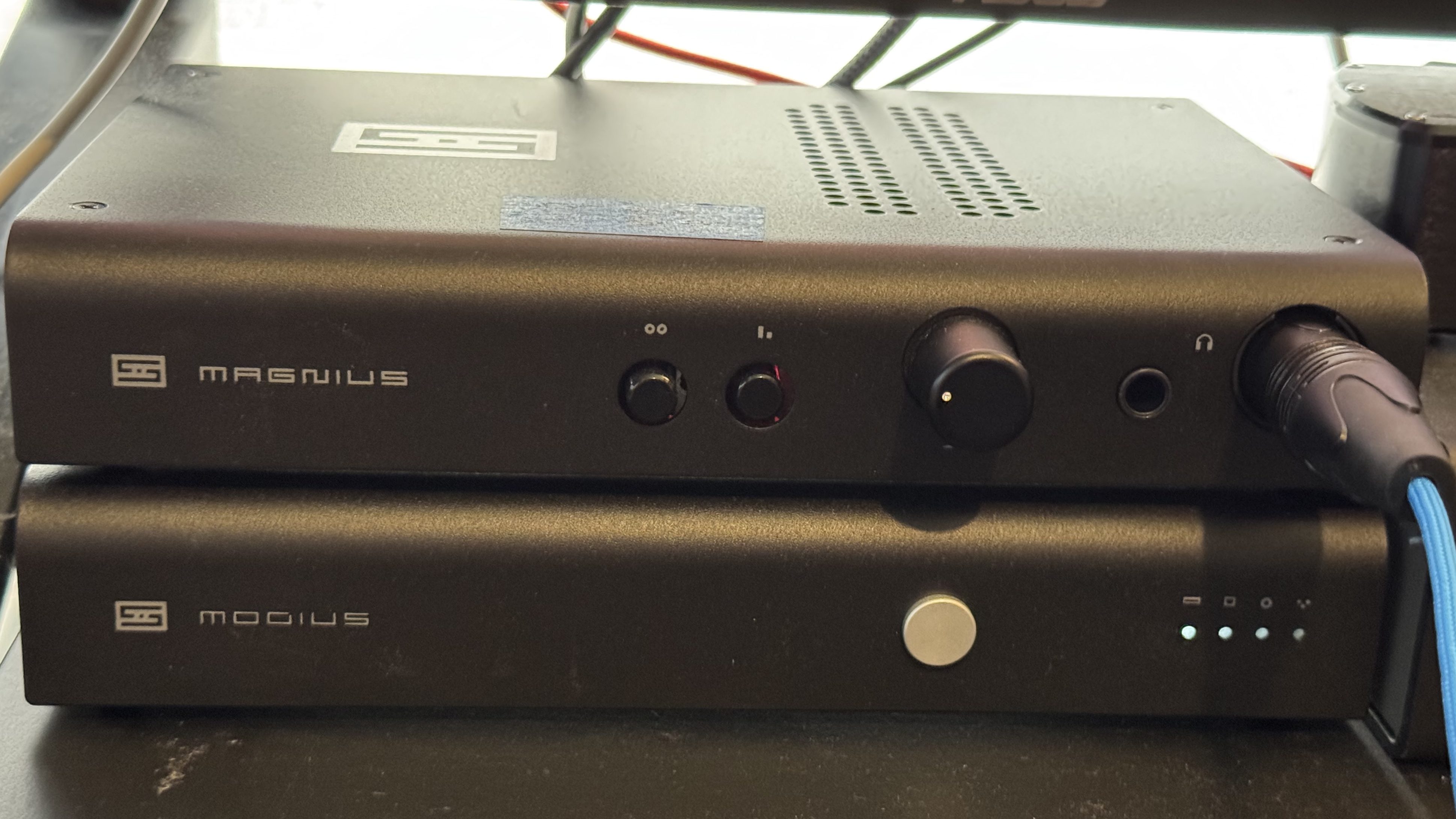
My amp settings:
- Modius E/Magnius: low gain mode, volume right around 9:00.
- Jotunheim 3/Mimir: low gain mode, 11:00 (with a -15 dB software gain applied in the DAC)
- Apple dongle: Roon at 13/100 (with headroom management turned off), iPhone 15 at around 40%
- Nitsch Magni Piety: high gain, 9:30
- Topping L30: -9 dB gain, 11:00
- Chord Mojo 2: dim white, off, off9
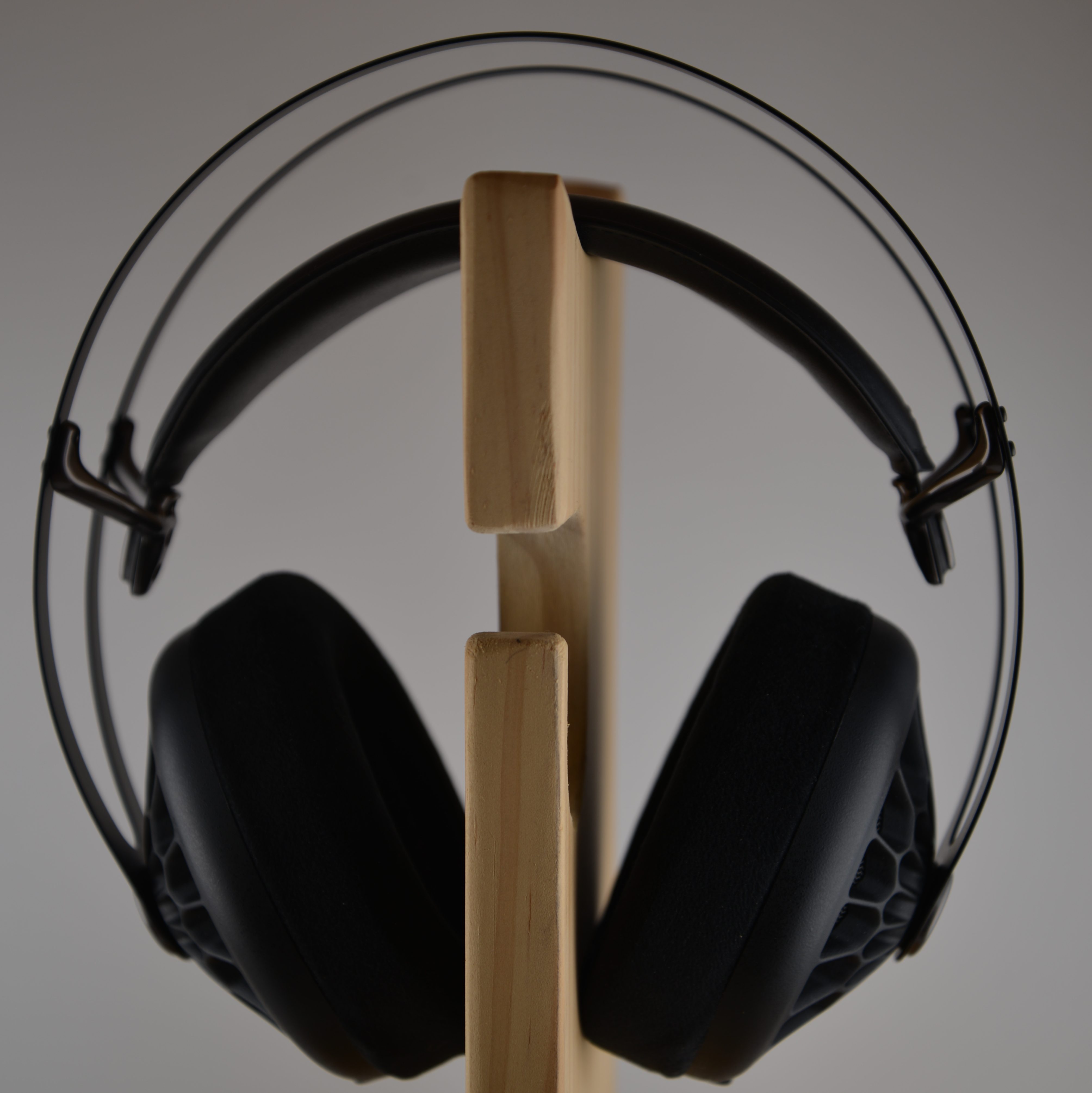
The basics. The Meze 105 AER are Meze’s new mid-tier open-back, dynamic driver offering, sitting underneath the 109 Pro in Meze’s open-back line up. The form factor will be familiar to anyone who’s used either the 109 Pro or the 99 Classic/NEO/Noir, though they’re in a matte black color instead of the metal and wood tones of the rest of the lineup (other than the NEO). They are a 42 Ohm, 112 dB/mW headphone, so pretty easy to drive from even the output jack from most consumer electronics, and will not require (but still may benefit from) a dedicated DAC/amp.
Sound.
I can be a little judge-y about open-back headphones, given the crowded market of excellent offerings in the $200-300 price point. Despite that, I really like the sound profile of the 105 AER, which is not super surprising given my love for their big brother, the 109 Pro. They align with Meze’s house sound, which I would describe as warm and rich rather than neutral, though they don’t sound quite as warm as the 109 Pro (and don’t have quite the same treble sparkle; more on that later).
The resolution is quite good; music playback is detailed without being distracting, and layering and instrument separation are good but not as strong as headphones like the Arya Stealth or the 109 Pro; on “Fresh Tendrils”, I can definitely hear the jangly countermelody around 2:15 but it doesn’t stand out as much as it does with those headphones; it’s a little more buried in the mix. I think the presentation on “What Did I Do?” is second only to the 109 Pro to my ears; both the hiss at the beginning (a recording artifact) and the sound of Meshelle Ndegeocello’s fingers sliding on the strings are beautifully reproduced. The 105 AER are also excellent for quiet tracks, and don’t struggle with isolated individual instruments (especially acoustic ones) like some other headphones do.
The soundstage/stereo separation is pretty good side-to-side, but doesn’t have a lot of depth front-to-back: the beginning of “Love Can Damage Your Health (Laid Mix)” is more panning than rotating, but the cross-channel cymbal pattern around 1:45 is clearly and cleanly separated. Very clean channel transitions from side-to-side on “Angel (Blur Remix).” The toms on “Thunder Lightning” are a tiny bit buried in the track layering-wise but have good and correct stereo separation across the channels around 2:58.
The dynamics are good; setting the volume comfortable at the beginning of “It’s All So Incredibly Loud” results in a slightly painful volume by the end of the track. The microdynamics are good as well, with clean attacks and accents throughout the frequency range, though I think the bass accents could be slightly more emphasized, particularly in the bell tones at the beginning of “Angel (Blur Remix)” (the notes don’t bend quite as much as they do on some other pairs), but they are clean and crisp. Accents and hits are excellent in the mids and treble on “Intro”; my beef, such as it is, is really just a little niggle about accents in the bass.
The bass is generally good and very well controlled; it’s one of the better presentations of the bassline coming in around 2:49 on “Out of My Hands” that I’ve heard, with a really solid, rich hit around 3:20 when the string bass drops down. “Got ‘Til It’s Gone” is clean and crisp, with just a tiny issue with tonal separation on Q-Tip’s bassline. Notes are clear on “Remain Nameless,” even when the Machine really gets going around 1:15. The sub-bass on the 105 is also genuinely impressive; I’m not sure I’ve heard a better version of the brain wobble on “Limit to Your Love” outside of the 109 Pro.
The thing I really love about the bass response on the 105 (and 109) is how good they are at bass both in isolation AND in a crowded track; some headphones excel in isolated bass but get muddy quickly in a busy track, and others are great in busy tracks but struggle when a bass instrument is on an island by itself: the Mezes handle both. Even in a deliberately splattery track like “Superpredators,” the 105 never feel like they’re out of control.
The one criticism I’ll offer is that at the very bottom of the scale, the notes sometimes seem to lose just a hair of tonal accuracy. A couple of the notes on “Got ‘Til It’s Gone” are closer together in frequency than they should be, and the same is true on “Limit to Your Love” when James Blake really reaches for the underworld around 2:50 or towards the end of the track. It doesn’t particularly bother me, and these are notes that a lot of other, lower-quality bass reproductions either roll off for or drop entirely, but it’s just worth noting.
Mid-range is really, really nice. Both male and female vocals have excellent and correct timbre, and Justin Hicks’ voice on “What Did I Do?” is damned near perfect in the way it contrasts with the string bass. Jill Scott’s voice also stands out pretty well in “Calls”, especially around 3:20 where she can disappear a little into the background mix on some headphones (I’m also hearing a countermelody she’s singing that I’m not sure I’ve really picked out before, and I’ve listened to this track A LOT). It’s harder to separate or identify the two guitar soloists on “Garcia Counterpoint” than on something like the Arya Stealth, but that VERY busy track is nicely presented and clearly articulated across the mix; the timbre is just a little closer there than I want it to be.

Treble is good, slightly better controlled than on the 109 Pro. Miles Davis’ solo on “Will O’ the Wisp” is clear and distinct from the background trumpet and while it may edge on harsh at higher volumes, it doesn’t cross over the line. The bells on “Coffee” are clear and crisp, and the cymbal pattern in the middle of “Love Can Damage Your Health (Laid Mix)” is well articulated. I like this treble presentation more than the 109s.
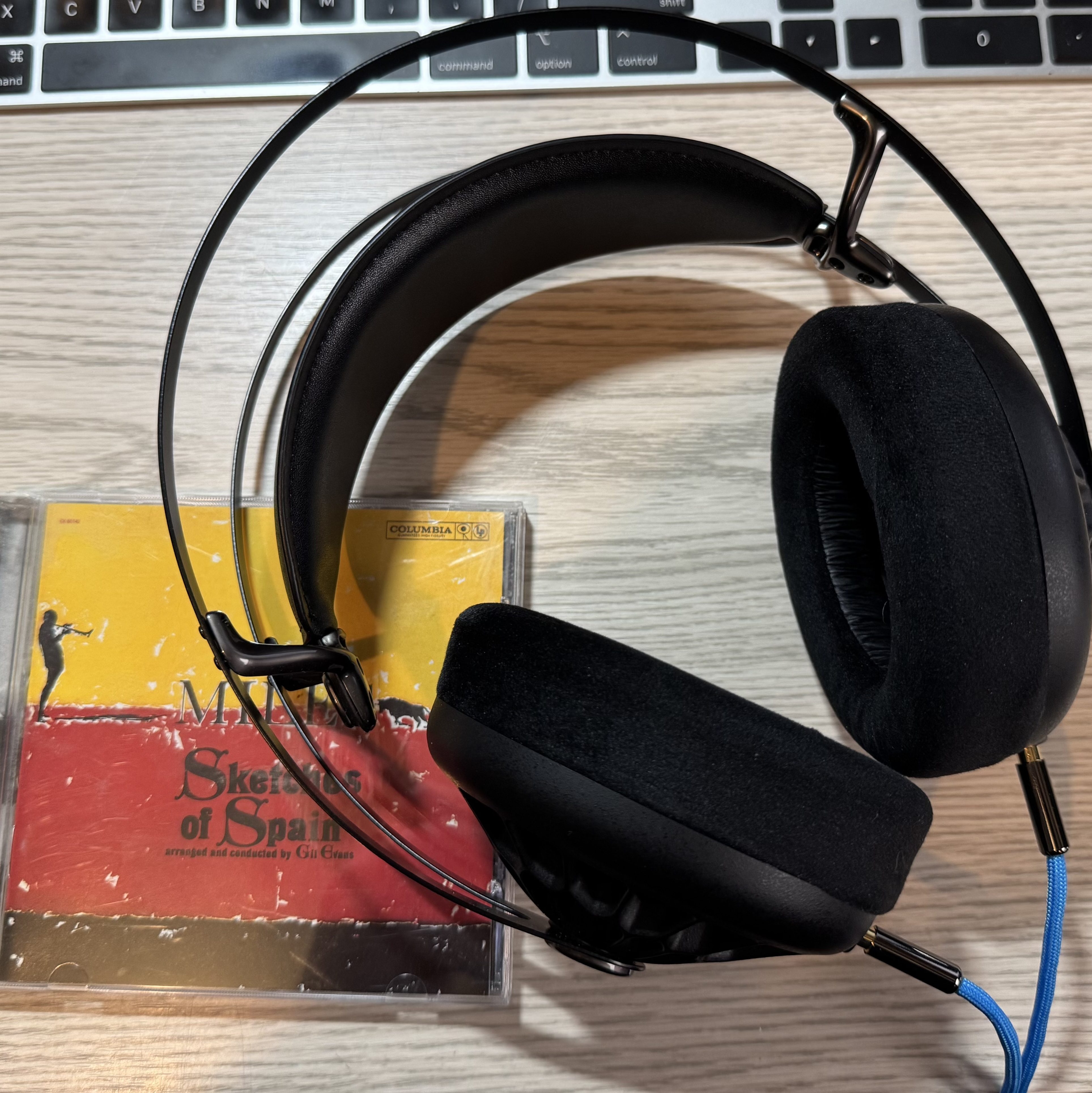
Gaming. I’ve been using these for Cyberpunk 2077 a lot the last couple of weeks, and they’re well-suited for it. The soundstage isn’t the widest, but it’s consistent enough that it’s easy to place objects in space for a non-sweaty shooter. The frequency response is also warm enough that gunshots and explosions are satisfying without being muddy, dialog is clear and consistent, and treble is just sparkly enough for sound effects. Overall I’d say they’re a pretty excellent gaming headphone as long as you don’t need a built-in mic.
Amplifier compatibility. The 105 AER are very easy to drive and seem to play well with the full gamut of my amplifiers, from the $9 Apple dongle to the $400 Schiit Jotunheim 2 to the $650 Chord Mojo 2. With some headphones, I start to feel the diminishing returns at a relatively low price point, but these appear to be able to use the full quality of any of the amps I tested them with and I don’t worry about overshooting their capabilities. These are a warmer tuned headphone, but I still very much enjoy them with both the Apos Gremlin tube amp AND the Nitsch Magni Piety tube-ish solid state.
With a couple of notable exceptions, I continue to be a balanced headphone skeptic and a fancy-ass cable skeptic, and while the 105 AER sound very nice with the balanced Hart cable, I don’t personally think there’s really any benefit from it with them (other than, of course, letting you use balanced-only amps like the Gremlin, which I love).
Noise canceling/isolation. Basically zero. These are VERY open open-back headphones, and I can hear the keys on an Apple Magic Keyboard clicking as I type, and I can hear naughty dog noises from the living room anytime I’m wearing them. They have a tiny bit more isolation than something like the Arya Stealth, but I wouldn’t count on them blocking anything.
Spatial audio. Nope!
Build
Controls. None; these are a purely passive set of headphones.
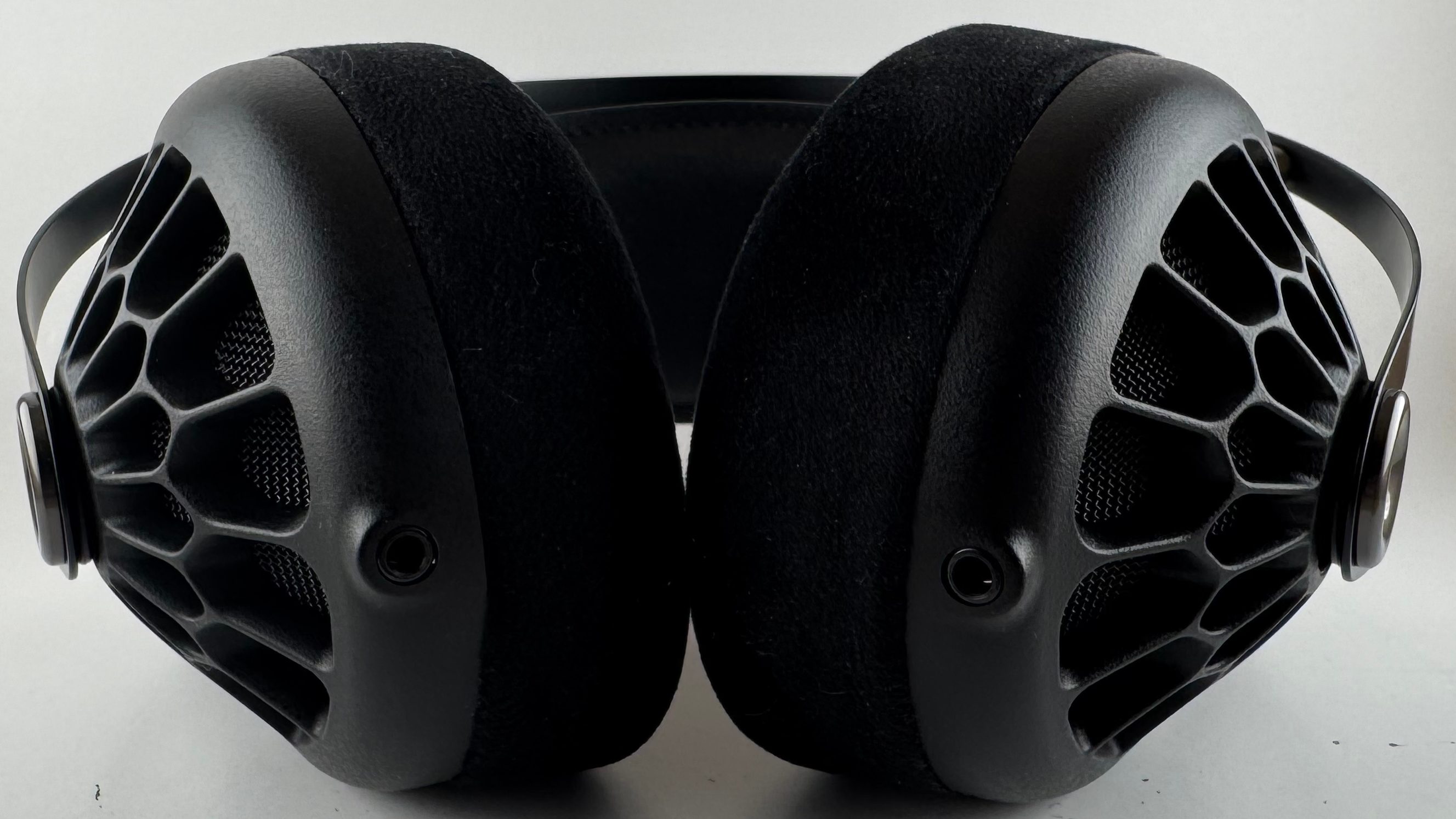
Connectivity. Meze 105 AER, like the 109 Pro, use a 3.5 mm socket on each ear cup to connect to headphones. Unlike the 109 Pro, the 105 AER’s sockets aren’t recessed inside a guard; the sockets sit on the outer edge of the cup which makes them WAY more compatible with non-OEM cables than the 109. They should fit really any 3.5 mm-terminated cable, single-ended or balanced, including most Hifiman, Meze, Focal, and Fiio cables that I have in my house.10
Comfort. I think the Meze 109 Pro are the most comfortable headphones I’ve ever owned, but the 105 AER are very close. They’re a tiny bit clampy on my (larger than usual) head, and as a result the weight sits more on the ears than the suspension strap (unlike the 109, which on my head are exceptionally good at distributing the weight across the ears and the strap). They’re not the lightest headphones in the world at 336 grams, but they’re in the same general range as most open-backs I’ve tested.
The velour pads are very soft and yielding, making them comfortable for long listening sessions, and they don’t slide on my head even when I’m moving around a lot. The cups don’t rotate very much side to side, and maybe 10-15 degrees up and down, making the pads the primary mechanism for achieving a good seal. I would rather have the cups articulate a little more, just to increase the range of heads that fit them, but I find them very comfortable all around.

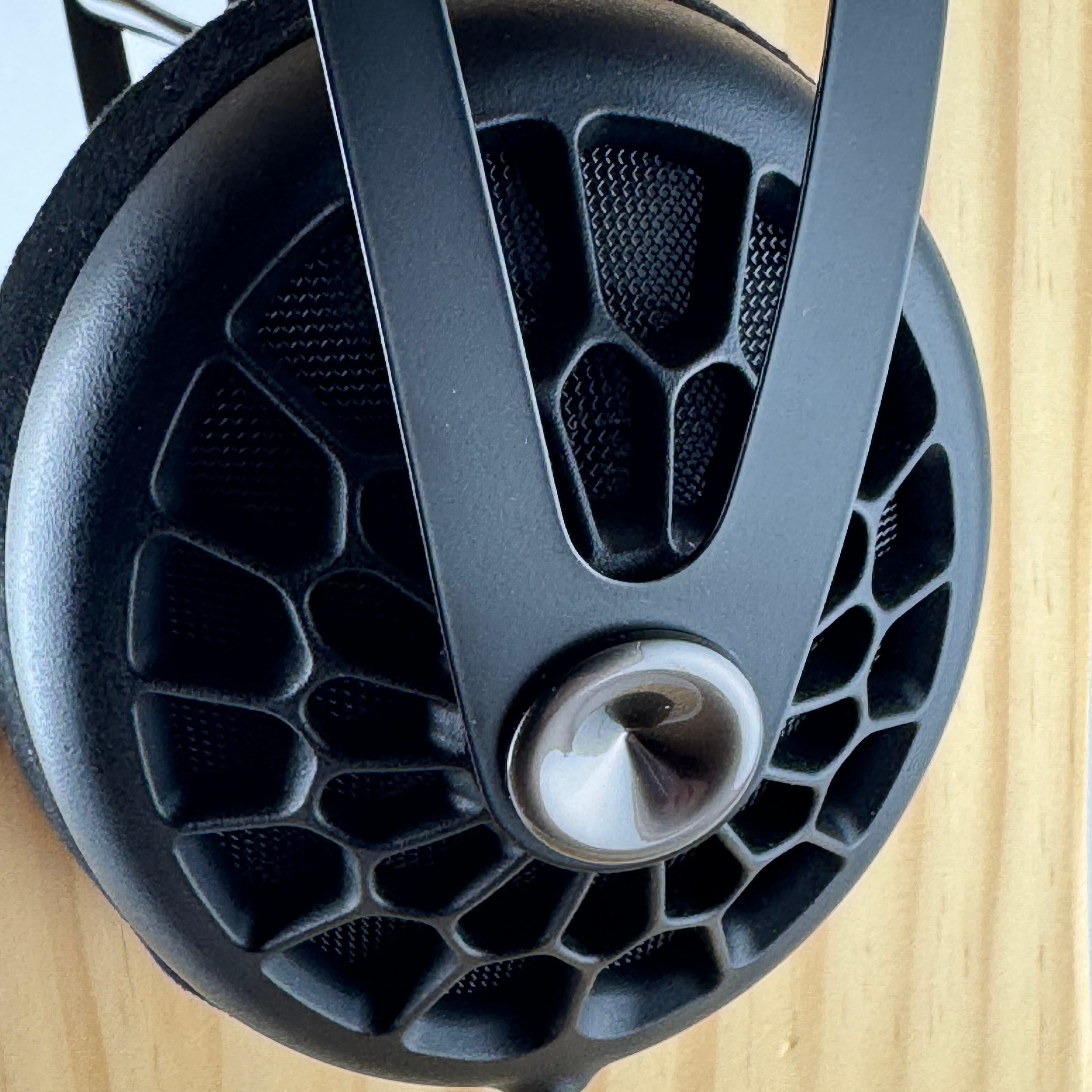
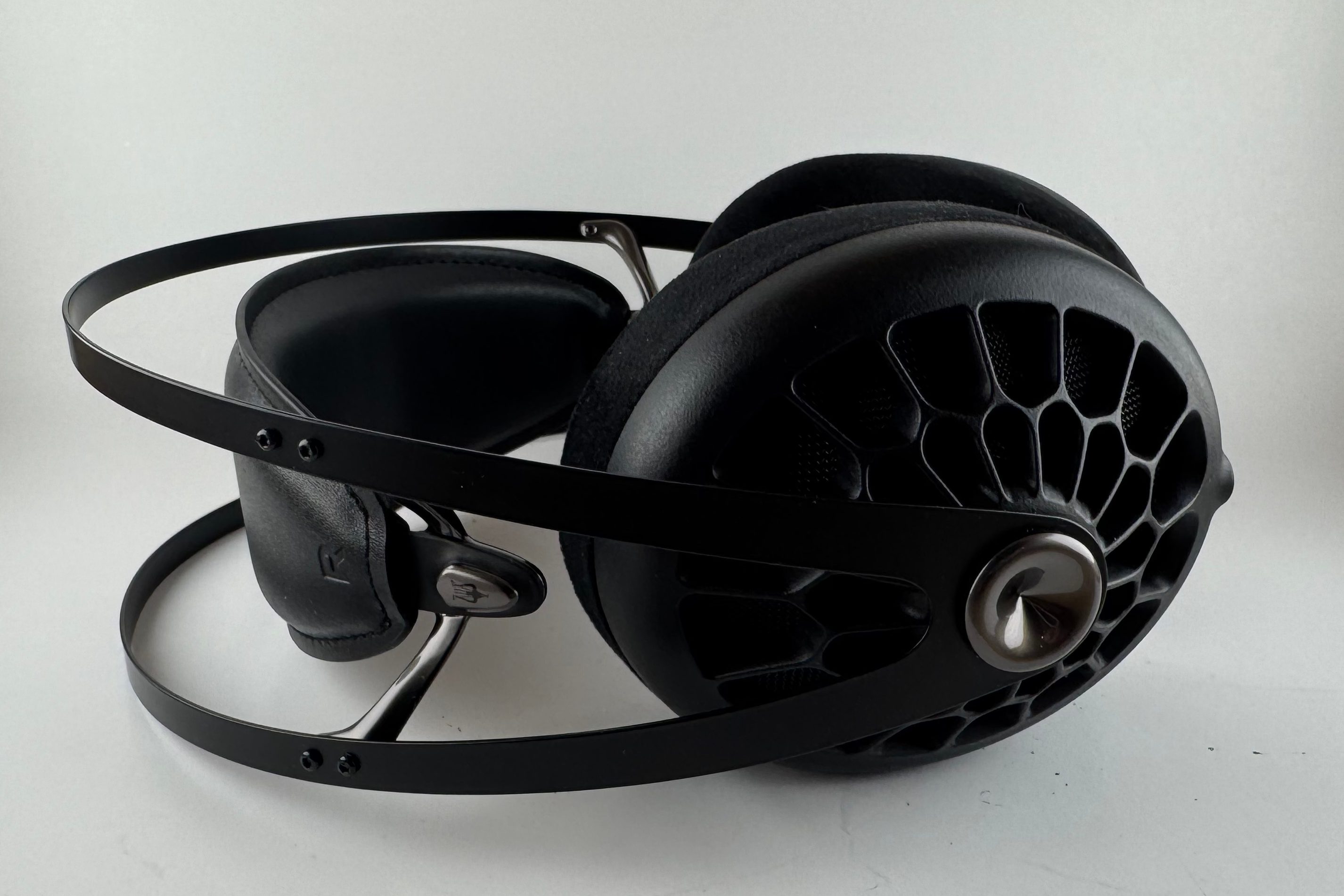
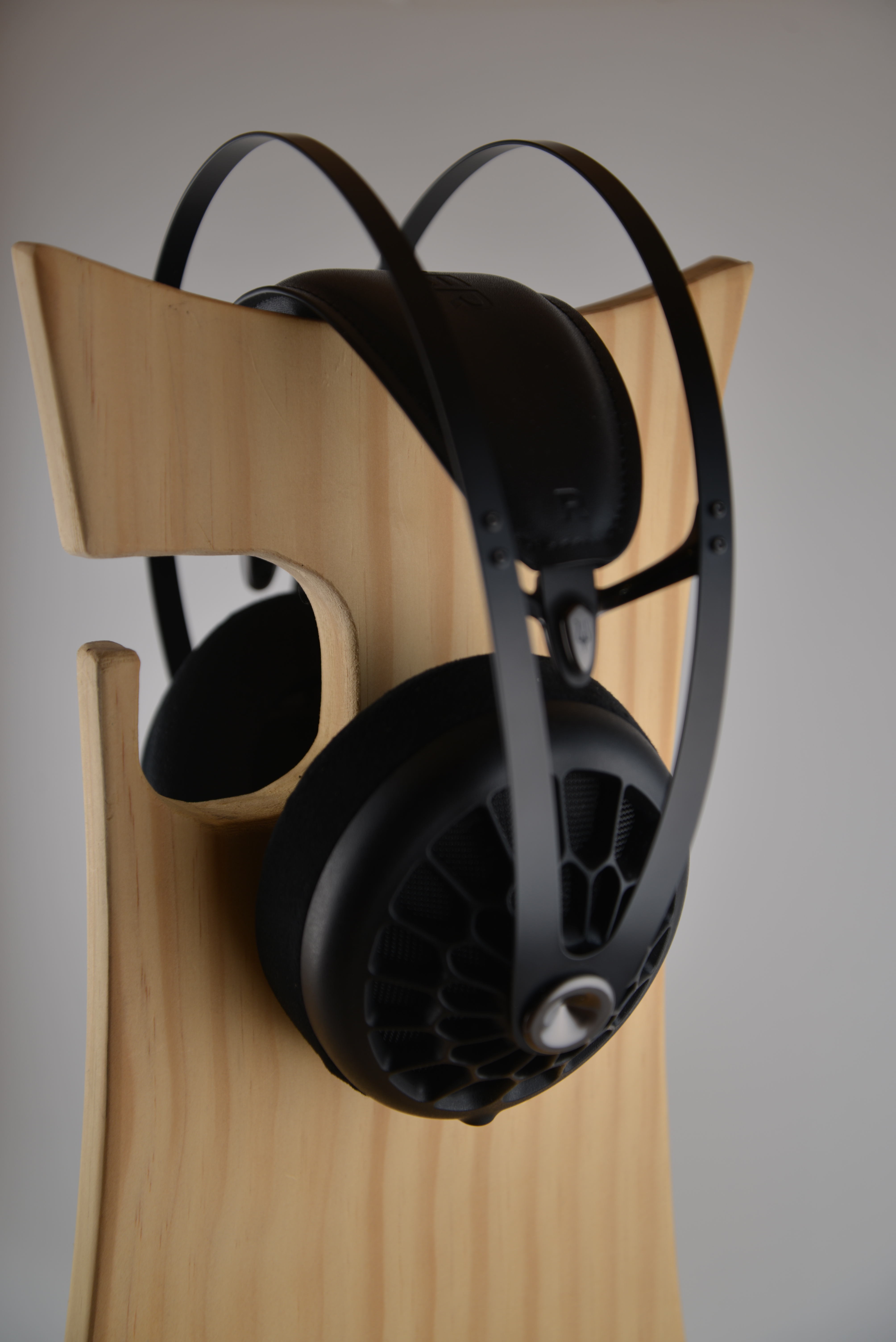
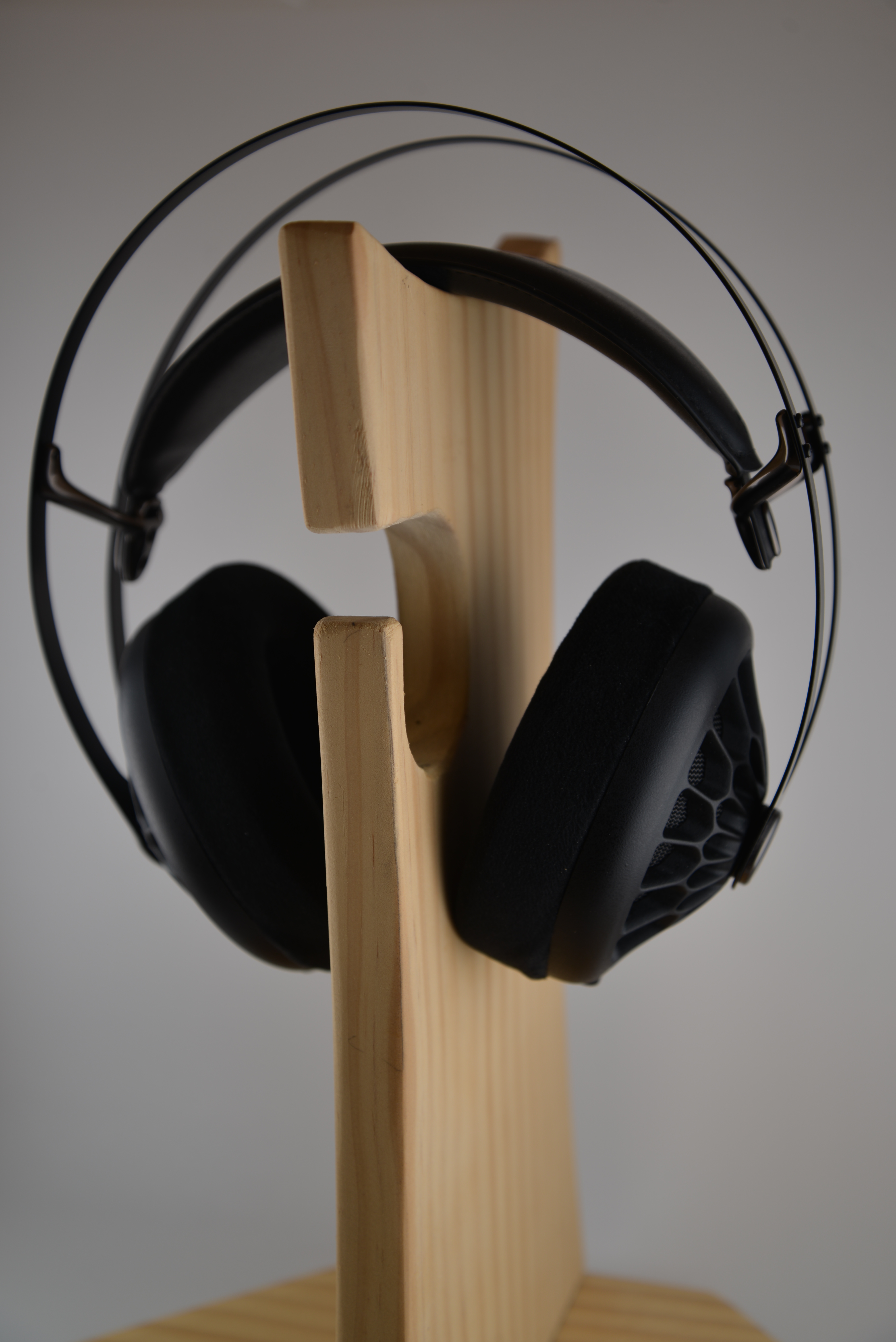
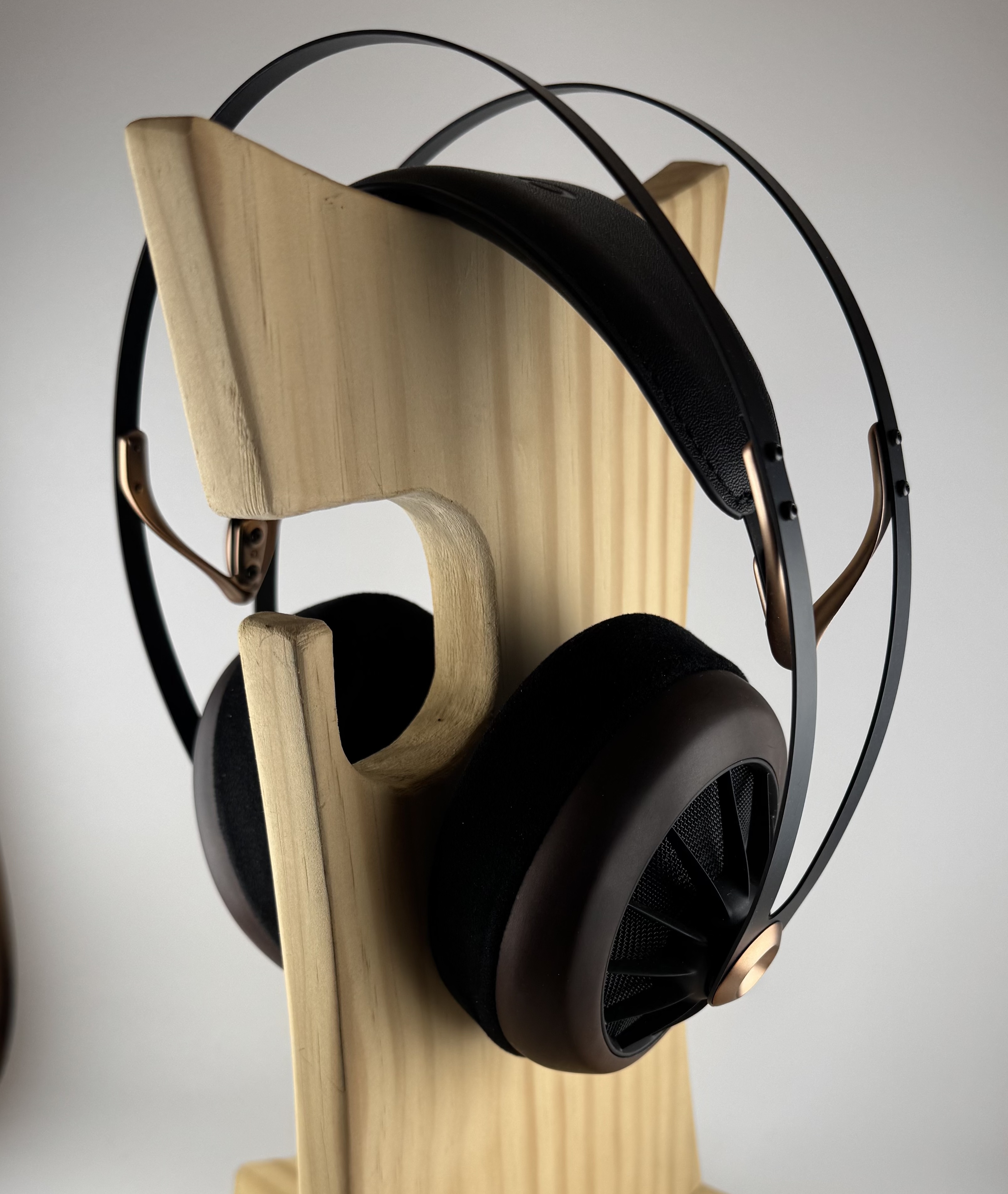
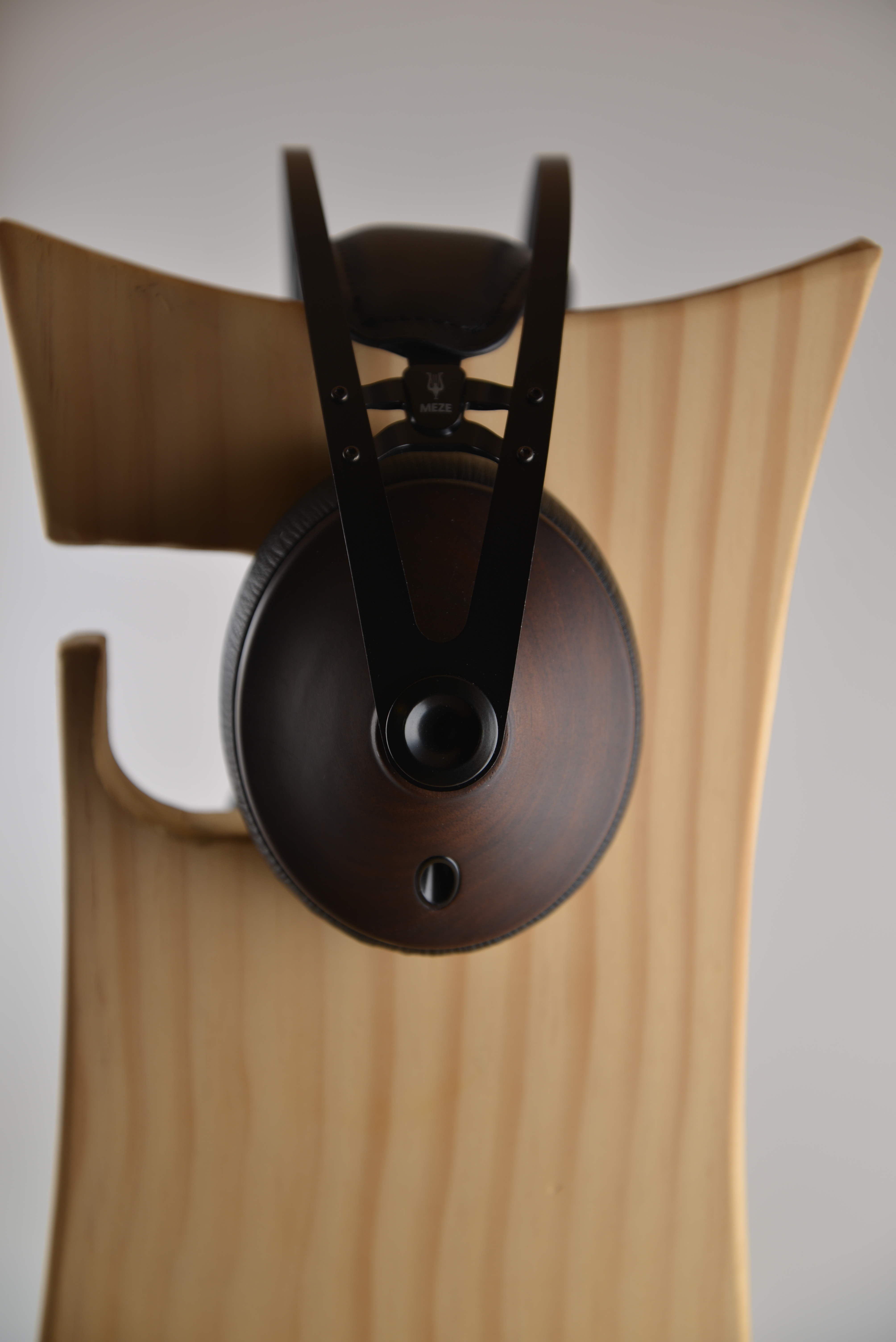
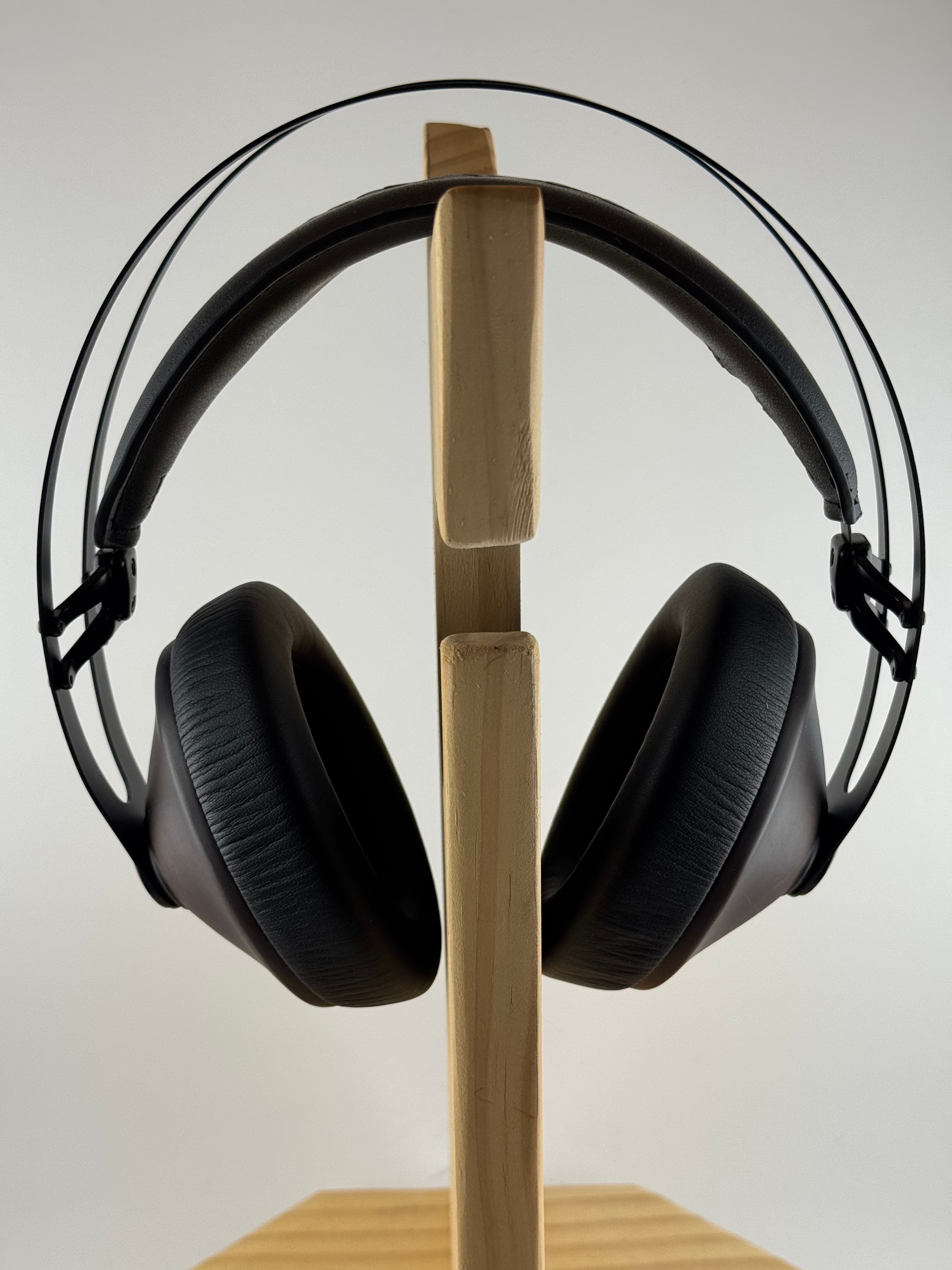
Construction. The 105 AER share their general design aesthetic with the 109 Pro and the 99 Classic/NEO/Noir platform, consisting of ear cups, steel springs for the cage, and a self-adjusting pleather suspension strap. The biggest difference in terms of physical build with the 105s is that the cups are an all-plastic construction instead of the combined wood and plastic of the 109 or the all-wood cups of the 99. Despite that plastic construction, the 105 feel very solid and well-built.
The 105s avoid one of my biggest complaints about the 99 Noir, which is how incredibly microphonic the head cage on that headphone can be. Some of it is probably the closed back nature of the 99 increasing the occlusion effect, but the cage on the 99 pings much more loudly when tapped than either the 109 or the 105. Short of deliberately tapping on the cage, or pet that likes the pinging, you are not particularly likely to notice it very often.
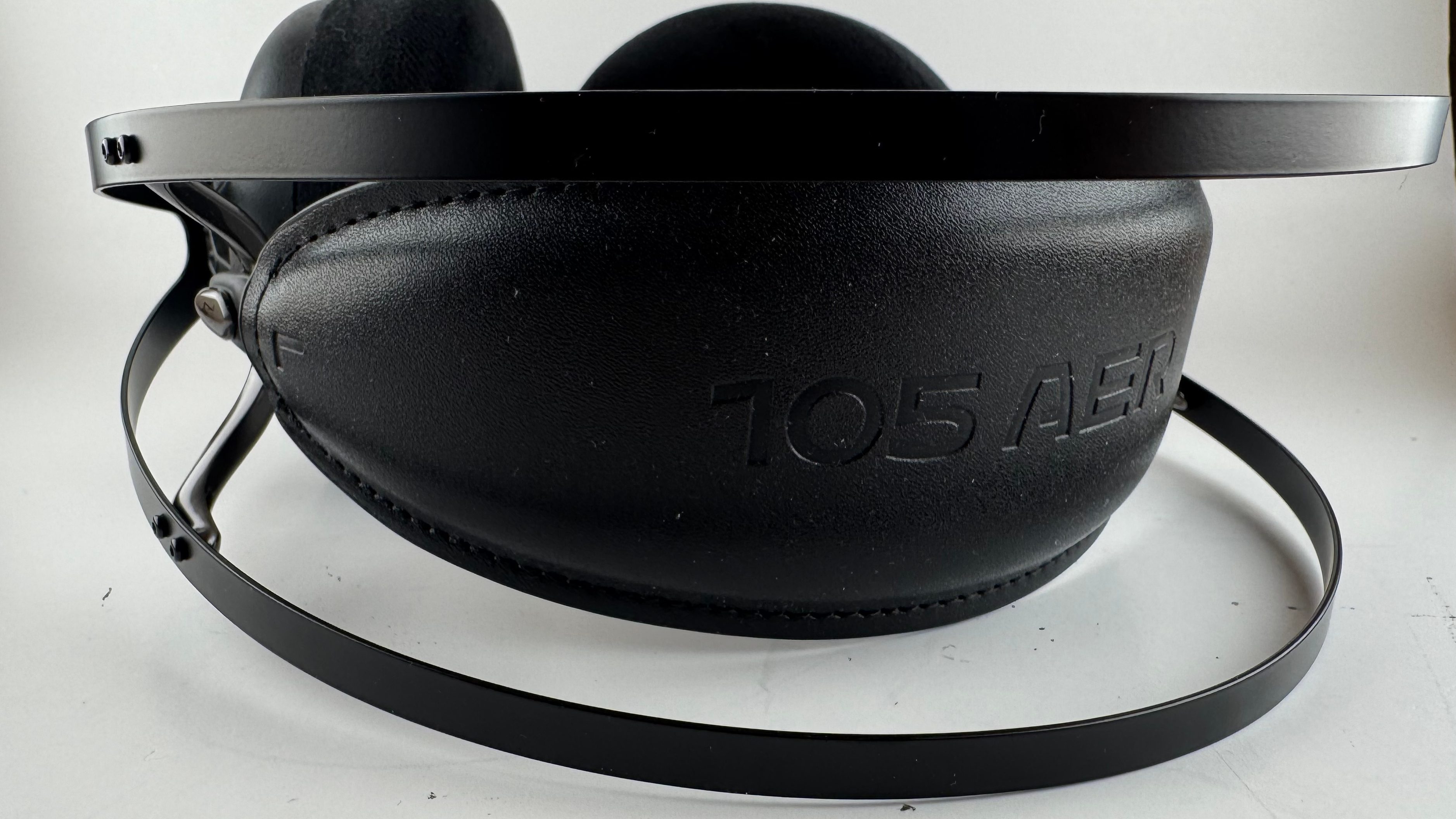
Like the 109, the 105 also ship with a hard case, a 1.5 m and 3.5 m 3.5 mm-terminated TRS cables, and a 3.5-to-6.35 mm adapter. The case is nice, though it’s woven cloth as compared to the rubberized plastic of the 109, and the cable bag is a zipper pouch instead of a drawstring bag. I think I prefer the 105’s case, but it’s a pretty minimal difference. The OEM cables are fine; they’re not as microphonic as the ones that ship with the 99 Noir, and they have a reasonably good drape and are not so stiff as to be annoying.
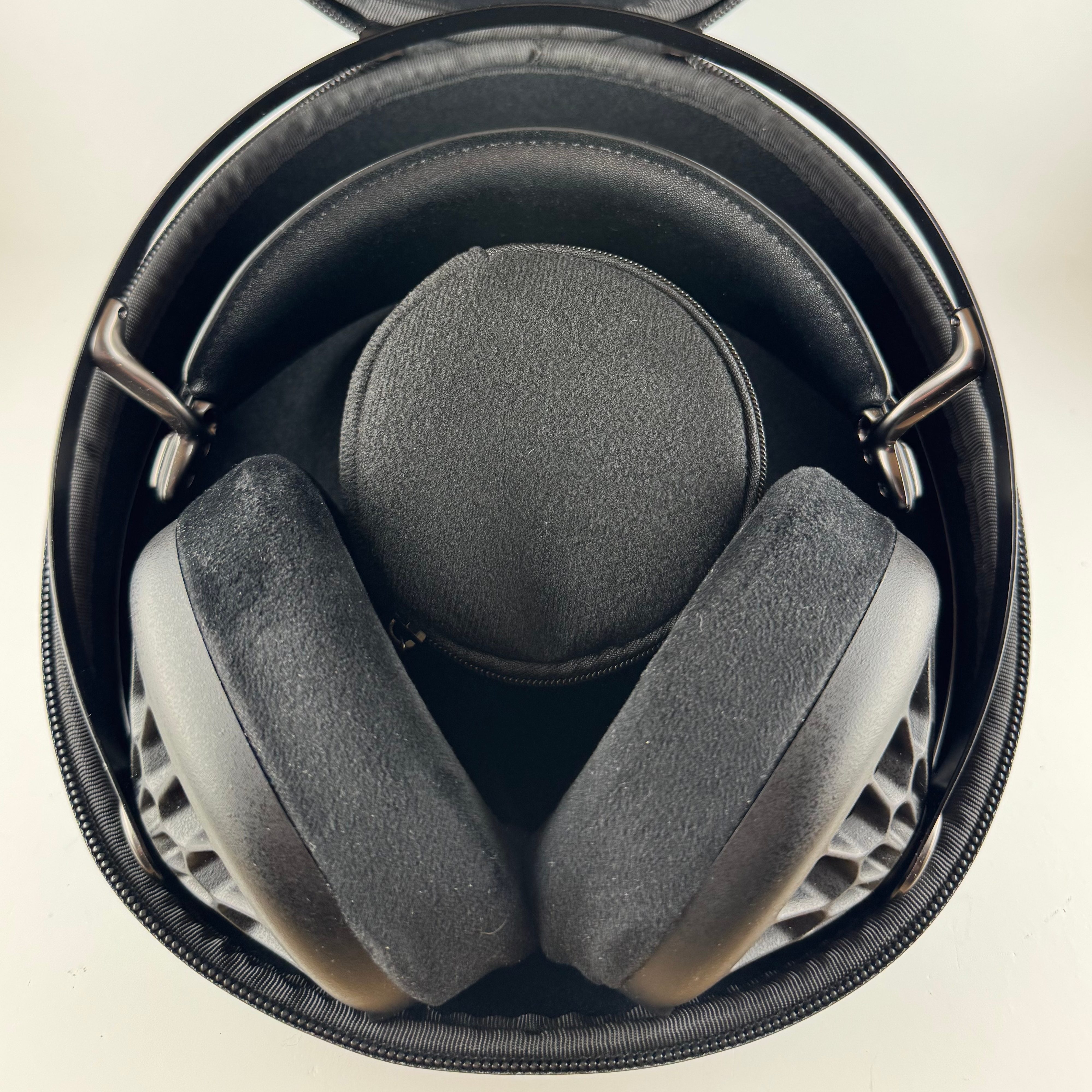
All in all, the 105 feel like a well-built luxury product without being as heavy or stiff as some other offerings in this price range.
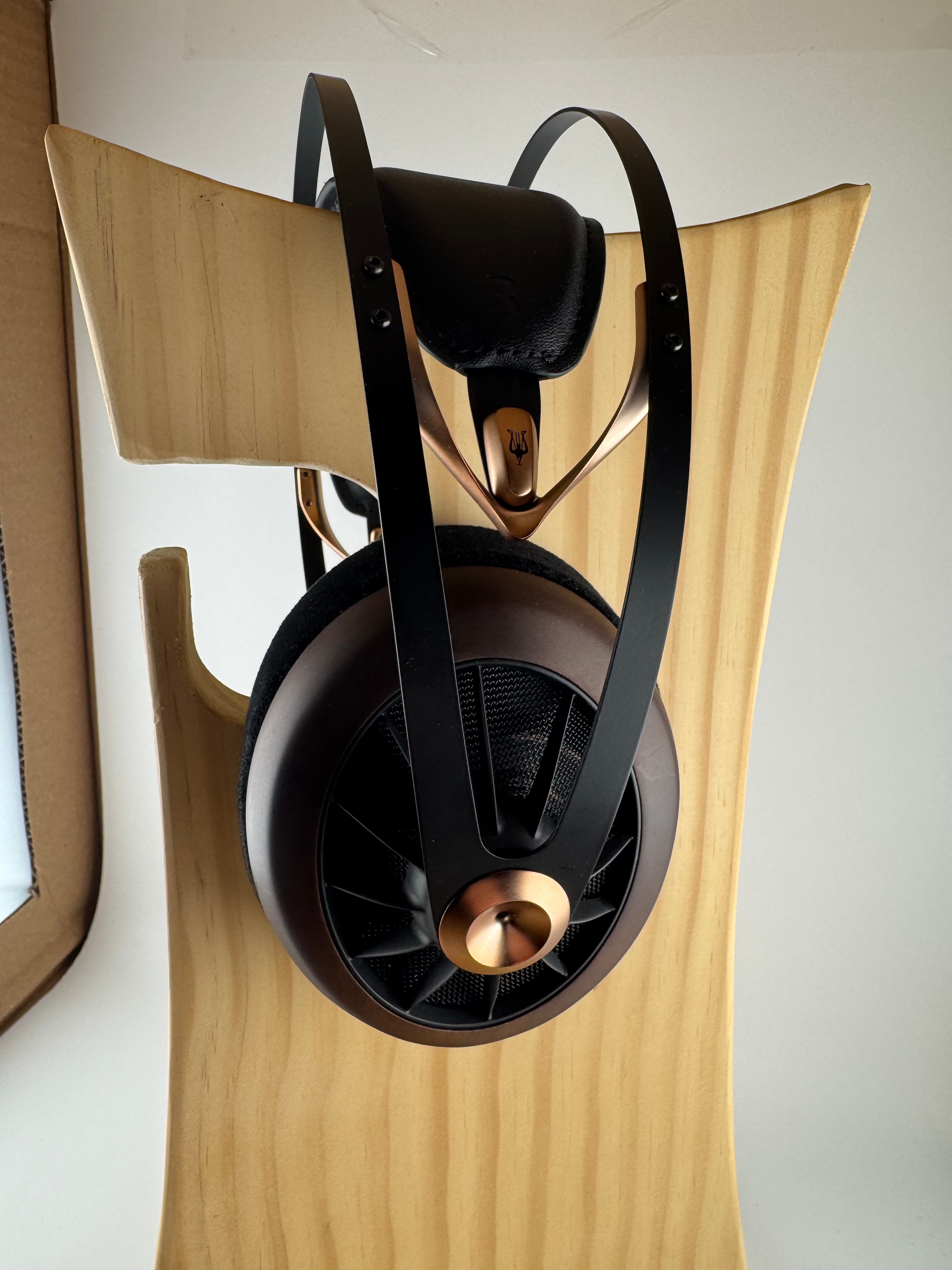
Appearance. Look, you either like Meze’s pseudo-steampunk aesthetic or you don’t. I personally am a huge fan; as far back as my review of the 99 Noir I’ve commented on their appeal to me. There’s an interesting comparison with the 105 AER too, as they’re a more muted colorway of the 109 Pro (black vs. walnut and copper), just like the 99 Noir are a more muted colorway of the 99 Classic (walnut and black vs. gold). I’d be happy if Meze chose to use wood in the development of the 105’s cups, but I’m not bothered by the high-quality, matte plastic they went with instead, and it might have saved a little on weight. I think these look good, and I won’t have any shame around wearing them in public.
Value/Comparisons.
I don’t have many passive headphones in this general price range; for me the sweet spot in passive open-backs is right around $200-250 so I tend to play around there. Among my headphones, the obvious comparisons are to the Meze 109 Pro (the 105 AER’s big brother), the Arya Stealth, and the 6XX/Edition XS/FT1 Pro (the best value picks in that sweet spot). I’ll also throw in a comparison at the end to the Focal Bathys running in DAC mode, and maybe to the Sennheiser Momentum 4 at a similar price point.
Meze 109 Pro.
It’s doesn’t feel particularly fair to compare the 105 AER to the 109 Pro (the latter is nearly twice as expensive at MSRP) but it’s closer than I expected it to be. I feel like the 105 gets you 90% of the way to the 109’s performance, and if I did a true blind of the two not immediately back to back, I’m not sure how reliably I’d be able to pick them out. Listening to them closely, I’d say that the 109 has slightly better resolution, better microdynamics (especially in the bass; the bell tones at the beginning of “Angel (Blur Remix)” are crisper and sharper on the 109), and better layer and instrument separation on tracks like “Thunder Lightning”, but these are pretty minor differences. The soundstage is also better front-to-back and slightly wider side-to-side on the 109s; on “Love Can Damage Your Health” the intro is much more just panning left and right on the 105 vs. a full rotation on the 109, and the bass line is just a hair crisper on the 109. I do think the 105 has calmer and crisper treble, though, especially on tracks like “Coffee” and Miles Davis’ solo on “Will O’ the Wisp.”
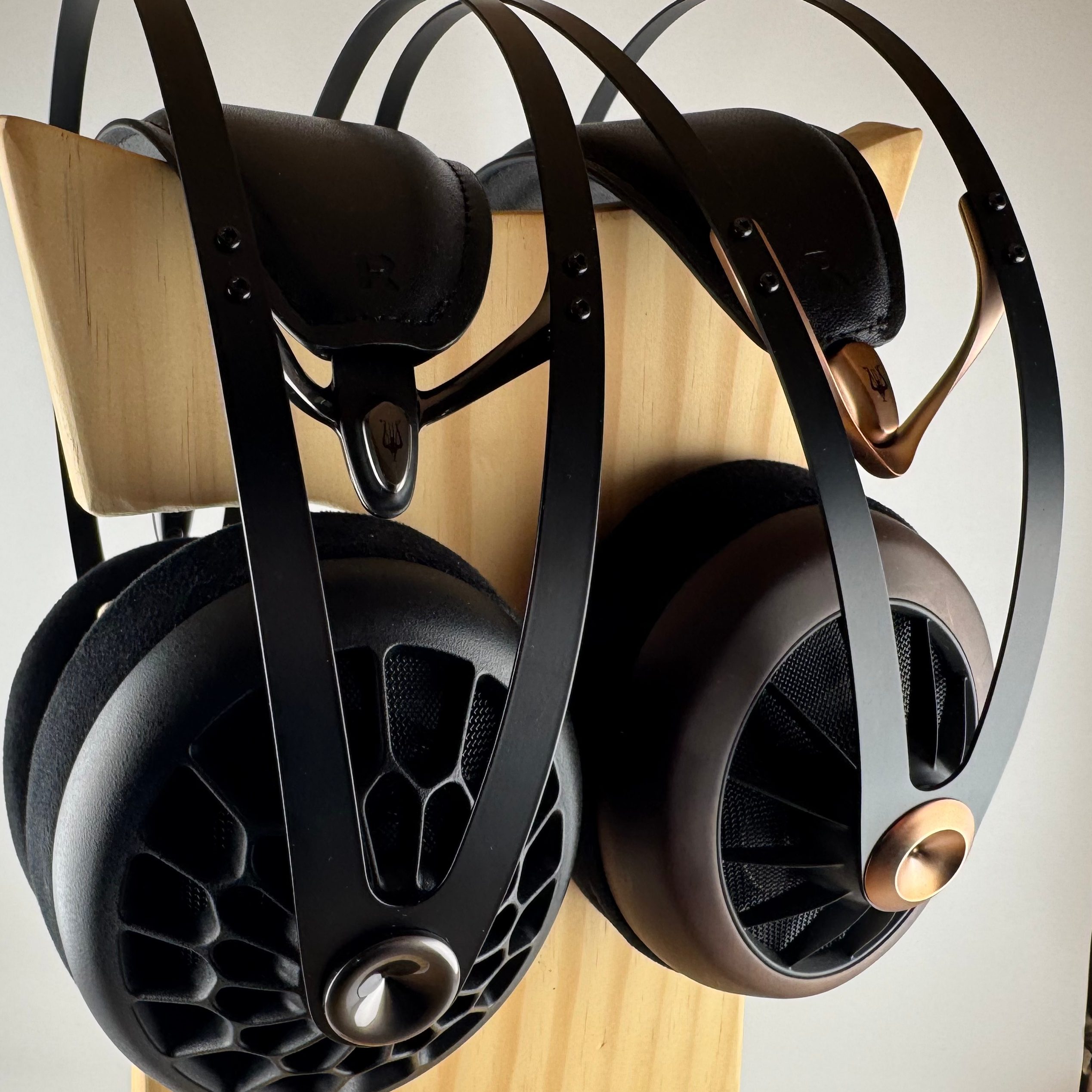
Overall, I think I prefer the 109 Pro for my own listening preferences, but I’m not sure I’d recommend anyone else spend the extra $400 for them, particularly if they have had any issues with treble. The 109s don’t bother me, treble-wise, but some people have found them unpleasant. [‘Could this be the flip side of cope? Entirely possible! I do love me the 109s.] But I’m genuinely really impressed by the comparison to the 105, which speaks well of the 105 as a platform.
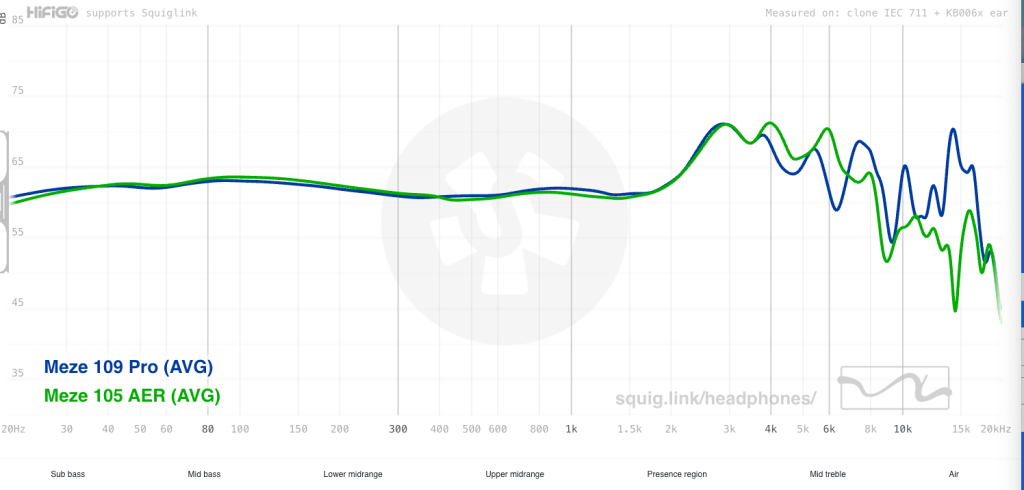
After writing this, I was curious to go look at the Frequency Response graphs, courtesy of Squig.link, using Super* Review’s (Mark Ryan’s) measurements with his permission.11 As I suspected based on the listening, the frequency response is pretty similar with the exception of a very slight increase in bass and a spicier top-end on the 109 Pro:12
Arya Stealth.
On paper, this also shouldn’t be much of a comparison. The Arya Stealth’s original MSRP was $1,499.99, and while Hifiman appears to have quietly adjusted that down to $599 everywhere towards the end of 2024, they’re still headphones designed for a very different price bracket as well as a very different tune. And, again, the 105 is surprisingly competitive.
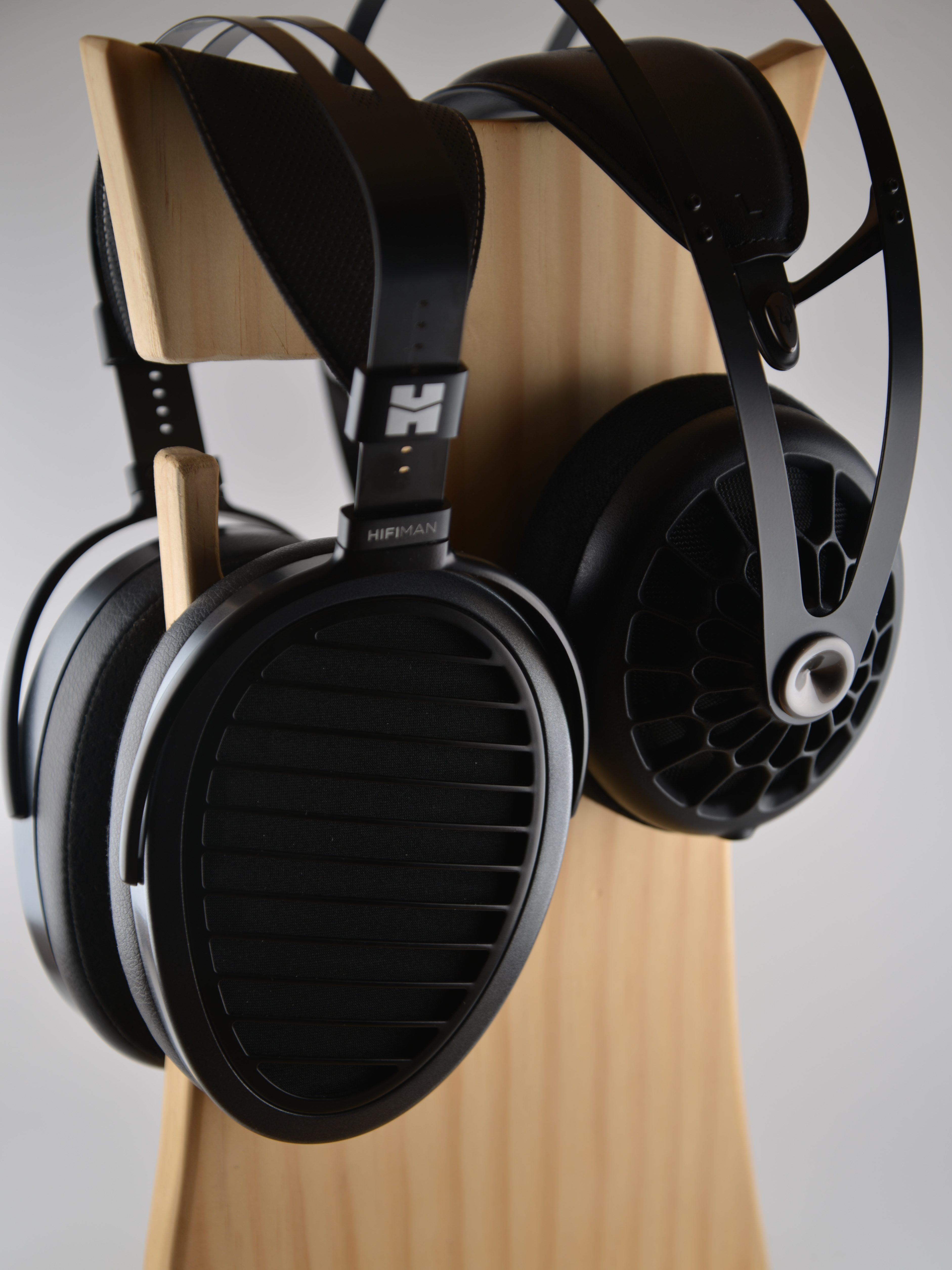
When I did my comparison of the Arya Stealth vs. the 109 Pro, my conclusion was that while the Arya Stealth was a much more objective headphone, with more detail, better accuracy, and a more open feeling, the 109 Pro was a better fit for my preferences and listening style. That’s equally true of the 105 AER; I find the bass response deeper and more satisfying on the 105, and the treble substantially more relaxed and comfortable for every day listening. The warmer tuning for the 105 AER just works better for me, so unless you really need that objective-type sound, are a huge spicy treble fan, or really want planar magnetic drivers, I’d go with the 105. The fact it’s also $200 cheaper doesn’t hurt. This feels a bit like the Edition XS vs. FT1 Pro comparison I did in my FT1 Pro review; the Edition XS is clearly the “better”13 performing headphone, but the FT1 Pro is more for me and the kinds of listening I do.
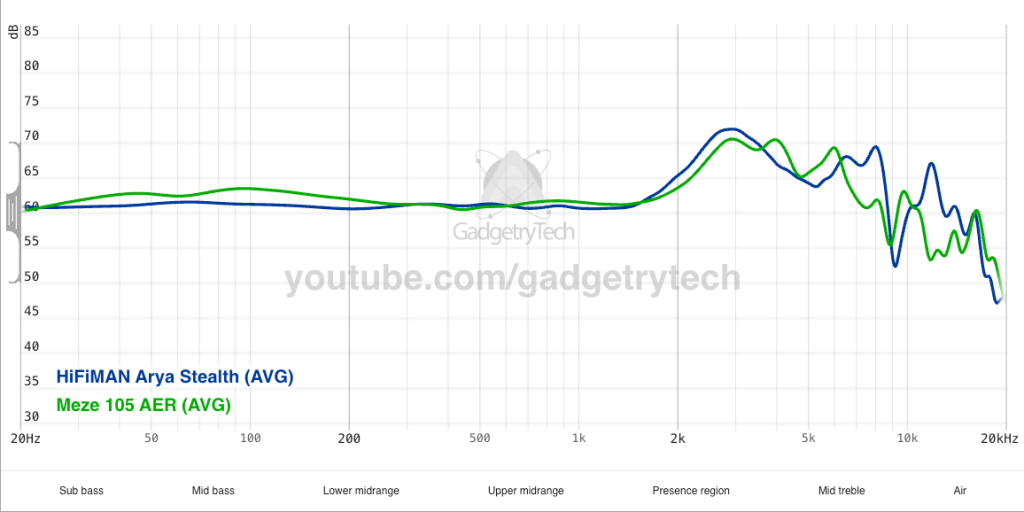
It’s surprisingly hard to find anyone who has measurements online for both the Arya Stealth AND the Meze 105 AER, but here GadgetryTech comes to our rescue. And as expected based on my subjective listening, the 105 have slightly better base response and less spicy treble.14
6XX/Edition XS/FT1 Pro.
This feels a little like an unfair comparison going the other way; the 105 AER are a $400 headphone and the 6XX/Edition XS/FT1 Pro are all between $200 and $250. And I think that largely shows in the performance. I would say that I think the Edition XS edges the 105 Pro slightly in terms of detail retrieval and overall resolution, but that comes at the cost of a much less pleasant treble profile and less bass/mid-bass. I think of the three, the only one I would still prefer for some listening is the 6XX, just because the 6XX’s superpower is mids (especially vocals). If I’m listening to quieter acoustic music, I might still occasionally use the 6XX.15 I’m curious to do some testing with the 105 AER and the Focal Elex; I think of the Elex as a Super-6XX and I wonder if I would prefer its vocal performance and timbre to the 105.
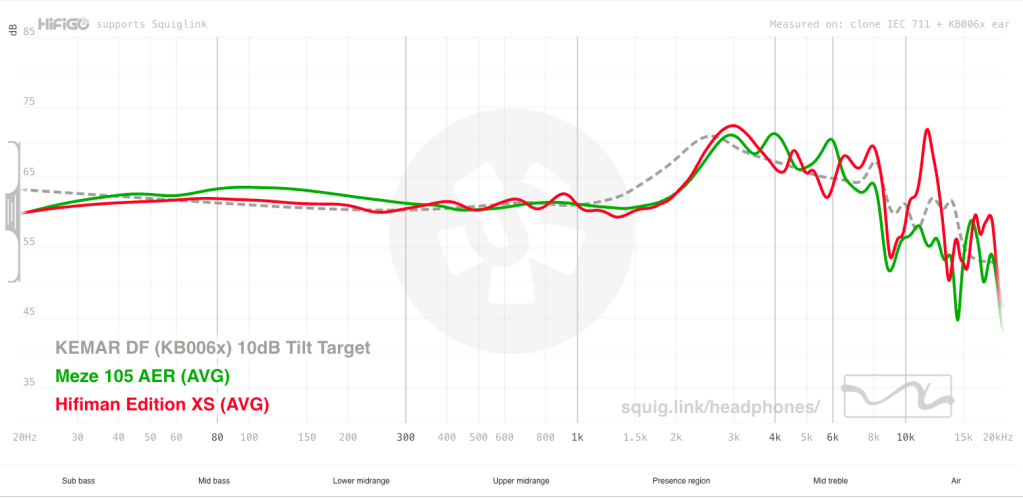
Back to Super* Review’s measurements for this showdown:

As expected, the 105 crush the 6XX in the bass. I personally like the 6XX’s bass profile (clear and crisp, definitely not overpowering) but there’s also no question that the 105’s warmth gives it a much better bass response. I’m also not surprised to see that the 6XX is better in the presence region; there’s a reason that the 6XX are a vocal reference headphone for me and for everyone else.
For the Edition XS, nothing particularly surprising here either; the 105 clearly have a better mid-bass response than the Edition XS (though the XS isn’t shabby), and the Edition XS is obviously a lot spicier in the treble as demonstrated on the graph.
[Editor’s note of self-discovery: At this point, honestly, there’s just nothing I’ll really use the Edition XS for other than reviewing (or I suppose if I were trying to mix audio, but even then I think I’d prefer the Arya or even the DT 990 Pro). I should probably consider passing it along.]
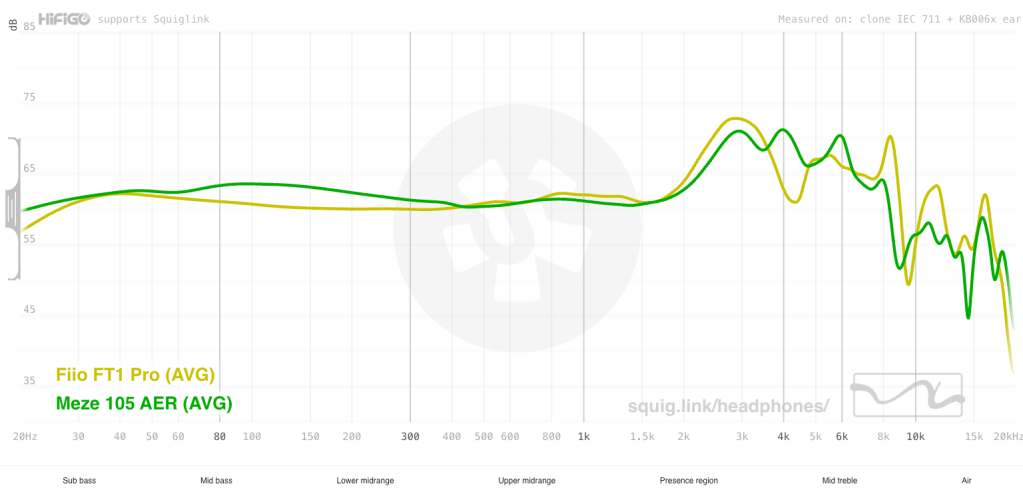
As much as I enjoy the FT1 Pro (it’s what I have grabbed when I want more bass than the 6XX, particularly for electronic music and trip-hop), I think the 105 AER render them mostly superfluous in my collection. I would say that they have slightly better mids than the 105, but I really like the 105’s natural vocals and the timbre feels really good to me. Combine that with a slightly tamer treble response and better mid-bass, and these have probably knocked the FT1 Pro out of my regular rotation. And when I go to the graphs, yeah, that seems about right. While the FT1 Pro has a slightly better midrange response, the 105 (like the 109) just has a really nice, natural tone.
Focal Bathys (DAC mode).
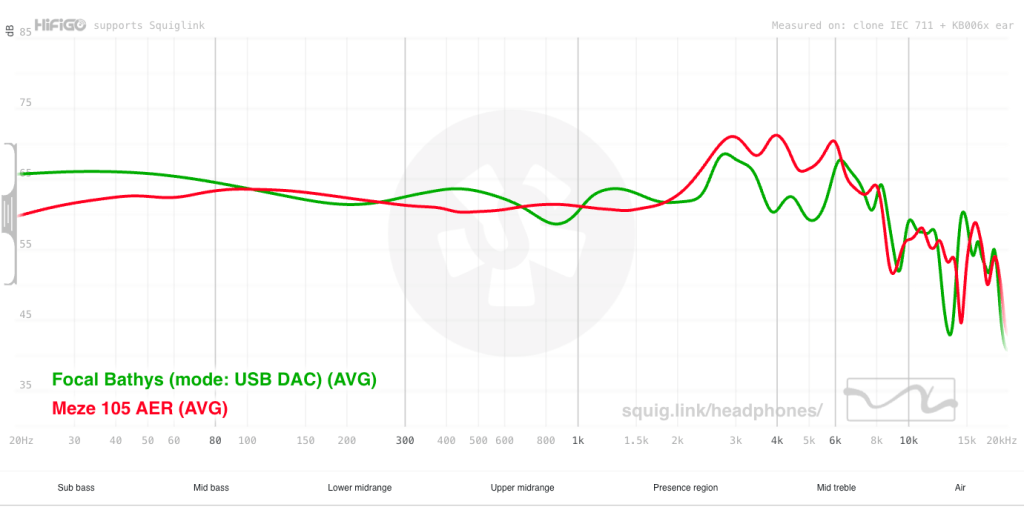
I haven’t even started my review of the Focal Bathys yet, but I’ve been listening to them for about a week at this point and I have to say I’m pretty impressed, particularly for an ANC wireless headset. I’d been pretty intrigued by the Bathys, particularly after watching Resolve from The Headphone Show talking about his reference gear, wherein he admitted that he only owns one headphone that he uses as a reference: the Focal Bathys, that he usually uses in DAC mode, connected to a source via USB-C. The Bathys have a weirdly good tune, with rich, deep bass, decent mids, and well-controlled treble. They still can’t hold a candle to a good open-back when it comes to sound quality, at least not for me. Unless you need sound isolation and noise cancelling, the 105 are the winner here, but I would listen to the Bathys anytime I’m in a noisy environment.
Sennheiser Momentum 4.
It probably goes without saying, but no one should be buying the Sennheiser Momentum 4 (or really any ANC headphone OTHER than the Bathys) for the sound quality. Right out of the box, the Momentums are poorly tuned. Running their personalization system via the phone app makes it … less bad, but still far from great. I’m going to give these a fair shake over the next couple of weeks, but unless you need sound isolation and noise cancelling, definitely take the 105 over these at the same price point. (And, at least for now, if you do need sound isolation and noise cancelling … the Quietcomfort is right there for half the price.)
Overall.
The Meze 105 AER is a great addition to the Meze lineup AND the open back market. I’m really, really impressed with how close they get to the 109 Pro at half the price, and you could make a good faith argument that their treble response is better for most listeners (especially the treble sensitive ones). My experience with these have left me quite eager for the pending 105 SILVA we should see later in 2025.
I think the question I’m struggling with is this: if I didn’t already own (and love!) a pair of the Meze 109 Pros, would I bother buying them if I had the 105 AER? And that’s a lot harder question than I would have guessed until I started doing a lot of critical A/B’ing. To me, I think it’s pretty clear that the 109 Pro is a better headphone, even discounting the ability to EQ some of the treble spikiness. And purely from an aesthetic standpoint, nothing short of some of ZMF’s offerings beat the 109. The 105 is striking, but the matte black doesn’t hold up to the walnut and brass fittings in my book.
I think, for me, I’m going to continue using the 109 Pro when I’m at my desk. They’re better enough that I want to hold on to them for dedicated desk listening. I think the 105s will become my office open backs; while they’re still expensive, I would feel a lot less bad about something happening to them while I was out and about, and they give surprisingly close to the same listening experience. Paired with the Chord Mojo 2, they’ll make a good listening station when I’m setting up somewhere else for hours.
These are a genuinely impressive pair of headphones, especially at this price, and even more so if you can get them at a decent discount or an open-box. I recommend them with no hesitation.
#reviews #headphones #sennheiser #6XX #anc #spatialaudio #meh #2025 #99noir #meze #overear #cans #hifiman #arya #stealth #editionxs #budget #hahahaha #fiio #ft1 #closedback #beyerdynamic #dt770
- I score bass, mids, and treble on a two part scale: 1-5 for quantity (5 being the highest), and A-E for quality (A being best in class, E being laughably bad). For soundstage it’s also a two part scale, with the number representing the width and the letter the separation within it. ↩︎
- For comfort/fit, my scale is A-E with A being disappear entirely into the background and E being I want to tear my ears off to stop feeling these headphones on my head. ↩︎
- As of December 2025, I have spent some considerable time with the Empyrean II. They … do not disappoint. ↩︎
- I’m genuinely fine with open-box headphones; it’s in fact almost my preference, but I do resent being charged full price for a used headphone, particularly one billed as new. ↩︎
- “The item you purchased was absolutely brand new and never used. It is possible, though very unlikely, that this item was inspected by customs. Regardless, we apologize that you are not 100% happy with what was delivered to you.” It’s worth noting here that the sealing stickers had been fully removed and someone spent some time scraping off the sticky residue to prevent an unknowing purchaser from knowing they’d been sealed in the first place. Customs absolutely wouldn’t have done that, and wouldn’t have discarded the internal plastic bag. ↩︎
- “You are welcome to return the item for a full refund at no cost to you. Alternatively, if you would like to keep your item and would be willing to remove your commentary, we would adjust the price of the item down 15%.. In order to amend the feedback, follow these instructions.” ↩︎
- “As you’ve already set up a return on Amazon, our only remaining option is to offer you an additional $20 refund (on top of the purchase price you paid) for the inconvenience if you would be willing to remove your initial commentary. Our apologies again for your experience.” ↩︎
- I’m a big fan of headphones.com in no small part due to their returns policy, but if you buy from them, make sure to read the fine print. Refunds are available for only 30 days, and the rest of the 365-day return policy is for store credit. It also doesn’t apply to an awful lot of their products, even new ones. For me, I use them as a source of open-box gear (they have a lot of pretty great stuff and reasonable prices and I haven’t had anything not work), but I’d be leery of anything super expensive from them. ↩︎
- The Mojo shows volume with three lights: the first (effectively) shows you the gain setting and the other two a color-coded progression from quiet to loud. This combination means the very bottom of the high gain range. ↩︎
- Though, as always, I recommend buying cables for quality of life, not quality of sound. ↩︎
- I always care a lot more about subjective listening than objective measurements, but it’s also super interesting to see the objective piece, particularly where you can get two headphones measured by the same competent person with the same rig.. ↩︎
- At some point, I’ll to a quick 101 on using Squigs and the value/limitations, but the short version is this: a Squig is a measurement of how loud a particular transducer (headphone or speaker) is for any given frequency. There’s an art (or at least some nuance) to reading them, but if one headphone is higher than another on this graph at a particular frequency, it will be louder. ↩︎
- “Better” in scare quotes because better is, of course, subjective. Here, I mean a better representation of what was originally recorded, for whatever that’s worth. Which is not *MY* goal with listening; I care about whether something sounds good to me in my space. ↩︎
- I’m curious about the AER’s spikes around 4k and 6k; might need to spend some time and see if I can isolate those just for my own learning. They appear on multiple measurements. ↩︎
- The 6XX remains, and will likely always remain, my reference open-back, the yardstick by which I measure all other open-backs. ↩︎
 Phil's Superpower of Enthusiasm
Leave a comment