[ORIGINAL MSRP $449.95, frequently listed around $200 on Amazon in November 2025. Purchased used from r/AVExchange for $160.]
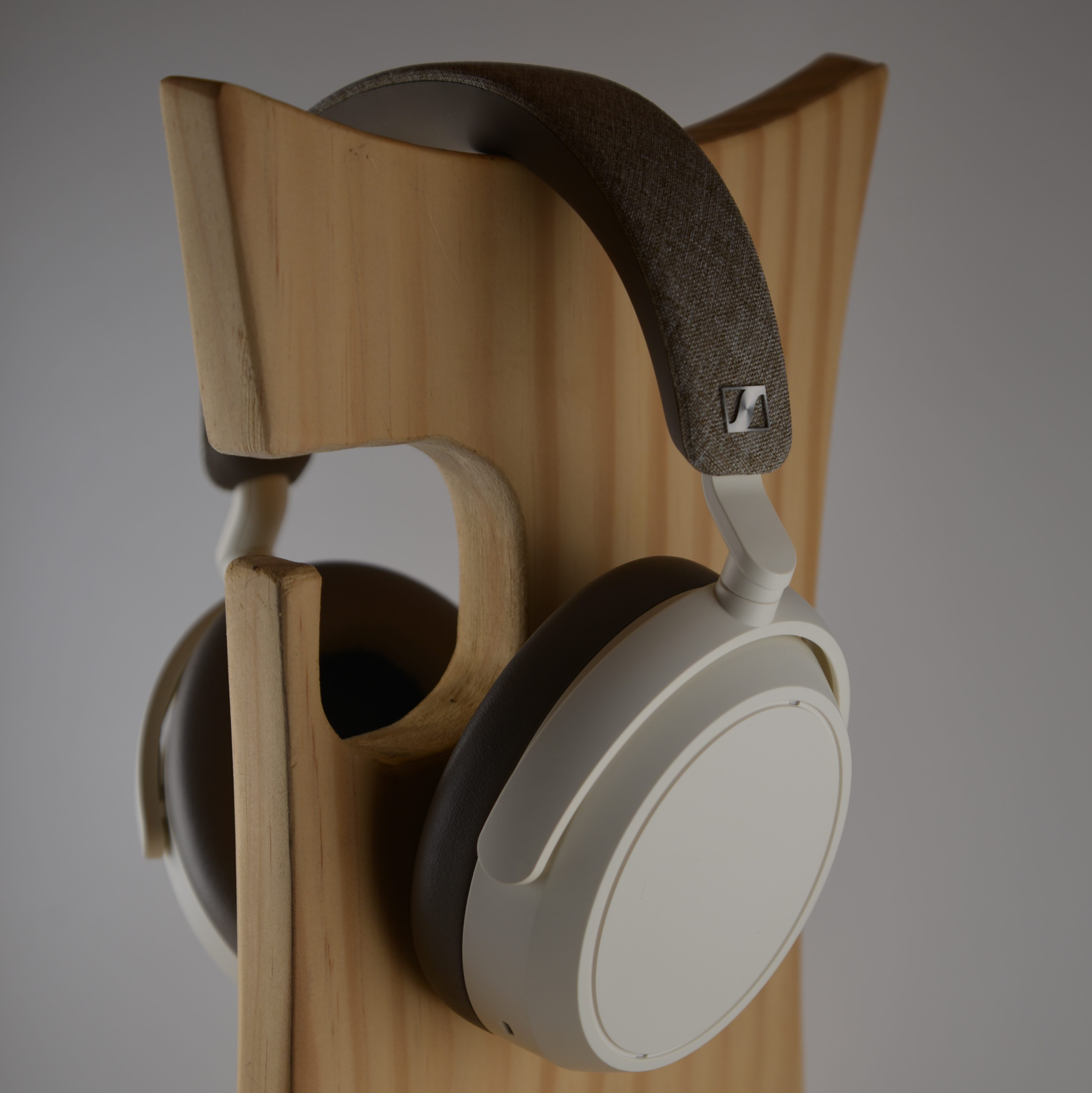
[Tl;dr: The Momentum 4 are an intriguing wireless ANC headphone at their current price point. They sound pretty mediocre to me out of the box, but will reward 30-45 minutes of playing around in the app or finding an EQ setting on the internet with a really solid, consumer-style sound. This is what I’ll be recommending to people when they ask about a pair of over-ear ANC headphones for a plane, at least for anyone not willing to splurge on a pair of Airpods Max or Focal Bathys. For most of my uses, though, they’ll struggle to displace the Airpods Pro2.
[Editors note: updating February 4, 2026 to reflect that I just posted a review of the M4’s big brother, the HDB 630. With a few exceptions, I’m still recommending the M4 to most people for most use cases based on value.]
Scores:
Cost-agnostic: 6 out of 10 Denalis
Cost-sensitive: 7 out of 10 Denalis (at $300), 5 out of 10 Denalis (MSRP)
- Scores:
- Intro.
- Review note:
- The basics.
- Sound.
- Noise canceling.
- Build.
- Value/Comparisons.
- Phil’s (Updated) Hierarchy of ANC13
- Overall.
Intro.
I’ve long been a fan of Sennheiser; my first pair of real headphones back in … 1992? was a pair of Sennheisers, and I’ve had four or five different pairs in the time since. The Sennheiser x Massdrop 6XX was my first audiophile-type headphone, and remains my benchmark for midrange and especially vocals. There’s a pair of HD515’s hanging from my headphone rack right now (though I’m less a fan of Senneheiser’s single-cable offerings than most), and I think fondly of the pair of OG Momentums that my dad used to have. Oh, and there’s a pair of RS175s in my living room connected to my theater system (and another pair in my mom’s living room), for when we have guests and want to listen to TV (though I probably wouldn’t use them for dedicated music listening).
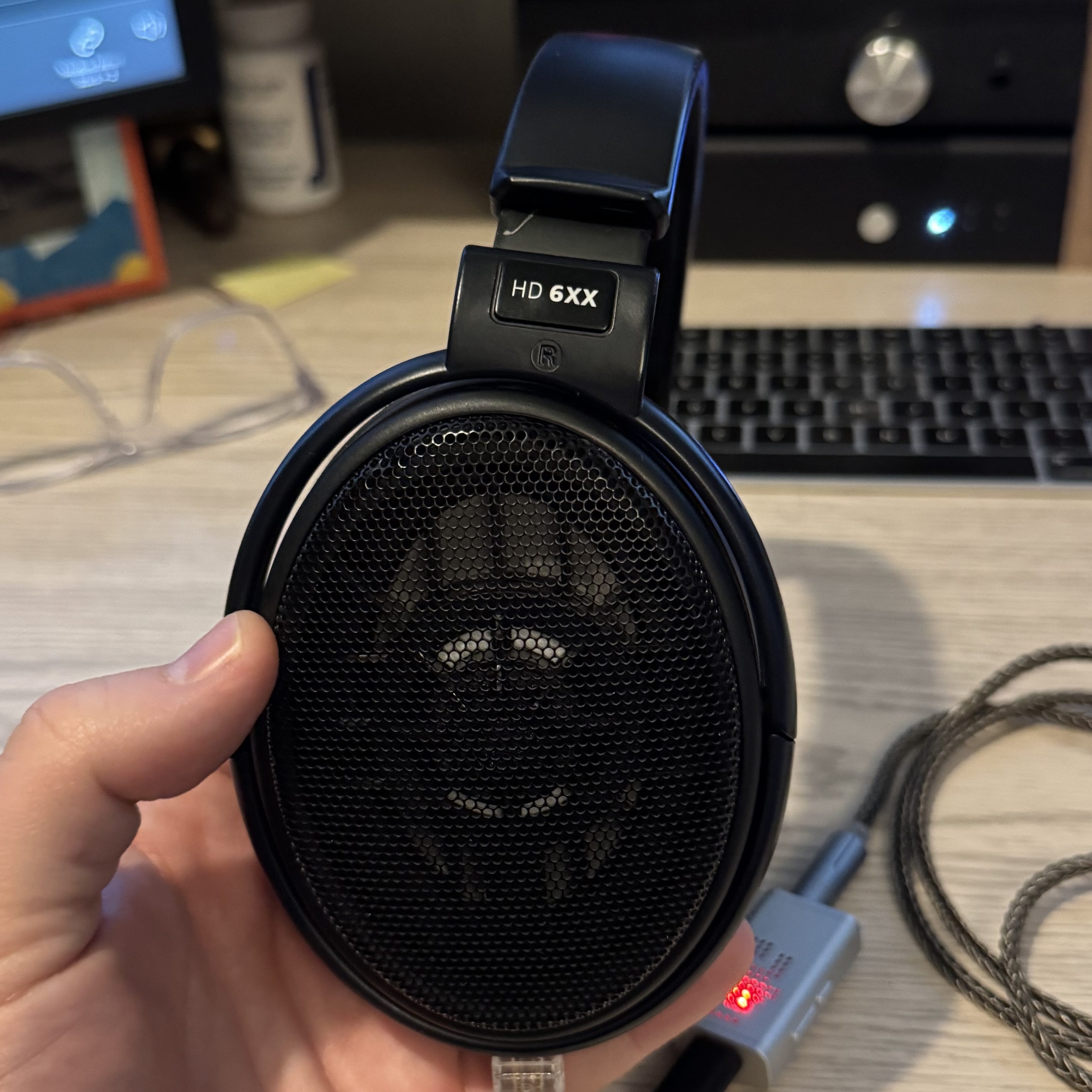
I really liked the original Momentums and Momentum 2s. I’ve been pretty unimpressed by the rest of Sennheisers more consumer-focused offerings (over-ear and in-ear); they’re often overly-bassy and muddy to my ears, and I’m generally pretty skeptical about most consumer-targeted Bluetooth offerings, but after some positive reviews by people whose opinion I respect, and after the mixed bag that was the Bose Quietcomfort SCs, I decided to give the current generation Momentum 4s a shot.
Review note:
Like the Focal Bathys and the Bose Quietcomfort SC, the Momentum 4 are intended to be used primarily as wireless ANC headphones via Bluetooth, so that’s the way I’ve done the majority of my testing. I’m doing most of my listening for this review with the Momentum 4 connected to my iPhone 15 running the Roon client, controlled from my Mac Studio.
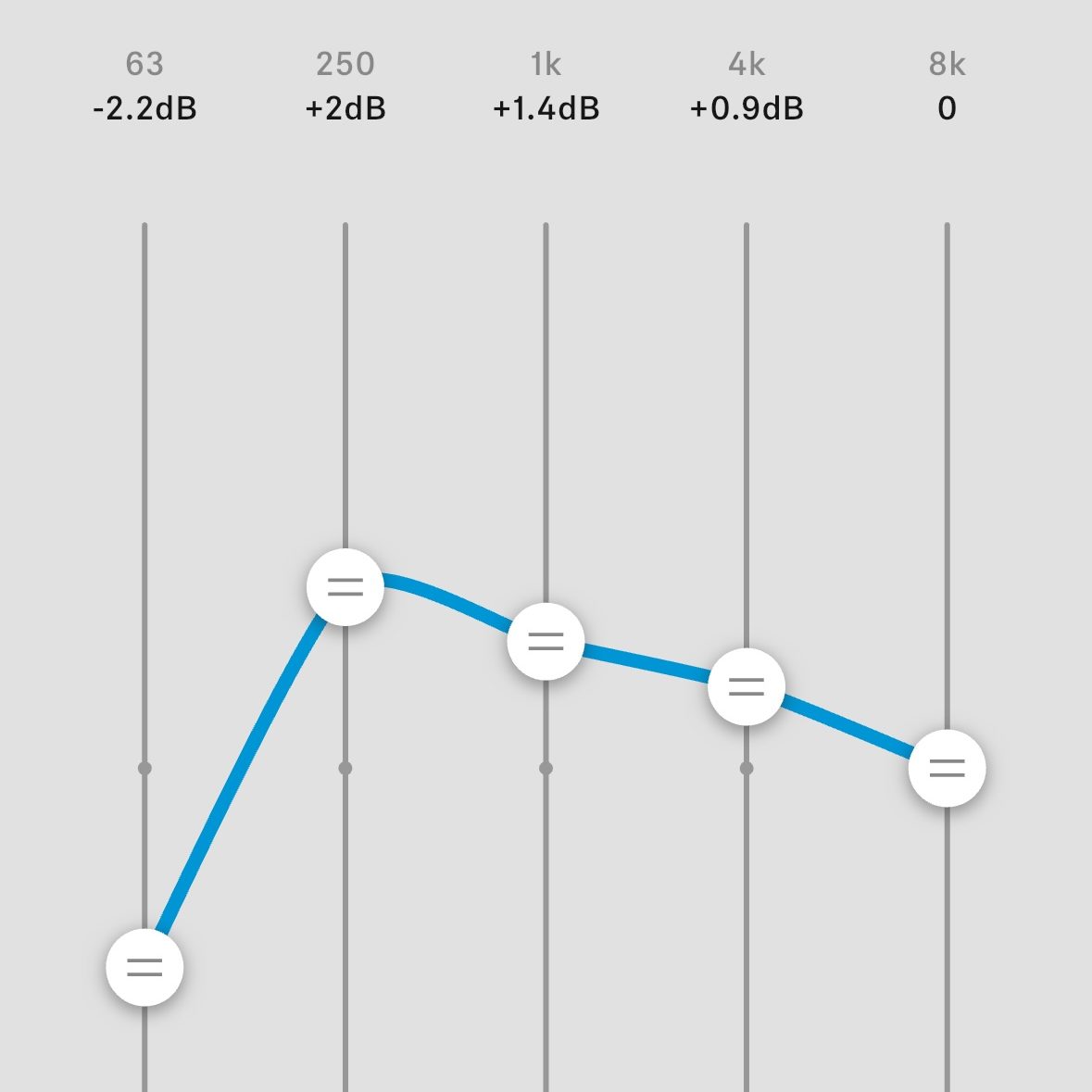
As noted in the Bathys review, I mostly prefer to test headphones with their default tuning, assuming that most people won’t take the time or make the effort necessary to use a third-party EQ. I make an exception for headphones where there is some kind of built in EQ, whether it’s on the device or via a free app. The Sennheiser Control+ app gives you a five-band EQ (63 Hz, 250 Hz, 1k Hz, 4k Hz, and 8k Hz, +6 dB to -6 dB), and I find the out of the box tune (“Neutral”) unpleasantly bassy, so I applied some basic EQ here:1
Even more than the Bathys, this is not a headphone that I’m going to use wired, either in DAC mode or with a 3.5 mm audio cable. For reference, here are my regular volume positions for reasoanble playback:
- Bluetooth via iPhone: 45-50 out of 100.
- Bluetooth via Mac Studio directly:
- USB-C via Mac Studio (Roon): ~20%
- USB-C via iPhone (Roon): 25/100
The basics.
The Momentum 4 (“M4”) is a consumer-focused, wireless, active noise canceling (ANC) headphone from venerated headphone maker Senneheiser. The Momentum line has been around for more than a decade. The M4 can be driven via 1) Bluetooth (supporting most major codecs, including AptX), 2) USB-C to a phone, computer, or other device, or 3) a proprietary (2.5? mm to) 3.5 mm cable,2 The M4 has both ANC and adaptive modes, and via update a few months ago, the ability to turn the ANC off entirely.3 Sennheiser reports a 60 hour battery life, and I don’t think I’ve charged them in the three weeks I’ve been using them intermittently so that seems about right.
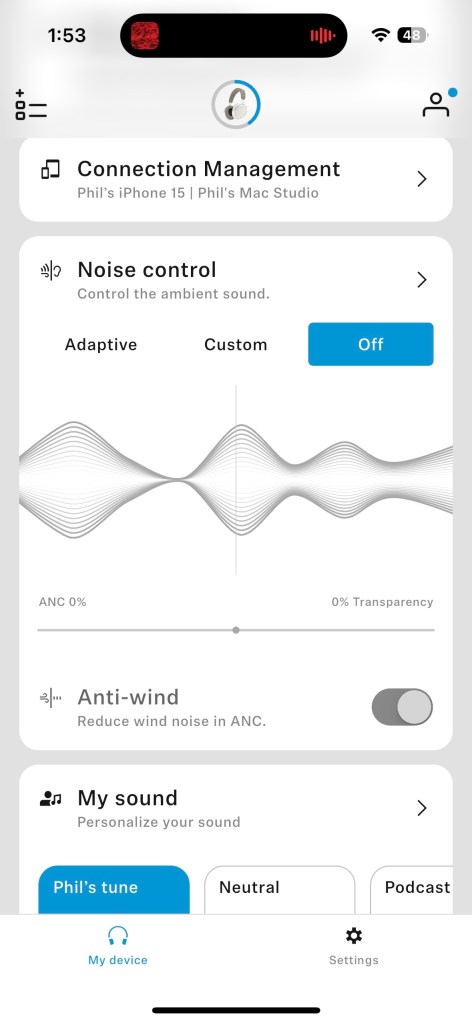
Sennheiser Total Control+ app. Sennheiser offers two free apps for use with the M4: the old Smart Control app, and the SmartControl+ app. I believe the former is intended mostly for older models, and I would absolutely recommend using the SmartControl+ app. The app allows you to choose two devices to connect at any one time,4 a visual interface for “noise control” (aka ANC, adaptive mode, and off), “My sound” (aka equalization), “Sound zones”,5 and some “find my headphone functionality.” The app is pretty well done and regularly updated with new features, though they made some odd choices, particularly with regards to the EQ screens.
[There’s an argument out there that products like this aren’t really audio products, but rather lifestyle products, and I get where that argument is coming from. For most wireless ANC products, the end goal isn’t quality sound–it’s noise isolation for specific kinds of use cases. I get it, but I don’t find it particularly interesting. At the end of the day, they’re still a headphone and should be considered as such. I underestand that Everclear’s end goal is to get you drunk, not to be an enjoyable experience, but that doesn’t mean it should be graded on a curve compared to better kinds of alcohol.]
Sound.
Sound is generally pretty good for a wireless, ANC headphone, but as I’ve pointed out a few times, you really shouldn’t be buying a headphone like this primarily for sound quality. Out of the box, the tuning is very consumer-friendly (aka bass cannon-y) and took quite a bit of EQ to get to a sound profile that works for my ears and tastes. Once adjusted, I’m genuinely surprised by how good these are at quiet music, not normally a strength for ANC headphones. On “What Did I Do?” you get both the hiss and the finger slides clearly.
While I really appreciate the ability to turn off ANC entirely, for me the overall sound feels very flattened and lifeless in that mode; maybe that’s why Focal doesn’t include something like it with the Bathys?
The soundstage/stereo separation is good, particularly for this kind of headphone. The guitar on “Love Can Damage Your Health (Laid Mix)” is pretty flattened into more of a side to side pan vs. a rotation, but that’s par for the course with most ANC headphones.
The dynamics are fine, though they’re a little compressed on a track like “It’s All So Incredibly Loud”. The microdynamics are also fine, though they’re better in the treble than in the bass (on “Angel (Blur Remix)”, the treble tones are bright and crisp with the bassier bell tones a little less clear).
Bass is the strength of this headphone, perhaps a little too much so for my taste! Out of the box, the bass is so enhanced as to be muddy even with the bass boost turned off; I cannot imagine what someone would be listening to such that they would want to use the bass boost option. For me, the bass boost ends up generating a feeling a lot like overpressure, but an order of magnitude more. The good news is that when you turn the bass down a bit (or a lot in my case), it gets a lot crisper and more precise and the mud mostly falls away. [Note from editing: even my tune is almost nauseatingly bass-y on “Limit To Your Love.” I will be skipping that track on these headphones!]

The mid-range is generally fine, at least with my tune on the M4. On the default tune (especially with bass boost turned on), the mid-bass swallows the lower end of the mid-range and leaves it weak and indistinct. As I have them tuned, both male and female vocals are reproduced decently and have generally correct timbre.
The treble is solid but nothing special. It’s occasionally a little spikey (like the beginning of “Nobody Speak”), but that’s relatively uncommon and isolated to a couple of tracks. Generally you’ll get clear, crisp treble without being harsh or sibilant, at least as I have it tuned.
Amplifier compatibility. Use these with their build in amplifiers. If you must use them with an external amp via the proprietary 3.5 mm cable, these are 60 Ohm, 106 dB/mW headphones in passive mode, so they should run reasonably well from most amplifiers (or even a dongle).
Noise canceling.
The ANC on the M4 is competent but does not particularly stand out from the field. I put it about on par with both the Focal Bathys and the Sony XM line, slightly behind the Bose 700/QC, and substantially behind the Apple Airpods Pro2 and Max (particularly for intermittent, sharp noises). They’re good for consistent sounds, particularly in the bassier regions, but struggle with more transient and higher pitched sounds. I would use these on a plane or bus without hesitation, but I probably wouldn’t use them for the gym, working in the yard, mowing, etc.
I don’t actually love the way that the M4 handle noise canceling. There are three modes: Adaptive (where software makes decisions about where it should fall on the ANC vs. transparency spectrum), Custom (where you use a slider in the app from 100% ANC to 100% transparency), and Off. In my experience, Adaptive mode is pretty inconsistent, and being in Adaptive mode appears to turn off the touch controls (*shudder*; more on this later) for transparency. Custom is fine; it lets you decide where you want to be on the spectrum, and the touch controls (while a little wonky) give you reasonably good control over your settings. Full ANC is pretty good, and I’d say that the M4s transparency mode is as good as any of its competitors other than the Airpods. As discussed above, “Off” changes the sound profile in ways that I personally don’t like.
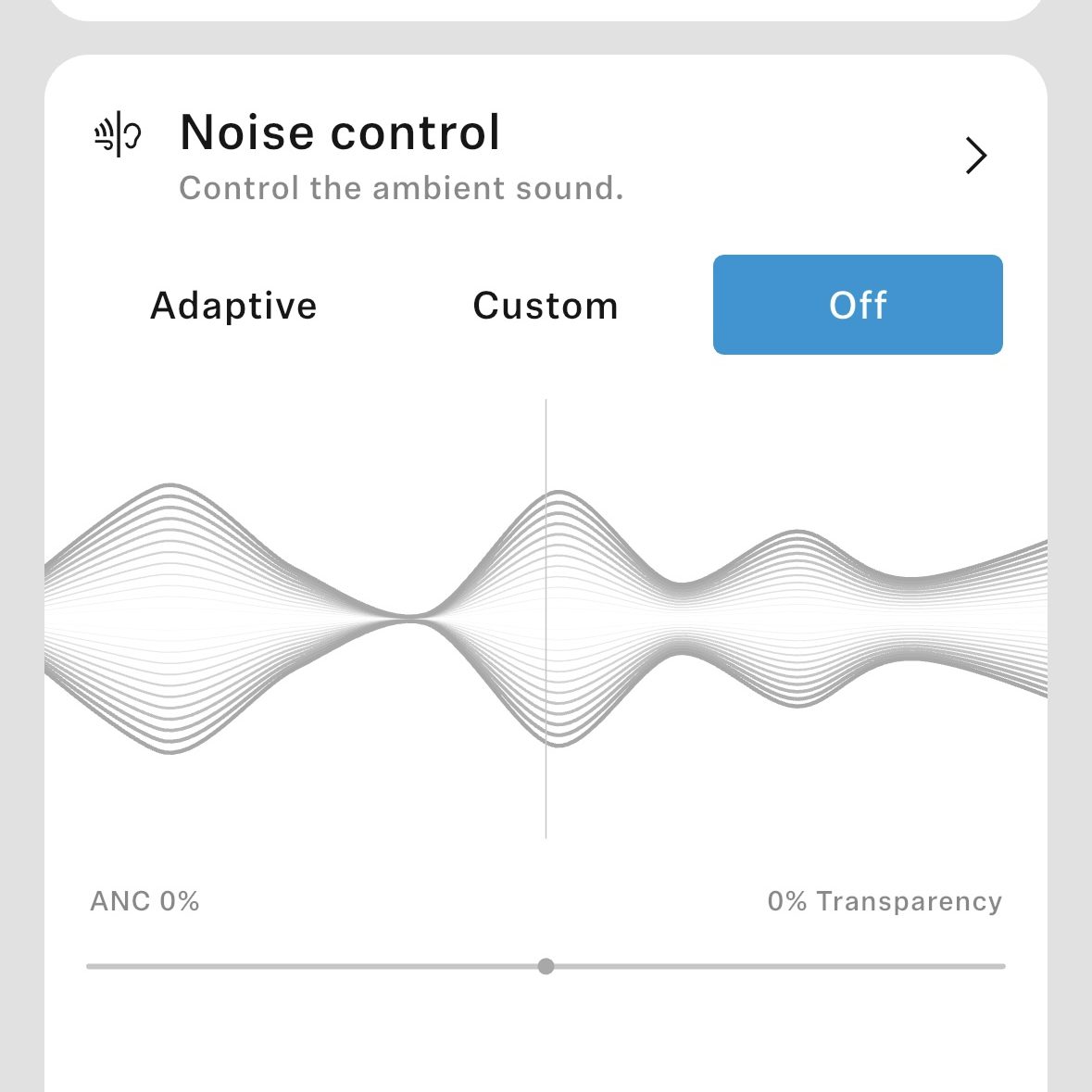
Personally, I find the overpressure on the M4 somewhere between the Airpods Max (mostly not noticeable) and the Bathys (unpleasant after a couple of hours). It doesn’t make my head hurt immediately, but I’d be reluctant to wear them all day because of the pressure. It’s MUCH better in transparency mode, though. Also, you really must leave wind control on; these are so loud without it even in a light wind.
Build.
Controls.
I don’t know why companies are so enamored of touch controls over physical buttons, especially on a device that’s worn on the head and designed to be used at least partially outside. The M4 has one button, on the right cup, and it is the on/off/pairing button. You turn on the headphone by a surprisingly long press of the button, and either turn them off or enter pairing mode by a long or longer press of the button while they’re turned on. The outside of the right cup is also a touch panel, with the following functionality:
- Tap (in theory pause/play, but also sometimes transparency mode? I’m so confused.)
- Swipe up: volume up
- Swipe down: volume down
- Swipe forward/right: skip track
- Swipe back/left: restart/previous track
- Pinch in: shift slider from transparent to ANC (only in Custom mode)
- Pinch out: shift slider from ANC to transparent (only in Custom mode)
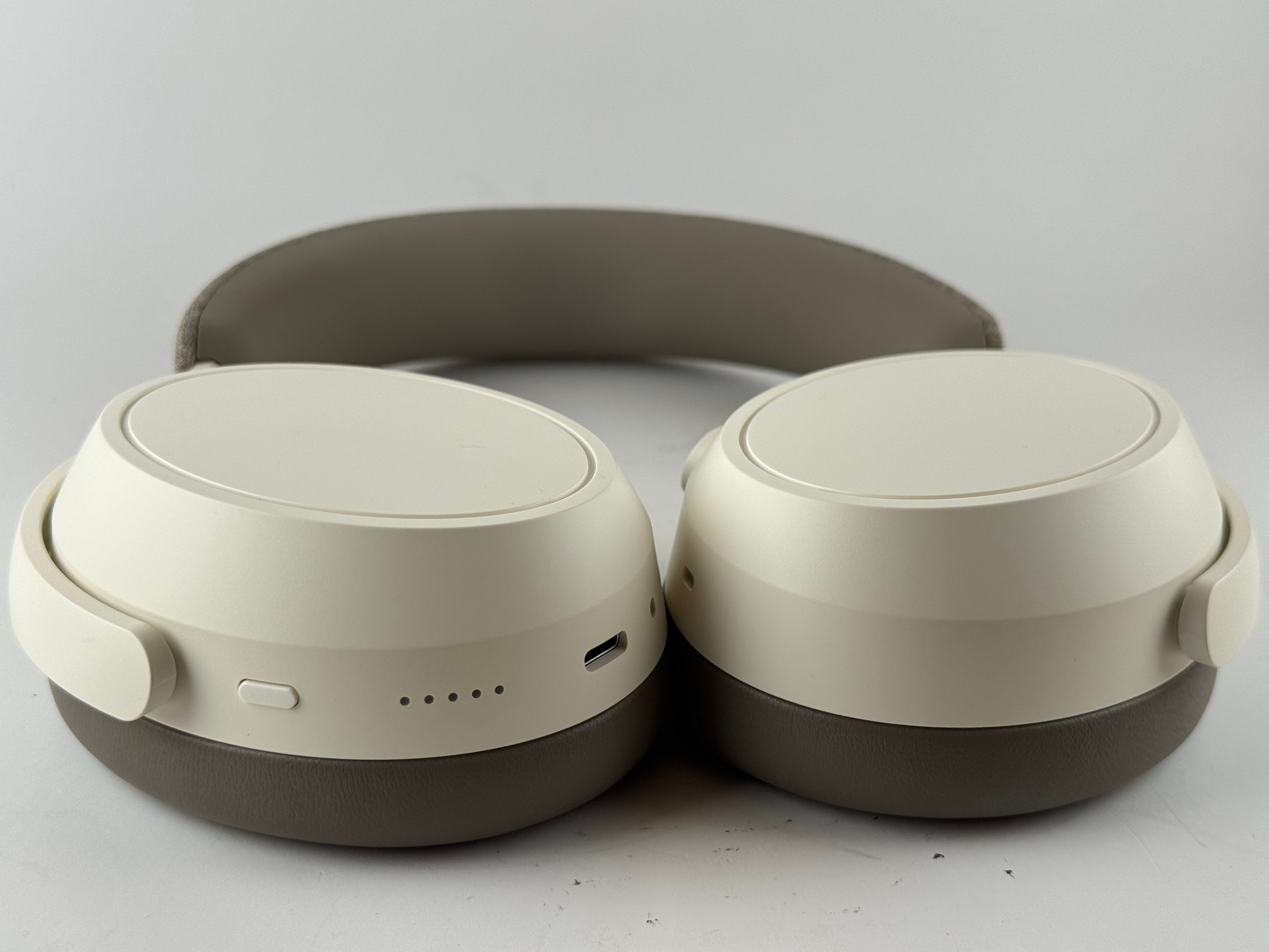
I don’t actually mind swiping up and down for volume, though it’s easy if you’re not paying attention to accidentally swipe diagonally with unpredictable results. The cup is also highly microphonic in transparency mode, which is not super pleasant. I think these controls are at least more intuitive than the Bose 700, so I mostly won’t have to look them up when I use the headphones, but they’re not great.
Call me old fashioned, but I really miss headphones with physical buttons for most functions. In the end this isn’t any worse than most of its competitors but spending a few weeks with it really makes me appreciate the physical buttons on the Bathys and Dyson Zone a lot more. I find myself mostly using my Apple Watch for controls with the M4.
[A note from editing: it turns out that by default, these pause if you remove the headphone, except that it appears to only be monitoring the right earcup. If you lift or slide the left earcup, music will continue to play.]
Comfort.
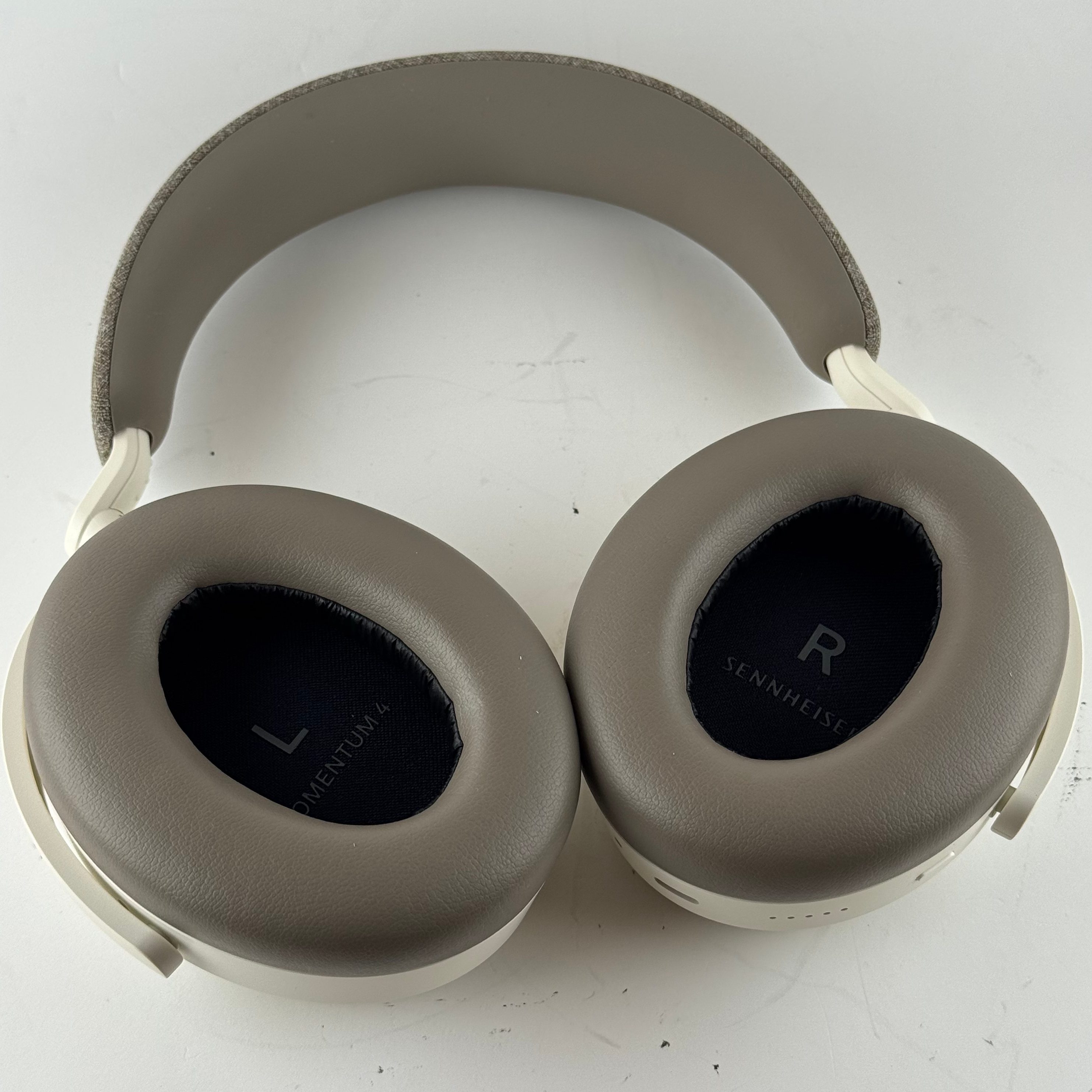
The M4 are a pretty comfortable headphone for me. They have reasonable clamp force (similar to the Bose 700/QC and Sony XM4-6, and a little less than the Bathys), such that they’ll slide a little on very fast head movements but generally feel pretty secure for movements you’re likely to make in an office environment. They’re also reasonably light at slightly less than 300 grams, compared to the 350+ for the Bathys, Max, Maxwell, etc. The headband and cups do a pretty decent job of balancing out the weight, so I don’t get a hotspot. I do wish the inside of the cups was slightly larger and slightly deeper, as I have to set them behind my ears and slide them on forward, slightly folding my pinnae. I will also say that they’re reasonably comfortable in a warm environment; they’re still going to be way stuffier than an open-back or a pair of earbuds, but I’m much less warm sitting in my office with these on than I have been with the Bathys, Zone, Maxwell, etc.
Construction.
The M4 are mostly plastic construction with pleather ear cups. They feel reasonably well built, but also pretty cheap compared to something like the Bathys (reasonably, because they are, you know, a lot cheaper). The band has pretty good flex and the cups rotate in two dimensions, making it pretty easy to get a good seal on my head. All in all, they feel like a headphone in this price range and style should.
The M4 also come with a nice, semi-rigid cloth case and accessories, including the 2.5 mm to 3.5 mm audio cable, a USB-C charging cable, and a plane audio adapter like the ones that Bose used to ship with their headphones. It’s a reasonable package, especially at their current prices.

Connectivity.
The M4 can be connected via Bluetooth, USB-C, or a proprietary 2.5 mm to 3.5 mm cable. For Bluetooth, the M4 offers most of the major Bluetooth codecs, including AptX support for (theoretically) high-res listening via Bluetooth. I’m generally pleased by the Bluetooth implementation; connections are both easy to make and seem to be as robust as Bluetooth can be, with few issues and pretty decent range before dropouts.
Appearance.
It’s dumb, but this is one of my biggest complaints with the Momentum. The original Momentum and the Momentum 2 were a beautiful, almost-steampunk-y design that wouldn’t have been far out of line on a Meze headphone, but the later generations seem hell-bent on convergently evolving to be indistinguishable from the rest of the marketspace. Absent the subtle(ish) Sennheiser logo on the temples, I’m not sure I’d be able to pick these out at a distance from the Sony XM4-6 range, or some of the other competitors. It’s dumb and I hate it.6
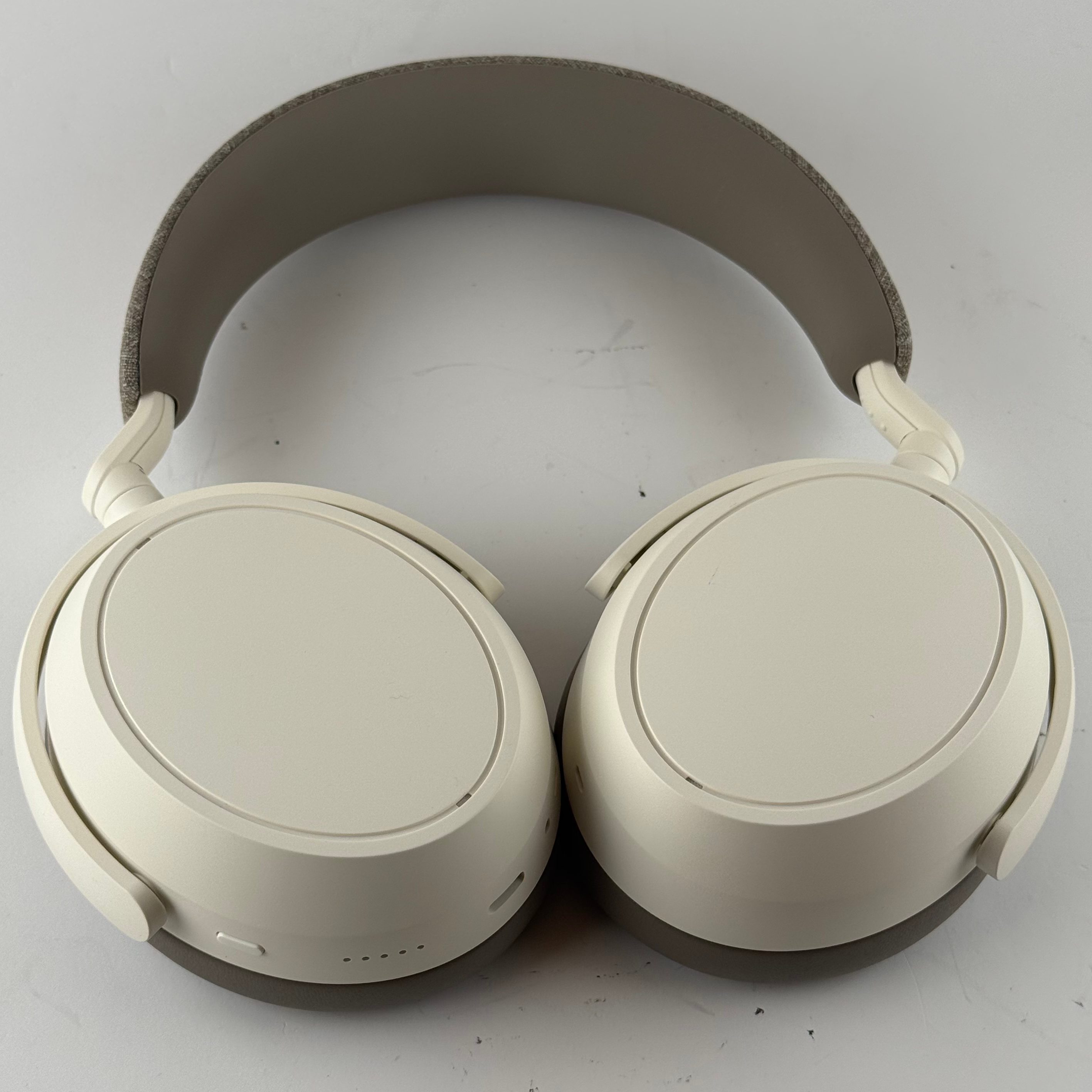
That said, at least Sennheiser offers a couple of different colorways. While I like the black and copper variant, my preference is (weirdly) either the white version or the pride version; if I’d been able to find a pride version at the price point I paid for these, I’d have taken that one (to piss off homophobes, if nothing else). At least they look a LITTLE different than the Sonys.
Value/Comparisons.
I’ve done a lot of comparisons over the last couple months of the various ANC offerings, so I’ll mostly summarize them here.7
Bose 700/Quietcomfort SC/QC45.
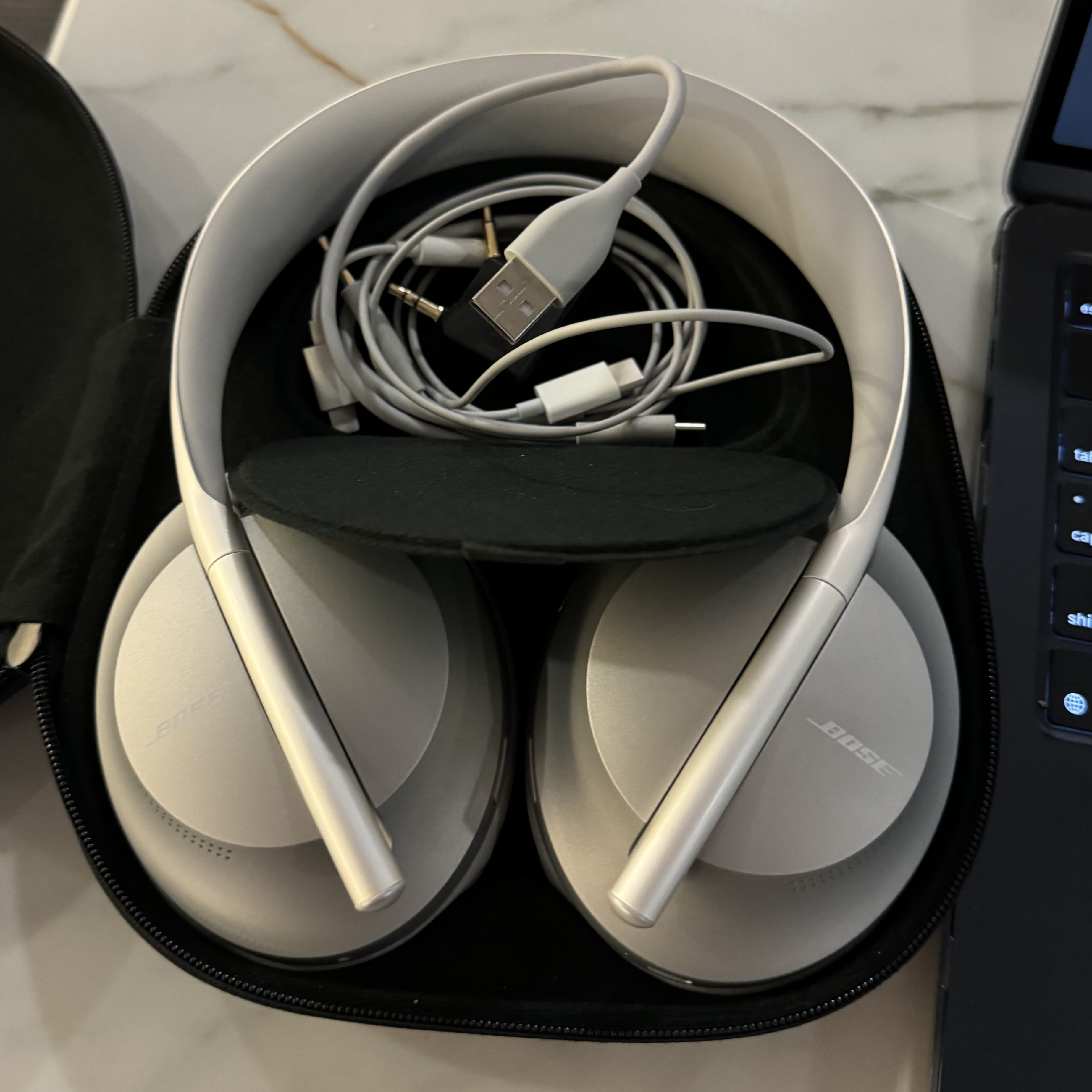
I think that the Bose offerings pretty clearly have better ANC than the M4; the M4 is competent for consistent, bassy noises like airplanes, but struggle a lot more with intermittent or higher-frequency noise (this is true of the Bose offerings as well, but at least to my ear they do slightly better). As tuned out of the box, I also prefer the Bose offerings’ sound quality to the M4, but once I fix the M4’s frequency response issues, I much prefer the sound quality I get from them. Both appear to be retailing around $300 right now; if you’re willing to spend some time playing with the EQ function in the Sennheiser app (or you want muddy bass cannons, no judgment8), I’d recommend the M4 over the Bose lineup. If you’re not willing to EQ, stick with the Bose.
Focal Bathys.
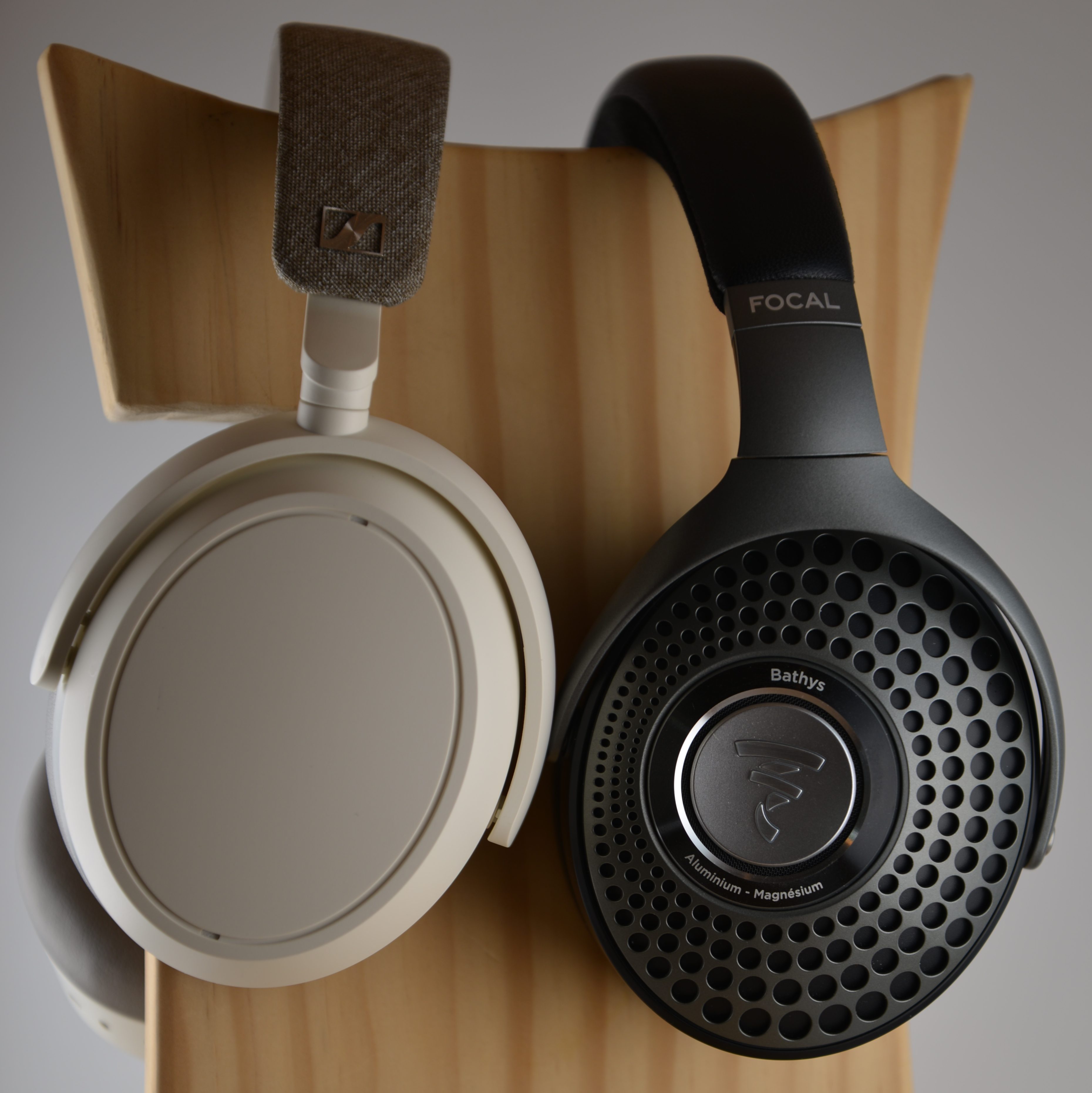
I prefer both the ANC and the sound quality of the Bathys over the M4, but they’re also nearly twice as expensive new. (Hell, I paid more for a used Bathys than the M4 are selling for new, now, and I felt great about that price.) I also think that the M4 are going to be more comfortable for most people (though the Focals tend to fit well on my noggin), and they will frankly look less ridiculous when out in public. The Bathys are large bois.9 If you really care about sound quality, the Bathys are the better choice. For most people, though, the M4s are a much more reasonable option.
Airpods Pro2/Max.
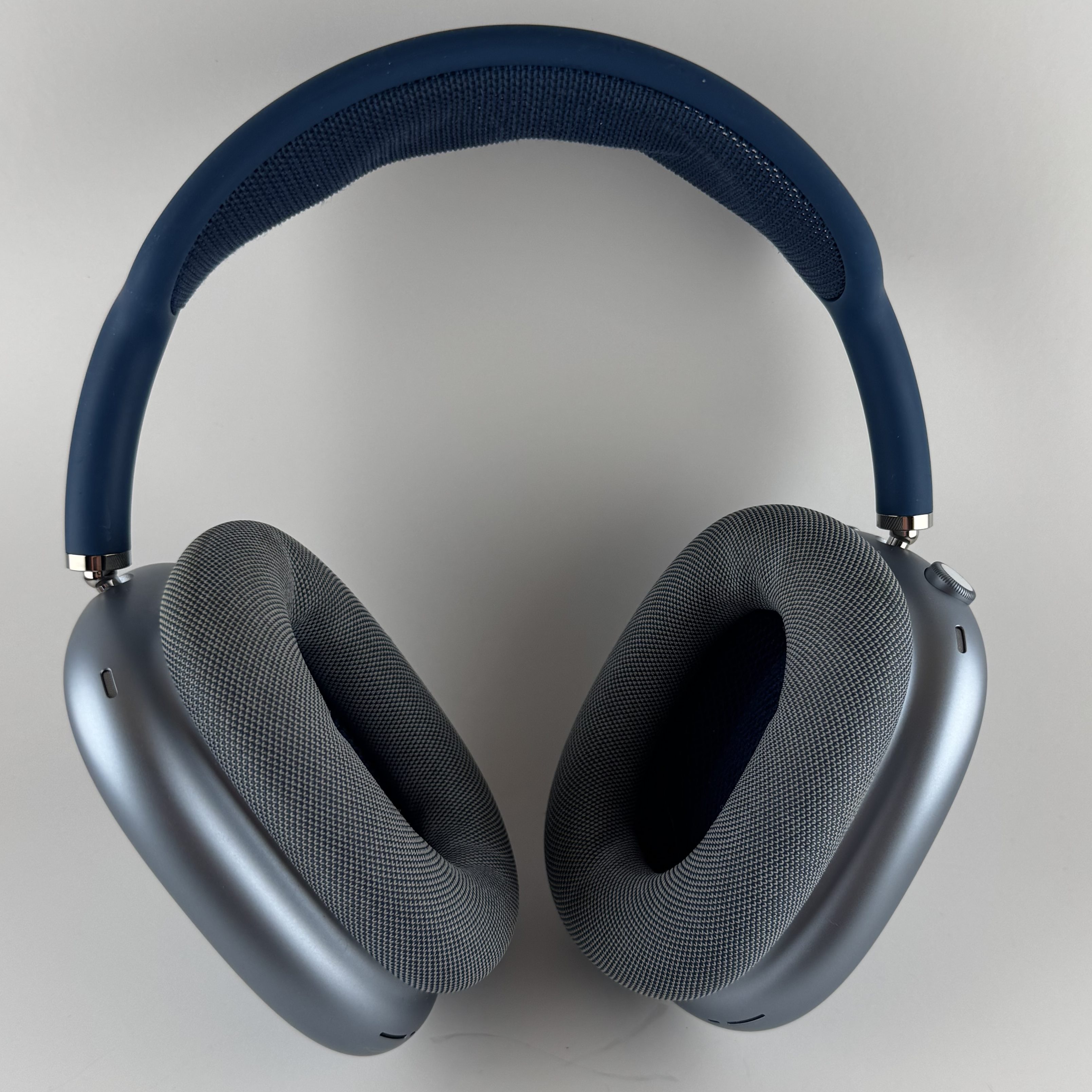
This is the rub, isn’t it? Clearly the Max are in a different price category than the M4 so we shouldn’t be surprised that they’re a much better headphone, both in terms of sound quality and pricing. I’m pretty sure I’d paid like … $300 for my used Max back in 2022, and at that price point I’d 100% take the Max over the M4, especially if you’re already in the ecosystem. The more interesting comparison is the Airpods Pro2, which are frequently on sale under $200. Despite being in-ears, I still think the ANC is better on the Pro2 than the M4, and the sound profile (right out of the box) is better than the sound quality I get out of the M4 after a few hours of screwing around and fine-tuning the EQ settings. I think I’m taking the Pro2 nine times out of ten, though if you’re one of those unfortunate folks who can’t get a good fit or comfortably wear the Pro2, the M4 is a perfectly good over-ear alternative.
Picun F5.
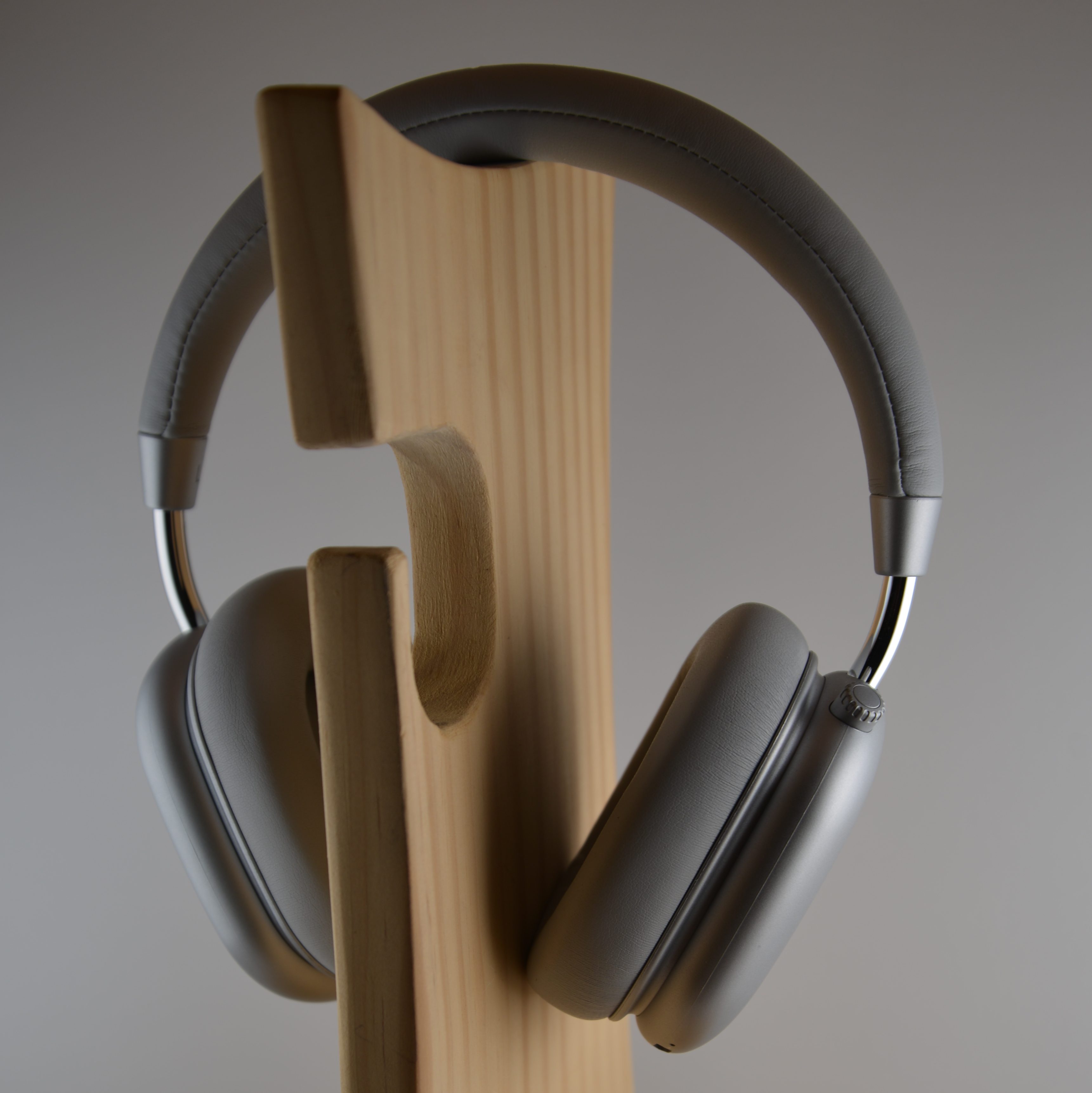
Similar ANC, worse sound quality (out of the box), better sound quality (after tuning and EQ). The M4 are a much more comfortable and better built headphone, and after applying a decent EQ profile I much prefer the M4 over the ($35) F5. If you’re not going to EQ, honestly … yeah, I’m probably taking the F5.
Dyson Zone.10
This is a weird one, and I’ll withhold judgment until I’ve spent more time with the Zone, but my early impression is that if you can get past the ridiculous nature and appearance of the Zone, and discard the air purifier nonsense (and ignore the $950 MSRP11), I think the Zone actually edges the M4 out for both ANC and sound quality. But they are deeply funky, and I’m pretty sure my girlfriend would break up with me if I wore them around her in public.
If you want sound, and don’t care about appearance, these are frequently on sale and I genuinely think I might prefer them.12

Sony/B&O/B&W offerings.
I’ve been clear about my opinion of most of these offerings; from my Bathys review: “I honestly think all of the products I’ve heard from these manufacturers sound pretty awful (except, maybe, the Sony XM6 *if* you have access to pretty good EQ, as in EQ better than the app gives you). I would never recommend any of them over anything else in this group, including the [$35] F5.” That’s equally true of the M4; I would take the M4 (even out of the box) over any of the Sony, B&O, and B&W ANC offerings.
Also Crinacle just released a review of the Sony XM6 and made a point I hadn’t really thought through, regarding the weird two-stage adaptive ANC that Sony uses where putting them on triggers an initial, light ANC stage while the mics measure the world around you, with the real ANC only kicking in some time later IF it’s not disrupted by a leakage caused by something like, say, bulky glasses. I haven’t spent any meaningful time with a Sony headphone since before I got LASIK, so it’s possible that I should give their ANC another chance. (Their sound quality still seems awful, though.)
Phil’s (Updated) Hierarchy of ANC13
For my money, and based on current prices for new/refurbished, if I were buying an ANC headphone for use on flights, commutes, or consistently loud environments, I’d take them in this order: Focal Bathys, Airpods Max, Airpods Pro2, Sennheiser Momentum 4, Bose 700, Bose Quietcomfort SC, Picun F5, Sony WH-1000XM6, Beats Studio Wireless, Airpods Gen 4 ANC. If I were particularly concerned about breakage or loss, I’d probably go with the F5, straight-up.
Overall.
I think I’ve been unfair in the past in my attitude towards the Momentum 4. While they’re not the best ANC option on the market, and while their tuning out of the box is really, really bad to my taste, these are a competently designed and made headphone. Sennheiser has also given you a good set of tools to personalize them and make them better than they are at baseline. They’re also a really comfortable headphone for me, both in terms of build comfort AND the lesser overpressure than some comparable options. If you can get them around the same price as a pair of Bose Quietcomforts, and are willing to spend a little time on EQ, I’d take these.
I’m genuinely uncertain about where these end up in my collection. I think I’m probably not going to ever use them on a plane (I prefer the Bathys, the Max, and maybe the Zone for both sound quality and ANC for that use case). I’m probably not going to use them at my desk, as I prefer something wired (or at least the Bathys in DAC mode). Maybe working around my house? They’re light enough and cool enough that they may be a good fit for physical activity where I want some noise isolation and don’t want to deal with a wire, though I’m struggling a little to figure out where I’d use them over the Airpods Pro 2. They’re also reasonably compact, particularly in their case, have a good battery life, and have a better-than-most transparency mode, so they would be easy enough to leave in my laptop bag on a semi-permanent basis.
Knowing what I know now, and given my existing collection of options, I wouldn’t buy these at their current price of $300, and certainly wouldn’t at their MSRP. If you can get a pair around what I paid ($160), they’re a steal (and Woot.com pretty regularly has them on sale, new, at $160, if you happen to catch them at the right moment). If you are in the market for a good, lightweight ANC headphone and don’t have one, I’d take these over the Bose Quietcomfort if they’re even vaguely comparable in cost (like if you missed the Costco sale where they were around $200). And I would take these every day and twice on Sunday compared to almost any of the Sony/B&O/B&W options.
These will be my default over-ear ANC recommendation going forward, at least for anyone who doesn’t want to spent $500+, and I owe some folks on a Reddit an apology for mocking their favorite headphones.
#reviews #headphones #sennheiser #6XX #anc #spatialaudio #meh #2025 #99noir #meze #sunglasses #overear #cans #hifiman #arya #stealth #editionxs #budget #hahahaha #iems #quickreview
- The EQ doesn’t apply until you back out of the setting screen, which makes it really hard to fine-tune on the fly. It’s … a silly choice. ↩︎
- Some basic testing suggests that the headphones will still be “on” when using them via the 3.5 mm cable, rather than running as a truly passive pair of headphones. ↩︎
- Hey Focal, I’m looking at you very meaningfully right now. ↩︎
- Personally, I would never do this. I have the Momentum 4 connected to my phone and Mac Studio right now, and every time the Mac has an alert it stops music play back and switches. ↩︎
- A pretty cool idea; it lets you set combinations of settings for particular physical locations, but it’s not something I personally fine particularly useful given my use case AND how easy it is to manually swap settings. ↩︎
- Yes, I know that the XM5-6 don’t use a yoke system. They still look WAY too much alike. ↩︎
- Turns out, not a lot of folks have measured the Sennheiser Momentum 4 so it’s hard to get good comparison graphs. Also, the bass tune is so bad it’s of limited help; measuring a mudpit against a decent tuning on anything else isn’t particularly meaningful. 🤷♂️ ↩︎
- Okay, some judgment. ↩︎
- Though no where near as large as the Dyson Zone; more on that soon. ↩︎
- Yes, this Dyson Zone. No, I’m not drunk. At least not at this moment. Explanation in the forthcoming review. ↩︎
- I think I paid around $175 + international shipping. ↩︎
- I am contemplating a tear-down project to remove all of the fan paraphernalia from the Zone; if you do, apparently they become pretty functionally identical to the new Dyson OnTrac, a pretty good $500 ANC headphone in their own right. ↩︎
- As of June 29, 2025. ↩︎
 Phil's Superpower of Enthusiasm
Leave a comment