[MSRP $199.99, currently available on Drop.com for October delivery as of September 2025, occasionally on Black Friday or other sales around $180.]
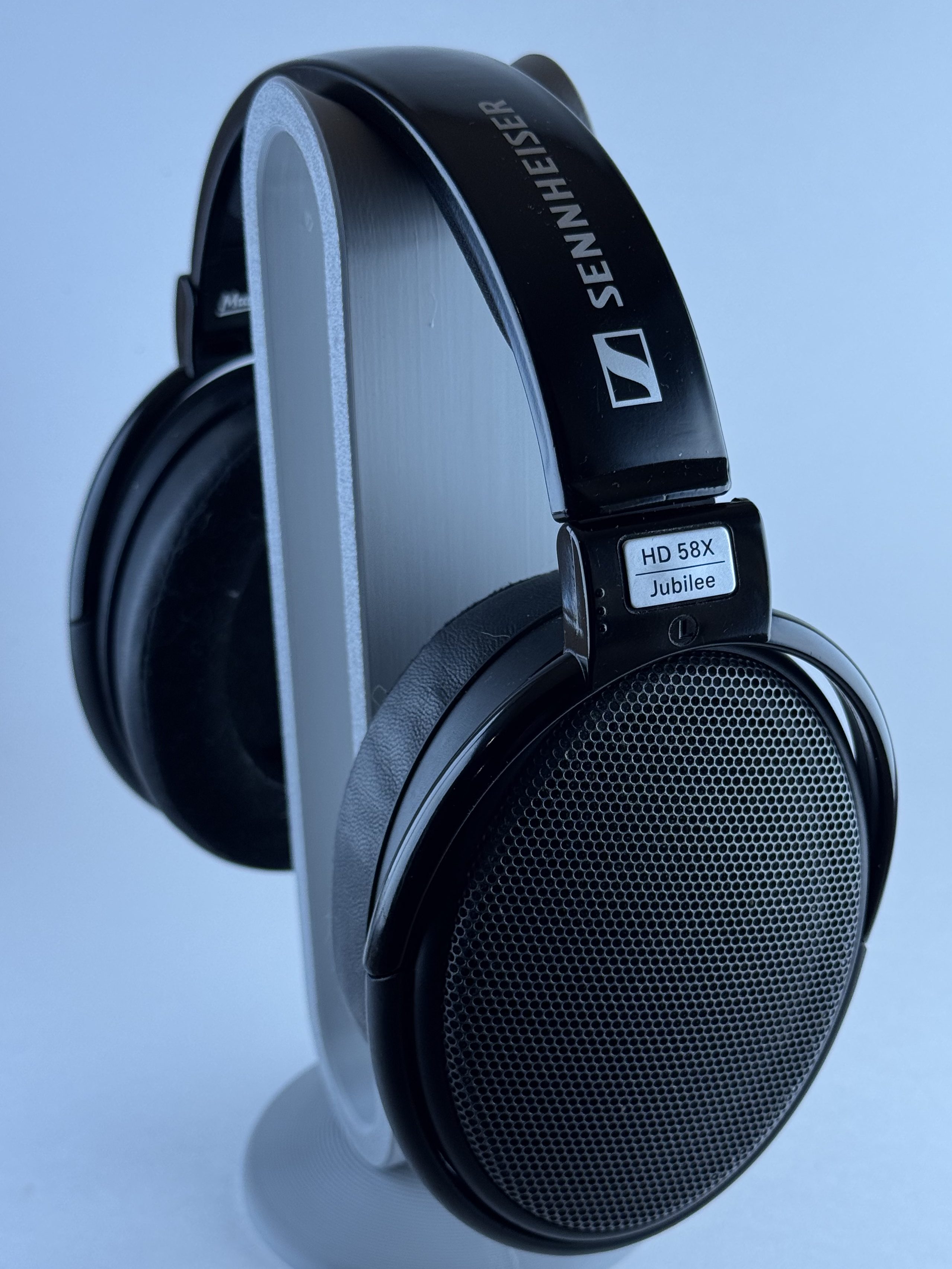
[Tl;dr: The Sennheiser x Drop HD 58X are another excellent collaboration between Sennheiser and Drop (formerly Massdrop). They’re a more 6XX-y version of the 6XX, with even more bass and slightly more tamed treble. The trade off for that tuning shift is a noticeable reduction in detail-retrieval (at least to my perception), and it’s really a matter of preference if you would rather have the 6XX or the more 6XXy 58X. For me, the 6XX really is the sweet spot in terms of tuning preference vs. detail, though I’d happily listen to the 58X anytime. Add into the equation the fact that the 58X are $20 more expensive than the 6XX at the moment (the 6XX are on sale, as they often are), and I’d suggest most people get the 6XX and add a bit of a bass shelf via EQ.]
Cost-agnostic: 7 out of 10 Denalis
Cost-sensitive: 8 out of 10 Denalis
- Intro to the intro: Quick Reviews!
- Intro
- The basics
- Overall impressions
- Sound
- Build
- Value/Comparisons
- Overall
Intro to the intro: Quick Reviews!
I’ve been leaning into a new feature here at Phil’s Superpower of Enthusiasm, Quick Reviews! There are a number of things that I’d love to get quick notes down on for my own edification/memory, but that I don’t want to spend the 10-15 hours I devote to most of my (overly?) in-depth reviews. Some of these will be things that aren’t in production anymore (so it’s less likely anyone will read a review), or are extra niche, or are things that I didn’t particularly like but want to be able to point people to my reasoning, or that are in a category I don’t spend a lot of time with (like IEMs). So far, the “quick” reviews haven’t been all that quick. Today, I’m going to try to do better with the last of the Sennheiser 6 series reviews, the HD 58X!
Intro
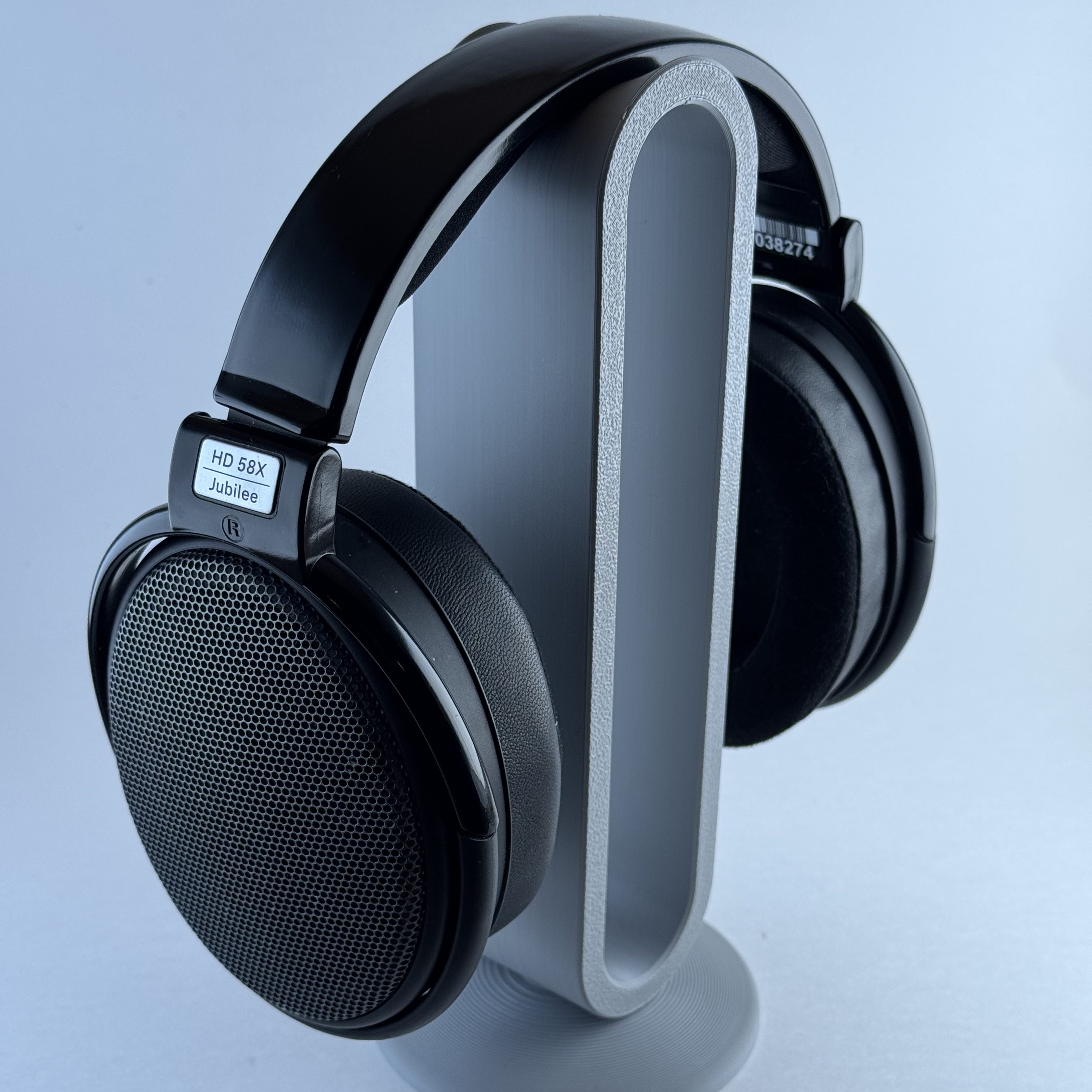
I have have long been a fan of Sennheiser’s headphones; my first pair of over-ears was a old 500 series when I was in middle school that I used until my brother stepped on them,3 and my first real pair of audiophile grade headphones when I was an apartment-dweller was the truly excellent Sennheiser x Massdrop (now just Drop) 6XX back in 2016 or 2017. I’ve owned the HD 600, at least three sets of Sennheiser RS175s, the original (wired) Momentum, the HD 515, the Epos x Drop PC38X,4 and two pairs of Momentum 4s as well as a couple of their wireless earbuds.
I like the 6XX enough that they continue to be a regular listen for me, despite the fact that I own some much more expensive headphones (some of which I think sound substantially and objectively better); there’s both a real nostalgia factor with the 6XX as well as a frequency response that I really love for much of the music I listen to (clean but not emphasized bass, beautiful mids, mellow treble, excellent reproduction of silence, etc.), but I’d never really bothered to try the other modern Sennheisers until pretty recently when a friend lent me a pair of the HD 660S and I snagged a pair of HD 600s on Prime Day sale.
I was never all that interested in the 58X. I think that’s in part because the lower original price point made them seem like a downgraded version of my beloved 6XX rather than a flagship product in their own right, but when a friend offered to let try them out I jumped at the opportunity. Color me reasonably impressed.
Review notes
Terminology: I’m going to be referring to the HD 600/6XX/650 family a lot in this review, and I will refer to them collectively as the 6X0. General modern consensus seems to be that the differences between these three models (particularly between the almost identical 650 & 6XX) may be smaller than the unit variation within each model, which largely comports with my own experience with the 600/6XX in my collection; I can hear some consistent but minor differences, but I don’t know if that’s because of the design differences or just my specific units.
While the 58X Jubilee starts with the number 5 instead of 6, it’s clearly at least an honorary member of the 600 club because of how similar it is in both build and sound to the 6X0s, and how much different5 they are than anything in the 500 series.6
Testing rig: Based on my philosophy on the allocation of resources in headfi, except where otherwise noted I’m going to primarily be testing these with a Schiit Modi/Magni stack, running single-ended via a Hart interconnect cable and connected via USB-C to a custom gaming PC running the Roon client.
EQ: As noted in the Bathys review, I mostly prefer to test headphones with their default tuning, assuming that most people won’t take the time or make the effort necessary to use a third-party EQ. And like most Sennheiser 6-series products, these don’t need EQ, though they may benefit from a bit of tweaking on the margins and they take it quite well, but I found them pleasantly tuned out of the box.
Volume: Here are the volume settings I use with the Sennheiser x Drop HD 58X Jubilee (unless otherwise noted, running via Roon with no headroom management, playing Daft Punk’s “Face to Face”):
- Mimir/Jotunheim 2 (Mimir has a -15 dB pregain applied via Forkbeard): low gain, 10:00 (balanced); low gain, 11:45 (single-ended)
- Modius/Magnius: low gain, 10:30(single-ended)
- Modi/Magni: low gain, 8:45
- Chord Mojo: white, clear, clear,
- dark red7
- North American Apple dongle: 33 (Mac Studio, running from Roon in exclusive mode), 54 (iPhone running in Roon)
My torture testing list: Apple, Tidal, Spotify.]
The basics
Before there was an HD 6XX, there was an HD 650. Before the HD 650, an HD 600. And before the HD 600, the legendary HD 580 Precision (and in the interim, the original HD 580 Jubilee). After the wild (and on-going!) success of the Massdrop x Sennheiser 6XX collaboration, in 2018 Sennheiser and Massdrop (now Drop) partnered together again to release another collaboration headphone with a classic name, the HD 58X Jubilee. Initially released for $150, they’ve increased to $199.
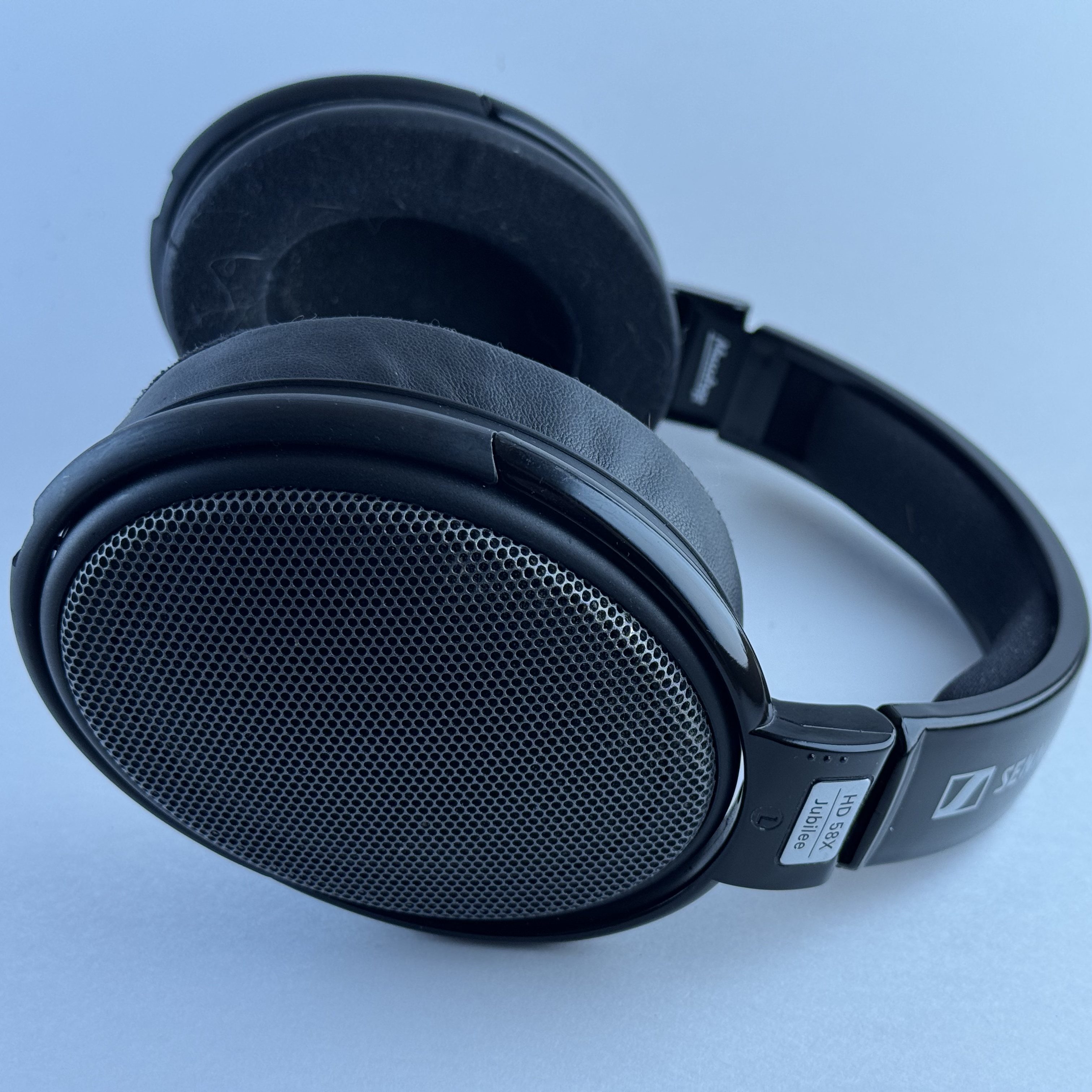
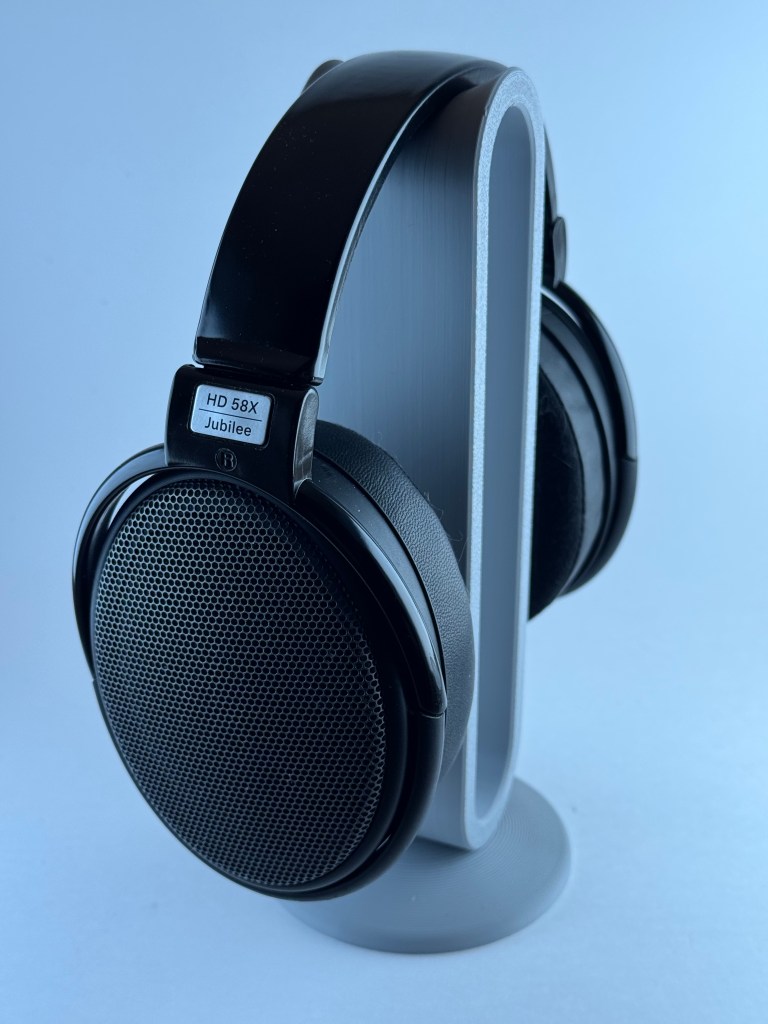
The 58X is a passive, open-back headphone weighing in at a pretty light 260 grams. While they’re physically pretty close to identical to the 6XX, they are easier to drive at 150 Ohms of impedance and a sound pressure level of 104 dB/V. While it is named the 58X Jubilee in homage to the original 580 Precision and 580 Jubilee, it draws more from the 6X0 line and most of the parts are interchangeable with the 600/6XX/650 rather than the other members of the current Sennheiser 500 series. This means it also has a pretty robust market for third-party parts, including pads.
Overall impressions
While they’re a more consumer-friendly tune than anything else in the 6X0 family, they retain some of their 600 series heritage with excellent midrange (particularly for vocals), reasonable resolution, comfort, etc., but they bring the bass in a way that none of the others do. The trade off for that is some of the detail and resolution, particularly in the treble. They’re really nice headphones, and my pre-conceived notion of them as a cheaper version of the 6XX is certainly wrong, though I think I’ll stick with my 6XX for now.
If you like the 6X0 but really just want more bass without having to fiddle with EQ, the HD 58X might be for you though.
Sound
Though they’re not as resolving as the HD 600/650/6XX,8 the 58X are still a very nice reference headphone. They do address a couple of the knocks on the 6X0, in particular the soundstage. One of the ways that I can tell which I’m wearing while I’ve been A/B’ing the 6XX and 58X is that the 6XX is a VERY intimate and immediate headphone, with most vocals and instruments seeming to be inside your head. By contrast, more of the sound on the 58X comes from the sides, though like the 6XX it has a pretty flattened front-to-back soundstage. It’s not a huge difference, but it’s quite distinct (particularly on spatially-interesting songs like “Love Can Damage Your Health (Laid Mix)”.
The dynamics are solid; both the bell tones and the treble chimes in “Angel (Blur Remix)” are well produced though less crisp and precise as the 6XX (I feel like some of the warble as the bass tones hit is less pronounced). Like the rest of the 6X0 line, these are good headphones for listening to quiet, simple tracks.
Bass is definitely more emphasized than on the 6XX, though I have never been particularly bothered by the bass on those headphones. You trade a little bit of the precision and control in the bottom end from the 6XX in favor of more volume and presence. Which is better? That’s really a personal preference. There’s a reason I gravitate towards the 6X0 lineup, but it’s worth noting that unlike the 660S, the 58X doesn’t get thumpy or splattery in the bass, even at higher volumes and with music more inclined to splatter.
The midrange on the 58X are excellent, with clear and natural timbre across the spectrum including the human vocal range. The balance isn’t quite as good as you get on the 6X0s (the vocals aren’t always as clear or present on the 58X), particularly where mids and bass blend together, but they’re still very good.
Treble reproduction is excellent and well controlled. Maybe a hair more recessed than the 6XX, which likely is part of why I perceive the 58X as being less resolving. No particular frequencies jump out at me; these are well-balanced and tuned heaphones.
Build
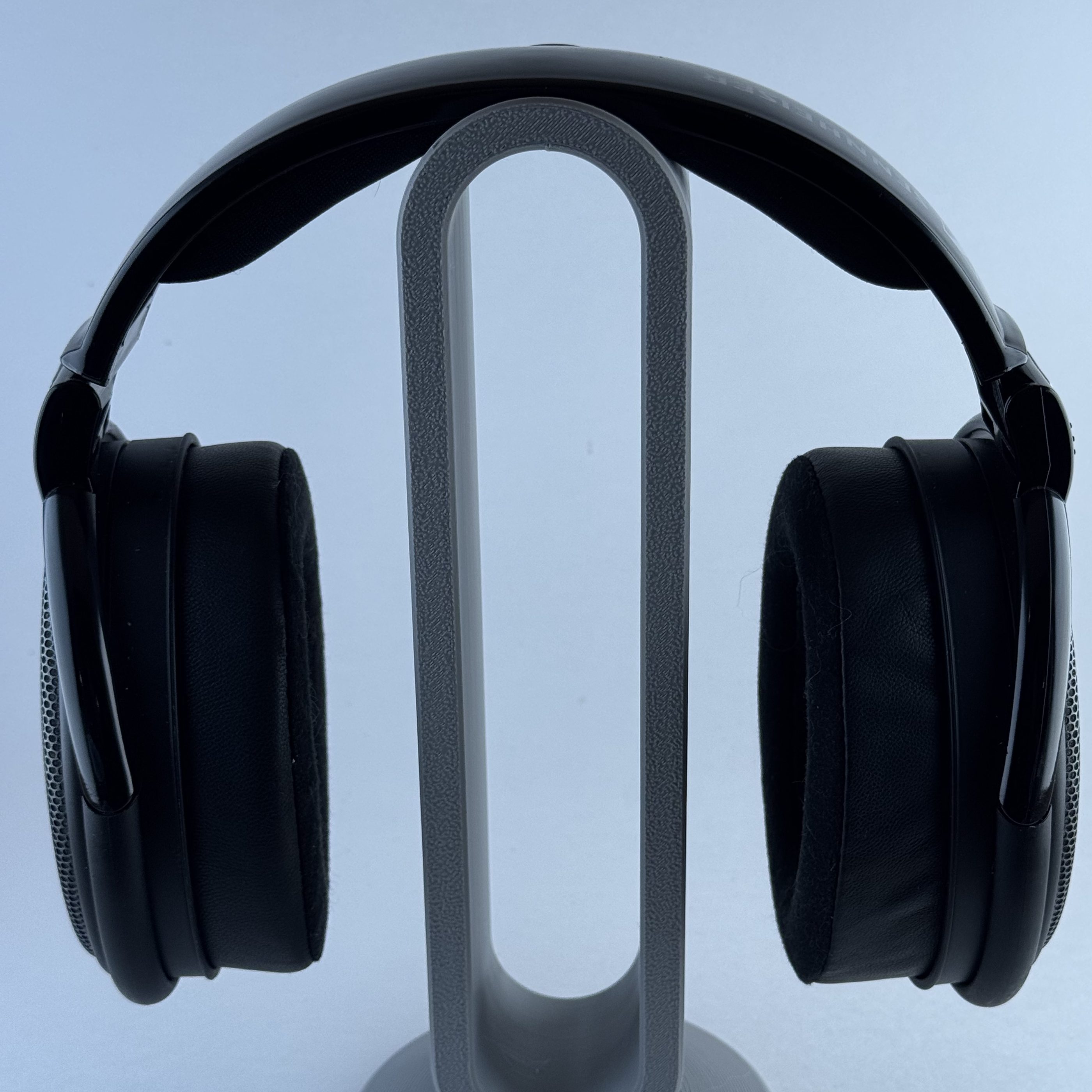
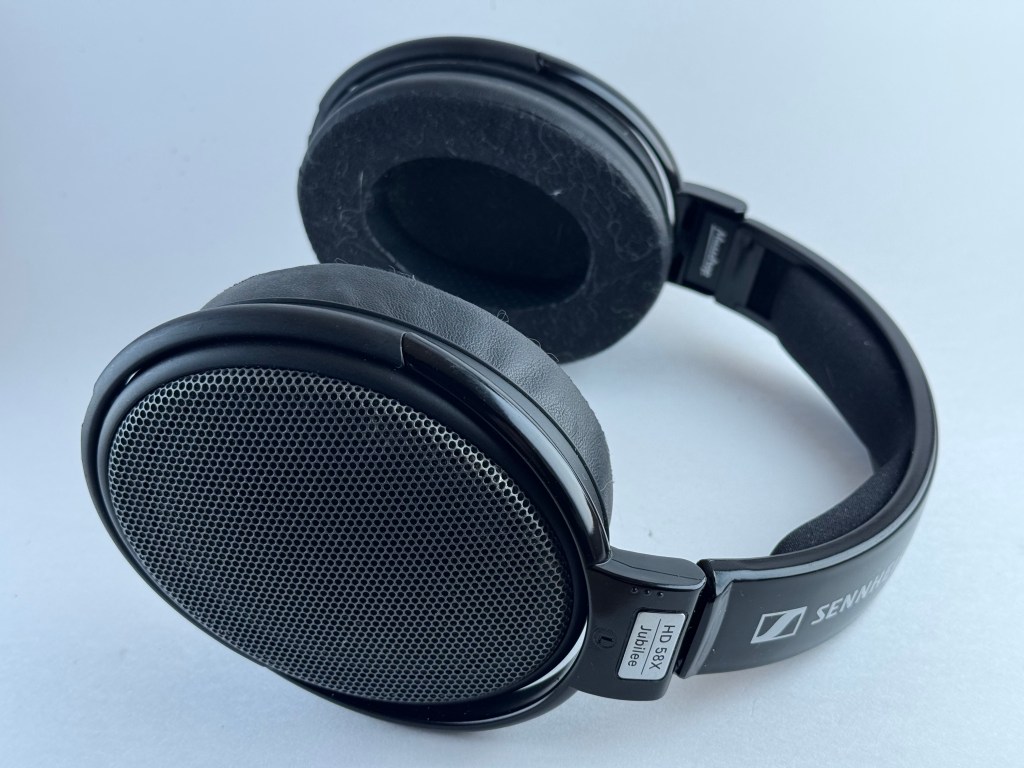
Like my HD 600 review, I’m just going to refer you to the build section of my HD 6XX review; the only noticeable difference in the build between the 6XX and the 58X is less visually transparent grill, a silver name plate reading 58X Jubilee instead of a black one saying HD 6XX, and the Sennheiser logo on the headband being black instead of silver (honestly, I like the contrasting silver more). They’re perfectly comfortable to me, though I’m guessing that they (like the 6X0) can be a bit clampy out of the box.9
Value/Comparisons
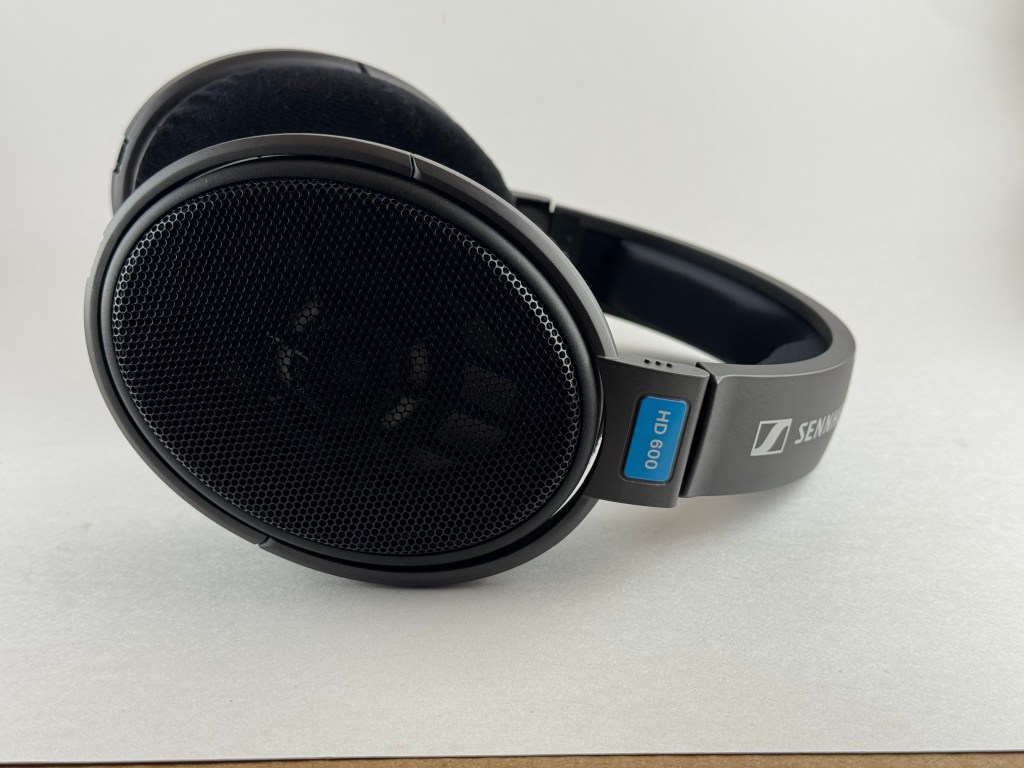
HD 600/650/6XX/660S
This is the third time I’ve done this in the last month, so I’ll go ahead and just give you the highlights.
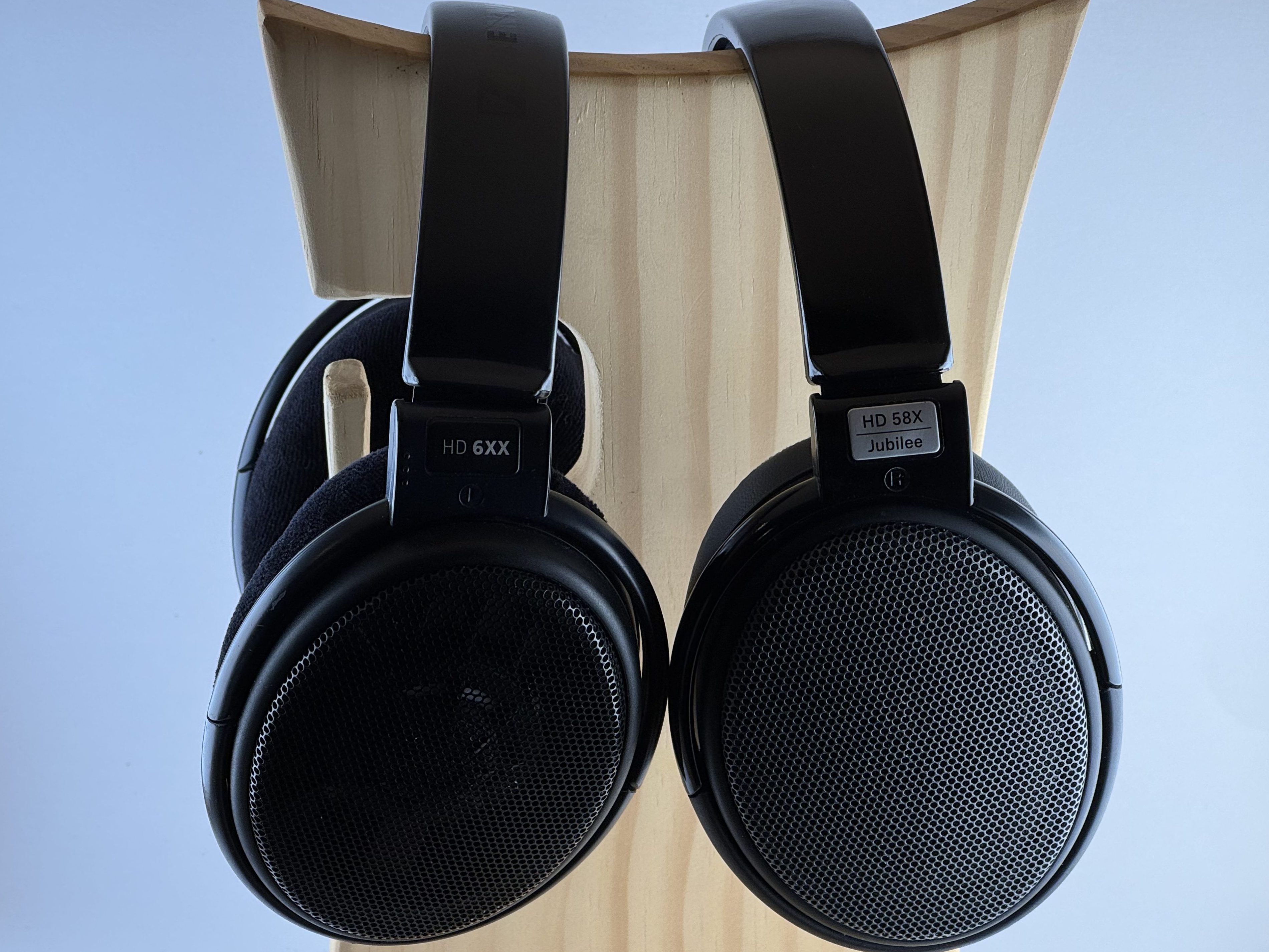
To me, the 58X is a warmer tuned version of the 6XX/650, which itself was a warmer tuned version of the 600. It is easier to drive (see, e.g., the volume settings above compared to those for the 660S and 600), but the variation isn’t huge. To the extent you have a hard time driving the HD 600 with any given amplification, these will be easier. To the point where I’d probably apply a negative gain in Roon if I were daily driving these; I’d like to get out of the 6:30-8:45 range on the volume knobs on most of my amps.
I’ve said it before, and after a bunch of dedicated A/Bing I still stand by it: for me the audible differences between the HD 650/6XX and the HD 600 aren’t huge, and the 58X is just an extension of that. With the specific units that I have in my house for this review, here are my thoughts:
- The bass is slightly stronger on the 58X than the 6XX, which is stronger than the 600, which is stronger than the 660S. Personally, I think the 6XX is the sweet spot with more bass than either the 600 or the 660S, but with more control and precision than the 58X.
- The 58X falls somewhere between the 6XX and 660S for mids. I still prefer the 6XX over the 58X, but it’s closer (and for me, the 600 beats the rest).
- The treble on the 58X sits somewhere between the 6XX and the 600, and is SUBSTANTIALLY better than that on the 660S in terms of both quality and quantity. For most things I’d take either the 58X or the 6XX, though there are some tracks where I want that little bit of extra treble and detail you get from the 600. I’m probably never picking the 660S for anything treble-related.
For me, the ranking is this: 6XX > 600 > 58X > 660S. Even more so with a little bit of EQ, where I can add a bass shelf to the 6XX or 600 and get the bass performance of the 58X without trading the mids or treble tune that I like. Out of this group I think I would probably grab the 58X for gaming just based on their soundstage performance, but honestly I’m not using any of these for gaming with any regularity. There are just better options in my collection.



With those subjective impressions out of the way, let’s take it to the graphs:10
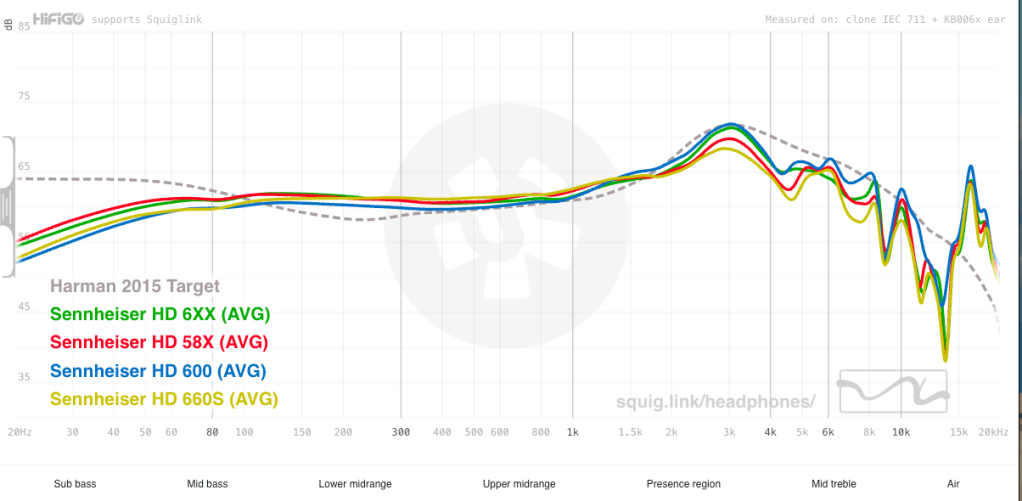
This seems to more or less correlate to my impressions; though it’s busy enough that it’s hard to read in any detail. Let’s narrow this down to just the two main competitors, the 58X and the 6XX:
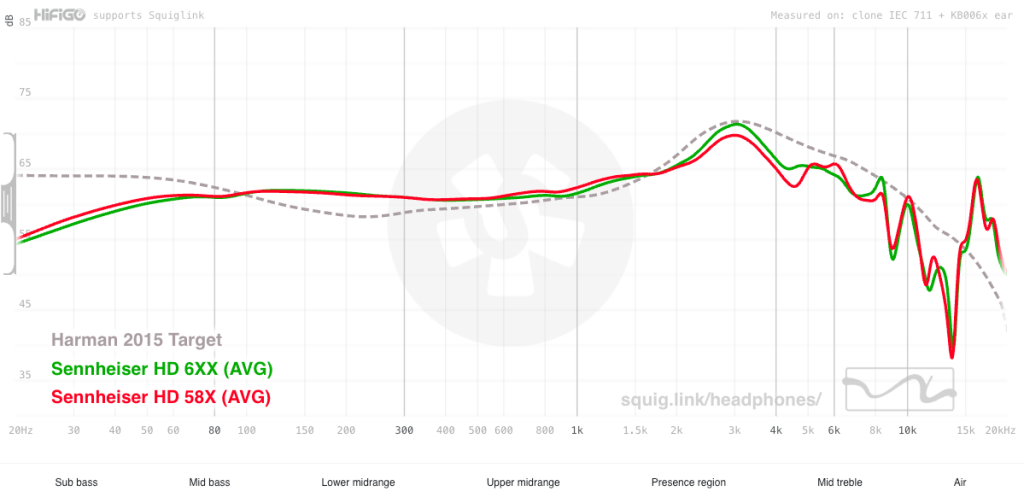
Yeah, that seems right to me. As you can see, the 58X has slightly more emphasized sub- to mid-bass (though neither are particularly bassy, as you can see by looking at the target). The mids are pretty close, though the 58X is slightly stronger through the upper end of the mids which I don’t particularly hear, but may be a result of a little more bleed from the mid-bass and a lower response in the presence region.
This more or less solidifies my opinion that the 58X is a 6XX’d 6XX; a pretty similar tune but with the bass slightly emphasized and the treble slightly mellowed even from the 6XX’s already bassier (but not bassy!) and treble-light baseline. There’s no objective winner here, but for my preference I keep coming back to the 6XX. [This is a reflection of how much I love that headphone, rather than a knock on the 58X.] In a world in which the 58X was still $50 or $70 cheaper than the 6XX I’d think seriously about choosing it, but at least at this moment the 6XX is on sale for $179 while the 58X is still $199 (and slightly back ordered). If didn’t already have the 6XX, I’d probably take a $200 58X over a $260-350 HD 600, but because the 6XX fills the slightly-bassier 600 slot for me so well I’d probably shell out the extra $60+ for the 600.
That said, unlike the HD 660S, the 58X aren’t a product in search of a niche; I will recommend the 58X to many people, particularly those more used to a consumer-style tune but who are looking for their first foray into the audiophile world. They’re going to be more accessible for a lot of people, and are probably a better (albeit not great) option for people looking for a gaming open-back.
Drop + Epos PC38X Gaming Headset (pre Drop-only version)11
I’ve had these in the house for awhile and they’re on my list to review, but I haven’t quite gotten there. Because I think I might be recommending the 58X for gaming use, I thought it was worth a brief comparison.
The PC38X started out as a collaboration between Sennheiser’s gaming division (EPOS) and Drop where it was quite successful. At some point they became a Drop-only product.
Sound wise, this is a closer comparison than you might have expected for a “gaming headset,” but the advantage of the PC38X has always been that it’s a really well-designed and -tuned headphone that happens to also be good for gaming (including a good built-in boom mic). I would consider the PC38X more in line with the Sennheiser 500 series design-wise (single-entry cables, shallower ear cups with less swivel, general aesthetics and comfort in line with them), but they are in a price range closer to the 58X than most of the 500s ($199, marked down to $169 as of late September 2025). The PC38X has, unsurprisingly, a really good bass response12, solid midrange, and acceptable treble.13 They come with a pretty good built in microphone, a volume control dial on the right cup, and two cable options: TRRS and split stereo/mic jacks. Unlike the 600 series, there is no way to run them balanced; they are single-ended only. They’re also pretty easy to drive, at 28 Ohms impedance and an SPL of 109 dB/V.
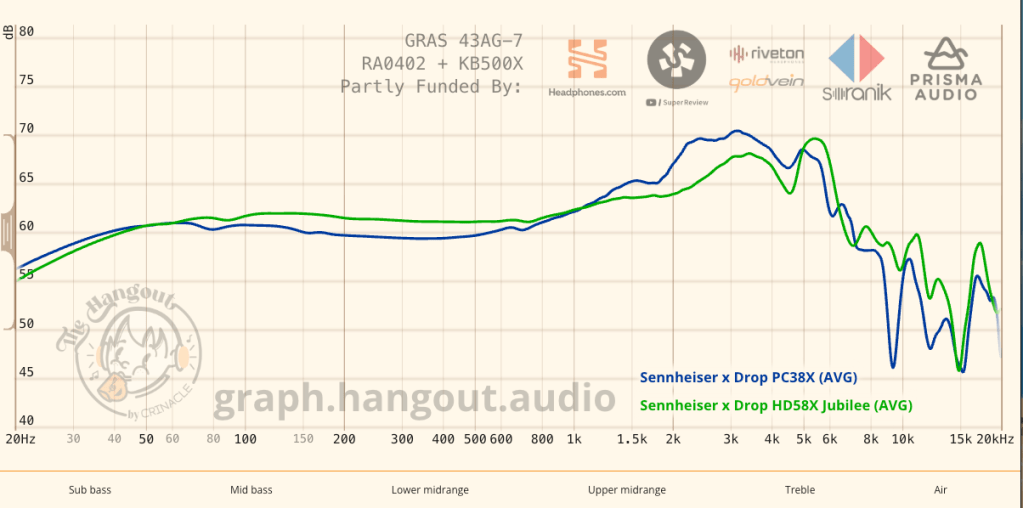
I definitely prefer the sound, comfort, and style on the 58X over the PC38X. I’m generally not a huge fan of the single-entry Sennheiser 500 series, but the PC38X is probably my favorite of the ones I’ve tried. I also have the sense the soundstage is substantially better on the PC38X, and I’m curious to spend more time with them for gaming.
For music listening or mixed music/gaming, I’d stick with and recommend the 58X. If you’re just gaming, or absolutely need a microphone, the PC38X can be a great option particularly when they’re on sale.
[Editor’s note from the end of the review: I’ve been wearing the PC38X for an hour now while finishing up this review and my ears are a little numb. As much as I appreciate how stable the PC38X are on my head, I think the combination of smaller ear cups, thinner pads, and high clamping force might make these a no for me. I might try doing some stretching of the yokes, but that won’t help with the ear cup sizing issue.]
Beyerdynamic DT 990 Pro
I really liked the Beyerdynamic DT 990 Pro back when I first started getting into headfi. The consensus at the time was that the 990 was a great studio-style open-backed headphone. The consensus was … well, wrong, and I hadn’t heard enough good headphones to know any better myself. I’ve updated the review since.14
Here’s the short version: the 990 have excellent soundstage, great comfort, reasonably good build quality, pretty good layer separation, good mids (especially the human vocal range, especially with people talking normally), and a wonky-ass tuning that makes those strengths pretty much irrelevant to me.
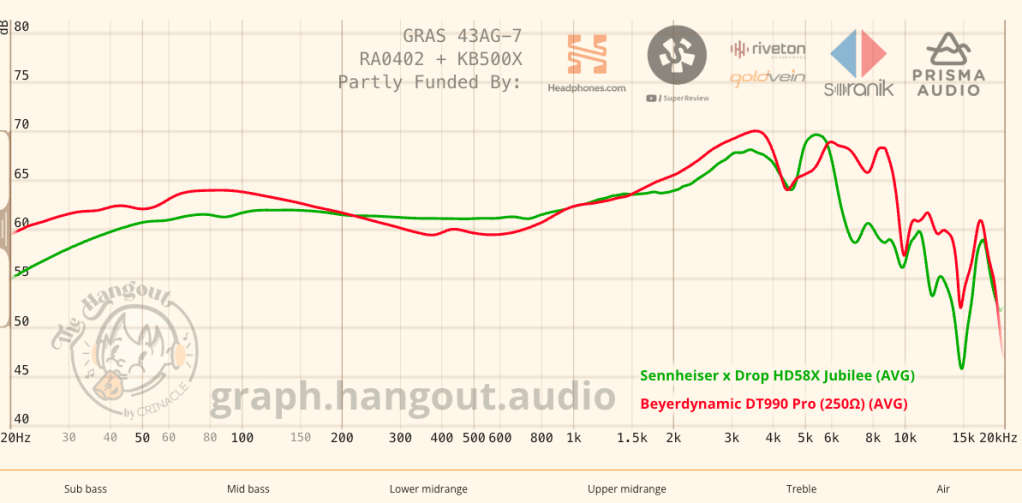
Oof. Yeah, the DT 990 just aren’t for me. Boomy bass and mid-base, wonky-ass upper mids and treble … I’ll take the 58X any day. This is particularly true when they’re the same price, as they are now.
Fiio FT1 Pro
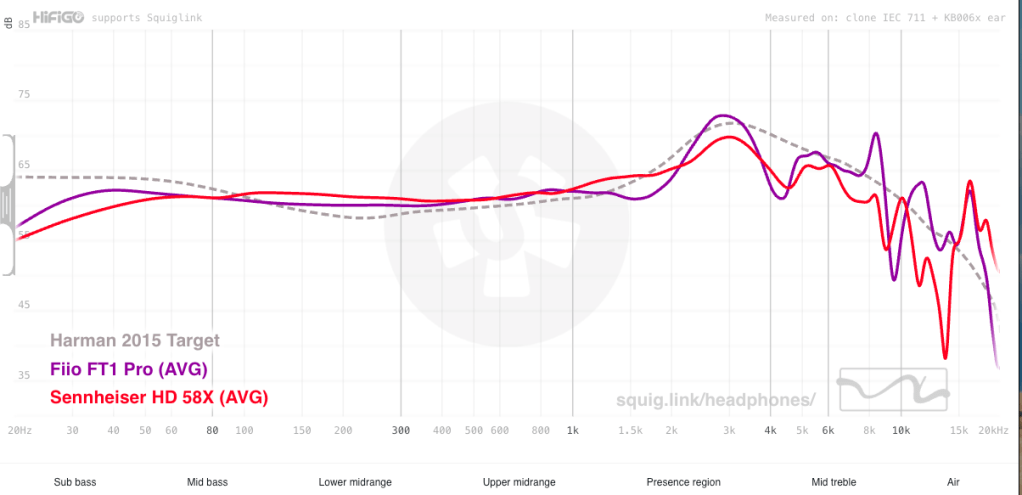
This is a really interesting comparison, and one that I wish I could do a direct A/B right now.15 I REALLY like the bass response you get from the FT1 Pro ; it is present and strong but remains controlled and crisp. While I consistently pick the 6X0 over the FT1 Pro, I think it’s a much closer call with the 58X. The things that the 58X do well, the FT1 Pro arguably do better. You’re not going to go wrong either way, but aside from some concerns about the long-term durability of Fiio’s headbands and the 58X’s generally good Sennheiser-style mids, I think the Pro might edge this one out for me.

Hifiman XS/Sundara16
I’m still choosing the 58X over the XS; both benefit from a little EQ (adding a bass shelf for the 600, taming the treble on the XS), but I find the HD 58X style of headphone much more comfortable for extended listening. They’re at pretty similar price points these days, so it’s a pretty easy call for me.
The Sundara is a closer call; while I’m still part way through my listening for the Sundara review, I think so far I prefer them over the Edition XS because I think they’re better on the mids and slightly more controlled in the treble (though the bass, particularly mid-bass, on the XS is super nice and I might add a bass shelf on the Sundara).

Super* Review’s graph here:
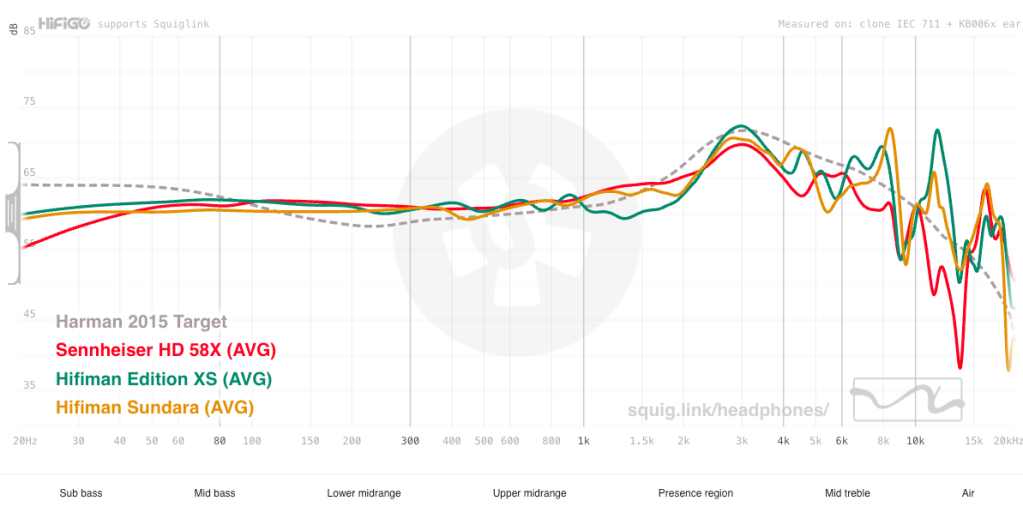
There’s no clear, hands-down winner here for me. I think I’m probably picking the Sundara at this point, though it’s really six of one, half dozen the other. Both Hifimans have that funky treble response, but the Sundara’s is less troubling for my ears and the round cups seem weirdly more comfortable for me. If I didn’t have the 6XX I might take the 58X just to have something like this sound, but in a world in which the 6XX is a permanent part of my collection a Sundara is a more interesting option for contrast.
Meze 105 AER
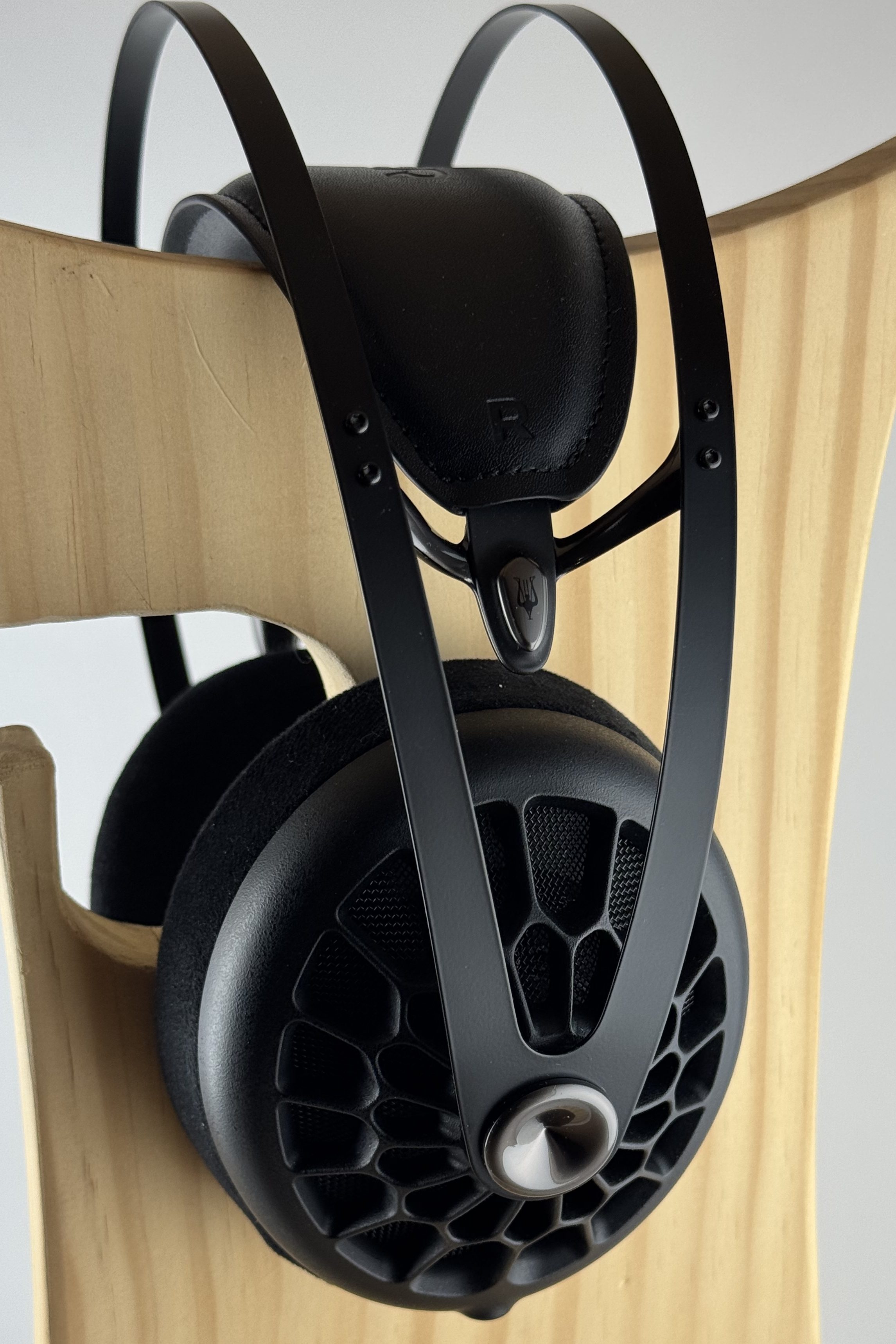
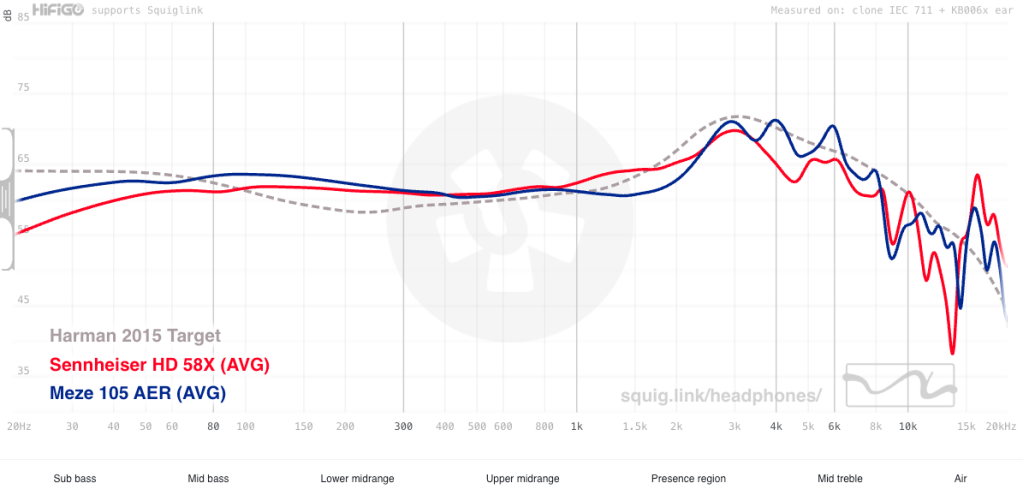
In my review of the Meze 105 AER, I picked the AER over the 6XX for almost everything (except for maybe some very vocal-centric music). Because I prefer the 6XX over the 58X for almost everything, the 105 AER take this one too. The things that the 58X improve on the 6X0 on, the AER just does better; the AER have similar bass and better treble performance (at least to my personal preferences, with the exception of a couple of slightly weird spots), are reasonably competitive in the mids, and are one of the most comfortable headphones I’ve ever worn. The 58X are definitely cheaper ($200ish vs. almost $400), but you can probably find an open-box AER for around $300 and I’d rather spend $300 on the AER regardless of what else I have in my collection.17
Super* Review’s graph largely aligns with those perceptions:
Overall
Color me very impressed by the Sennheiser x Drop 58X Jubilee. I didn’t come into this expecting to like them very much but they really are most of the things I appreciate about the 6XX (which I love), just turned up a bit. The end result is not necessarily to my personal preference (and you do sacrifice some level of detail and resolution to get the additional bass and slightly more mellow treble), but these are excellent headphones for someone making the jump from consumer-tuned products to more audiophile tunings. They’re bassy enough to be appealing, and detailed enough to be a solid introduction to the world of headfi.
If these were offered at the original $149 price point, they’d be a no brainer. Unfortunately, the market has shifted a lot in the last eight years and the introductory open back market has changed more rapidly that the rest of the audio space. There are definitely options around the $200 price point that I would take over the 58X for most of my music listening, starting with Drop’s own 6XX. I’ve always been surprised that Sennheiser would be okay undermining their own HD 650 sales by selling a basically identical product for almost half the price, and now I think Drop may be a victim of their own success. For music listening, it would be hard for me to recommend someone buy this at $199 over the 6XX at their frequent sale price of $179, unless they really wanted a little more bass or were primarily using it for gaming. And if they’re primarily using it for gaming, I’d probably recommend something like the PC38X or a Fiio for most people.
Don’t get me wrong; these are great headphones, and I’d happily listen to them. They just lose a little bit of their shine when compared to other things on the current market and at their current price point. If they were on sale for the same price as the 6XX, it’d really be a matter of preference. When the 6XX is cheaper and (at least to my ears) better? It’s a pretty easy call for me.
They have a clear market, I’m just not it.
#reviews #headphones #sennheiser #6XX #anc #spatialaudio #meh #2025 #99noir #meze #sunglasses #overear #cans #hifiman #arya #stealth #editionxs #budget #hahahaha #iems #quickreview #600 #650 #58X #jubilee
- I score bass, mids, and treble on a two part scale: 1-5 for quantity (5 being the highest), and A-E for quality (A being best in class, E being laughably bad). For soundstage it’s also a two part scale, with the number representing the width and the letter the separation within it. ↩︎
- For comfort/fit, my scale is A-E with A being disappear entirely into the background and E being I want to tear my ears off to stop feeling these headphones on my head. ↩︎
- Damn you, Dylan! ↩︎
- Epos is Sennheiser’s gaming division. ↩︎
- Subtext: better. ↩︎
- Dual cable entry, two-pin, shape and texture of the grill, ear pads, impedance/sensitivity, components, etc. ↩︎
- The Mojo shows volume with three lights: the first (effectively) shows you the gain setting and the other two are a color-coded progression from quiet to loud. ↩︎
- I traded my HD 600 for Focal Clears a week or two ago, so all comparisons to the 600 here are based on the A/B’ing and notes I took while working on my HD 600 review. ↩︎
- This pair is well-loved, though appears to be in excellent shape. ↩︎
- As noted, where possible I prefer to use Super* Review’s, and he’s measured all four of these headphones. ↩︎
- Quick review forthcoming. ↩︎
- Dare I say an improvement over the 58X, especially in the sub-bass. ↩︎
- They are, after all, designed for gaming. ↩︎
- https://daemonxar.wordpress.com/2023/03/11/beyerdynamic-dt990-pro-250-ohm-edition/#update-september-2025 ↩︎
- The 58X is on loan from the friend who currently has the FT1/FT1 Pro, so a true A/B is not in the cards at this time. ↩︎
- Full Sundara review forthcoming. ↩︎
- Again, this is more a reflection of my love for the AER than a shot at the 58X. ↩︎
 Phil's Superpower of Enthusiasm
Leave a comment