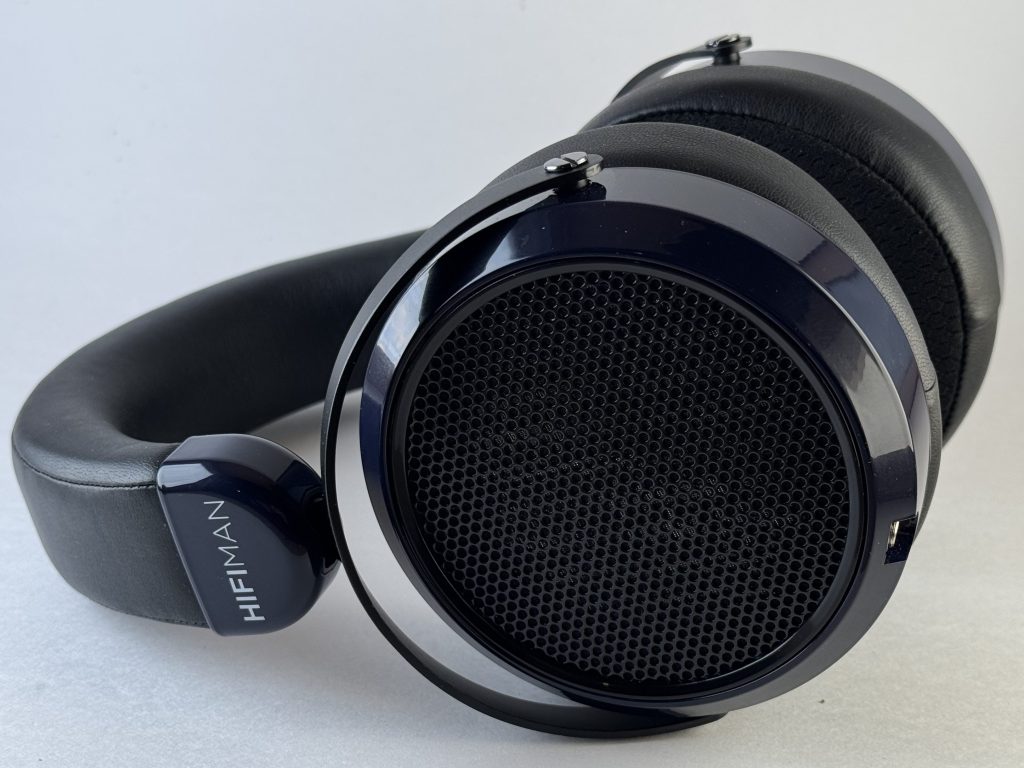
[ORIGINAL MSRP $1,899. Currently available directly from Hifiman (though don’t buy from them) for $359 (open-box) and $333 (refurbished, EU only) in October 2025. Purchased for $359 (open box) from Hifiman.com before my customer service saga.]
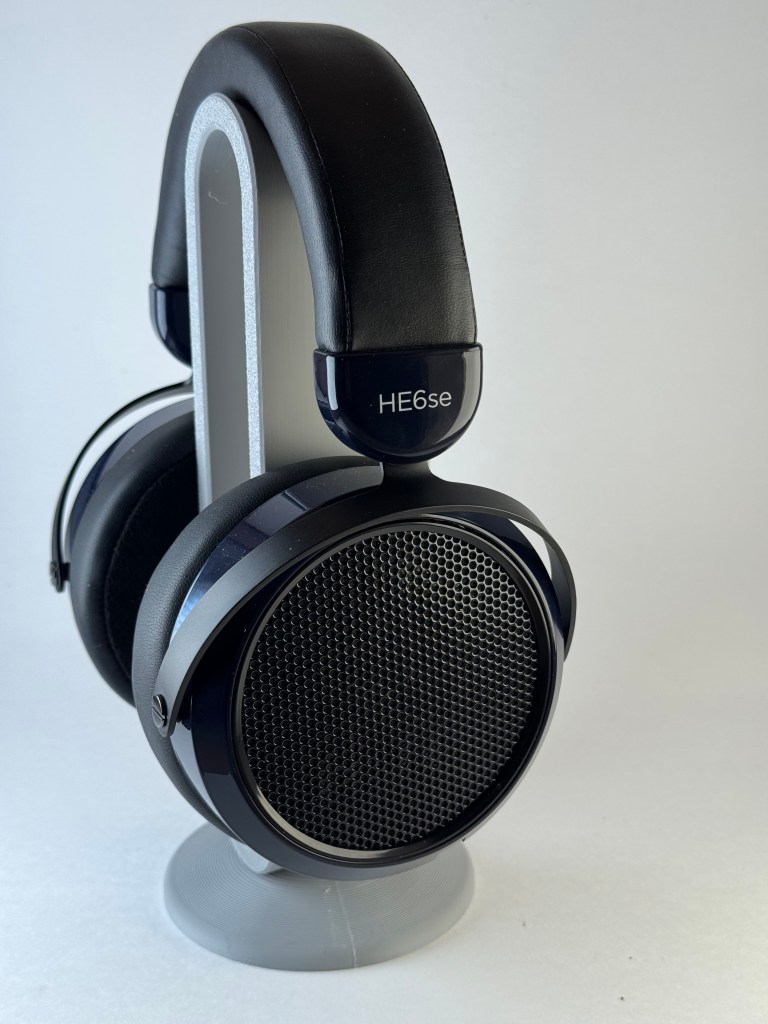
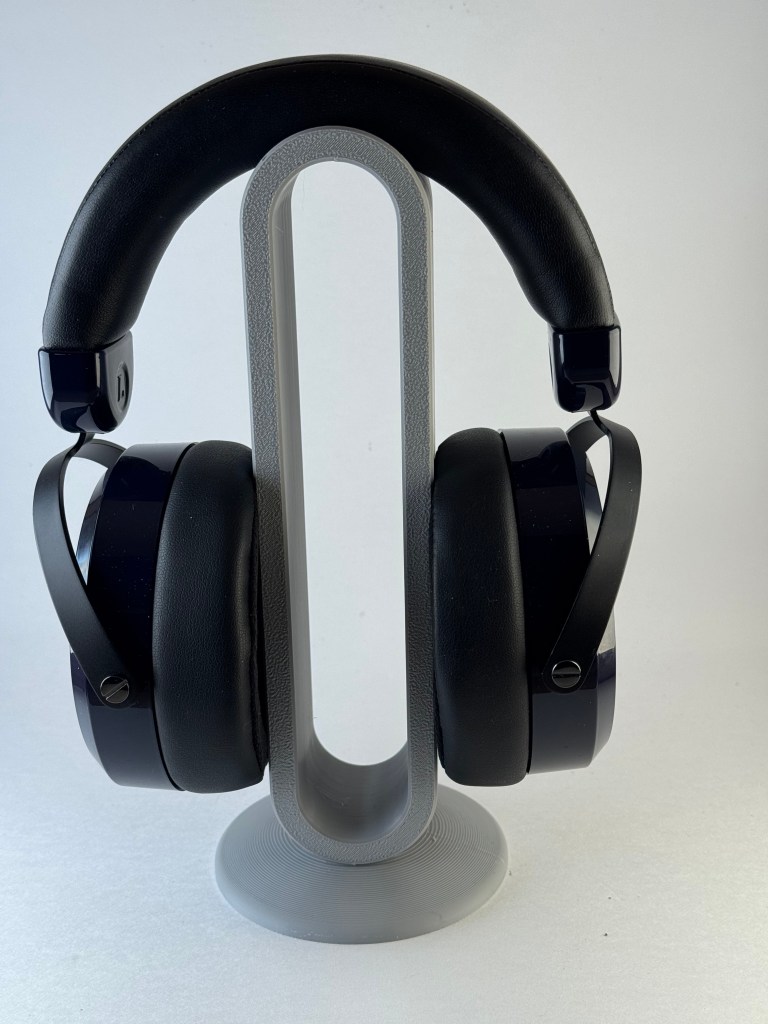
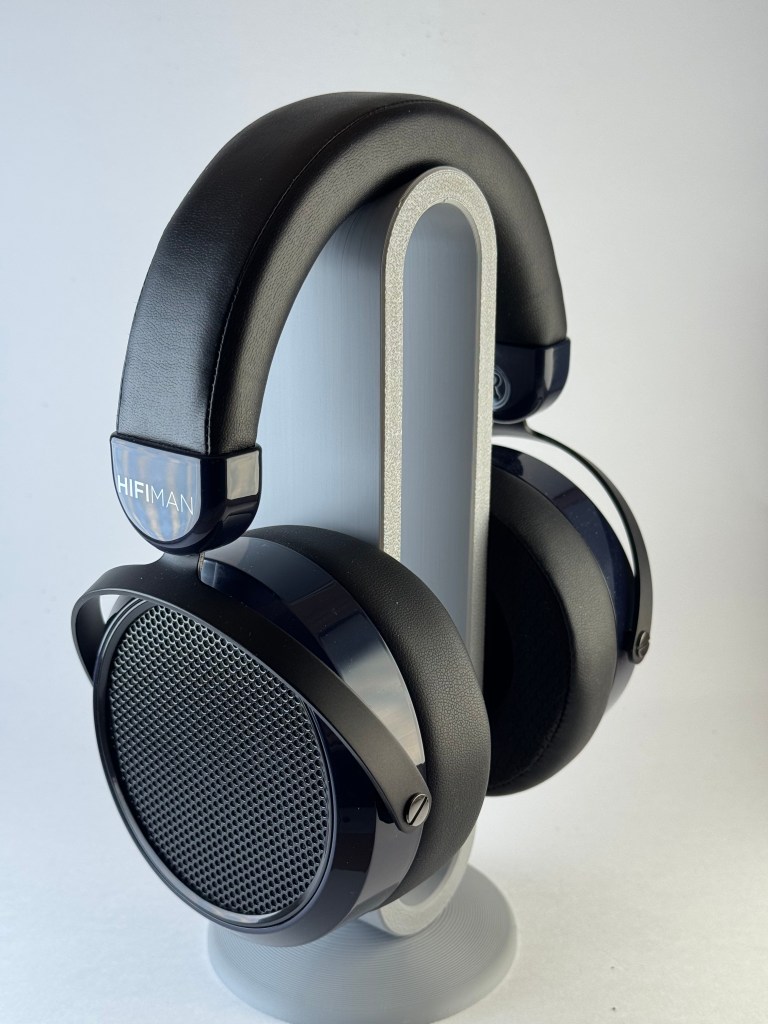
[Tl;dr: The HE6se v2 are a surprisingly great pair of planar magnetics, especially at their current price point. They’re incredibly detailed, have a wide soundstage, and do a great job of separating and placing instruments and musicians in space. For me, they fill a pretty specific niche in that they’re great for certain types of music (jazz, acoustic, etc.), and are a great candidate for dedicated critical listening as well as gaming, but might not be as good an option for more casual listening or bass or vocally-intensive genres. They’re worth a listen, regardless, particularly if you’ve never experienced the incredible detail, layer separation, and soundstage of a moderately high-end planar. And they’re cheaper enough than the Arya Stealth, my favorite objective headphone, to be worthy of serious consideration.]
Cost-agnostic: 7 out of 10 Denalis
Cost-sensitive: 8 out of 10 Denalis (3 out of 10 Denalis at MSRP)
TABLE OF CONTENTS:
- Introduction
- Review notes
- The Basics
- Sound
- Amplifier Compatibility
- Build Quality & Appearance
- Value & Comparisons
- Overall
Introduction
As I discussed in my review of the (it turns out) excellent Hifiman Sundara, I largely ignored Hifiman as a company for the first eight or so years of my journey into headfi; they seemed overly expensive and had tunes that I didn’t particularly love. At some point Hifiman started massively discounting most of their products3 and I started seeing the ‘value’ in some more expensive headphones and wrapping my head around the (admittedly diminishing) returns on additional investment in headphones. This summer I found myself with a lot of time on my hands and some credit in my pocket from selling other headphones, and I decided to take a flyer on a couple of the round-shaped Hifimans I’d been hearing about. I ordered two pairs: 1) the HE6se v2 and 2) the HE-X4, a budget collaboration with Drop.com. I really liked everything about the HE-X4, right up until I figured out that something in the right driver was broken in a way that buzzed really unpleasantly in almost every Massive Attack song, so I attempted to return it. That turned into quite the debacle, and ended up several months later with me in possession of a Hifiman Audivina, one of the least liked ‘closed’ backs in modern headfi (review forthcoming4).
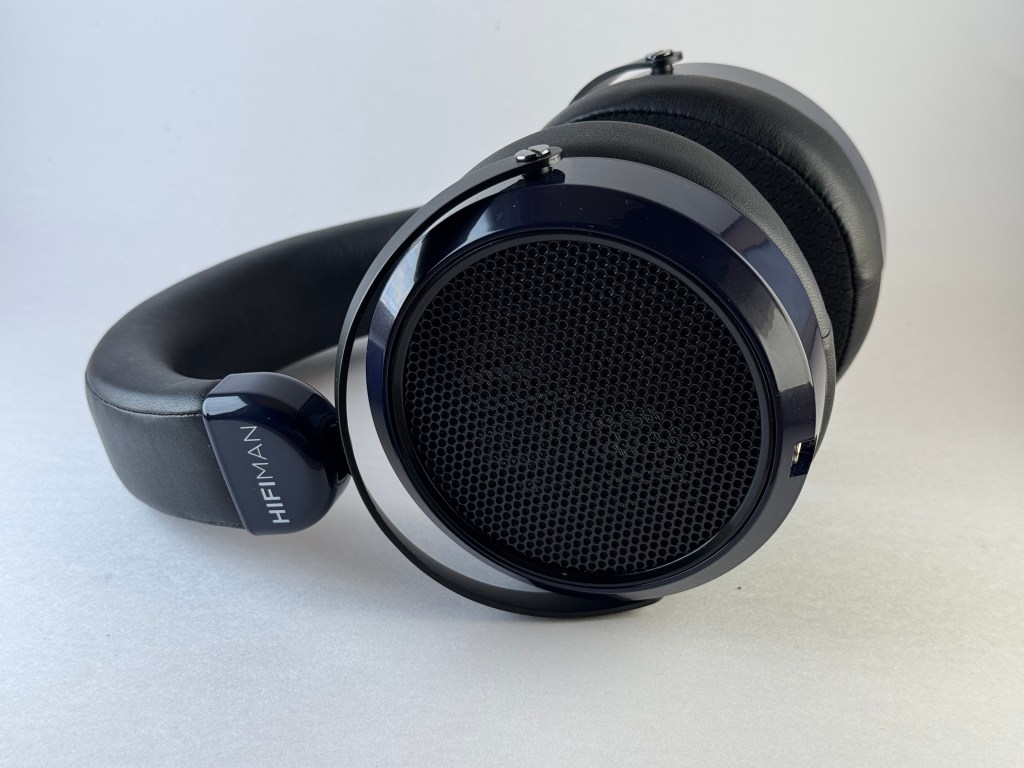
HE-4X (and Sundara Closed!) drama aside, the much more expensive part of that transaction appears to be in fine working order and I’m finally getting around to reviewing it: the HE6se v2 (aka “v2”).
Review notes
Testing rig
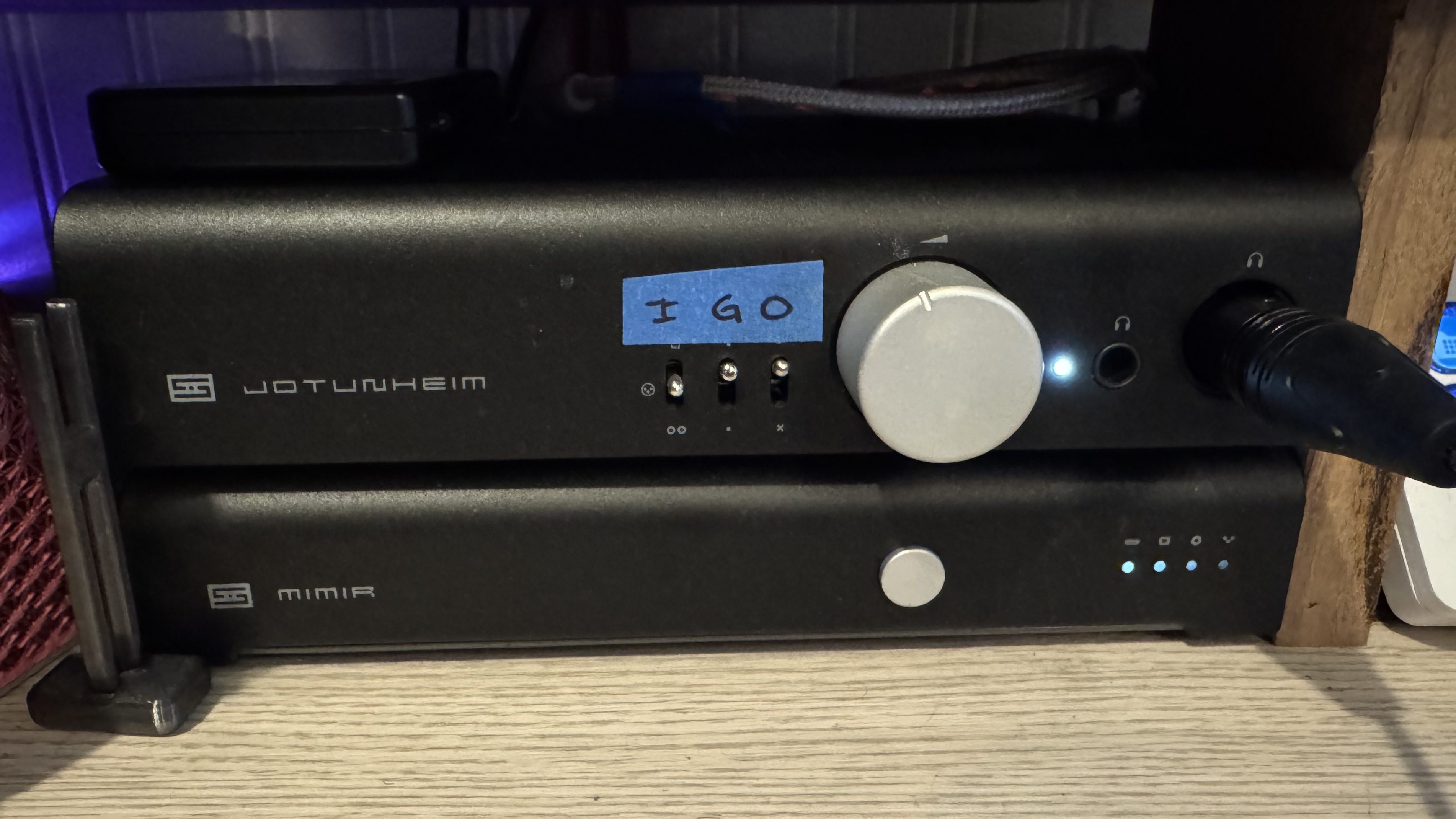
Based on my philosophy on the allocation of resources in headfi, except where otherwise noted I’m going to primarily be testing these with a Schiit Mimir/Jotunheim 2 stack, running balanced5 via a Hart interconnect and connected via USB-C to a Mac Studio running the Roon client.
EQ
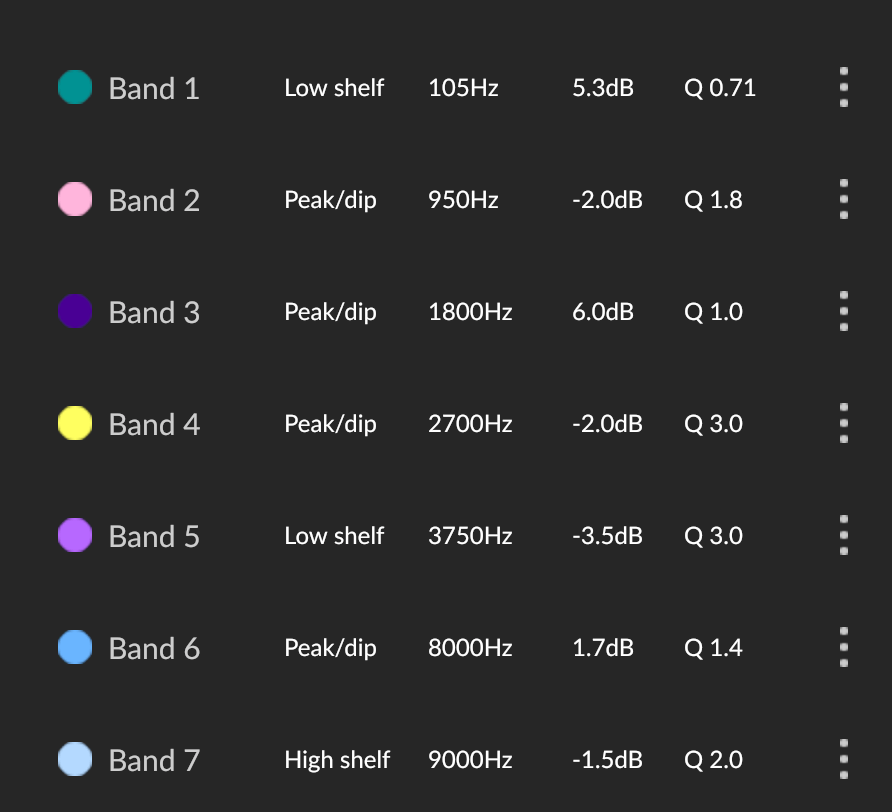
As noted in the Bathys review, I mostly prefer to test headphones with their default tuning, assuming that most people won’t take the time or make the effort necessary to use a third-party EQ. And the HE6se v2 really don’t *need* EQ; they sound pretty good to me out of the box, though like many headphones (especially planars for me) they do benefit from some adjustments .
EQ Update
[EQ Update: After some fiddling around, this is where I’m at now. It’s … close? The bass is much richer and the overall sound is more complex, though there are still a few little treble things that I don’t love and I think I’d still like a little more in the mids.]
Volume
Here are the volume settings I use with the Hifiman HE6se v2 (unless otherwise noted, running via Roon with no headroom management, playing Daft Punk’s “Face to Face” from Tidal):
- Mimir/Jotunheim 2 (Mimir has a -15 dB pregain applied via Forkbeard): high gain, 11:45 (balanced); high gain, 2:00 (single-ended)
- Modius/Magnius: high gain, 11:00 (balanced); high gain, 11:30 (single-ended)
- Modi/Magni: high gain, 11:00
- Fulla: 12:306
- Hel 2E: 11:00
- E30/L30: middle gain, 1:30
- Chord Mojo: white, bright green, bright green, red7
- Moondrop Dawn Pro (balanced, USB-C to Mac Studio): max volume on unit, 20% volume in Roon.
- North American Apple dongle via iPhone 15: 100%8
- Apple dongle via Mac Studio: N/A (couldn’t get loud enough without adding a positive pre-gain)
My torture testing list
The Basics
The Hifiman HE6se v2 is a passive, open-back planar magnetic headphone produced by Chinese manufacturer Hifiman. They were the second generation update to the venerable HE6, a pretty legendary headphone from the early modern audiophile era. The original HE6 was released in 2012, with the HE6se (“v1”) following in 2018 and the HE6se v2 (“v2”) in 2020. The primary difference between the v1 and v2 is the headband design, with the v2 having the Edition XS style single headband, and the v1 the separate strap and frame style of the Sundara. The tuning is also slightly different.
While audiophiles like to talk about how hard to drive some common headphones are, the HE6, v1, and v2 are all genuinely challenging for many amps. While there are people who insist that you need to connect them to the speaker taps on a power amplifier to properly power them,9 my experience is that they do pretty well with most of my headphone amplifiers, with the caveat that they do make me run in high gain mode across the board. They’re not super high impedance at 50 Ohms, but they make up for that by being the lowest-sensitivity headphones I own (by a substantial margin) at 83.5 dB/mW.
The HE6es are all also beefy boys, with a mix of metal and plastic construction and weighing in around an Audeze Maxwell-challenging 470 grams. All of them use a dual-entry 3.5 mm, balanced-capable, detachable cable system, making them very easy to source aftermarket parts for (though the OEM cables are spectacularly, laughably bad for a product that initially retailed north of $1500).10
Hifiman appears to have sold through their production run of the HE6se v2, but it’s available on their website in both open-box ($399) and refurbished ($369) forms, along with the v1 (new; $699, open-box; $419, refurbished; $399). Hifiman also released the HE600 a few months ago in the summer of 2025, though it sounds like it’s more a successor to the Sundara than the HE6/v1/v2.11
Sound
The soundstage on the v2 is really quite good; I’d say it’s almost as broad as the Arya Stealth and substantially wider than the Sundara. They’re also better than the Arya in terms of placing things in space. On “Chan Chan”, each instrument (and vocalist) is in a very specific, consistent location in space. For example, the guitar counter melody is like three quarters of the way out to the left with the bass slightly closer in, the rhythm guitar halfway out to the right, etc. It’s quite something. They’re also pretty deep front-to-back; the opening riff on “Love Can Damage Your Health (Laid Mix)” sounds like the guitarist is walking in a consistent circle around you. The synth lines on “Angel (Blur Remix)” track beautifully across space, and it feels like there’s much more nuance in its spatial layout than on most headphones. The downside of that stage, of course, is that it can be very distracting on things like “Blackbird” with the split between the click, the guitar, and the vocals being a bit too stark for my personal preference. That said, this is maybe my favorite presentation of the tom patterns on “Thunder Lightning”‘s chorus.
The dynamics are solid but not overly impressive. Starting “It’s All So Incredibly Loud” at a reasonable volume gets uncomfortable by the end but the variation isn’t quite as broad as some other headphones. The microdynamics12 are some of the best I’ve heard; on the beginning of “Angel (Blur Remix)” both the bass and treble bell tones are sharply accented and crisp; they may linger a hair longer than you get on something like the Arya but the slight warble before the tone settles on the bass is perfectly reproduced. You can hear and feel Meshelle Ndegeocello’s fingers lifting off of the strings in “What Did I Do?” and the brass hits on “Intro” are damned near perfect.
Overall, I certainly enjoy the detail and resolution quite a lot; I’d put them somewhere between the Sundara and the Arya Stealth for pure detail retrieval, but with better layer separation than either.
I personally really enjoy the bass response on the v2. It’s solid and present without being thumpy or distracting. It fragments a little on “Superpredators” (which is not uncommon), but it’s tight and controlled and warm on “Paradise Circus” and “I Against I.” The bottom notes on “Got ‘Til It’s Gone” start to blend together towards the middle of that track but it gets satisfyingly wobbly on “Limit to Your Love” (though again the very bottom is a little de-emphasized). They do get a little splattery on some tracks, especially modern hip hop. Overall I’d say that bass is good, not great, and I might add a bit of bass via EQ for every day listening.
The midrange on the v2 is good but slightly recessed, with a generally nicely balanced presence and correct timbre for both male and female vocals. They’re not particularly emphasized which can result in things like Jill Scott’s voice fading into the instruments on “Calls” towards the middle, but the staging and layer separation are good enough that she mostly carries through. Same with Amelia Meath on “Coffee”; she floats through the mix beautifully, though interestingly, occasionally she sounds a little like she’s on the radio with a weird timbreal artifact. Justin Hicks stands out on “What Did I Do?” without getting in the way of the rest of the instruments, and Johnny Cash gets the star treatment on “Hurt,” though these are detailed enough headphones that you can hear exactly how hot parts of that recording are.
The treble is maybe my favorite part of the v2, clear and distinct without being spikey or overdone. I’m inclined to say that they’re maybe a little rolled off compared to some of Hifiman’s other products, though at least to my ear there’s enough there to lend a strong sense of detail and resolution as well as creating an excellent soundstage. On “2021” the bass clips before the guitar gets too shouty, and you can hear the strings bend on the solo (and hear a difference between the two guitars around the minute mark). Miles’ muted trumpet solo occasionally dips into sharpness towards the end of “Will O’ the Wisp,” but it’s manageable particularly compared to other Hifiman models.
One other thing that I’ll note is that the v2 are headphones that I enjoy more the longer I listen to them and as I let my ears adjust. They suffer a bit in comparison when I do rapid A/Bs, particularly with headphones with a warmer tune like the Elex and 6XX. Coming from a warmer headphone, the v2 sound a little tinny when I first put them on and my brain takes a bit to readjust. After a bit, though, the soundstage and incredible layering come to the forefront and they shine. This is an interesting realization to have at this point in my journey, and I wonder if some of the headphones I’ve enjoyed less in the past have been suffering from this same thing.
Amplifier Compatibility
The v2 seems to be largely amp agnostic. As much as it is a relatively power-hungry headphone, I’m genuinely impressed by how good and full it sounds even running single-ended from a cheap all-in-one like the Schiit Fulla. It’s even fine running from the Apos Gremlin, though I didn’t think it got any particularly noticeable benefit from the tubes.13 I probably wouldn’t run this from most dongles, but any of my desktop amplifiers seem to power it just fine and the Moondrop Dawn Pro ran it at a weirdly low volume in Roon (albeit with what felt to me like a distinct bass boost).
Because I’m me, I bought the Hifiman HE-Adapter14 and tried running the v2 from it, powered by the very nice and powerful super-integrated power amp in my office, the Devialet Expert 140 Pro. It was … fine. Perfectly nice. Life-changing? Certainly not. Headphone changing? Meh. I genuinely didn’t notice any particular difference. I think people exaggerate how much power these really take.
Build Quality & Appearance
I’m generally pretty pleased with the design, build, comfort, and appearance of the v2, though I don’t think that they live up to the original MSRP on any of those accounts.
Connectivity
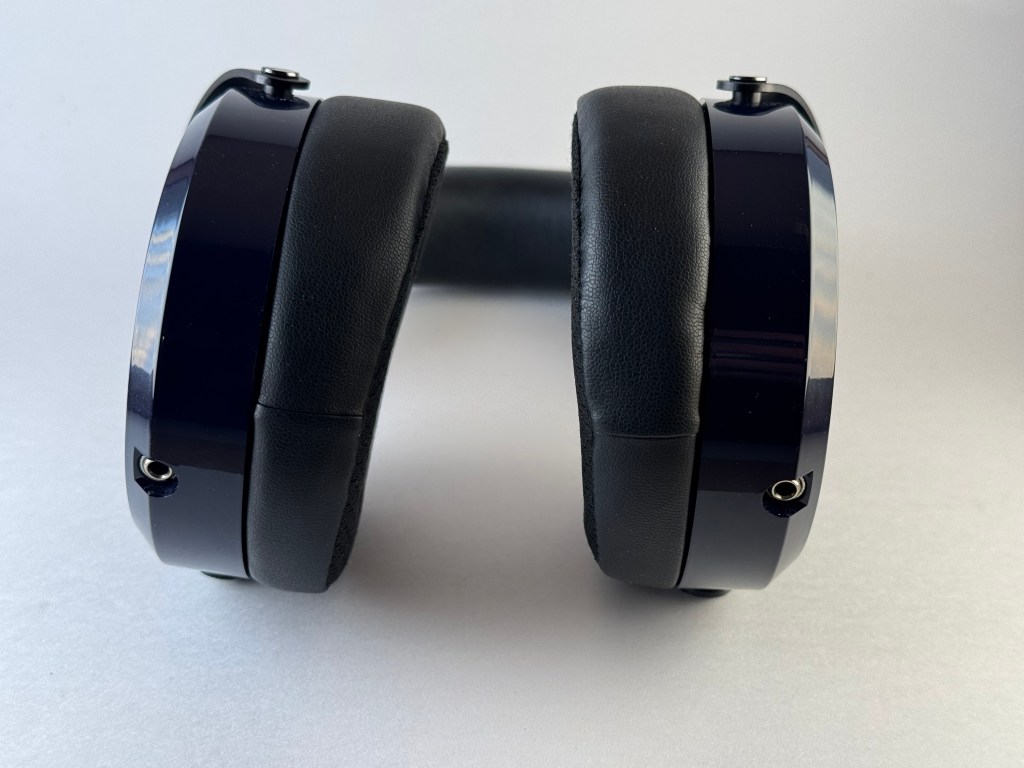
Like most (or all?) Hifimans, the v2 are powered by a common dual-entry 3.5 mm, balanced-capable cable. It ships by default with a remarkably poorly built XLR-terminated balanced cable (aka the “surgical tubing cable”), but because it uses standard jacks you can use a variety of aftermarket and other audiophile manufacturer cables with them. The jacks are only slightly recessed from the cup’s rim, making them potentially at risk of damage if dropped (unlike something like the Focal Elex or Meze 109 Pro, which recess the jacks to provide a little impact protection), but also means compatibility is about as broad as possible.
Construction
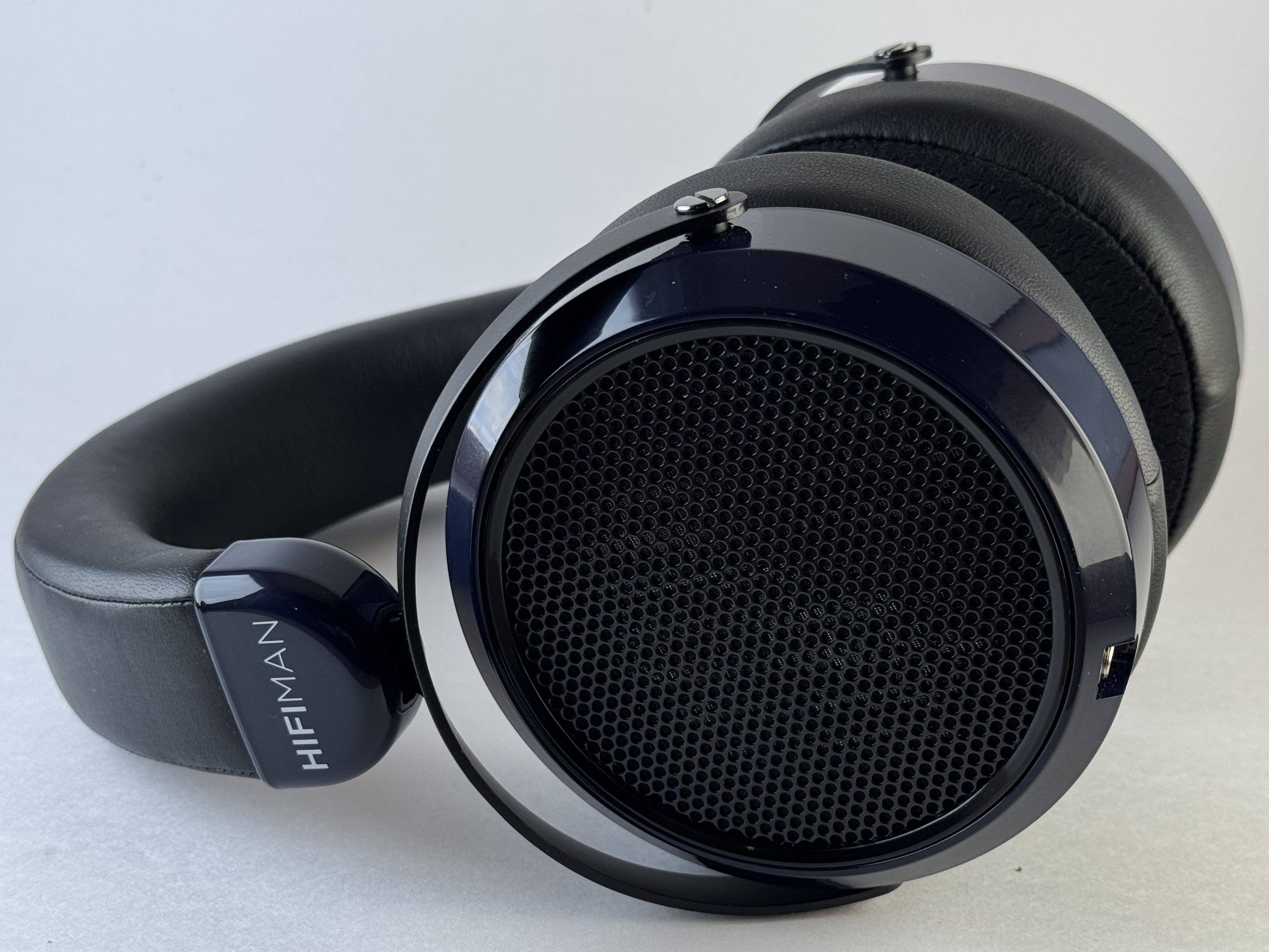
The v2 feel very solidly built, unlike some of Hifiman’s other products. The combination of metal and plastic is weighty compared to a lot of its competitors, weighing in at close to 500 grams. The grills are made of a nice coated metal with a honeycomb pattern, and they feel much sturdier than the grills on something like the HD 6XX. The cups are round like the Sundara rather than egg-shaped, and the earpads are reasonably pliant foam covered with leather/pleather (outside) and fabric (the part that touches the ears). They’re decently sized, and when I’m wearing them properly adjusted, my pinnae only occasionally bump against the pads.
The yokes are made of machined metal, connected with four flat head screws and with a single metal slider going up into each side of the headband. This yoke and post design allows the cups to flex up and down as well as twenty five degrees or so side to side, making it reasonably easy to get a consistent cup fit. So, substantially less adjustability than the Arya Stealth, but more than the Sundara.
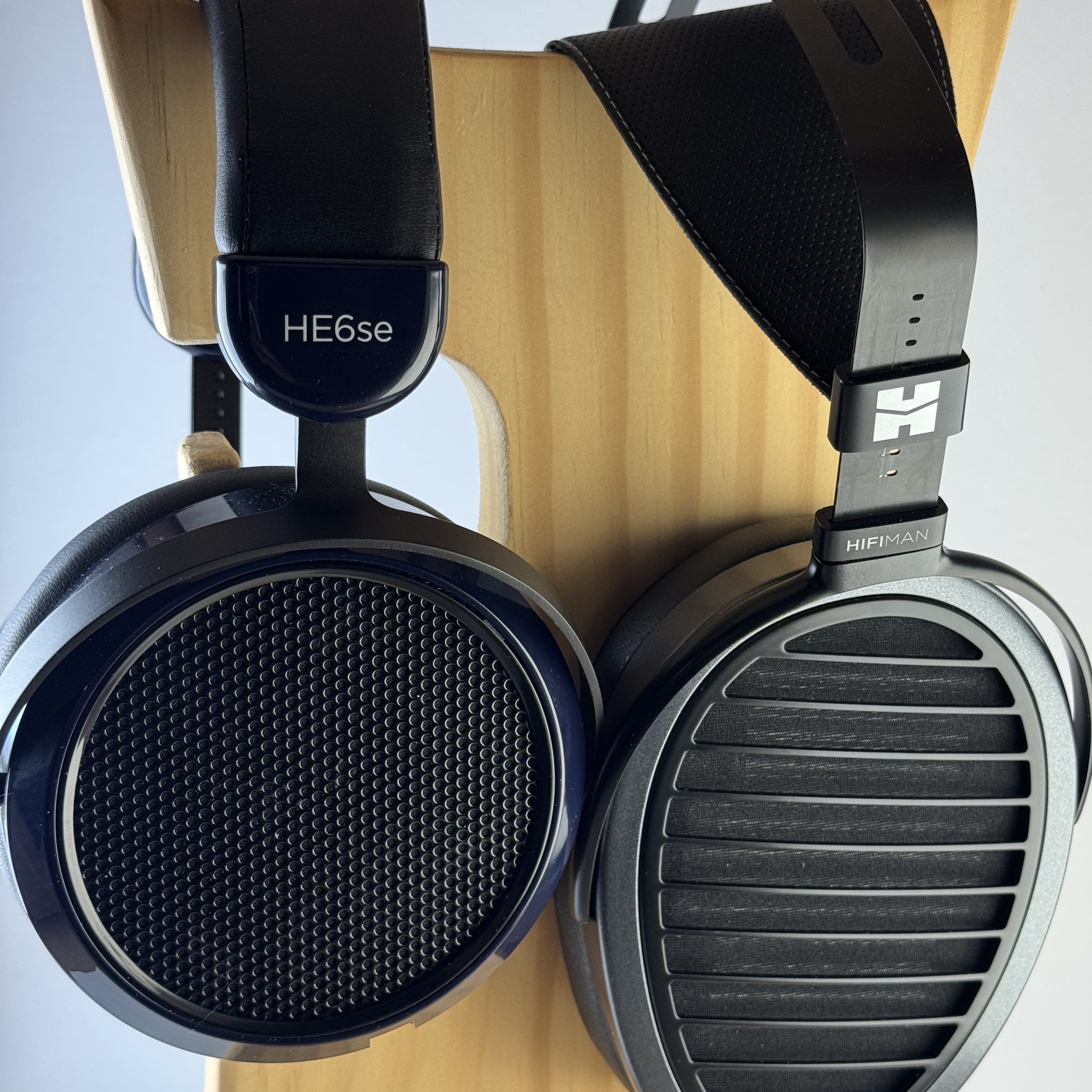
The band is pretty typical for this style of Hifiman headphone; it’s filled with almost an inch of reasonably springy foam and covered in leather or pleather. Each side of the headband has 9 or 10 clicks of adjustment, though at least on my review unit some of the clicks feel a little worn down and hard to stop on, and because of the weight of the cups they tend to slide fully open whenever they’re hanging from a stand. Unlike the Arya, the clicking mechanism is internal to the headband so there’s no easy way to see what your settings are at a glance.
Overall, these feel more like a premium product that most of Hifiman’s other products, particularly the Arya Stealth and Edition XS, though they give up a little in terms of adjustability to the Arya and as a result some people might find them harder to get a proper, consistent fit with.
Comfort
I find the v2 pretty comfortable for longer listening sessions. They are heavy, and the design of the band means that more weight is resting on the top of my head than with many other headphones, but even after several hours I don’t feel any hot spots due to how compliant the foam on the headband is.15 The clamp force is minimal, and comfortable, though they do move a little bit on my head if I turn my head quickly or look too far down or up.
In a perfect world, I’d like a little more clamping force just to stop them from moving quite as much on my head, but overall I find these very comfortable to wear and I don’t feel a need to print a Capra strap.
Appearance
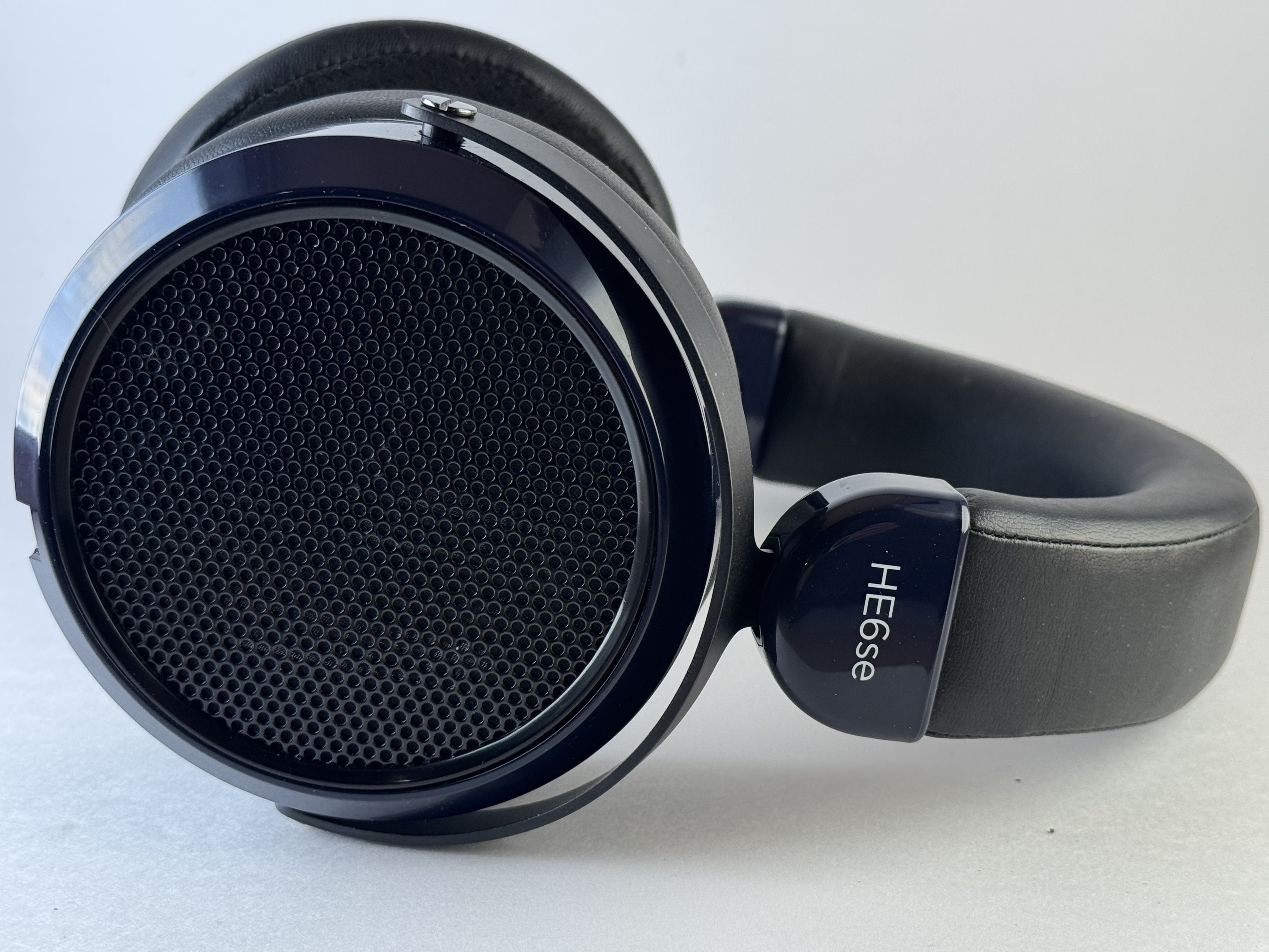
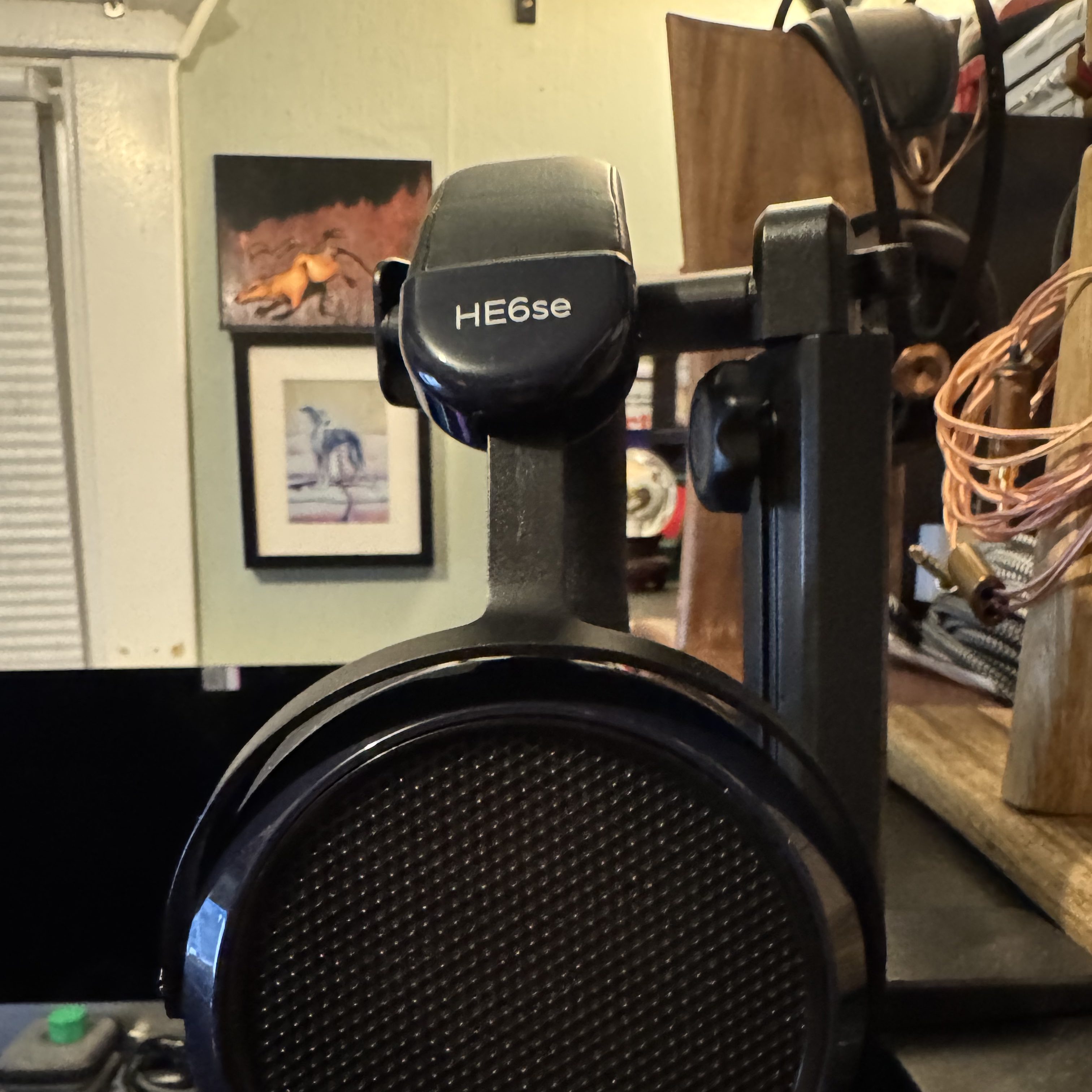
The design on the v2 is very simple, black on black on black with the Hifiman logo on the left yoke and the model designation (minus the “v2” on the right temple). They’re … fine. I don’t think they’re as striking as the Sundara or the Arya Stealth (and certainly not the Audivina), and the round shape makes them less visually interesting than the Edition XS, but they’re a perfectly nice looking pair of headphones. If I get really bored I might try printing more interesting replacement grills, but for now they do their job well.
Value & Comparisons
I will start by saying that these don’t feel like the nearly-$2,000 headphone they originally were. Particularly in terms of adjustability and appearance, I wouldn’t feel great about dropping almost two grand on them; for that kind of money, I’d want a more premium feeling and looking experience closer to the Bokeh Closed. They are really good headphones, but I’m not yet quite convinced that any headphones are worth that kind of money, and certainly not ones like this that feel a bit bare bones.16 Overall I’d call these a grown-up version of the Sundara.
That said, I personally think that these are a steal under $400. As I’ll discuss below, I slightly prefer their sound profile to their slightly more expensive, $599 cousin the Arya Stealth, and I find them a little more comfortable for most use cases.
Arya Stealth
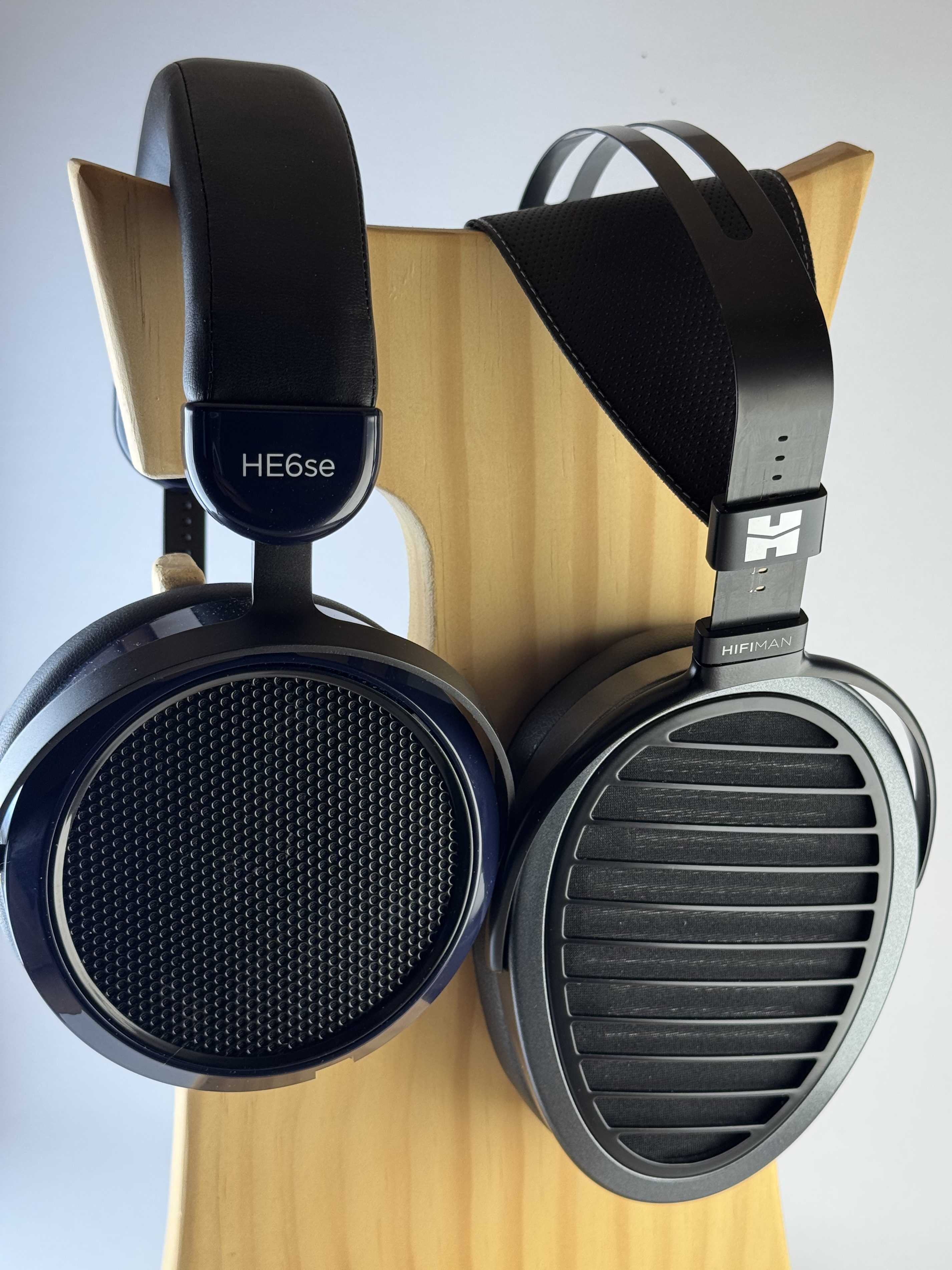
The Hifiman Arya Stealth is the most obvious comparison in my collection, as they’re both Hifiman planars that started closer to $2000 than $1000 and have since seen substantial discounts (particularly for open-box or refurbished versions). The big challenge in this match up is volume-matching, as the v2 are MUCH harder to drive than the Arya and require a lot more power. This makes it hard to go back and forth with the same amp.
To me, the Arya has maybe a slightly wider soundstage, but slightly less impactful microdynamics. The Arya have better bass, pretty equivalent mids, and a treble performance less to my taste compared to the v2. The Arya’s treble isn’t problematic, exactly, but can edge on harsh sometimes on things like claps, cymbals, or particularly high pitched guitar notes. The v2 sands off those harsh edges. Both excel at layer separation and separation of instruments in space; you can hear every note distinctly, and on a recording like “Chan Chan” you can tell exactly where every musician is standing relative to everyone else.17 On “Garcia Counterpoint” you can tell which lead guitar is which based on timbre on both pairs of headphones (even without considering where they are in the mix based), though I think the Arya is very slightly better resolving.
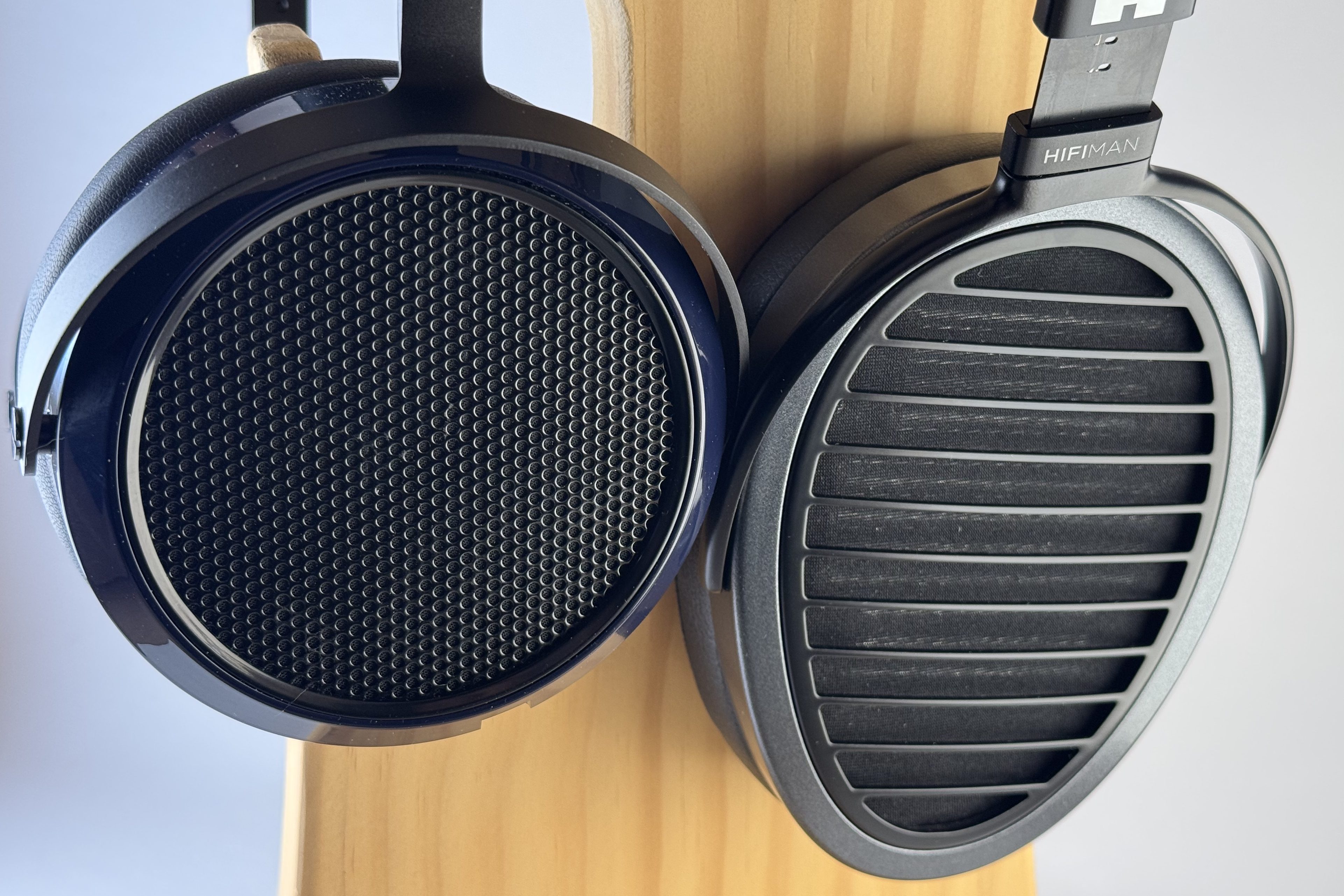
Purely on sound, I think I’d give a very slight edge to the Arya Stealth. This whole process has really reminded me how damned good that headphone is, and that maybe I should give them more of my listening time. For me, though, the v2 is a more comfortable headphone for long sessions, both in terms of purely physical comfort AND in terms of the tune; after enough time with the Aryas I do eventually find them a little fatiguing in the treble without EQ. With EQ, the treble fatigue issue goes away, and I’m left with a decision between the round, single-band style v2 and the egg-shaped, suspension style Arya. I’ll come down slightly on the side of the v2 for that reason only.
That said, at $599, the Arya is more than $200 more expensive than the HE6se v2. Even if you look at the refurbished version of the Arya at $529, I’d be hard pressed to say that it’s worth an extra $150 for a pretty marginal performance increase. Regardless, they’re both great headphones worthy of your time and respect, and I can wholeheartedly recommend either (my Hifiman misgivings notwithstanding).
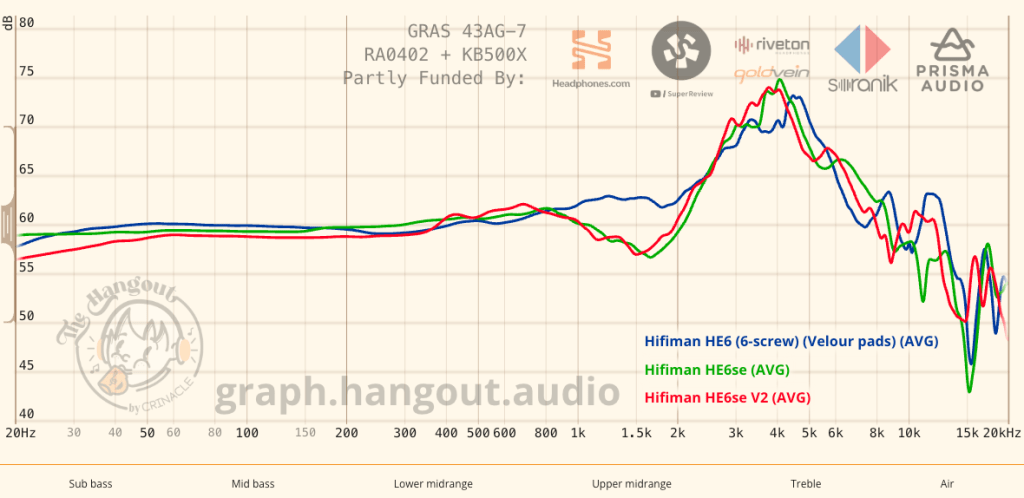
With the subjective stuff out of the way, let’s look at the graphs:
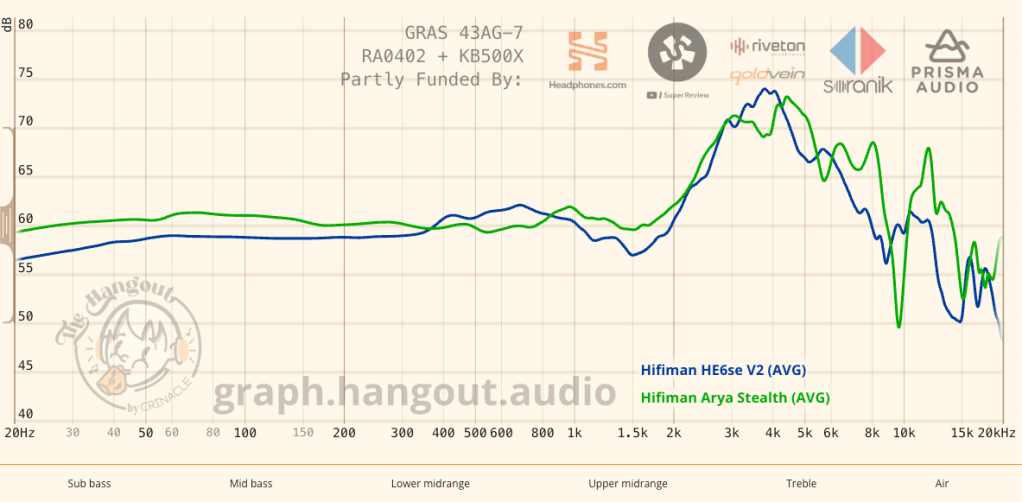
Yeah, that looks about right. I think the difference in the bass is less noticeable than this graph would suggest (and is largely non-existent if you factor in good, parametric EQ), and I’m genuinely surprised by the relative dip in the midrange on the v2, but the treble variation seems spot on.
So … yeah. Both great headphones. I have found myself reaching for the v2 over the Arya for the last couple of months, and as much as I enjoyed this match up and found it compelling, I don’t think anything has changed my mind.18 As long as you have (or will buy!) a decently powerful amplifier, the v2 is a better value pick to me even if the Arya is potentially a slightly better headphones for sound quality alone.
Hifiman Sundara/Hifiman Edition XS/Fiio FT1 Pro
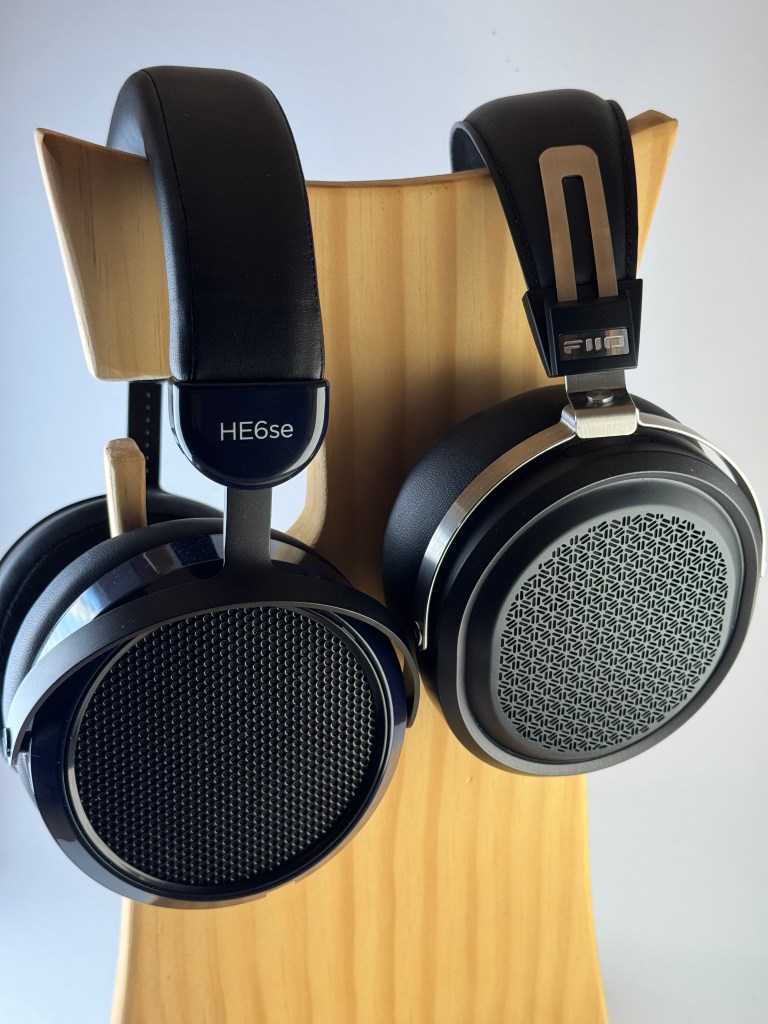
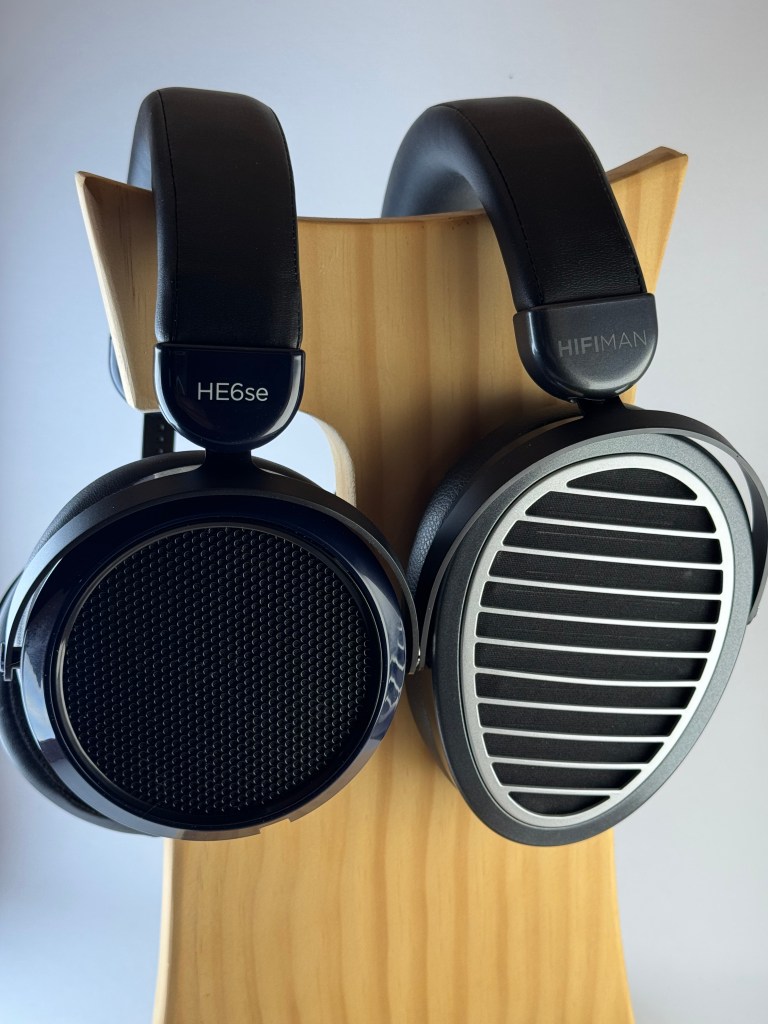
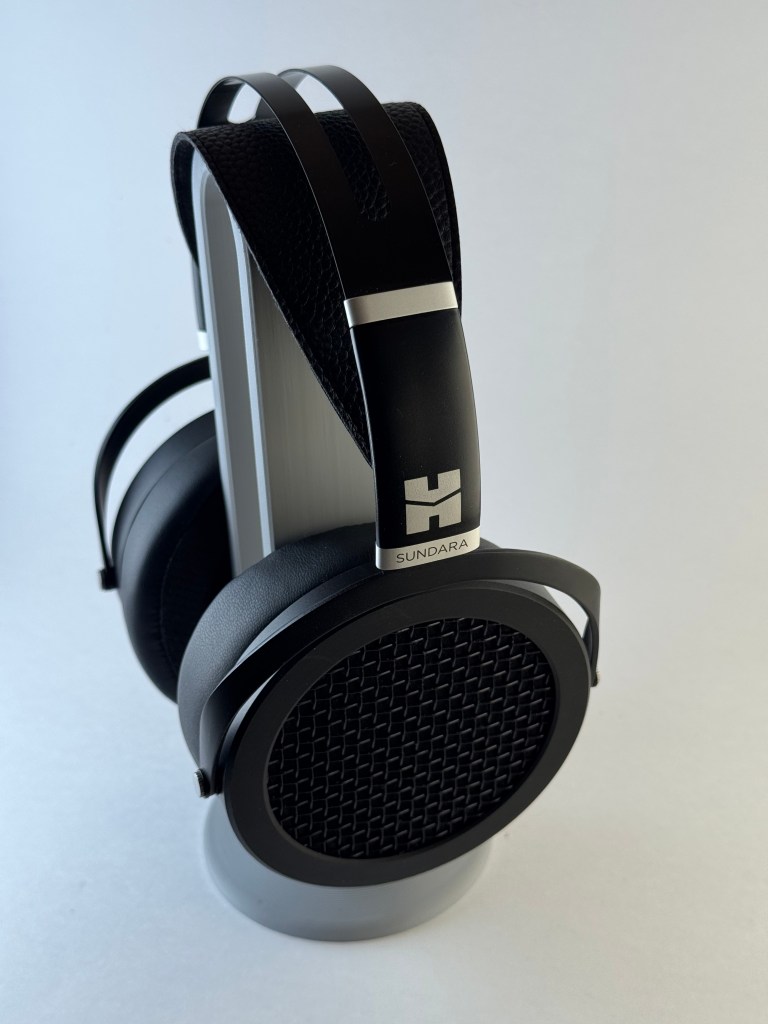
This is, on paper, a pretty unfair comparison despite the superficial similarities between these (mostly!) round-shaped, open-backed planar magnetic headphones. Turns out that it’s also pretty unfair when it comes to reality too. To paraphrase me from my Edition XS review, “… the [Sundara/XS/FT1 Pro] are, charitably, $300 headphones (ignoring the original MSRP), and the Aryas are just not.” Given that I have a slight preference for the v2 over the Arya, it shouldn’t be surprising that I’ll take the v2 over any of those headphones any day. And as much as I really enjoyed the Sundara and waxed poetically about them last month, they’re also still just a $300 headphone up against an offering that wasn’t totally crazy at almost $2000.
As good as they all are, if you’ve got the extra $150 (and either have or don’t mind getting decent amplification), get the v2 over any of these options.
Focal Elex/Clear
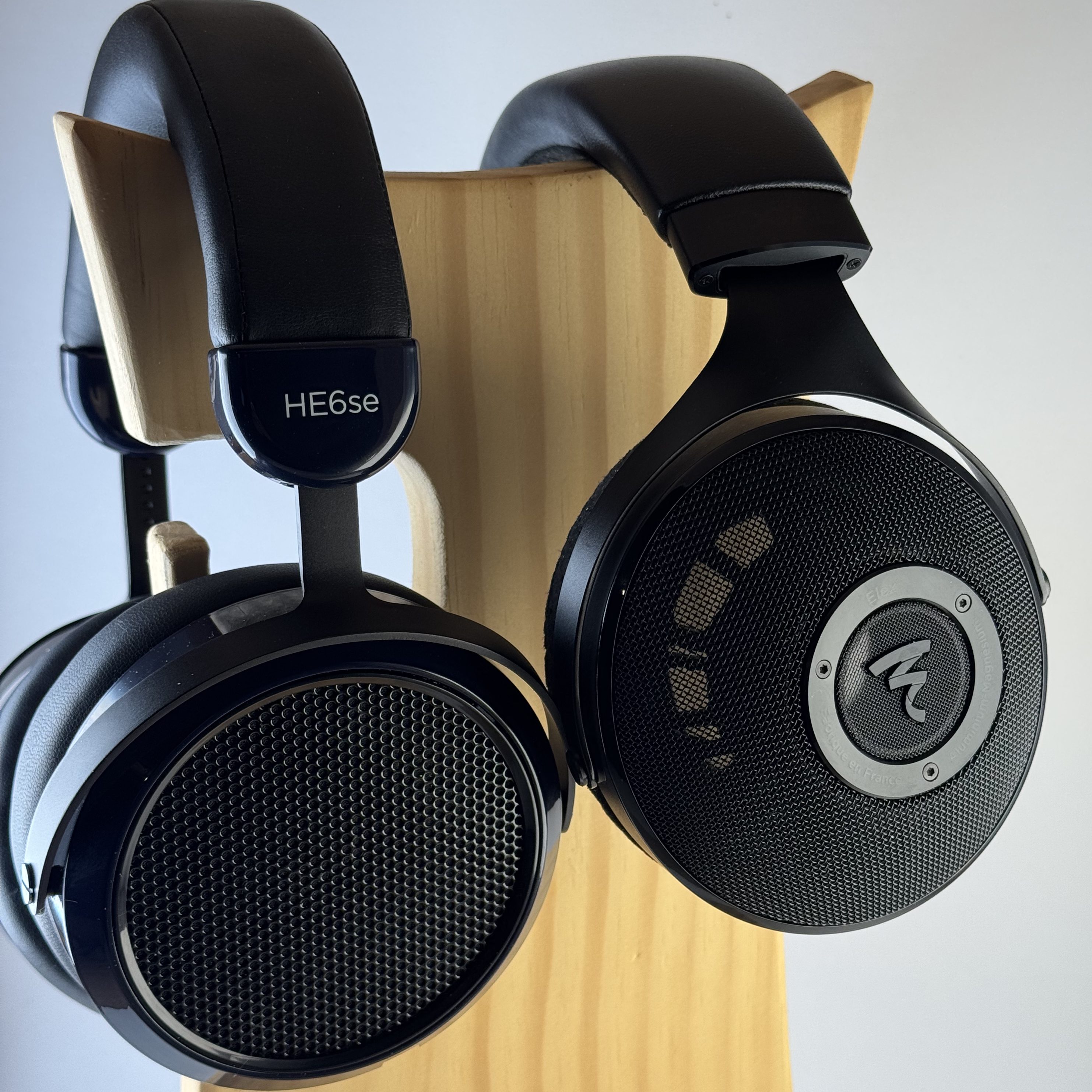
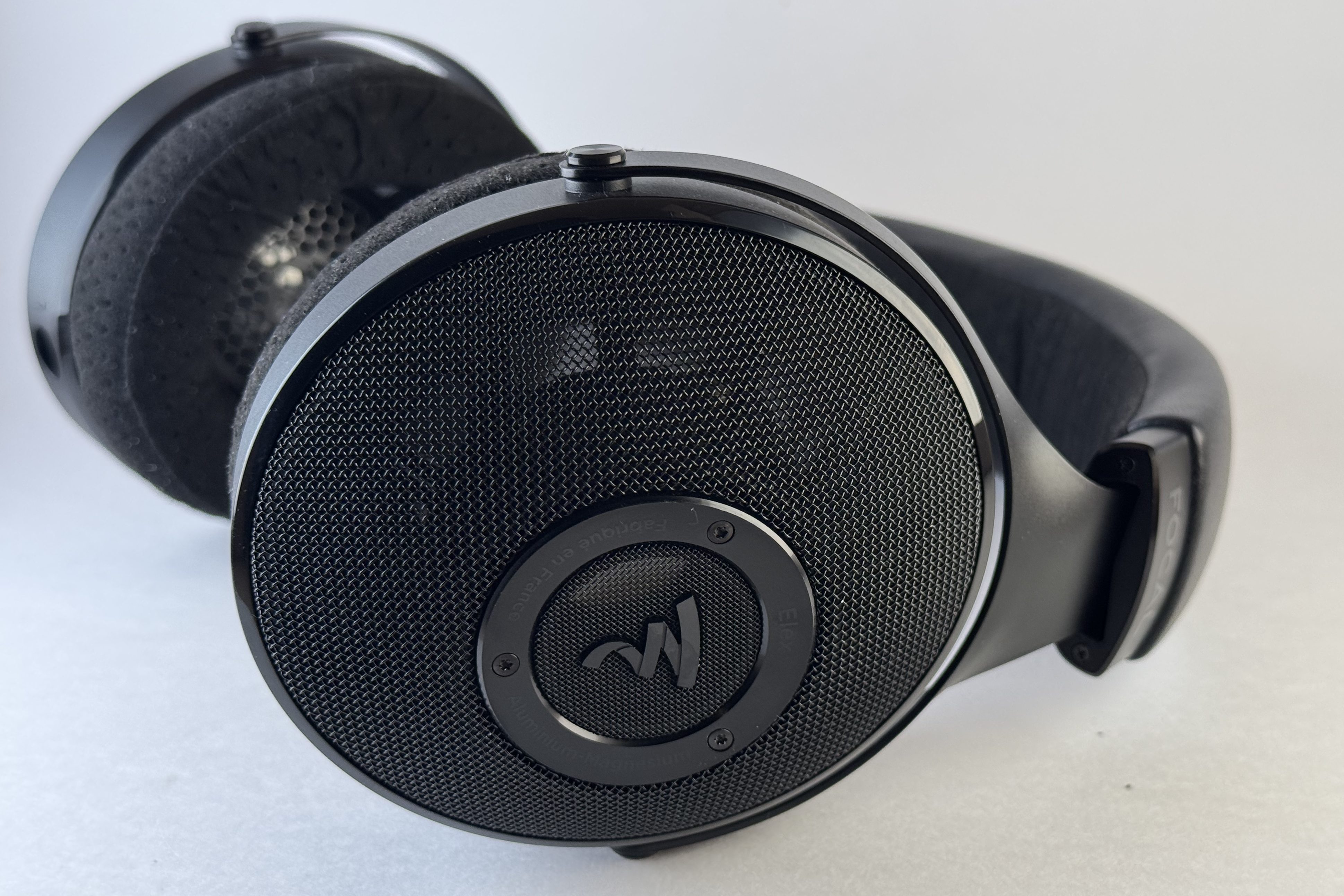
I’ve been weirdly hesitant to get around to doing my review of the Focal Elex and haven’t done much comparison of it to anything in a review recently, despite it existing in my head as basically “what if the 6XX actually had bass.” I really ought to go back and update some of my other open-back reviews to throw it in the mix as a comparison as well.
The v2 obviously takes it in terms of resolution and detail retrieval; as is typical of planars, the v2 is just really excellent in terms of technicalities. But, for me, I keep coming back to how much I love the Sennheiser style of warmer tune; it’s why I will always keep the 6XX around, it’s why the Meze 109 Pro is my favorite headphone of all time, and why I really need to give the Elex more attention.
If you want resolution, detail, soundstage, or slightly crispier treble, the v2 is for you. If you want a better (and beautifully balanced!) bass and midrange, and an even more smoothed out treble response with a perfectly adequate soundstage and resolution, go with the Elex. The v2 are arguably a better headphone for critical listening, but the Elex are just suited for me and most of my casual listening (though EQ partially bridges that gap).
And now the measurements19:
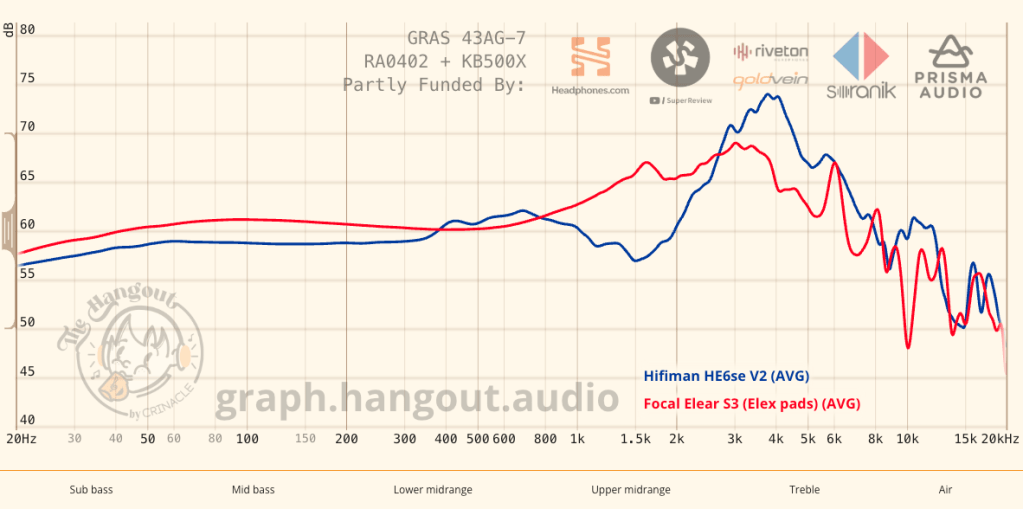
This seems about right; the Elex has a better bass and midrange response (at least to my taste), and even a little more mellowed treble response. [Editors note: good lord the Elex are awesome. I need to listen to them more.]
I haven’t had the Clear for long enough to have a strong opinion of them20 but so far they seem pretty similar to the Elex; enough that I think I’m likely to come down on the Focal side of the v2 x Clear showdown. I still prefer the Clear’s bass and mids, and despite the Clear seeming like it has a few weird treble spikes, it’s amazing how tinny the v2 sounds for a little bit after swapping over from the Clear. With EQ it’s pretty close, but out of the box I’m still going with the Clear and the graphs more or less line up with what I’m hearing21:
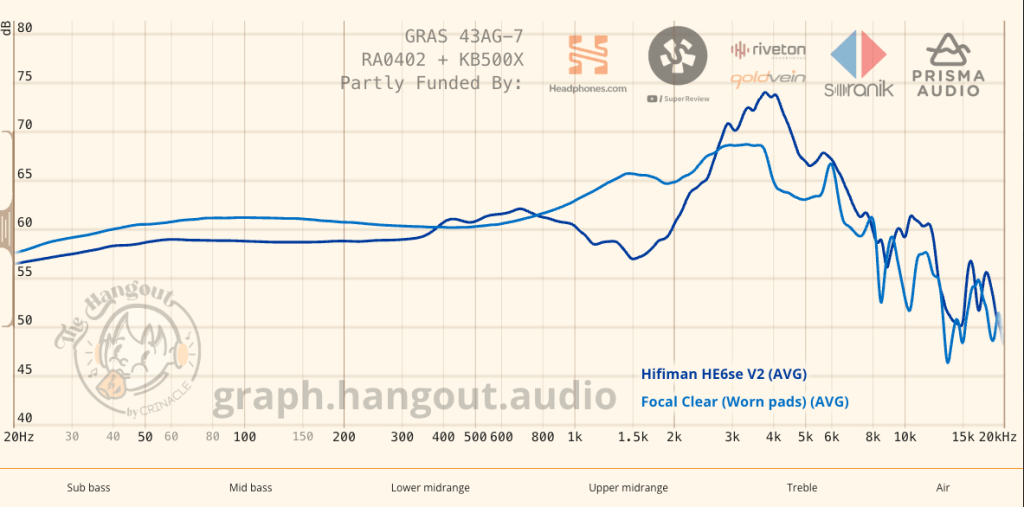
That ear gain tho.
HD 6XX/600/58X/660S

This is a fairer price comparison, at least at current prices. The HD 650 (the non-Drop version of the 6XX) is right around $400 these days, the HD 660S2 is between $400-500, and even the venerable HD 600 is right around the $300 mark (at least until Black Friday sales hit).22 The 6XX is my reigning favorite among the bunch, so I’m primarily going to focus on them.23
Like the Elex, the 6XX is absolutely outclassed in terms of technicalities. There’s just more there there with the v2, and while I don’t have a problem with the 6XX’s soundstage (three blobs be damned!), it’s amazing how noticeably intimate it is (and the real limitations of that intimacy) when directly A/B’ing against a competent, wide-sounding planar. That said, the richness you get from the deeper bass and mids on the 6XX are, at least to me, a reasonable trade for the lost resolution and soundstage. Tracey Thorn’s voice on “Hunter Gets Captured by the Game” throbs and wavers on the 6XX but sounds relatively flat on the v2.24 And if we look at the graphs, that absolutely makes sense:
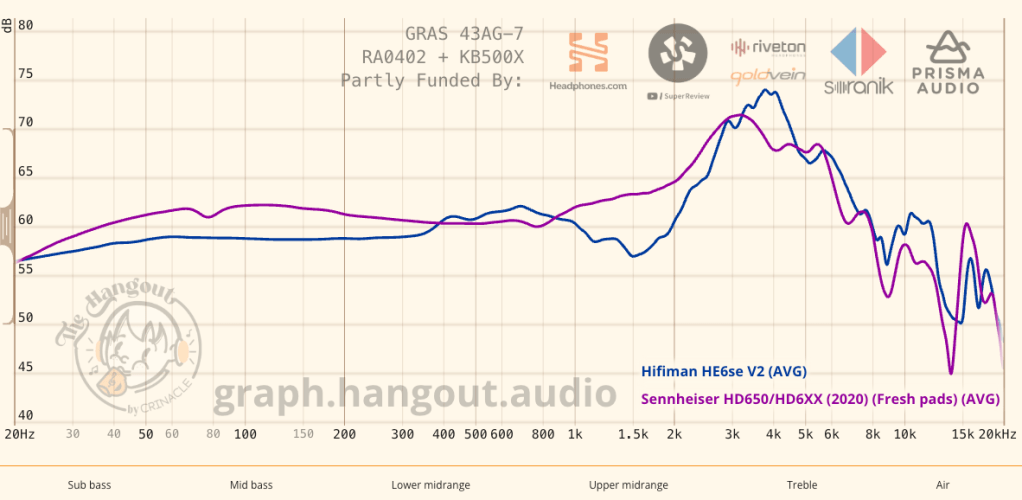
While it’s hilarious to look at a headphone that makes the 6XX seem bassy, that’s what we get here. And I attribute the 6XX’s amazing vocal reproduction to the substantially stronger frequency response throughout the midrange.
For every day listening, and for almost $200 less, I’ll take the 6XX over the v2. That said, there is real value in a headphone that has such incredible technicalities for very specific kinds of listening. The 6XX (or something with a similar tune) is what I’m going to grab 9 times out of 10 for casual and background listening, but when I’m focusing on a new album or doing dedicated listening, I’m going to prefer something like the v2 (or Arya, for that matter!) that lets me really pick apart and experience a recording in so much more detail. And a good EQ profile for the v2 brings it pretty damned close for the casual listening too.
[I got the HD 490 and HD 660S2 in recently for review; I’ll come back and update this after I spend some time with them both. At least so far, I think I’d put the 660S2 roughly on par with the 6XX and the 490 slightly lower for music, higher for gaming and maybe comfort.]
Meze 105 AER
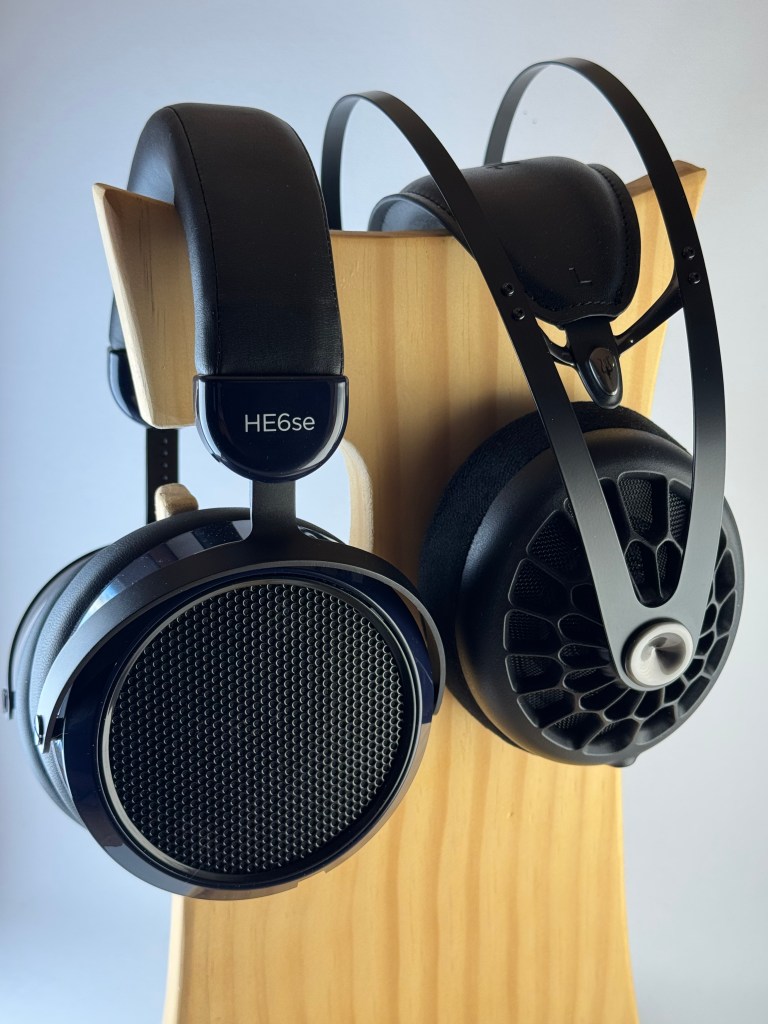
Like the Elex and 6X0, the decision between the v2 and the Meze 105 AER really comes down to use case. The v2 is clearly more detailed and resolving, with better layer separation and soundstage, but a much less interesting and engaging tune without EQ.
The first thing I noticed when going back to the v2 from the 105 AER was how tinny and hollow they sounded. After a few minutes of adjustment, I started hearing the precision and fine grain detail that the v2 is great for again, but it’s something.25
To me, the 105 AER wins on pretty much all fronts: better bass, better mids, better treble (without the slight funkiness on the top end that their big brother the 109 Pro adds), substantially better comfort (the 105 AER are, after all, one of the most comfortable headphones I’ve ever owned), build quality, aesthetics, etc. I will say that coming back to the 105 AER from the v2 you do feel like you’re missing some of those details almost immediately, particularly with complex music that I know well, but after a few minutes of readjustment it’s not bothersome.
I suppose it shouldn’t be surprising that I’m going to pick the 105 AER over the v2 most of the time as well; they’re one of my favorite pairs of headphones (I gave them a rare 9 out of 10 and 10 out of 10 cost-adjusted, after all). I will say that there is some music I would prefer to listen to on the v2; for things like jazz (especially Cuban jazz) the extra sense of presence, detail, and layering you get from the v2 trumps the preferable tuning. The 105 AER are certainly not built for critical listening, and that’s another thing I’ll grab the v2 off the shelf for over the Mezes.
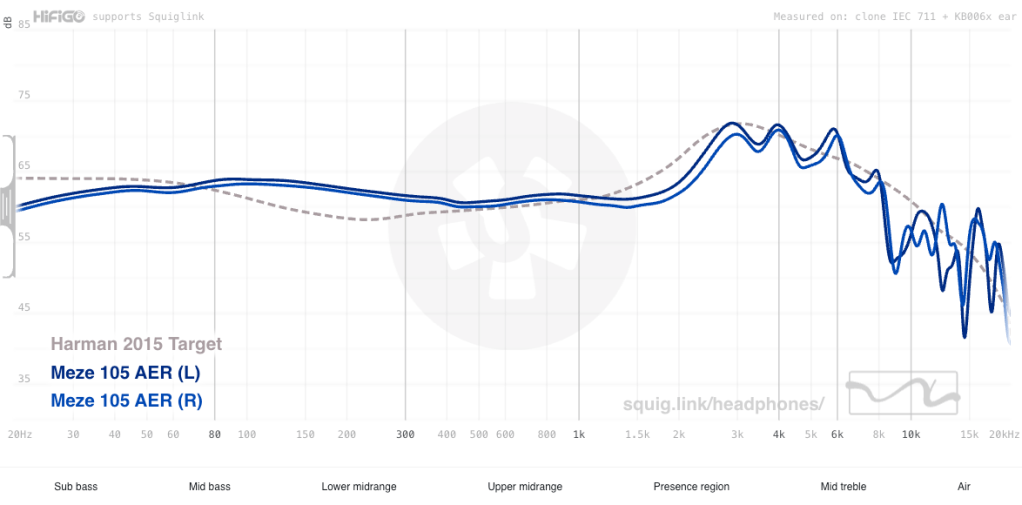
It appears that no one has actually measured both the v2 and the 105 AER, so here’s a graph of the 105 AER’s performance just for reference26:
Meze 109 Pro: Though the v2 were substantially more expensive than the Meze 109 Pro at MSRP, at this point they’re less than half the cost and it doesn’t feel particularly fair to compare the two. One of the things that I noted in my 105 AER review is that the 109 Pro has better resolution and microdynamics than the 105 AER, and while the 109 Pro isn’t quite as detailed or resolving as the v2, it’s not very far off. I’m probably still grabbing the v2 for purely critical listening over the 109 Pro, but it’s not nearly as clear cut a choice, and I’m absolutely taking the 109 Pro for almost any other circumstance outside of maybe gaming.
DMS Open Omega
[Caveat: These were not designed for home 3D printing, and as a result they’re a challenging print. I ended up with a pair of headphones that I definitely enjoy, but I’m no where near certain that they sound like DMS intended, which makes comparisons harder.27 It’s further complicated by the fact that my Omegas currently have a prototype headband that I’m developing on them, and I don’t think the clamping force (the pressure that the ear cups exert on the side of the head) is strong enough, which can affect the pad’s seal against the head, and in turn can affect frequency response and subjective sound.]
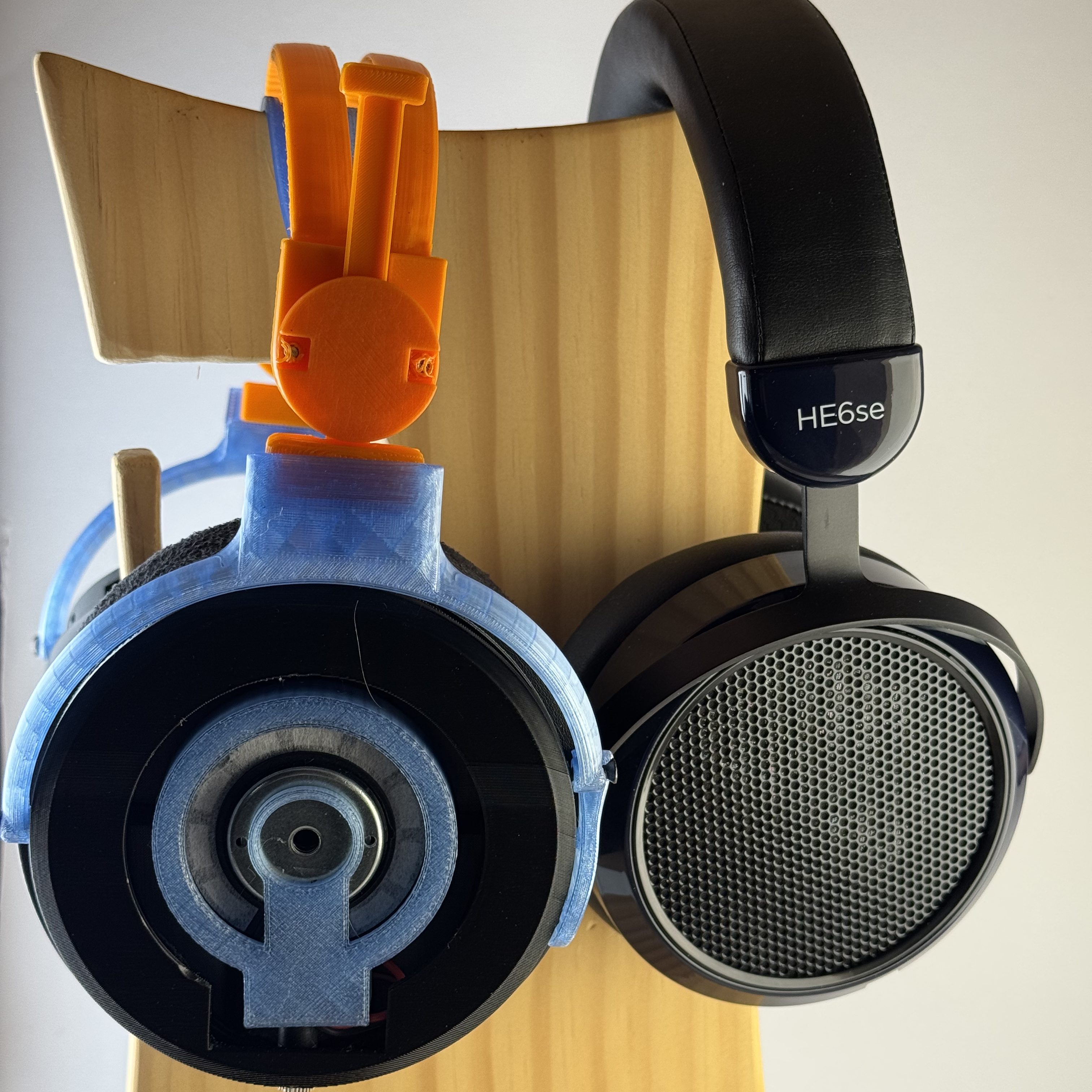
I’m including the Omega here mostly because they’re probably the closest sounding headphone to the v2 in my collection (at least my particular unit/build): they’re pretty similar in the treble and bass, and have similarly recessed mids. The soundstage and separation on the Omega is also closer to the v2 than most of the things in my collection. Particularly on a track like “Chan Chan”, you get a remarkably strong sense of where each musician is in space, relative to both you as the listener and to the other musicians. The soundstage is a little narrower than the v2, but it’s still decently wide, and the detail retrieval on the Omega is genuinely a bit surprising. The one real difference is in the build; I definitely worry constantly about breaking the Omega (particularly with my janky headband, but even with a solid Capra headband!) while the v2 feels like a tank; the trade off is that the Omega is MUCH lighter and probably better suited to long listening sessions. If you want most of the upsides of the v2 and have a 3D printer, you might want to think about building the Omega instead for around $100 in parts and ten or fifteen hours of printing. I definitely prefer the v2, but I don’t know if I prefer them $250 more.
Overall
Overall, I’m a pretty big fan of the HE6se v2 for some specific use cases. They do most of the things that the Arya do, almost as well, and they address the two things that I don’t absolutely love about the Arya (build quality and treble response). They definitely share some of the flaws of headphones that I love like the HD 600, with their relatively weak bass response (but excellent bass quality), while adding pretty incredible detail and resolution. These are headphones that will excel at very specific applications, and struggle with others. I think they’re going to be great for critical listening, particularly for genres like jazz and acoustic music, but are surpassed by other things in my collection for casual listening and things that prominently feature vocals, midrange, or bass.
There was a point in this review where I was pretty sure that the v2 had permanently displaced the Arya Stealth from my collection, but after a lot of A/Bing between the two I’m not convinced that they necessarily fill the same niche for me. I think they’ll be great for gaming, but the sheer power demand will limit me to a gaming rig with a decently powerful amp connected. And while I find them surprisingly comfortable, I have noticed a slightly stiffness to my neck over the last few days of pretty intensive listening, and I wonder if that might be in part due to their unusual weight.
I haven’t yet found an EQ profile that sounds exactly right, though I’ve done a fair amount of reading and fiddling around. I’m definitely to a place where it’s fun for casual listening though. I find myself wondering if my unit is “normal”, just because some of the more popular profiles on the internet result in a pretty funky sound to my ears. Might be time to invest in a headphone measurement rig!28
Phil’s Matrix of Use:
I’m painfully aware of how long and sprawling these are getting at this point, and I’ve been trying to figure out a good way to provide the highlights in a meaningful way. Here’s today’s attempt
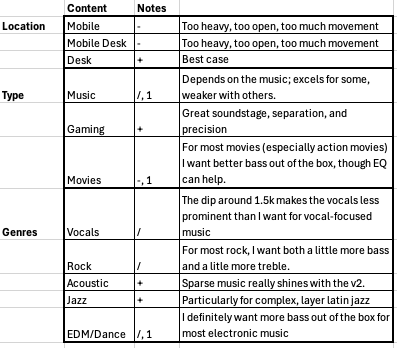
Matrix Legend
+ = good
/ = acceptable, but there are better options
– = not recommended
1. The right EQ might move this to a +.
#reviews #headphones #sennheiser #6XX #anc #spatialaudio #meh #2025 #99noir #meze #sunglasses #overear #cans #hifiman #arya #stealth #editionxs #budget #hahahaha
- I score bass, mids, and treble on a two part scale: 1-5 for quantity (5 being the highest), and A-E for quality (A being best in class, E being laughably bad). For soundstage it’s also a two part scale, with the number representing the width and the letter the separation within it. ↩︎
- For comfort/fit, my scale is A-E with A being disappear entirely into the background and E being I want to tear my ears off to stop feeling these headphones on my head. ↩︎
- Making for some interesting Reddit reads … ↩︎
- Spoiler alert … I actually don’t hate it? Especially with EQ. ↩︎
- For power-related reasons that I’ll get into in a bit. ↩︎
- Genuinely surprised by how good this sounds; might have to come back to it later. ↩︎
- The Mojo 2 is weird; it shows volume via a color code. ↩︎
- This is *mostly* loud enough, but only just. ↩︎
- And Hifiman makes the HD-Adapter, a product designed to let you run them safely off of a power amplifier. ↩︎
- Like seriously. WTF. I’d have respected them more if they just omitted a cable. ↩︎
- It’s also almost $800. ↩︎
- What do I mean by microdynamics? Accents, a sense of punch when a drum hits or a horn blows. ↩︎
- Editor’s note: I may have changed my mind on this after a little bit of EQ. When I added a bass shelf I started to get a lovely warmth out of the Gremlin, but I stand by it not particularly benefiting right out of the box. ↩︎
- The device to let you run a headphone out of the speaker taps on a power amplifier. ↩︎
- By the end of this review, after a couple of days of regular use, I did find my neck a little stiff. Don’t know for sure if it’s related to the v2 or not, but I thought it worth mentioning. ↩︎
- Also, seriously, the cable is SO bad. ↩︎
- It’s also worth noting that these headphones are so resolving that I figured out that one of my Hart interconnects has a channel imbalance, which I didn’t know was even a thing. ↩︎
- Interestingly, today while working I got pulled onto a surprise call and swapped over from the Jotunheim/Mimir to the 3.5 mm out on my Yeti microphone, and got a harsh reminder in how power-hungry the v2 is. ↩︎
- This is a measurement of the Focal Elear using the Elex’s pads, but the Elex is a Drop colorway of the Elear with a different set of pads. General consensus is that the Elear w/Elex pads is sonically identical to the Elex. ↩︎
- And I’ve been working on reviews basically that entire time. ↩︎
- And it’s worth noting that my Clears are used, and while the prior owner replaced the pads at some point they’re definitely not brand new. ↩︎
- The outlier, obviously, is the HD6XX which is a screaming value pick at $180 right now. ↩︎
- Also dear lord even my 7 year old 6XX are clampy bois compared to the v2 and LITERALLY EVERYTHING ELSE I’M COMPARING TODAY. I’ve had them long enough that I don’t think of them as being particularly clampy, but oof. ↩︎
- Though the cymbal pattern on the right side of the mix is WEIRDLY distracting on the 6XX; that must be a frequency spike. ↩︎
- It’s a really weird experience to have a bunch of times in a row; even though I’m pretty sure I know what’s going on each time I quickly check to make sure all of the cables are fully plugged in. ↩︎
- Be wary of comparing graphs that aren’t measured by the same person, on the same rig, with the same methodology and calibrations. ↩︎
- I talked a little bit about the challenges of reviewing DIY/3D printed headphones in my Sundara review. ↩︎
- Just kidding.
Mostly.
Mostly. ↩︎
 Phil's Superpower of Enthusiasm
Leave a comment