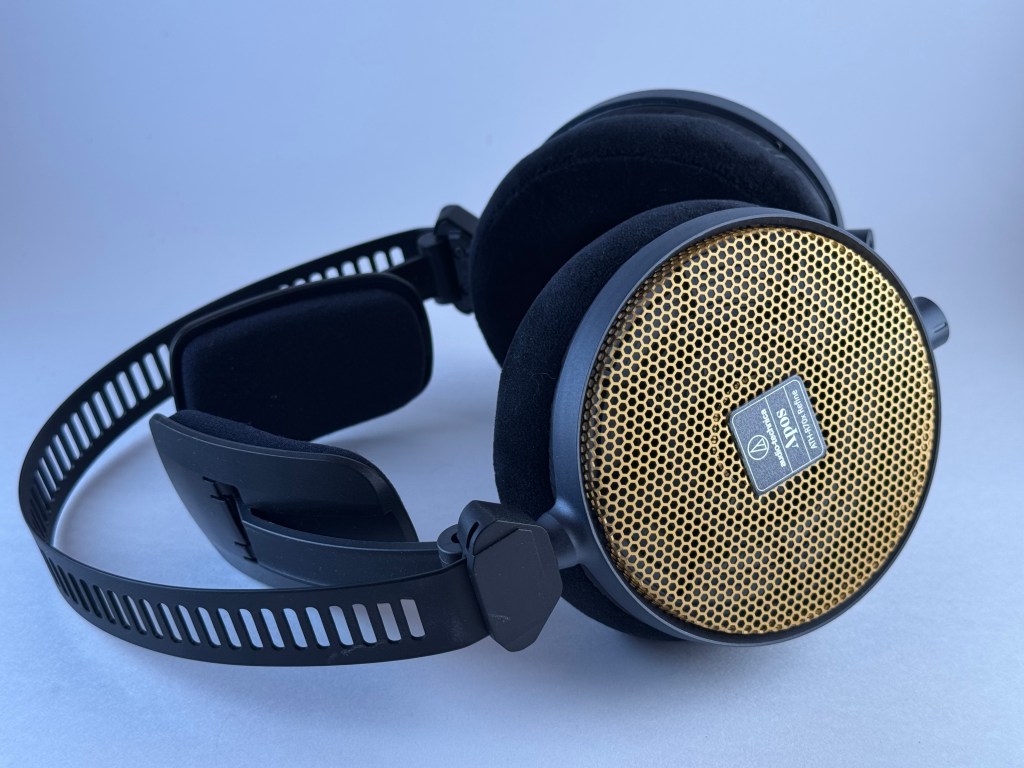
[MSRP $3001 and $350.2 Purchased from for $220 (R70x Refine) and $200 (R70x) in December 2025 and February 2026 off of r/AVexchange.]
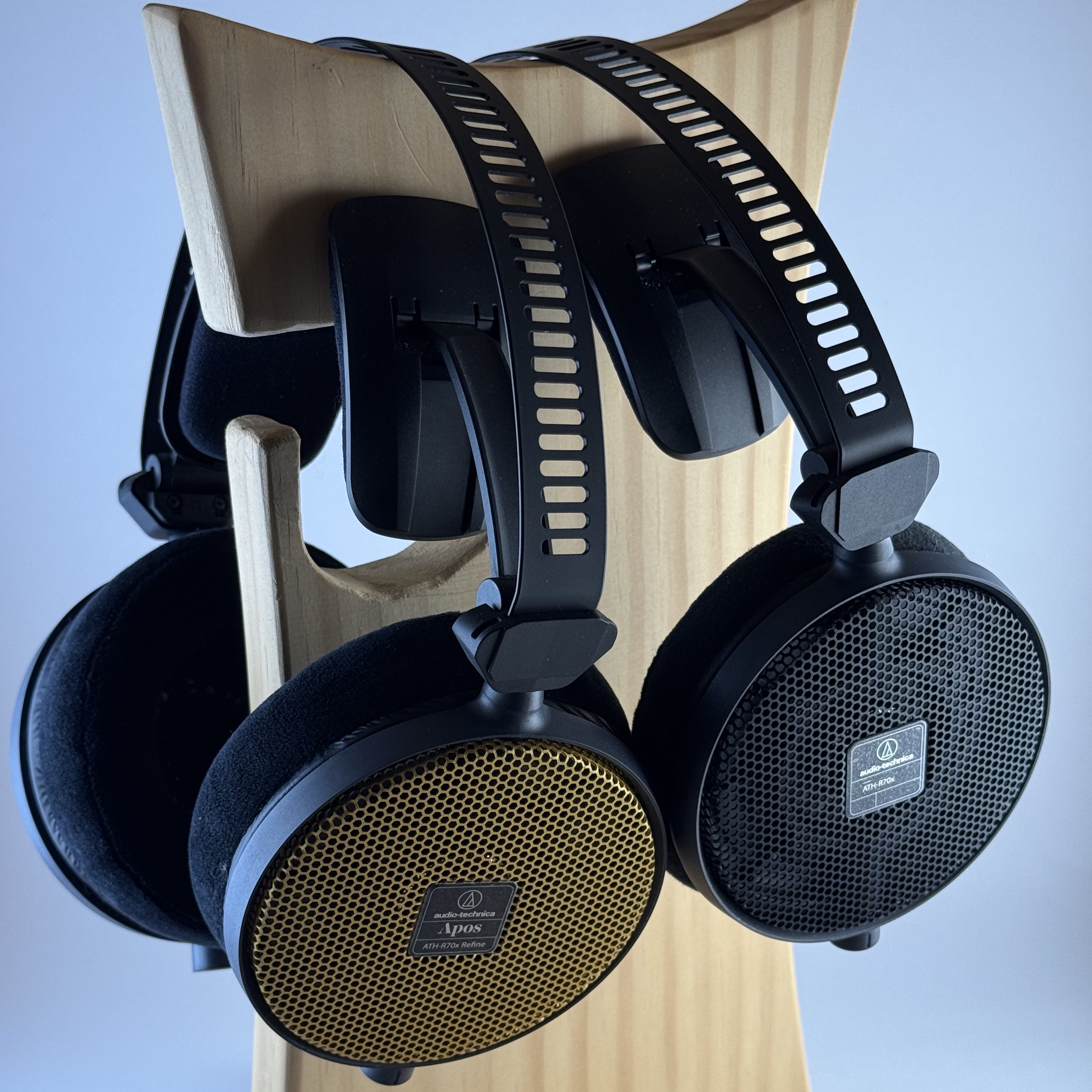
[Tl;dr: This is a great headphone family, and one that makes me excited for future Apos collaborations (and willing to consider future Audio-Technica products). They’re not super easy to source these days (there were only 1,000 units of the Refine manufactured, and the R70x has been superseded), but if you get a chance to get your hands on them they’re worth a listen, especially via tubes. To me, they’re better than most of the competition around their price point, which given the crowded and excellent market open back market in this sweet spot around $250 is really saying something.]
Scores:
Cost-agnostic: 7 out of 10 Denalis (Refine), 6 out of 10 Denalis (original R70x)
Cost-sensitive: 8 out of 10 Denalis (Refine), 7 out of 10 Denalis (original R70x)
TABLE OF CONTENTS:
Intro to the Intro
This is a “quick” review. There are a number of things that I’d love to get quick notes down on for my own edification/memory, but that I don’t want to spend the substantial time I devote to most of my (overly?) in-depth reviews on. Some of these will be things that aren’t in production anymore (so it’s less likely anyone will read a review), or are extra niche, or are things that I didn’t particularly like but want to be able to point people to my reasoning, or that are in a category I don’t spend a lot of time with (like IEMs). Today, the Audio Technica ATH-R70x Refine and ATH-R70x.
Introduction
Audio-Technica is one of the OG Japanese audio manufacturers, initially founded in the 1960s to manufacture turntable cartridges. They also were a pretty early manufacturer to take audiophile headphones seriously for home use, starting in the 1970s, and I’m pretty sure that the headphones I grew up around were an old pair of Audio-Technicas my dad had. (It’s also worth noting that while they’ve diversified a lot, Audio-Technica still manufactures very well-regarded turntables, including some really excellent budget and decidedly NOT budget options). I’d mostly experienced their entry-level closed backs as an adult and … they’re not for me.
But, I’d heard really great things about the limited Audio-Technica x Apos ATH-R70x Refine collaboration they did last year, and when a lightly-used pair popped up on r/AVexchange a little below market, I decide to take a shot. Spoiler alert: I really enjoyed them, and then I got curious see how they differed from the R70x (the headphone they were a “refine[d]” version of, and so when those popped up at a reasonable price I tried them out too. Now I just need the R70xa to complete the hat trick!
Testing rig
Here’s my basic testing protocol.
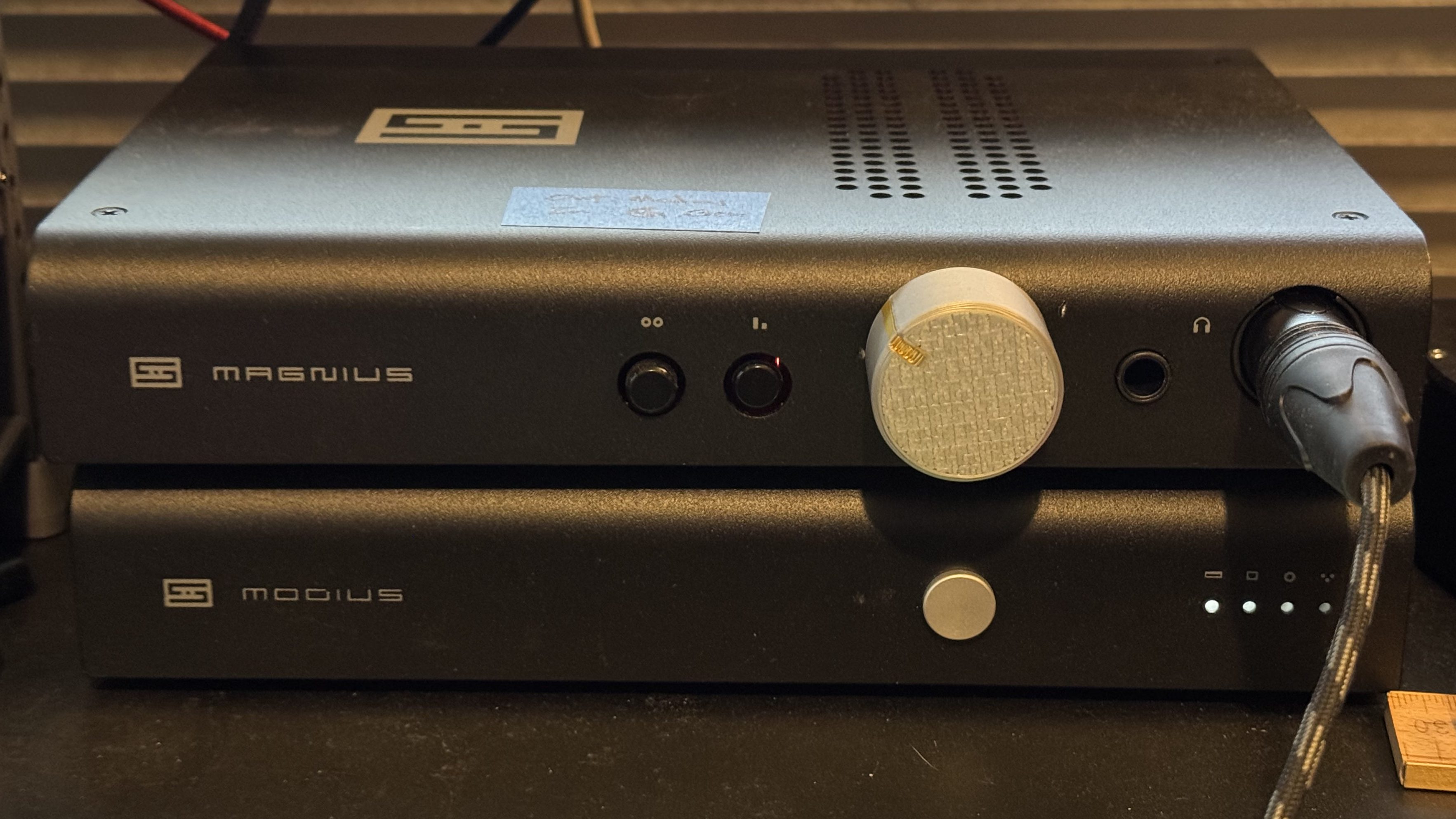
Based on my philosophy on the allocation of resources in headfi, I am doing most of my listening with the Schiit Modius/Magnius stack, via a Hart interconnect cable with a balanced XLR termination,5 with the Modius connected via USB-C to my gaming PC running the Roon client.
EQ
As noted in the Bathys review, I mostly prefer to test headphones with their default tuning, assuming that most people won’t take the time or make the effort necessary to use a third-party EQ. I like the Refine and the R70x without EQ, though they do have at least one potentially problematic dip in their frequency response on my head, so I may eventually play a little with EQ.
Volume
Here are the volume settings I use with the ATH-R70x Refine (unless otherwise noted, running via Roon with no headroom management, playing Daft Punk’s “Face to Face” from Tidal):
- Apos Druid/Gremlin: 1:30 (balanced, XLR)
- Chord Mojo: white, orange, yellow, red
- Dongles (Apple Music, iPhone 15):
- Apple dongle: 80%
- Crinear Protocol Max (Boost-enabled): 80% (single-ended)
- Fiio KA11: 60%
- JCALLY JM12: 90%
- Holoaudio Cyan 2/Bliss (KTE): -29 dB (balanced XLR, high-Z); -22 dB (single-ended 6.35, low-Z)
- iBasso DX170: 60% (single-ended)
- Mytek Brooklyn Bridge: 66
- Schiit:
- Mimir/Jotunheim 2 (Mimir has a -15 dB pregain applied via Forkbeard): low gain, 12:30 (balanced); high gain, 11:15 (single-ended)
- Modi/Magni: low gain, 9:15
- Modius/Magnius: low gain, 9:00 (balanced); low gain, 10:30 (single-ended)
- Snowsky Echo Mini: 60
- Topping:
- DX5 II: -29 dB (XLR, balanced); -24 dB (single-ended)
My torture testing list
My torture testing list: Apple, Tidal, Spotify.]
The Basics
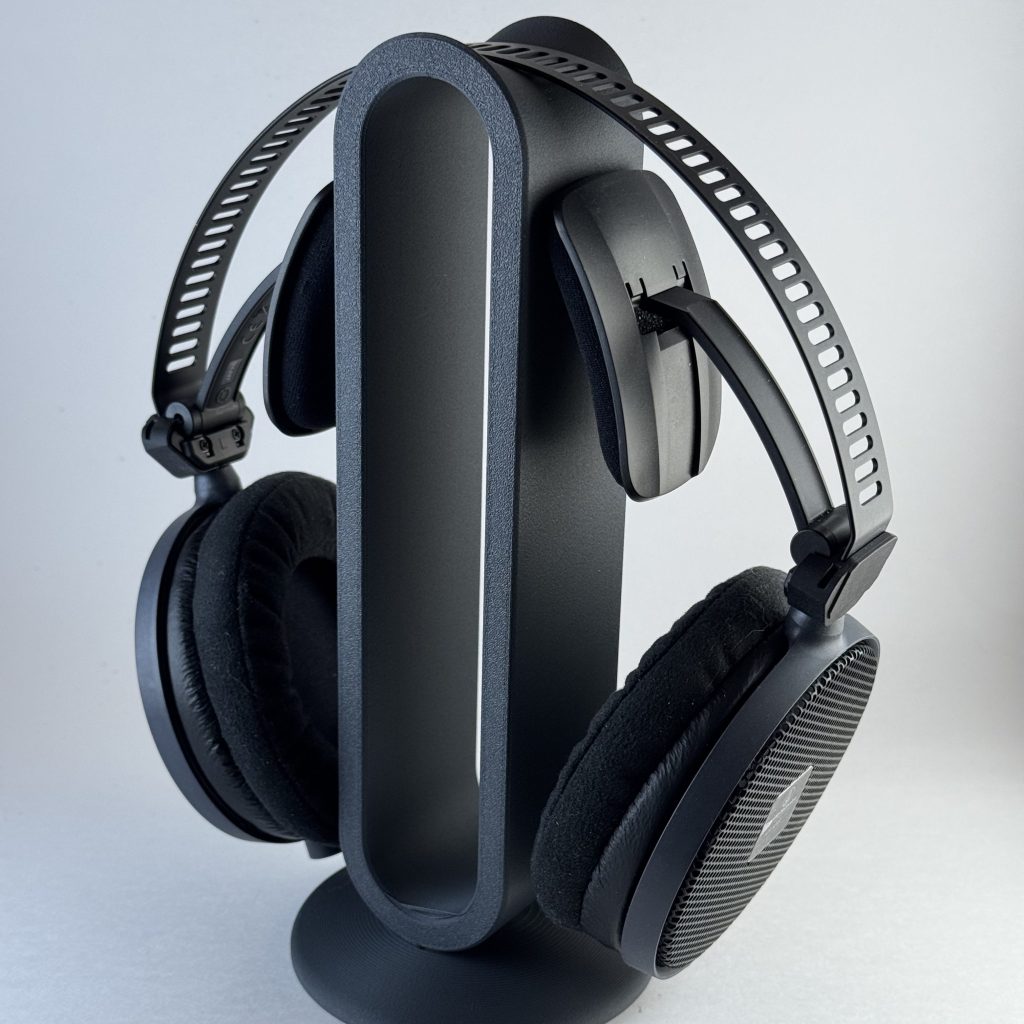
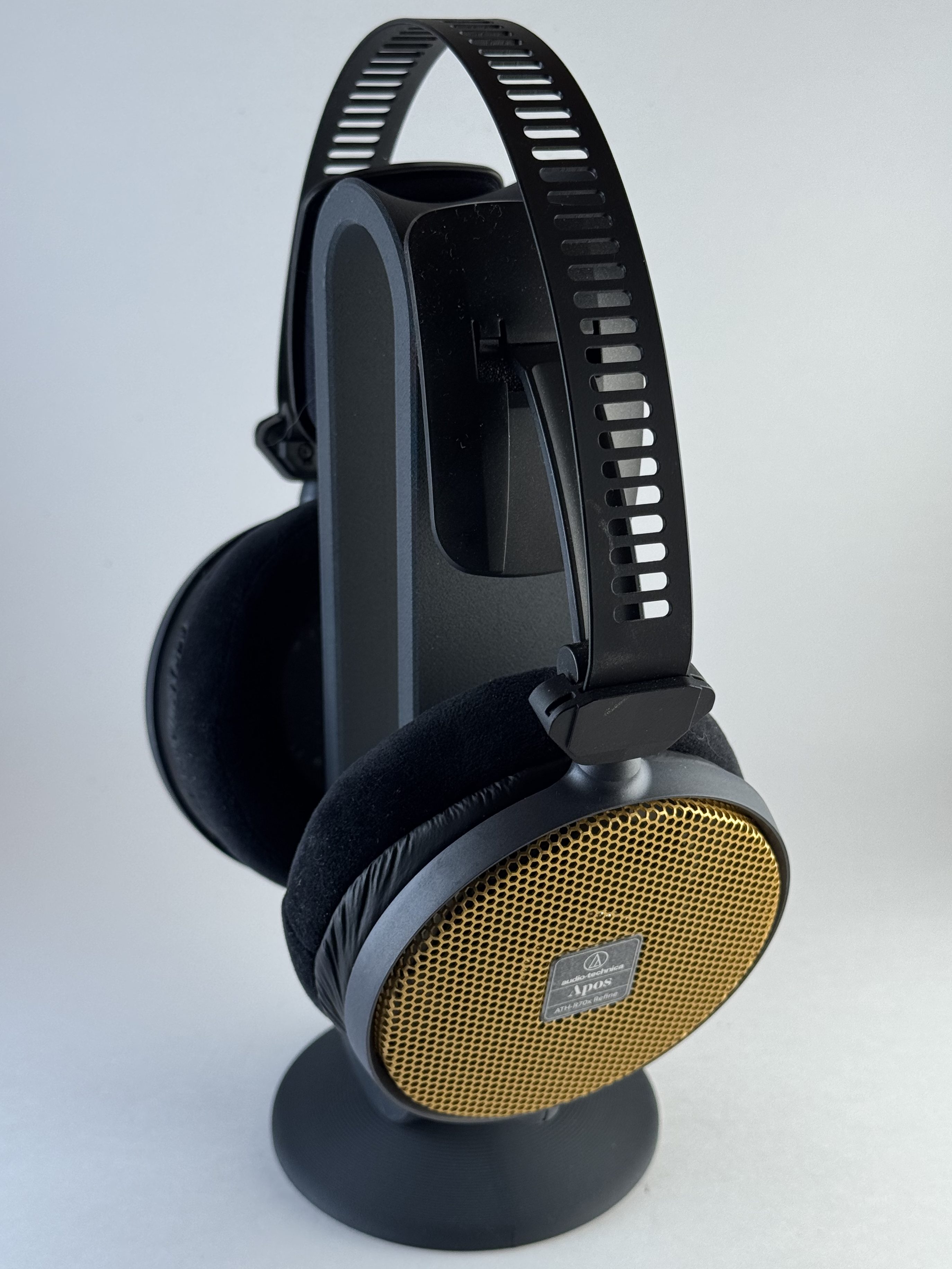
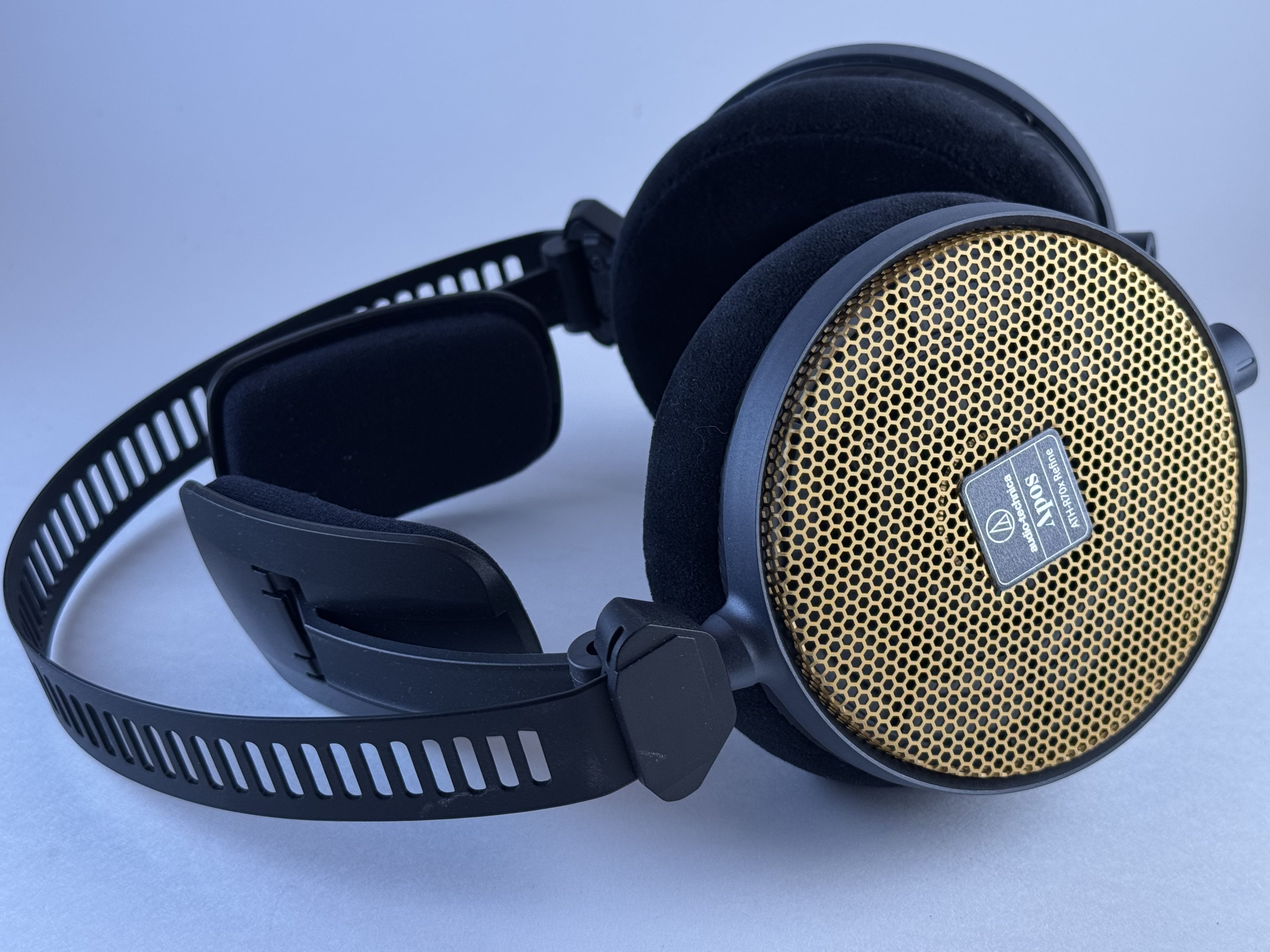
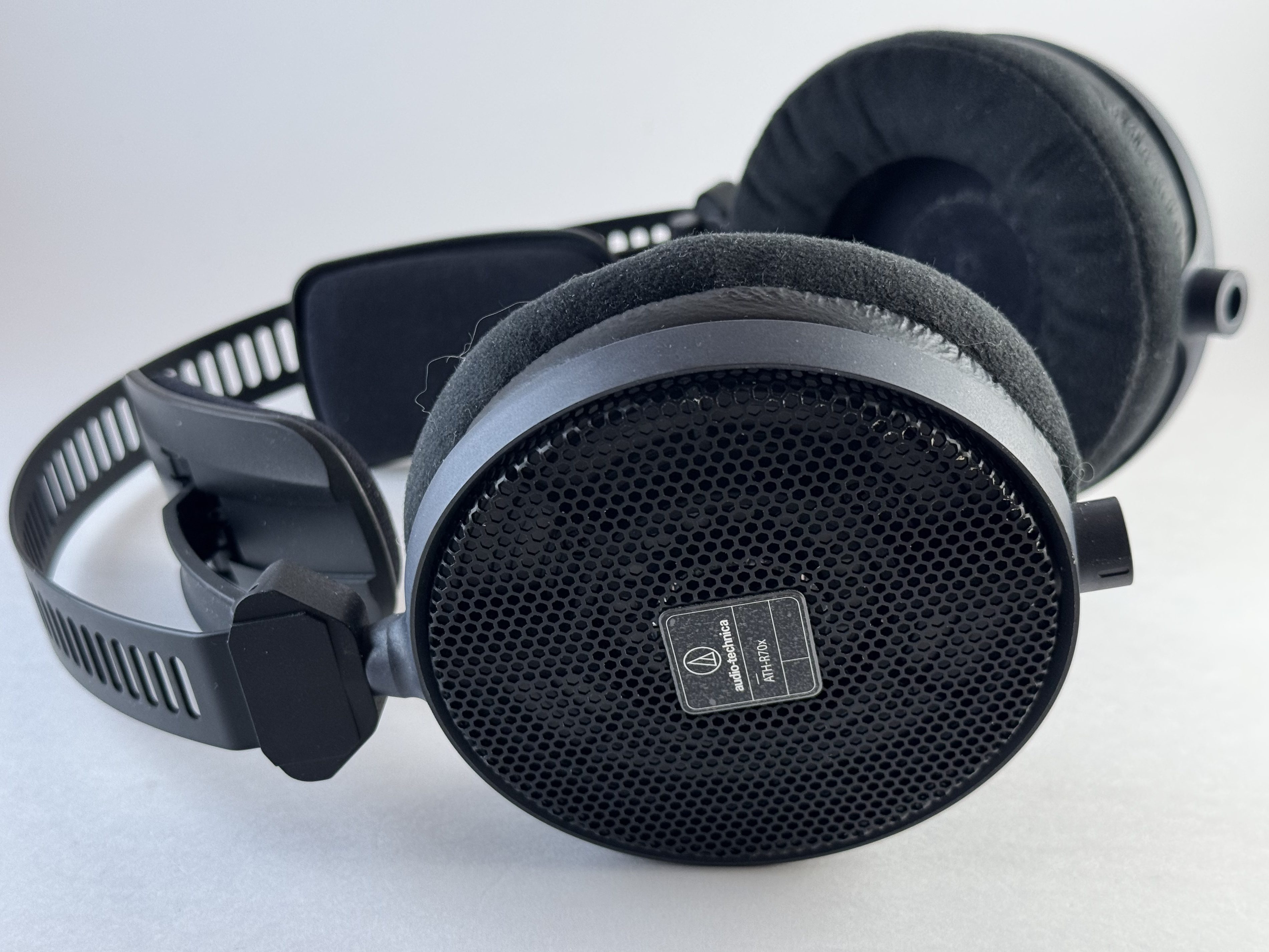
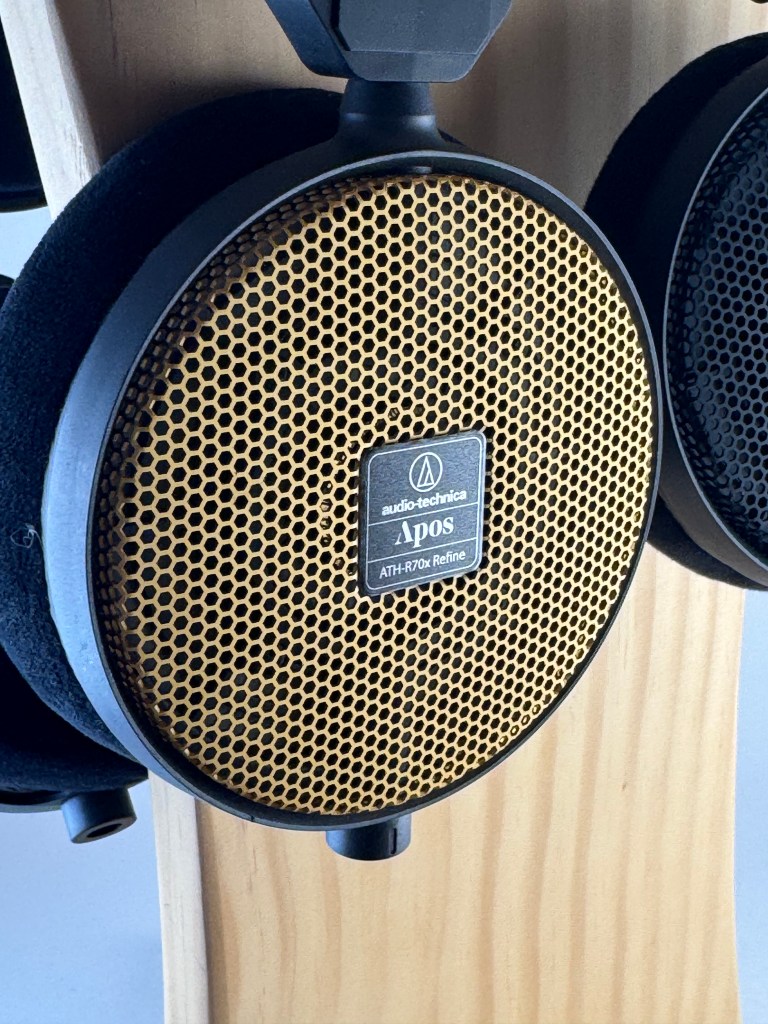
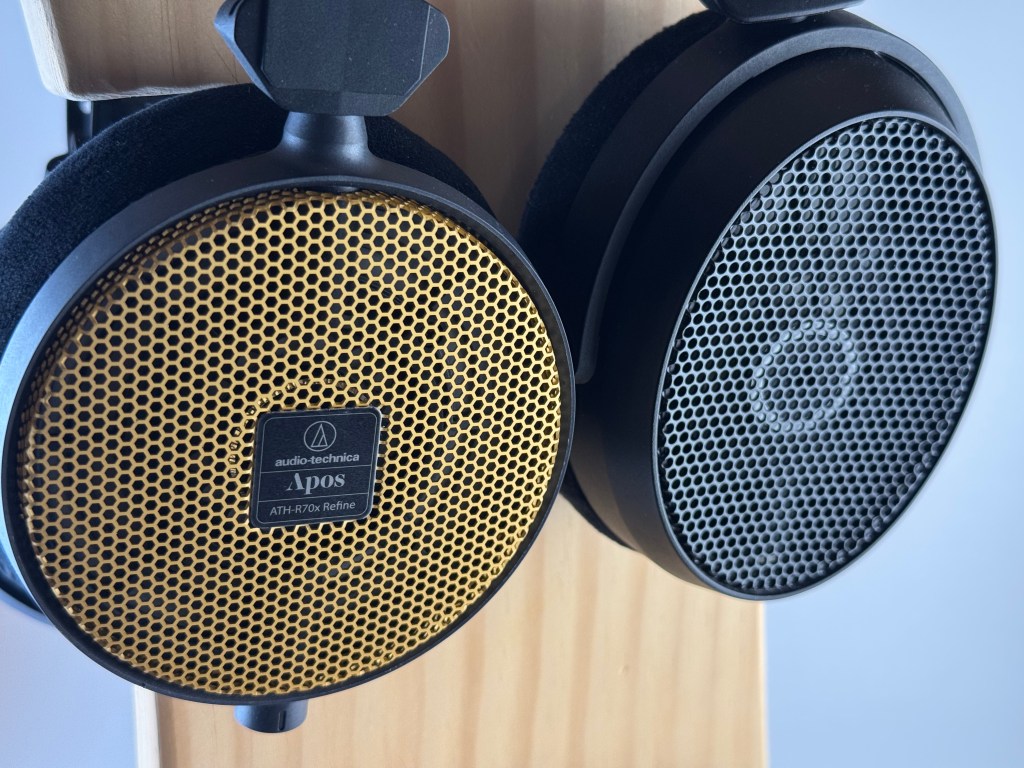
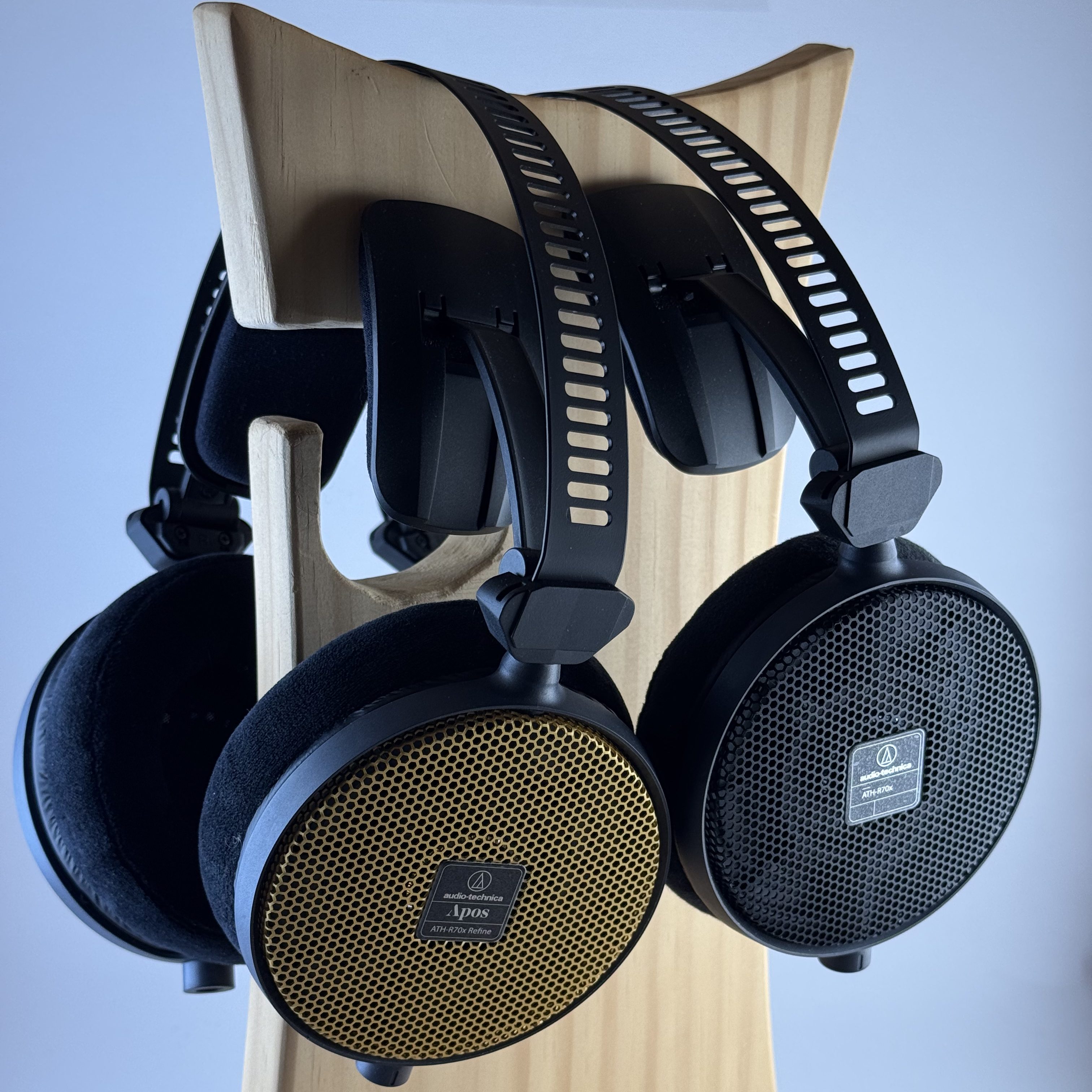
Both the Audio-Technica ATH-R70x Refine (“Refine”) and ATH-R70x (“R70x”) are discontinued open-back, dynamic driver headphones from Japanese manufacturer Audio-Technica, using a proprietary 45 mm driver. The R70x were first produced in 2015 as a professional reference headphone to generally positive reviews. The R70x was ultimately succeeded by the R70xa in 2025, by all reports a more U-shaped6 headphone (I haven’t had a chance to try them myself; if anyone wants to send me a pair …). Along the way, in the fall of 2024 and spring of 2025, Audio Technica collaborated with Apos, a well-respected online retailer of audio equipment (with a history of interesting internal projects and collaborations!), on the Refine, a limited, 1,000 unit production run of the R70x with custom velour earpads, a shorter cable, a unique gold colorway, and a slightly reduced price. The earpads were custom developed in-house at Audio-Technica, and overall Apos promised a “[w]armer, deeper, and fuller sound without sacrificing detail.” They were a little cagey about whether the changes were solely the result of the updated pads or if there were other internal changes, but general consensus seems to be that the new pads accounted for most, if not all, of the changes in the Refine’s frequency response.
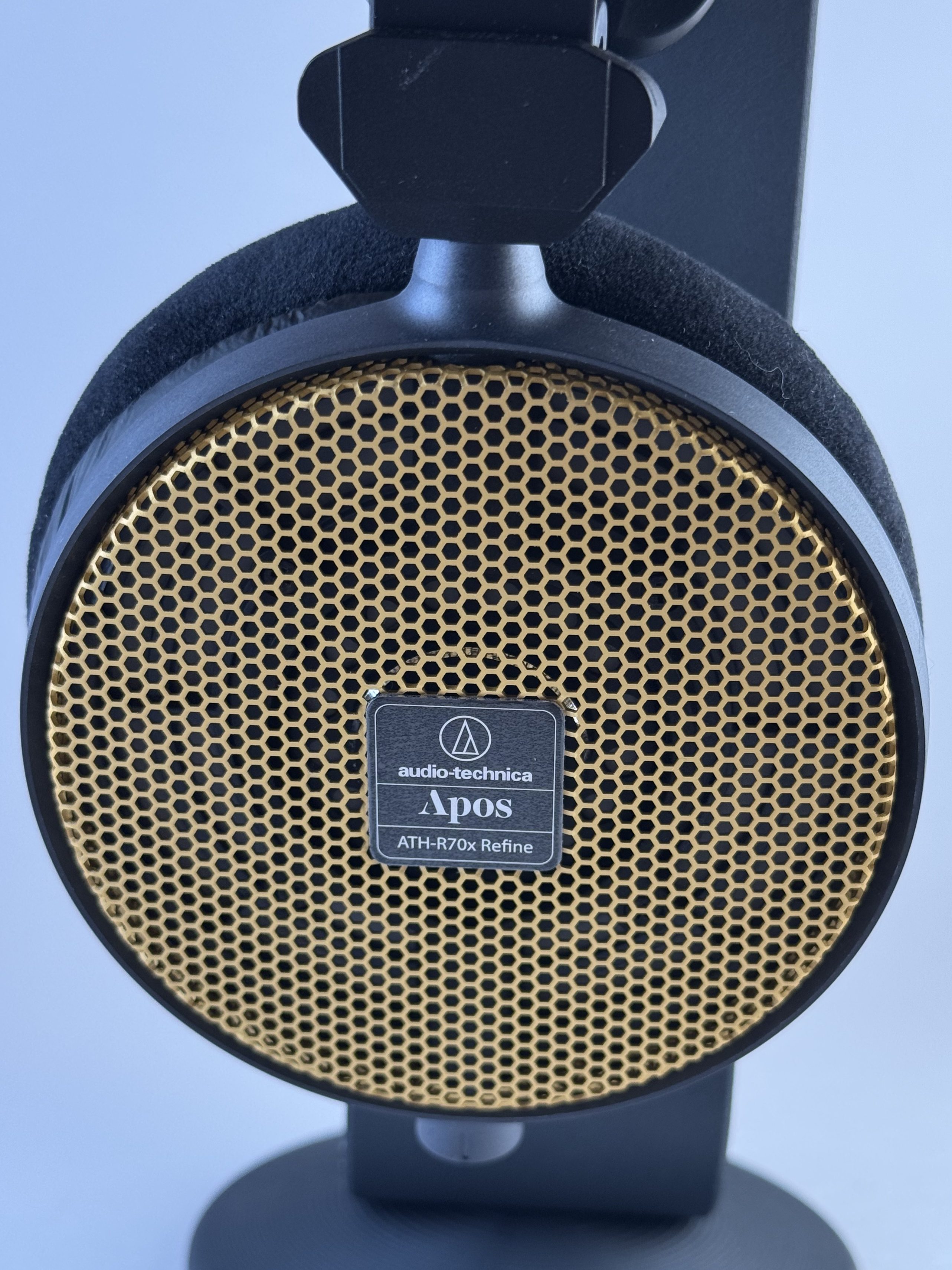
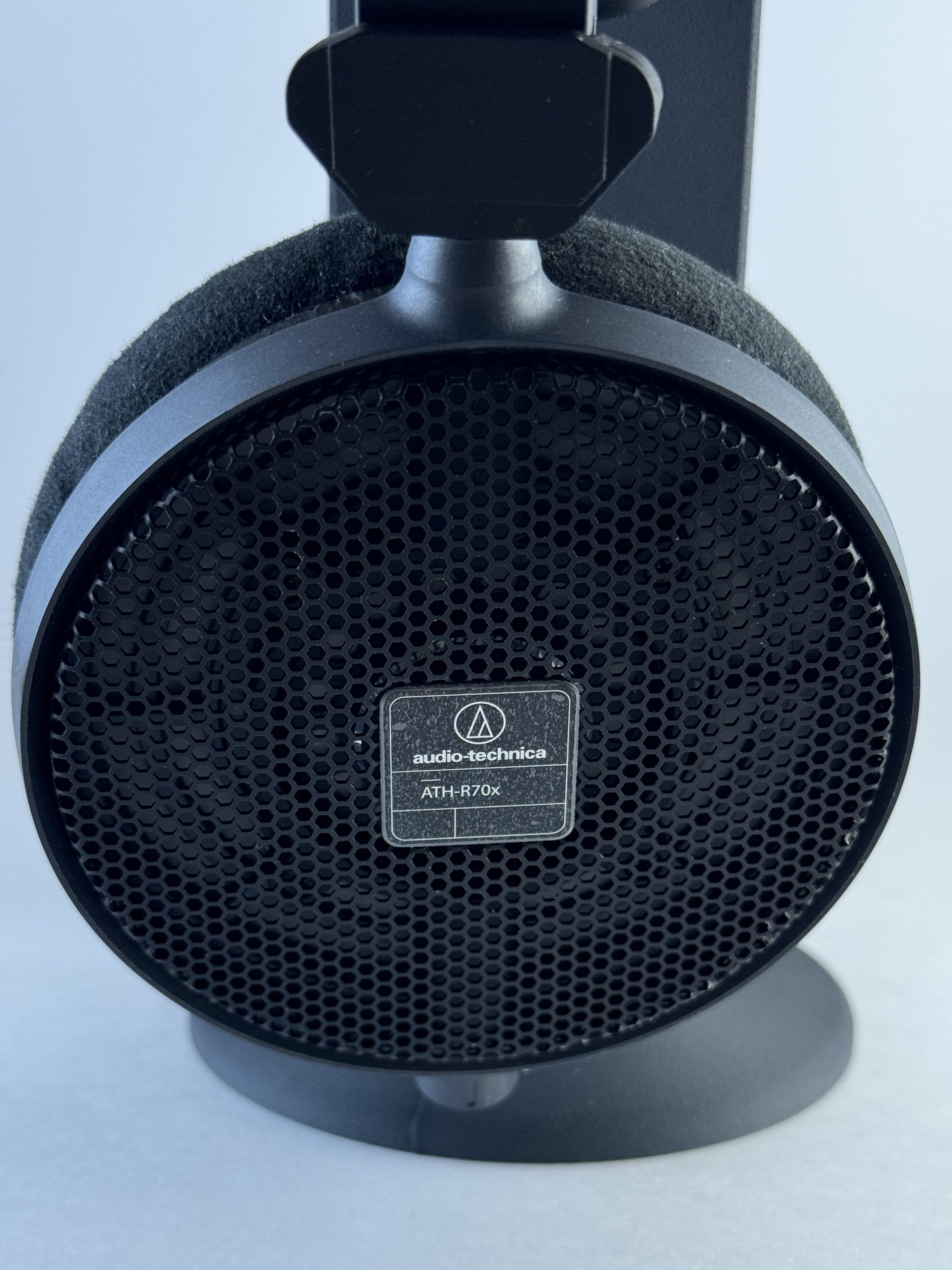
Both the R70x and the Refine are relatively challenging headphones to drive, with an impedance of 470 Ohms and a sensitivity of 98 dB/mW. (This high impedance also makes them a great a candidate for a tube amplifier like the Apos Gremlin.) They’re both also pretty light, at 210 grams without the cable. The biggest physical difference between the two is the pads, with the R70x using a stiffer cloth pad (not unlike the tweed pad from the Sennheiser HD 490 Pro) and the Refine a very soft, cushier velour.
Here’s one set of measurements comparing the two (very few people have measured both, and no one with a B&K 5128 as far as I can tell):
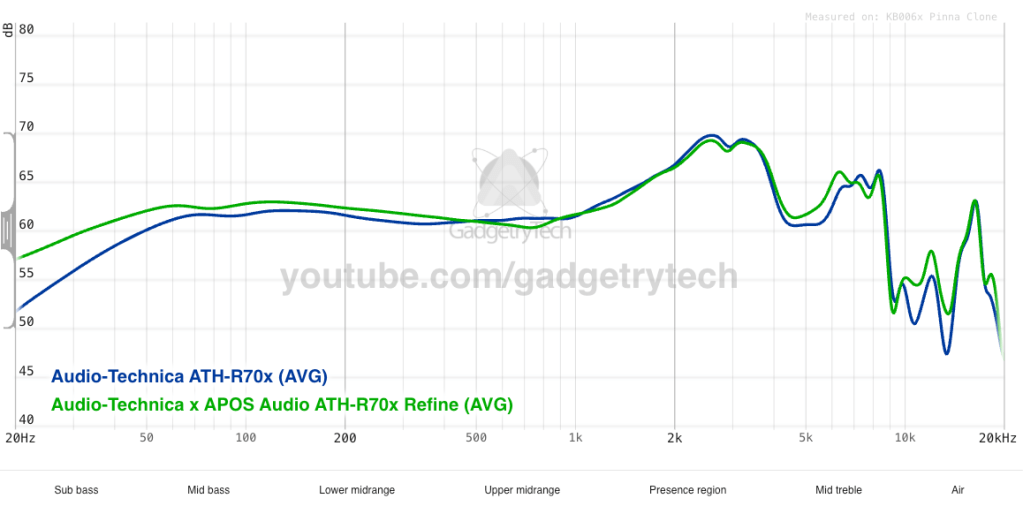
This is more or less what I hear when I do a frequency sweep, though with both I think the scoop Gadgetry Tech measured around 5 kHz is shifted a bit on my head, and I don’t hear the 17-19 kHz spike as strongly as he measured it.
Sound
[Editor’s note: I started the listening for this review using the Modius/Magnius stack, but eventually the static interference from the Audio Ninja cable got irritating enough that I swapped over to the Mytek Brooklyn Bridge (with dual 6.35 mm outputs) and the OEM single-ended cables for the bulk of the listening. I’m … skeptical of there being meaningful differences between most competent, modern DACs/amps but I thought it was worth noting.]
It’s worth noting that these are VERY open headphones, and you will hear all of the world around you with little or no noise isolation. Clamped on my leg at my reasonable listening volumes, I could clearly hear the music but it wasn’t offensively loud to my taste.
I like the Refine more than the R70x, so I’m going to come at this review from the perspective of the Refine with comparisons to the performance of the R70x in each category.
I really, really like the way the Refine sounds for most of the music I listen to. It’s a rich, precise, well-controlled, and full-frequency range response (what you might call “neutral” or “reference”). When plugged into an amp OTHER than the Magnius, it also gets whisper quiet without losing anything, and does a great job of reproducing silence within tracks. In a vacuum, the R70x is also a great-sounding headphone, but if you’re swapping back and forth between it and the Refine you really miss the extra bass you with the Refine pads. Interestingly, at least on my head, too, I feel like I get a little more treble energy out of the R70x.
The soundstage is pretty good on the Refine; it’s nicely wide (if not as wide as something like the Arya Stealth), though there’s not a lot of front-to-back staging; on “Love Can Damage Your Health (Laid Mix)” there’s not a lot of rotation and the guitar riff at the beginning is more or less just panning left to right and back again. The separation within in that stage is excellent, though; on a track like “Chan Chan”, you can place all of the instruments and performers in space and hear them distinctly, and on a crowded and complex mix on a track like “Drream” it’s pretty remarkable all of the different lines you can pick out layered within the mix. (I also get a little less clarity and separation on the tom pattern in “Thunder Lightning,” but I think that might be a result of the ear gain dip rather than an issue with the staging of the headphones.)7

To my ears, the soundstage is slightly wider on the R70x, with pretty similar separation, and a little more front-to-back staging on a track like “Love Can Damage Your Health (Laid Mix).”
The dynamic range is fine but not amazing. Starting “It’s All So Incredibly Loud” at a reasonable volume, I found myself reaching for the volume around 3:20 or so. The microdynamics are good, not great; the bell tones on “Angel (Blur Remix)” are punchy enough (heard, rather than felt) but not quite as strong as I might like, and there is little or no warble on the back end of the bass tones.8
Detail retrieval on both is fine, but not exceptional. I don’t feel like I’m hearing anything extra or missing anything important during regular listening sessions, though I feel like the fingers lifting off of strings in “What Did I Do?” are not as well reproduced on both the Refine and R70x as they are on some other headphones, and the presence around :40 on “Bassackwards” is less enveloping.
[Editor’s note: with a lot of critical listening, I’m thinking I might have been a little harsh on the detail retrieval of the R70x/Refine. There’s a crackle at the beginning of “Clair De Lune” that I hadn’t picked up before and assumed was a flaw in the headphone’s wiring (again, this is a track I use for a lot of testing) … but then it’s there on some very highly-resolving headphones when I go back and specifically listen for it. I’m not saying that the R70x/Refine are detail monsters the way the Arya Stealth or LCD-2.2 pf are … but they’re pretty dang good at detail too, and the slightly unusual tune might emphasize some things in different ways than most things I review.]
Bass
The bass is solid for an open back, though it lacks the Focal punch. Bass extension is pretty good, getting all of the bass notes on “Violence”, though the bottom ones are starting to roll off a bit. I don’t hear any splatter or muddling; the notes remain clean and relatively crisp. The bass could use a little more punch as it comes in around 2:48 on “Out of My Hands”, but that’s not uncommon across open backs.

To my ears, the bass on the R70x is just a little lighter and maybe a hair more precise and clean than on the Refine. Both are very enjoyable listens, though I think I come down ever so slightly on the side of the Refine for every day listening.
Midrange
The midrange on the Refine is generally pretty good, very natural sounding and with good, correct timbre for most of the human vocal range. Sampha on “(No One Knows Me) Like the Piano” and Justin Hicks on “What Did I Do?” are well-reproduced and appropriately balanced, as is Jill Scott on “Calls” (though I would like her runs and counter melodies to be slightly more forward in the mix). Christine Hoberg gets a little bit lost in “Clair De Lune” at times, though the Refine’s tuning mostly avoids making her voice sharp in the choruses the way that some other headphones (like the LCD-2.2) might.
I don’t hear the dip that folks seem to measure around 3.5-5 kHz; for me it’s shifted a little farther up, but I did note in my listening that occasionally guitars (particularly higher frequency guitars) are a little lower than I might prefer. It’s particularly noticeable on “Chan Chan,” and there’s a ratchet throughout Soundgarden’s “Pretty Noose” that almost disappears on the Refine/R70x.

So in short, mostly great for vocals, marginally less great for instruments towards the top of the midrange, and a little funkiness on things that bridge the upper mids/lower treble divide. Minimal differences, if any, between the Refine and the R70x to my ears.
Treble
The treble is generally really well controlled in the ranges in which I listen. I do actually hear a bit of the 18-19 kHz spike that Gadgetry Tech measured, but so little of my music contains information in that range that I’ve only really noticed it on a frequency sweep. I get a tiny bit of harshness on “Will O’ the Wisp” or “Intro” on particularly brassy, aggressive sections, but as long as I’m listening at a reasonable volume they aren’t distracting or problematic (and I really only listen at reasonable volumes). I wouldn’t blast particularly treble-y music on these headphones, however.
There’s definitely some funkiness in the transition from the mids to the treble; there’s a scoop there that occasionally futzes with timbre, or where instruments get quieter than they should. I’m reasonably confident that some EQ could pretty easily fix this, though, and I may invest some time into that.
Gaming
These make pretty good gaming headphones; they have a full enough frequency response that they will nicely replicate everything from footsteps to gunshots to explosions, and they’re light and comfortable enough for long sessions. If I were playing something sweaty like an FPS, I might go with the R70x just for a little more treble energy (though I’m aware that’s not how they measured for Gadgetry Tech), though I personally find the Refine a little more comfortable with a better, more consistent seal and less movement on my head with the upgraded pads. That said, the velour on the Refine definitely feels warmer and might be less well-suited for long gaming sessions in warmer climates.
Amplifier Compatibility
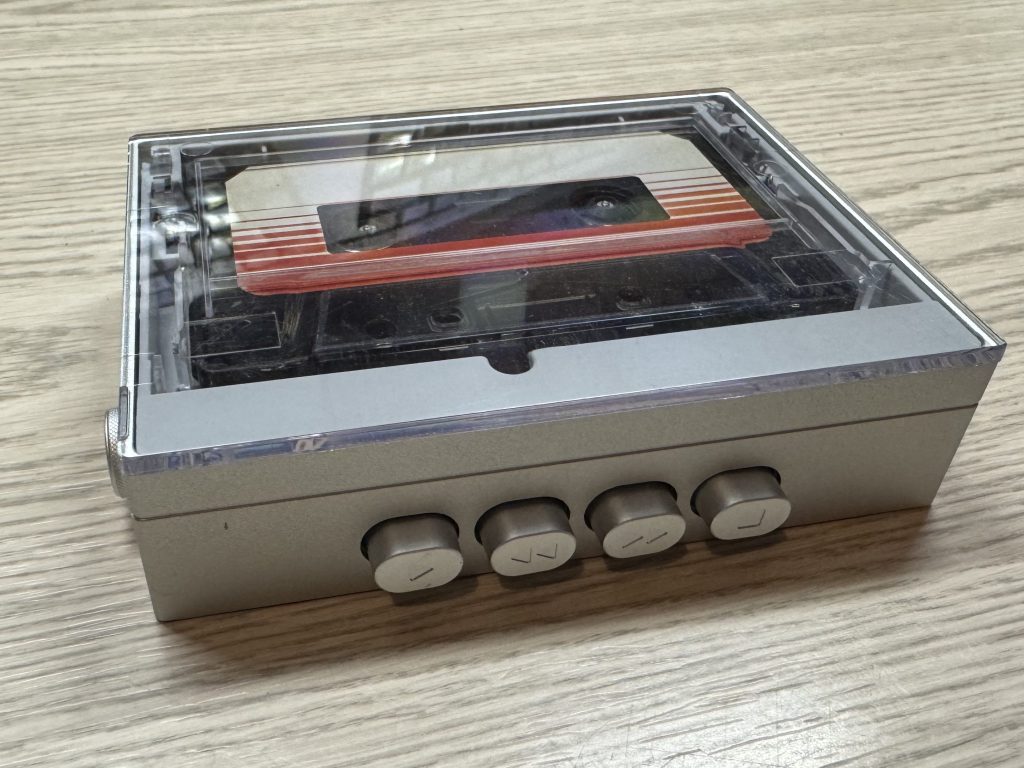
Generally, the Refine and R70x did pretty well with almost anything I plugged them in to. Despite their very high impedance, they even did pretty well with lower-powered options (80% volume or so via the North American Apple dongle & iPhone 15), though I would probably recommend using a desktop amp if you can. They sounded a little bit hollow on the Snowsky Echo Mini, for example, but sound excellent on the iBasso DX170, a discontinued but reasonable mid-tier digital audio player and even the Fiio CP13 cassette deck.
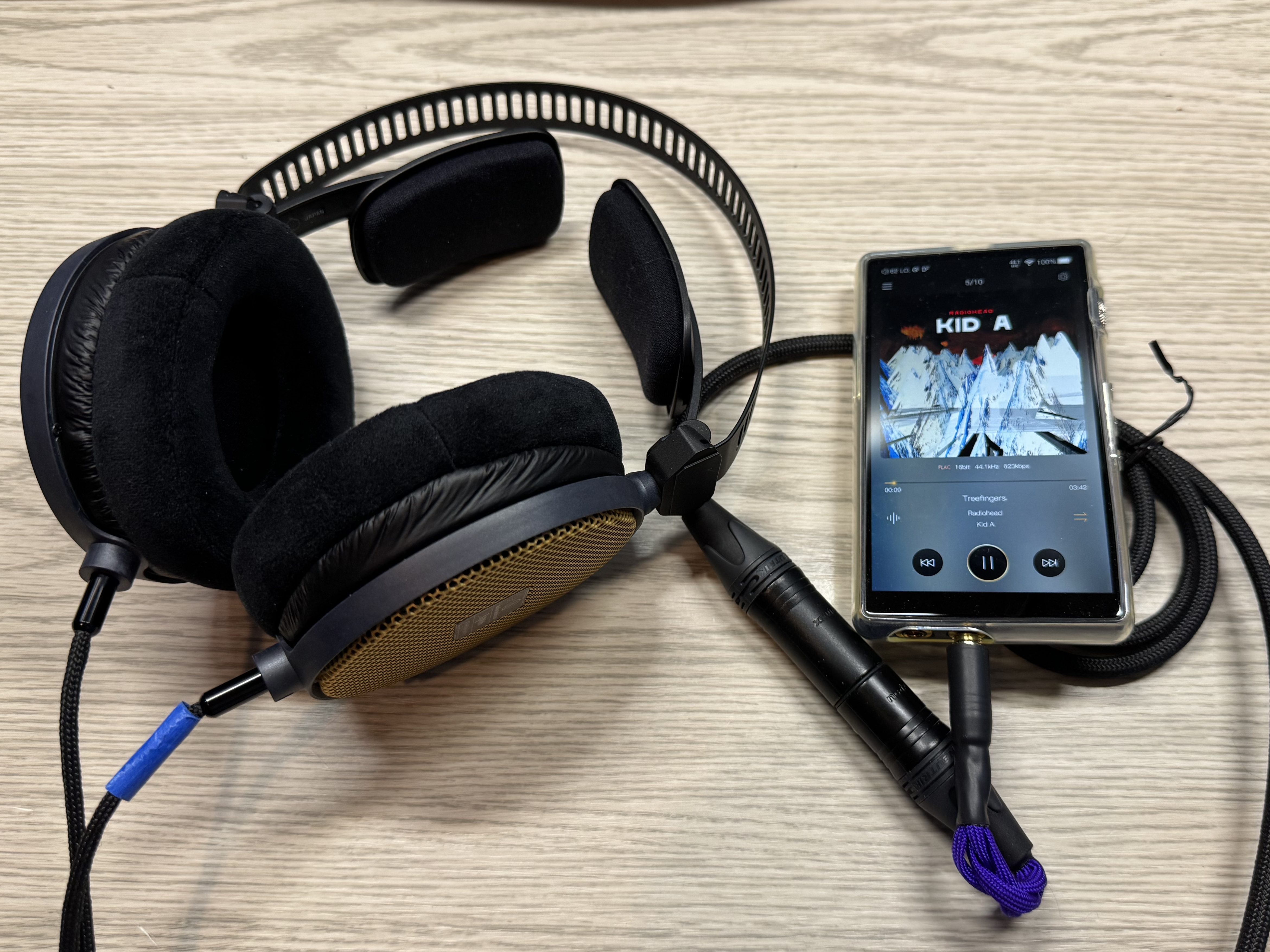
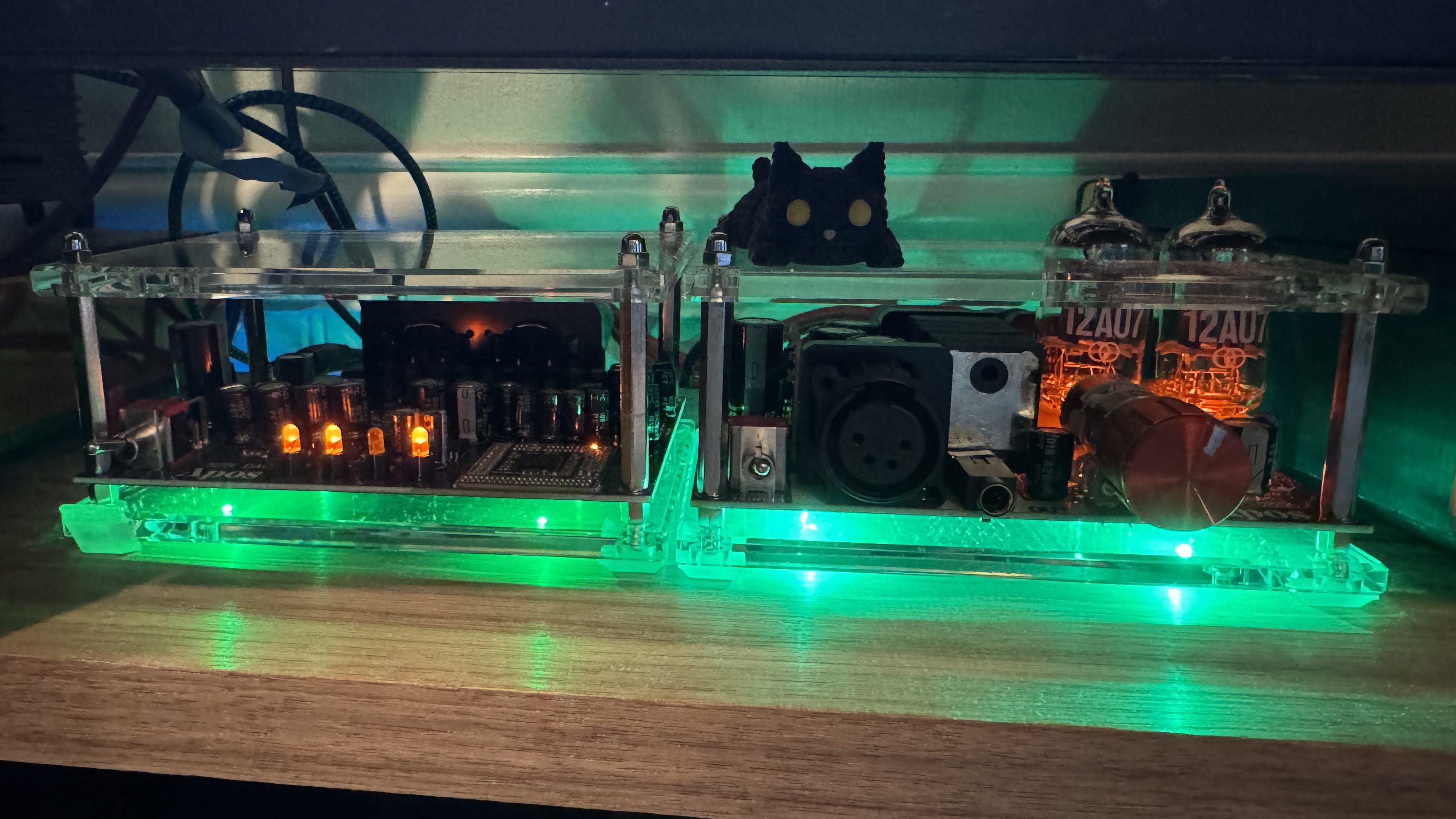
Tubes. As a high-impedance dynamic driver headphone, the Refine/R70x are a perfect candidate for tube amplifiers. Which is not surprising, given the ecosystem Apos advertised with the Gremlin tube amp, the Merlin/Druid DACs, the Refine, and the Apos x Zeos Magia cable. The already warm tune of the Refine turns into gooey, buttery, euphonic magic with the Gremlin/Druid, particularly on bassy tracks like “Got ‘Til It’s Gone” or the super mellow and expressive “What Did I Do?” The Refine also plays super well with a tube-emulating solid state amp like the Nitsch x Schiit Piety; again, not super surprising given that Apos sold the Piety with the Refine as a package. If you find yourself with a pair of Refines, you owe it to yourself to track down a tube amp at least once.
High-end scalability. Once again, I’m hearing things with the R70x on the Mojo 2 that I’ve … never heard before.9 I’ve listened to “Face to Face” at least 131 times since January (it is, after all, my volume level testing track), and there’s a whole flute countermelody on that track that I’ve never heard before. I can’t explain it, but this happens so consistently that I’m willing to believe it might not be placebo. Knowing it’s there, I can kind of pick it out on the Brooklyn Bridge, but it’s interesting how much more strongly it registers on the Mojo 2. By contrast, while the Refine/R70x sound absolutely fantastic via the Holoaudio Cyan 2/Bliss (KTE) stack, to me there’s no real difference from something like Mimir/Jotunheim or the Mytek Brooklyn Bridge: not better, not worse, not different. So don’t worry about how they’ll sound with too much amplifier; they’re up to the task and even a VERY resolving amp won’t reveal any particular flaws.
The almost. Now for the almost: depending on the cable, I got some interference with the Refine. Using an aftermarket (Audio Ninja) XLR cable with my Modius/Magnius stack created weird static some of the time that varied a lot depending on my head position. It occurred only when connected directly in via XLR (using an XLR –> 6.35 mm adapter stopped it), mostly occurred when I was looking to the right, and it didn’t happen consistently.10
Build
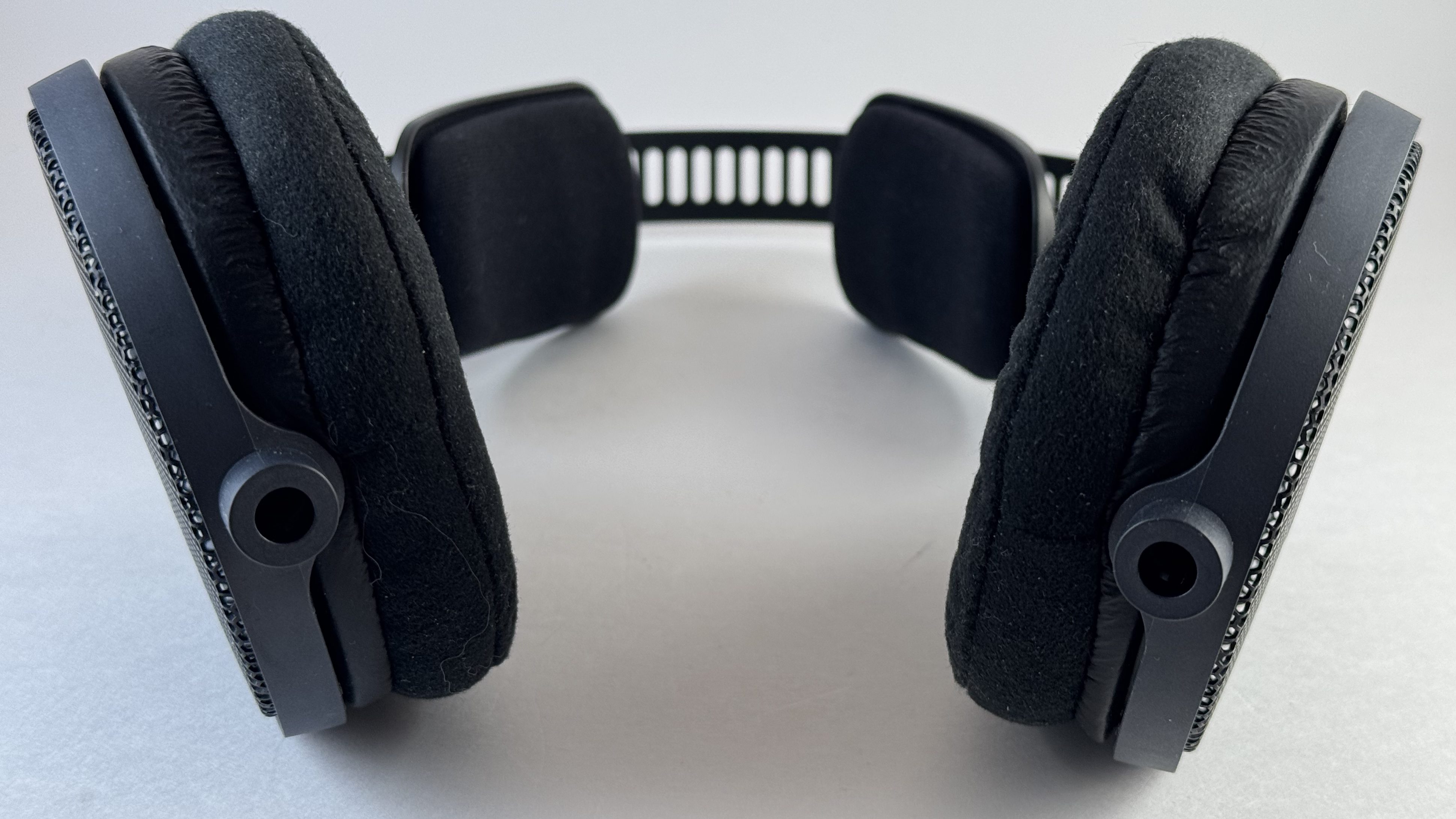
Connectivity. I, generally, loathe proprietary cables in the headphone world. Sennheiser’s two pin connector, DCA’s DUMMERS/Hirose, etc.: there are a number of competent open standards (3.5 mm, mini-XLR) and there’s zero reason to adopt a shitty, unique system that solves no problems and introduces headaches. Audio-Technica’s dumbass dual-locking 2.5 mm is no exception: this is a cable standard that adds no value and means I can’t use the drawer full of nice, high quality-of-life (but not necessarily quality of sound) cables in my drawer. It’s so dumb.
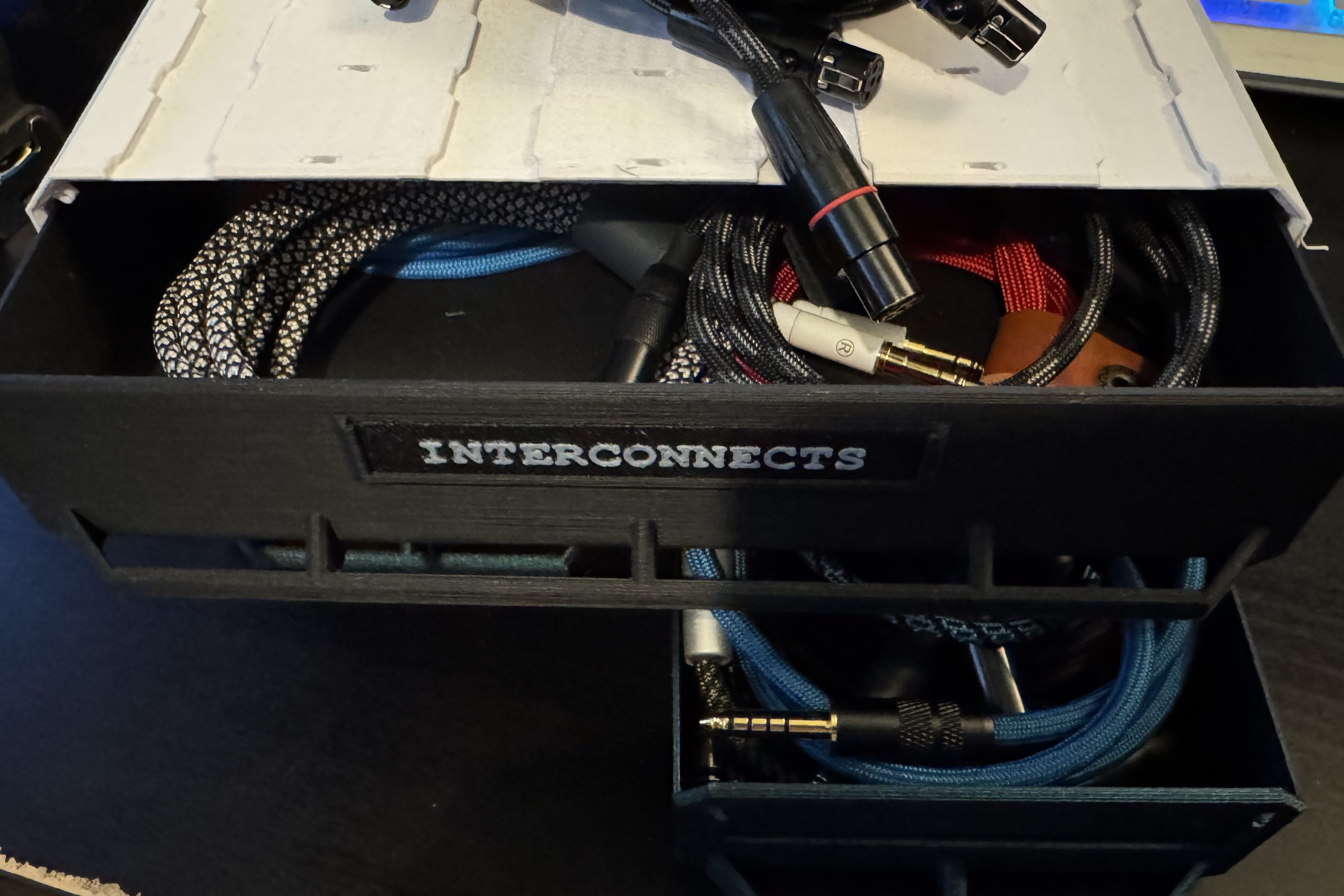
That said, it’s a perfectly competent connection, and at least as implemented for the R70x and Refine, it’s worth noting one quirk: the way that they are internally wired, it doesn’t matter which of the cables is connected to which ear cup. You can swap the connections and still have the right channel on the right side and the left channel on the left side; a cool party trick, but one that was a little confusing when I couldn’t figure out which end of the Y was which (because, in the end, they don’t matter and therefore aren’t marked). The stock cables are fine, normal-ish rubberized cables a la Sennheiser’s OEMs (and a step up from Hifiman’s, at least the surgical tubing ones they ship with their highest end headphones). The R70x’s cable is much longer than it needs to be for any of my use cases and I prefer the shorter length of the Refine’s included cable. If I were buying an R70x, I’d want to either order a shorter cable or figure out a good way to wrap a lot of it up neatly during use.
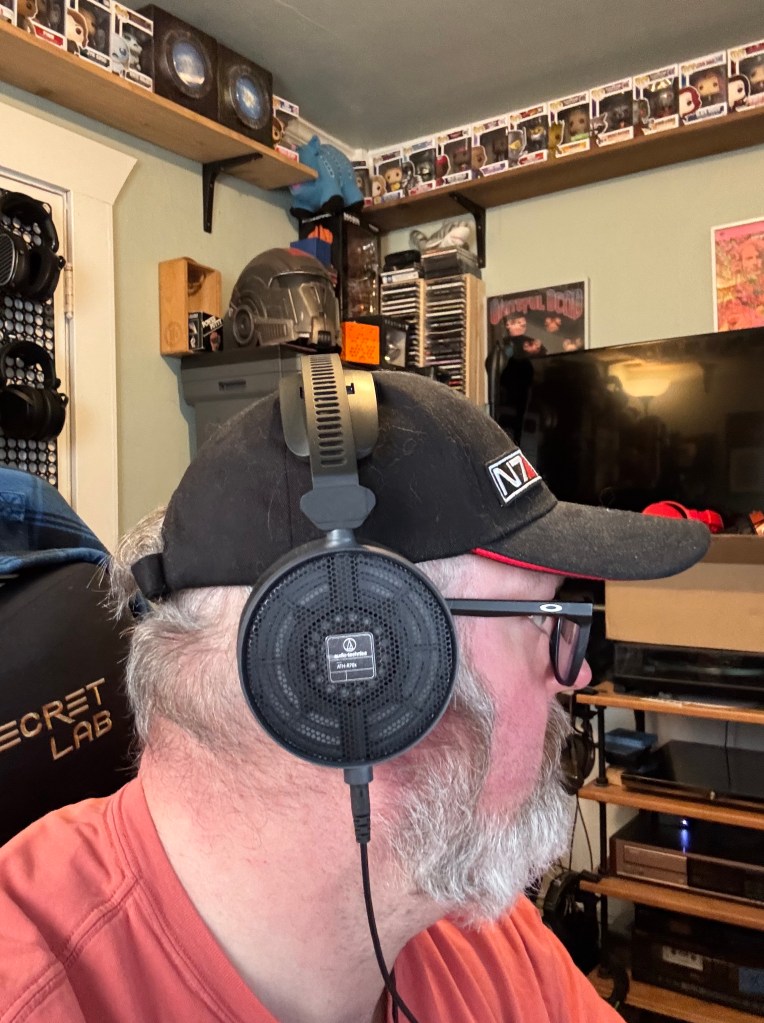
Physical design. Both of these headphones are really light but manage to feel mostly pretty well-built. They don’t flex very much except in terms of width; the metal band across the top doesn’t twist very much, and the cups only rotate thirty or so degrees with zero tilt. If your head is extremely large or extremely small, you may have a hard time getting the cups to seal consistently and flatly against your head; particularly for the extra-large noggined, you may have a hard time getting enough pressure at the bottom of the cups. They are … interestingly close to sharp, with both the edges of the metal mesh on the outside of the cups and the metal band on top feeling like it wouldn’t take much of a drop to expose a sharp(ish) edge. The mesh on the cups is also, unsurprisingly, pretty microphonic and sensitive to anything rubbing against it.
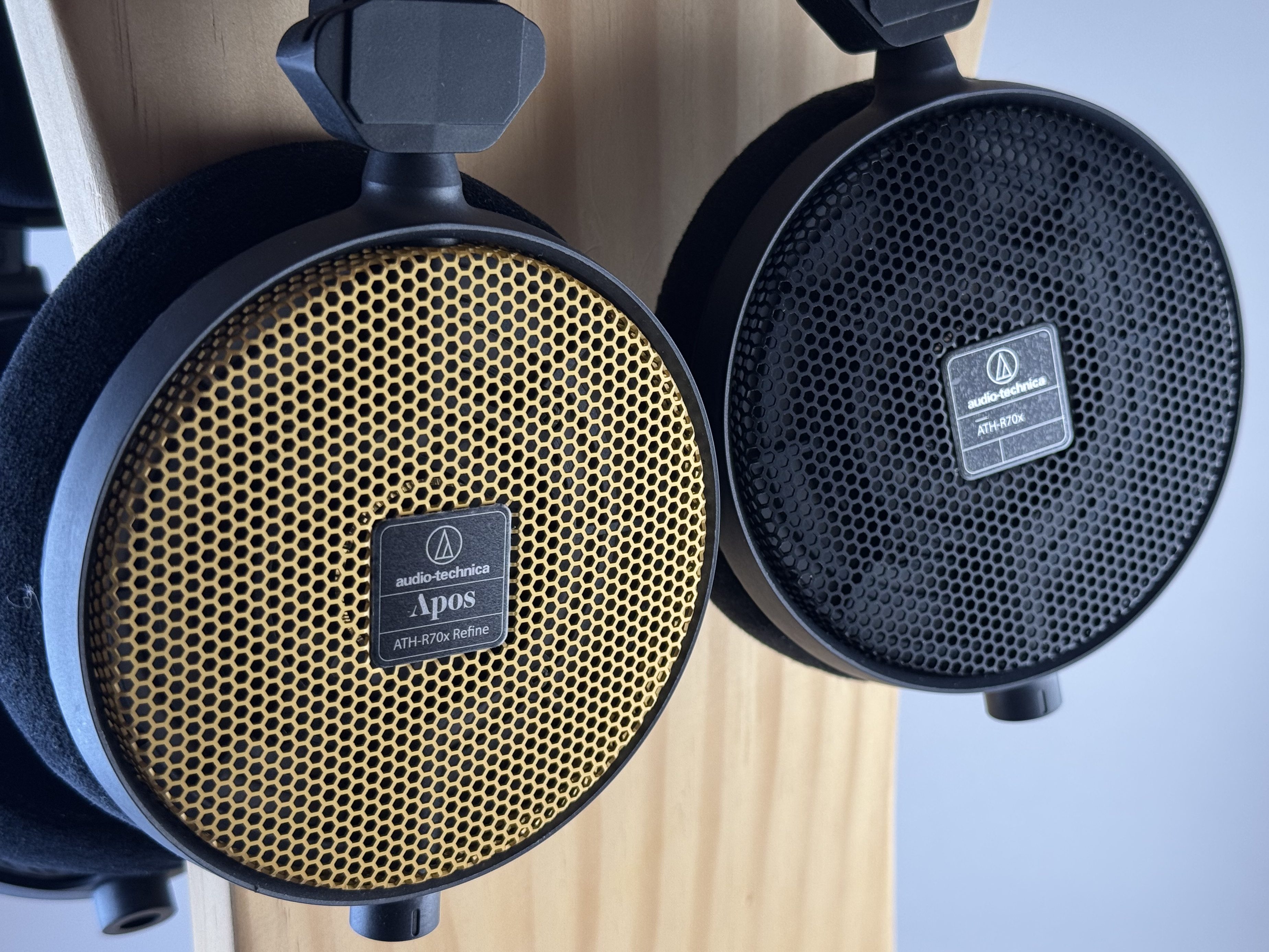
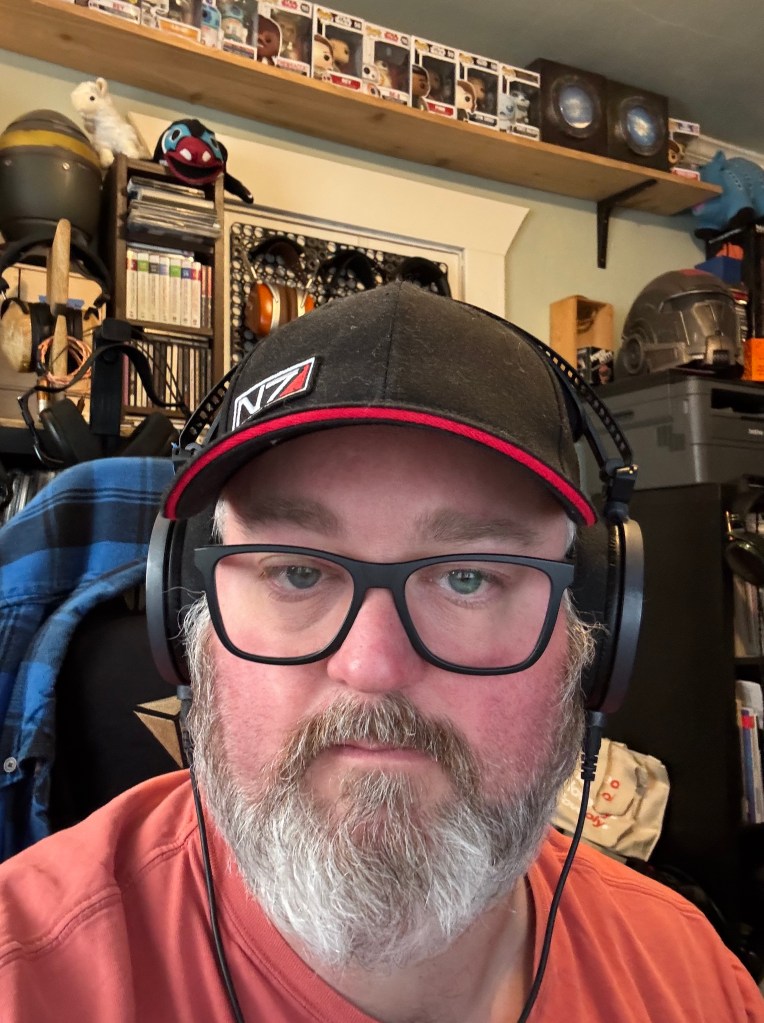
Comfort. Those quirks noted, these are a pretty comfortable (if weird!) design. Audio-Technica’s wing design works reasonably well on my head, with enough tension in the wings to keep them nicely centered on my ears and distributes the weight evenly between the earcups and the wings on either side of my head. The lack of a middle section even reduces the chances of discomfort when wearing a hat with a squatchie. The only real difference in the build between the R70x and Refine is the ear pads, with the Refine coming with cushier, deeper velour pads and the R70x a stiffer, thinner, and more traditional cloth pad. Your mileage may vary, but I personally find the Refine a bit more comfortable, though they may also be more prone to overheating in warmer weather.
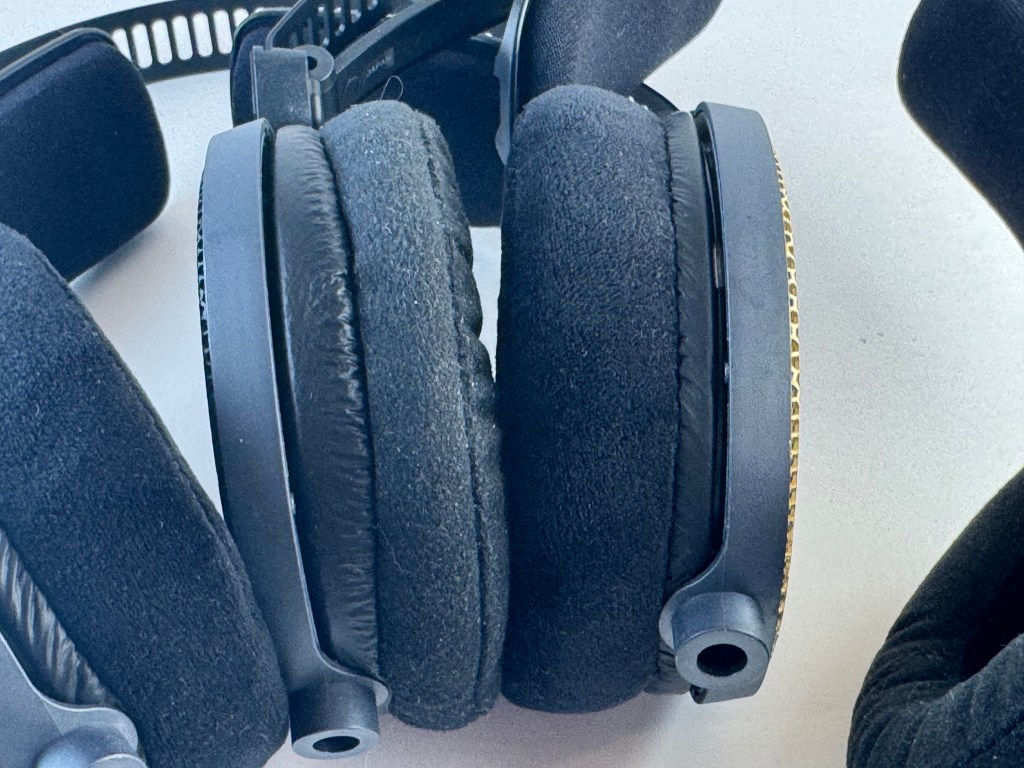
Appearance. I think Audio-Technica’s wing system is a little funky, but funky in a way that I can appreciate (and isn’t super noticeable at a quick glance). They’re not the most attractive headphones I have in my collection (*cough* Meze *cough*) but they’re perfectly nice looking. Interestingly, I think I marginally prefer the straight black look of the R70x to the gold mesh of the Refine, but that’s going to boil down to personal preference and both are good enough looking.
Value & Comparisons
One of my reoccurring challenges over the last few reviews of headphones that aren’t current production models is determining what “value” looks like for them. For purposes of these comparisons, I’m going to treat both the R70x and Refine as $200 headphones, as that seems roughly what they’re going for these days on the used market. I’d be perfectly happy buying either at $200, though I definitely prefer the Refine. It’s also worth noting here that Apos is selling the Refine’s earpads for $69/pair, so if you want the Refine’s sound signature but don’t care about the yellow cups or the Apos sticker on them, you can just buy a pair of the R70x and add the earpads (or if you do care about the color, maybe disassemble and spray paint the mesh?).
If you do have the R70x, I wouldn’t tell you to go buy a set of Refine pads unless you’re already in the market for replacement pads. I don’t think I’d pay almost $70 for the added value. If you need pads … well, my default options for replacement pads don’t seem to stock anything for the R70x/Refine so I guess go with Apos and get the Refine!
Sennheiser x Drop HD 6XX
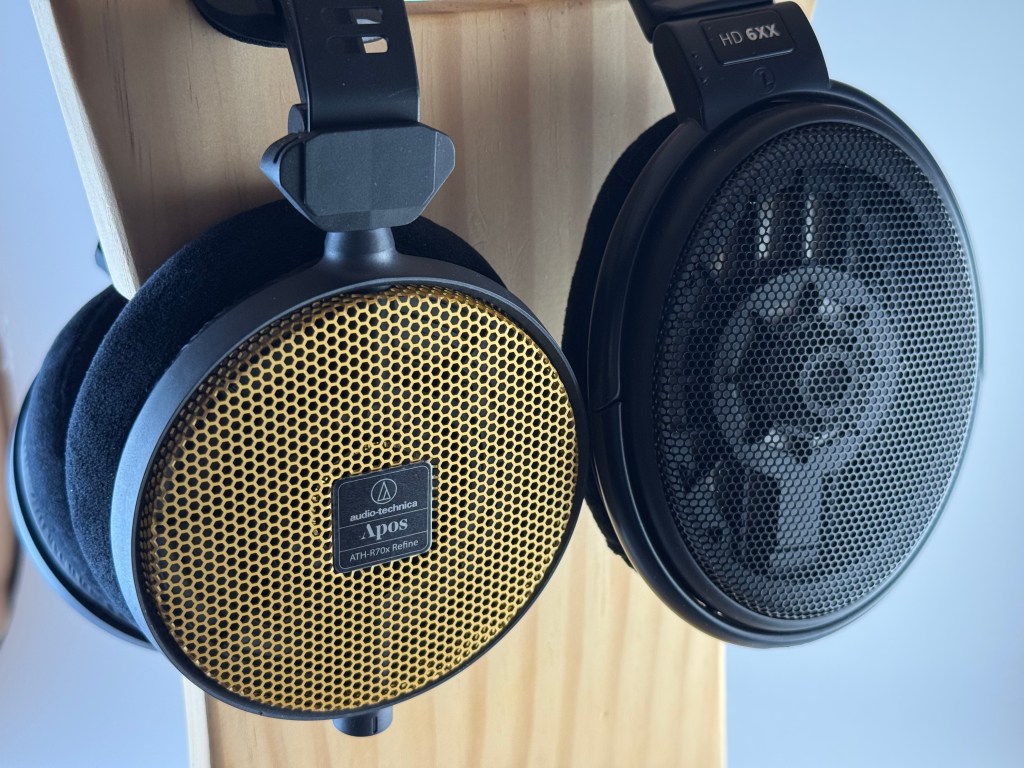
The Sennheiser x Drop HD 6XX has long been the stick with which I measure all other open backs, especially around this price point, and particularly when considering value. That took a bit of a hit earlier this month when Corsair announced that they were shutting down Drop.com and at least implied that a lot of their collaborations would be sunsetting,11 but earlier this week Sonova announced that they would be selling the HD 6XX for the foreseeable future (at least in the US!).
The 6XX vs R70x is an interesting comparison; to my ear, they have a pretty similar sound profile. I prefer the midrange, treble, and overall timbre on the 6XX (and especially the transition between the midrange and treble, where the Refine feels a little scooped out), but the bass and soundstage/separation on the Refine. And after a few months using the HD 490 Pro a lot, I’ve really come to realize how clampy even my almost eight-year-old 6XX can feel, so I think I slightly prefer the comfort of the Refine.
When I swap back and forth between the Refine and the 6XX, I am struck by the extra richness and depth you get in things like “Fresh Tendrils” or “Drawn” on the Refine, but also by just how damned good the 6XX is for vocals on a track like Young Father’s “Geronimo.” It’s not that the 6XX can’t convey Soundgarden’s guitar riffs well (for all the angst about the 6XX’s “poor” bass, I really enjoy it’s bass presentation and don’t notice anything lacking UNLESS I’m actively A/B’ing), or that the Refine can’t do justice to Young Father’s harmonies and complex vocals (its vocal timbre is excellent!), just that each is a sterling example of a particular type and tuning of a headphone. On a track like Massive Attack’s “Voodoo in My Blood” (featuring Young Fathers), I could make an argument for either headphone to enjoy the mix of bass and vocals, but I think I end up leaning a little to the Refine. It’s even closer with the R70x, which at least on my head is slightly softer in the bass and more lively in the treble.
A quick look at the graphs:
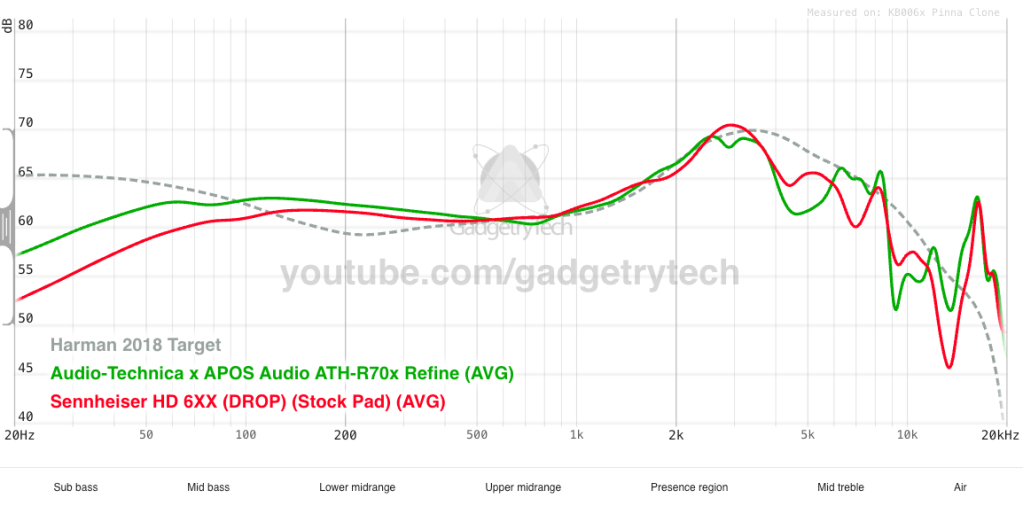
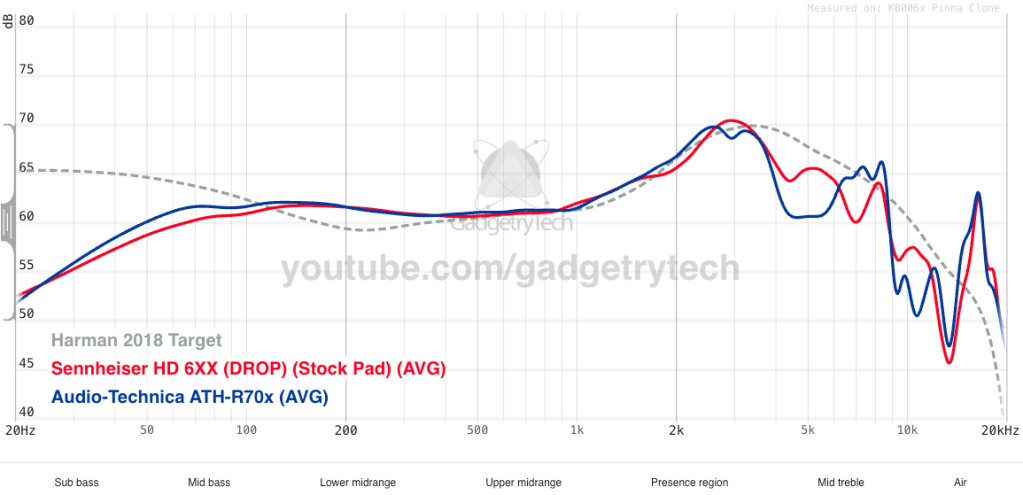
That’s more or less what I’m hearing. I think the graphs might be underselling the additional bass of the R70x a little; on my head I’m definitely getting more pronounced slam in the bass, but that may be a function of the 6XX’s relatively gentle bass presentation.
This is another one where you’re not going to go wrong either way. I probably wouldn’t recommend paying $350 for the R70x or $300 for the Refine over the 6XX at $200, but when you’re looking at the used market AND Sonova has raised the 6XX to $220, paying a little extra to get slightly better bass looks like a reasonable choice you could make. For me, the Refine has almost certainly earned a place in my collection (and you can take my 6XX when you pry it from my cold, dead fingers).
My pick: 6XX for almost everything. But damn. That’s a close call.
Sennheiser HD 490 Pro
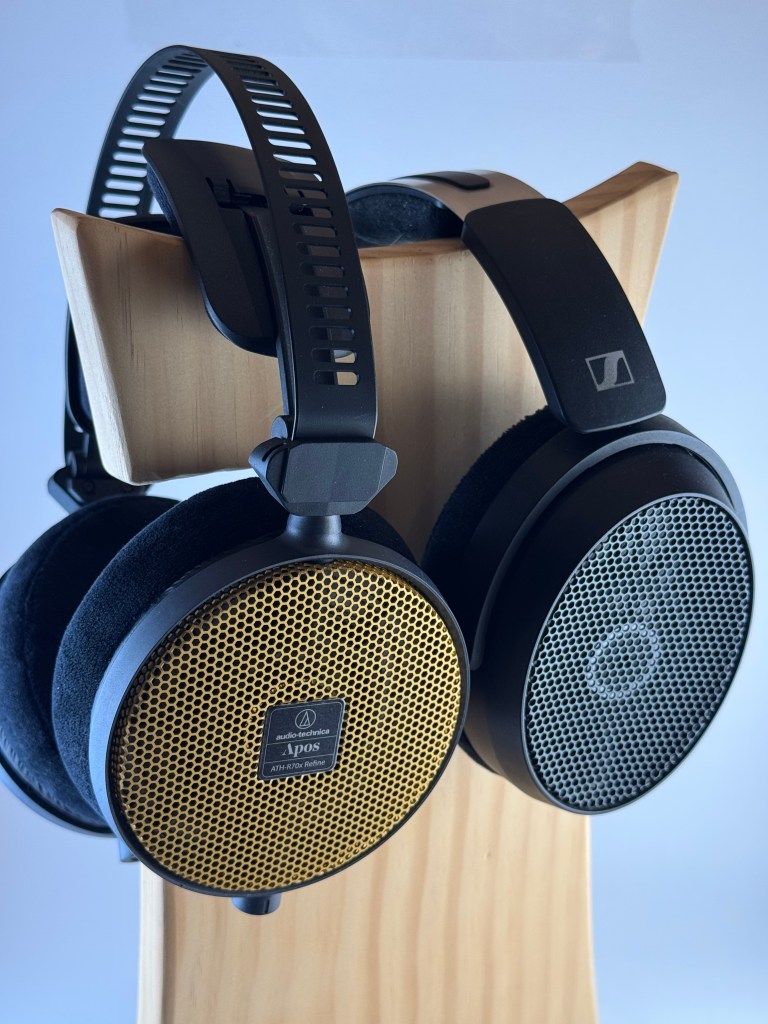
I’ve been pretty effusive in my praise of the HD 490 Pro, my favorite 6X0.12 As good as the Refine is (also the R70x), to my ears they just don’t compete that closely. If I want the warm sound of the Refine, I’ll grab the 490 Pro and use the velour pads. If I want a more vocally-focused sound, I’ll grab the 490 and use the tweed pads. In both cases, I’ll avoid the scoop sitting between the mids and the treble. I think the one advantage the Refine has over the 490 is just a hint more clarity and precision in the bass; the 490 definitely has more slam and heft, though, and that’s a trade I’ll make pretty easily. I commented in my 490 review that they can be a little bit spicy in the treble at moments, but I’ll note in the three months since I wrote that review (three months in which I’ve done a fair amount of listening with the 490), it hasn’t bothered me at all during regular listening. So while the Refine brings a really well-controlled treble … it’s not enough to sway me.
I really like the Refine, and I’ve really enjoyed listening to it. But to me, the moment I put the 490 Pro on for some A/B’ing I realized how much better they are to me, on my head. The bell tones and warble on “Angel (Blur Remix)” … Johnny Cash’s voice and the acoustic guitar on “Hurt”13 … there’s just a sense of presence, immediacy, and gravity on the 490 Pro that the Refine just doesn’t match, at least for me, and the fact that the 490 can pull that off while also giving a pretty great, wide, and separated soundstage is pretty magical.
Now, the 490 Pro is substantially more expensive at $350. To me, it’s pretty easy to justify that additional money, and I think you get good value for that extra $100-150.
A quick glance at the graphs:
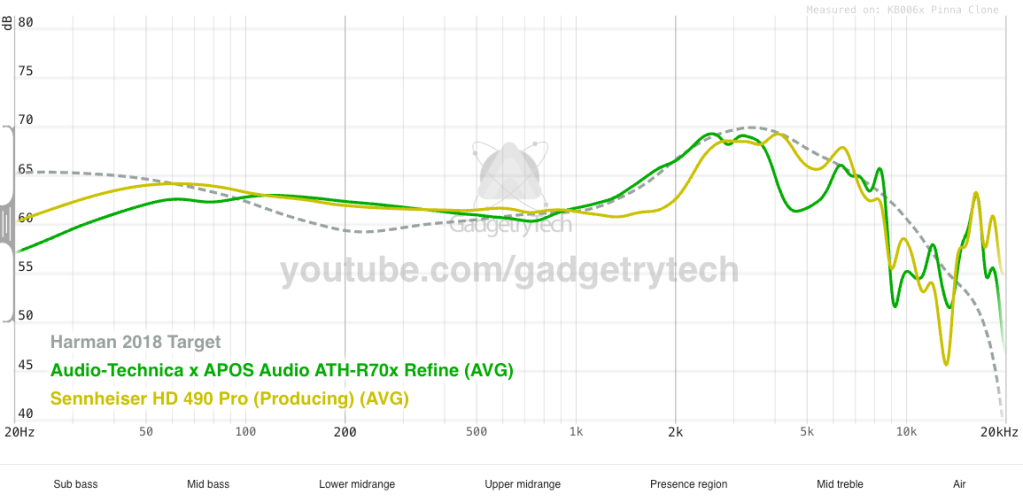
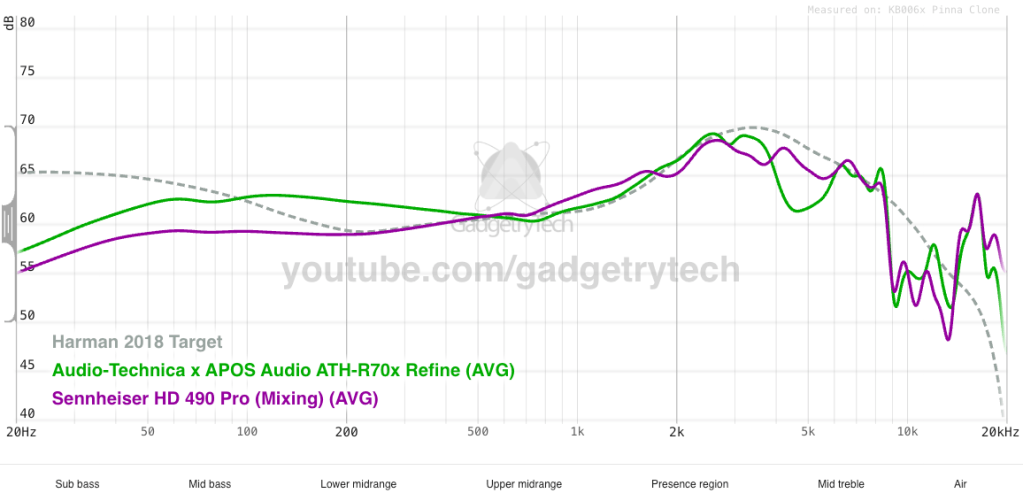
This sounds about right. For most of my listening, I’m going to prefer the Refine over the tweed pads’ more 600-like tuning, but the velour pads on the 490 are going to take it over the Refine’s velour pads on the R70x platform. I didn’t do a ton of A/B’ing the 490’s tweed pads versus the R70x, but my sense in a few minutes of flipping back and forth is that the things I like about the R70x, I like more about the 490 with the tweeds and I’m still going with the 490 for vocally-focused listening.
You’re not going to be disappointed by the Refine, but you’ll probably enjoy the 490 Pro more. At least I do! So yeah … to me, this is a solid and easy win for the 490. Given the difficulty in sourcing both the Refine and the R70x, though, and in light of Sennheiser’s more-aggressive-than-usual pricing on the 490, that might be a good thing!
My pick: HD 490 for basically everything, if you can afford the extra $100-150.
Fiio FT1 Pro
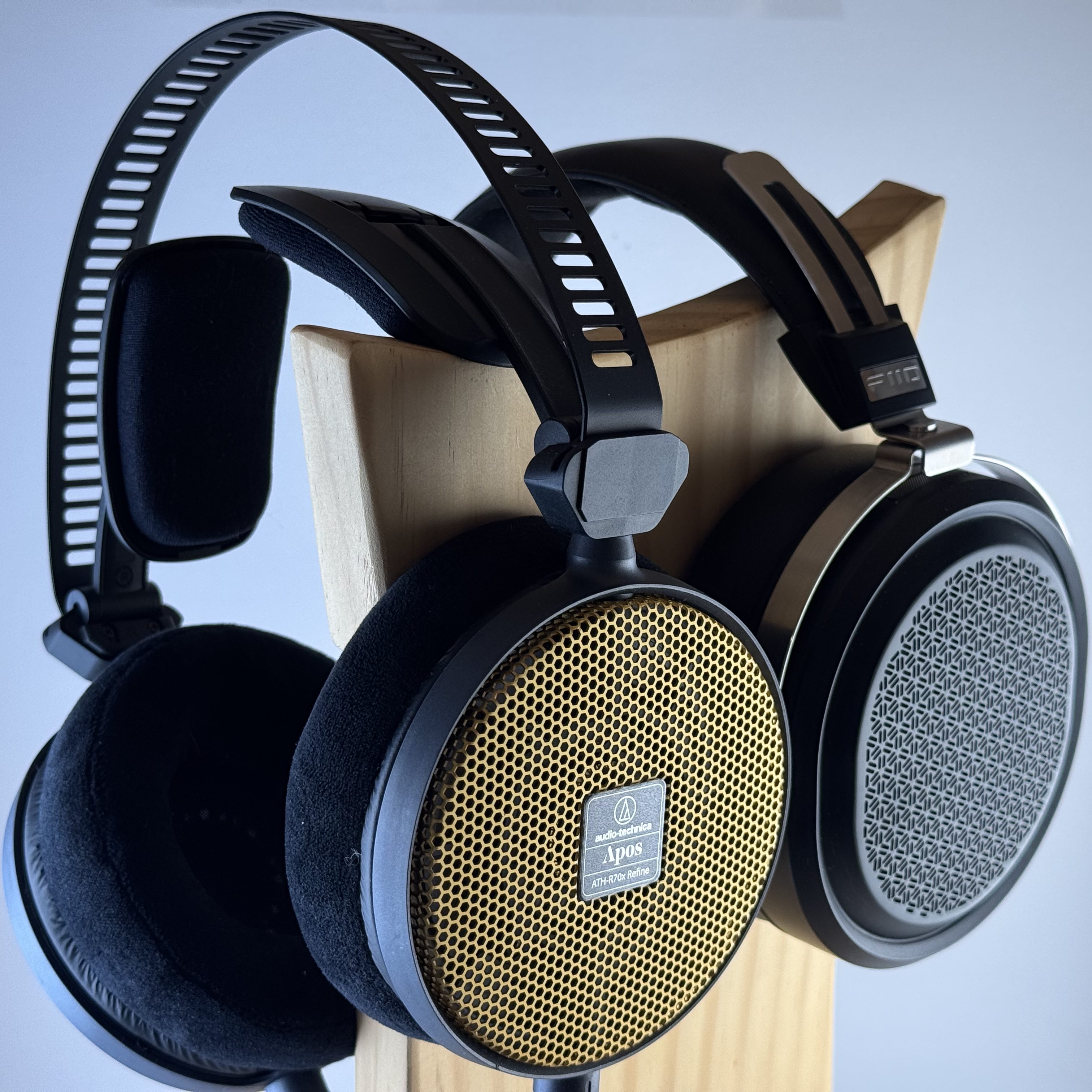
The FT1 Pro is my go-to recommendation around $200 for people who don’t live in the US or otherwise can’t source a HD 6XX, in large part because they’re just FUN. Really engaging, pleasantly bassy with reasonably well controlled treble and a nice midrange (particularly for vocals). The one place they struggle a little is on sparser, quieter tracks where the bass doesn’t shine as much.
The Refine is a more (badumbum-cha!) refined headphone by most measures; it’s cleaner, more precise, and better controlled in most ways, and my sense is that it’s a more detailed headphone overall. It also definitely has a better treble tuning; while it doesn’t often bother me in regular listening, you definitely will get the occasional reminder that there’s some slightly funky behavior going on above 8 kHz with the FT1 Pro, at least on my head.
I think based on my listening habits, I’m probably choosing the Refine over the FT1 Pro for most of my listening. I enjoy the bass on the FT1 Pro a lot, but I listen to a lot of acoustic(ish), college and independent rock, often with pretty substantial vocal components (think The National, The Grateful Dead, etc.), and as a result I prefer the more delicate, careful tuning of the Refine to the more intense and more fun tune of the FT1 Pro for a lot of that. The FT1 Pro is definitely my choice for EDM and electronica, and harder rock though.
Quick glance at the graph:
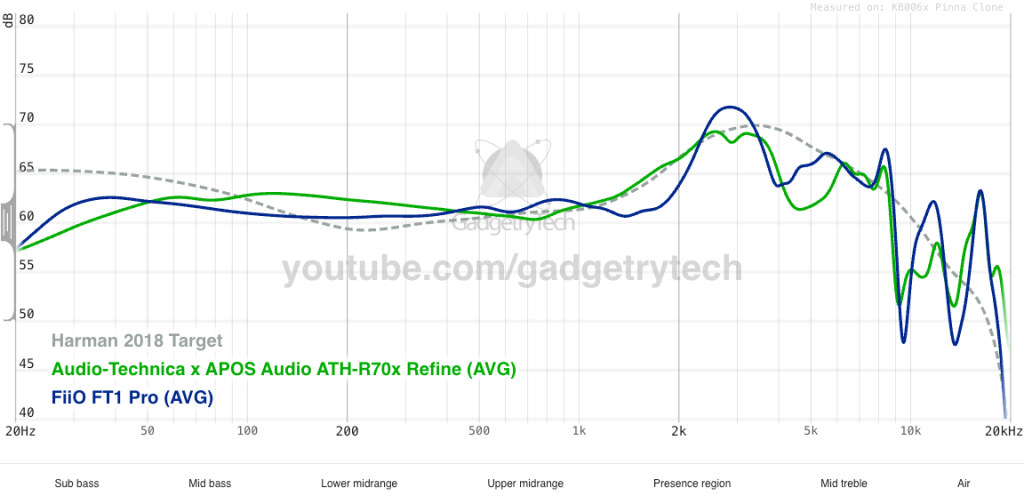
More or less what I’m hearing. I don’t hear quite the midrange scoop on the FT1 Pro that Gadgetry Tech measures either; I think the mids on them are generally pretty good even if the timbre on some guitars feels very slightly off.
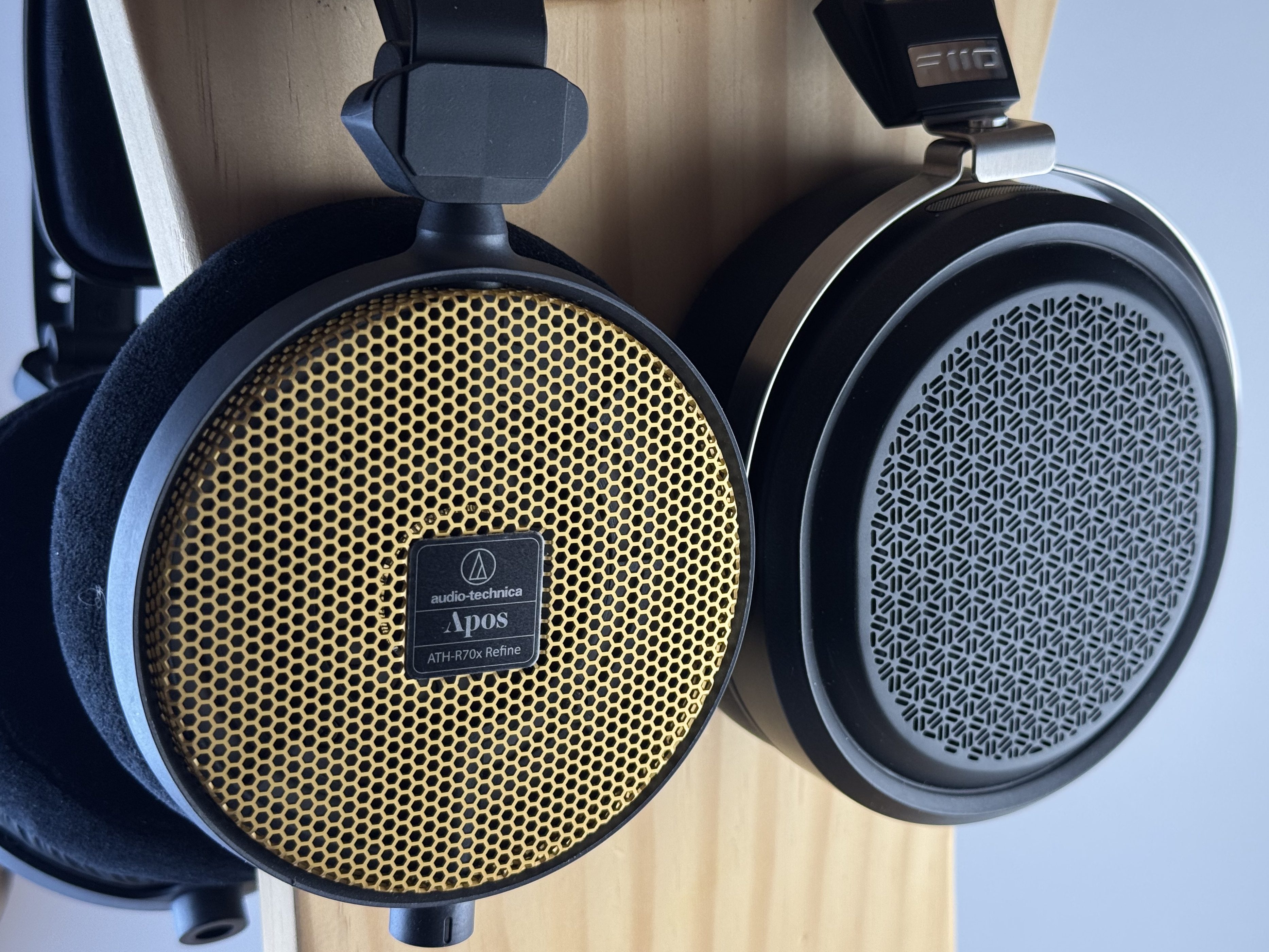
My pick: Refine for most of my listening. FT1 Pro for specific genres.
Hifiman Sundara/Edition XS
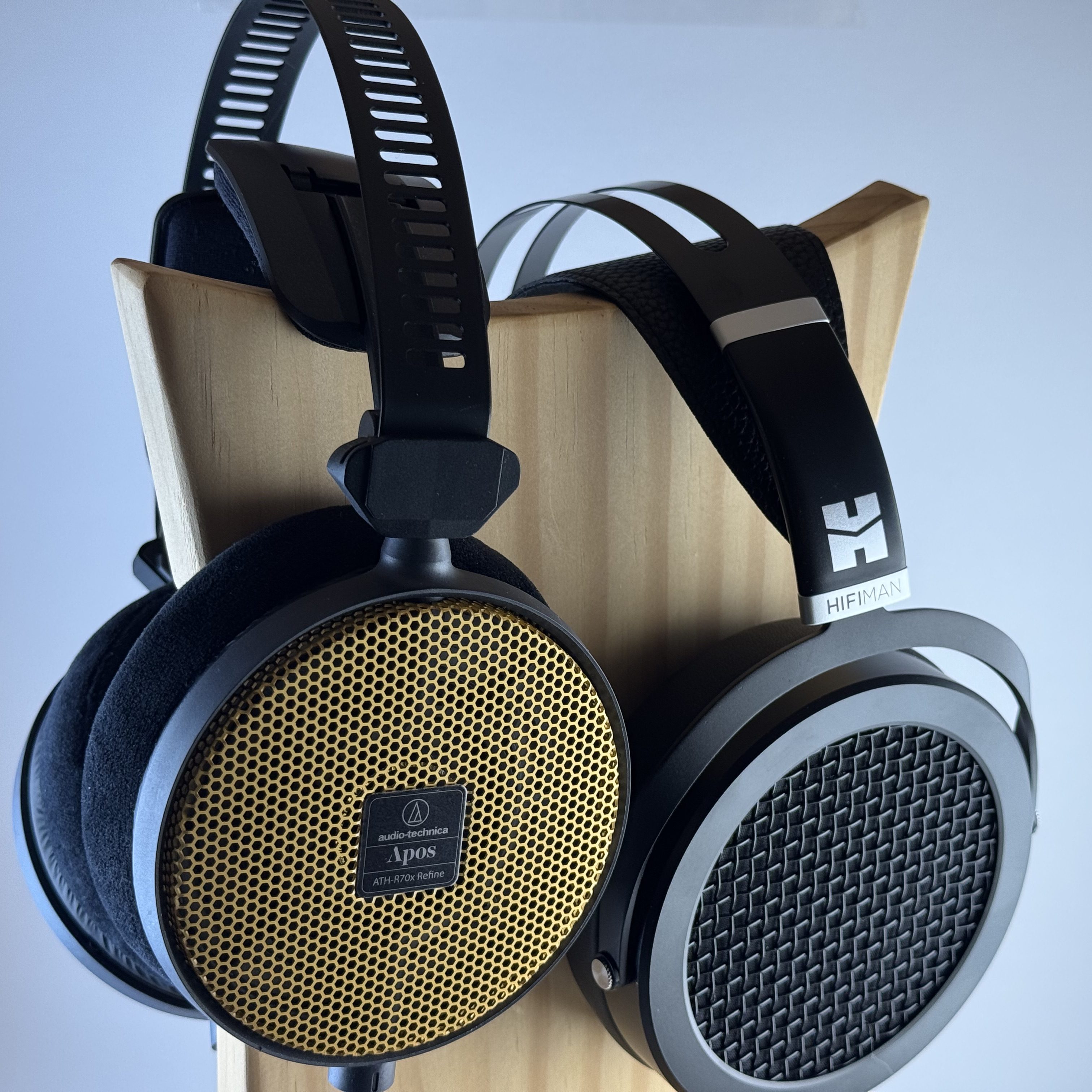
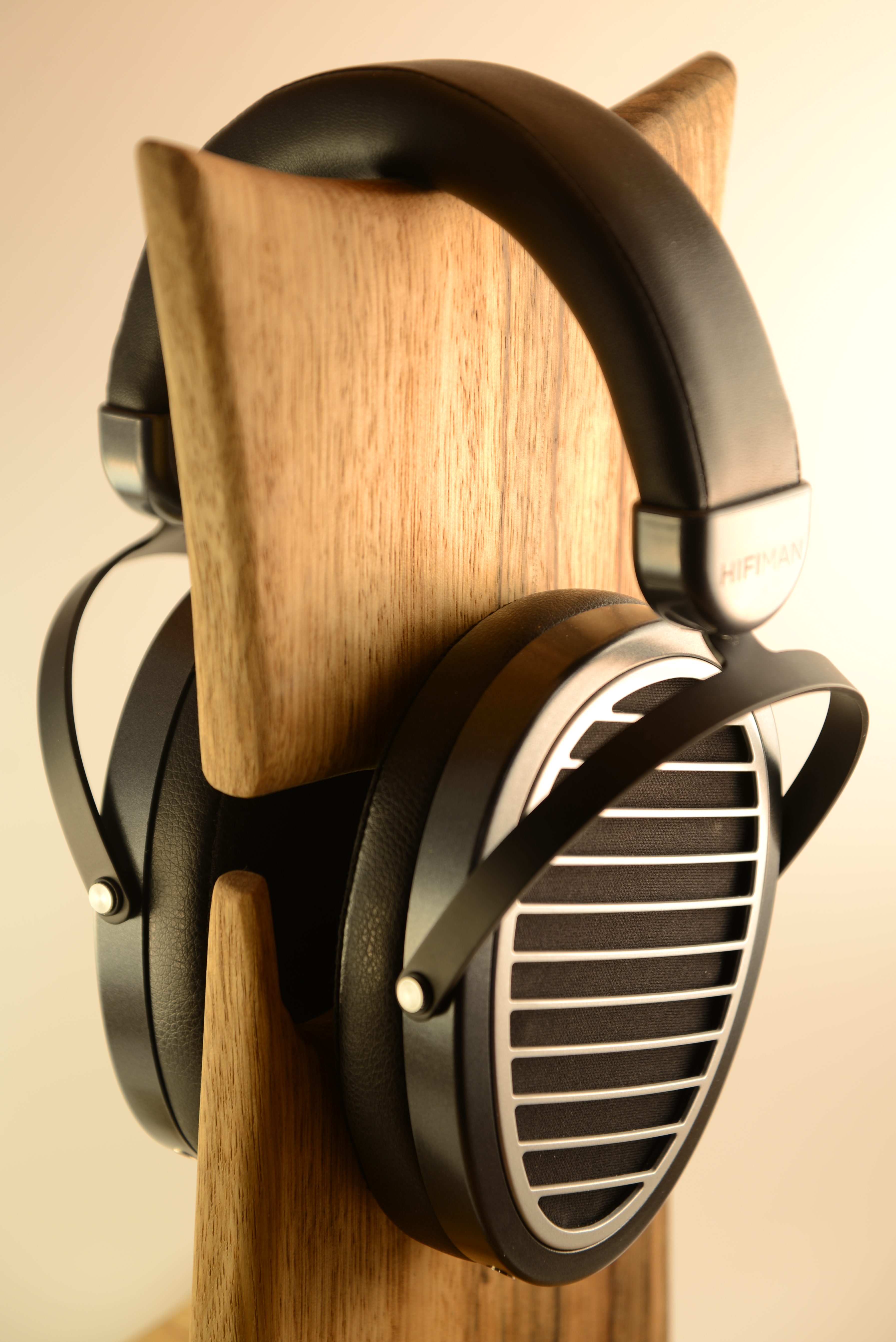
The Sundara feels a little like an inversion of the strengths of the Refine while following a generally similar profile; my favorite part about the Sundaras is how well they reproduce guitars, while at least to me the biggest disappointment of the Refine is the transition from midrange to treble. The Edition XS is a much more linear headphone than either the Sundara or the Refine, particularly in the bass and especially sub bass, though at least on my head I do hear enough treble spice that I basically don’t use them outside of testing for reviews anymore. In part because of that, and in part because of the way the Sundara reproduced guitars (and to a lesser extent, other strings), the Sundara is always my pick between these two unless someone is a bass head.14
My hot take: I think the Refine is better than either the Sundara or the Edition XS. Edition XS is arguably slightly more resolving (and certainly has a better sub bass response), but the overall tuning (particularly in the treble, but also in the mid bass and midrange) is a much better one to my ear, and I find them more comfortable overall.15 The tuning is a much closer call on the Sundara; generally I prefer the stronger bass response on the Refine (as much as I enjoy the Sundara’s bass, especially with a little bass boost via EQ or 3D printed insert), it’s better midrange, and less spikey treble (though, again, the Sundara’s spice isn’t that troubling on my head). The Refine is also definitely more comfortable for me. As I noted in my Sundara review, the lack of adjustment in the suspension strap means that the Sundara bear down harder on the top of my head and that becomes uncomfortable for longer sessions. So, based both on tuning and on general build and comfort, I think the Refine is a better product than either for my use cases. Ditto the R70x; while I certainly prefer the warmer tuning of the Refine, the R70x is still a better product to me than either the Edition XS or Sundara.
Quick look at the graphs:
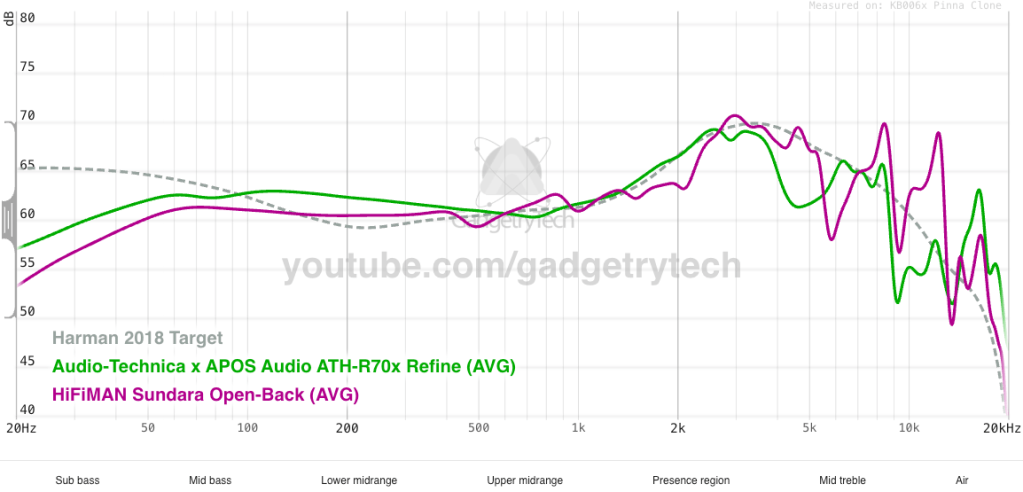
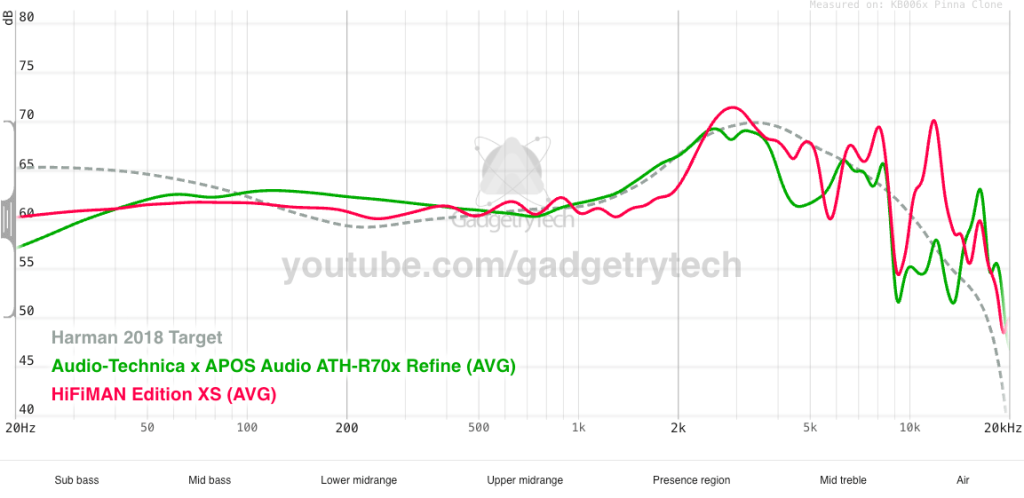
As spicy as I find the Sundara, at least on my head the spikes aren’t quite as loud or prominent and mostly don’t detract from my listening. On the Edition XS … they do, and they’re narrow enough that I’ve had a hard time cleaning them out via EQ without affecting the XS’ strengths. These measurements generally comport with my experience, though, particularly vis-a-vis the general tonal balance of the headphones.
My pick: Refine for everything except for VERY specific guitar tracks (most of The Police’s catalog, “Garcia Counterpoint,” etc.) where I’m taking the Sundara. Probably never going with the Edition XS except for people who NEED sub bass.
Overall
I’m really quite impressed by both the Refine and the R70x; whenever reviewers so universally praise a new headphone, I’m inherently a little skeptical of them (particularly where so many of the reviewers have some kind of commercial relationship with the manufacturer/seller,16 but in this case the glowing reviews seem to be born out by my experience. The $200-350 price point in the open back market is a pretty crowded, competitive space, and the fact that these headphones match up reasonably well (and in some cases beat!) my perennial recommendations is pretty impressive.
If you can find a pair of reasonable Refines, I recommend them to you wholeheartedly. If you can find a cheap pair of R70xes, they’re a pretty great headphone. If you get them cheap enough, I’d be tempted to order a pair of Refine pads from Apos just to get the full experience.
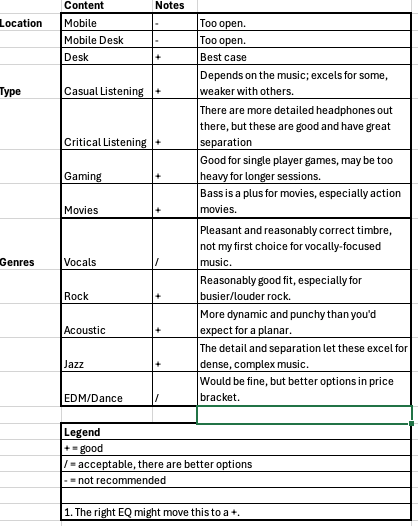
Phil’s Matrix of Use
#reviews #headphones #sennheiser #6XX #anc #spatialaudio #meh #2025 #99noir #meze #sunglasses #overear #cans #hifiman #arya #stealth #
 Phil's Superpower of Enthusiasm
Leave a comment