[MSRP $1099, $200 more with a tuning set, more with additional/upgraded cables.]

[Tl;dr: These are an incredible pair of closed backs, from a technical standpoint, an artistic standpoint, and a dedication to craftsmanship standpoint. They are very expensive even for someone like me, and they’re definitely not going to be everyone’s cup of tea, but I really, really, really like them (and I’m not generally a big fan of closed-back headphones). They’re hands-down my favorite closed-back at this point, and I think they may be my endgame closed-back. If you know me IRL and you like headphones, you should come take a listen to them. If you like woodworking, you should come take a look at them.
Editor’s note: I put on Massive Attack’s “Heligoland” while I was editing this review, and … damn. These headphones are perfect for this kind of music, so they’re kind of perfect for me.]
Cost-agnostic: 10 out of 10 Denalis
Cost-sensitive: 8 out of 10 Denalis
Table of Contents:
- Intro.
- Sound.
- Gaming.
- Amplifier compatibility.
- Noise canceling.
- Connectivity.
- Comfort.
- Construction.
- Appearance.
- Value/Comparisons.
- Overall.

Intro.
I first came across the ZMF brand a few years ago when they started popping up in headphone review channels on Youtube. They’re a very high-end headphone manufacturer based out of Chicago, and the standout thing about them (in addition to a polarizing, but mostly well-regarded sound, and a founder who … occasionally freaks out on the internet) is that the cups for their headphones are mostly hand-crafted from hardwood and pretty universally beautiful. No two pairs are the same, and they rotate through different kinds of wood from batch to batch. When you order, you have no idea what you’re going to get: the color, the wood, the grain, the acoustics, all of these things can vary a lot, pair to pair. 1 They’re also mostly built to order, though you can occasionally get a pair directly if they happen to have B-stock. The thing about natural wood grain is that they’re also full of imperfections. Holes and voids are not uncommon, so they have a variety of “stabilized” versions with the gaps filled in with resin or epoxy, often in spectacular colors.2
I’ve wanted a pair ever since I saw my first review. Never could justify the cost of any of their products, particularly with inconsistent reviews for a lot of their models (especially their open-backs), their pricing, etc., but man … I wanted a pair. Then two things happened in the same month: 1) a bunch of reviewers whose taste in headphones I generally share made the Bokeh Closed (ZMF’s “affordable” option) their closed back headphone of the year, and 2) my mom gave us a generous Christmas gift to let us pick out something we wanted for ourselves. I decided to do a dumb thing, and on January 3, 2025, I ordered myself a pair of Bokeh Closed and the wait began.
On January 13, I got an e-mail from ZMF telling me that the wood from my headphone had been selected, and begun the process of five-axis CNC cutting. The excitement grew.3 What wood was it? Would it have interesting grains? Would it end up being a stabilized version with resin? Would there be holes?
On February 16, I got an e-mail from ZMF telling me that my Bokeh had made it through the machining stage and were now in the sanding room. The excitement grew. How did the shape turn out? Would they be smooth or lumpy? What color would they be?
On March 3, I got an e-mail that my cups were finally ready to assemble, including the testing process to ensure that the acoustics of my particular pieces of wood were acceptable.4 The excitement grew. What color would they be? Dark? Tiger striped? Red? Blonde (the most boring option5)?
On March 4, I got an e-mail that my headphones were shipped, due to arrive March 8th. The excitement grew.
On March 8th, I saw that the shipment had been delayed until March 12th. The excitement grew (along with the frustration, but weather is weather is weather).
On March 11th, I received the magic notification: Fedex was at my door with a delivery that required signature. The excitement spiked! It was time to reveal my new piece of art.
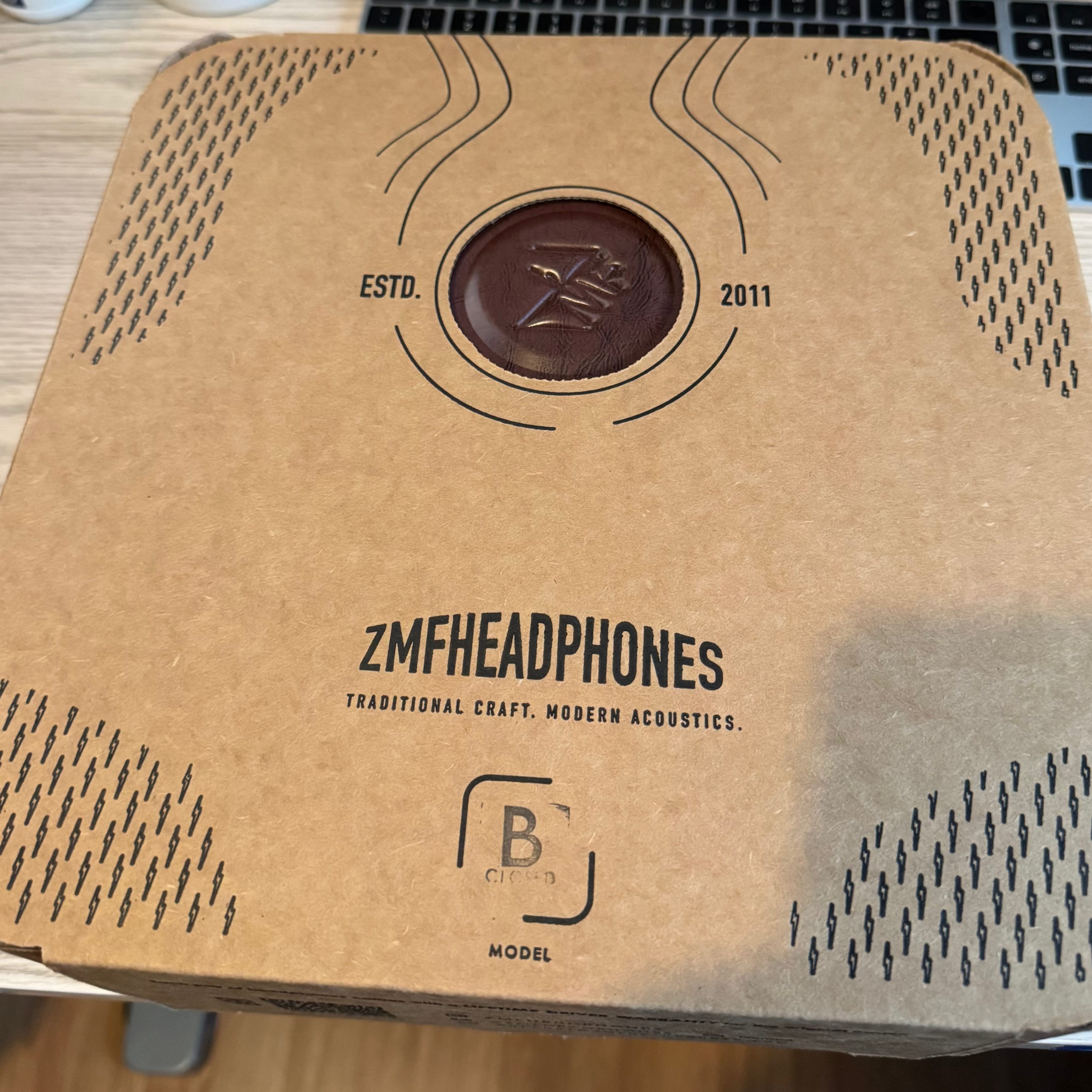
First, the cardboard box:
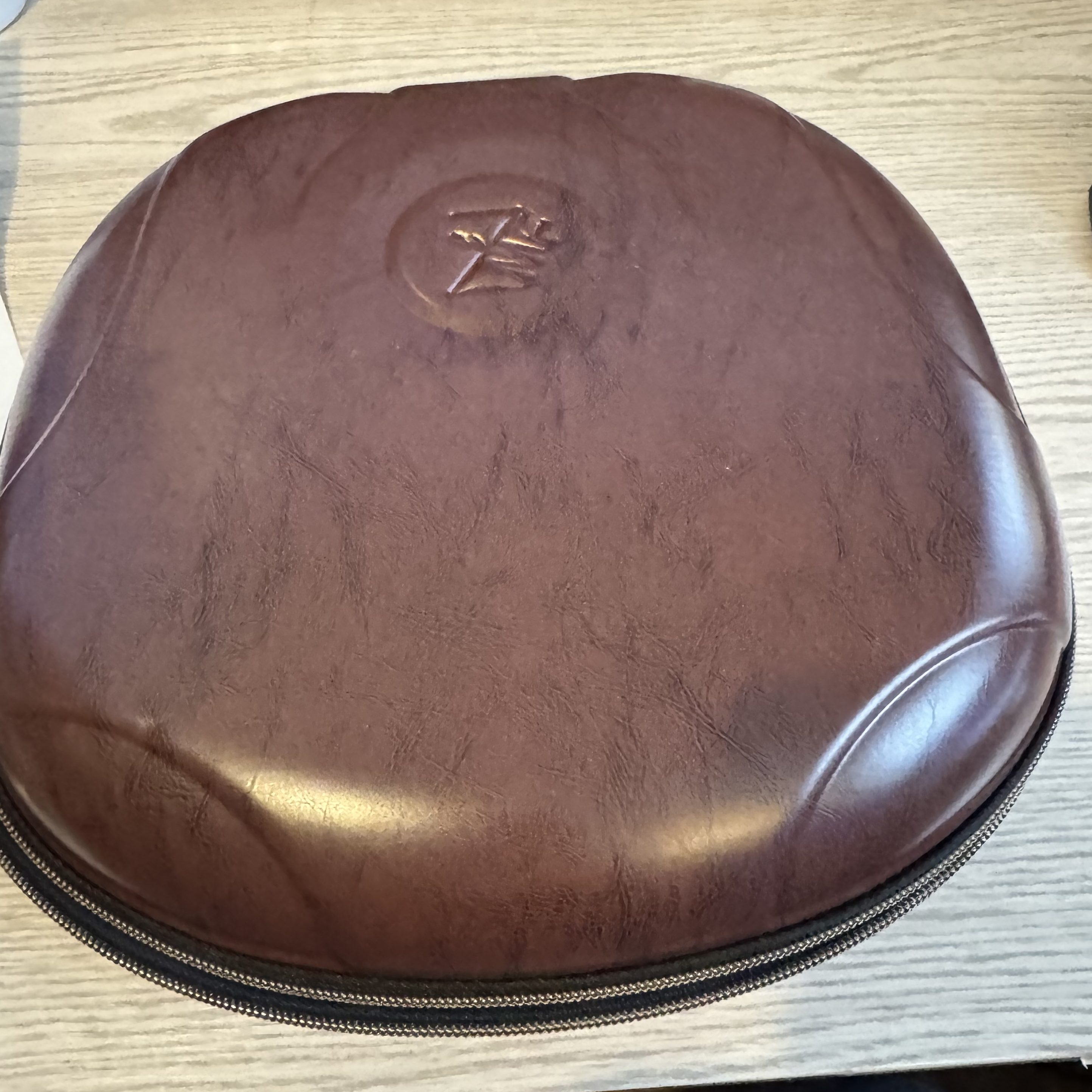
Next, the beautiful custom leather case:
And then, after more than two months of waiting, and anticipating, and wondering, THE HEAPHONE APPEARED:

I’ll admit to very brief disappointment. Of the many ZMFs I’ve seen, I have personally found the blonde wood look to be the least interesting, and I’d really hoped for a tiger stripe or red or a dark coloration or something more visually interesting. And that disappointed lasted about as long as it took for me to turn on my desk lamp.6
The thing about this particular pair of Black Limba wood headphones is that while they have a very subtle tiger striping in the wood, there is a truly exceptionally beautiful, perpendicular reflective tiger strip hidden in the wood’s sheen. It’s hard to see in photos, but if you look at the photo above, you can see the wood grain on the left cup running down and to the right and the reflective stripes running up and to the right. They are, genuinely, beautiful and a little mesmerizing in the right kind of light. I have spent a surprising amount of time under a bright lamp, just turning them in my hands and admiring the grain.
It was a pretty magical unboxing experience overall. ZMF understand that they are manufacturing a bespoke, luxury product, and they lean into that completely. Each one is a genuine piece of art, and totally unique. Even the imperfections in the cups.
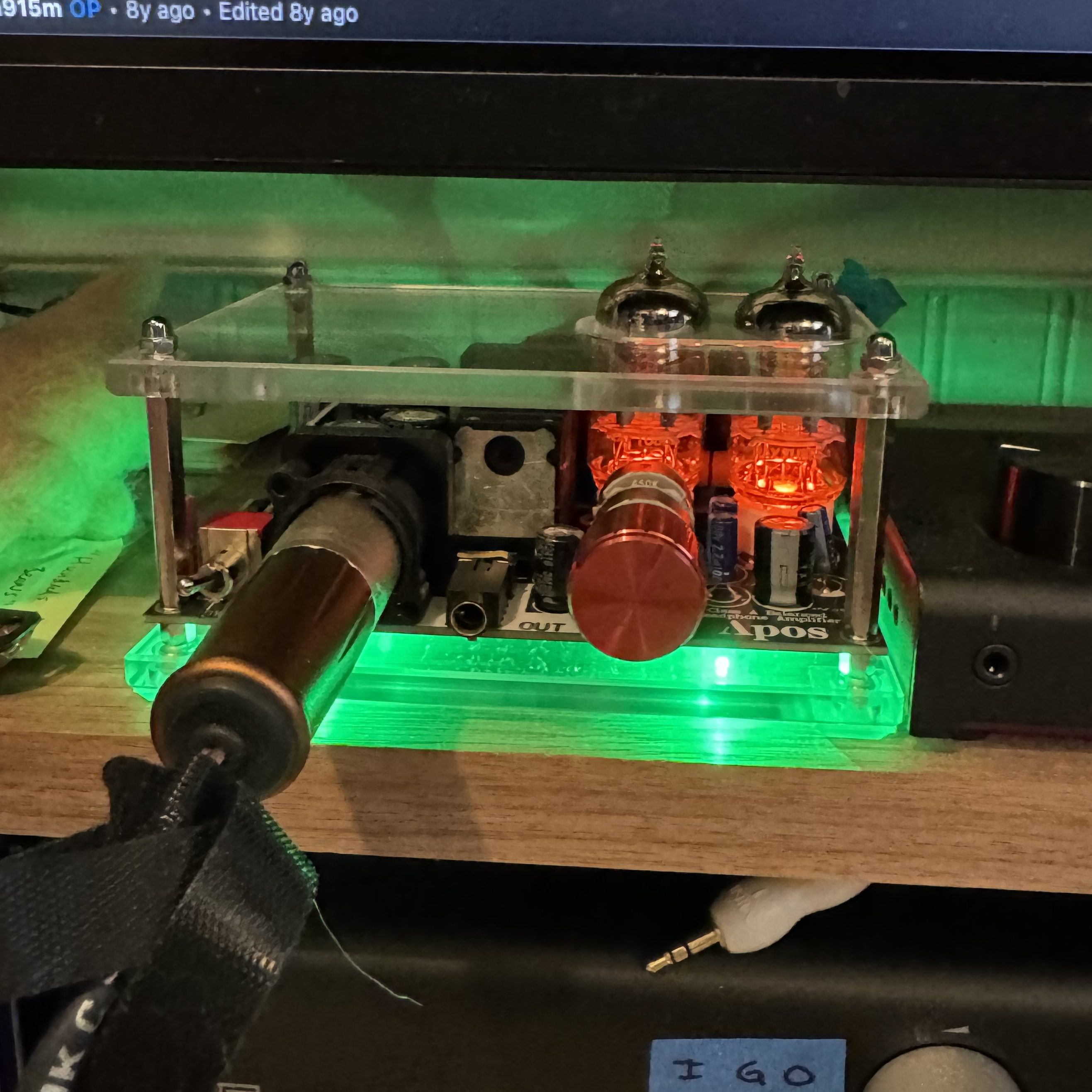
[Review note: I’m generally a cable and balanced skeptic (outside of a very specific circumstance), but I tested this primarily via an XLR-terminated, 2-strand ZMF Lectric C cable and while I tested it with a number of different amps, I did focus on the Apos Gremlin tube amp in part because I love it, and in part because Zach (of Zachary Mehrbach Films aka ZMF) loves tube amps and presumably designs his headphones around sounding great with them. Except where noted otherwise, assume Bokeh –> Lectric C XLR –> Apos Gremlin. I’m using the default pads and mesh for purposes of this review.
My torture testing list: Apple, Tidal, Spotify.]
Sound.
I’m mostly not a fan of closed-back headphones. I like the Meze x Drop 99 Noir, and I really dislike the Beyerdynamic DT 770 Pro, and I’ve mostly avoided reviewing the others because I’m not a fan of the general sound profile.7 These are definitely bringing me around. They’re … really, really nice. Solid, consistent, not overdone or under-tuned in any particular way, etc. They’re really good for the range of music I listen to, from hip hop to EDM to rock to jazz to classical. Nothing has sounded bad on them, except badly mastered music. They’re so good at quiet music like Meshelle Ndegeocello’s “What Did I Do”, and so good at loud, intense and heavily layered music like Son Lux’s “Easy”, and the layering on “Garcia Counterpoint” from Day of the Dead is just spectacular: crisp, clean and clearly separated.
The biggest criticism I will offer is not a flaw in these headphones, but rather in the nature of closed-backs; silence is never really silence just because of the occlusion effect. They’ll never be quite as good at silence as a good pair of open-backs, but they come damned close.
The soundstage/stereo separation is good, but not great. It’s not as distractingly wide as some other headphones, but the click and the guitar on “Blackbird” are very distinctly in the left and right channels, you get good full rotational sound on “Love Can Damage Your Health (Laid mix)” (aka good front-to-back soundstage), and in general vocalists sound like they’re just in front of your head instead of inside it. The synths in the first 30 seconds of “Angel (Blur Remix)” cross channels nicely, and these are the kind of headphones where occasionally I find myself going to look to see what Denali is doing when something in the mix is reproduced far enough out in the sound field that I think they’re coming from the real world (this happens with rain effects in some contexts too, where I think it’s rain on the skylights in my house).
The dynamics are great. Setting the volume at the beginning of “It’s All So Incredibly Loud” at a reasonable volume becomes almost painfully loud by the end. Microdynamics are similarly great; the attack on the trumpets on Brasstracks’ “Intro” are sharp and biting without losing clarity, and the bell tones and reverb at the beginning of “Angel (Blur Remix)” are beautifully and consistently reproduced.
The bass is exceptional. You would expect solid bass from a relatively expensive closed back, and these do not disappoint. It’s not forward, or thumpy, but it’s consistently solid and precise. The bassline in Florence + the Machine’s “Remain Nameless” is consistently sharp, and the Bokeh is one of the very few headphones I’ve heard that can really lay out Tip’s entire evolving bassline in Janet Jackson’s “Got ‘Til It’s Gone.” It also gets the throbbing bass in “Limit to Your Love” exactly right; feels like your brain is sloshing around inside your skull when it really hits (it sounds weird to say it like that, but trust me when I say this is what you want from this track).
Mid-range is good, but not great. Female vocals in particular are maybe a hair recessed; Jill Scott fades a tiny bit into the intensely layered mids on Robert Glasper’s “Calls”, and Sampha isn’t as present in “Like the Piano” as he is on some other systems. Both are still clear and have good timbre, they’re just not as emphasized as they might be on something like a Senneheiser x Drop 6XX or even a Meze 109 Pro, particularly on tracks with busy midranges.
Treble is nicely controlled, with clear and precise reproduction without edging into harshness or sharpness. Miles Davis’ muted trumpet on “Will O’ the Wisp” is lovely and stands out from the background instrumentation without being distracting, and even the badly mastered guitar on Vampire Weekend’s “2021” is clear and forward without being overpowered. The challenging treble riffs in Son Lux’s “Easy” are well-balanced and cut through the rest of the track but don’t cross over into harshness, and the same is true of the bells on Sylvan Esso’s “Coffee.”
Gaming.
I really like the way these perform for a game like Cyberpunk 2077. They’re good for the music in the game, and the sound effects, and they reproduce human voices very well and place them correctly in space. I mostly don’t play sweaty FPSes that rely super heavily on positioning anymore, but I’m very rarely confused about where a particular effect is coming from in space. And man. The bass on explosions, or the revving of a car engine … *chef’s kiss.*
Amplifier compatibility.
So far, I haven’t encountered any amp that doesn’t play well with the Bokeh Closed. The Bokeh are a middle impedance set at 80 ohms nominally, but have a relatively high sensitivity of 103 dB/mW, which means they play pretty well even with an Apple dongle, getting to the kind of listening volume I prefer around 50-60% of volume (though of course they benefit from a little more power). The only issue I’ve encountered is that they sound slightly harsh in the treble running single-ended out of a Schiit Jotunheim, but that may just be that I’ve mostly been listening to them through a balanced tube amp and my ears may be adjusted to their tone with tube influence. They do sound surprisingly nice via a Schiit Fulla (an inexpensive gaming amp).
Noise canceling.
Pretty decent passive noise isolation (I can’t hear myself type, or my dog squeaking her toy in the hallway), but no active noise canceling.
Spatial audio. Nope!
Controls. None. These are passive closed-backed headphones.
Connectivity.
Like most high-end headphones, the Bokeh Closed can ship with a variety of cables. The default cable is a nice, 6’, braided cloth 6.35 mm cable and while it’s got a little more memory and stiffness than I might prefer in an ideal world, it’s a perfectly suitable cable. I do really like the upgraded Lectric C XLR cable; it drapes more easily and seems less prone to tangling when winding or unwinding. Because the Bokeh connect to each cup separately via a standard 3.5 mm jack that is exposed on the outside of the cup (unlike, say, the *cough 109 Pro *cough*), there are a lot of potential aftermarket upgrades if you don’t choose to use ZMF’s own cables.
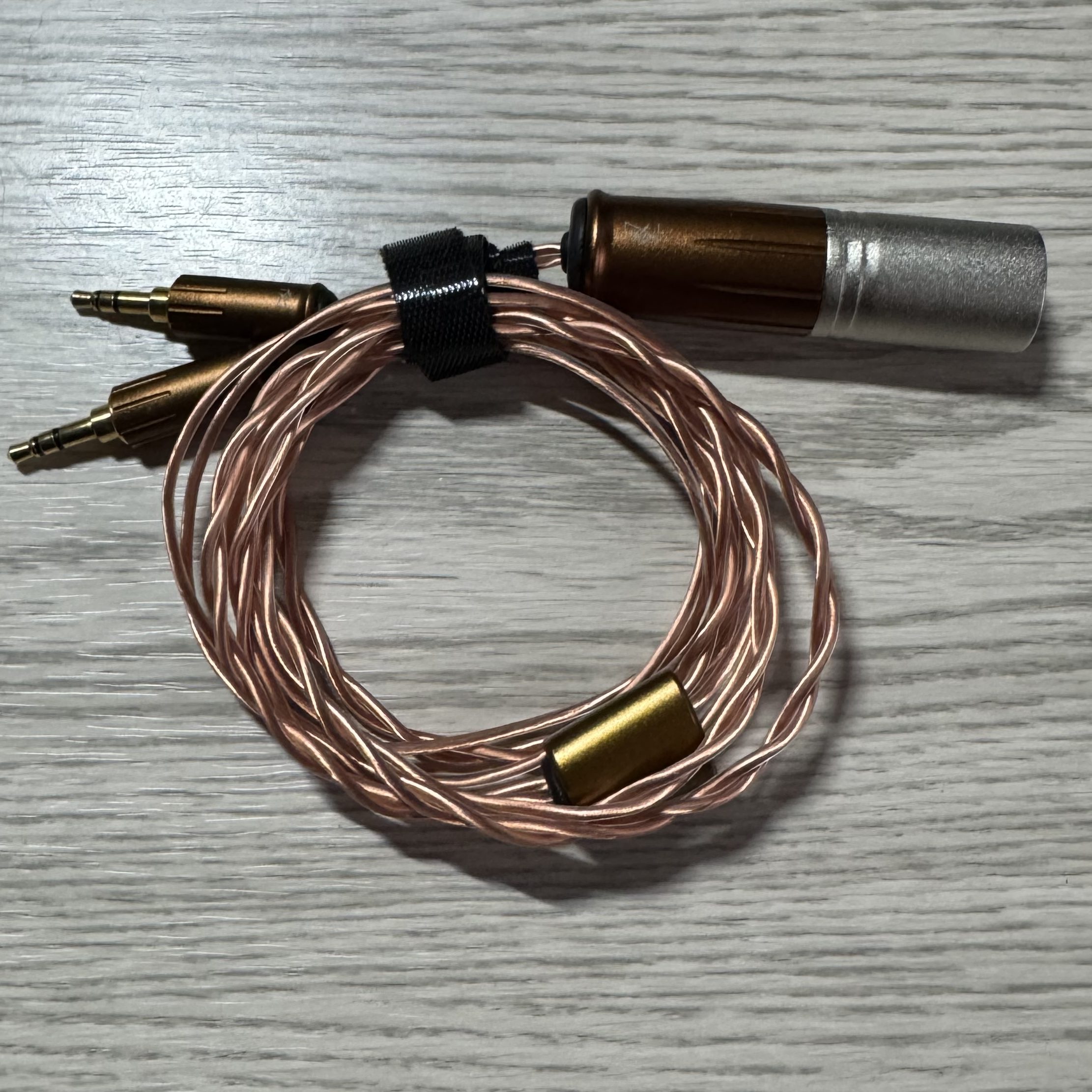
[One pro-tip; if you’re ordering a single-ended cable, go with the 3.5 mm version. If you’re like me, you have a couple dozen 3.5 mm to 6.35 mm adapters kicking around, and no 6.35 mm to 3.5 mm adapters. In order to listen to this single-ended from a couple of sources I had to swap in a Meze 109 Pro cable I had laying around.]
Comfort.
I find these very comfortable. They’re definitely on the heavier side at around 500 grams, but for me the adjustable headband is flexible enough to let me get a really comfortable fit for long listening sessions (4+ hours at a time). Some people will likely find the clamping force too much, but even with my pretty big head I’m able to get a good fit with a good seal, even with reading glasses on.
Construction.
These are, as you would hope for the price point, really well built. The cups are not only beautiful pieces of art, but they’re also incredibly smooth and satisfying and I find myself absently running my hand over the cups sometimes while I’m listening. Unsurprisingly, the cups are slightly microphonic, so if you’re in a place where things will be constantly bumping your head, these might not be a great choice. The rest of the construction is similarly solid; the steel rods that connect the cups to the cups to the headband feel very sturdy. I certainly wouldn’t drop these on purpose (mostly to avoid dinging the ear cups!), but I’m pretty confident that they’d survive it just fine.
My one complaint about construction is the way the ear pads attached to the cups. Essentially, you stretch the material out around the cups and get the edges into small grooves around the outside of the cup. It seems simple enough, but in practice I have found it pretty challenging to get them fully seated. And because of the design, if you slide the headphones off the wrong way, you may find that you’ve inadvertently removed the pads. I find myself taking them off by holding both cups as a result. Particularly for a headphone designed to pad roll, I’d rather have a pad system that’s a little easier to put on and more likely to remain on.

Appearance.
I mean, look at them. They’re gorgeous. They feel very 50s industrial to me, and I mean that as a compliment. I think in the end I slightly prefer Meze’s steampunk-y aesthetic, but nothing I’ve ever worn really competes with the hand-crafted and finished wood cups. They’re sui generis; nothing will ever be exactly the same as these headphones, and they’re probably the single most beautiful object I’ve ever owned.

Value/Comparisons.
I don’t really have anything to fairly compare these to; my prior experience with audiophile closed-backs have been limited to the sub-$200 range, and that’s definitely not fair. These are just … better in every possible way. I do technically own a pair of headphones that was slightly more expensive at MSRP; the Hifiman Arya Stealth originally sold for $1,599 at MSRP, though the new standard price appears to be a thousand dollars less at $599. I said in my review of the Arya Stealth that I wouldn’t have paid the original MSRP but that they were a steal at $599, I still stand by that a few months later. I will say that as much as I enjoy the Arya, and as much as I tend to prefer open-backed headphones over closed-back ones, I think I prefer the Bokeh’s sound profile to the Aryas. It’s certainly less detailed, less highly-resolving, and much less neutral, but like the 109 Pro, the ZMF tune on these (at least with default mesh and pads) just really fits my preferences. Everyone values their money differently, and I don’t know that I would have eventually bought these but for a gift, but I’m REALLY happy to have them.
Overall.
I love these. Because of the sound, the appearance, the craftsmanship, the pure ridiculousness of them, or whatever else, they’re absolutely my jam and I have zero regrets. Are they $900 better than the 99 Noir, or $950 better than the Fiio FT1? That’s a hard case to make.8 But damn are they nice. At least for now, they appear to be my end-game closed back, and they’re certainly my favorite closed-back so far.
#reviews #headphones #sennheiser #6XX #anc #spatialaudio #meh #2025 #99noir #meze #sunglasses #overear #cans #hifiman #arya #stealth #editionxs #budget #hahahaha #zmf #bokeh #closedback
- In order to buy Bokeh, you have to agree to the following terms and conditions: “I am entering the exclusive world of BOKEH. This hand-assembled headphone is unique and made from Black Limba wood. While I cannot choose the nature of the aesthetics I appreciate the features of spalt ambrosia bores incongruent figuring and more are innate to Black Limba making it awesome and unique and I am all about that because nothing is as real as solid wood. BOKEH headphones will saunter out after being built from scratch within 4 to 10 weeks offering a crash course in patience. The reward? A headphone that isolates you from blurred ideations and the expectations of others get ready for BOKEH.” ↩︎
- Seriously, look at their gallery. It’s … gorgeous. These are individual works of art. ↩︎
- I also contacted ZMF to ask if I could add a balanced XLR-terminated cable to the order; I had acquired a balanced setup for the first time in December and I was excited about the possibility of these “end-game” type headphones running balanced. Their support is … incredible. I also found myself fancy-ass cable-curious, so I upgraded to a mid-tier cable from them. For the record, I don’t think it affects the sound quality at all, but it’s gorgeous and a real quality of life upgrade in terms of drape. ↩︎
- From the March 3 e-mail: “FUN FACT: – ZMF doesn’t change the tuning or assembly of your headphones based on the wood used, we let the acoustic characteristics of the wood shine through.” ↩︎
- Or so I thought … ↩︎
- If you watch my unboxing video (and can make it through the slightly nauseating head movements), you can experience the very moment where I caught the reflections and realized what I got. ↩︎
- This may be changing, between this headphone, the Fiio FT1 (review soon) and the fact that I’m enjoying a lot more IEMs these days. ↩︎
- They are 1,000% worth $950 more than the Beyerdynamic DT 770 Pro, but that’s more a reflection of the 770 than the Bokeh. ↩︎


Leave a reply to fcovigil2000 Cancel reply