This is a compilation of questions that I frequently respond to on Reddit and my stock answers, gathered mostly for my own convenience.
Table of Contents:
- Question: Do I need a DAC or amp to run my headphones out of my computer?
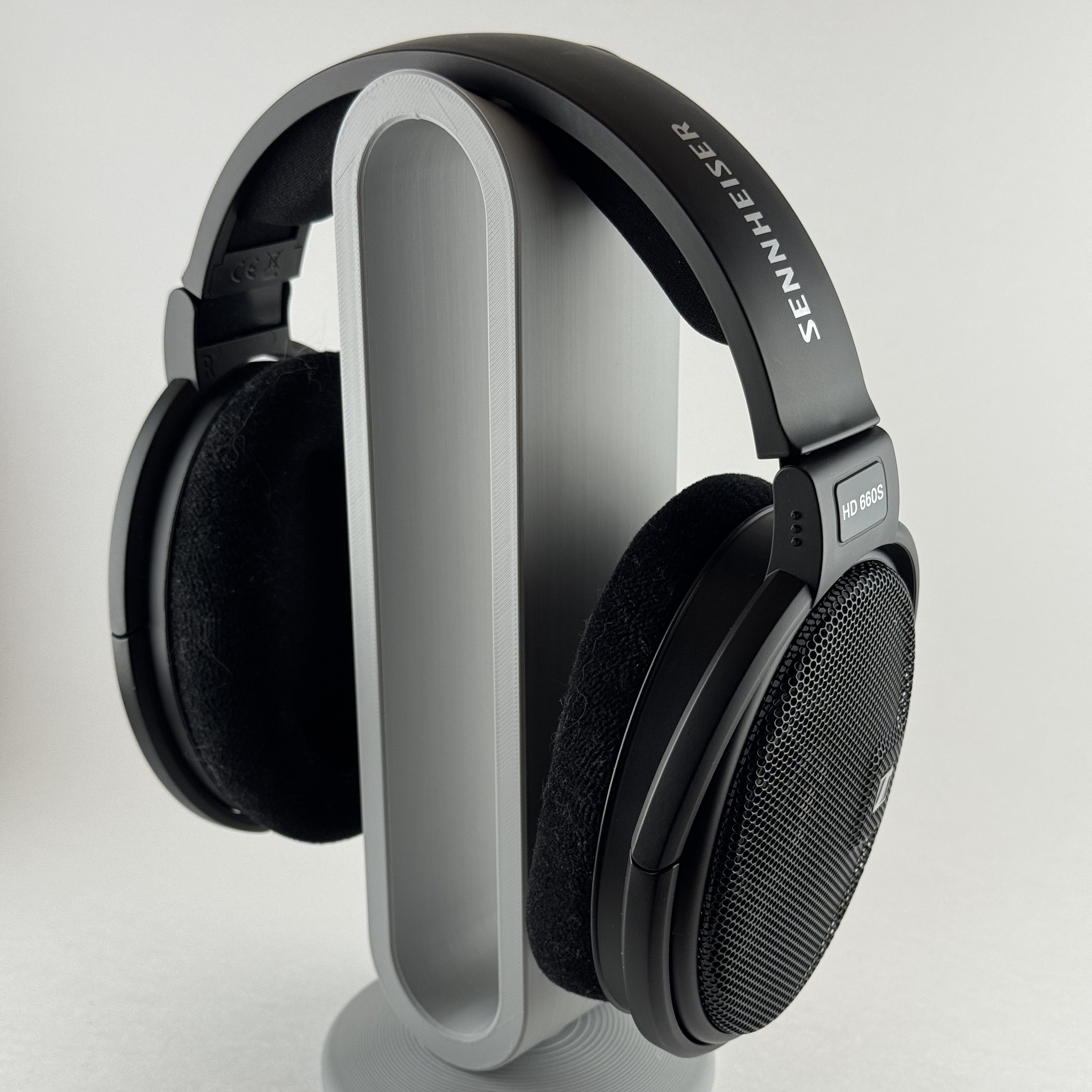
- Question: Do I need a DAC/amp to run the Sennheiser HD 600/650/6XX/58X/660S/660S2 (aka “6X0s”)?
- Question: Is there a significant sound difference between open/closed back?
- Question: I need a good, solid DAC/Amp stack to drive [headphone X]. What should I buy?
- Question: I’m new to this space and I want something to use for gaming. Do I want a closed-back or an open-back headphone?
- Question: Are wireless headphones really worse sounding than wired ones?
- Question: Okay, which wireless headphone should I get?
- Question: I’ve really enjoyed the audiophile headphones I got, but I seriously don’t understand how you can describe the quality of the sound and whatnot. How do I learn this?
- Question: How do I pick between the Bowers & Wilkins Px[7, 7S2, 8, 8S2] or the Sony XM[3, 4, 5 or 6]?
- Question: I’m down to either the Beyerdynamic DT 990 Pro or [insert virtually any headphone here]; which should I choose?
- Question: I’m buying my first good pair of headphones, and I want open backs under $250. What should I buy?
- Question: I have the HD 6XX and I want a second pair of headphones. What would give me the most contrast?
- Question: Do cables affect sound quality?
- Question: Are balanced cables worth it?
- Question: I live somewhere where I can only buy headphones online and without testing them, and I can’t afford to buy a bunch of stuff I won’t like. What do I do?
- Question: Do you use EQ to increase soundstage on your headphones?
- Question: Should I pick headphones based on what they sound like out of the box, or after EQ?
- Question: Will ANC headphones running lossless and passively via a 3.5 mm analog cable sound better than they do via Bluetooth?
- Question: Okay, I want to buy my first pair of audiophile headphones and I want to spend $1000. What should I buy?
- Question: Which streaming service should I use?
- Question: I want to buy my first IEMs, and I have a budget of $300. What should I buy?
- Question: Should I buy one pair of headphones for $1000, or four pairs for $250 each?
- Question: I just bought [headphone x], and I still prefer [cheaper headphone y] even though X should be a lot better. Am I doing it wrong?
- Question: Why should I buy a DAP?
- Question: Why should I buy an expensive headphone instead of just buying a cheap one and using EQ to make it sound like the more expensive version?
- Question: Does Sennheiser have any headphones which can compete with Sony in terms of ANC ?
- Question: So you’re telling me that the best I can do with my [insert inexpensive ANC heaphone here] is listening in wired mode through the 3.5mm? And without the anc? In headphones instructions it is said that in wired mode they go up to 40khz and support hires. So using the 3.5mm and playing hires files from pc would make it able to play true hires? And also what headphones would you suggest?
- Question: What’s recommended to replace Arctis 9 Wireless Headset? Under $300, US, just PC gaming and music.
Question: Do I need a DAC or amp to run my headphones out of my computer?
Answer: Need? No. Want? Would benefit from? Probably.
Honestly, people often overestimate how much power they need for a lot of headphones and most aren’t particularly hard to drive (unless you’re diving deep into the audiophile deep end), but most motherboards’ sound output is … not great. High output impedance changes the frequency response on a headphone in unpredictable and often unpleasant ways. I’d always recommend putting a $9 dongle from Apple or JCALLY in your signal chain just to get away from the motherboard’s output (unless you’re using a Mac model released after 2021, in which case you have a good, clean, high-impedance headphone compatible headphone jack already).
If you decide to go for an amp, my general rule of thumb is to spend no more than half as much on an amp and a third as much on a DAC as you did on the headphone; more than that and you’re starting to leave a lot of value on the table. Unless you really want a desktop amplifier with a volume dial (and if you do, respect. I love them), there are some great, powerful dongles on the market: Moondrop Dawn Pro is my favorite of the bunch, but F*si’s DS2 is also great, as are things like the Fiio KA11, Crinear Protocol Max, etc.
Question: Do I need a DAC/amp to run the Sennheiser HD 600/650/6XX/58X/660S/660S2 (aka “6X0s”)?
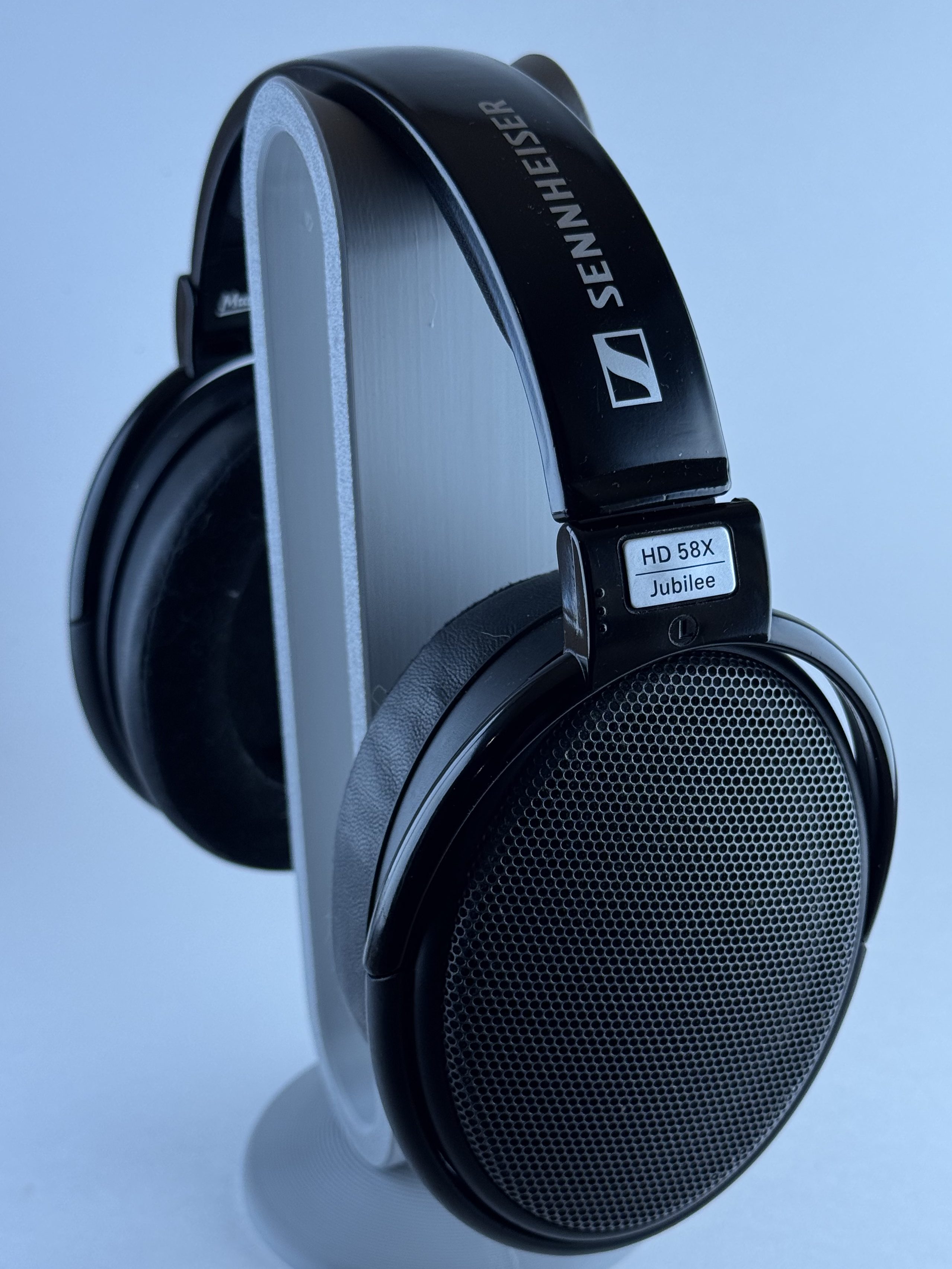
Answer: Folks exaggerate a whole lot about how hard the 6X0 are to drive; sure, they’re high impedance, but they’re also pretty sensitive. There are some things that are genuinely harder to drive (like the Hifiman HE6se v.2), but there aren’t that many things that a North American Apple dongle can’t drive. The HD 600 is arguably the hardest of the bunch to drive, and even it gets to a reasonable volume at 75% on an Apple dongle.
For the 6X0, I personally really like the Moondrop Dawn Pro for $50/60, and it has a 4.4 mm Pentaconn out for when you want more volume. Paired with a $20 balanced cable from Amazon, it’s the best my 6XX have ever sounded (and I have a LOT of DACs/amps); I can’t explain why but that’s how I hear it.
I’m intrigued by the Crongle but haven’t had a chance to get my hands on it yet. Really, almost any competent DAC/amp is going to be effectively transparent and won’t matter a whole lot. The KA11 is fine, so is the Fosi DS2, the Dragonfly series (though they’re OG USB-A), etc.
Question: Is there a significant sound difference between open/closed back?
Answer: Not universally, but I generally think that open-backs are better sounding at any given price point. There’s really only one closed back under $500 that I choose to listen to regularly, and it’s that FT1 and there are a bunch of really good open backs in that price range.
Question: I need a good, solid DAC/Amp stack to drive [headphone X]. What should I buy?
Answer: Any of the basic stacks will work well (Schiit Modi/Magni, Topping E30II/L30II, JDS Atom amp 2/dac 2, etc.) for almost any headphone. Most people will notice minimal differences between them, if any.
I like the Schiit stack for their aesthetics (and I like buying American in this space, supporting a great no-nonsense company with good customer support), but they all have their advantages and disadvantages. I just think audio quality ain’t one for any of them.
There are a few random exceptions. For whatever reason, I think that Schiit stacks (particularly Magni/Modi and OG Bifrost/Asgard 2) don’t bring out the best in the HD 6XX or vice versa, so if I were running those I’d either stick with a Topping or JDS stack or upgrade to a nicer Schiit stack like Modius/Magnius or Mimir/Jotunheim 2).
Question: I’m new to this space and I want something to use for gaming. Do I want a closed-back or an open-back headphone?
Answer: Do you want to isolate yourself from the noises around you, or are you okay being able to hear the world around you? If the former, you want a closed-back. If the latter, you want an open-back (which generally are ‘better’ soundwise, though they often lose a little bit of subbass).
The Fiio FT1 is the best closed back on the market right now under $500 to my ears. I know people like the 770 but to me it’s painfully trebly and I can’t wear it for more than 10-15 minutes without getting a headache. It’s a pretty shallow market.
For an open back, I’d recommend the Fiio FT1 Pro for a fun tune, the Hifiman Sundara for a more neutral tune, and the Hifiman Edition XS if you want a bit more bass. My personal pick among those three is the Sundara.
For gaming you want something with a decent, consistent sounstage, a not-overblown bass and treble tune, and reasonable comfort for long sessions. Any of the ones I’ve recommended will meet those requirements.
Oh and get a $10 dongle DAC to get away from your motherboard’s sound, which are often pretty bad (high output impedance). If you’re in North America, Apple’s is one of the best. If you’re not, JCALLY makes a couple of good options.
Question: Are wireless headphones really worse sounding than wired ones?
Answer: Wireless is THEORETICALLY lower quality; in practice, a well-implemented Bluetooth headset can be not that much different in a lot of listening environments. As much as I love my wired headphones (and I do love them), I’m a mostly Bluetooth listener when I’m out and about.
Question: Okay, which wireless headphone should I get?
Answer: My favorite wireless headset at this point is the Focal Bathys, though it’s more expensive than I’m mostly comfortable with (might be able to find an open-box or Black Friday sale under $500, but less than that will require buying used which is iffy with battery-carrying products). It has an excellent DAC mode to run lossless plugged into a source. https://daemonxar.com/2025/06/21/focal-bathys-review-premium-sound-quality-in-anc-headphones/
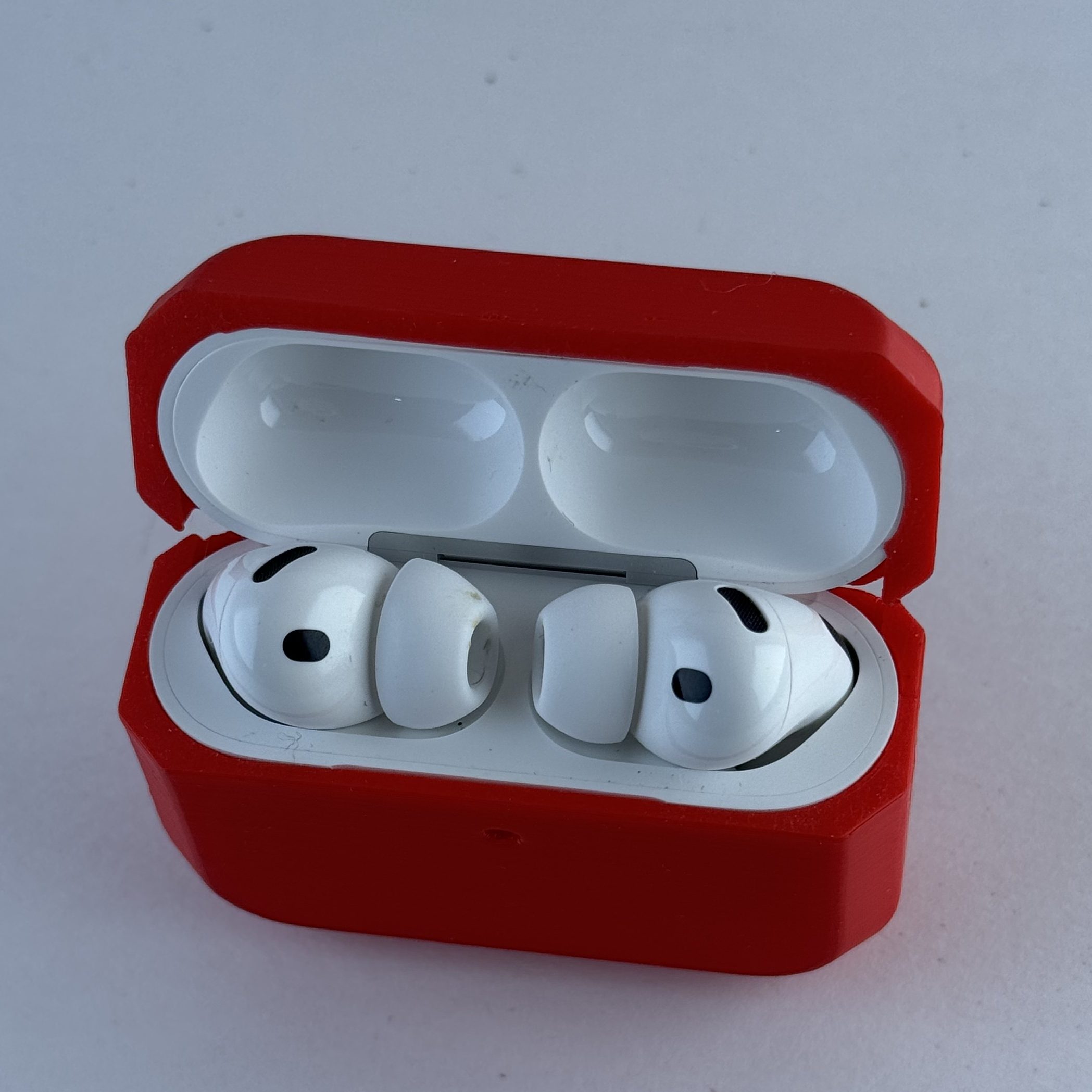
The AirPods Pro 2 is my favorite earbud and they live in my pocket. I use them for public transit, power tools, and even concerts. The new Pro3 is better in most ways, except their tuning is a little less to my preference. Their ANC is really, really good, even compared to over-ears, and I’d take them over almost everything except the Bathys and the Sennheiser Momentum 4.
The Momentum 4 is the best budget pick to my ears. Anything at this price point is going to be a compromise, and while the out of the box tune isn’t my favorite, it’s pretty easily corrected using the built-in app. The Sonys, B&Os, and B&Ws can’t be corrected to a non-weird tune without a third-party app. https://daemonxar.com/2025/06/29/an-apology-to-sennheiser-momentum-4-fanbois-theyre-better-than-i-thought/
Question: I’ve really enjoyed the audiophile headphones I got, but I seriously don’t understand how you can describe the quality of the sound and whatnot. How do I learn this?
Answer: Listen to a lot of headphones. Watch good reviews and listen to those headphones. Find a credible source of graphs … and listen to the headphones, before and after you look at the graphs. There’s a lot of nuance, but rocket surgery it ain’t; just a lot of repetition and the realization that while there are more and less standard ways to use language to talk about headphones, at the end of the day it’s all a bit loosey goosey.
Or your ears don’t work that way, which is totally fine and means this will be a much less expensive hobby for you!
Question: How do I pick between the Bowers & Wilkins Px[7, 7S2, 8, 8S2] or the Sony XM[3, 4, 5 or 6]?
Answer: To me, the PX8 aren’t really any better than the XM4-5-6; they’re arguably even more of muddy bass cannons (especially in the midbass) and they have a WILD treble response. None of them can be corrected in built-in apps; the on-board EQ isn’t fine-grained enough to kill the treble peaks I hear (and that rigs measure on it). I don’t mind using EQ (and I get full parametric EQ from Roon on most devices I use), but I generally don’t want products I HAVE to use a third party tool to fully enjoy which takes these out of consideration for me. The Sonys have better ANC if you can get a good seal, but that’s challenging for a lot of people.
The only ANC headsets that I think have really good sound quality are the Focal Bathys and the Momentum 4 (after a little EQ in the app).
Question: I’m down to either the Beyerdynamic DT 990 Pro or [insert virtually any headphone here]; which should I choose?
Answer: Definitely not the 990; they’re a super weird tune.
Question: I’m buying my first good pair of headphones, and I want open backs under $250. What should I buy?
Answer: There are a lot of great open backs in this general price category, and if you don’t live in the US, I’d commend three to your attention: the Fiio FT1 Pro, the Hifiman Edition XS, and the Hifiman Sundara. The Fiio FT1 Pro would probably be my pick because I find the treble on the Edition XS challenging and as much as I love the Sundara, the Pro are just FUN to listen to. Short version is that the XS are bassier and more treble-y, Sundara the most “neutral”, and the Pro somewhere in the middle. I did a deep dive on the comparisons on my recent Sundara review: https://daemonxar.com/2025/10/26/hifiman-sundara-a-classic-in-open-back-headphone-design/#value-comparisons
If you live in the US, the answer is almost certainly the Sennheiser x Drop HD6XX, a headphone I still listen to a lot despite having a lot of “better” options. It lists right around $200, but is often on sale closer to $180. It’s a relatively demanding headphone, so you might want to consider a desktop amplifier but it runs fine out of an awful lot of devices or with an Apple dongle.
Reviews:
– Sundara: https://daemonxar.com/2025/10/26/hifiman-sundara-a-classic-in-open-back-headphone-design/
– XS: https://daemonxar.com/2025/03/07/hifiman-edition-xs-a-great-budgetish-objective-open-back/
– FT1 Pro: https://daemonxar.wordpress.com/2025/05/05/the-fiio-ft1-pro-a-great-new-addition-to-the-crowded-open-back-space/
– HD 6XX: https://daemonxar.com/2025/01/27/sennheiser-x-drop-6xx-review-seven-years-in-the-making/
Question: I have the HD 6XX and I want a second pair of headphones. What would give me the most contrast?
Answer: The XS is probably the most different (planar vs. dynamic driver, “objective” vs warm, etc.), but if you want a planar I’d point you to either the Fiio FT1 Pro or the Hifiman Sundara over the Edition XS (just because it can be a little too bright for me).
Reviews (with a lot of comparisons in the Sundara review):
– XS: https://daemonxar.com/2025/03/07/hifiman-edition-xs-a-great-budgetish-objective-open-back/
– FT1 Pro: https://daemonxar.wordpress.com/2025/05/05/the-fiio-ft1-pro-a-great-new-addition-to-the-crowded-open-back-space/
– Sundara: https://daemonxar.com/2025/10/26/hifiman-sundara-a-classic-in-open-back-headphone-design/
Question: Do cables affect sound quality?
Answer: This is a loaded question and a lot of ink has been spilled on it.
Your mileage may vary, but to me, cables are cables are cables; unless they’re incredibly poorly made or faulty I personally can’t tell the difference between a $20 cable and a $200 one, even on VERY expensive, highly-resolving equipment. I buy cables for quality of life, not quality of sound.
This means I consider things like microphonics (if you rub the cable or bump it against something, can you hear it in the headphone?), coiling, drape, length, terminations, aesthetics, and material. It’s your money, you can do what you want. But I’ve swapped almost entirely over to Hart interconnects; not because they make my headphones sound better, but because of the sheer convenience of being able to swap amplifiers and headphones quickly and easily. And a lot of headphones (*cough* HE6se v2 *cough*) come with really, really awful cables.
For what it’s worth, I think this is true of adapters as well. A 3.5 mm cable with a 6.35 mm adapter (competently made) is indistinguishable to me from a 6.35 mm cable.
Question: Are balanced cables worth it?
Answer: Meh. No? Probably not? But balanced cables are compatible with single-ended systems with the right adapter, and using an adapter to plug a single-ended cable into a balanced system will end in tears, AND there are some components that are balanced-only (like the Apos Gremlin), so I mostly buy only balanced cables at this point because I’ve got a full set of balanced –> single-ended connectors. [Other than for single-ended only headphones, obviously, but I only have a couple of those left.]
The one caveat here is that for whatever reason, I think the HD 6XX sounds best running balanced out of a Moondrop Dawn Pro dongle. I cannot explain it, but I’ve done the blind testing a couple of times.
Question: I live somewhere where I can only buy headphones online and without testing them, and I can’t afford to buy a bunch of stuff I won’t like. What do I do?
Answer: Same, bruh. Same.
Just like wine or whiskey, nothing really substitutes for trying a pair of headphones on your head, in person. BUT, if that’s not possible, find a reviewer with similar taste to you and start with the things they recommend. For me, it’s Resolve from the Headphone Show and Mark Ryan at Super* Review; I don’t 100% line up with them but we like a lot of the same things and I can be reasonably confident I’ll like the things they like and dislike the things they dislike (with the exception of weird things like the Audivina). Beyond that, if you’re buying online pick retailers with really good return policies like headphones.com (though watch that fine print!), or massive retailers like Amazon that price the cost of frequent returns in.
Question: Do you use EQ to increase soundstage on your headphones?
Answer: I do not, for a couple of reasons: 1) I don’t know how to EQ to increase the perception of soundstage (and my intuition is that it’s not just the FR, but also build/construction), 2) to the extent we know anything about what makes something sound wide it seems to be treble-related and I’m not the biggest fan of elevated treble, and 3) like a lot of folks at my stage in the journey, I’ve decided I personally don’t care all that much about soundstage. I don’t want everything compressed in between my eyeballs, but beyond that for music I mostly don’t care. If I want to hear something separated a lot in space, I’ll run an ATMOS mix.
Question: Should I pick headphones based on what they sound like out of the box, or after EQ?
Answer: Without a good rig and a LOT of time, you’re not going to be able to EQ out all of the issues with a bad pair of headphones even with parametric EQ. Contrary to popular opinion on Reddit, you can’t actually make any pair of headphones sound like any other pair of headphones; at best, you can make a good headphone sound great and a shitty pair of headphones sound … less shitty.
For me, as much as I enjoy having access to EQ for most of my listening, I don’t always use it so I prefer to get a pair of headphones I think sound good out of the box. Any improvements I can make with parametric EQ are just the icing on the cake. This also avoids a situation where the first minute of every listening session is me figuring out if I’ve applied the right EQ on the right device (with some exceptions, EQ on a pair of passive headphones is a the source, amp, or DAC level and aren’t as simple as just plugging the headphones in).
Question: Will ANC headphones running lossless and passively via a 3.5 mm analog cable sound better than they do via Bluetooth?
Answer: No. Don’t use active headphones passively unless you have no other choice; I’ve never heard one that sounded better any way other than that which it was designed for. The headphone is built around the speakers, DAC, and amp working together, and when you try to drive them passively you screw with the tuning and rarely in ways that will work well. Active headphones often rely on digitial signal processing (“DSP”) (aka EQ) to address flaws with the underlying tune by cleaning up treble spikes, adding or reducing bass, etc., and when they’re running passively, that DSP is generally turned off. This leaves you with only the hardware and any physical damping built into the headphones, and that rarely ends well.
If you want to use headphones passively, get a pair of passive headphones in the future, or a pair of Bluetooth ones that can run in DAC mode, plugged in via USB-C.
Note: this doesn’t apply to running ANC headphones in DAC mode (i.e. connected via USB-C), which can let you get lossless signals via the fully-integrated headphone system. It’s actually my favorite way to listen to the Focal Bathys.
I did a whole post on this topic here, with examples.
Question: Okay, I want to buy my first pair of audiophile headphones and I want to spend $1000. What should I buy?
Answer: A pair of $200 headphones first.
Seriously, it sucks to drop a lot of money on a thing only to discover that you don’t like it. I’ve done this with cars, firearms, whiskey, power tools, 3D printers, and headphones and it doesn’t feel great.
Question: Which streaming service should I use?
Answer: Tidal is my choice out of the bunch. Better recommendations, good catalog, reasonable pricing, integration with Roon, etc., though I use Apple Music out and about on my phone. I’ve used Pandora, Amazon Music, and briefly Qboz.
Spotify is both a shitty company to support and not a great streamer (they appear to use different masters than most streamers, and not in a good way).
Question: I want to buy my first IEMs, and I have a budget of $300. What should I buy?
Answer: Buy one, two, or three of the following $20 IEMs to figure out 1) if you like/can comfortably wear IEMs for extended periods and 2) which tuning is your preference: Tangzu Wan’er II (neutral), Moondrop Chu II (mild v-shape), and 7Hz x Crinacle Zero:2 (bassy bois). All three have clear upgrade paths once you figure out what YOU like/want.
There are really good IEMs at every price tier, and a great pair of $100 IEMs is often going to be better than a great pair of $20 IEMs (at least in terms of durability, build quality, accessories, etc., as well as sound quality). Speaking from personal experience, though, it sucks to buy a $100 or $200 pair of IEMs only to realize that you either dislike IEMs generally, or REALLY don’t like the tune of the pair you picked.
Question: Should I buy one pair of headphones for $1000, or four pairs for $250 each?
Answer: This is a great philosophical question. Variety is the spice of life. I have thought about consolidating to a single pair of each type (open, closed, wireless), but I enjoy most of my pairs and I like being able to pick the right pair based on what I’m listening to/in the mood for.
I’m mid process of selling some of them to fund a pair of Empyrean IIs, though.
Question: I just bought [headphone x], and I still prefer [cheaper headphone y] even though X should be a lot better. Am I doing it wrong?
Answer: Nope! One of the joys of audiophile-dom is that we all have our own preferences, and you shouldn’t give a damn if I like the same pair of headphones that you do, or that I hate the pair you love.
I will note that I’m a big believer in the concept of brain burn-in; for me, I have heard very few pairs of headphones that I liked immediately, particularly with new or interesting tuning. Our brains get used to hearing a particular sound a particular way, and it can be quite jarring to hear things differently. For me, I won’t start critical listening for a review until I have 10-15 hours of background listening with a particular pair of headphones because I don’t trust my ears to really hear them until my brain has adjusted.
Question: Why should I buy a DAP?
Answer: You probably shouldn’t.
Because you want to, and no other reason. You’re not going to get better quality out of a DAP than you will out of a modern smartphone and DAC/amp; the question is whether you have a use case or a desire where you want to not be tethered to your phone.
I personally use a couple of DAPs (Snowky Echo Mini, Echobox, formerly an Hiby R3 Pro) because I’m bad at ignoring smartphone notifications and I like being able to drop it in a drawer while I’m working on something. They’re perfectly nice, but they’re not any better than my iPhone through a $50/200 dongle DAC (Moondrop Dawn Pro or Fiio BTR17 are my picks at those tiers). At any given price point, you’ll almost certainly get at least equivalent if not better performance out of a dongle than a dedicated DAP.
Question: Why should I buy an expensive headphone instead of just buying a cheap one and using EQ to make it sound like the more expensive version?
Answer: You shouldn’t, necessarily, buy an “expensive” headphone, but I would recommend buying a headphone you like the sound of BEFORE applying EQ. As to why you shouldn’t just tune a cheap headphone to sound like a good one … well, *you* almost certainly can’t, which is a pretty good reason not to.
Assuming for the sake of argument that frequency response is the entirety of the perceived headphone experience (a pretty obviously flawed assumption in my book), the frequency response you hear from a headphone is the combination of at least three (and a half?) things:
1) the sound waves produced by the drivers in *your headphone* as they exist in the world [this is both the sound waves produced by the physical and electrical designs of the driver AND (and this is the half thing) any EQ that you are applying to the signal)];
2) the way that the chassis material, design, and damping affect the sound waves produced by the drivers in *your headphone*; and
3) the way that *your specific physiology* changes those sound waves (head-related transfer function).
Note the specificity, and individual nature of each of those three (and a half!) things.
Now, I’m not saying that *no one* can make two wildly disparate headphones sound identical, but you would need four specific things (or to get spectacularly and improbably lucky):
1) A good, consistent measurement of your headphone on your head (note: the specific unit you’re EQ’ing, not just the model you’re starting with. Unit variation, wear and tear, etc. are all real.)
2) A good, consistent measurement of the headphone you’re EQ’ing towards, on your head, from the same measurement rig and under the same protocol as 1).
3) A good understanding of the way your head affects headphones.
4) A tool that allows to you to match 1) and 2), taking into account 3).
Do you have those things? Probably not!
You could in theory, however, given access to a good enough testing rig, a rigorous testing philosophy and process, a lot of time and patience, and a willingness to do a ton of iterations, potentially brute-force the problem through repetition. That is, unless you run into a physical limitation of the design (either in the chassis OR the driver itself1) or some of the other components.2 Best case scenario, and barring extraordinary luck, this would take MANY rounds of iterations and testing to get the frequency response aligned, and in some cases it wouldn’t be possible at all due to resonances or other physical limitations.
Again, do you have these things? Probably not!
And that’s okay! You don’t need to be able to turn a pair of $20 discount store headphones into a Focal Utopia. Frankly as cool as that would be, it’d be a boring-ass world to live in. And that’s not EQ’s super power; EQ’s superpower is turning shit headphones into okay headphones, okay headphones into good headphones, and good headphones into great headphones.
Think about it this way: if it were easy to do this, don’t you think the market would be flooded with cheap headphones with cheap materials and drivers using DSP to mimic the $1,000, $2,000, or $5,000 headphones folks chase? That would also be a boring-ass world to live in.
Don’t use EQ to replicate another headphone. Use it to make YOUR headphones better. The other way lies madness.
Question: Does Sennheiser have any headphones which can compete with Sony in terms of ANC ?
Answer: No, but man … there are VERY few situations in which the extra 10% ANC on low, consistent sounds matters to me. And that’s all you get with the Sonys over the M4; if you want better ANC on higher pitched, intermittent noises Apple is the way to go, and for virtually all use cases the M4’s low-frequency ANC is more than adequate.
- There’s a reason that some headphones take EQ well and others don’t, drivers themselves can have physical limitations as can all of the pieces around them. 🤷♂ ↩︎
- If you don’t believe it, try swapping pads on a pair of headphones you know well. It can be WILD how much different they sound with different pads. See, e.g.: https://www.youtube.com/watch?v=_dP39oYqmfQ . ↩︎
Question: So you’re telling me that the best I can do with my [insert inexpensive ANC heaphone here] is listening in wired mode through the 3.5mm? And without the anc? In headphones instructions it is said that in wired mode they go up to 40khz and support hires. So using the 3.5mm and playing hires files from pc would make it able to play true hires? And also what headphones would you suggest?
Answer: [Edit: full discussion here.]The best you can do with those headphones is listening in Bluetooth mode (it’s what the headphones were designed and built for, after all!). If you listen via the 3.5 mm, you’re using a cheap analog-to-digital converter (in the cable), converting it back to digital on the headphone, and applying whatever DSP the JBL applies. Even if you were using a high-quality DAC on high res files on your source, every additional conversion is another chance to degrade the signal, and that signal chain will almost certainly undo any theoretical benefits of lossless. Try this test with those headphones and see if you can consistently tell the high res versions: https://www.npr.org/sections/therecord/2015/06/02/411473508/how-well-can-you-hear-audio-quality
You like what you like, but the differences between lossy and lossless are mostly noticeable on a well-resolving system and under relatively good listening conditions: those headphones aren’t particularly resolving, and any ANC headphone (but *especially* inexpensive ones) aren’t good listening conditions. I have a wall of expensive headphones and a collection of high res music (and DAPs capable of playing them while mobile), but out and about I basically only listen to competent Bluetooth headphones because 1) they’re way more convenient and 2) I can’t hear a meaningful difference wired on even things like the Focal Bathys and Sennheiser HDB 630.
If it were me, I’d stop worrying about lossless and enjoy the JBLs the way they are intended to be used. Save that money for upgrade headphones down the line. Sennheiser Momentum 4 is my “budget” ANC pick (and can run lossless via USB-C cable in DAC mode) especially if you’re patient and can find it around $160 or $170, but if you’re serious about audio and want to enjoy lossless, look at open back headphones like the Sennheiser x Drop HD 6XX or Hifiman Sundara around $150-200. Fiio FT1 if you want noise isolation without too many compromises.
But, genuinely, you do you! The first rule of headphones is that the best headphone is the one that you like, listening to your music, the way you want.
[Reviews of recommendations:
– Momentum 4: https://daemonxar.com/2025/06/29/an-apology-to-sennheiser-momentum-4-fanbois-theyre-better-than-i-thought/
– 6XX: https://daemonxar.com/2025/01/27/sennheiser-x-drop-6xx-review-seven-years-in-the-making/
– Sundara: https://daemonxar.com/2025/10/26/hifiman-sundara-a-classic-in-open-back-headphone-design/
– FT1: https://daemonxar.com/2025/04/17/the-fiio-ft1-a-truly-excellent-budget-closed-back/
Question: What’s recommended to replace Arctis 9 Wireless Headset? Under $300, US, just PC gaming and music.
Three good options: 1) Fractal Scape ($200), 2) HyperX Cloud IIIS ($150), and 3) Audeze Maxwell ($300).
I’d personally go with the Fractal Scape; it’s a great headphone for music and gaming, has an awesome EQ interface (with interestingly social aspects), and a solid dock and dongle for ease of use. The Cloud IIIS is great; I haven’t spend enough time with it to have reviewed it yet but I’m super impressed with both the sound and the comfort. The Maxwell is … popular, but my least favorite of these three. It’s really heavy, I think the tune out of the box is a bit bass-light (though you can fix that easily with the in-app EQ), but the software absolutely sucks and it’s the most expensive by a substantial step.
Reviews:
– Scape: https://daemonxar.com/2025/11/29/the-fractal-scape-please-let-this-be-the-future/
– Maxwell: https://daemonxar.com/2025/12/05/the-audeze-maxwell-a-great-headphone-in-a-mediocre-system/