
[MSRP $699. Currently available from Amazon for $515. Purchased via r/AVExchange for $325 in February 2026.]
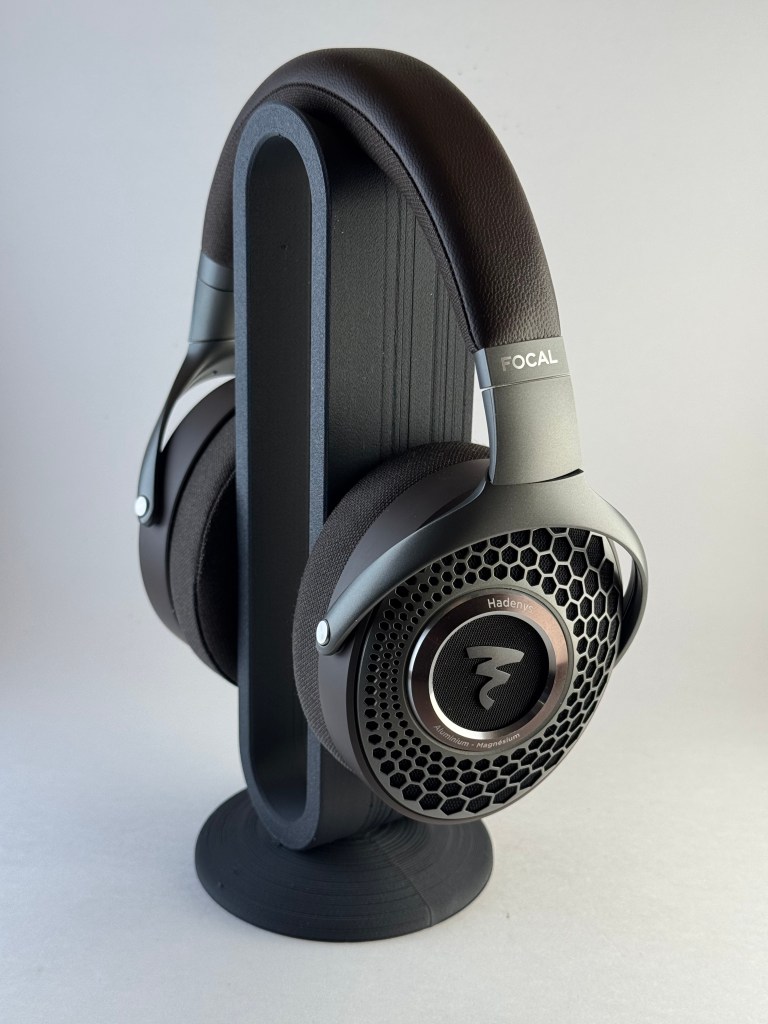
[Tl;dr: The Hadenys are a great headphone, and a worthy successor now that Focal is deprecating the Elex and Clear models that I really love. It’s a hair bassy for me, and I don’t find the new, smaller model Focals nearly as comfortable as the older, larger models, but I’m genuinely quite pleased with the Hadenys overall. I do think it’s a little on the pricey side, even with the current markdown to $500, and used models appear to be in short supply. If you can get a pair for $300 or $350, they’re a great value. At $500 … there may be better value options in the market, though you wouldn’t go wrong if you bought a pair.]
Cost-agnostic: 7 out of 10 Denalis
Cost-sensitive: 5 out of 10 Denalis (at MSRP, 7 out of 10 at $500)
TABLE OF CONTENTS:
- Introduction
- Review notes
- The Basics
- Sound
- Build Quality & Appearance
- Value & Comparisons
- Overall
- Phil’s Use Case Matrix
Introduction
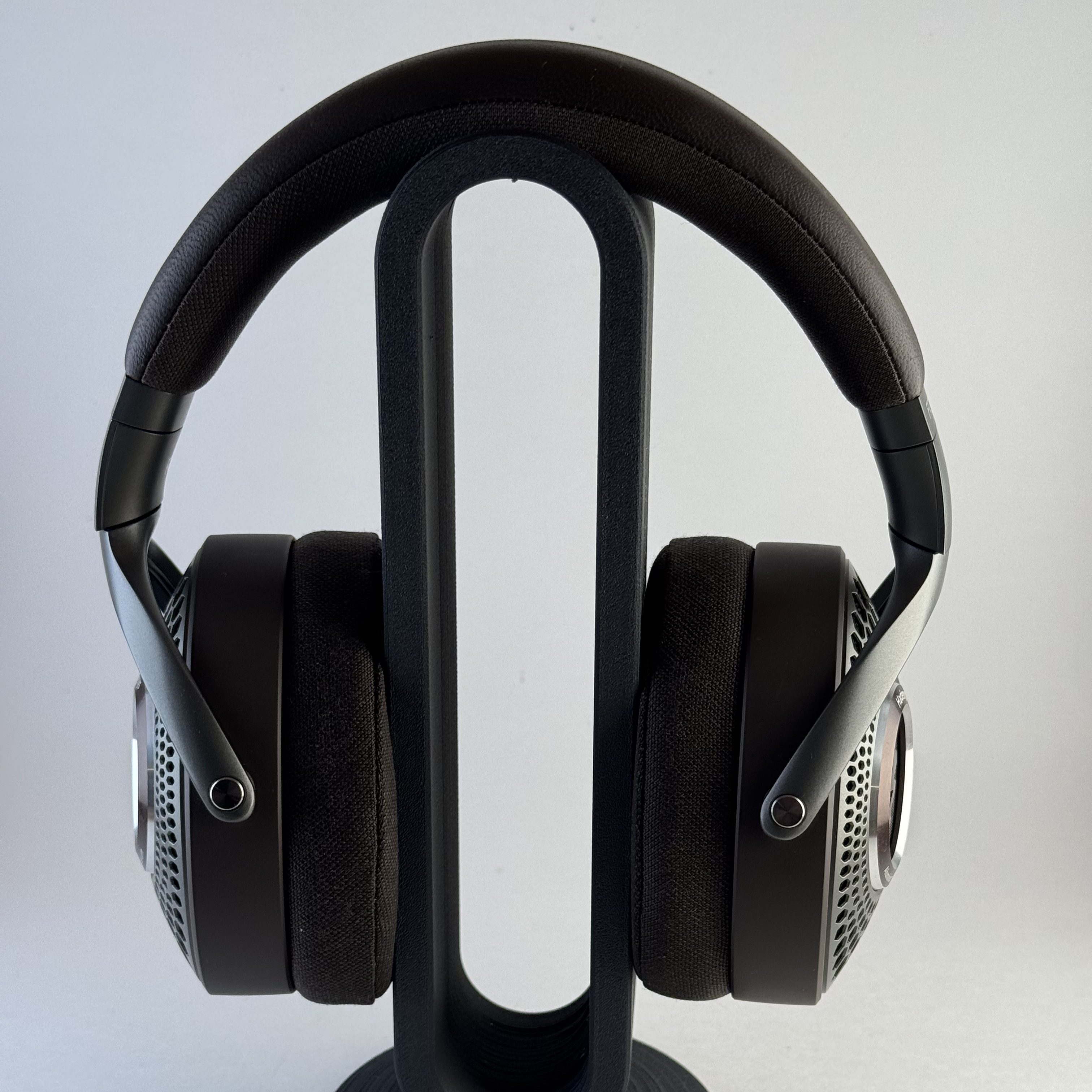
In the middle of 2024, renowned French audiophile manufacturer Focal introduced two new headphones at once at Munich Highend: the closed back Azurys and the open back Hadenys. They shifted from the relatively large, classic, dual-entry headphone design they’d been using for decades (Clear, Elex, Elegia, Utopia, etc.) to the substantially smaller, single-entry only design they’d used for their active noise canceling, wireless 2022 offer, the Focal Bathys. I reviewed the Azurys in August 2025, the Bathys in June, and both received a generally good review (if I was a little skeptical of their default pricing). Today I complete the hat trick of the new (current?) gen Focals with the Hadenys.
The Hadenys was, incidentally, much harder to track down than the Azurys or Bathys, both of which pop up on r/AVExchange pretty regularly. By contrast, only three Hadenys have been listed in the last three months, compared to more than 20 Bathys and 8 Azurys. Is that because they’re a better headphone? Let’s find out!
Review notes
Testing rig
Here’s my basic testing protocol.
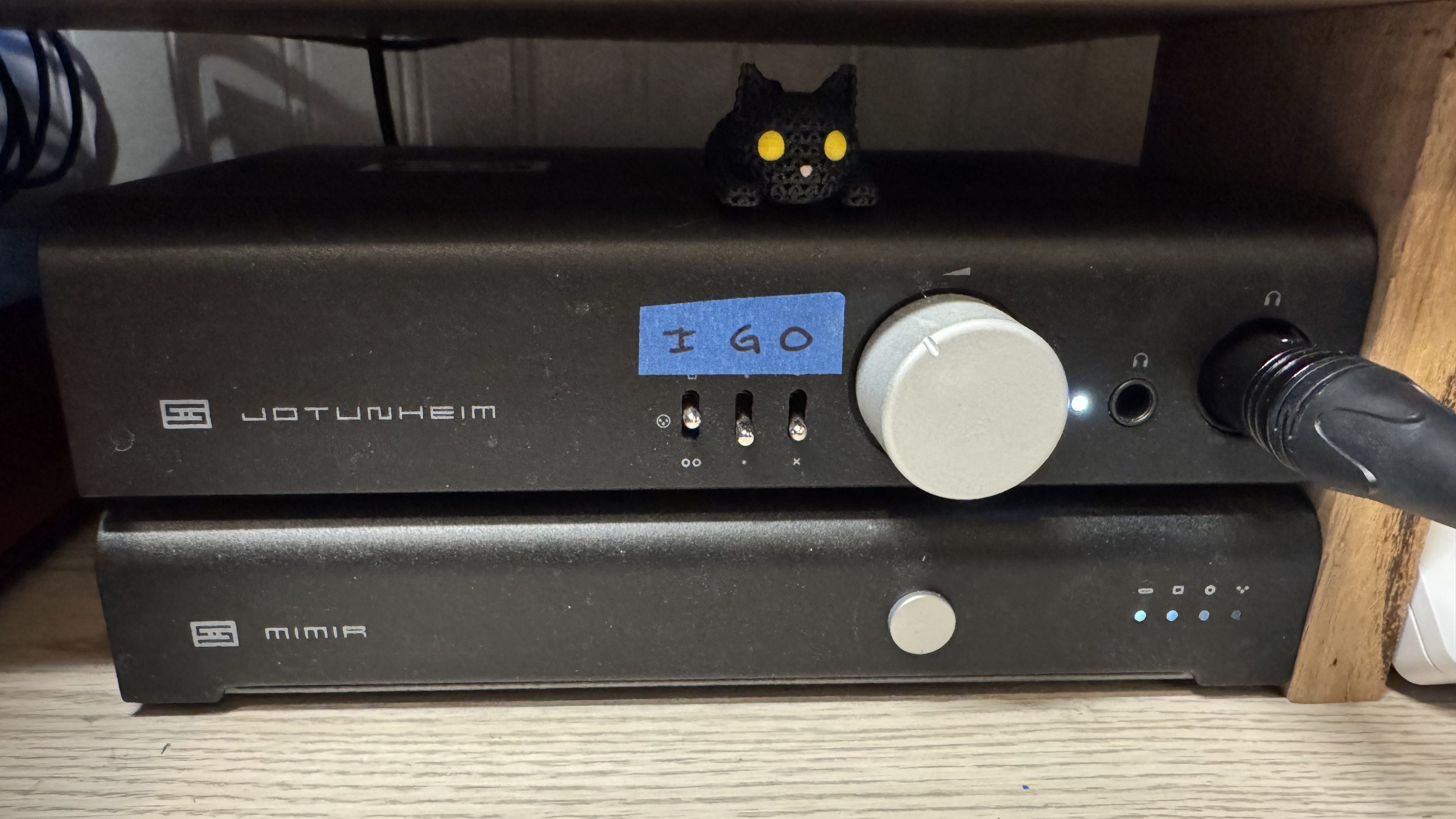
Based on my philosophy on the allocation of resources in headfi, except where otherwise noted I’m going to primarily be testing these with a Schiit Mimir/Jotunheim 2 stack, running single-ended3 via a the OEM cable and connected via USB-C to a Mac Studio running the Roon client.
EQ
As noted in the Bathys review, I mostly prefer to test headphones with their default tuning, assuming that most people won’t take the time or make the effort necessary to use a third-party EQ. And the Hadenys really don’t need EQ; they sound pretty good to me out of the box, though I have played with EQ a bit.
EQ Update
[EQ Update: I’ve been playing with Resolve from the Headphones Show’s EQ for the Hadenys and it’s … fine:
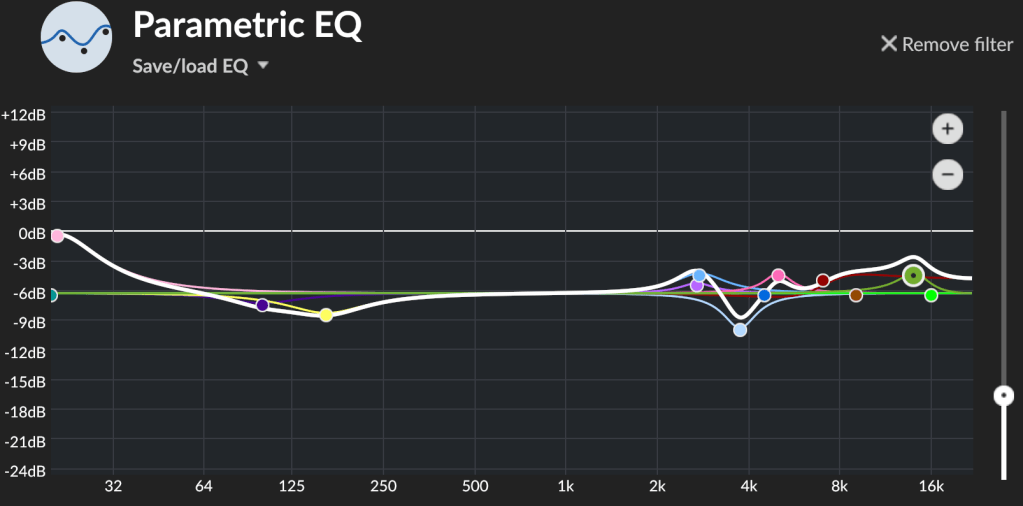
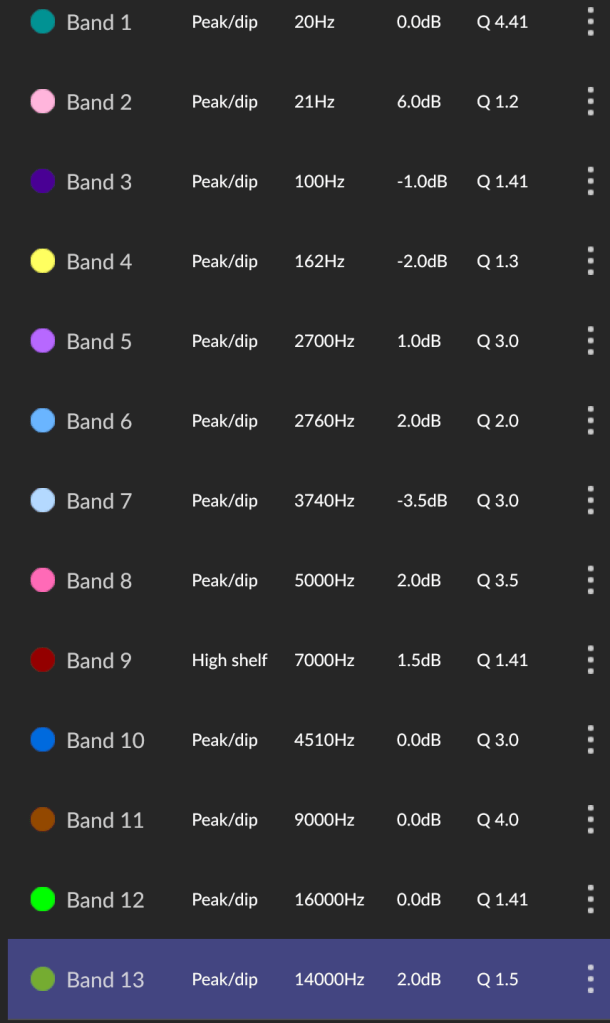
This is not a headphone that *needs* EQ by any means, and I definitely don’t think it needs additional bass, but I do overall find the balance it adds nice. I’m curious to see if I end up using it going forward, or if I go back to the vanilla tuning pretty quickly.4]
Volume
Here are the volume settings I use with the Focal Hadenys (unless otherwise noted, running via Roon with no headroom management, playing Daft Punk’s “Face to Face” from Tidal):
- Chord Mojo: white, dark, dark, red
- Dongles:
- Apple (iPhone 15, Apple Music): 40%
- Crinear Protocol Max: 95% (Boost), N/A (Eco, couldn’t get a reasonable volume)
- Fiio KA11: 35%
- JCALLY JM12: 50%
- Holoaudio Bliss (KTE): -37 dB (Lo-Z)
- Mytek Brooklyn Bridge: 53
- Schiit:
- Fulla: 8:30
- Hel2: 9:00
- Mimir/Jotunheim 2 (Mimir has a -15 dB pregain applied via Forkbeard): low gain, 11:00 (single-ended)
- Modi/Magni: low gain, 8:00
- Modius/Magnius: low gain, 9:00 (single-ended)
- Topping:
- DX5 II: -34.0 dB (single-ended)
- E30/L30: lowest gain, 9:00
My torture testing list
The Basics
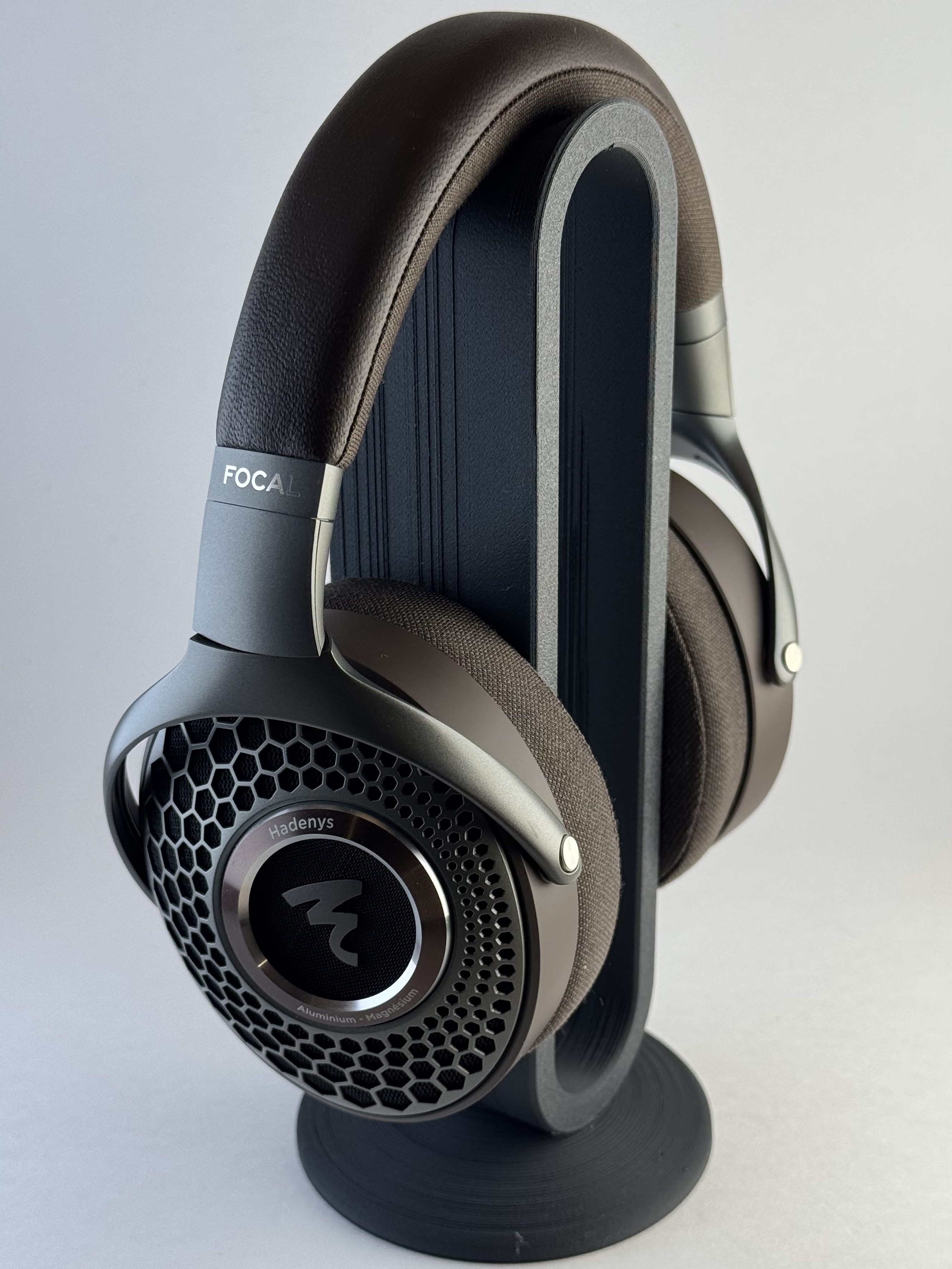
The Focal Hadenys (hay-den-ees) are a passive, open-back, dynamic driver, audiophile headphone from French manufacturer Focal. They’re one of the two new passive headphones that Focal announced at the 2024 Munich Highend, as part of their new line of smaller, more compact offerings, with the closed back Focal Azurys the other. They share the general chassis of Focal’s 2022 wireless offering, the Bathys, though without the electronics and with an open backed shell. These are the least expensive of Focal’s current production open-back options (particularly after they transitioned the Clear to a headphones.com exclusive), behind the $1500 Clear MG and the $5,000 Utopia.
The Hadenys are moderately easy to drive, with a nominal impedance of 26 Ohms and a sound pressure level (SPL) of 105 dB/1Vrms (~90 dB/mW). They will not REQUIRE a dedicated amplifier, though in some cases they may benefit from one (and I would always recommend at least a $9 dongle DAC/amp for PC listening).
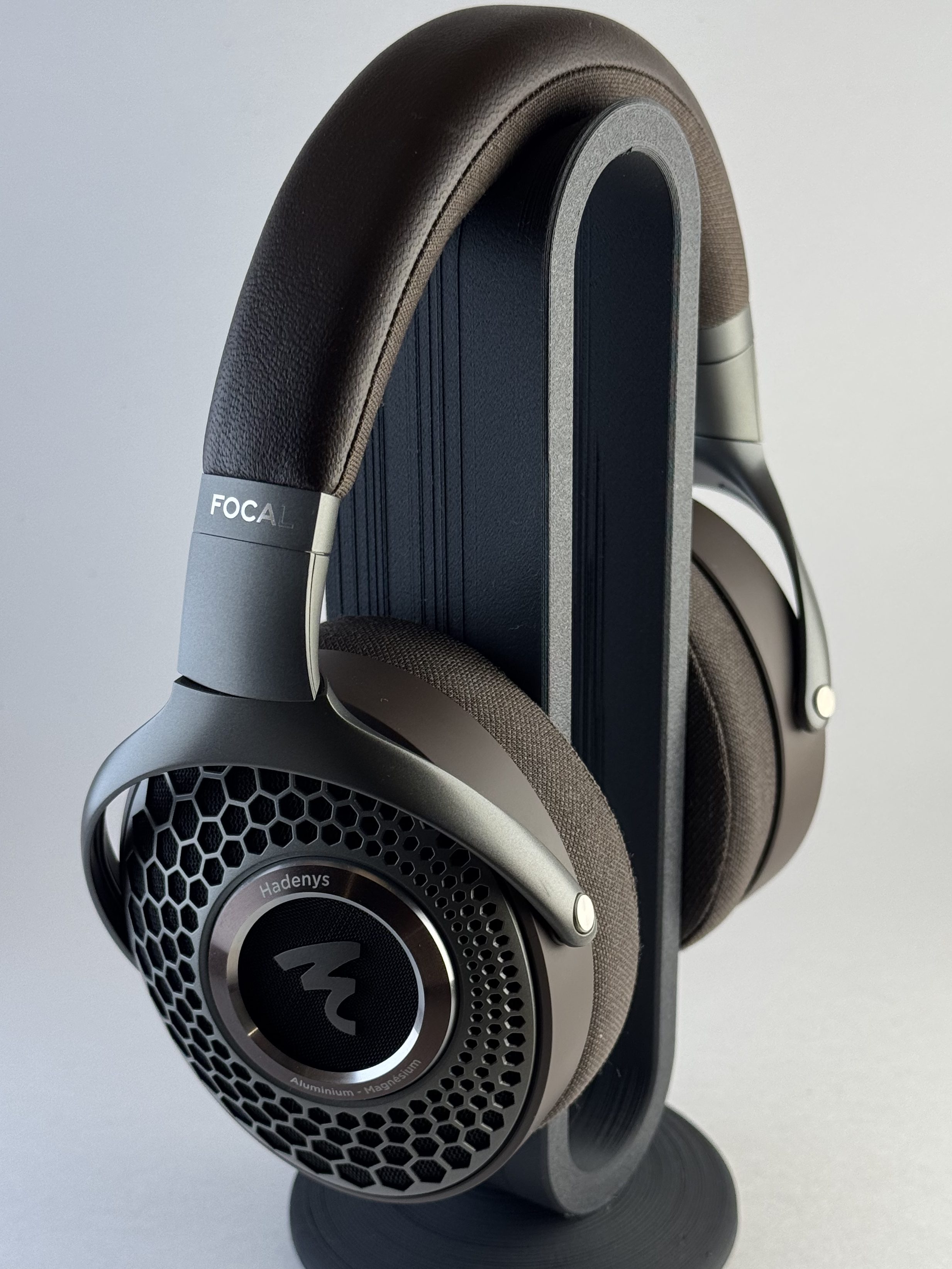
Like their sibling the Azurys, the Hadenys are the smaller, modern Focal form factor, with a hexagonal pattern across the cups in lieu of the circular patterns on the Azurys and Bathys. Like its siblings, the Hadenys come with a nice, semi-rigid zipper case and an approximately 1 m rubberized cord, terminating in a single chunky Focal-style 3.5 mm jack on the ear cup end and a standard 3.5 mm jack (with a 6.35 mm adapter) on the source end. The Hadenys come in a single colorway, which Focal describes as “earthy shades of brown” but I would personally describe as more grey than brown.
Sound
My overall impression of the Hadenys’ sound quality is that while it’s not my favorite tune (a bit more v-shaped than I prefer, with a mid bass hump that’s not particularly for me), it’s a really well designed and tuned headphone and well within the range of the acceptable. They do pretty well with both quieter, more sparse tracks and louder, busier ones, though I would say that they’re not quite as good at quieter stuff as something like the Elex or Clear. They do, however, have that Focal magic, with a deeply pleasant punch and dynamism that I have gotten from every Focal I’ve spent time with.
If I were listening to these long term I would probably spend some time with EQ, bumping down the mid bass, upping the mids, and mellowing out some of the treble spikes, but out of the box they’re still a really great pair of headphones.
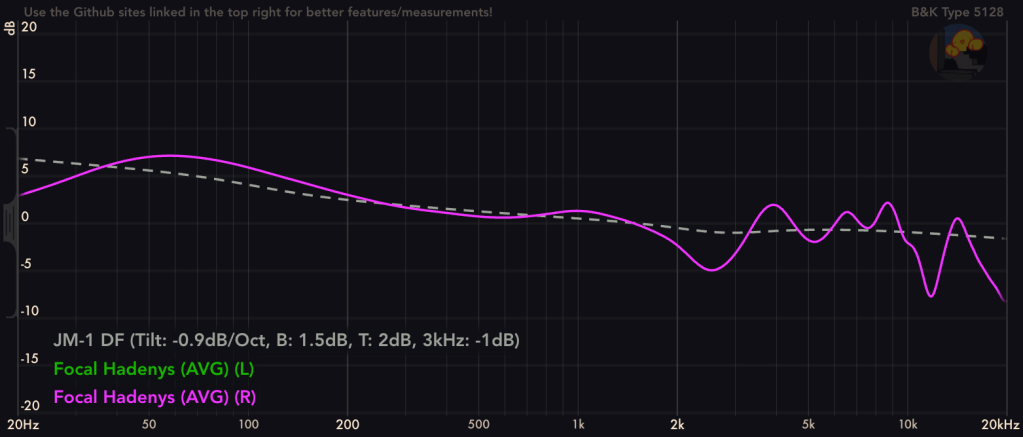
Here’s how listener measured them on the industry-standard 5128:
Technicalities
The soundstage on the Hadenys is pretty good; reasonably wide (though not as wide as something like the Arya Stealth) and with decent but not excellent separation. On “Chan Chan” the instruments are generally in the right place, though some of the non-vocal musical lines blur together at times (particularly the various rhythm guitars and the string bass). You get surprisingly good rotational soundstage on “Love Can Damage Your Health (Laid Mix)”; it mostly sounds like the guitar riff at the beginning is walking around you in a circle rather than walking side to side, though the cymbal pattern throughout gets a little lost in the mix compared to some other headphones. Most music sounds like it’s either in line with your head or slightly in front of you.
The dynamics are, like most Focals, pretty good. Starting “It’s All So Incredibly Loud” at a reasonable volume, I made it to 2:40 before reaching for the volume knob. The microdynamics are similarly pretty well done, with satisfying punch and thump across the frequency range, though like the Elex they’re not quite up to the standards of the Focal Clear. The bell tones on “Angel (Blur Remix)” are really excellently done,5 and the Hadenys does a better job of reproducing the bass warble after the initial accent better than most headphones I’ve had a chance to test (including the Elex).
The detail and resolution of the Hadenys are solid, if not quite as standout as something like the Focal Clear. Nothing feels like it’s missing during my listening sessions, though I haven’t noticed any particular details that are missing on other headphones. Basically, I would say that detail retrieval is good; neither lacking nor distracting and that’s more or less what I’m going for when I’m doing casual listening. Purely anecdotally, I’d put it about on par with the Elex and behind the Clear and things like the Meze 109 Pro.
Bass
The bass on the Hadenys is definitely elevated compared to most of the headphones I listen to, particularly in the midbass, but it’s really well controlled and rarely crosses into splatter or thumpiness. There is a hump around 60 Hz that I don’t love in most headphones, but it’s rarely noticeable in regular listening on the Hadenys; it’s reasonably well balanced with the rest of the tune.6
The bass on “Out of My Hands” is really well executed as it enters around 2:48, though it is perhaps a hair too strong throughout of the rest of the track. I would probably knock the bass down a little via EQ for regular listening with this headphone. The brainwobble on “Limit to Your Love” is a little bit much for me, though it’s pretty impressive how well the Hadenys handle all but the very lowest notes (which do roll off slightly, like pretty much every dynamic driver). Finally, the Hadenys produce one of the best versions of “Superpredators” I’ve heard; the only crackles and splatters I hear are the ones in the mix, though again I’d probably knock a few dBs off for regular listening as I have to turn the volume down to avoid unpleasant bass volumes. The bass riffs on “Got ‘Til It’s Gone” are really, really good and very clean.
Midrange
The midrange on the Hadenys is good, if not quite as strong as on something like a 6X0 or even the Elex. Jill Scott is well-reproduced and nicely forward on “Calls”, though Christine Hoberg is farther back in the mix on “Clair De Lune” and occasionally gets lost in the music. Beyonce and the other vocalists on “BLACKBIIRD” are beautifully layered and resonant, with good separation between the voices. Male vocals are a little more likely to be impacted by the Hadenys’ elevated mid bass, particularly lower-pitched voices, with Busta Rhymes less clearly highlighted on “Don’t Go” than on other headphones, and Daddy G in particular on “Mezzanine” getting a little bit lost in the instruments, but it’s not enough to be particularly problematic. Eddie Vedder’s voice comes through clearly on “River Cross.”
Instruments are generally well reproduced as well, though the Hadenys’ minor struggle with layer separation seems particularly present with instruments like guitars, and it’s a little hard to tell apart the two guitars playing the duet in the middle of “Garcia Counterpoint.” There’s just a little bit of muddiness in instrumental mids some of the time, which to my ears sounds a little bit like hollowness. Timbre is generally pretty good.
Treble
The treble on the Hadenys is occasionally a little spicy to me, though at least anecdotally it doesn’t cross over into harshness the way that a lot of Hifimans can. It’s definitely not as relaxed as things like the HD 6XX or Elex. The opening synths on “Hayling” are borderline sharp at a reasonable listening volume, but that may just be a function of their specific frequency as the cymbals on “Love Can Damage Your Health (Laid Mix)” are a little bit too quiet. Running a sweep, I definitely get a few volume spikes around 6.5 kHz and 11 kHz, though it’s not enough to interfere with casual listening. My go-to tracks for testing treble both sound fine; I might EQ down the guitar riffs on “2021” or the muted trumpet lines on “Will O’ the Wisp”, or I might just turn down the volume a little bit. Neither are particularly problematic. Same with the bells on “Coffee”; whatever peaks the Hadenys have they don’t appear to be present in most of the music I listen to (at least not on my head).
Amplifier Compatibility
The Hadenys is pretty amp agnostic, and played well with almost everything that I tried it with, with the exception of the Chord Mojo 2 where it sounded … overly bassy? I don’t understand why or how, but it was true each time I tried it. I didn’t notice much difference, if any, between the $9 Apple dongle and the almost $5,000 Holoaudio Cyan 2/Bliss (KTE) stack. Buy with confidence that the Hadenys will be fine with just about anything.
Gaming
The Hadenys, like the Elex, isn’t a headphone that I’m likely to grab for gaming on a regular basis, but that’s more about how good some of my other options are (Sennheiser HD 490 Pro, Fractal Scape, HyperX Cloud IIIS, etc.) than any flaw in the Hadenys itself. The soundstage is wide enough that you’ll have a good sense of the things around you for a single-player game, and few (if any?) games I play have a dense enough soundscape that I’m worried about losing cues in the less-than-stellar layer separation of the Hadenys. Explosions and gunshots are quite satisfying with the Hadenys’ bass bump, and gunshots satisfyingly sharp with the treble elevation. I’ve been enjoying them with “Death Stranding” the last couple of weeks, as they are both really good for music (including Kojima’s interesting soundtrack) and game cues.
Build Quality & Appearance
I’m generally pretty pleased with the overall build of the Hadenys. As these are a close sibling to the Focal Azurys/Bathys, a lot of this will mirror my commentary on the build quality and appearance in my reviews of the Azurys and Bathys.
Connectivity
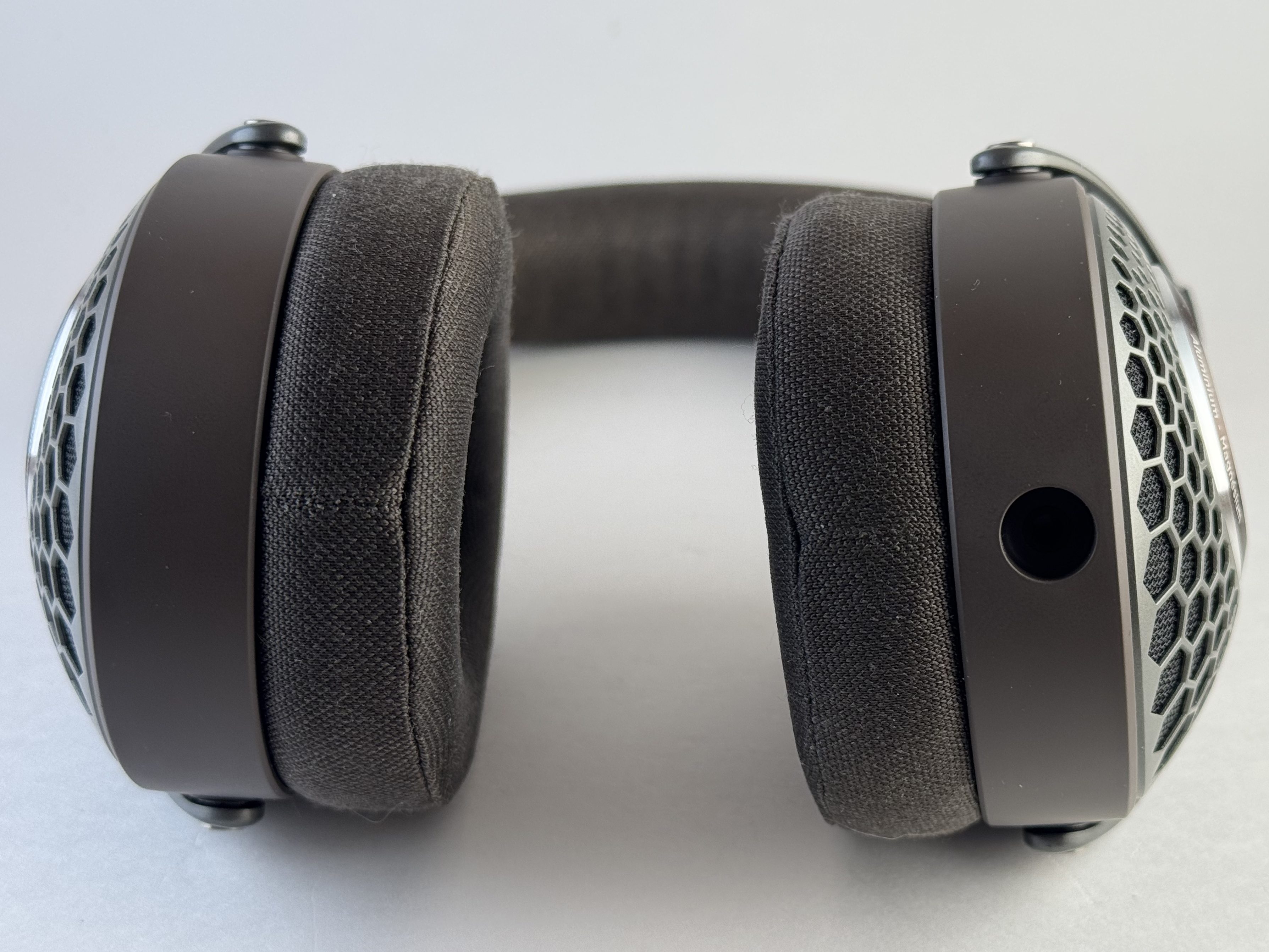
As a member of Focal’s modern family of headphones, the Hadenys rely on a thick barreled, single-entry, TRS (tip, ring, sleeve) 3.5 mm cable that connects to the left ear cup. Unlike something like the Sennheiser HD 490 Pro, the Hadenys cannot be used with balanced cables and you don’t have the option of connecting to the right cup.7 While I’ve complained vocally about Focal’s cables elsewhere, the Hadenys cable is … okay. It’s rubberized, which I don’t normally love, but at least it’s neither stiff nor particularly microphonic unlike, say, the cables from the Elex and Clear. I’ll probably order a Hart modular cable for it at some point (just because I can use it across a number of modern Focals and apparently also Sonys?).
I would almost always prefer a balanced option to be available on a pair of headphones; my favorite amp for daily listening at my desk (especially with dynamic driver headphones) is the Apos Gremlin, which is balanced only, and I’d love to hear what the Hadenys does with a tube amp. But this is definitely a quibble.
Construction
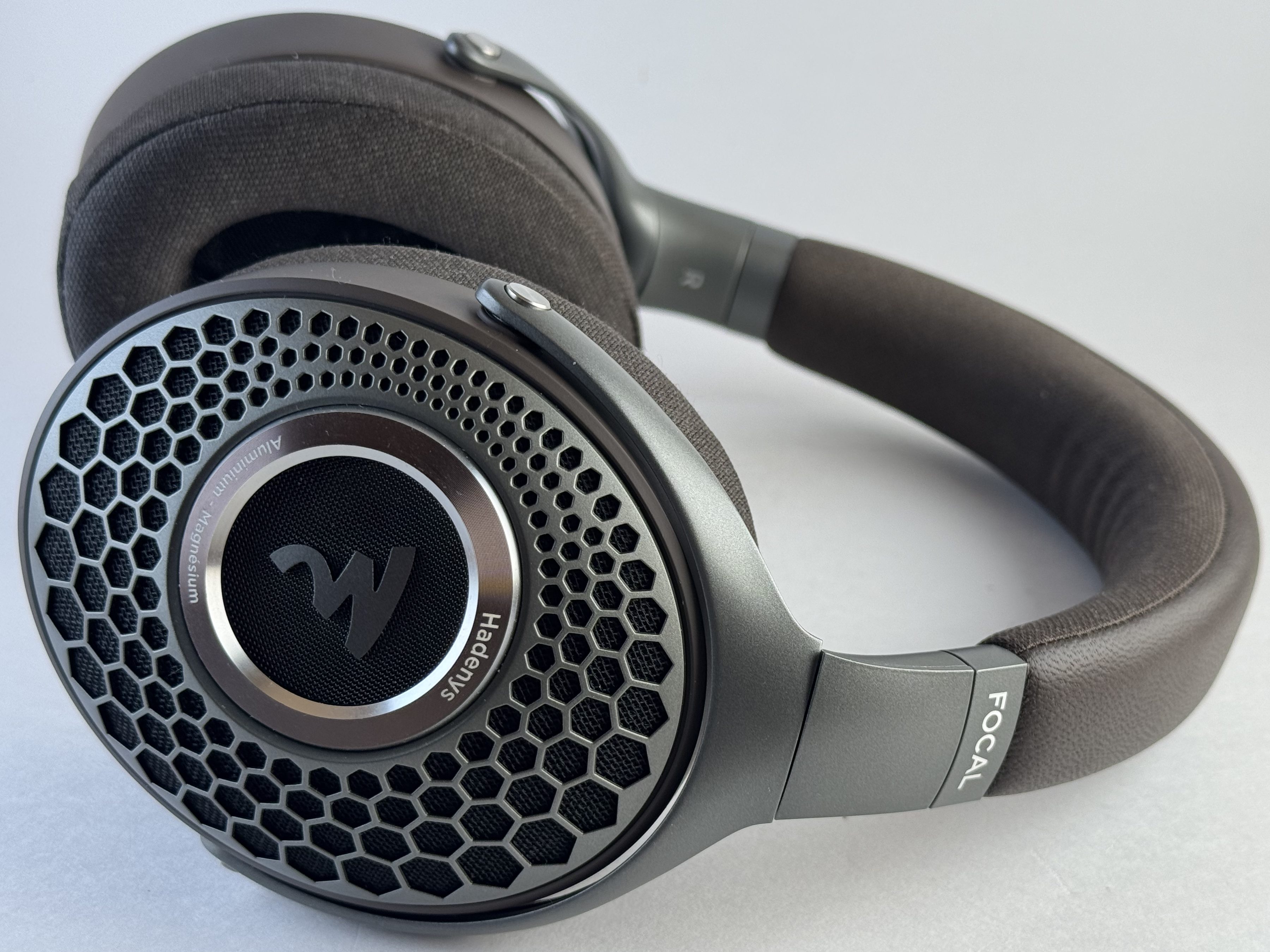
From my Azurys review:
“These are solidly built headphones. They’re physically a lighter version of the Bathys, which I regard as a very well built headphone. This family of Focal headphones allow the cups to swivel front-to-back, making it much easier to get a good, comfortable seal, and because only one ear cup connects to the cable, they’re slightly easier to work with at a desk. The cushions are well designed, if perhaps a hair too deformable.”
These things are all just as true of the Hadenys; they’re only 294 grams, about 15 g lighter than the Azurys, with a substantially more open cup (being open back instead of closed back). I would prefer the pads be a little stiffer, but mostly just so they seal faster after being adjusted.
Unsurprisingly, the cups are a bit microphonic and you definitely will notice if they’re rubbing on anything while you’re listening; the downside of a highly irregular outer surface. They’re also open enough that I can hear the sound of my (not super clicky) keyboard pretty clearly while I’m typing, though they’re not quite as acoustically transparent as something like the Arya Stealth, HD 6XX, or even the Focal Clear/Elex.
The headband doesn’t adjust a LOT larger than my head, so people with truly prodigious noggins may do better with the older style Focals.
Comfort
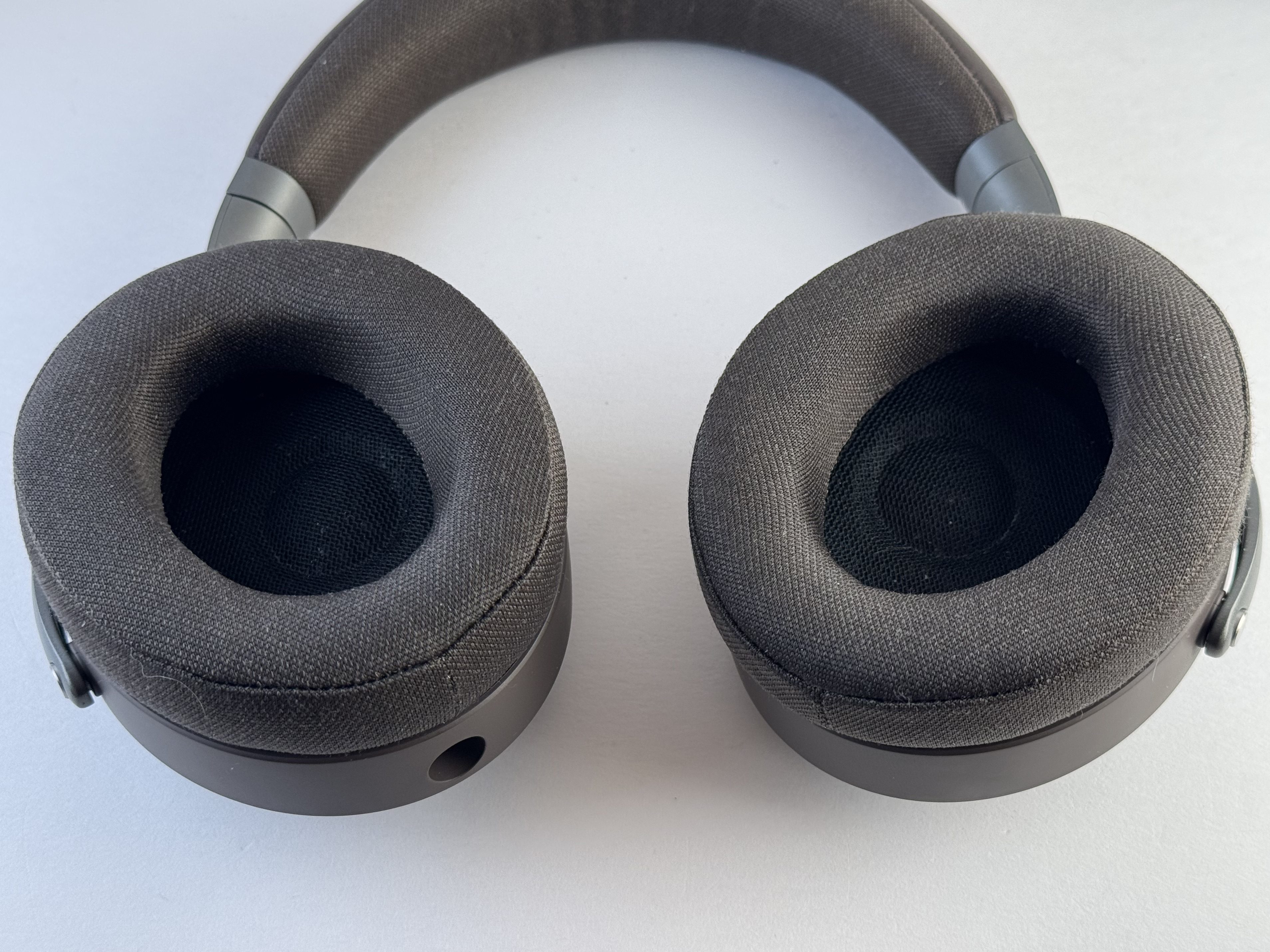
Here’s what I had to say about the comfort of the Azurys:
“The Azurys are also pretty comfortable. These are relatively light headphones, comparable to things like the Sennheiser Momentum 4 and Meze 105 AER. Out of the box, they have enough clamp force that they are very stable on my head without pressing hard enough to be uncomfortable. Like most Focals, I find it very helpful to place them on my head and then shorten the yokes slightly to make sure that the weight is evenly shared between the ears and the top of the head. My only criticism regarding comfort is that the ear cups themselves are pretty small. I have to adjust my ears to wear them comfortably, and my pinnae are often in contact with the driver baffles (especially at the back of the cup; like most Focals, the drivers are tilted slightly forward inside the cup). This issue is consistent across the smaller form-factor Focals for me.”
The Hadenys and Azurys are basically indistinguishable from a comfort standpoint. The Hadenys are very slightly lighter, but the difference is negligible on my head. I do wish the cups were slightly larger, as they do take a little adjustment to get comfortable, but once they’re nicely placed on my head they do pretty well. They’re nicely clampy, feeling very secure on my head without pressing uncomfortably.
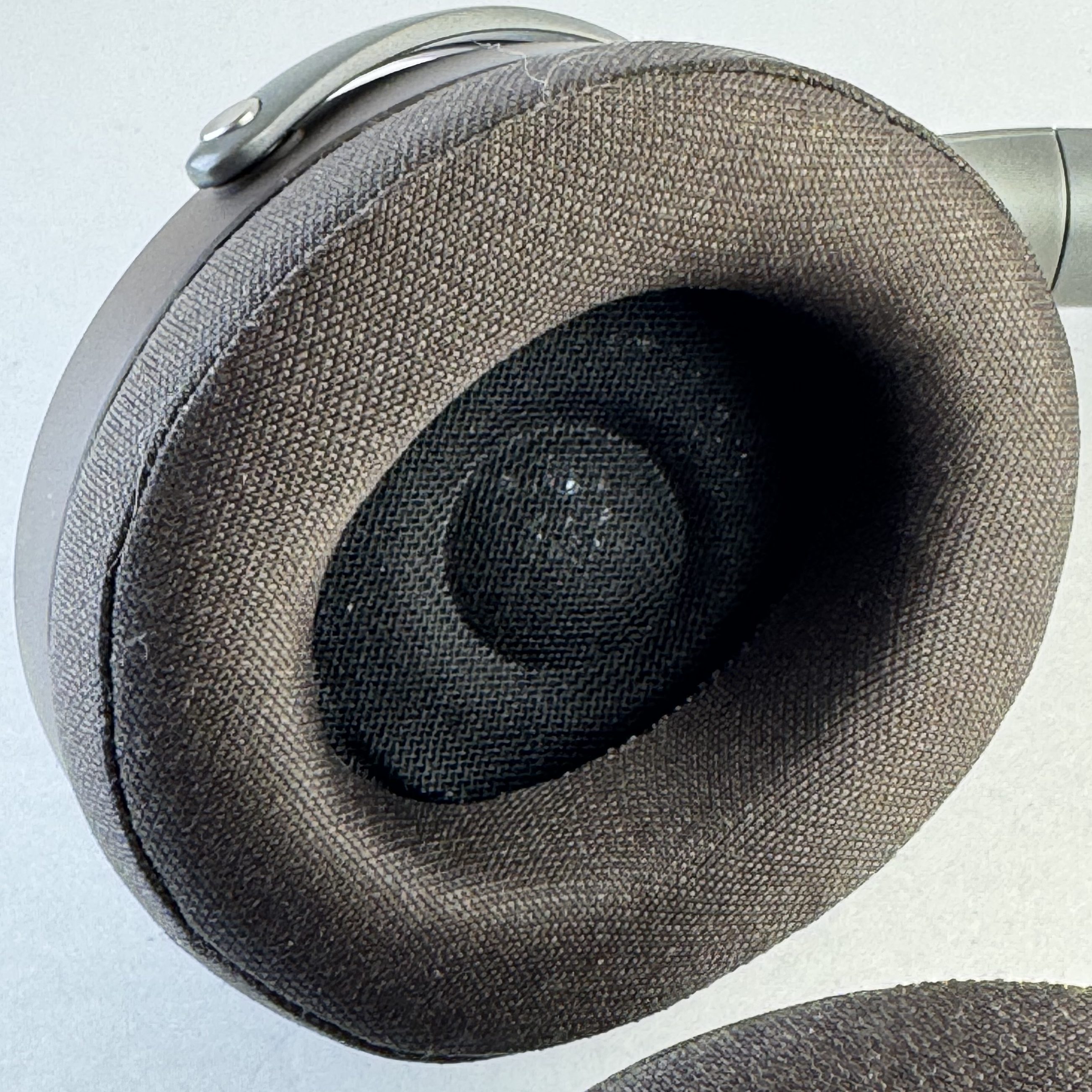
I definitely prefer the comfort of the larger, old-style Focals, but my criticisms of the Hadenys; comfort are pretty minor.
Appearance
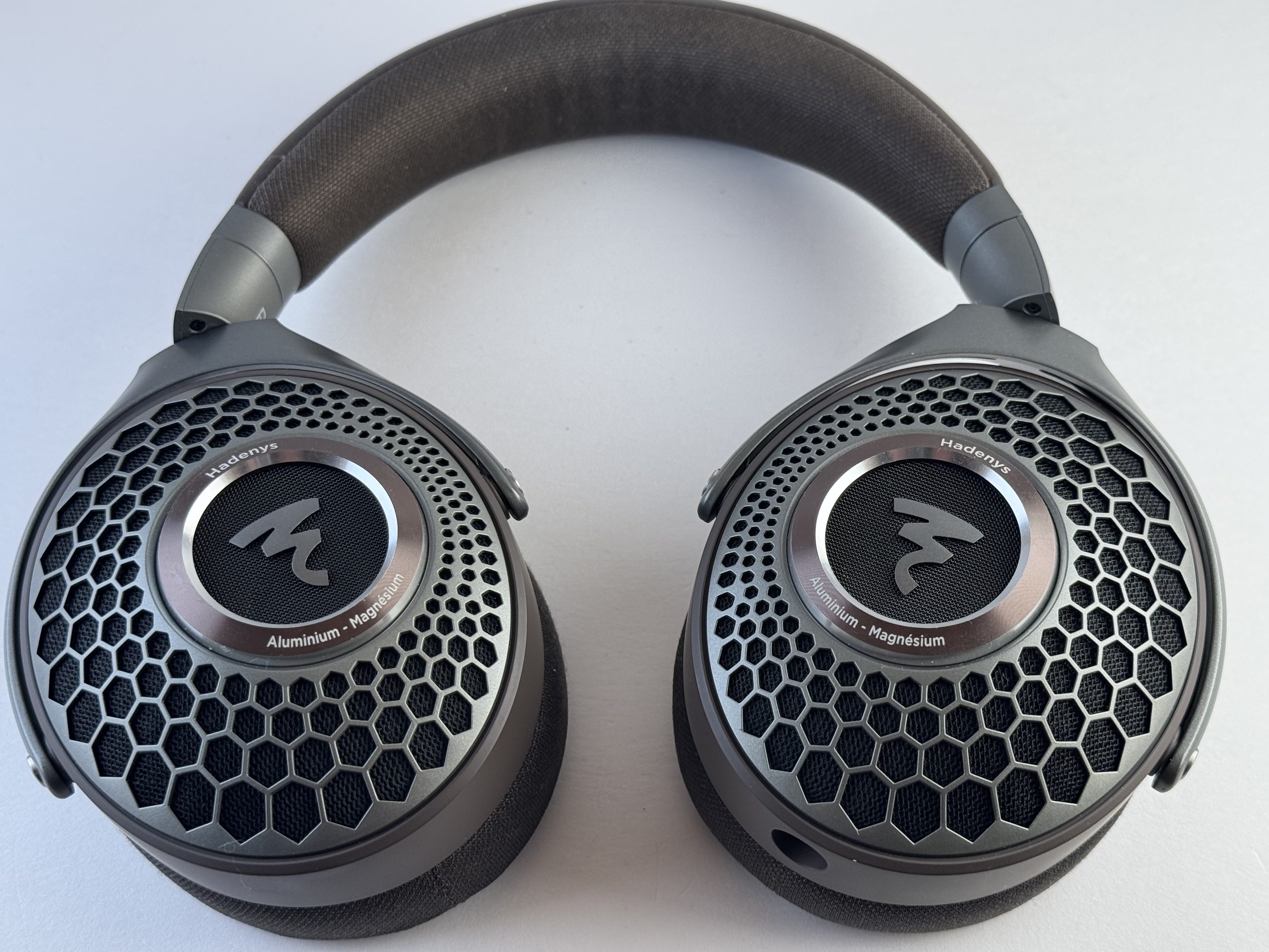
I personally like the Focal aesthetic, though I get why some people (especially people with trypophobia!) might now. The biggest differences between the Hadenys and the Azurys are that the recesses on the cups are (sometimes stretched) hexagons instead of circles, the shell is fabric instead of solid, the Focal logos on the center of the earcups are solid instead of cutouts, and the colorway is different. I think I marginally prefer the Blue of the Azurys to the brown/grey of the Hadenys, but it’s pretty minor.
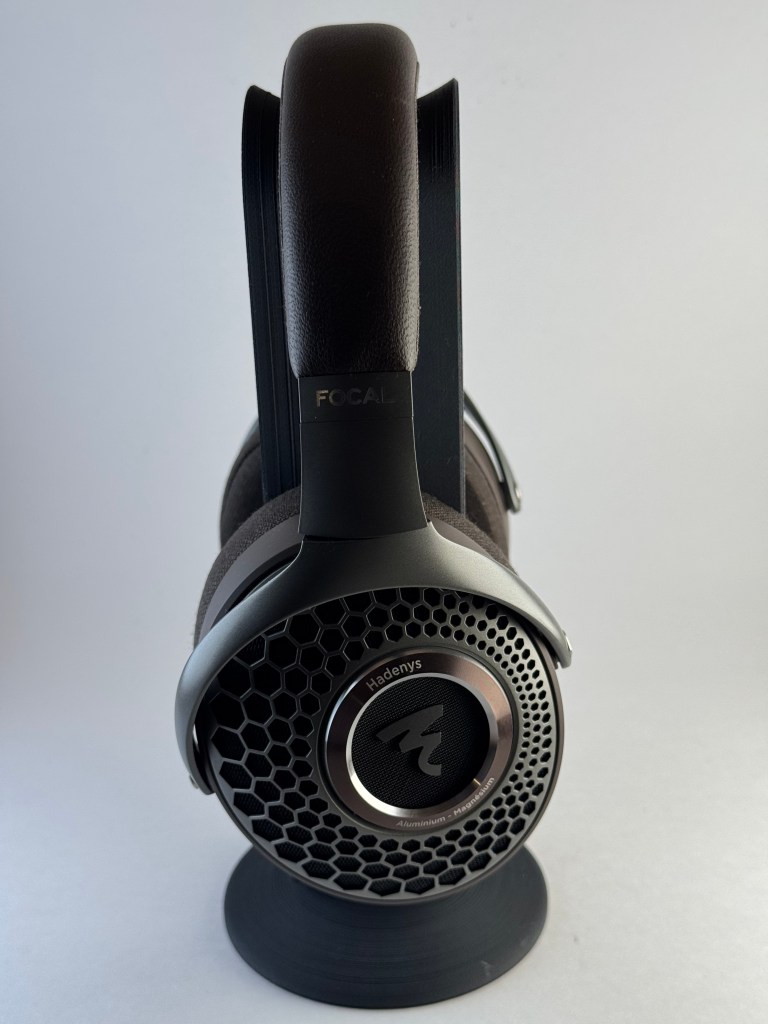
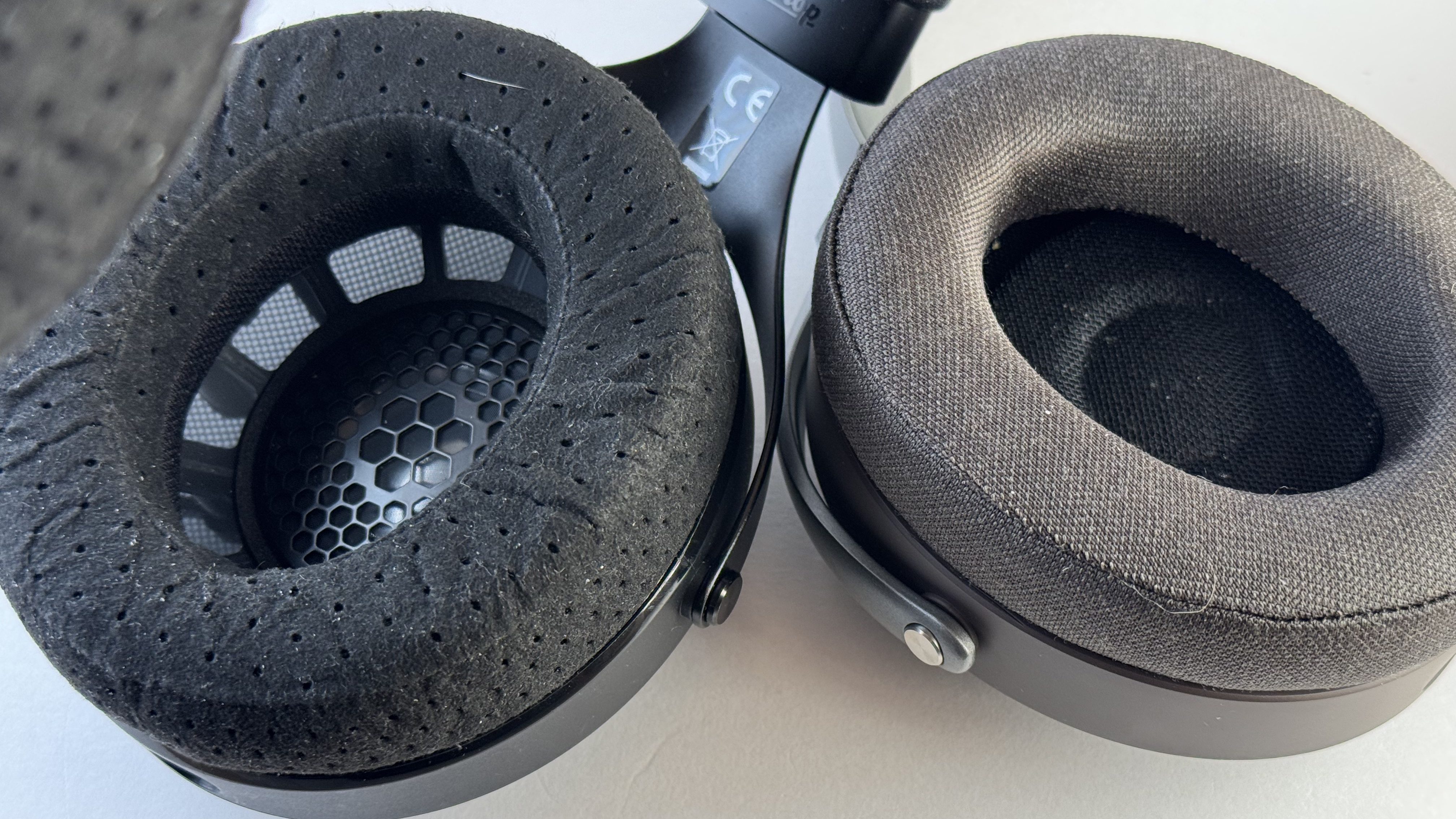
Interestingly, you can’t really see the drivers on the Hadenys, unlike the Elex or Clear, and the cups are not visually transparent. I’m always going to prefer the older style Focals, but the smaller, slimmer profile of the new generation might reasonably appeal to people with smaller heads or who are more worried about the Cyberman problem than I am.
They work for me. Your mileage, as always, may vary.
Value & Comparisons
This is where I struggle a bit with a lot of Focal’s headphones: generally, they make really good products that I like listening to and wearing, and that I think are stylish and well designed, but that often feel … overpriced. That was one of the things I struggled a bit with on the Azurys; as much as I appreciated that headphone, I liked the DCA Aeon x Closed more for substantially less money. In my review of the Elex a few weeks ago, I commented that I wouldn’t pay the original MSRP ($799) for a new pair, though I would pay the most recent new price ($500) if I lost or broke my inherited pair. And that’s kind of where I’m ending up at with the Hadenys: as much as I like the way they sound, I don’t know if I could personally justify the $699 price tag, especially in a world in which you can get a Heddphone D1 for that price, a Meze 109 Pro for a little more, or a Hifiman Arya Stealth for substantially less. Fortunately, I see them marked down to around $500 around the internet, which seems like a much more reasonable price for what you get.
I’m VERY happy with the Hadenys at the $325 I paid. If I were in the market for a pair of dynamic driver open backs, I think I’d be okay paying up to around $500 for them, though at that price you have a lot of interesting options including all of the 6X0s (including the excellent HD 490 Pro), the Audio-Technica ATH-R70xa, the Meze 105 AER and 105 Silva, etc., and you’re even in the right territory for a new Arya Stealth. Open backs around $500 are a pretty crowded market right now, and we’re spoiled for choice even if we don’t consider the used market. I’ll be curious to see where I land on some of these comparisons below.
Focal Elex
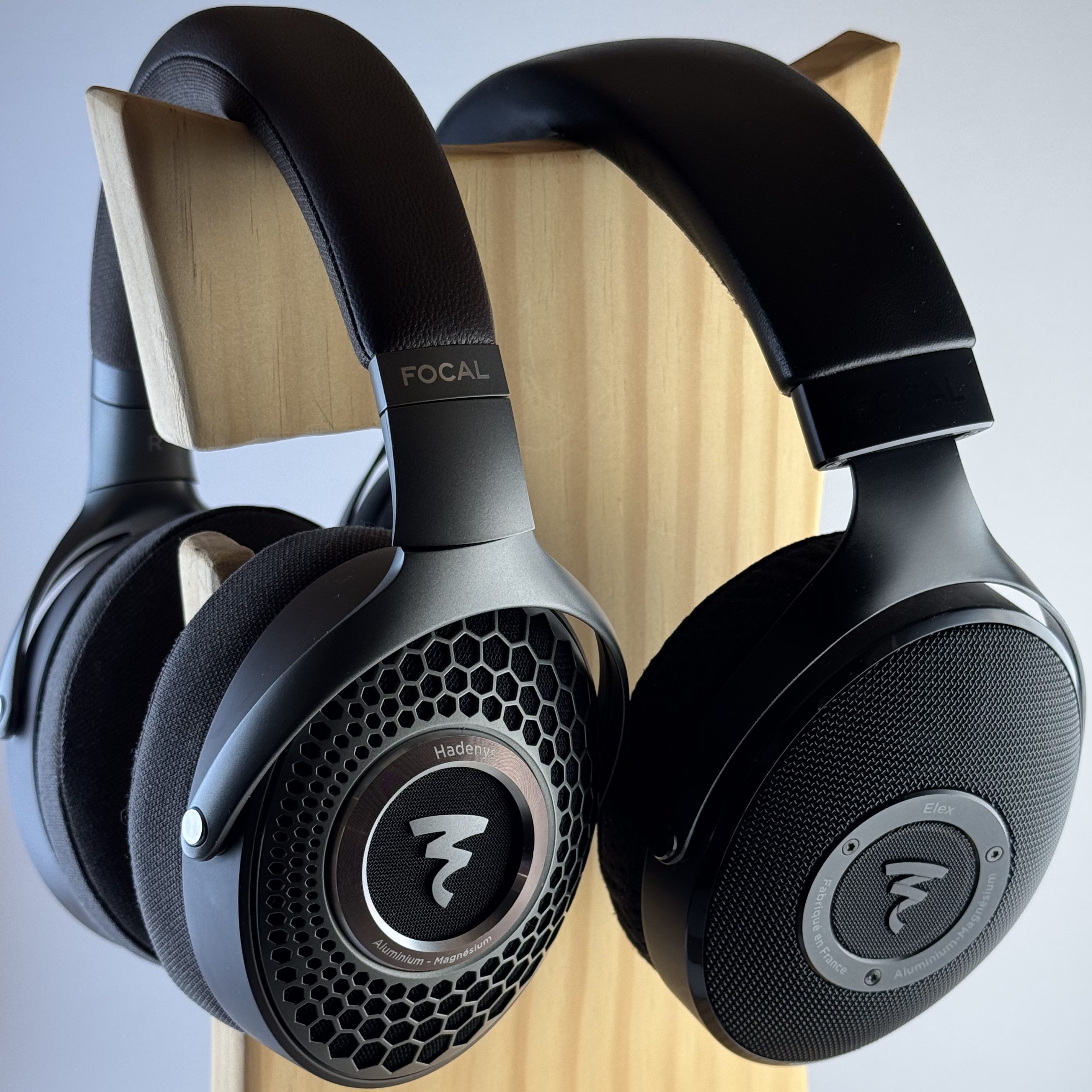
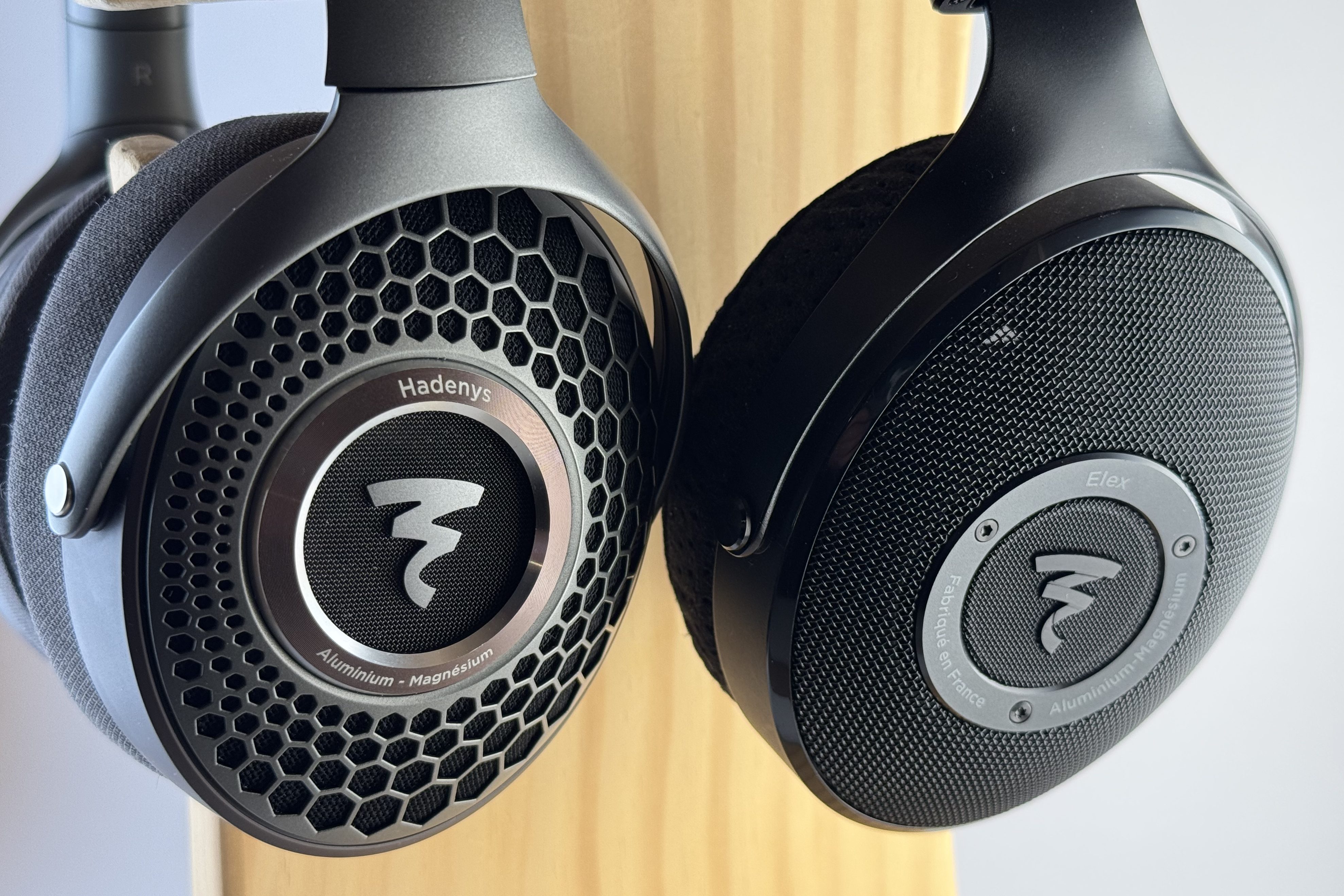
I still really, really, REALLY like the Focal Elex, even as my audio palate has gotten more refined, and I was delighted to be reminded of that. So it’s probably not surprising that I prefer them over the Hadenys, and it’s not all that close. The Hadenys are definitely more v-shaped than the Elex, which isn’t particularly an argument in their favor for me, though I do still really enjoy listening to the Hadenys. The bass and treble are definitely stronger on the Hadenys, but I prefer the balance and overall presentation on the Elex (and the mids are, to my ear, substantially better both in terms of balance AND timbre on the Elex). But my preference isn’t just or even primarily about sound quality (though I 100% do prefer the Elex’s tune); the Elex just fit my head damned near perfectly. So that said, this preference is more a reflection of how good the Elex is rather than a criticism of the Hadenys in any meaningful way.
Elex > Hadenys, unless you have a small enough head that you can’t wear the Elex comfortably.
A quick glance at the graphs (hard to find people who have measured both!):
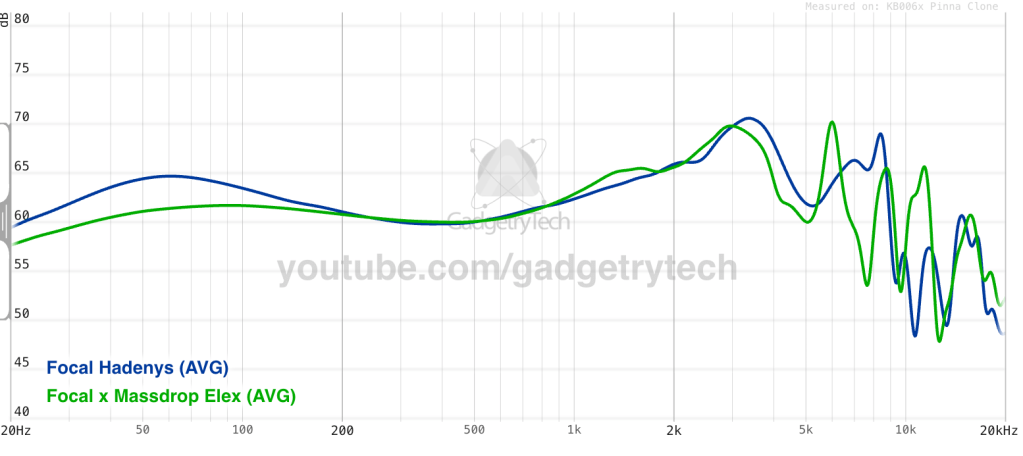
Yup; I definitely hear the stronger bass on the Hadenys (but prefer the balance on the Elex), and I don’t personally hear the 6 kHz spike Gadgetrytech measures on the Hadenys, but overall this looks about right. Some reviewers have talked about the way that the Hadenys shifts the ear gain region up a little (that bump between 3-4 kHz) and the way that affects timbre; I don’t particularly hear that in listening, though it might account for the few little quibbles I’ve had with the midrange on the Hadenys. Certainly not enough to dissuade me from listening to them.
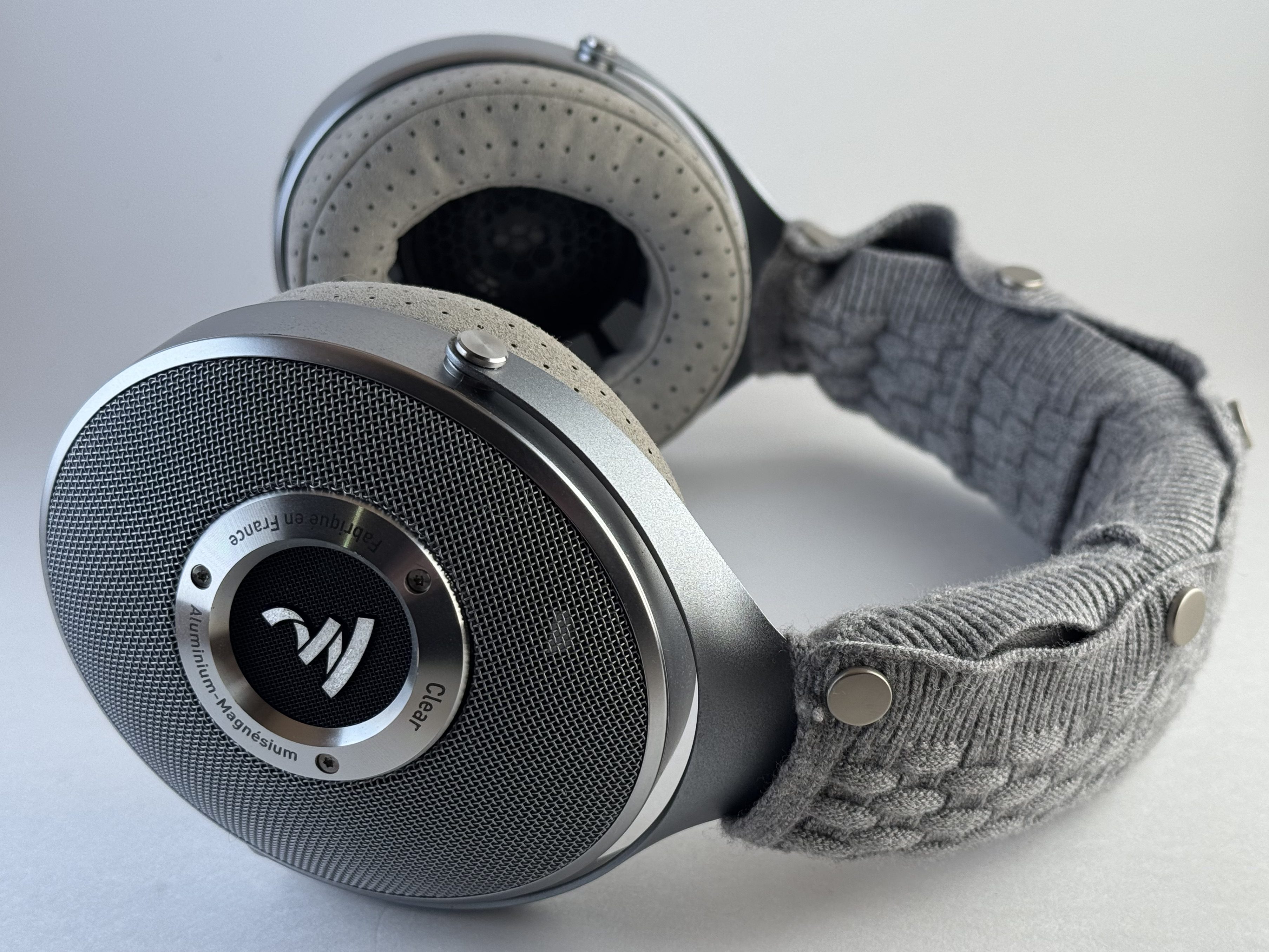
The Focal Clear is a more interesting question. With current markdowns on the Hadenys, it ends up being up to about $300 cheaper than the Clear. I definitely prefer the tuning of the Clear, and as noted above I think the older style of Focal is substantially more comfortable for long term listening, but is it $300 better? Honestly, for me I think it might be. At the moment, if you can stretch your budget to $790, I’d take the Clear over the Hadenys. As the Clear starts to disappear from the market, though, the Hadenys is a perfectly nice replacement.
HD 6XX/600/58X/660S
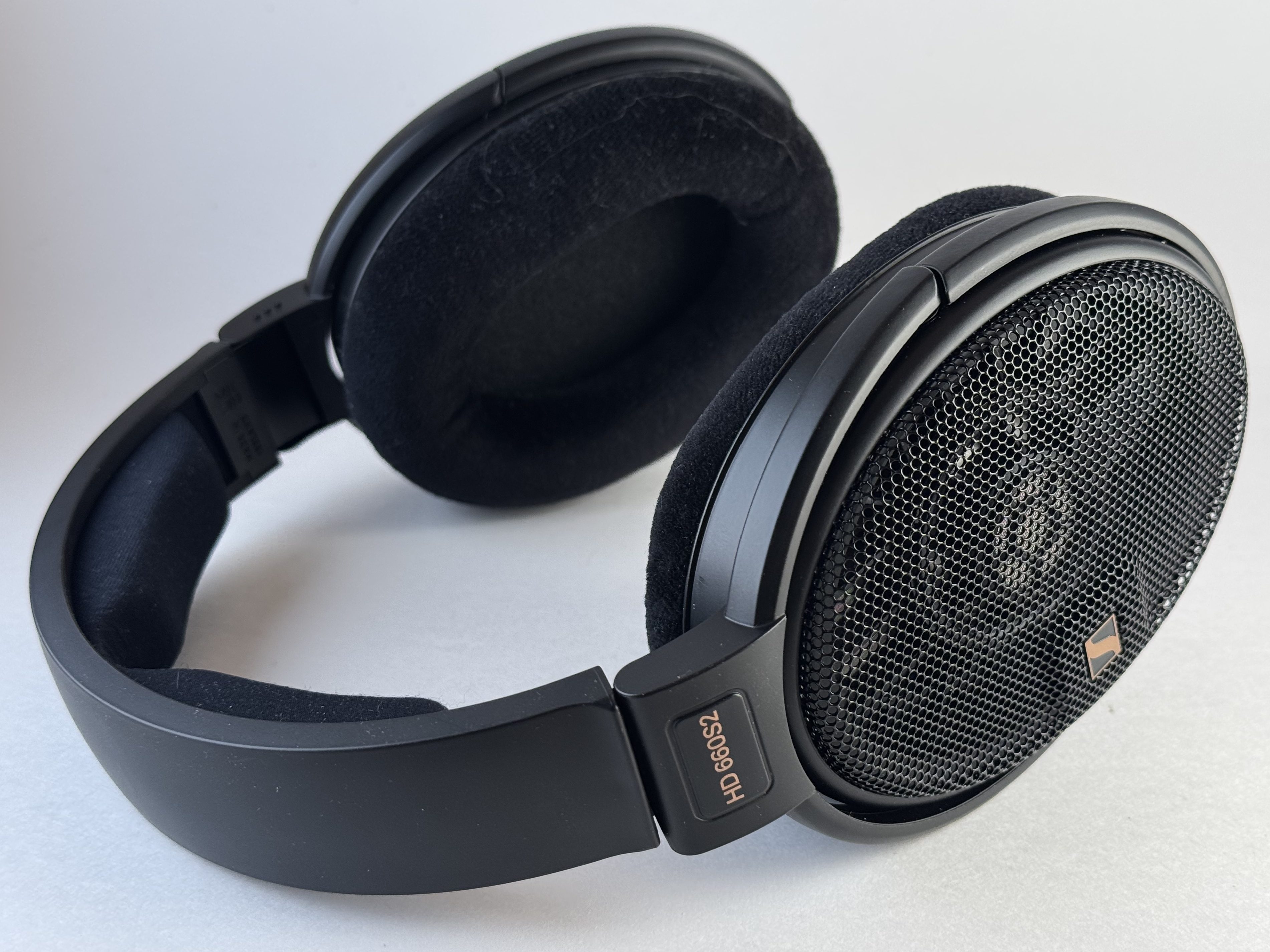
This is a particularly interesting match up for me, as the 6X0s (and particularly the HD 6XX) have long been my benchmark for open back headphones. The Hadenys definitely addresses the primary drawback of the 6X0 family (namely the bass roll off) and brings the magical Focal punch and dynamism, but does so at the cost of the 6X0s really excellent mids and (generally) well-balanced, relaxed treble a bit.
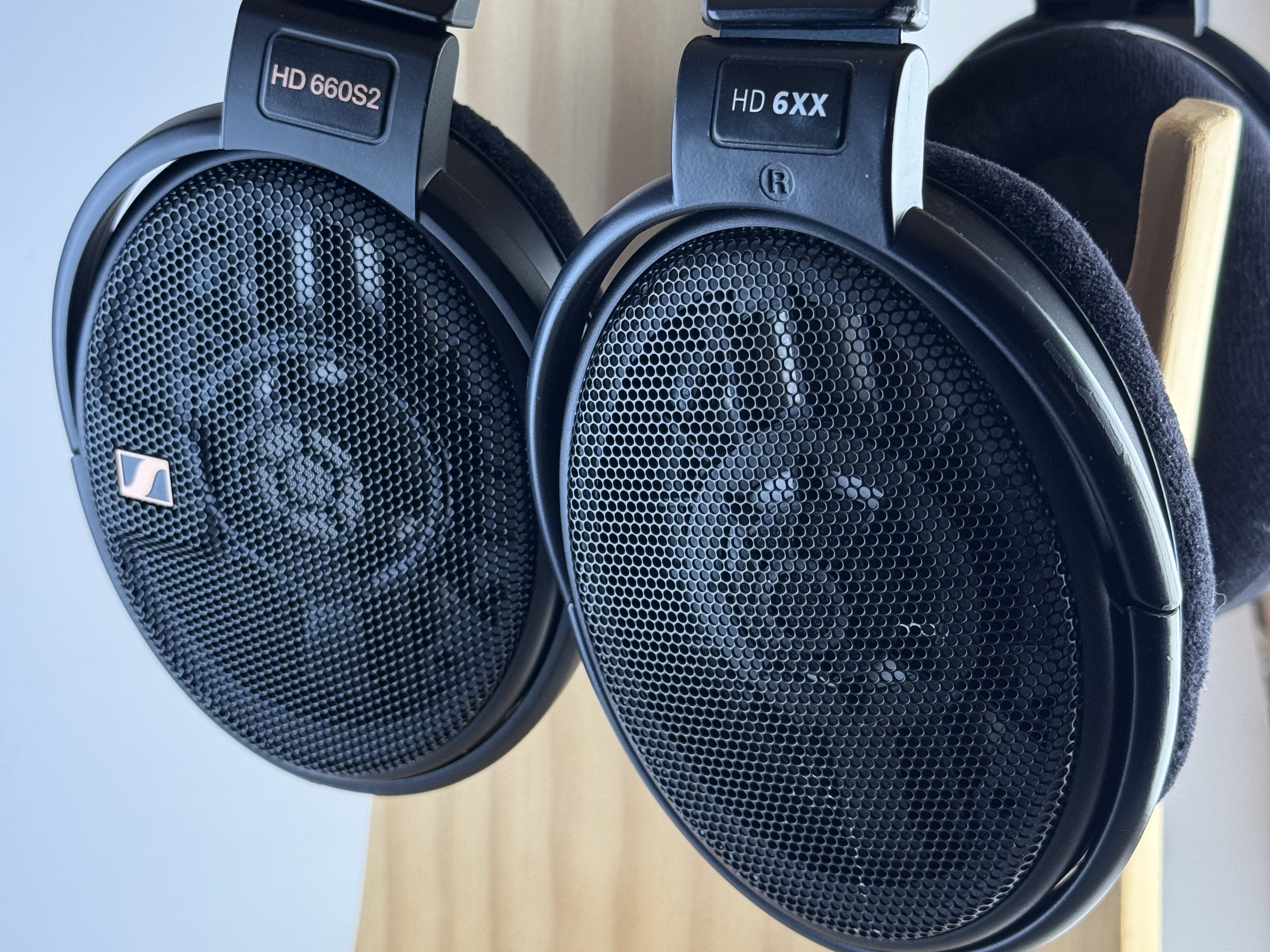
I’ll take the HD 6XX/660S2 for quieter, more sparse music, the HD 600 for anything dominated by vocals, and the Hadenys for anything where I really want punch, particularly in the bass. When we start taking value into consideration, this gets a lot more complicated. I’ve talked before about how difficult it is for me to justify the pricing on the 660S/S2, and I’d put their value about on par with the Hadenys. I’d definitely rather pay $500 for the Hadenys than for the 660S2, let alone their $679.99 list price these days. I’d even take the Hadenys at $500 over the $430 Amazon wants for the 660S2 right now. I’d say that the HD 6XX still represents an incredible value, but with the recent announcement that Corsair is shuttering Drop.com and that most of their collaborations are going away … well, the whole concept of budget in open backs might need to reshuffle in the very near future.
If we’re not considering cost, for most of my listening, I slightly prefer the Hadenys over the 6X0 family. If we are considering cost … well, as long as the HD 6XX is available, that’s still my pick. The HD 600 is king if you’re a vocal first person, but for the rest of us the Hadenys is my recommendation.
HD 490 Pro
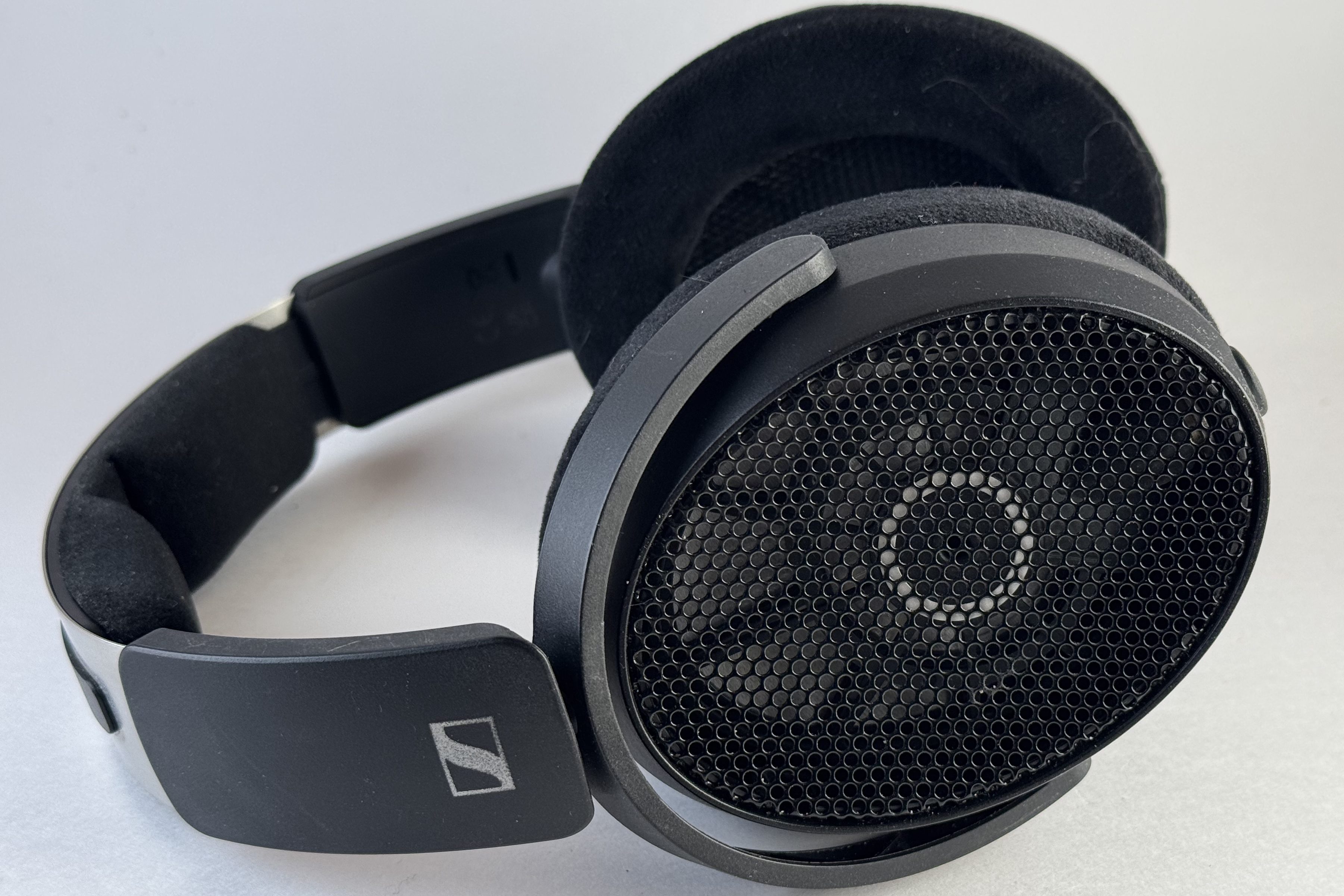
While I consider the HD 490 Pro a spiritual sibling to the 6X0s and an honorary member of that family, I think in this case it’s worth doing a separate comparison. I slightly prefer the tuning of the 6X0s over the 490, but the 490 is so. Damned. Comfortable. that I end up choosing the 490 over any of the 6X0s most of the time for most use cases. But is the Hadenys enough of an upgrade over the 490s as to have me overlook the decrease in comfort?
For me, at a similar price point, I could go either way. I really enjoy the tune of the 490, though the treble gets a little spicy for me at times. By contrast, though the Hadenys have better balanced and relaxed treble, I occasionally find the bass a little on the heavy side (though still very well controlled). The 490 bring some extra versatility with swappable pads and the ability to pick which ear cup you connect to, but at the end of the day that’s cool but not something I actually USE very often. Overall, I prefer the treble on the Hadenys, and the bass, mids, comfort, and soundstage on the 490s. It’s definitely easier to EQ down the bass on the Hadenys than to address the 490’s treble, so I think I’d take the 490 if I couldn’t use EQ but the Hadenys, by a hair, if I could. For longer sessions, and for gaming, it’s the 490 all the way. And once you add in their relative price tags, it’s pretty clearly a win for the 490. The tune on the Hadenys just isn’t worth the extra $150 or so.
A quick look at the industry-standard 5128:
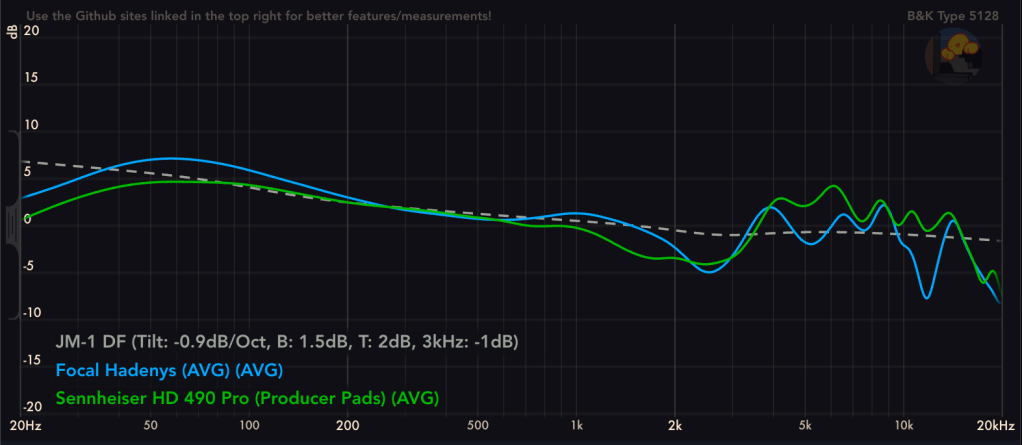
I don’t particularly notice that bump in the mids on the Hadenys during listening, and I don’t hear the 490 Pro as being QUITE that peaky around 3-7 kHz, but that generally looks about right. If you’re a bass person, the Hadenys are probably right up your alley.
Arya Stealth
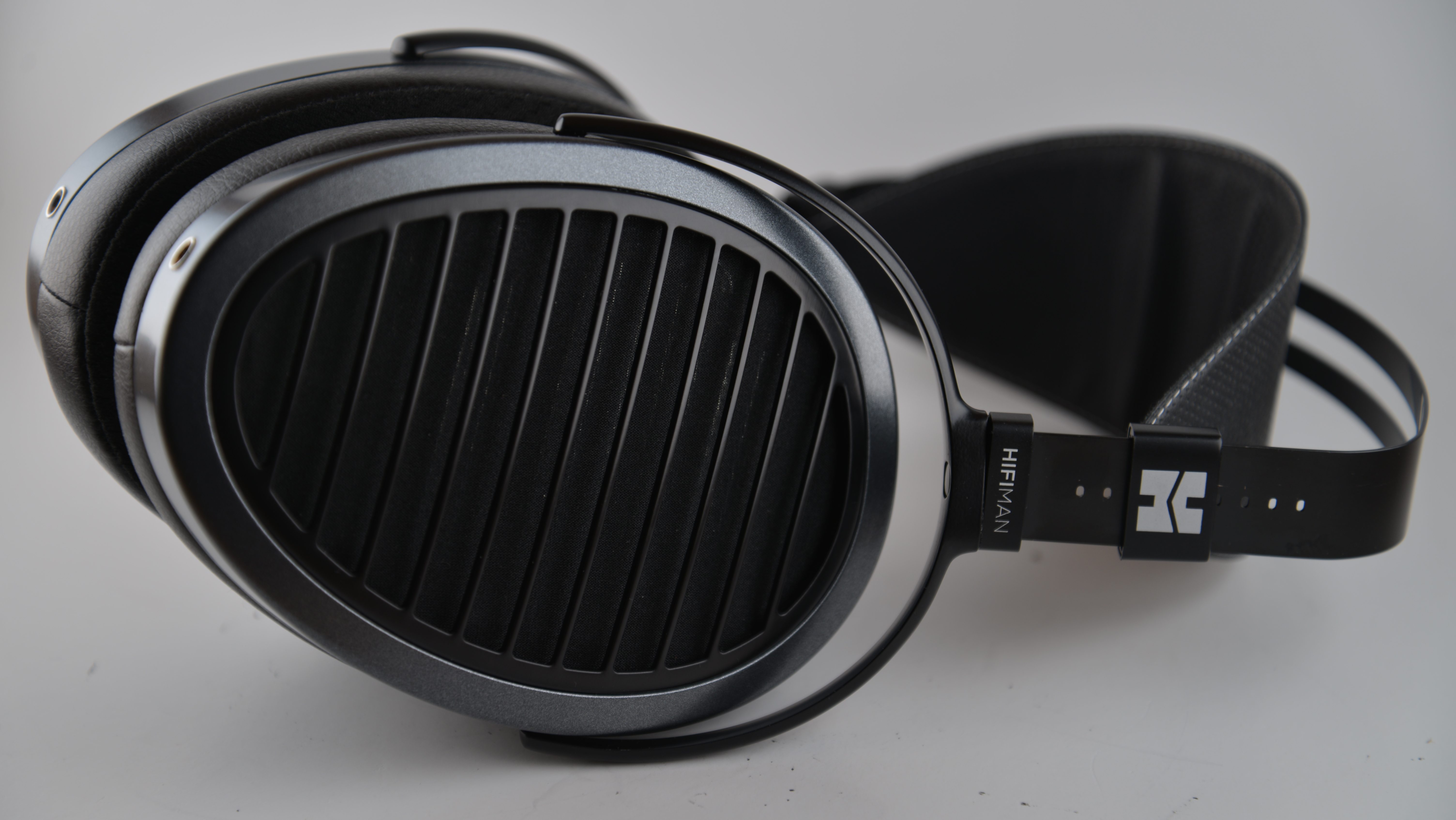
To me, the Arya Stealth and the Hadenys are headphones with very different purposes and use cases. By most measures, the Arya is a better headphone: much more objectively tuned, more resolving, more refined, etc. In terms of what I would like to actually listen to, though, I’m taking the Hadenys most of the time. I think I actually prefer Arya’s linear bass extension to the Hadenys’ mid-bass hump, but for the rest of the frequency response I’m taking the Hadenys’ profile. I don’t have any particular problems with the Arya’s mids or treble (other than just a tiny bit of spiciness on the treble), but Hadenys is just more my speed (and it’s easier to bump down the Hadenys’ bass than tame the Arya’s treble with EQ). Arya is better on most of the technicalities, though; better soundstage (width, depth, and separation), better detail retrieval, slightly better timbre outside of vocals, etc. I’ll take the Hadenys’ comfort, marginally, as the Arya just tends to slide around more on my head than I’m really comfortable with for use outside of critical listening sessions.
If you can get them for a similar price, and unless you do mostly critical listening, I’d recommend the Hadenys over the Arya. I probably wouldn’t pay much more for the Hadenys, though, as they’re pretty evenly matched over all, so if Hadenys goes back up to MSRP the Arya is the safer bet.
A quick glance at the graphs:
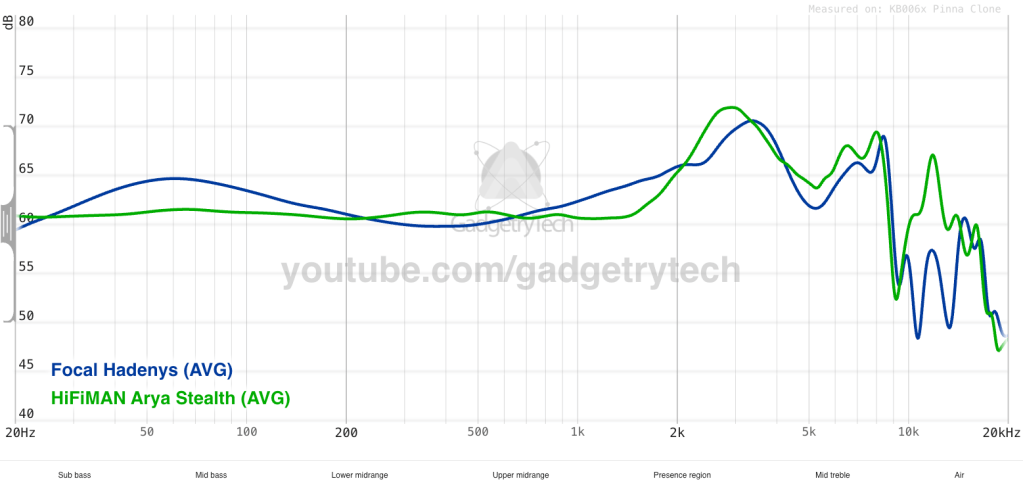
Yup, that matches with my experience. As I’ve noted a few times, the midbass hump on the Hadenys isn’t my favorite profile but the rest of the tune works well for me. I definitely hear a couple of the treble spikes on the Arya, while the 8 kHz spike on the Hadenys mostly doesn’t show up on my head.
You’re not going wrong either way; these are really well made and tuned headphones overall and I think I could make a compelling case for choosing either. For me, personally, I just prefer the dynamics and punch on the Hadenys.
Meze 109 Pro/105 AER
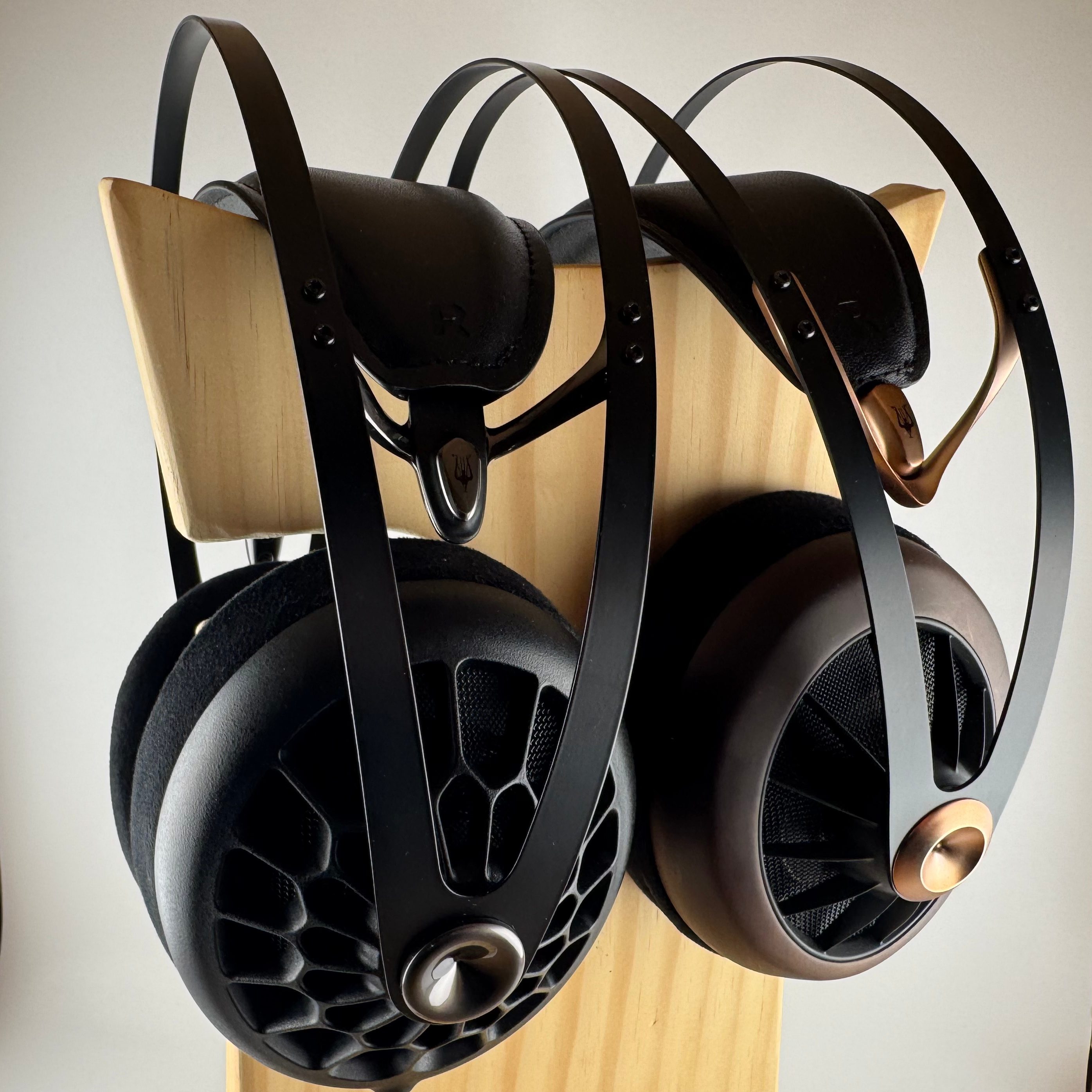
The Focal Hadenys sits neatly between the $400 Meze 105 AER and the $800 Meze 109 Pro in the middle tier of open back, dynamic driver headphones.
I’ll quickly dispense with the 109 Pro comparison: the Meze 109 Pro continues to be my favorite headphone under $1000, and I don’t think the Hadenys meaningfully competes with it in terms of sound quality, tuning, technicalities, or comfort. The 109 is just a better headphone all around in my book. The Hadenys comes closer than a lot of similar headphones that I’ve compared the 109 too, but just doesn’t quite get there. And, as I’ve discussed several times, I’m a real sucker for the Meze aesthetic.
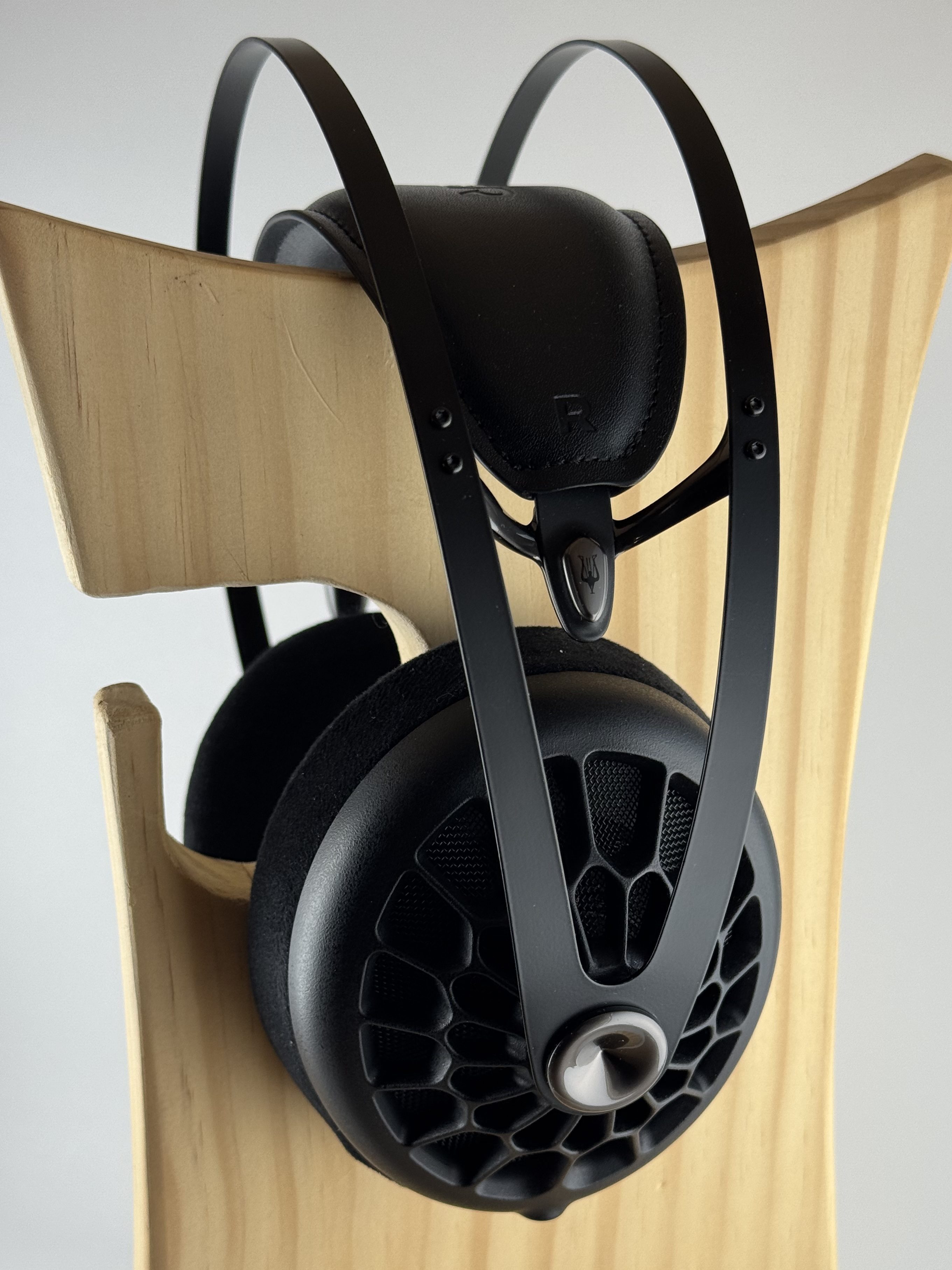
The 105 AER is the more interesting comparison. To my ears, the 105 consistently outperforms a lot of headphones in the $300-600 price bracket, with their warm but not dark tune and solid comfort. They were a 9 out of 10 for me, not considering cost, and I think of them as being 90% of the performance of the 109 Pro at half the price. But how do they measure up to the Hadenys?
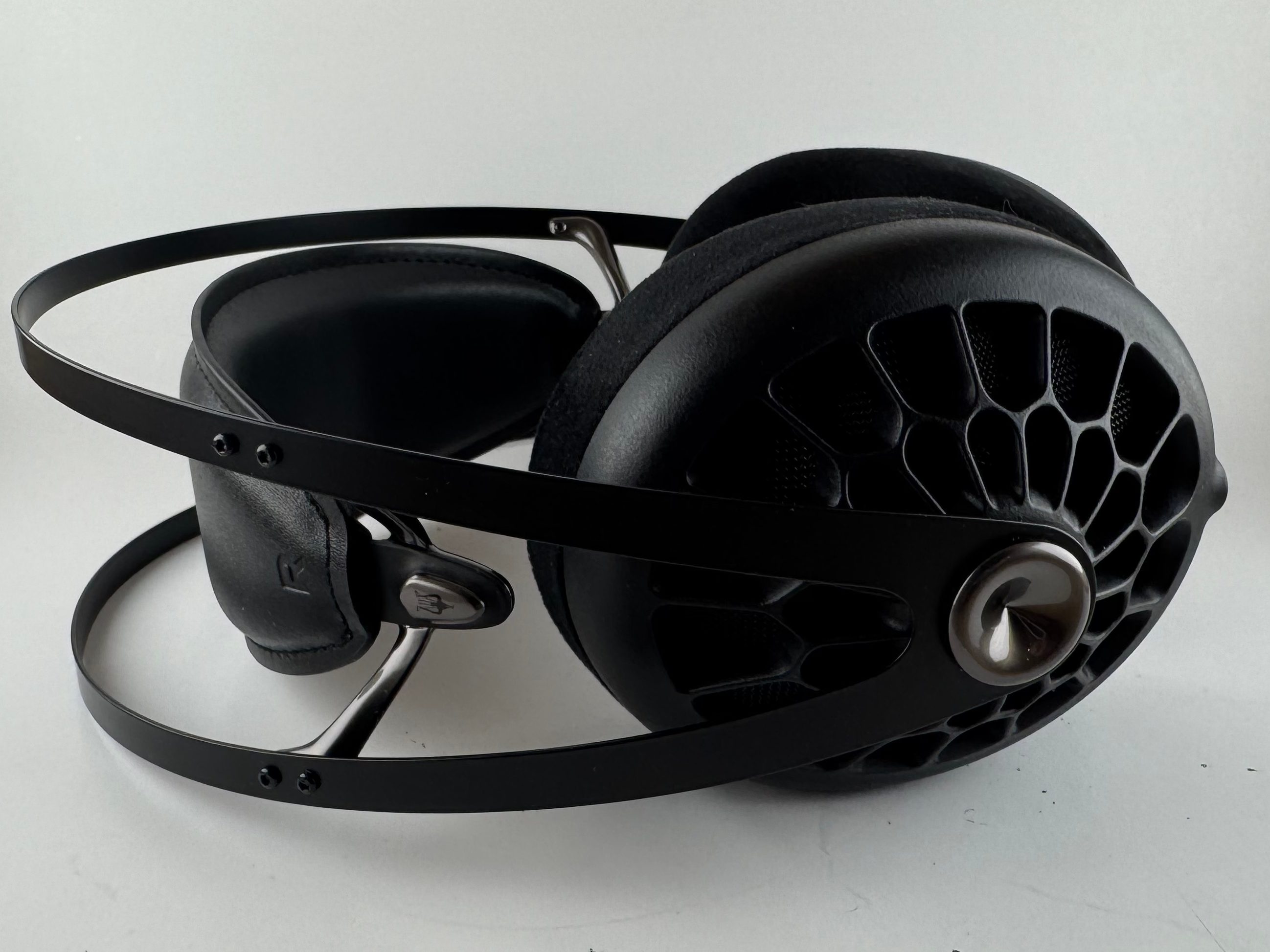
Pretty well, all around. They’re surprisingly close in the tuning; I definitely hear less midbass out of the 105 AER (which is pretty damned close to my ideal tuning for most of my listening), though I think the Hadenys have a slightly more natural sounding midrange, particularly for vocals, and perhaps a slightly better controlled treble presentation. Particularly when rapidly going back and forth, the contrast in the bass response is pretty stark, but after a minute or two of listening my brain readjusts to the bass level of the AER. I also think that the Hadenys handle the sub bass more cleanly; at the very bottom of the frequency range you get a hint of splatter on the AER that you don’t with the Focal. The AER is definitely better for quieter, sparser music; the quiets are quieter, though they’re also slightly more open in their design and therefore a little more subject to external noise (for example, right now, I can hear myself typing on this Microsoft Ergonomic Keyboard a little more clearly than I would with the Hadenys), but it’s not a huge difference. You get better punch and dynamism from the Hadenys (that Focal magic), but it’s also not a huge difference. Let’s take a quick look at the graph:
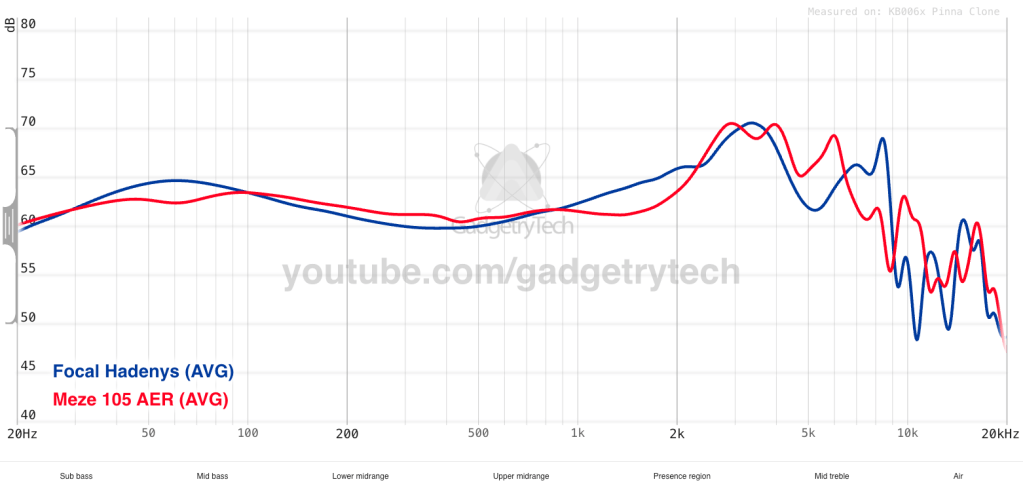
That more or less mirrors what I hear. I’m a little surprised that the AER has better response in the very lowest end, but then, I don’t listen to a lot of music with a lot of information down there and the Hadenys avoids the bottom-most splatter of the AER. Unlike the 109 Pro, I don’t really hear much of the treble peaks in either the AER or Hadenys, though the Hadenys does have a little more sparkle up around 10 kHz on my head.
The short version of this is that you’re going to be happy either way, in all likelihood. I think the Hadenys is a slightly more technical headphone, but is also not quite as well tuned as the AER for my preferences. It’s also at least $100 more expensive at current prices.
For me, if they’re the same price, I think I’m taking the Hadenys and dropping the bass a hair. At their current new prices, I don’t hear anything that justifies the extra cost for the Hadenys, unless you really want to experience the Focal punch. And for me, I have a number of other places to get that punch. I guess if I were buying a pair to carry around, the Hadenys’ case is easier to carry, and I appreciate that they fold flat? But the AER’s case is also quite nice, and it can be used with an aftermarket cable to use balanced amps.
Focal Azurys
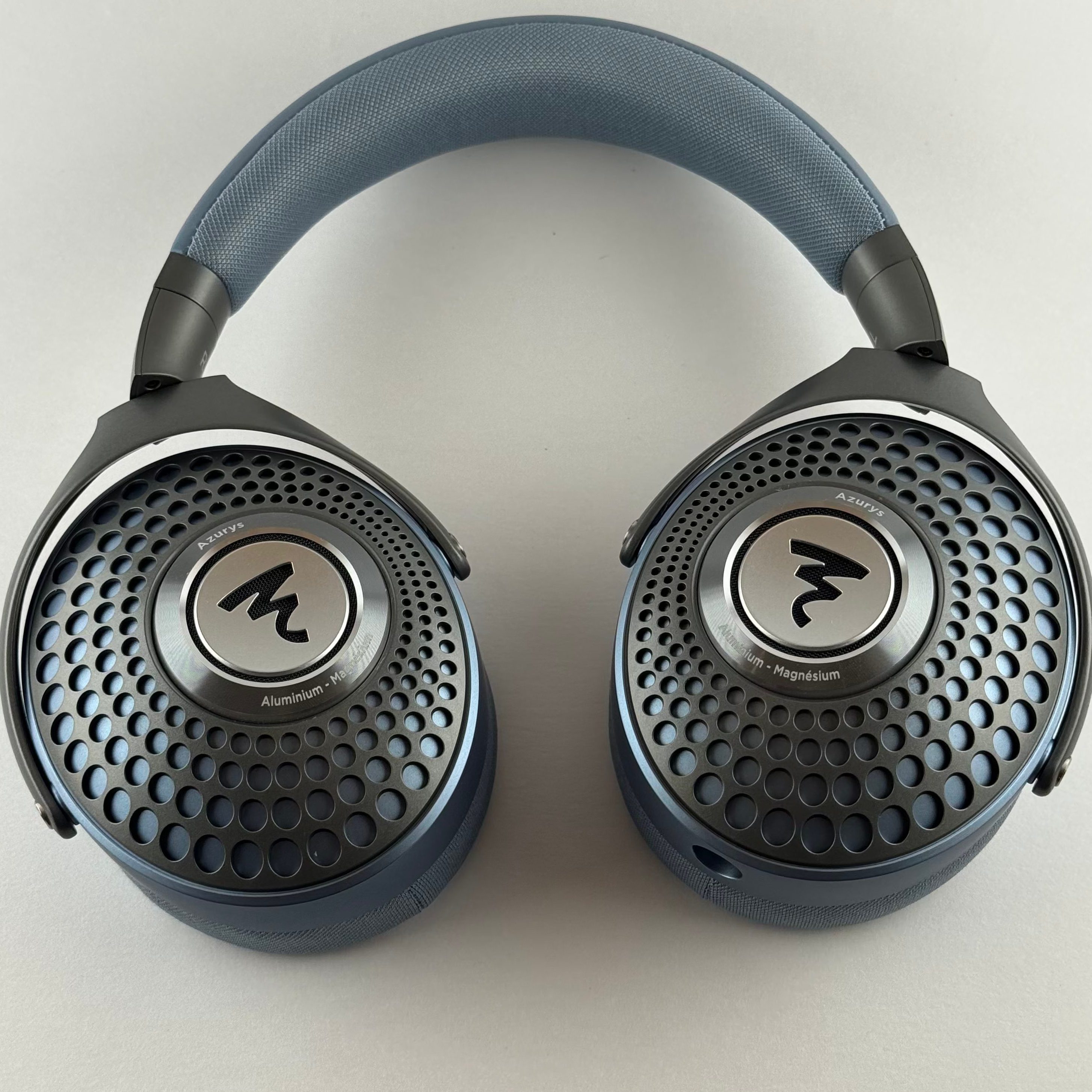
I mostly don’t compare open and closed back headphones that much these days, but in this case I think it’s worth a quick comparison just because of the similarities between the Azurys and the Hadenys.
I liked the Azurys pretty well for a closed back, though I argued that they were a bit overpriced for what you get. Like the Hadenys, I find them a little bassy out of the box, though rarely splattery or boomy. They’re also pretty well tuned for timbre, particularly for a closed back, though I find their treble tuning edges into sharpness for my ears. I also found that at least my unit didn’t play so nicely with a few of the amps I tried it with (particularly the Jotunheim 2 and Mojo 2).
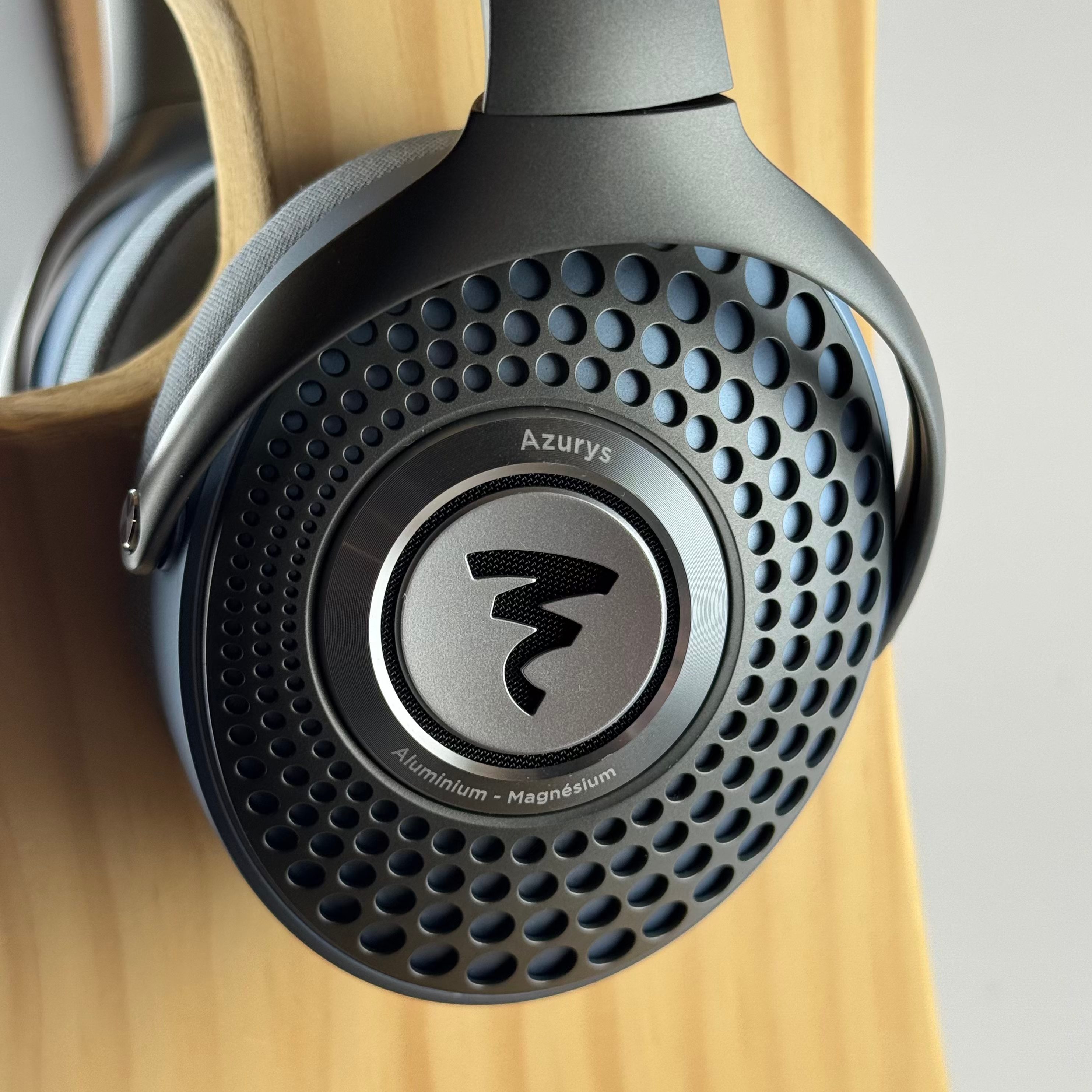
For any situation in which I don’t need noise isolation, I’m taking the Focal Hadenys. As good as the Azurys is, the Hadenys is better balanced, has better soundstage and separation, and is more conducive to longer-term wear by virtue of being open-back. [It also may be a figment of my imagination (or a function of pad wear), but I swear the Hadenys are ever so slightly more comfortable on my ears. Maybe pad design to get a better seal for a closed back? I dunno. It’s weird.] The Azurys is also bassier, in a way that I personally don’t love, though it’s not so dramatic as to be a problem. In a situation in which I want noise isolation, I’m … well, probably not taking the Azurys, given my other options.
A quick glance at the graphs:
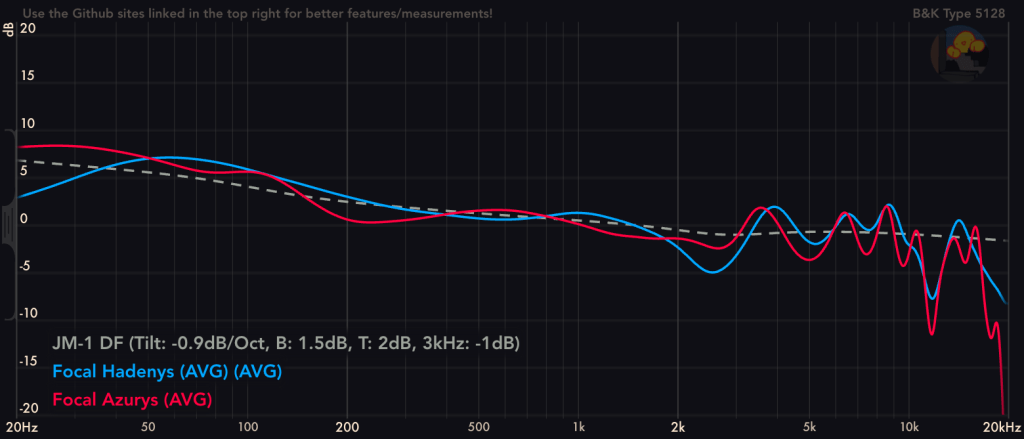
I definitely don’t get the roller coaster on the upper end for the Azurys (at least not to that extent!) but overall this looks about right. That valley at 11 kHz is wild, though, and now I want to go listen to a sweep and see if I can hear that on my head.
Overall
Overall, I’ve been pleasantly surprised by the Focal Hadenys. They’re a perfectly acceptable substitute for anyone who can’t find a pair of Elex or Clear and wants to experience that Focal punch (but can’t stomach Focal’s upper tier prices), as much as I prefer the older style. I think they’re a little overpriced at MSRP (and honestly, maybe even a little at their current asking price), but I am quite pleased with them at the $325 I paid. I’m curious to see if I hold on to them; the Elex and Clear are probably permanent parts of my collection and I don’t know that I need a THIRD Focal dynamic, especially as I covet a pair of Utopias at some point. Of course, I said that about the Meze 105 AER and they’re still on my wall … along with five pairs of Sennheiser 6X0s.
In the end, the Hadenys are a worthy successor. I’d rather Focal restart the Elex line and start selling the Clear more widely (if only so that I can continue overpaying for OEM ear pads for them!), but it’s also pretty clear to me that they don’t have much interest in those products any more. My quibbles with the Hadenys are just that: quibbles, and mostly easily corrected via EQ. If I had to get rid of all of my headphones and rely on just the Hadenys, it would be … fine. And that’s saying something.
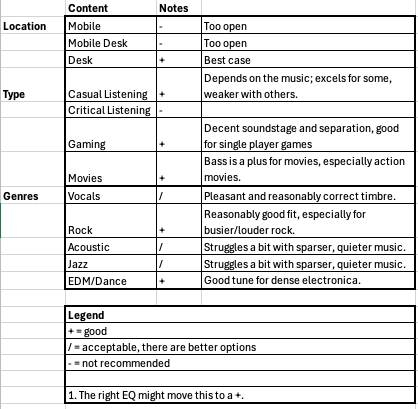
Phil’s Use Case Matrix
#reviews #headphones #sennheiser #6XX #anc #spatialaudio #meh #2025 #99noir #meze #sunglasses #overear #cans #hifiman #arya #stealth #editionxs #budget #hahahaha
- I score bass, mids, and treble on a two part scale: 1-5 for quantity (5 being the highest), and A-E for quality (A being best in class, E being laughably bad). For soundstage it’s also a two part scale, with the number representing the width and the letter the separation within it. ↩︎
- For comfort/fit, my scale is A-E with A being disappear entirely into the background and E being I want to tear my ears off to stop feeling these headphones on my head. I’ve had one E: the Koss PortaPro. ↩︎
- While I am mostly a balanced vs single-ended skeptic, I tend to do most of my listening balanced just because XLR is cool. Alas, the Hadenys is single-ended only. ↩︎
- Editor’s note: turns out, I turned down the bass boost to 3 dB and have really enjoyed the EQ quite a bit. ↩︎
- Though there is a high-pitched ring after the treble hits that I’m noticing on the Hadenys via the Jotunheim/Mimir; I want to see if it’s actually in the mix and I’ve missed it, or an artifact of either the Hadenys or my Jot/Mimir. ↩︎
- It’s worth noting that I did a bit of my initial listening for this review with my EQ profile for the Focal Elex inadvertently turned on, with a SUBSTANTIAL bass shelf, and it still didn’t blow my eardrums out. So it’s not that elevated. ↩︎
- Bougie problems, huh? ↩︎
 Phil's Superpower of Enthusiasm
Leave a comment