
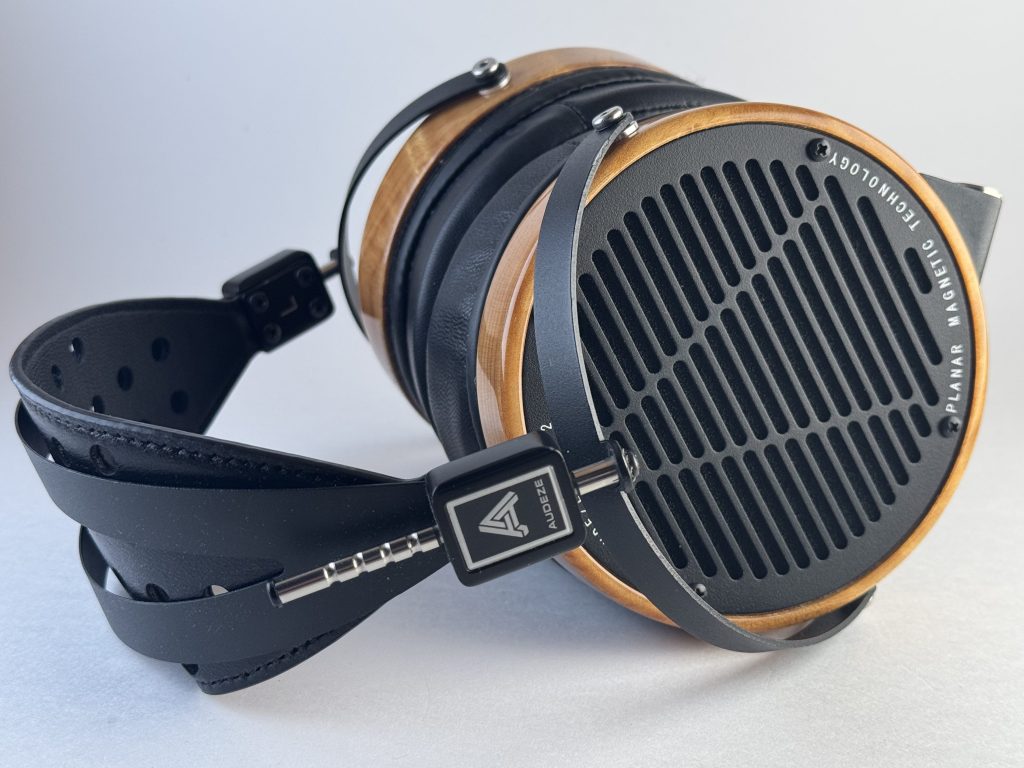
[ORIGINAL MSRP $1,200? Purchased from XXX for $450 in December 2025 off of r/AVexchange.]
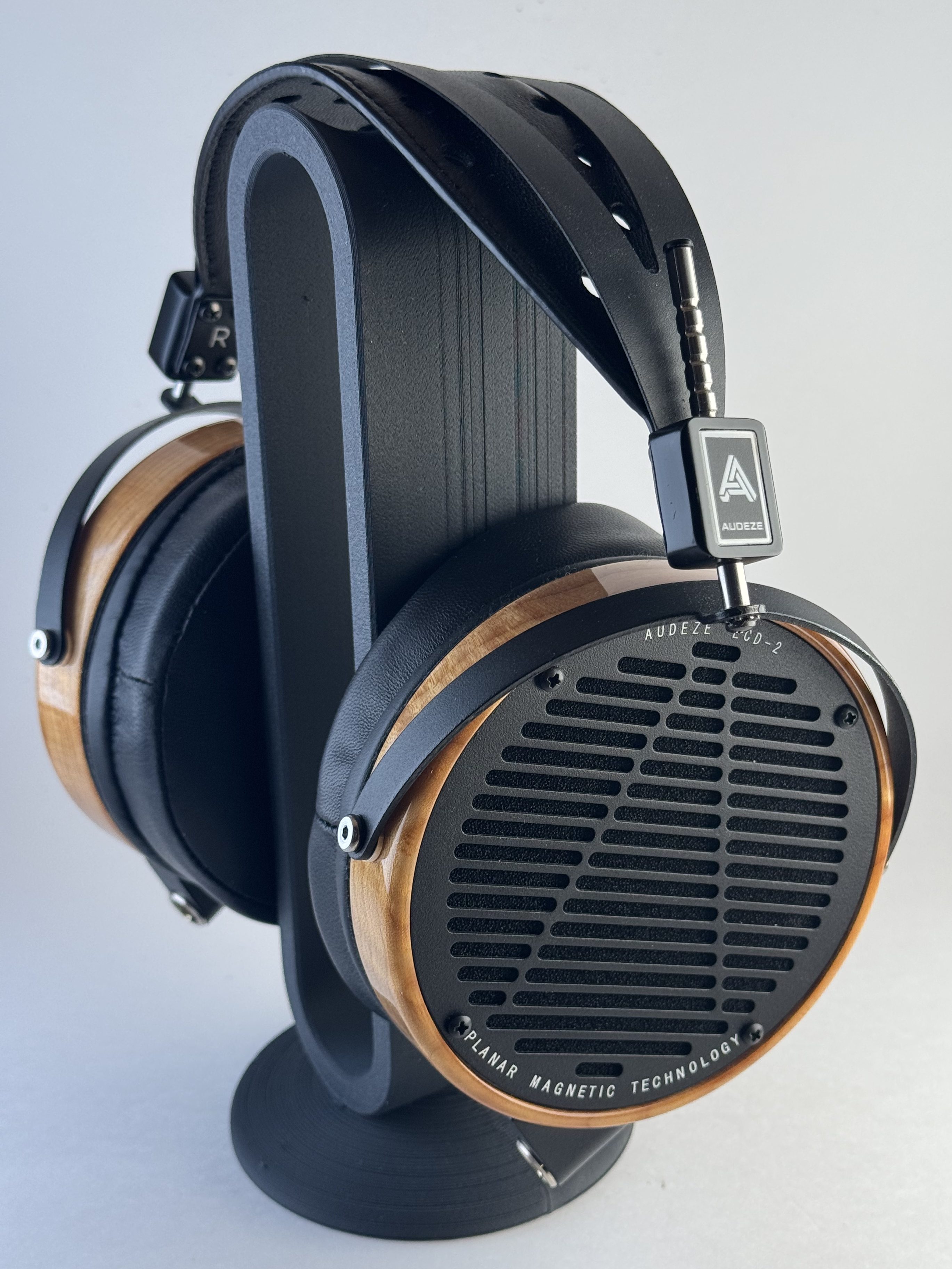
[Tl;dr: This review isn’t going to be suuuper helpful for anyone so I’ll keep it brief; this is a 14 or 15 year old headphone, and nothing like it has been produced since like 2017 (when Audeze adopted Fazor technology for their headphones), so this is mostly just a placeholder for myself. BUT, if you can get your hands on a pair of these, I cannot recommend them strongly enough.]
Scores:
Cost-agnostic: 9 out of 10 Denalis
Cost-sensitive: ? out of 10 Denalis1
TABLE OF CONTENTS:
Intro to the Intro
This is a “quick” review. There are a number of things that I’d love to get quick notes down on for my own edification/memory, but that I don’t want to spend the substantial time I devote to most of my (overly?) in-depth reviews on. Some of these will be things that aren’t in production anymore (so it’s less likely anyone will read a review), or are extra niche, or are things that I didn’t particularly like but want to be able to point people to my reasoning, or that are in a category I don’t spend a lot of time with (like IEMs). Today, the Audeze LCD-2.2, Pre-Fazor.
Introduction
Early on in my audio journey I had a chance to listen to a couple of Audezes; honest to god, I can’t remember which ones, in part because to me, they had too much treble and were, frankly, wildly too expensive for me at the time. I had a similar reaction to the Hifimans I tried, so I came to the conclusion that I just didn’t like planar magnetic headphones.
It’s been quite a journey since then, and I’ve come around on planars as a concept (first with the excellent Arya Stealth, and then with the excellent-for-a-budget-headphone Edition XS), and when a pair of the older style LCD-2s popped up on r/AVexchange over Christmas in 2025 at a pretty great price I decided to take a flyer on them. I do not regret that choice.
Testing rig
Here’s my basic testing protocol.
Based on my philosophy on the allocation of resources in headfi, I really should test these with something like my Schiit Jotunheim 2/Mimir stack. But, because I want to, except where otherwise noted I’m going to primarily be testing these with a Holoaudio Cyan 2/Bliss (Kitsune Tuned Edition) stack4 via a very nice Meze XLR to dual mini-XLR cable,5 with the Cyan 2 connected via USB-C to a Mac Studio running the Roon client.
EQ
As noted in the Bathys review, I mostly prefer to test headphones with their default tuning, assuming that most people won’t take the time or make the effort necessary to use a third-party EQ. I liked the LCD-2.2 pf without EQ, so I initially didn’t intend to apply any. Then I ran a sweep … and realized that the source of the few issues I had with timbre mostly lined up with some pretty substantial dips in the frequency response and decided to play with EQ. And they got … better. Much better. Great, even. So here’s my recommended EQ (cribbed from Oratory 1990, but with a few tweaks all my own):
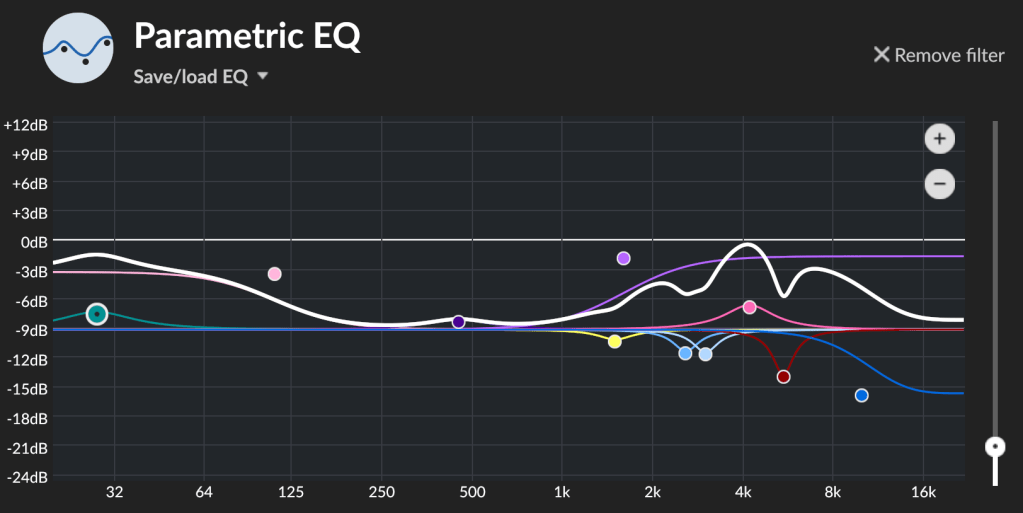
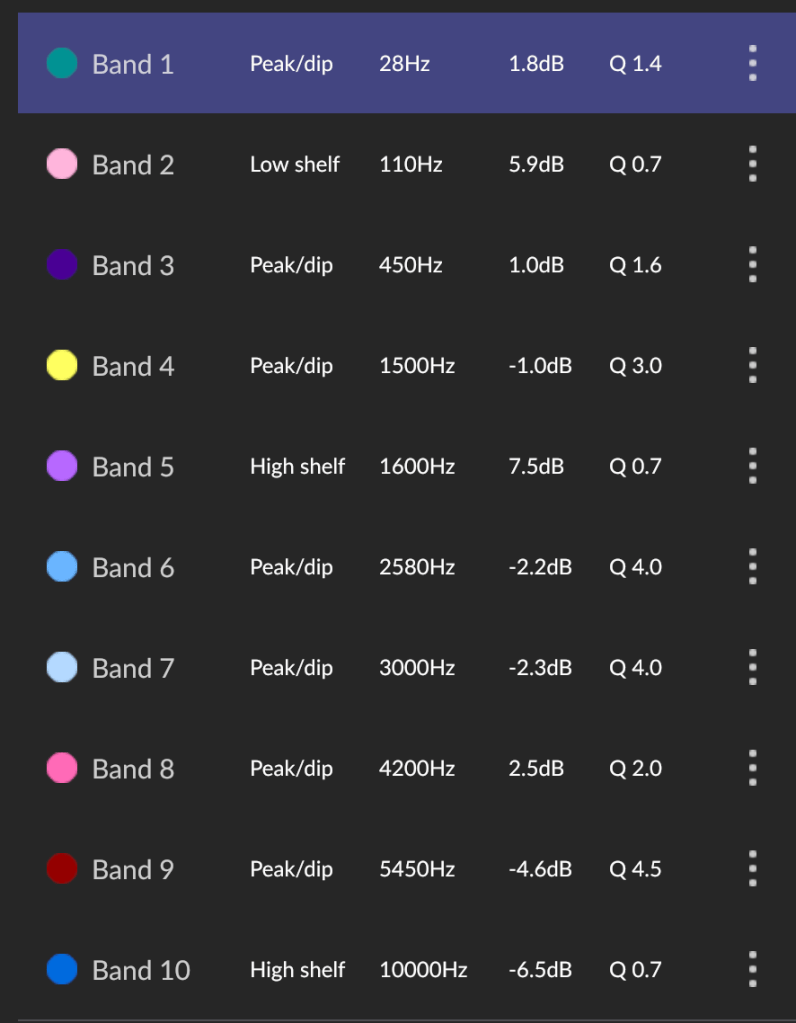
It’s a relatively complex set of adjustments, but on my head fills in a couple of pretty substantial gaps and improves the timbre and overall tone quite a bit. I recommend this!
Volume
Here are the volume settings I use with the Audeze LCD-2.2 pf (unless otherwise noted, running via Roon with no headroom management, playing Daft Punk’s “Face to Face” from Tidal):
- Apos Druid/Gremlin: 1:30 (XLR)
- Chord Mojo: white, orange, orange, red
- Dongles:
- Apple: 60% (Apple Music, iPhone 15)
- Crinear Protocol Max: 80% (single-ended), 60% (balanced)
- Fiio KA11: 55%
- JCALLY JM12: 85%
- Moondrop Dawn Pro:
- Holoaudio Cyan 2/Bliss (KTE): -34 dB (balanced XLR, low-Z); -25 dB (single-ended 6.35, low-Z)
- Mytek Brooklyn Bridge: 64
- North American Apple dongle:
- Via iPhone 15 (Apple Music): 66%
- Via Mac Studio: 90%
- Schiit:
- Mimir/Jotunheim 2 (Mimir has a -15 dB pregain applied via Forkbeard): low gain, 12:00 (balanced); high gain, 11:30 (single-ended)
- Modi/Magni: low gain, 9:30
- Modius/Magnius: low gain, 11:00 (balanced); low gain, 11:30 (single-ended)
- Topping:
- DX5 II: -30 dB (XLR, balanced); -23 dB (single-ended)
- E30/L30: lowest gain, 11:00
My torture testing list
My torture testing list: Apple, Tidal, Spotify.]
The Basics
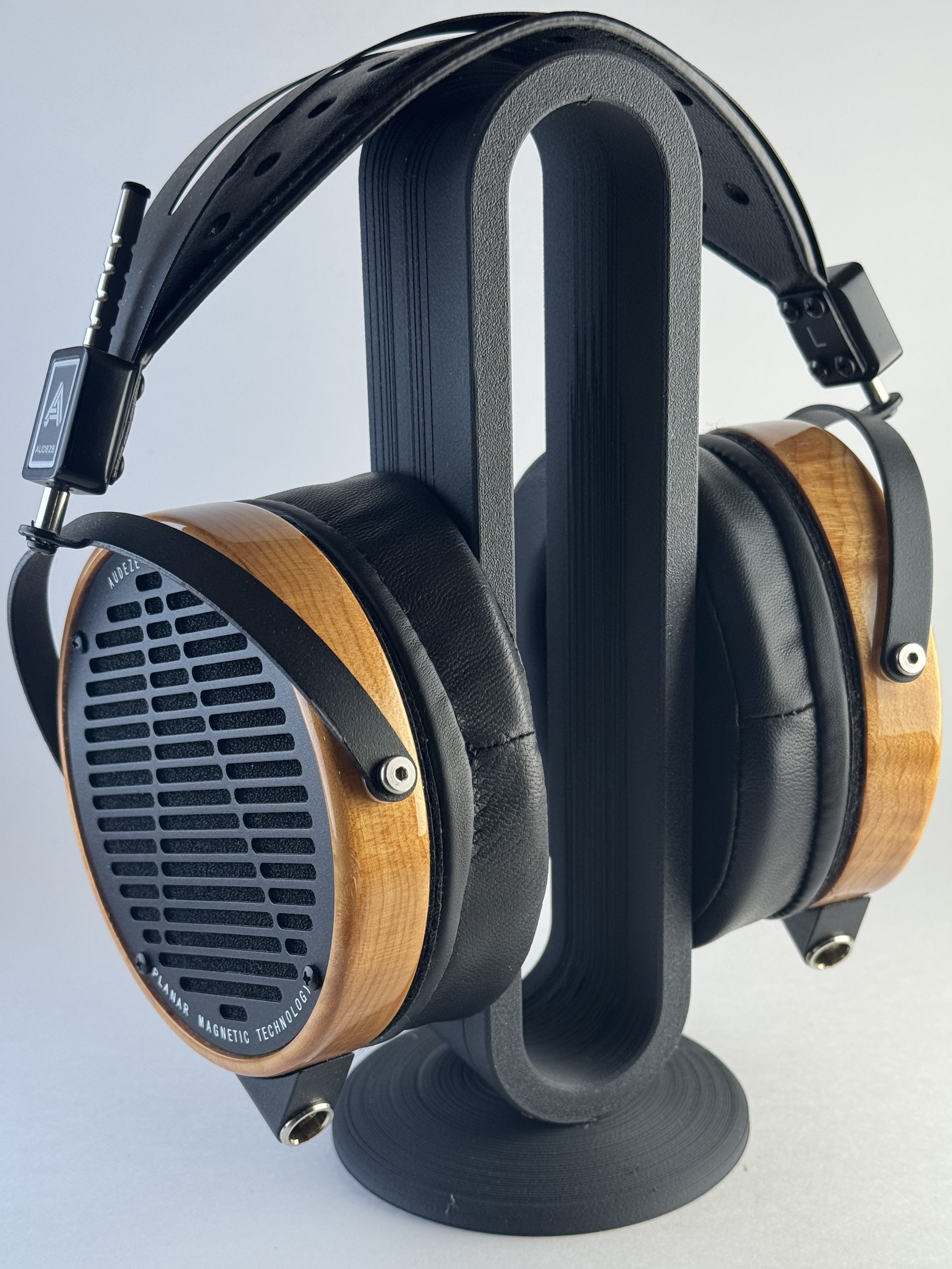
The Audeze LCD-2.2 pf is a 2011 or 2012 production planar magnetic headphone from Audeze, one of their earlier models.6 As far as I can tell, they ceased production on these models when they adopted Fazor technology in 2017 (and appear to have offered to upgrade any non-Fazored models to Fazors). They are a moderate impedance (110 Ohms), moderate sensitivity (101 dB/mW) headphone. Though general consensus seems to be that they benefit from an amp with quite a bit of power, I personally enjoyed them from an older MacBook Air as well as a variety of dongle DACs. The LCD-2.2pf uses a dual-entry, mini-XLR, detachable cable, and is balanced-capable if you have a cable terminating in a balanced connector (XLR, 4-pin mini-XLR, 4.4 mm, 2.5 mm, etc.). My particular version was upgraded by the prior owner with the Audeze Spring Steel Suspension Headband and Strap and Dekoni Elite Sheepskin pads.
What is a Fazor? Honestly, it’s complicated but the general idea is that they are “wave guides” for sound waves.7 Reviewers are mixed on whether they’re a good thing or a bad thing when it comes to Audeze headphones, with some camps passionately defending them and others arguing that they ruined Audezes. I’ve love to get my hands on a pair of Fazor-ed LCD-2s at some point to do a comparison for myself, but they’re $1,000.8
I don’t know for certain what originally came with the LCD-2.2pf, but at least what I got was a nice, hard-shell, Pelican-type case and what appears to be an OEM 3.5 mm cable, as well as an aftermarket 4.4 mm balanced cable. I didn’t get the measurement card with the serial number, unfortunately.
[Notes on identification: To be super clear, I don’t actually know for sure which generation of LCD-2 these are. The prior owner swapped out the headband, which means that the serial number it was assigned at production is gone, and while I believe there is another one on the drivers, the pads on this headphone are glued on and taking them off means replacing them (and they were relatively recently replaced already). Based on this handy-dandy chronology, I’m pretty sure they’re the 2012 LCD-2.2 revision 3 based on the angled mini-XLR ports in black plastic (borrowed from the LCD-3), the natural wood cups (instead of the black plastic cups of the 2013 LCD-X), and the lack of the triangular Fazors. Someday when I have to replace the pads I’m really curious to see if I can track down the serial number from the drivers.]
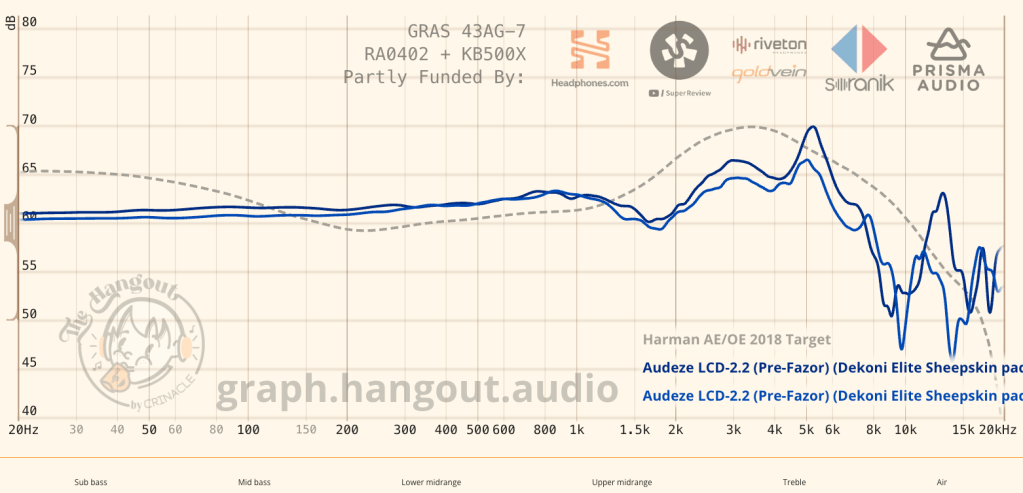
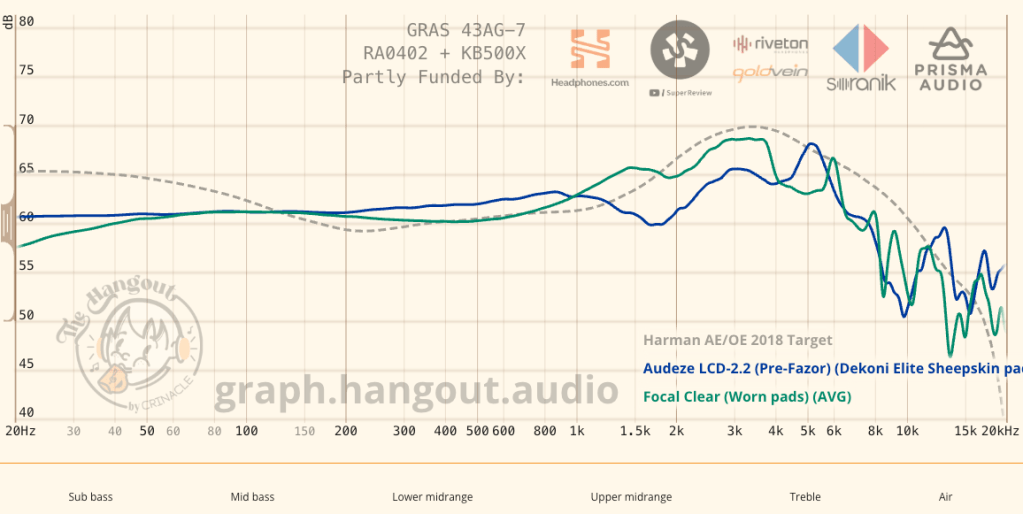
Remarkably, Crinacle measured the LCD-2.2pf with the same model of ear pads (maybe the prior owner was a fan!):
Sound
I really, really enjoy the Audeze LCD-2.2pf. I wasn’t sure what to expect, but for a planar they sound really great out of the box, and are by all reports a pretty blank slate when it comes to EQ. I just haven’t had any particular desire to EQ them! [Editor’s note: as discussed above, I gave EQ a shot after doing my listening and I’ve noted the changes where appropriate.]
Because this is a quick review, I’ll try to keep this short.9
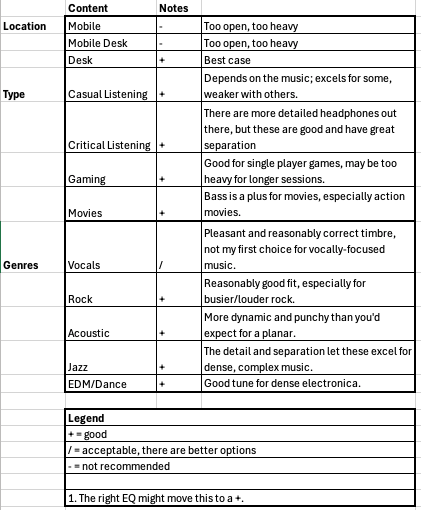
The soundstage on the LCD-2 is really, really good. On a track like “Chan Chan,” the soundstage is really nicely wide, very occasionally distractingly so. Instrument separation is also really good; it’s one of the few pairs of headphones where one of the toms on “Chan Chan” is just left of center instead of mixed in with the rest of the percussion. The soundstage is nicely rotational too; on “Love Can Damage Your Health (Laid Mix)” the guitar at the beginning is clearly walking in a circle around you instead of panning, and the tom pattern on “Thunder Lightning” tracks beautifully right to left after each chorus.
I also don’t think I’ve ever figured out before that the bass bell tones on “Angel (Blur Remix)” are moving around in space. On most systems they sound like they’re all off right of center, but on the LCD-2.2 they alternate close in and farther out. That’s wild. I also didn’t realize that the entire bass line is moving around in space too.10
The dynamic range is solid. Starting “It’s All So Incredibly Loud” at a comfortable volume, I reach for the volume knob at around 3:15. Microdynamics are good, particularly for a planar, with satisfying punch on both the bass and treble bell tones on “Angel (Blur Remix).” They’re not Focal levels of slam, but still damned impressive.
Detail retrieval is excellent. They don’t seem quite on par with the Arya Stealth or Focal Clear, but they’re not far off (and I haven’t spent much time playing with the EQ to really dial it in). Nothing jumps out as being missing during listening sessions, and I do find myself marveling at the resonance and richness of tone I’m getting out of a lot of guitars on tracks like “Garcia Counterpoint.” I also discovered that around :40 on Kurt Vile’s “Bassackwards”, there’s a pretty impressive, if brief, bass presence (maybe a plane landing?) that I’ve never heard before (but do hear on a few other pairs now that I know that it’s there).
Bass
The bass is almost exactly what I want out of a headphone: rich, resonant, full, and with just enough slam to be enjoyable but not distracting. The bass bell tones on “Angel (Blur Remix)” have weight and heft, but also balance. I don’t get as much warble on them after the initial hit as I do on some of the Focals, but overall this is a great bass presentation (with better slam than any of the other planars *I* have heard). The bass line on “I Against I” is always well-controlled and without splatter, and while the bass on “Limit to Your Love” doesn’t vibrate your brain quite as much as the Elex or Clear, oh man can the LCD-2.2 reach deep.
Midrange
The midrange on the LCD-2.2 is good but not great. It’s generally well-balanced, but the timbre is very occasionally just slightly off, especially with some kinds of stringed instruments. It’s most noticeable on things like the Dave Matthews Band’s “Crush”, where the violins are both slightly unbalanced (too far back in lower registers and too far forward in higher ones) in the mix and slightly … flat, maybe? Not flat as in slightly lower in pitch, but flat as in lifeless and synthetic sounding.11 It’s interesting, in part because the guitars in the same song are really excellently reproduced (particularly the guitar rattle starting around 4:04). I’d be very curious to get a frequency response on this unit in particular to see if there’s something funky going on.12
Vocals are generally really well reproduced in terms of timbre, but often feel at least a little recessed. On “What Do I Do?”, Justin Hicks is slightly recessed in the first minute, but not distractingly so. Jill Scott carries cleanly (and timbreally correctly) throughout “Calls”, even if some of her countermelodies end up recessed in the mix a little more than on other headphones (particularly around 3:00), and Christine Hoberg’s voice on “Clair De Lune” is inconsistent, with much of her vocals falling a little into the background, but with specific notes (particularly “go”, “feel”, “light” a little before 4:00) sounding almost a little sharp. [Interestingly, I also hear a whole vocal echo at 4:10 that I’ve never heard before, and I’ve listened to this song … a lot.13]
[Editor’s note: it’s worth mentioning that the LCD-2.2 are a blank slate when it comes to EQ and take to it beautifully, and with a little tweaking my complaints about the midrange mostly disappear, though some female vocals still feel a hair compressed.]
Treble
The treble has a few oddities but is overall nice and balanced. On a sweep, I get a pretty substantial spike from 6 – 7 kHz, a pretty substantial dip from 9 – 10 kHz, and then a little bump at 11 kHz. None of them are so large as to cause me any particular problems, but might explain why some things are farther out front of the mix than others.
Nothing on “2021” crosses the line into sharpness or harshness, and the same is true with “Will O’ the Wisp”, my test tracks for treble. If anything, bits of the trumpets on “Will O’ the Wisp” feel recessed, though I’m doing this listening having done the sweep and knowing that there are some interesting holes in the upper section that I may or may not have noticed without that expectation.14
For most of the listening I do, this treble presentation will be pretty great.
[Editor’s note: like the midrange, it’s worth mentioning that the shortcomings in the LCD-2.2’s treble response can also pretty easily be addressed via EQ. Once I apply the EQ discussed above (Oratory’s EQ + a few slight tweaks for me), the treble reproduction is pretty damned great.]
Gaming
I don’t know that I would use these for gaming, mostly based on their weight? They’re large, heavy headphones, and while they’re pretty comfortable on my head (see below!), I don’t think they’re headphones that I’d want to wear for really long sessions. That said, their soundstage and separation/imaging are really excellent, and the overall frequency response lends itself to a full single-player game experience.
Build
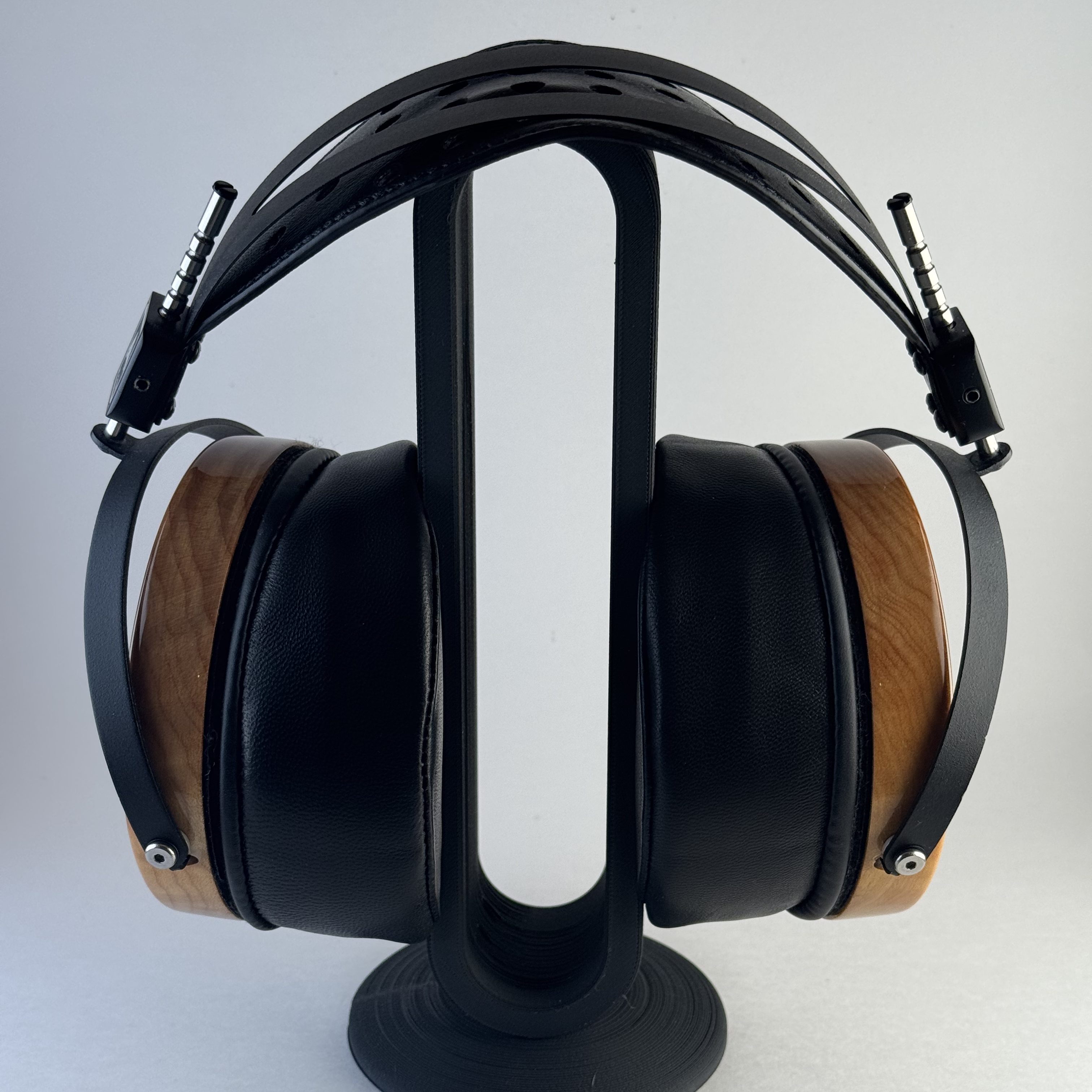
The LCD-2.2 are a pretty well-built pair of headphones, albeit ones with some quirks. This pair has had the headband replaced from the original single, padded band to the more modern Audeze band + suspension strap system, and are using nice (and expensive!) aftermarket Dekoni sheepskin pads.
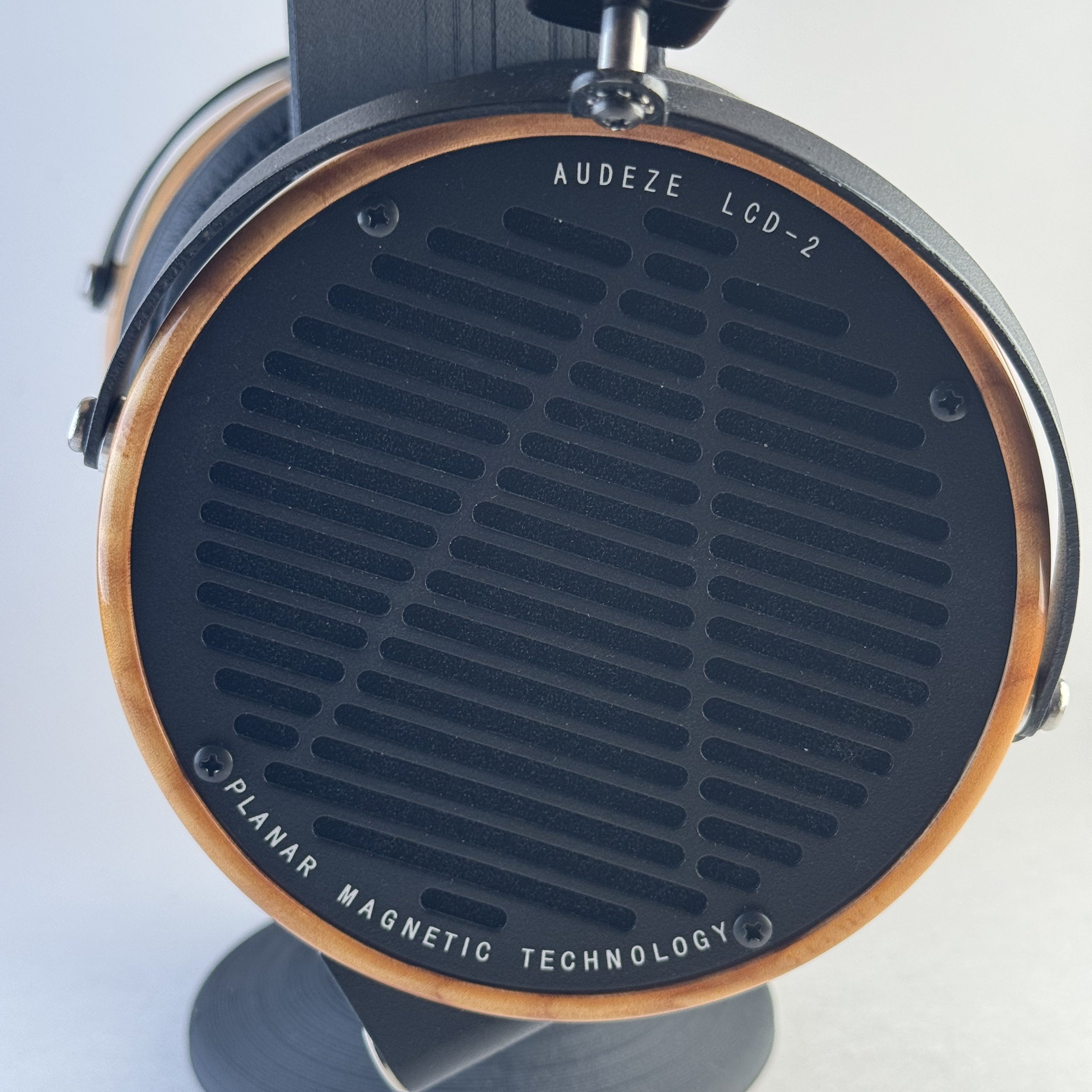
The headphone cups are made of a nice wooden rim with dark metal cups. They feel solid, and weigh in at a whopping 540 grams without a cable, making them the heaviest headphone in my collection other than the Dyson Zone with its air purifier mask attached.
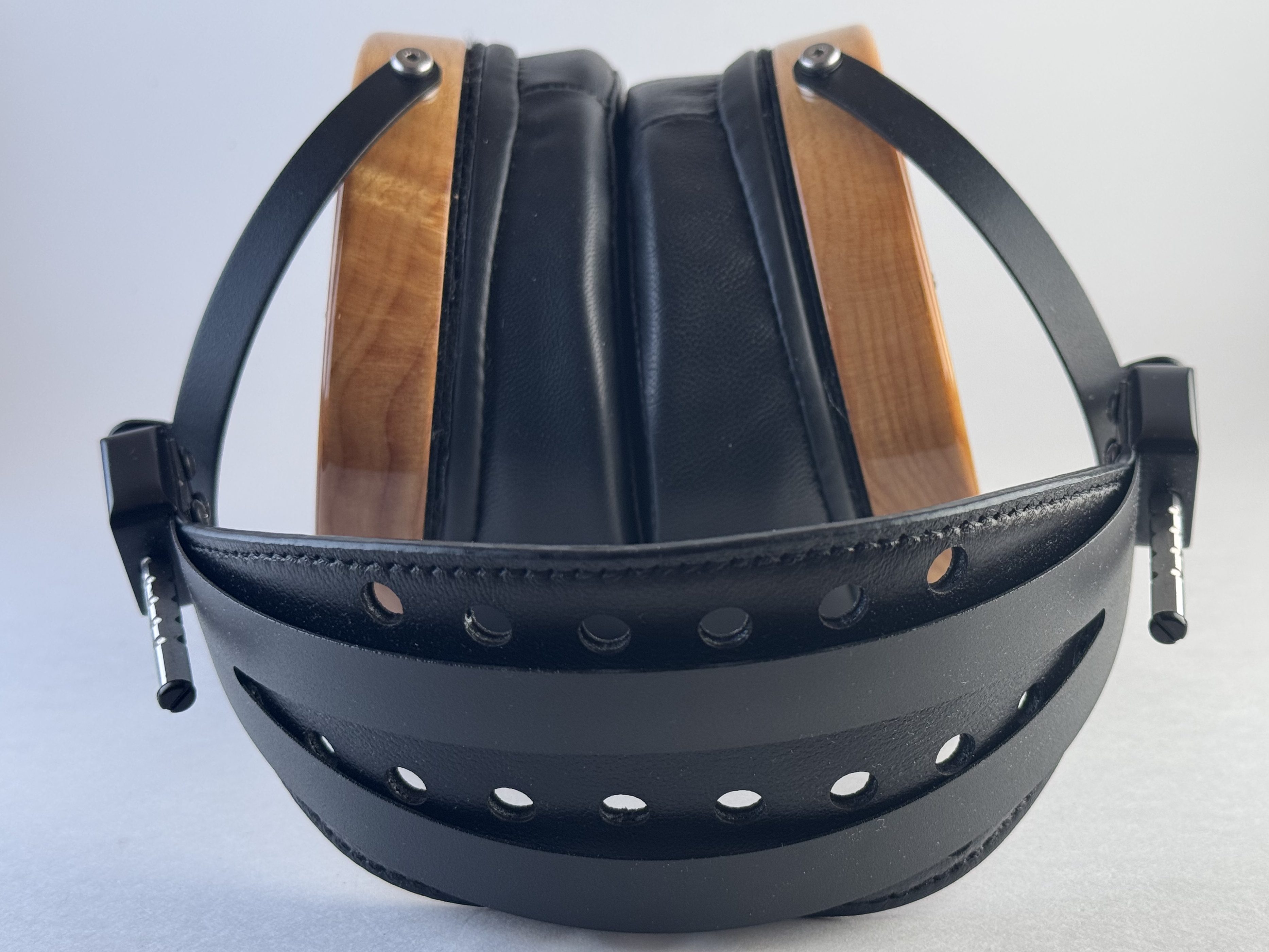
I can’t comment on the original headband, but I will say that this band and strap is pretty comfortable on my head. The way that the suspension strap is installed means that the metal band ends up basically resting on the top of my head, but at least for a three or four hour session without a hat (and with … “thinning” hair) they’re very comfortable. They’re reasonably clampy, meaning that the weight is nicely distributed across the top of my head and on my ears, and these aftermarket pads are reasonably compliant, making the clamp not too much for comfort.
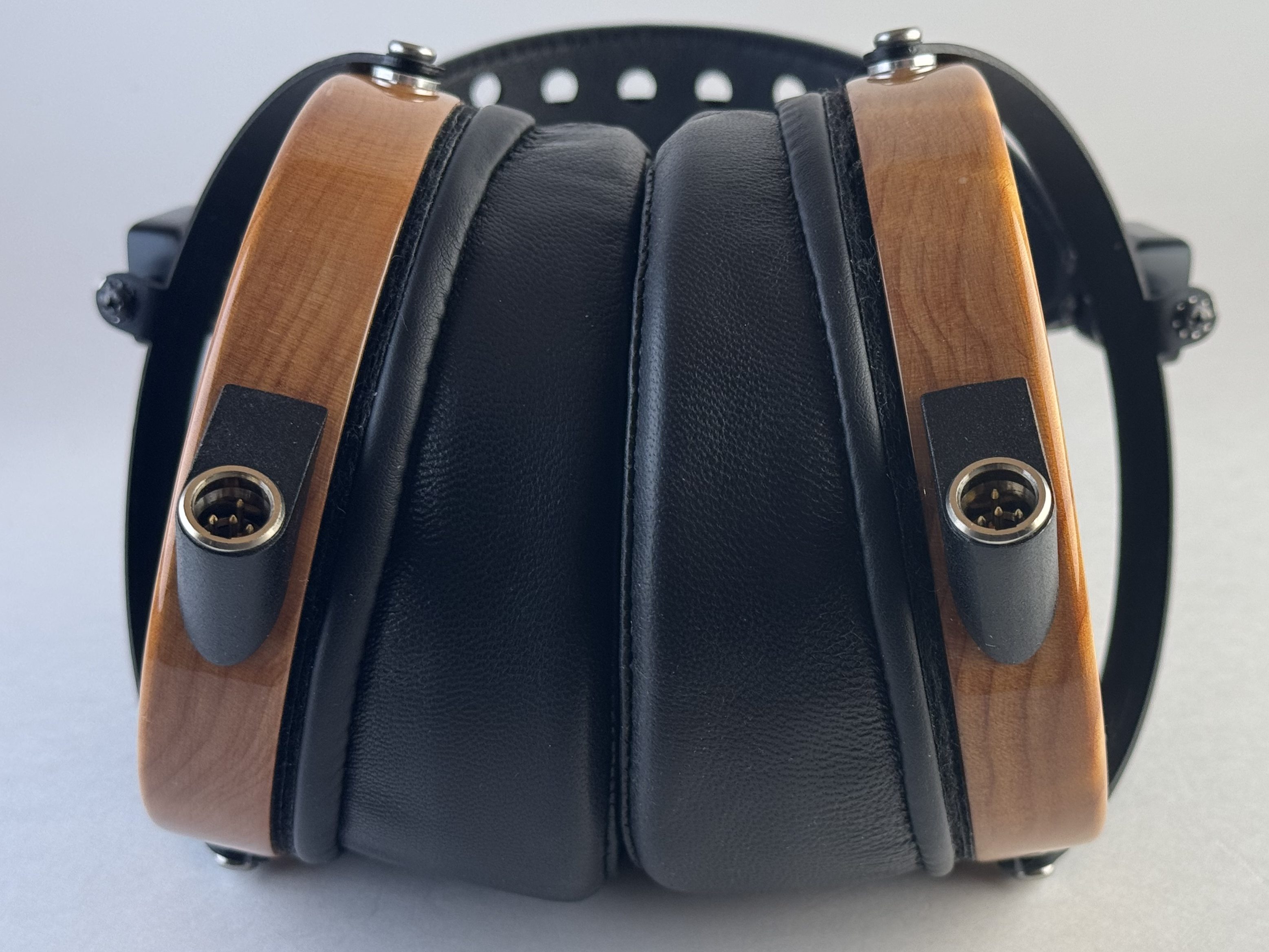
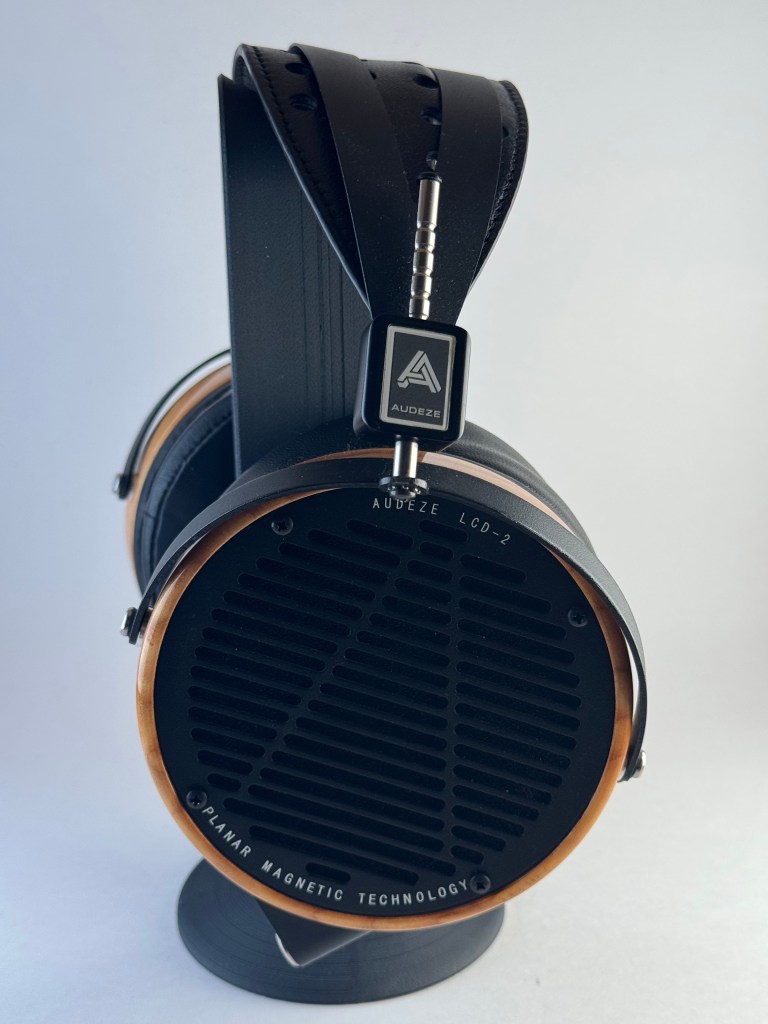
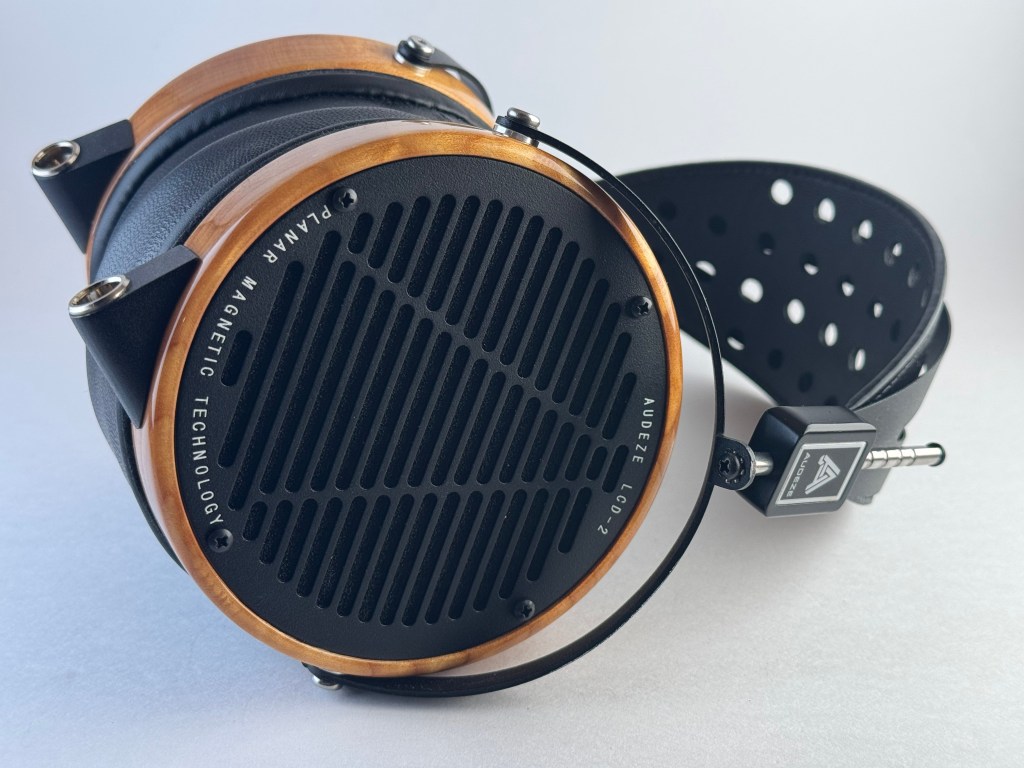
If you’re concerned about the Cyberman problem, these are not the headphones for you. They are big, and heavy, and not subtle. The steep angle on the Dekoni pads installed on these also mean that the grills face oddly forward. That said, I think they look really cool. The wooden cups are almost ZMF-y in appearance, and the metal grills (with the embossed A) are striking. Your mileage may vary, but I think they’re awesome. I probably wouldn’t wear them walking around, though.
Value & Comparisons
I don’t know how to assess the value of a headphone that’s been out of production for more than a decade. The modern version of the LCD-2 (with Fazors!) retails at $995, and that seems to be about what Audeze charged for these back in 2012.
I’ll say this: if you can get a pair for less than $500 in decent shape, they’re pretty damned great and I’d do that again in a heartbeat. Used headphones (especially old ones!) are always a gamble though, and anyone selling them cheap is probably doing so for a reason. I seem to have gotten pretty lucky (the seller had posted them three or four times and hadn’t gotten a bite) and they appear to be in good shape, but I definitely wouldn’t take the chance sight-unseen unless you’re doing it on a lark.
Arya Stealth
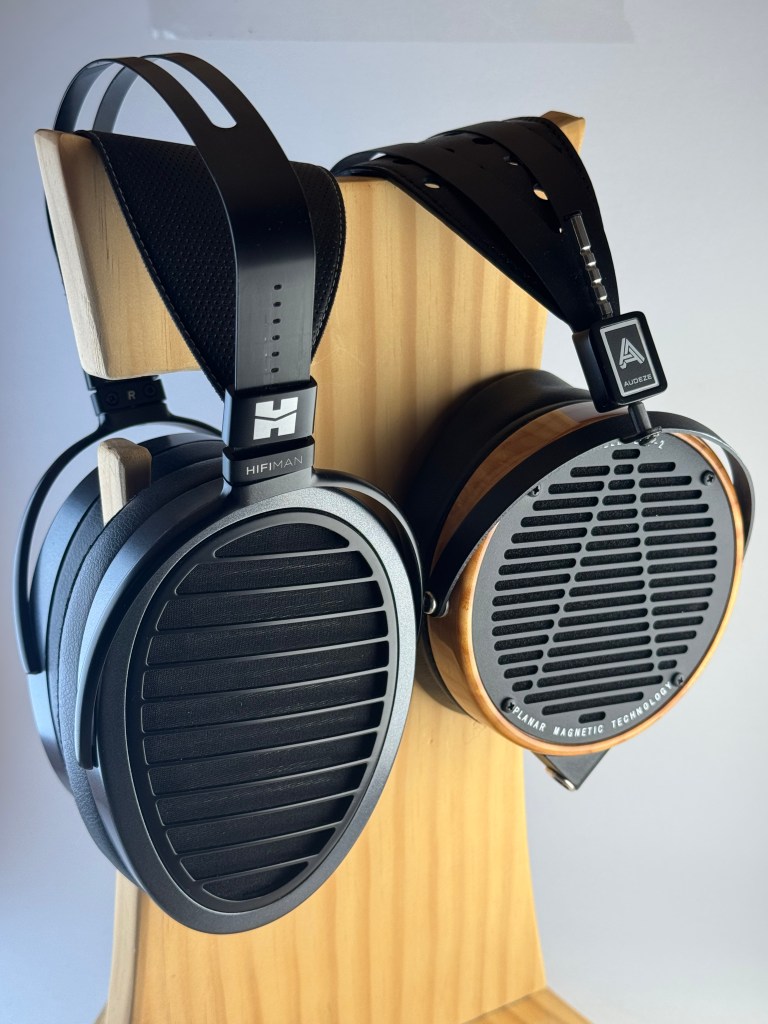
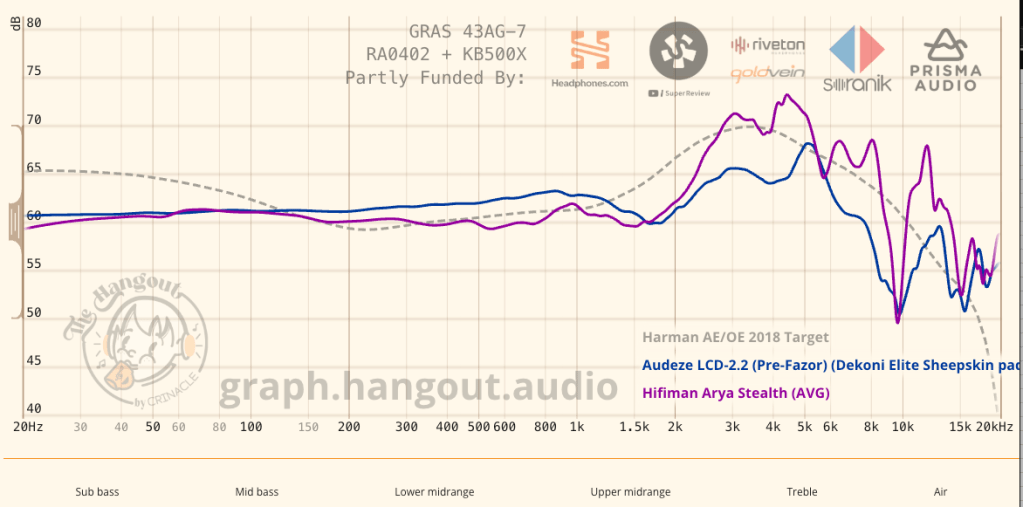
It’s interesting; I wrote above that I don’t think that the LCD-2.2 are as detailed as something like the Arya Stealth or Focal Clear, and while I stand by that when we’re talking about the out of the box sound, with EQ applied … I’m not so sure that’s true. I think part of the problem with the detail retrieval on the LCD-2.2 is that they’ve got a pretty big scoop in the treble region and that may affect at least the perception of detail; there are tracks where I can hear an instrument dip in and out of that region and it’s an odd experience.
I definitely prefer listening to the LCD-2.2 over the Arya Stealth. The bass is similar in quantity and quality but has that extra punch that planars so rarely have. The mids on the Arya are definitely better out of the box, but once you add some judicious EQ … they’re pretty close. And I’ll take the LCD-2.2’s relaxed treble response over the Arya for most of my listening.
If you’re not going to EQ, the Arya Stealth is a better headphone. If you’re willing to use EQ, I’d take the LCD-2.2. If you EQ both, you can get a pretty similar frequency response (Oratory’s base EQ profile for the LCD-2.2 pf gets to 98/100 on his target adherence and 89/100 for the Arya Stealth), but I’ll take the extra punch and slam from the LCD-2.2 pretty much every time. If you’re just doing critical listening, the Arya is for you. For basically everything else, I’m going Audeze.
ZMF Aeolus15
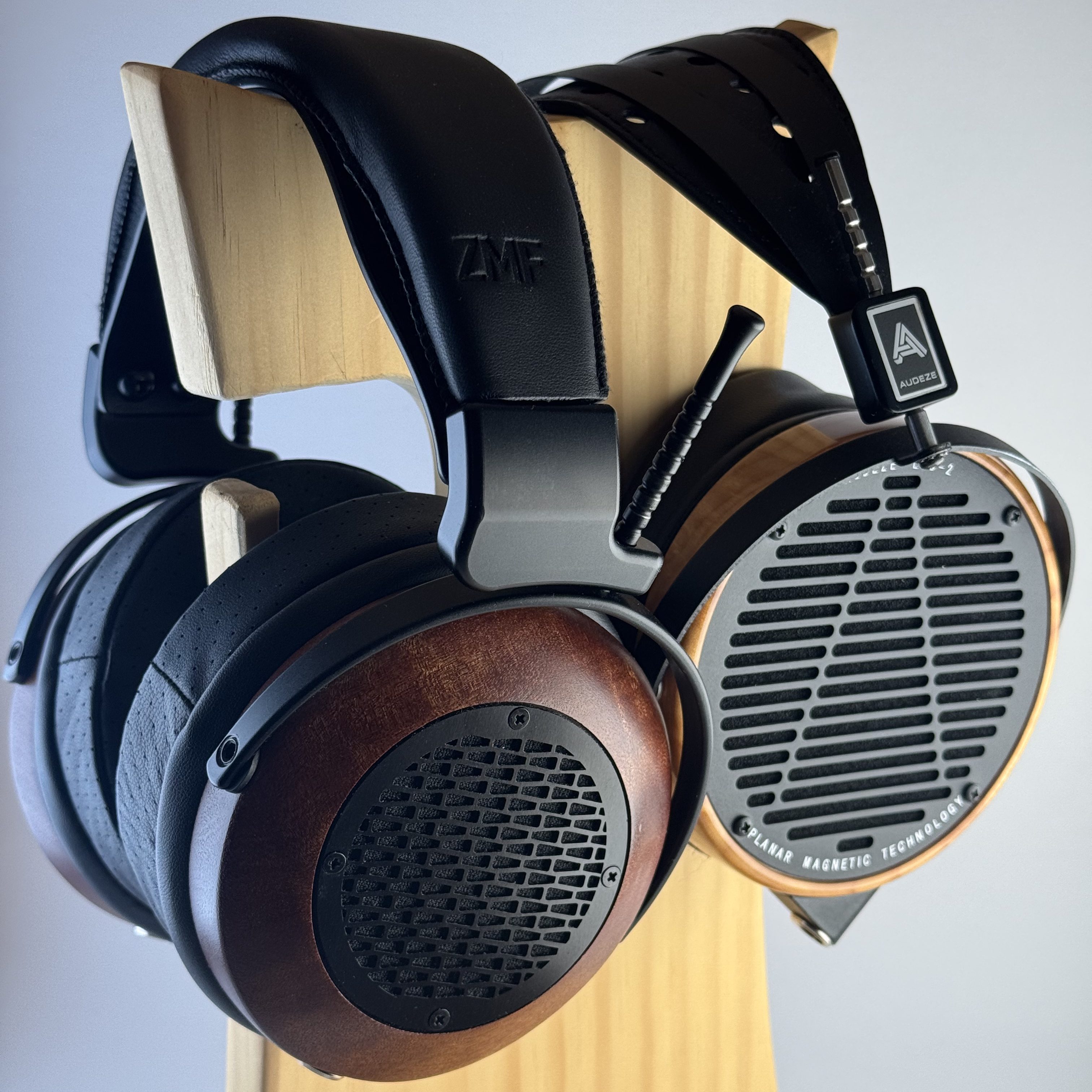
I snagged a pair of new ZMF Aeolus from their b-stock sale last fall (pretty sure they’re out of production these days, so must have been new old stock? Or maybe they just did a small production run?). They’re interesting products to compare: both relatively boutique products, both physically beautiful, large, and heavy, though the LCD-2.2 is a planar magnetic and the Aeolus a dynamic driver headphone.
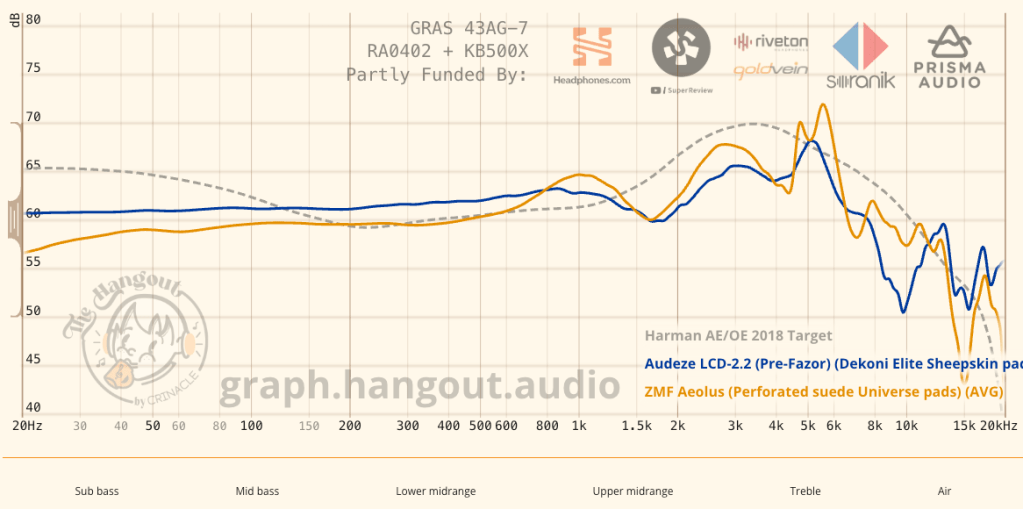
[The Aeolus are an interesting pair of headphones. I really like their out of the box tuning, but coincidence or not, every time I wear them I develop a headache. I don’t hear any particular huge spikes on them, so I’m guessing it’s more coincidence than anything else. For purposes of this comparison, I’m going to ignore the possibility that the Aeolus is inducing a headache every time I put them on and attribute it to the time period I’ve owned them.16]
Absent EQ, I prefer the bass balance and treble performance of the LCD-2.2, but the midrange performance, comfort, and the slightly better bass punch (aka microdynamics) of the Aeolus. The LCD-2.2 is definitely a wider soundstage and better separation within it, with the Aeolus giving a more intense, intimate experience. With EQ, it’s hard to imagine that the Aeolus would beat out the LCD-2.2 but I haven’t had the time with the Aeolus to really dial in the EQ.
At the end of the day, I think I enjoy the LCD-2.2 better, though I’m curious to come back and do this comparison again in the future after I’ve spent more time with the Aeolus and really figured out where I’m hearing oddities in its frequency response.
Focal Clear
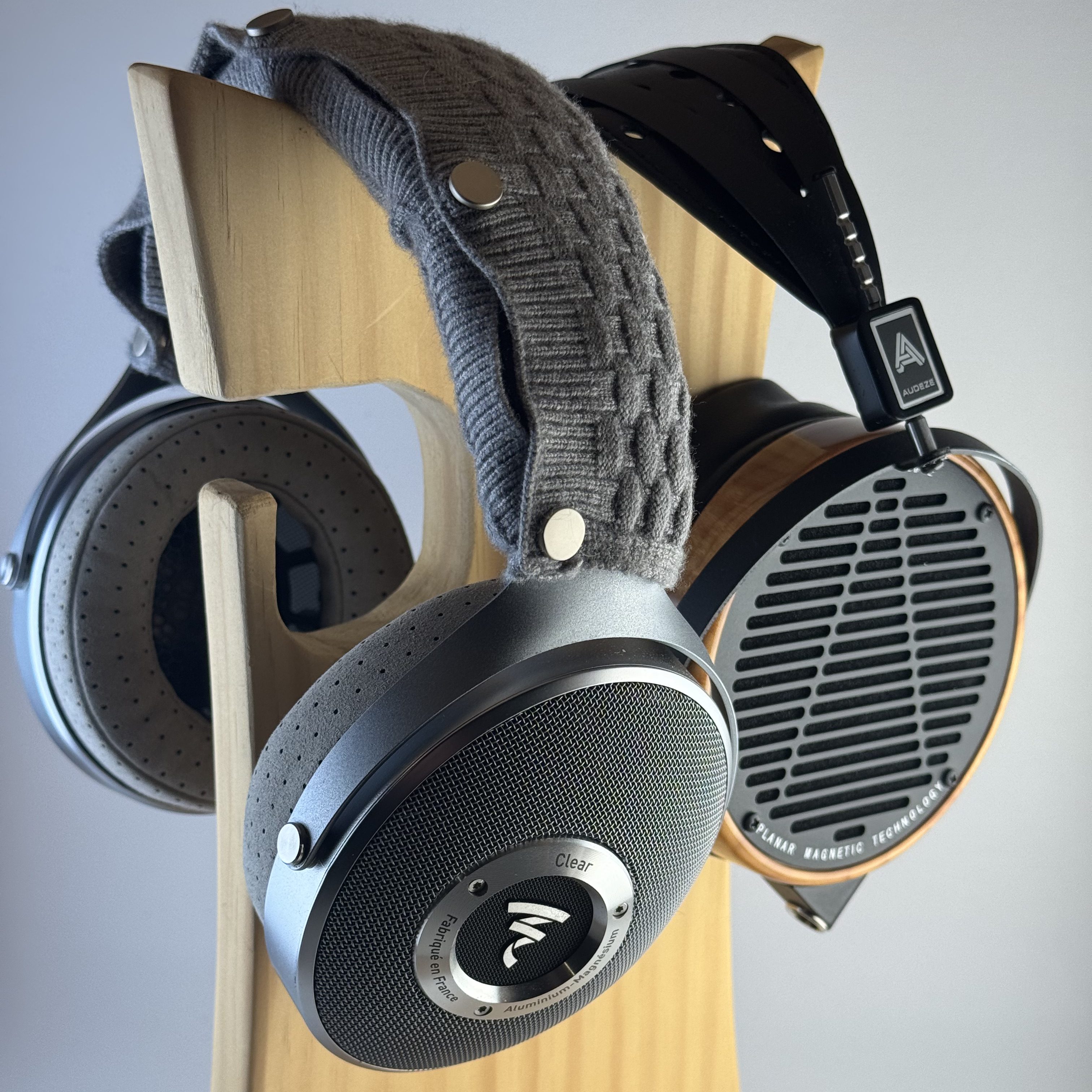
I definitely like the Clear better out of the box. It’s a better headphone in a lot of ways: detail retrieval, comfort, layer and instrument separation, and overall tune (to my preferences at least), as well as that Focal magic aka slam/punch. With EQ … I think I still prefer the Clear, ever-so-slightly? It’s genuinely one of my favorite headphones, and it’s a modern classic for a reason. I’d also definitely prefer it over the LCD-2.2 for longer sessions; the weight of the LCD-2.2 eventually gets to even my beefy neck, and I’ve written quite a bit about how comfortable I find the older–style Focals. That said, the LCD-2.2 have a certain … je ne said quoi about them, and I really enjoy them for some listening.
Maybe Clears for regular listening, and the LCD-2.2 for that extra little something special from time to time?
Meze 109 Pro
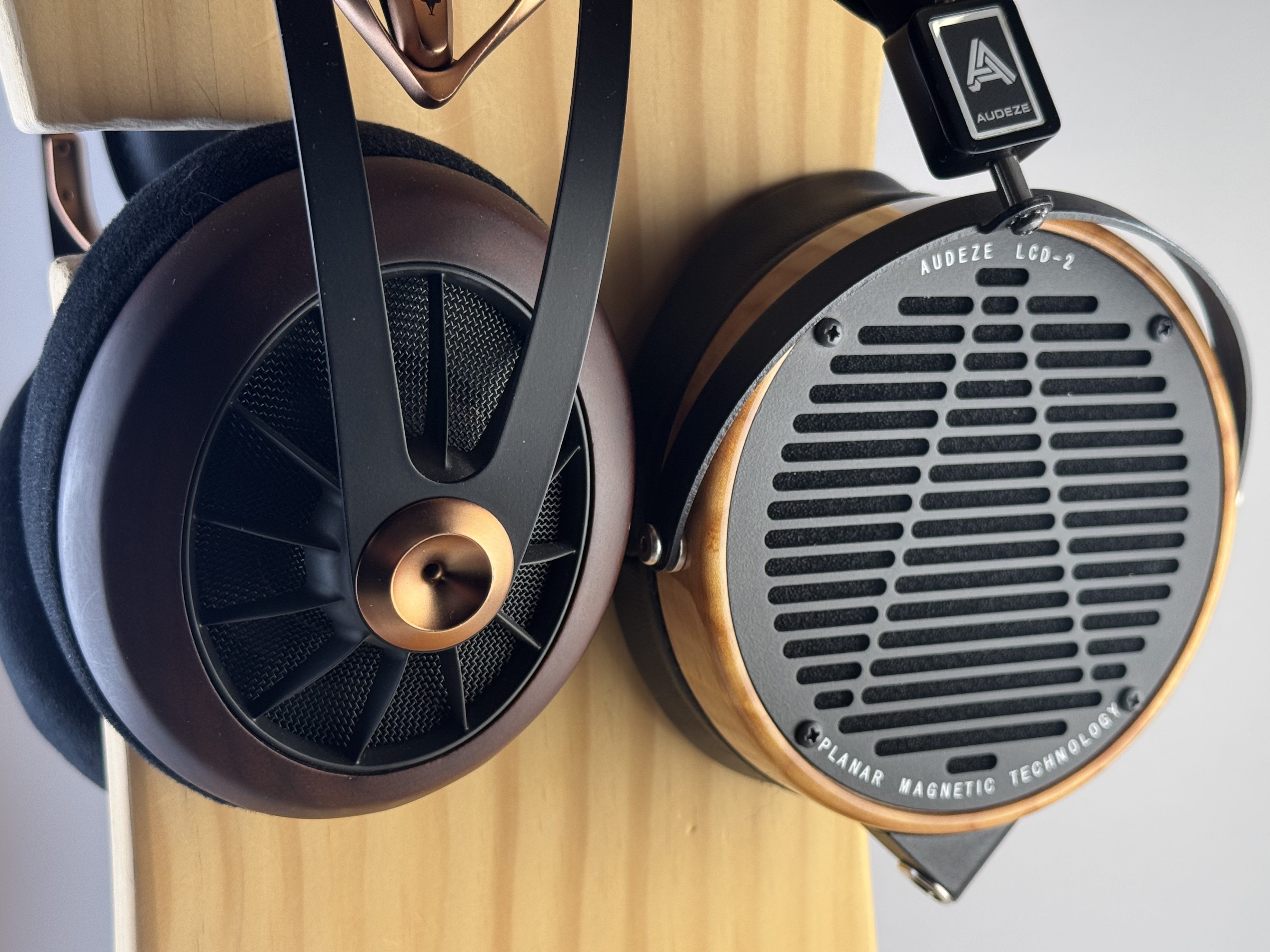
At the risk of sounding like a broken record, the Meze 109 Pro are my favorite headphone under $1,000. As much as I enjoy the LCD-2.2 (particularly after EQ!), they don’t change that assessment.
I look forward to the day that something challenges that assessment, but today is not that day.
Overall
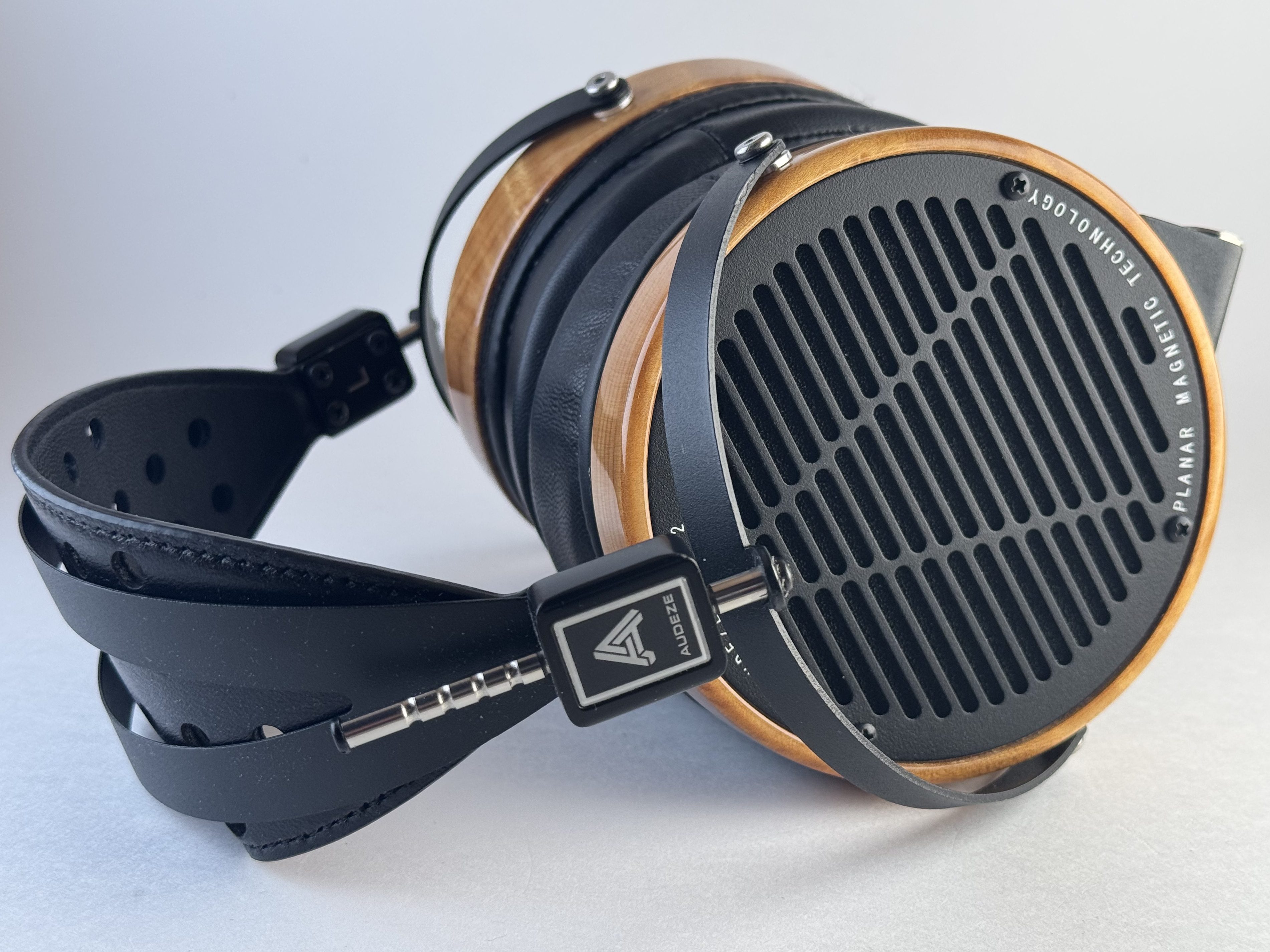
The LCD-2.2 pf was a great pair of headphones, and a super fun pair to listen to. I’m really curious to compare them to the modern production, Fazor-ed run at some point. I’m delighted to discover that as I age, I’m enjoying planar magnetics a lot more.
While I think that judicious use of EQ can benefit most headphones, this is one of the most stark examples to me of a headphone that can be truly excellent with some adjustments. I like them out of the box (Pelican case?), but more detailed listening definitely exposes some issues. Interestingly, unlike most headphones and particularly most planars on my head, the issue is holes rather than spikes, but starting with Oratory’s adjustments and then customizing them for my own head yields pretty remarkable results.
These are a piece of audio history, and if you get a chance to give them a listen, I highly recommend doing so. I think these are going to be a permanent part of my collection.
Phil’s Matrix of Use
#reviews #headphones #sennheiser #6XX #anc #spatialaudio #meh #2025 #99noir #meze #sunglasses #overear #cans #hifiman #arya #stealth
- I don’t even know how to measure the cost of these. For what I paid? 10 out of 10. At MSRP … 8 out of 10? 7? 9? ↩︎
- I score bass, mids, and treble on a two part scale: 1-5 for quantity (5 being the highest), and A-E for quality (A being best in class, E being laughably bad). For soundstage it’s also a two part scale, with the number representing the width and the letter the separation within it. ↩︎
- For comfort/fit, my scale is A-E with A being disappear entirely into the background and E being I want to tear my ears off to stop feeling these headphones on my head. I’ve had one E: the Koss PortaPro. ↩︎
- While I am mostly a balanced vs single-ended skeptic, I tend to do most of my listening balanced just because XLR is cool. I’ve got the cables and the amp. ↩︎
- I’m definitely a cable skeptic; I’m pretty solidly convinced that a competently manufactured cable does shit-all to the sound of a system. This is just a really nice quality of life cable that more or less lives attached to my Bliss for convenience. ↩︎
- Audeze opened its doors in 2008, so this was VERY early in their operation. ↩︎
- To be fair, a lot of that sounds like gobbledegook to me. ↩︎
- Maybe I’ll keep an eye out next year for their Black Friday B-stock sale! ↩︎
- Pretty sure I’ll fail, but eh. It’s good to want things. ↩︎
- To the point where I did a couple of channel imbalance tests to make sure that it wasn’t an issue with the headphones! On an imbalance test the sound wobbled only very slightly, less than most headphones I’ve tried it with and certainly well within the bounds of normal driver matching. ↩︎
- I mean, it’s possible they’re synth violins, but I’d be surprised if it’s not Boyd Tinsley. ↩︎
- See the discussion both before and after this; I’m pretty convinced that I’m hearing the dip in the mids/treble that Crinacle measured. Cleaning that up helped a lot with this timbre issue. ↩︎
- At least 72 times from Roon since January. It’s one of my favorite test tracks. ↩︎
- Placebo is a hell of a drug, which is why I try to do my listening before looking at the graphs. ↩︎
- Yes, this is a particularly unhelpful comparison, pitting one out-of-production product against another out-of-production product. Have an issue with that? Hush. Get your own blog if you want more timely and relevant content. ↩︎
- I’m going to spend some more time with them, but a cursory sweep with them shows that I do get a pretty harsh spike around 13 kHz that may be contributing to it. ↩︎
 Phil's Superpower of Enthusiasm
Leave a comment