
[ORIGINAL MSRP $1,199 for stock models when available. Purchased B-Stock/Demo from ZMF for $899.99 in ZMFtober 2025.]
[Tl;dr: The Sapele wood ZMF Aeolus is both a beautiful piece of art and a very interesting headphone to listen to. The warm tuning isn’t for everyone, and will be polarizing to purists chasing a neutral tune (which this so is not). I didn’t like this headphone very much at first, but after a couple of hours my brain adjusted and it’s a really, really fun listen. There’s a little residual funkiness even after brain burn-in but it’s addressable via EQ, and the placement of instruments in space and the size of the soundstage is really exceptional. They’re … a very expensive pair of headphones at MSRP (and I shudder to think what they’ll run you in the upcoming ZMF custom shop), but if you can get a pair used or on b-stock like I did they’re a fun addition.]
Scores:
Cost-agnostic: 7 out of 10 Denalis
Cost-sensitive: 5 out of 10 Denalis
TABLE OF CONTENTS:
Intro to the Intro
This is a “quick” review. There are a number of things that I’d love to get quick notes down on for my own edification/memory, but that I don’t want to spend the substantial time I devote to most of my (overly?) in-depth reviews on. Some of these will be things that aren’t in production anymore (so it’s less likely anyone will read a review), or are extra niche, or are things that I didn’t particularly like but want to be able to point people to my reasoning, or that are in a category I don’t spend a lot of time with (like IEMs). Today, the ZMF Aeolus: a worthy headphone, but one that ZMF appears to not be actively selling at this point (it’s a 2016 design, after all, and ZMF has done some pretty cool stuff in the years since).3
Introduction
A couple of Christmases ago, I decided to splurge on my first truly high-end headphone. For … reasons? That I can’t particularly explain? I went with the ZMF Bokeh Closed. It was an odd choice, both because of it’s tuning (ZMF’s aren’t a particularly normal tune in the modern market), the focus on handcrafted wood cups (and the resulting price differential), and the fact that it was a closed back headphone: to that point, I’d never heard a closed back headphone that I particularly liked outside of maybe the Meze 99 Noir. But to my surprise … I loved it.4 It’s still one of my favorite things that I own, even if I’ve definitely heard closed backs whose sound I might like more overall.
Since then, I’ve been tempted on a couple of occasions by ZMF headphones that came up for sale on r/AVexchange, but I have continually struggled with the idea of buying a headphone in that general price category used and without knowing anything about their provenance/condition. And then I got a fateful e-mail from ZMF in late November announcing that ZMFtober and b-stock sales were going live … and I found this pair. I think they’re the cheapest pair ZMF has sold in the time I’ve been paying attention, and it’s a b-stock model of a headphone they don’t appear to make anymore. Not sure if it was new old stock, or they did a limited run of Aeolus in 2025 that I just didn’t hear about,5 but I decided to take a shot on them. Six weeks later, they showed up on my doorstep!
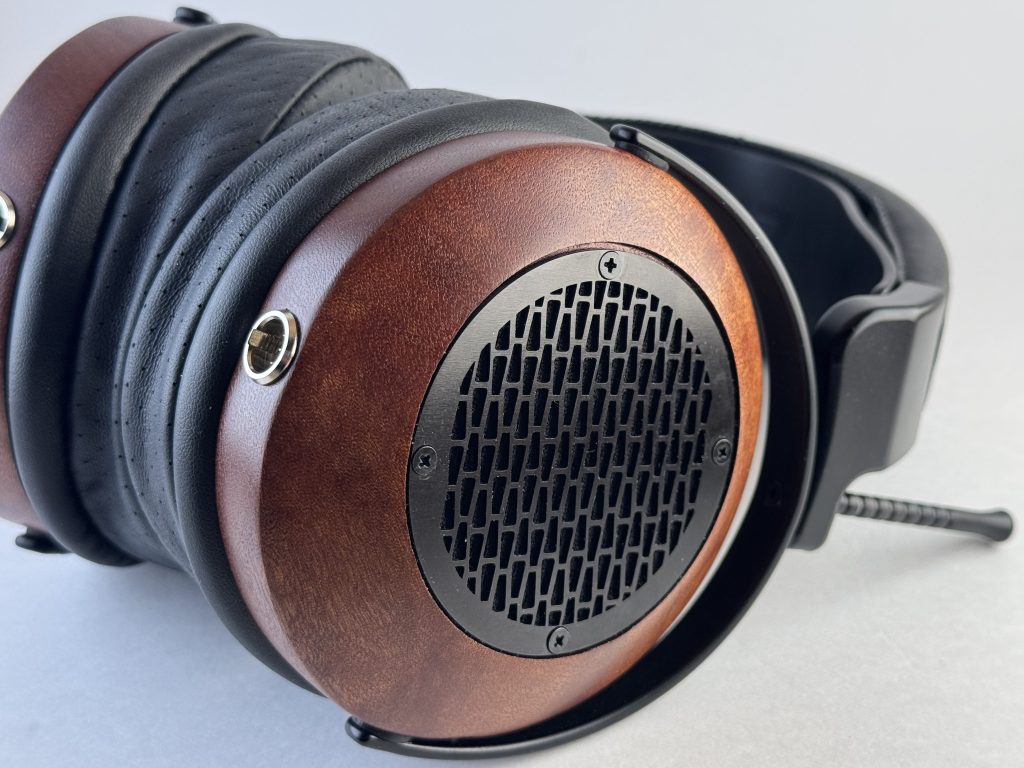
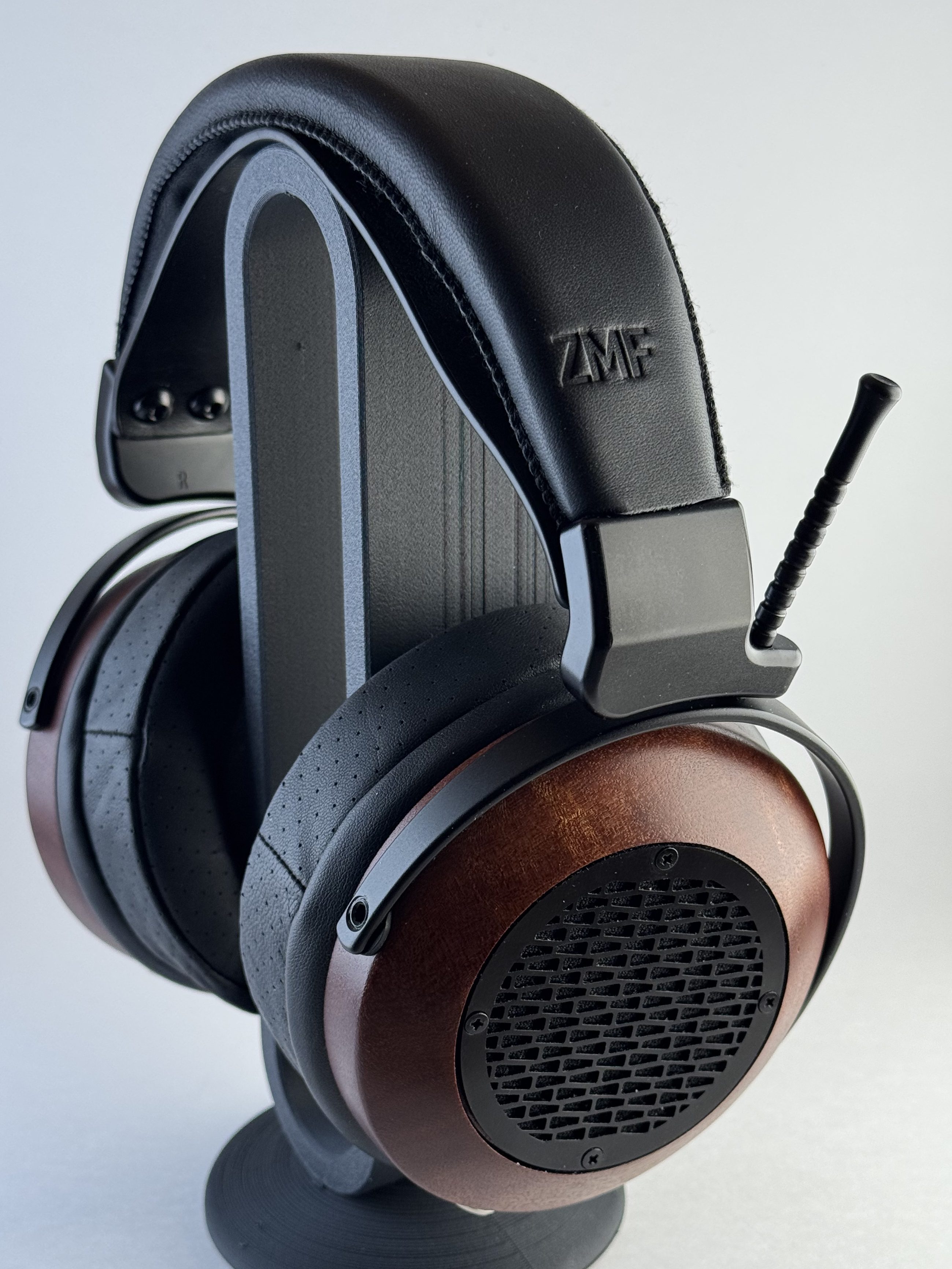
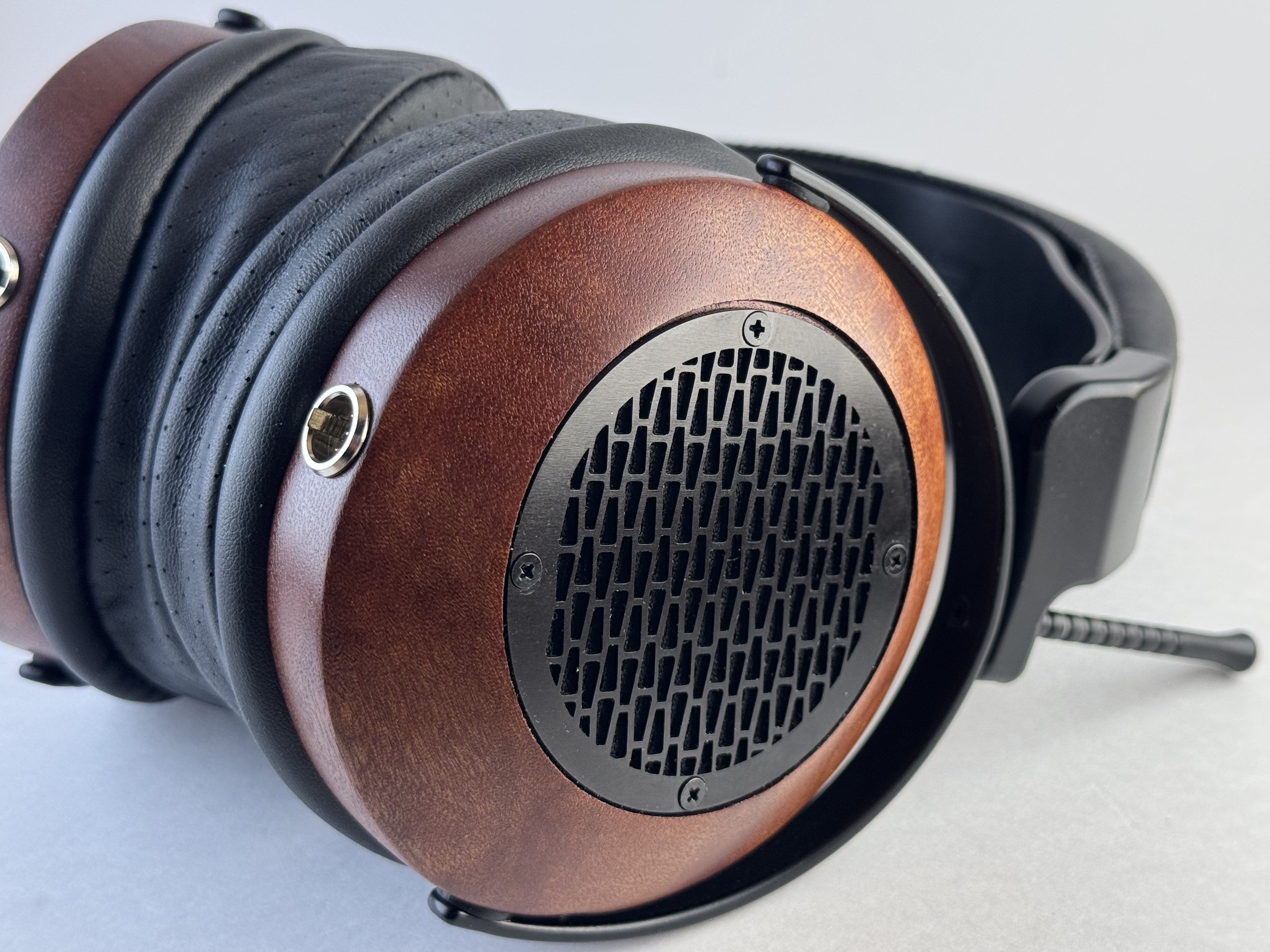
This particular pair has cups carved from Sapele, an African hardwood with some similar properties to mahogany (but without being an endangered species!) with black aluminum fixtures and at least one ding in the left ear cup. Looking at my e-mail, it also seems like these might have been a pair used for demos in their space.

Testing rig
Here’s my basic testing protocol.
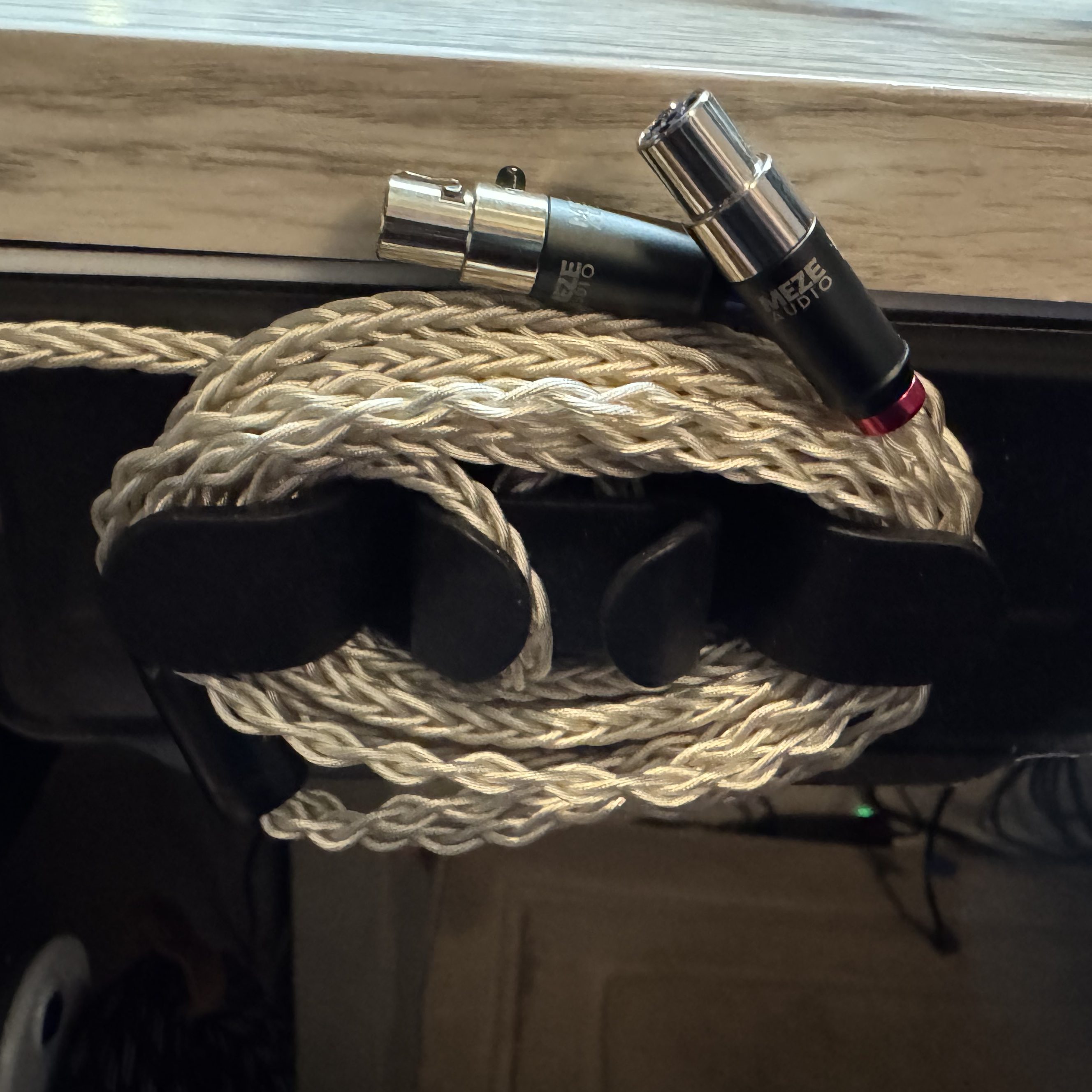
Based on my philosophy on the allocation of resources in headfi, I should probably test these with my Jotunheim 2/Mimir stack or my Mytek Brooklyn Bridge, but I’m choosing to review them with the Holoaudio Cyan 2/Bliss (KTE) stack because I can. I’m mostly using the very nice dual mini-XLR to XLR cable that came with my Meze Empyrean II, just because they’re what I leave connected to the Bliss and wrapped neatly for use at my main computer desk where I write most of these reviews:
The Cyan 2 is connected via coaxial S/PDIF to a Raspberry Pi 4 with an Allo Digital+ HAT and running Ropieee, connected wirelessly to my Roon ROCK. I also did a fair amount of listening with other amps, as discussed below.
Volume
Here are the volume settings I use with the ZMF Aeolus (unless otherwise noted, running via Roon with no headroom management, playing Daft Punk’s “Face to Face” from Tidal):
- Apos: Druid/Gremlin: 11:30
- Chord Mojo: white, dark red, bright red, red
- Dongles (iPhone 15, Apple Music, single-ended)
- Apple: 60%
- Crinear Protocol Max: 75%
- Fosi DS2: 55%
- JCALLY JM12: 65%
- Moondrop Dawn Pro: 75%
- Holoaudio Cyan 2/Bliss (Kitsune Tuned Edition): -38 dB (XLR, Hi-Z)
- Mytek Brooklyn Bridge6: 60%
- North American Apple dongle:
- Via iPhone 15 (Apple Music): 66%
- Via Mac Studio: 90%
- Schiit:
- Mimir/Jotunheim 2 (Mimir has a -15 dB pregain applied via Forkbeard): low gain, 11:00 (balanced); low gain, 12:00 (single-ended)
- Modi/Magni: low gain, 9:00
- Modius/Magnius: low gain, 8:30 (balanced); low gain, 9:15 (single-ended)
- Topping:
- DX5 II: -19 dB (balanced); -12 dB (single-ended)
My torture testing list
My torture testing list: Apple, Tidal, Spotify.]
The Basics
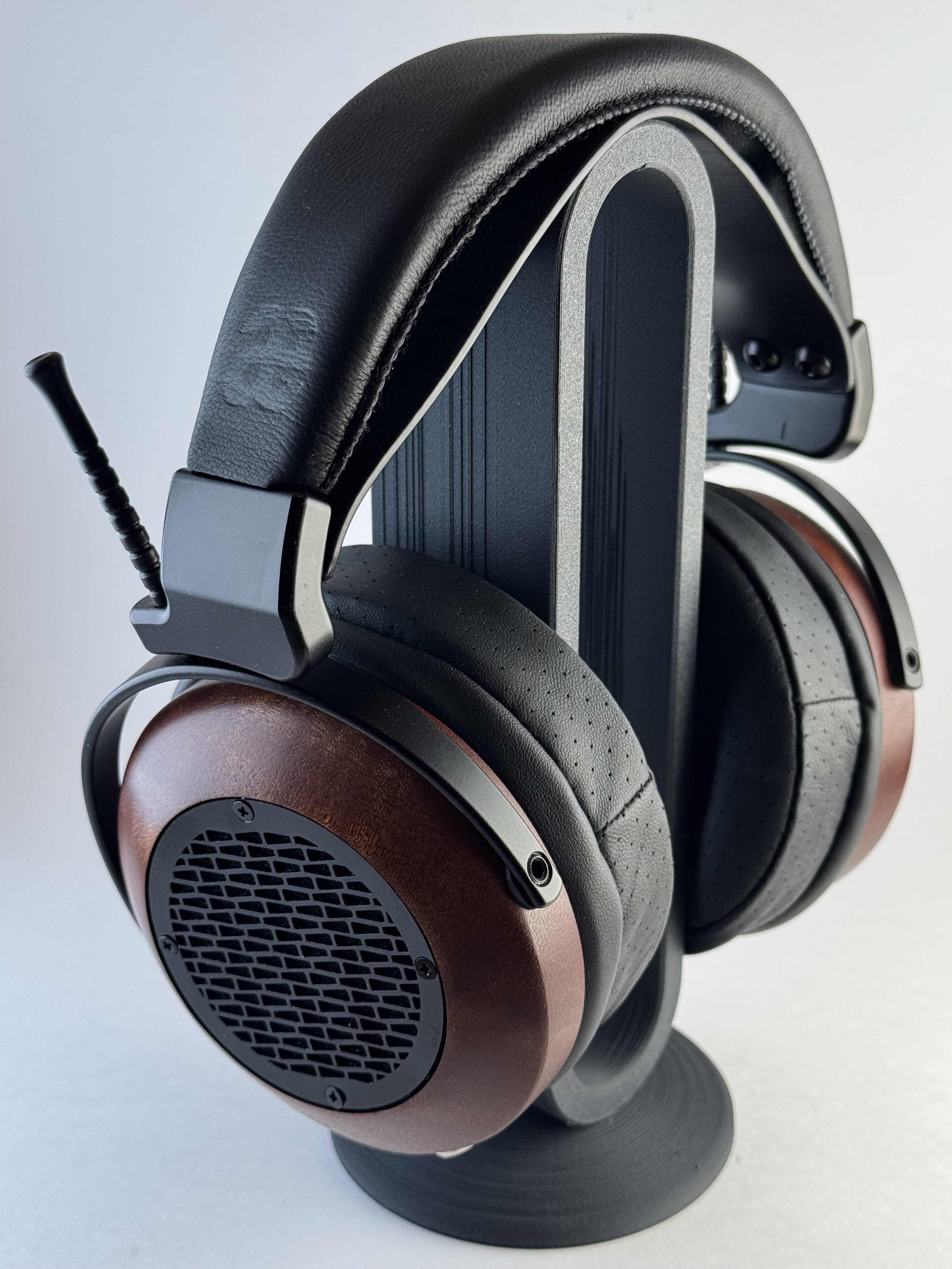
The ZMF Aeolus is an open-backed, dynamic-driver headphone from Chicago-based boutique manufacturer Zach Mehrbach Films aka ZMF. They were one of ZMF’s earlier headphone designs, offering an open-back version of the Atticus with a slightly wider soundstage and less bass while maintaining a warm tuning tilt. They’re not the easiest headphones to drive, at a relatively high 300 Ohm impedance and an only moderately high sensitivity of 99 dB/mW. This means that while they can be driven by a device like a DAP or a phone, they really do appreciate a little more power. They are beefy bois, weighing in around 450 g without a cable, and have been made from a variety of woods throughout their production lifetime. This particular pair is made from sapele, a darker-hued African hardwood. ZMF also specializes in pad rolling, offering a wide variety of swappable pads with varying compositions and materials that can impact the frequency response of their headphones in interesting ways. This pair of headphones came with the Universe Suede Perforated pads, the default for this model as of 2025/26.
One of the challenges of playing around with the Aeolus is that there are at least a couple of different revisions based on the included mesh (swapped from steel to titanium in 2021) and pads (swapped from the Aeolus pads to the Universe Suede Perforated pad at some point), though ZMF is very clear that they do not expect any of the changes they’ve made to meaningfully change the tuning of the Aeolus beyond normal unit variation (heightened by the nature of the materials they’re using), though Zach notes that the original Aeolus pads were too dark for many owners and most swapped to the Universe pads anyway, leading ZMF to make them the default. Because it’s an older headphone, there also just aren’t a lot of measurements available for them, and many of the measurements that are available aren’t particularly clear about which version was measured and when those measurements were made.
EQ: The Aeolus is a fun, interesting tune that doesn’t need EQ,7 but they do shift in interesting and potentially pleasant ways when you do spend some time fiddling with them. I started with a relatively straightforward profile from a user called gointendo on Head-fi.org with some comments from a user called Arghavan, then fiddled a bit (and added a bass shelf to address the roll off). Here’s what my EQ profile looks like:
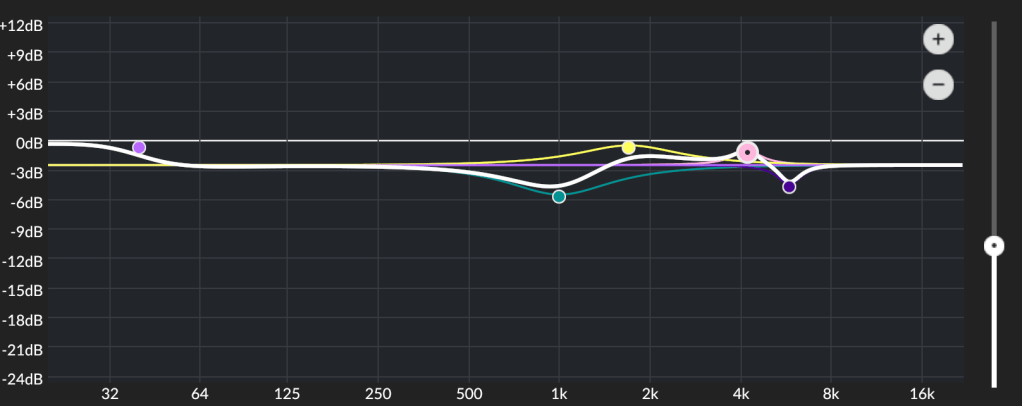
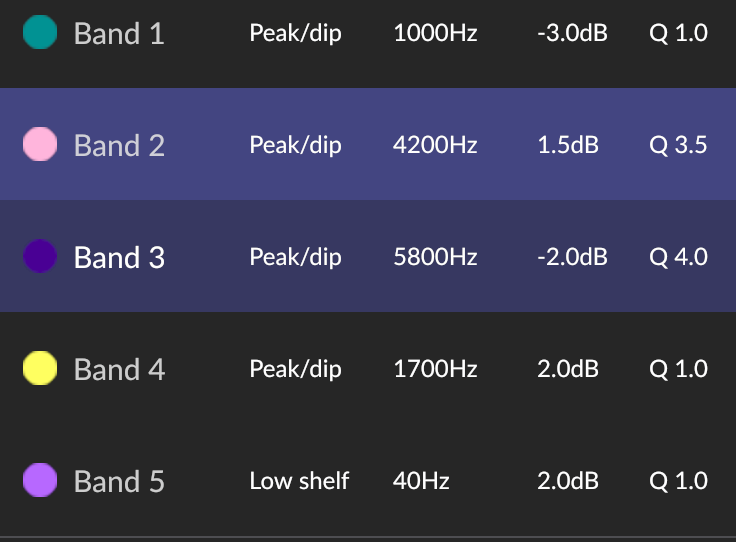
Like I said, the Aeolus doesn’t need EQ and I’ll be curious to see if I keep using this or revert back to stock for future listening.8 Here’s what the frequency response looks like with (green) and without (blue) this EQ applied, FYI.
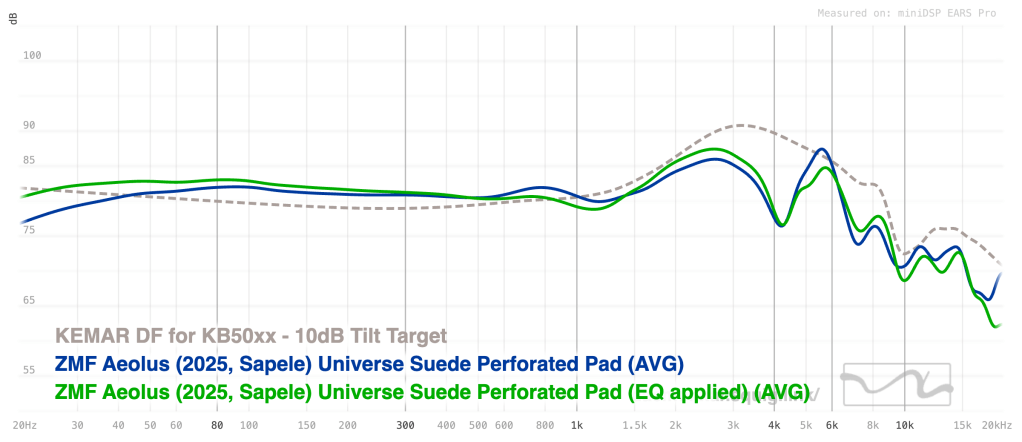
As always, unless otherwise noted below my listening notes in the Sound section are without EQ applied; they’re this Aeolus as it sounded when it arrived from ZMF.
Sound
[It’s worth noting that this is the pair I’m going to point to when people ask if burn-in is real; I personally don’t think there’s a physical or acoustic difference in most gear at 1 hour or 10 hours or 100 hours or 1,000 hours,9 but it definitely takes my brain 10-15 hours of background listening to really adjust to a new type of tuning. I’ll be frank; when I first put these on I … did not like them. At all. They sounded weird and unpleasant to me. Then I threw on “American Beauty” in the background for a couple of hours while I worked … and some magic happened.]
I really quite like the Aeolus; it’s definitely a warmer tuning than I usually listen to, and it’s really fun to be reminded that while I default to a more “neutral” sounding sound profile, getting out of that box can be a whole lot of fun. That said, it’s got some quirks and I wouldn’t use it for every kind of listening I do. In particular, I might tend to gravitate towards it for things like jazz more than rock or hip hop, where there can be a little hollowness in the middle on some recordings.
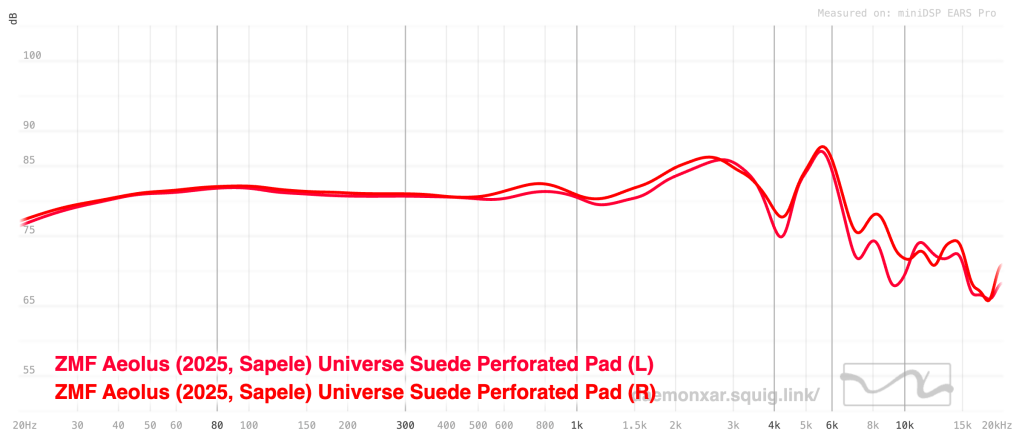
Here’s what my particular pair looks like, according to my shiny new Mini-DSP EARS Pro measurement rig10:
The soundstage on the Aeolus is really well done. It’s pretty wide, with the rhythm guitars on “Chan Chan” pretty far out to the left and the right, though many of the instruments (particularly those in the center of the imaging) are a little behind my head rather than in front. The wandering guitar on “Love Can Damage Your Health (Laid Mix)” for example is pretty good front-to-back. Though the guitar mostly doesn’t cross in front of you, it definitely passes through your head and then circles around behind.11 The toms on “Thunder Lightning” are a little more subdued on the Aeolus12 than on some other headphones, but are nicely placed in space. The instrument separation is also pretty exceptional; “Chan Chan” is a very crowded (and incredibly well-recorded!) track and I can place every single musician in space; I’m not sure I realized where the hand percussion was in relation to the vocalists until I listened closely with the Aeolus. These don’t image quite as well as something like the Hifiman Arya Stealth, but they are impressively close for a dynamic driver, particularly an older one.
The dynamic range is pretty good. Starting “It’s All So Incredibly Loud” off at a reasonable volume had me reaching for the volume dial at 2:20.13 Microdynamics are pretty good, if not quite up to Focal or LCD-2.2 pf levels of punch. I want just a little more hit on the low bell tones on “Angel (Blur Remix)”, and there’s not very much warble, though the higher bell tones did have the kind of accenting I want.
Detail retrieval is pretty solid, if not quite as excellent as things like the LCD-2.2 or Focal Clear. I rarely felt in listening sessions like anything was missing (though Meshelle Ndgeocello’s fingers on the strings on “What Did I Do?” weren’t as pronounced as they are on other headphones), but I also didn’t hear anything in particular that jumped out as being new. [Editor’s note: I take it back. I am hearing fingers around :44, which aren’t nearly as noticeable on something like the D1. I might need to revisit my take on the detail resolution in the future, especially with EQ.]
Bass
The bass on the Aeolus is nice; strong and warm without being overblown. As noted above, it does still have some pretty strong roll off in the sub bass (like most open-backs) but it’s plenty for fun listening and it’s pretty easy to add a bass shelf via EQ if you want more super low-end energy. It does have a pretty solid elevation in the mid bass through the lower midrange, giving it a warmth and vibrance that I really enjoy. That said, I think the Aeolus’ real strength is how nimble the bass is; the timpanis on “Remain Nameless” really drive you through that track, the bass synths on “Cold War” are very well articulated and precise without being sharp, and you get a pretty good brain-wobble on “Limit to Your Love,” even if you lose the very lowest of the notes a bit.

There is a little funkiness in the bass to mids transition, particularly on a track like “Drawn” where there’s almost a little bit of hollowness in the transition from the more melodic first four minutes to the more traditionally hip-hop ending. This is alleviated a bit by the EQ profile above, though entirely correcting for it would almost certainly dampen some of the character and fun of the Aeolus.
Midrange
The Aeolus have a somewhat unusual midrange tuning with a bit of a dip just above 1 kHz14, but it’s not a big shift. Overall the mids are well reproduced with good timbre and richness, though this is also the part of the frequency response that benefits the most from some judicious use of EQ. Out of the box, some of the rhythm guitar parts on “Only Here and Nowhere Else” get a little buried in the mix; adding a little energy around 1.7 kHz really cleans it up and adds some warmth and vibrance to the tone.

Vocals are generally pretty strong, with good clarity and correct timbre, though these aren’t a vocally focused headphone like the Sennheiser 6X0s. Jill Scott carries through nicely on “Calls” even when it gets crowded, but some of her vocal countermelodies are a little buried in the mix. There’s a little extra spice on some of Christine Hoberg’s vocals on “Clair De Lune”, though it never gets sibilant to my ears, and Amelia Meath’s voice is nicely balanced on “Coffee.” For male vocals, I might want a tiny bit more separation between Justin Hicks and the instruments on “What Did I Do?” or Chris Cornell on “Fresh Tendrils,” but it’s a minor quibble. Johnny Cash is front and center and beautifully reproduced on “Hurt,” and oh boy is it clear when the recording of his voice gets a little hot at times.
Treble
The treble is, overall, relaxed and pretty well controlled. The guitar riff on “2021” that can be painfully bright on other headphones is perfectly pleasant on the Aeolus, as is Miles Davis’ muted trumpet solos on “Will O’ the Wisp.” Ditto the bells on “Coffee,” and almost any track where I’ve occasionally had issues with cymbals and other percussion instruments with high-frequency components to their sound.

On my head I definitely hear the peak around 6 kHz, and while it’s not any more prominent than the one on my beloved 6XX, the fact that it sits between a pretty substantial dip around 4 kHz and another around 7 kHz means that it reads to my ears as a stronger spike. I’ve been playing around with that peak in EQ and while I initially started with a -4 dB reduction at 5.8 kHz to address, I ended up dropping it to -2 dB just to keep some of the unique character of the Aeolus.
Gaming
These are a perfectly competent headphone for gaming, though the weight might be a bit much for longer sessions and the relaxed nature of the treble performance might make their otherwise excellent soundstage and isolation less useful or useable for particularly sweaty FPS gaming. I’ve been using them a bit for “Death Stranding,” and they’re great for the mix of gameplay noises and the pop music score.

Amplifier Compatibility
I probably wouldn’t listen to these a lot via a low-powered device (they are reasonably high impedance, after all!), but they seem to play reasonably nicely with all of the amps I tried them with and they’re not that hard to drive. Also, like apparently most ZMFs, they do very well with tubes (the Gremlin seems to fill in a bit of the hollowness on a track like “Drawn”) or tube-emulating solid states (like the Nitsch Piety), while at least some solid state amps (Brooklyn Bridge, Topping DX5 II) potentially accentuate it, as much as I’m generally a skeptic of amps/DACs making a difference in sound quality. It’s there when I test it blind-ish, but it’s a minor quibble.
This is getting to be a bit of a broken record, but these sound really great off of the Chord Mojo 2.15
Build
They’re a ZMF headphone. They don’t skimp on the build quality. But, some specifics.
Connectivity
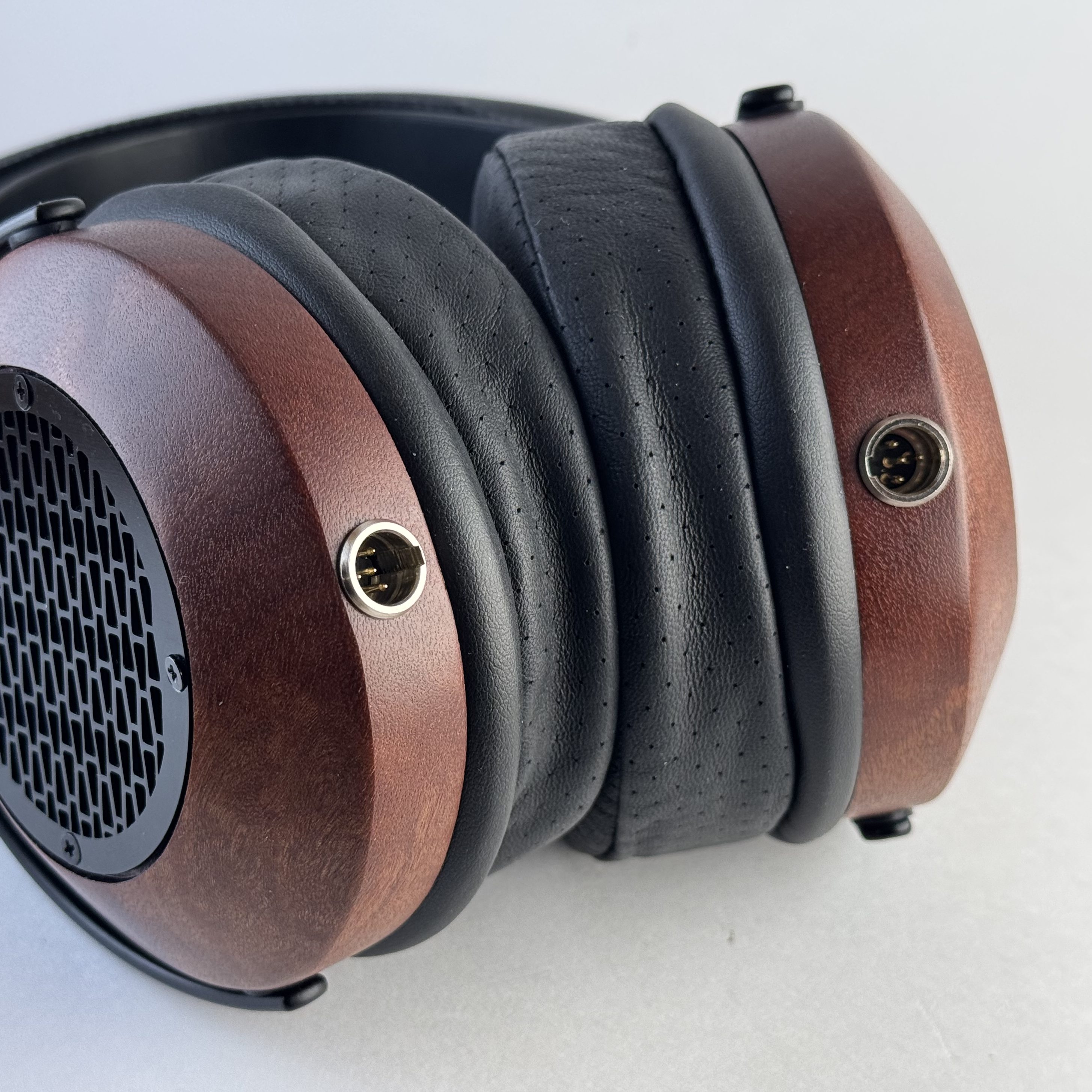
Like most older ZMFs (maybe all of them other than Bokeh Closed?), the Aeolus uses a dual-entry, mini-XLR cable. While I’d prefer a 3.5 mm-based cable system just for convenience and swappability, at least this is a pretty standard connector and unlike something like the Head(amame) kit, the mini-XLR connections aren’t particularly tight making them easy to use and swap. ZMF also makes pretty solid stock cables, with a nice braided cloth covering and solid connectors. The mini-XLR ports are oriented in the cups such that the release button is facing your head while you’re wearing it; it’s a little detail and preferences may vary, but if it were up to me they’d be facing either out (like the LCD-2.2) or back (like the Empyrean II) to make them easier to access during use, but that’s a pretty minor nit to pick though.
Construction
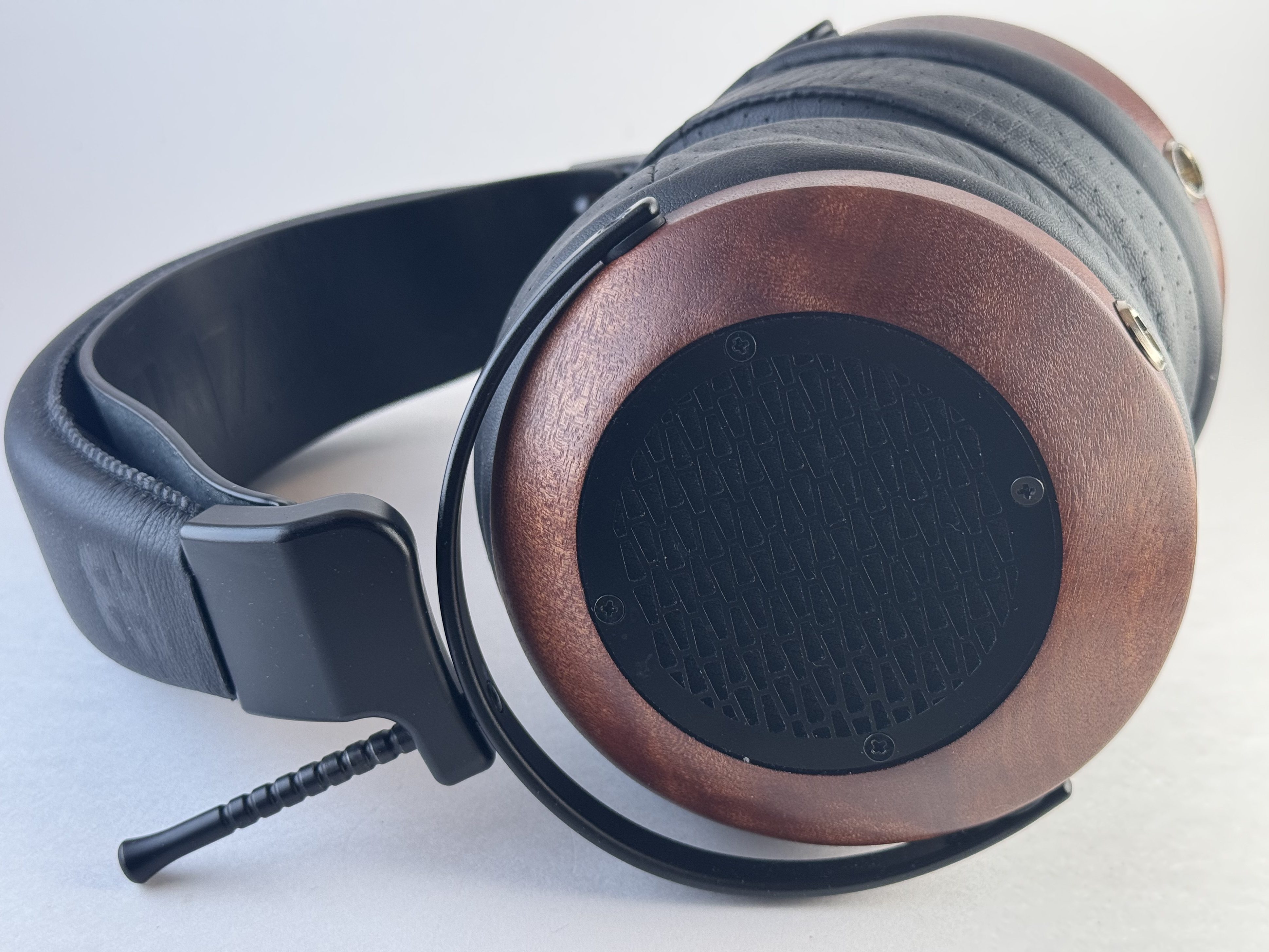
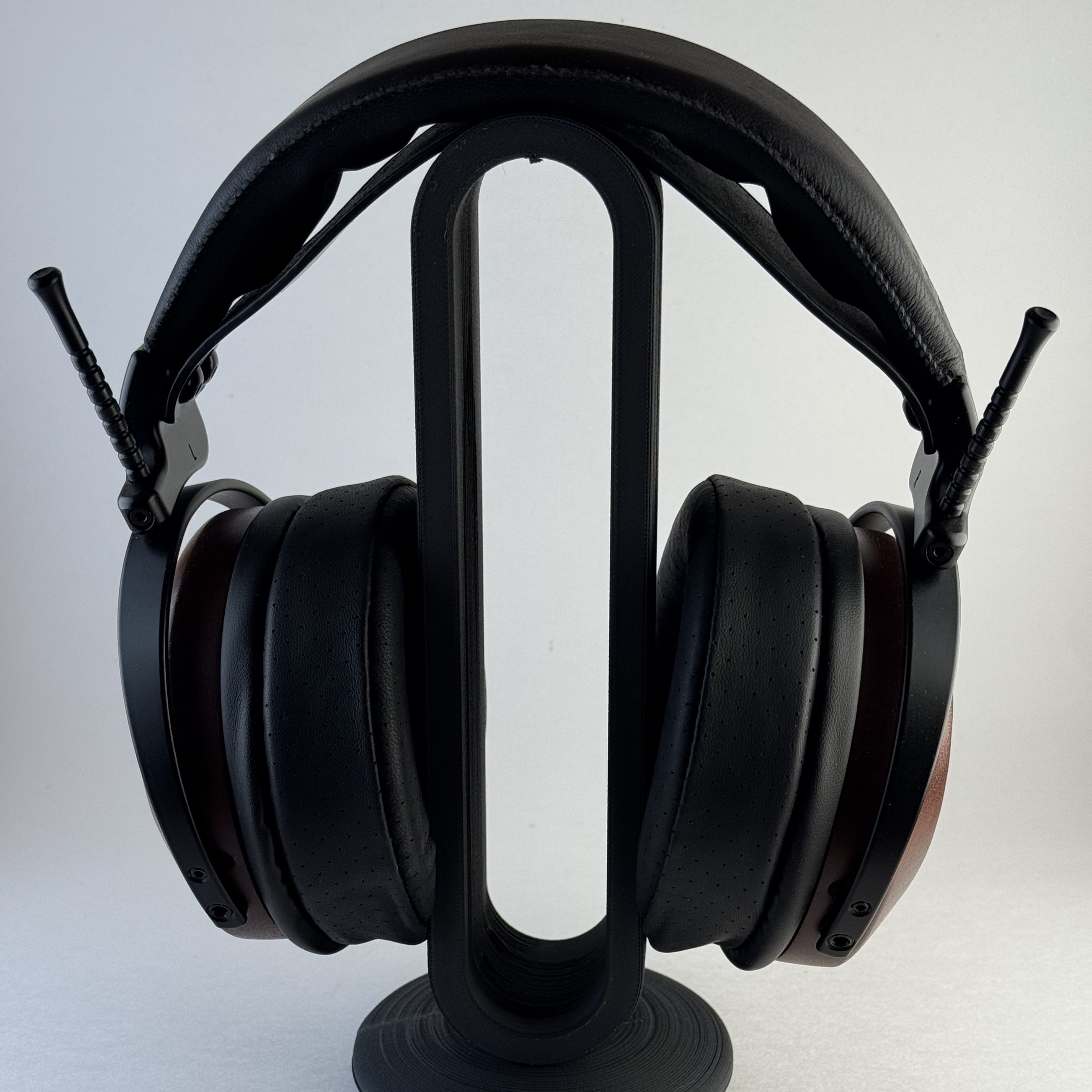
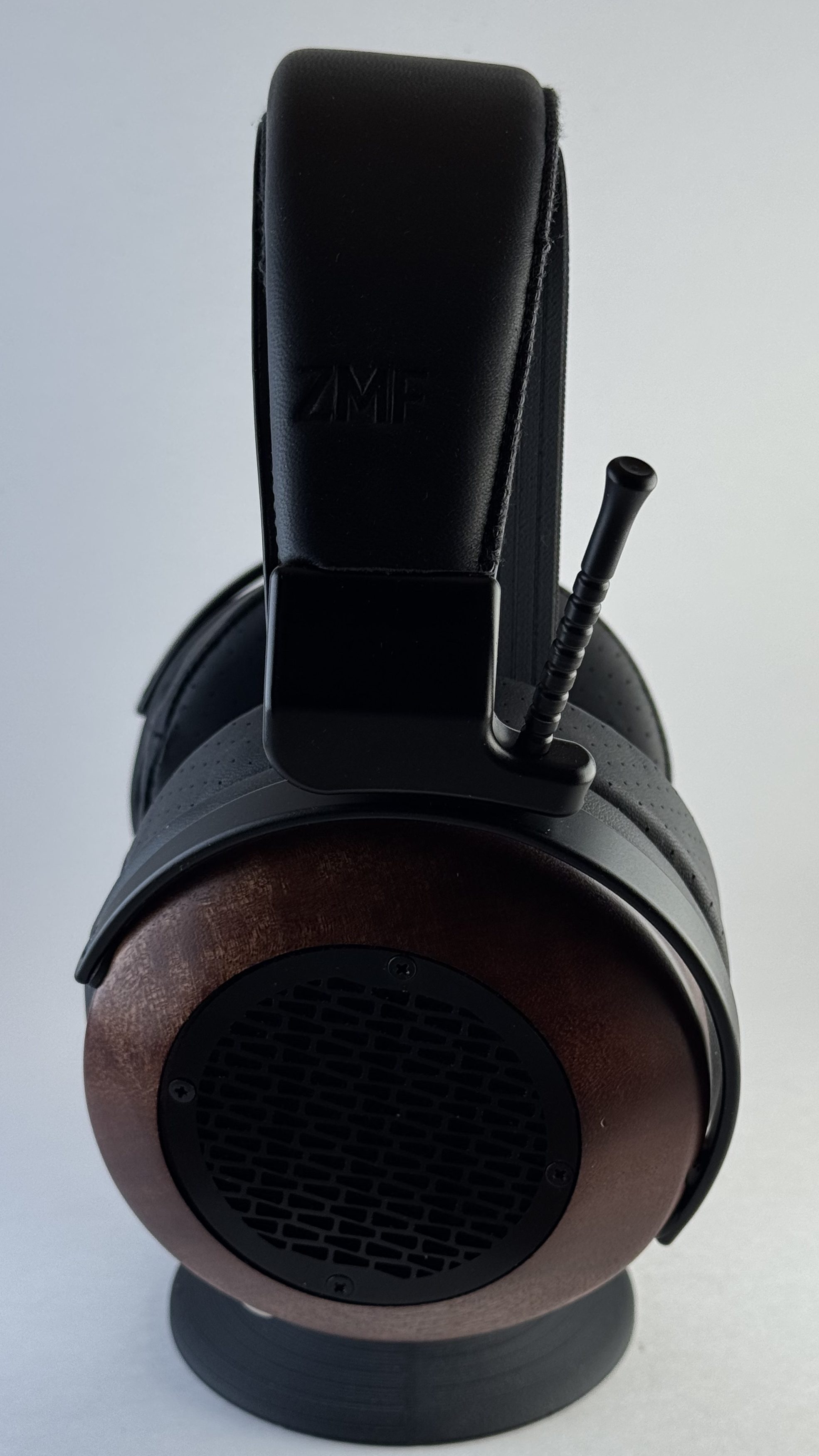
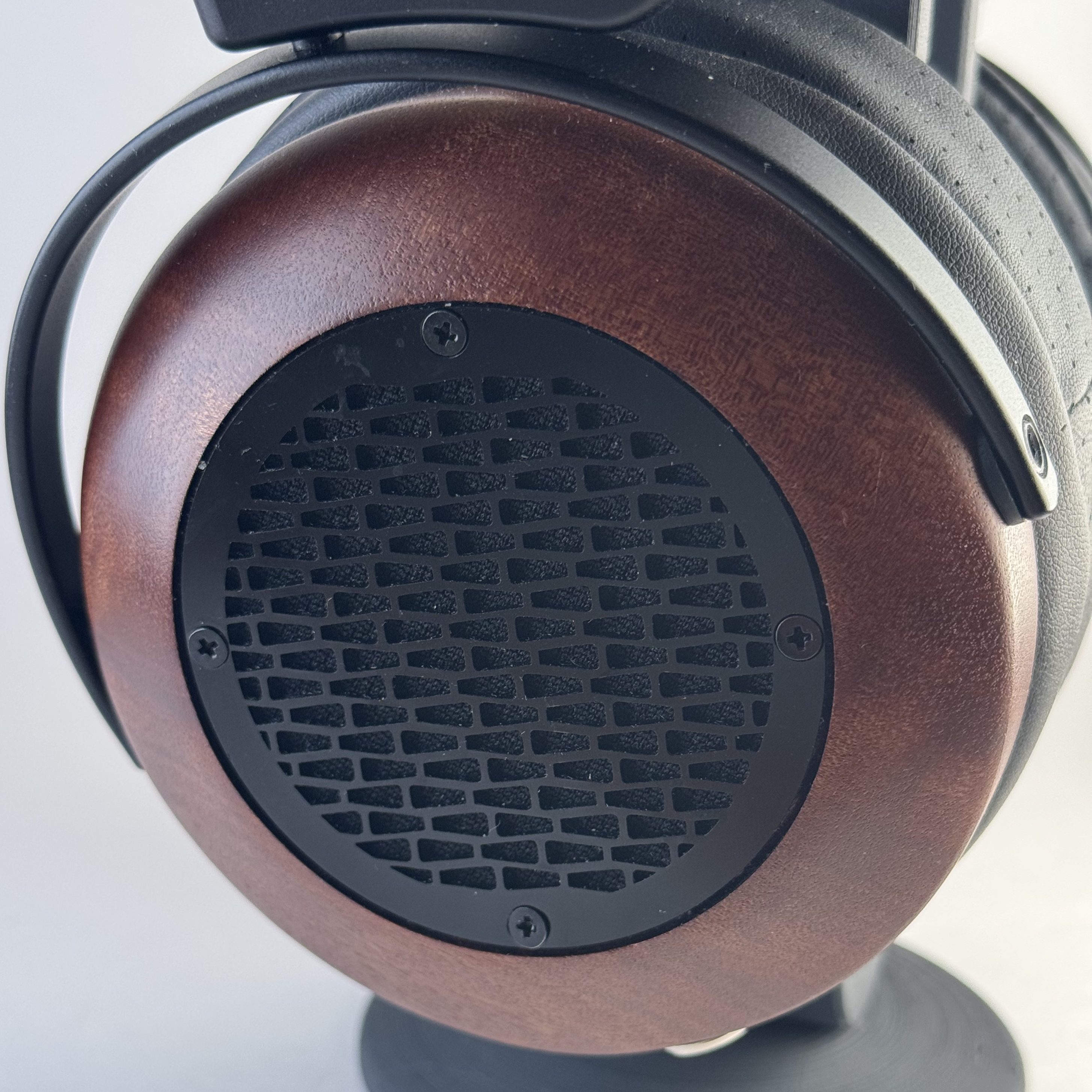
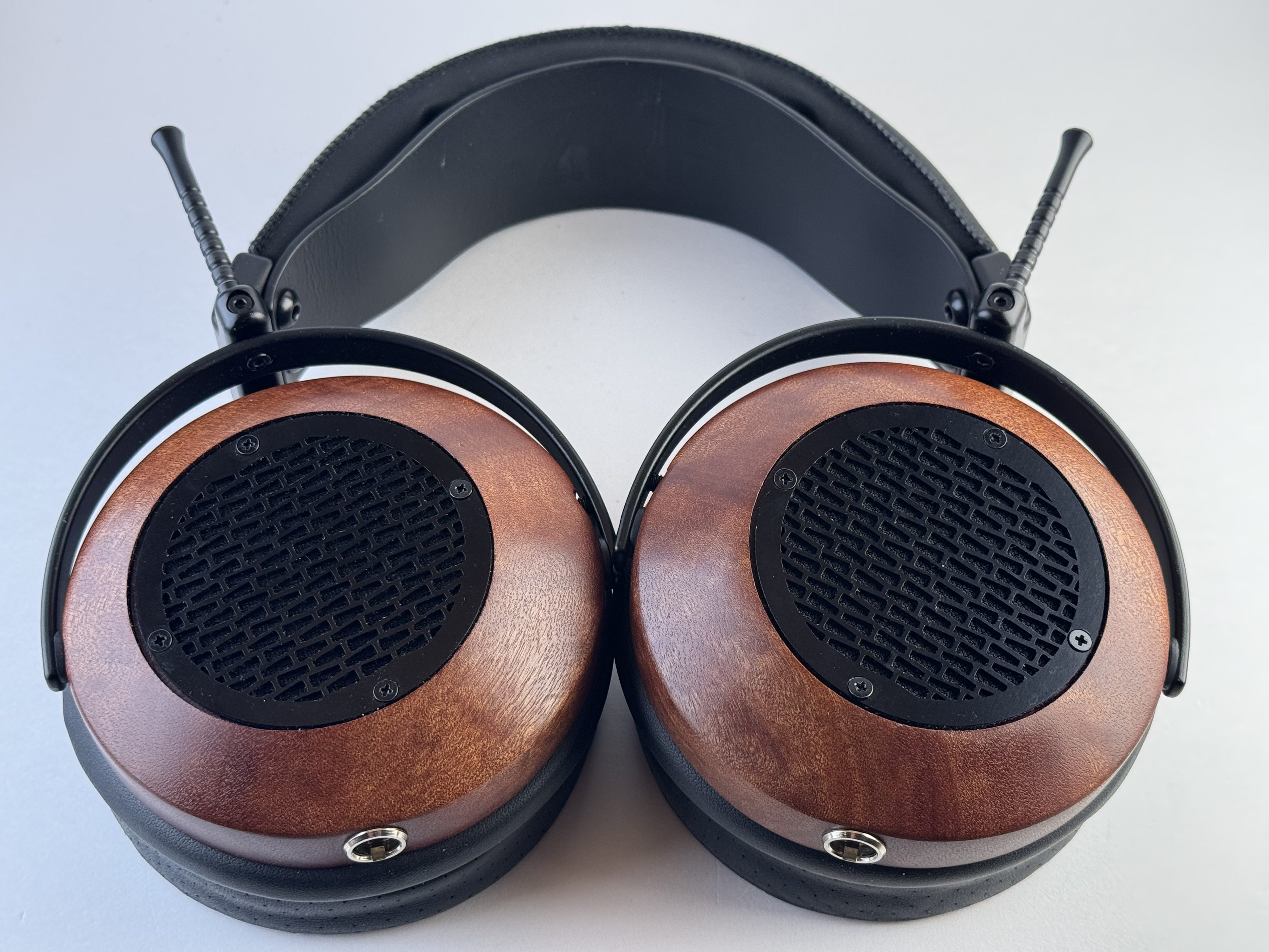
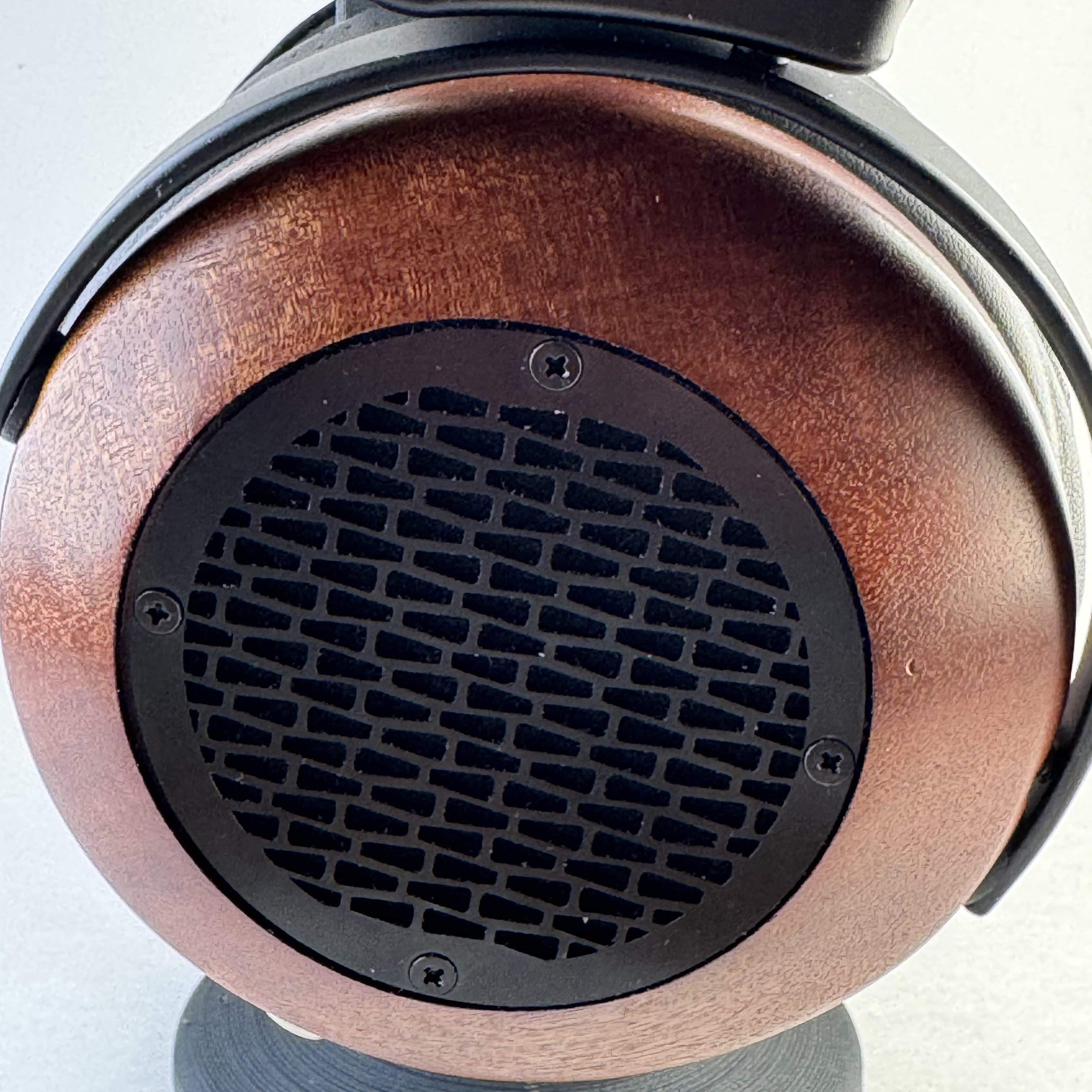
The Aeolus is a ZMF headphone; it’s going to be well-constructed. The cups are carved from sapele wood and nicely finished. The metal grill on the outside of the cups is nicely designed and smooth, though at least on my unit the four screws on each grill aren’t quite flush/flat against the grill and I have lightly scratched my desk by sliding them around on their backs. The band consists of a leather suspension strap and a memory foam and leather-coated metal band. The band allows extension and compression, but very little in the way of twisting. The band is connected to the cups by ZMF’s signature adjustable rods16 and yokes. The rods rotate freely, while the yokes are limited by a clever design to a little less than 45 degrees of tilt. These came with the Universe suede perforated pads, which have quite a lot of give. Between the physical design of the headband and the compliance of the pads, I mostly didn’t have a hard time getting a good seal on my ears, which is reflected in positional data below.
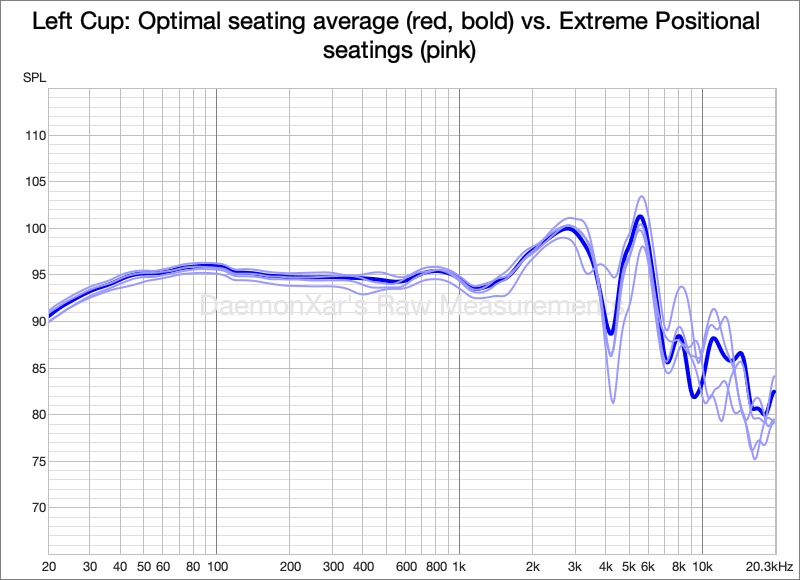
It’s worth noting that the Aeolus’ sound is pretty consistent whether it’s seated optimally or in extreme positions. As you can see below, even seating the cups as far forward, backward, up, and down as I could on my rig mostly didn’t affect the seal or shift the frequency response very much, especially below around 4 kHz:
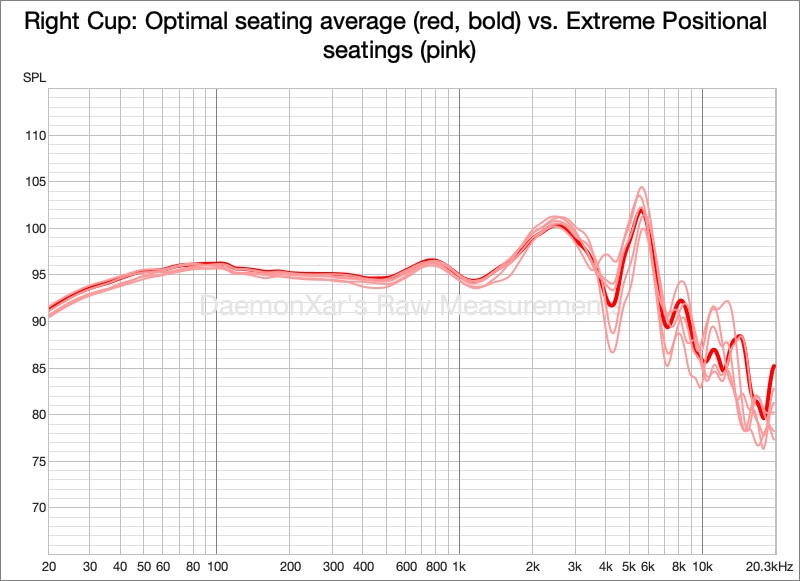
Overall, these are a very well-built, solid-feeling headphone that feels designed to survive extended use. They feel very premium. Other reviewers have complained about the wood chipping, and this unit did arrive with a little bit of a chip on the left cup, but I don’t mind that; it adds character and I’m reasonably careful with my headphones most of the time.
Comfort
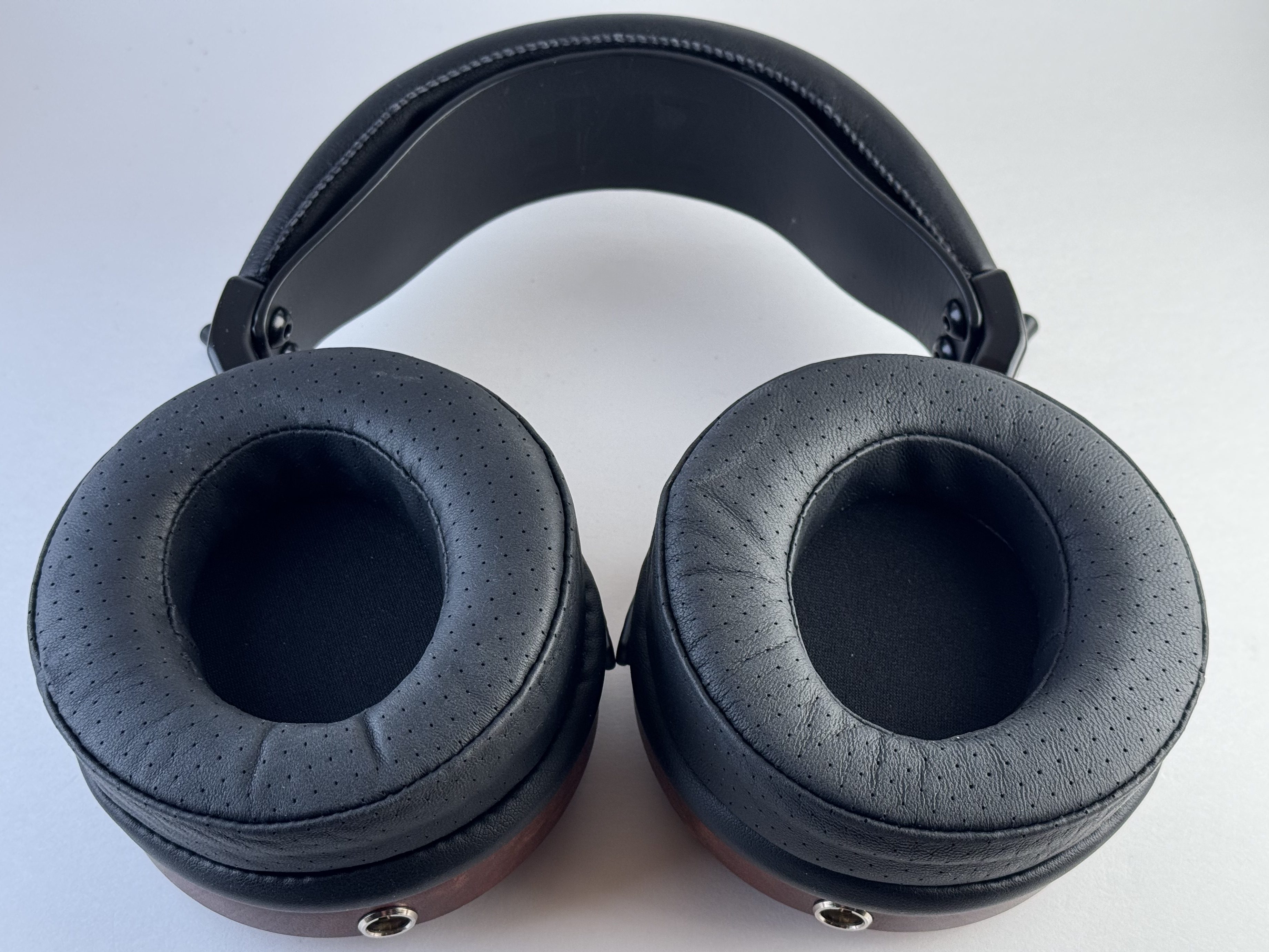
These are a pretty heavy headphone, but at least on my head they’re pretty comfortable for even extended listening sessions. They’re not super clampy; just enough to both feel stable on my head (even when looking around) and to take some of the weight onto my ears via the cups instead of having it all rest on the top of my head. The pads are pretty large, deep, compliant and comfortable as well. If these were lighter, they’d probably get an A for comfort from me.
Appearance
I think these are a handsome pair of headphones; I’m not sure I’d have chosen this particular finish out of a lineup (I don’t think it highlights the gorgeous chatoyance of this particular wood, which you can only really see in the parts of the cups mostly covered by the yokes), but I think these headphones (like most ZMFs) are a pretty handsome pair. They definitely do run the risk of the Cyberman problem with the rods resembling attenae, so if that’s something that bothers you they might not be for you.
Value & Comparisons
Like a number of my recent reviews, this one is hard to benchmark as a non-current production model. $900 for a b-stock unit isn’t exactly cheap, but it is about as close to a budget open-back as you get from ZMF these days. That said, you don’t buy a ZMF looking for a great value; they are, in at least some ways, an art object built with incredible attention to detail and craftsmanship here in the US; sure, they also sound great but that’s not the sole focus when you shop for a ZMF.
In the end, I don’t regret the price I paid for the Aeolus. They’re beautiful, and I’ll enjoy having them as part of my collection, but if they were destroyed tomorrow I don’t think I’d try very hard to replace them. The price isn’t unfair, but this is a boutique, luxury product but that’s mostly not what I want from my headphones, and I don’t have that much of a need for luxury products in my life at this point.
Sennheiser x Drop HD 6XX
This isn’t necessarily a fair comparison on paper; the HD 6XX, while great, is a $200 headphone17 and the Aeolus is more like a $1,200 one ($899 for a b-stock/demo unit). It’s closer if you look at the HD 650, the version of the 6XX available outside of North America which retails closer to $550 at MSRP, but still … I’m throwing this comparison in here because, for better or worse, the 6XX is the headphone that I judge every other open back against, and any headphone that’s in this general price range ought to handily beat the 6XX. So how does the Aeolus match up?
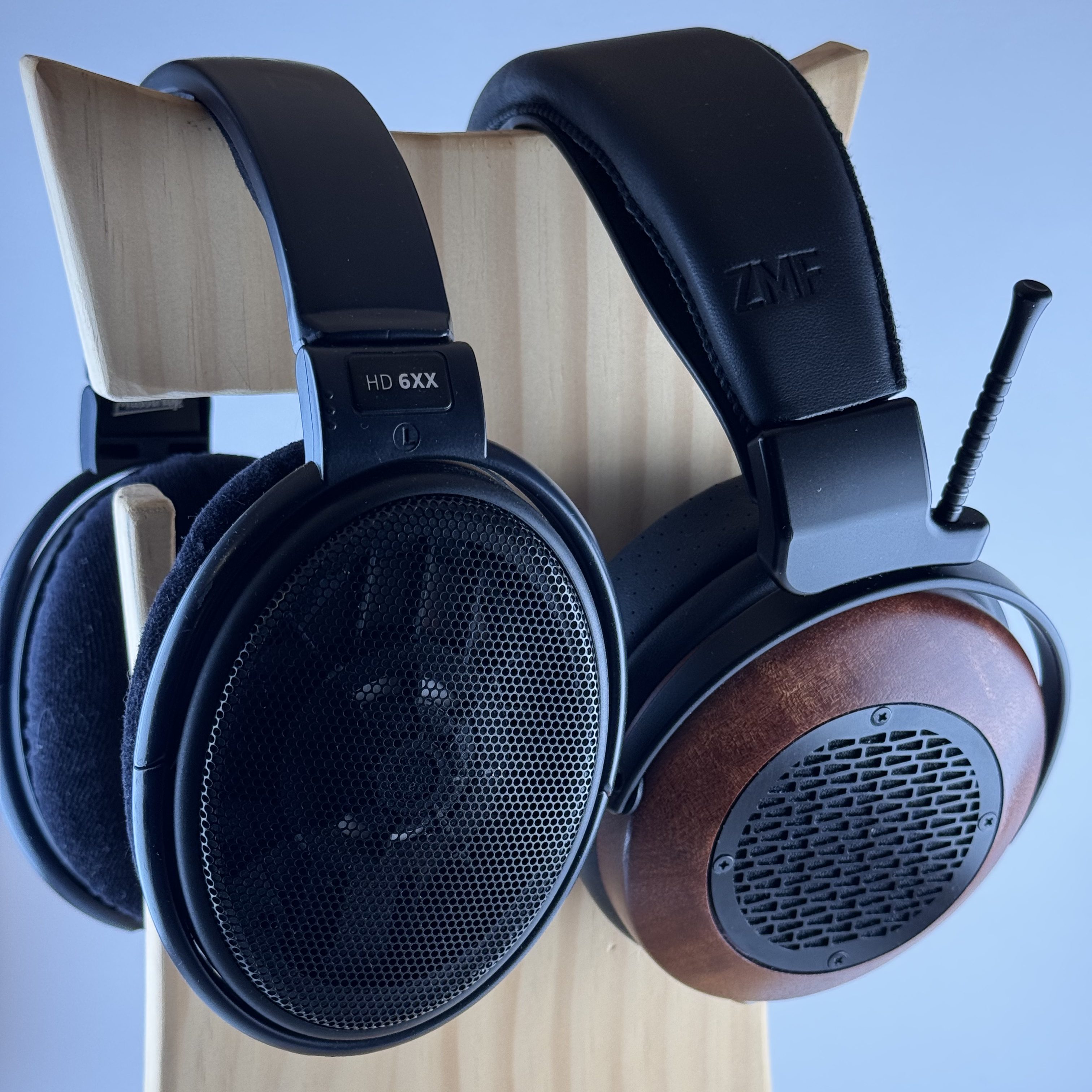
Fortunately, quite well. The strength of the 6XX is the combination of truly excellent midrange (second in my heart only to the HD 600) and an incredibly well-balanced and controlled overall frequency response. I know people like to rag on its bass or lack thereof, but while it is pretty light in quantity, it’s incredibly well done in quality. The 6XX is definitely a better balanced headphone all around than the Aeolus, and does beat it hands down when it comes to the mids. However, the bass on the Aeolus is just … really good, adding depth and richness and quantity without sacrificing quality, and I think I even prefer the treble tuning on the Aeolus by just a hair. Aeolus is also much better when it comes to soundstage width and imaging, and at least for me, the Aeolus is a more comfortable headphone to wear even if it’s close to twice as heavy. It’s also, obviously, more solidly built and feels like the premium product it is, while the 6XX just feels cheap.
In the end, this isn’t a particularly close call which is to be expected. For most of my listening I’m going to grab the Aeolus off the shelf. If I’m listening to something particularly mids-centric, or where timbre is very important, I might go with the 6XX but that’s not very much of my listening.
Now a quick glance at the comparison graph (for the first time, my units and measured on my own rig!):
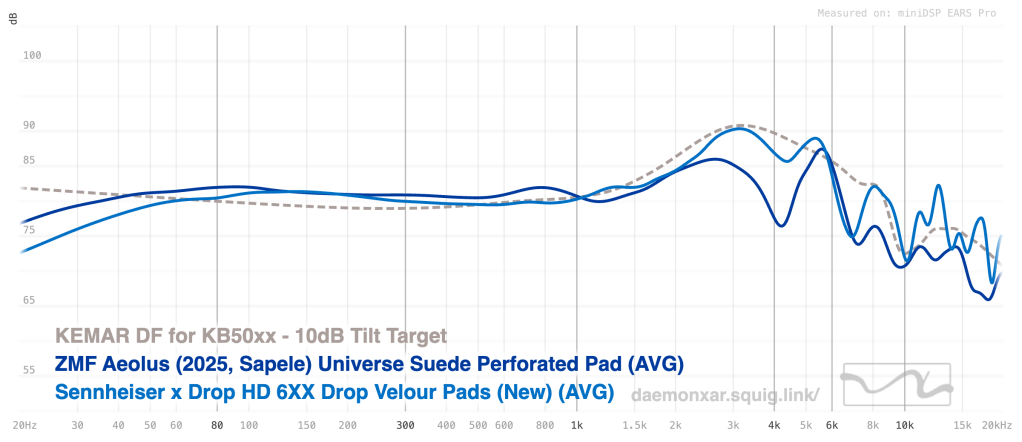
Yeah, this is (unsurprisingly) pretty much what I hear; the 6XX is just incredibly good in the midrange and is definitely substantially lighter on the bass (sub and mid bass). I don’t hear all of those treble issues I measure on 6XX, so they may be an artifact of the measurement rig more than the headphone, or maybe I’m just not very sensitive to those frequencies.
Verdict: As much as I love the 6XX, the Aeolus is a better headphone in almost every respect and I prefer it.
Focal Elex
Why not compare one out-of-production headphone against another? This is an interesting comparison as the Elex is relatively easy and inexpensive to acquire at present (7 or 8 Elex posted on r/AVexchange in the last couple of months, priced mostly between $250-$300) while the Aeolus is pricier and rarer (3 or 4 in the last few months, mostly priced $700+).18
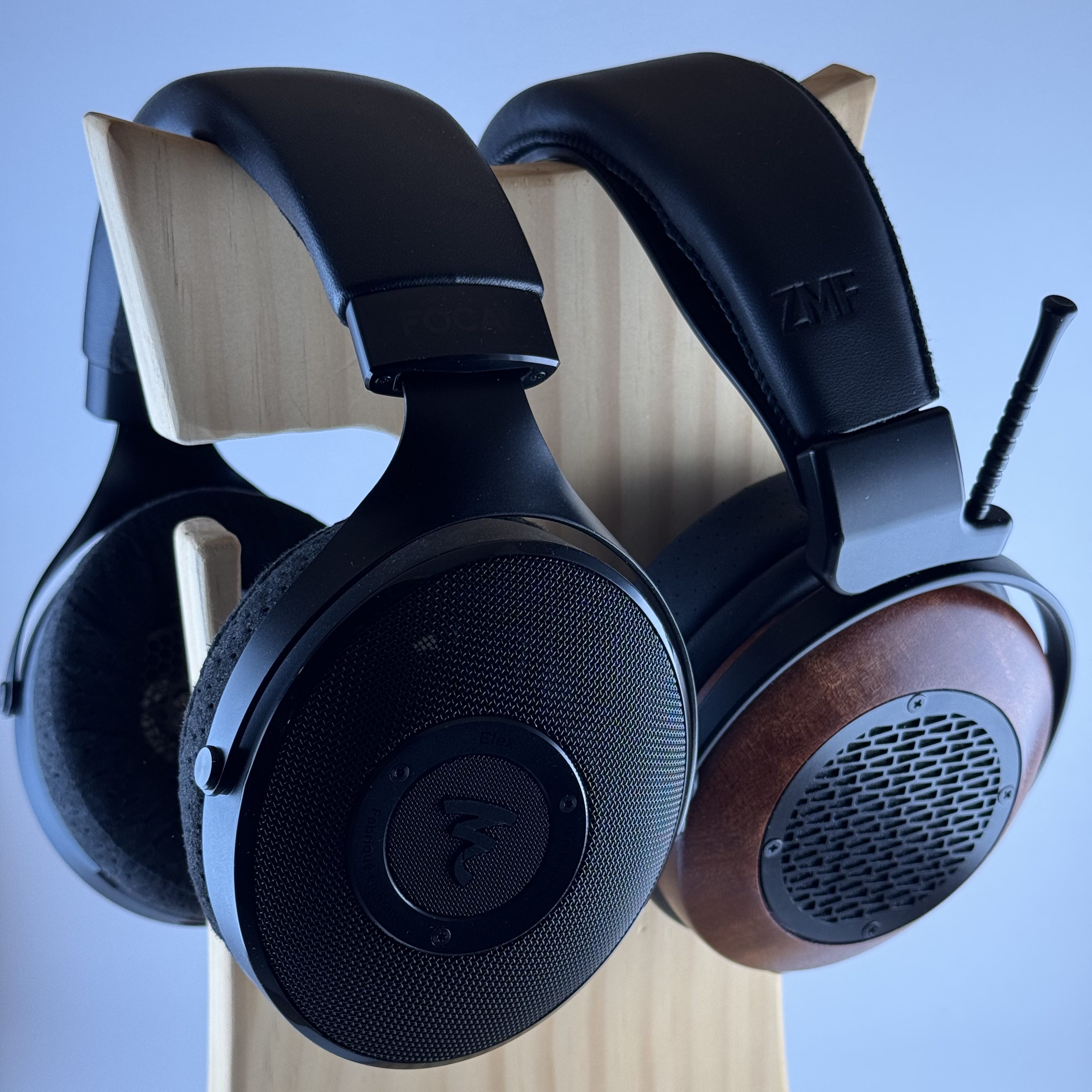
As an art object, the Aeolus are far and away the winner. While I like the aesthetic designs of Focals, the Aeolus are a genuinely beautiful headphone. When it comes to sound, though, the Elex/Clear are just a better suited headphone for most of my listening. I enjoy the Aeolus’ tune quite a bit, but Elex is almost exactly what I want out of a headphone. The Elex shares the Aeolus’ warmth, but adds substantially more natural mids and a more balanced treble tuning to my ear. The Aeolus definitely has a wider and deeper staging, though I would say they’re about equal when it comes to separation and imaging within those stages.
There are things that I would prefer to listen to on the Aeolus (some kinds of jazz, some classical, etc.), but for most thing I’m going for the Elex. And once you consider price, it’s a bit crazy that you can buy two pairs of used Elex for less than you’d spend on a single pair of used Aeolus. A quick glance at the graphs with my units and measured on my own measurement rig:
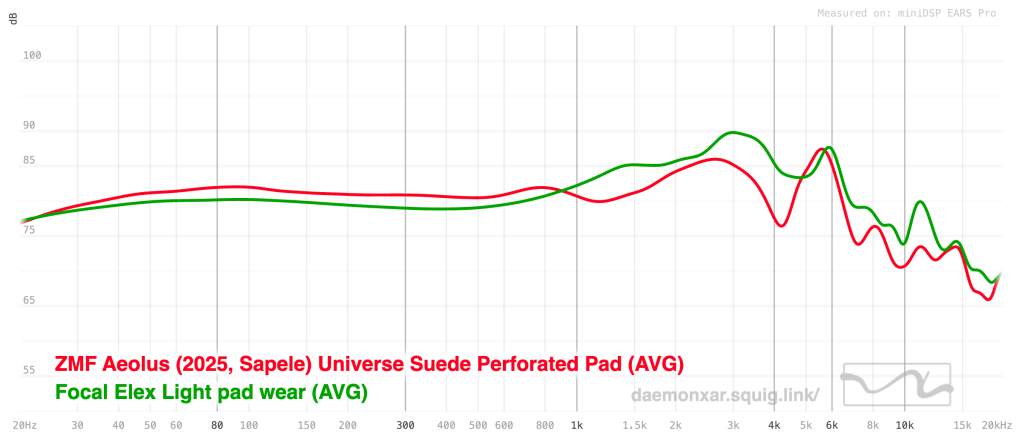
In this case the graphs don’t necessarily tell the whole story; part of the Focal magic is the unique punch and slam you get from the bass reproduction on headphones like the Clear and Elex, and as nice as the Aeolus’ bass is, it just can’t particularly match up that well even if it might have slightly more quantity. And, as noted above in the treble section, while the peak around 6 kHz is similarly sized on the Elex and the Aeolus, the fact that the Aeolus has such a dip at 4 kHz and 7 kHz means that spike feels disproportionately large on my head compared to Elex.
Verdict: The Elex/Clear are one of my favorite headphones, so unsurprisingly I’m taking them over the Aeolus for listening. For looking, it’s all Aeolus!
Heddphone D1
Heddphone released the D1 in late 2025 to pretty universal acclaim, with some reviewers (including Resolve) reporting that they prefer it to many of their top picks. Priced at $799 (though occasionally already available closer to $700), it’s another relatively large, open-back dynamic driver headphone with a tuning just on the warm side of neutral.
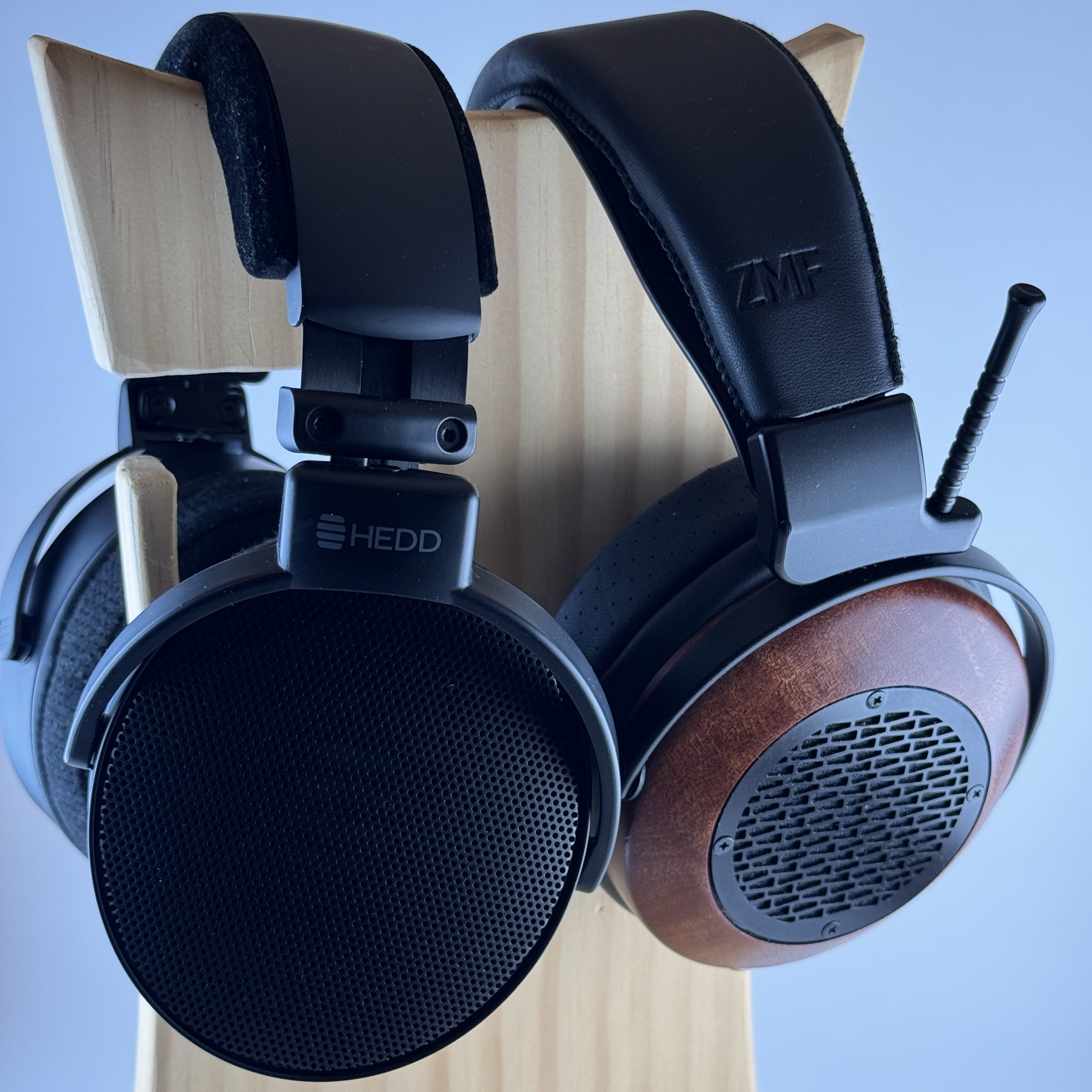
I want a little more time with my D1 before I review it (I think it’s second or third on my stack now). So far, I’m pretty damned impressed and I get the hype, and it seems like a pretty reasonable comparison to the Aeolus.
At least for me, outside of appearance I think the D1 is a better all around headphone. It’s definitely a more neutral-ish tune, and while I do appreciate the additional warmth the Aeolus brings to the table that’s pretty easy to address via EQ on the D1. The mids and treble are better on the D1, and I think the D1 wins out on comfort and detail retrieval. The soundstage is pretty similar on both, though the Aeolus may do a slightly better job of separating instruments and musicians in space.
A quick glance and how they both measure:
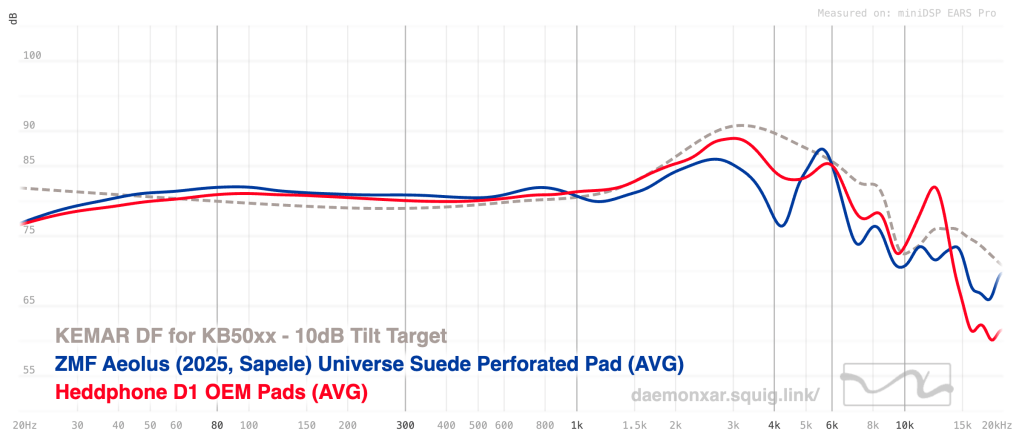
This seems pretty close to what I’m hearing. I read a theory the other day that the 4 kHz dip on the Aeolus (and on most Focals!) is part of why they stage and image so well; I’m curious in the next few weeks to play around with filling it in and seeing how it shifts. The Aeolus is definitely warmer, the D1 has better midrange, and the Aeolus’ treble is very relaxed compared to the D1’s. Up to you which you prefer; in my case, I think the Aeolus is a more fun listen, but the D1 is probably still the better headphone. It’s also just less genre-sensitive; I haven’t hit any tracks on the D1 that sounded bad or disjointed, and that’s not the case with the Aeolus.
Verdict: D1 is a better headphone for most of my listening, but the Aeolus is definitely a more fun listen. Not going to go wrong with either choice.
Meze 109 Pro
I should probably start by noting that, to date, the Meze 109 Pro are my favorite headphone under $1,000 (and were my favorite, period, until I spent some time with the Meze Empyrean II). And as much as I enjoy the Aeolus, that hasn’t changed.
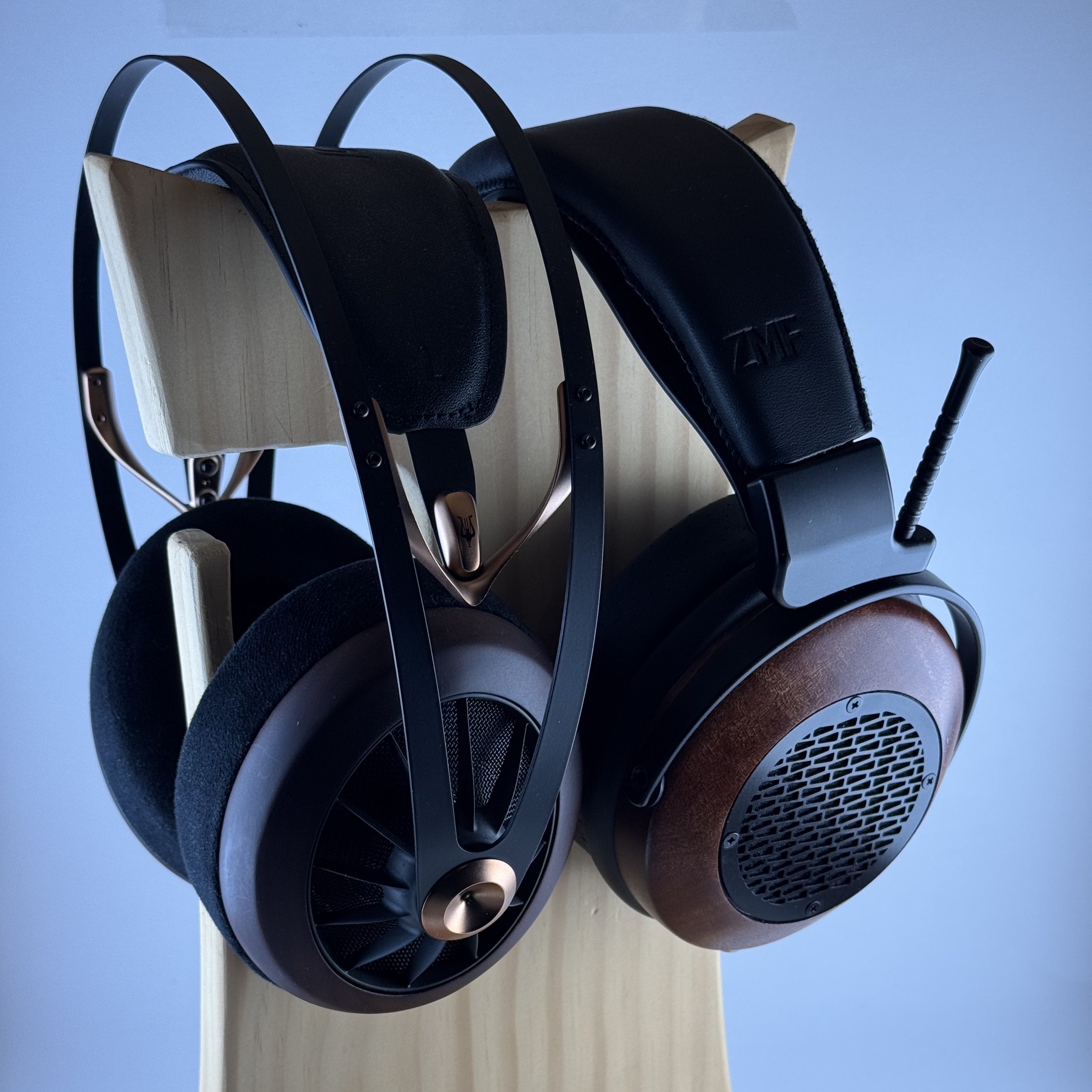
I often describe the 109 Pro as warm, buttery magic, and as much as I enjoy the Aeolus they can’t really compete with that. The sub bass on the the Aeolus is definitely stronger (without being overblown), but the overall balance on the 109 Pro is such that I don’t miss the sub bass where it rolls off; it just fits beautifully with the overall presentation. There are definitely people who struggle with the treble on the 109 Pro,19 but I’m definitely not one of them. And the mids … in my original review of the 109 Pro I said this about their midrange: “These are the only headphones I’ve heard that really compete with the 6XX on vocals, and they do so without any of the compromises of the 6XX.” With the benefit of another year with them and a lot more experience with headphones, I think this might be a slight exaggeration, but at least on my head the 109 Pro excels in the midrange and I’ll take it over the Aeolus, especially for anything vocally-focused. The Aeolus has better staging, better imaging, and a pretty similar detail retrieval and resolution, but the 109 Pro has substantially better comfort for long-term listening sessions. The Aeolus is perfectly comfortable on my head, but I never forget it’s there. The 109 Pro disappears into the background after a few minutes. Also not for nothing, the 109 Pro is one of the nicest looking headphones I have ever had the pleasure of owning, and the only pair on this list that edges out the Aeolus for looks.20
A quick glance at my units’ frequency responses:
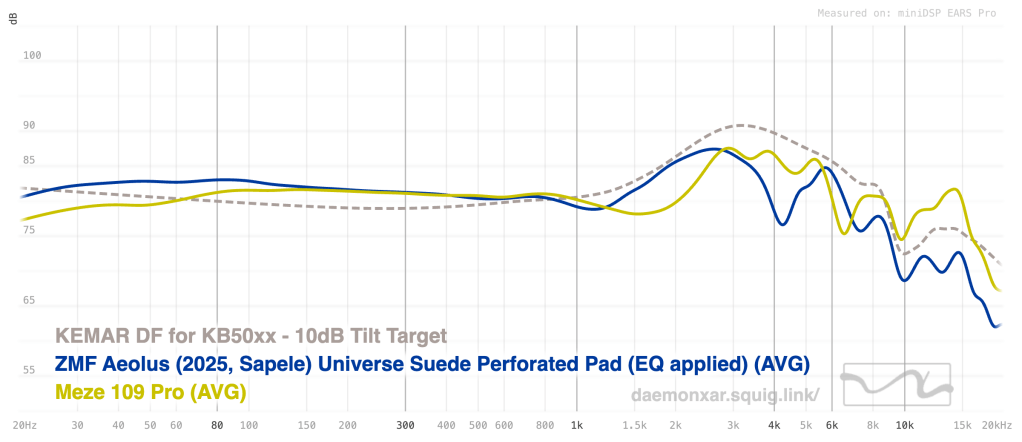
I’m actually a little surprised by how big that delta below 125 Hz is; as I’ve been doing a lot of critical listening with the Aeolus I’ve been gradually bumping up a bass shelf centered around 50 Hz, and by comparison I’ve legitimately never listened to the 109 Pro (consistently -5 dB quieter below 125 Hz) and thought to myself that I needed to add a bass shelf. Now I’m curious to go back to see how they do with a little extra sub bass! I’m also a little surprised by how much stronger the Aeolus’ response between 1.25 kHz and 3 kHz is; it certainly doesn’t sound that way to me for music, which sort of strengthens my growing belief that I personally care a lot more about overall balance and relative tonality than I do about target compliance.
Verdict: If you’re choosing between the two, buy the Meze 109 Pro.
ZMF Bokeh Closed
The ZMF Aeolus and Bokeh Closed are VERY different headphones in most ways, enough that this isn’t a super helpful comparison but I one I thought worth briefly making.
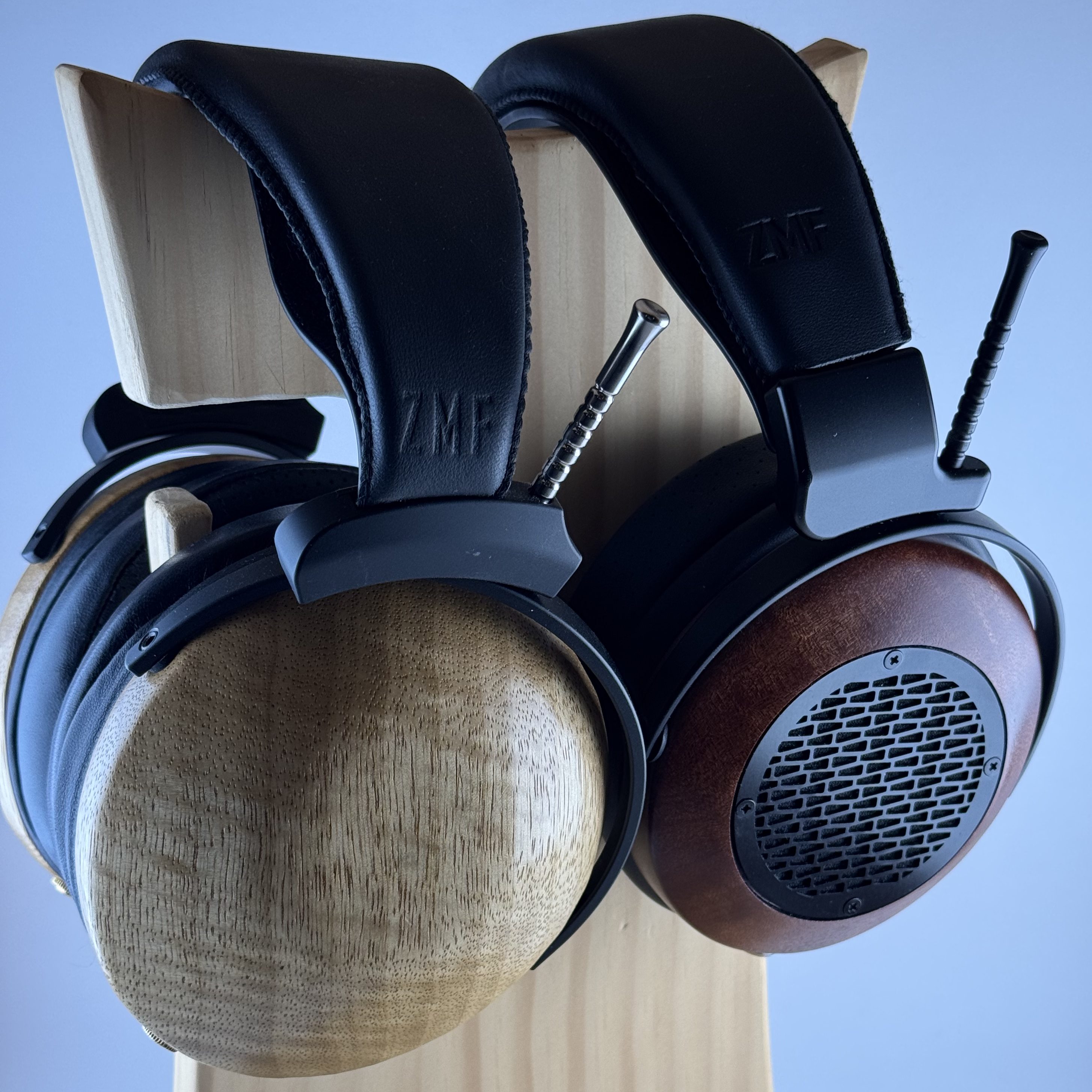
The Bokeh Closed were the first pair of closed back headphones that I really enjoyed listening to, and my scores reflected that. I probably ought to go back and re-review them when I have a moment; I’ve had the opportunity to spend a lot of time with other excellently designed and tuned closed backs and it’d be worth revisiting and adjusting that review to reflect everything I’ve learned over the last year.
Suffice it to say for now that while the Bokeh aren’t my favorite closed back to listen to anymore, I still love them dearly and consider them an important part of my collection. I’ll throw them in the same category as the Aeolus: an incredibly cool, fun headphone that I enjoy but that isn’t the peak of sound quality. Both reflect a very specific aesthetic and design philosophy that is uniquely ZMF, and there’s a reason that knockoffs of Zach’s stuff keep popping up. They’re not best-in-market for tuning, but they are beautiful and unique and I really appreciate them.
Now a quick glance at the Squigs:
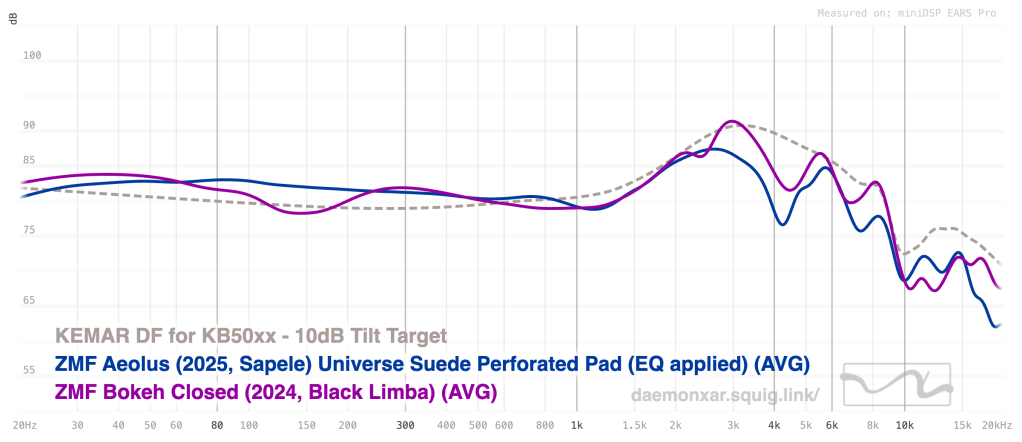
Verdict: There’s not really a reason to choose between these; if you need noise isolation, you should go with the Bokeh; if you don’t … I think I slightly prefer the tuning of the Aeolus, particularly with EQ, but it’s worth noting that Bokeh pre-dates my EQ journey and it’s probably worth going back and seeing what they can do with a bit of tuning.
If you can afford them, either would be a delightful addition to your collection.21 Oh, and get a tube amp for them; I’d suggest the Apos Gremlin in a pinch.
Overall
The ZMF Aeolus are a lovely and interesting pair of headphones. Are they the best sounding pair I’ve ever heard? Certainly not, but they’re a good reminder that “neutral” isn’t always what I want for my day to day listening. As always, I’m impressed by ZMF’s clear sense of aesthetics and craftsmanship, and the detail and attention they put into their products even if some of them aren’t for me.
This particular pair is for me, though, and I’m delighted to have it in my collection. If you’re in the market for a fun, warm tuning with very relaxed treble and great soundstage/imaging (think a mix of an Arya Stealth with a Fiio FT1), this might be for you too. Doubly so if you have an appreciation for a product built with incredible craftsmanship and attention to detail and don’t mind paying a price for a beautiful, functional object d’arte.
If something happens to this pair I don’t think I’ll be buying another at retail, though I’m very curious to see what kinds of options are available in ZMF’s upcoming custom shop. If your in the market for an unusual, warm and fun tuning and you find a pair of these under $750, I think they represent a decent value and are a part of a unique legacy of a maker who zigged at a time when everyone else zagged.
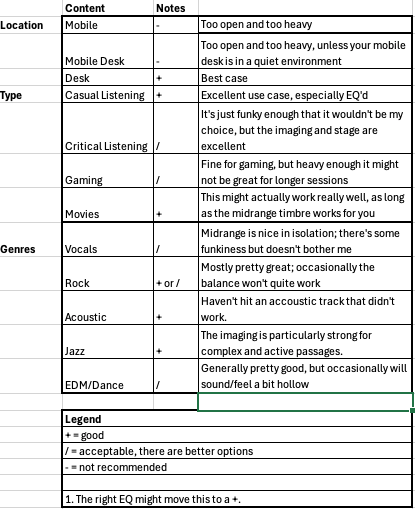
Phil’s Matrix of Use
#reviews #headphones #sennheiser #6XX #anc #spatialaudio #meh #2025 #99noir #meze #sunglasses #overear #cans #hifiman #arya #stealth #
- I score bass, mids, and treble on a two part scale: 1-5 for quantity (5 being the highest), and A-E for quality (A being best in class, E being laughably bad). For soundstage its also a two part scale, with the number representing the width and the letter the separation within it. ↩︎
- For comfort/fit, my scale is A-E with A being disappear entirely into the background and E being I want to tear my ears off to stop feeling these headphones on my head. I’ve had one E: the Koss PortaPro. ↩︎
- It does sound like the Aeolus will be coming back this year as part of ZMF’s new custom shop, though I would anticipate that it will be VERY expensive. ↩︎
- At some point I should probably update the review … that 10 out of 10 definitely reflects a world in which I hadn’t heard a lot of good closed backs, and an 8 out of 10 cost-adjusted on a $1100 headphone is … a choice. But regardless of how I rescore them, I still enjoy the hell out of them, both for listening and for looking. ↩︎
- Or if they were a demo unit from their retail space in Chicago? ↩︎
- When connected and playing back via Roon, the Brooklyn Bridge sets and is set by the volume in the Roon client. It’s … pretty amazing and I want every streaming device to do this. ↩︎
- I spent the first few weeks I had these headphones trying to figure out why I had a headache most of the time I was wearing them; they are pretty heavy, but I own and use heavier headphones pretty regularly. I wondered if they were a particularly trebly tuning that I just wasn’t hearing (the Beyerdynamic effect!), so I spent some time playing with EQ. Then I got a headphone measurement rig and they’re not particularly trebly. In the end, I think it was probably just coincidence, as it was a time of year where the barometric pressure was whipsawing around a lot and that can be a headache trigger for me. ↩︎
- Added a little bit of a subbass shelf? ↩︎
- If you think burn-in is real, good for you. You do you, boo! It costs you almost nothing and if it makes you happy, yay. ↩︎
- At some point I’ll finish and post my thoughts on measurements, their utility, and their limitations, but here’s the short version: measurements are a great tool but are limited and cannot replace actually getting ears-on time with a pair of headphones. My rig in particular is of pretty limited use above around 8 kHz-10kHz, as the effects of the pinnae (i.e. ear anatomy) start to be to pronounced to be useful without correction data … that doesn’t seem to exist for this rig so far.
I’m also mostly not particularly interested in target adherence with headphones; I mostly want to use measurements to compare two headphones, but I will include the KEMAR DF for KB50xx -10 dB Tilt Target (probably the closest thing we have to a relevant target for the Mini-DSP EARS Pro) where it makes sense to do so. Take it with a grain of salt. ↩︎ - Someone on Head-fi commented that adjusting the 4 kHz dip in the Aeolus’ freuqency response can affect the way the sound stages, and I’m curious to play with that a bit. ↩︎
- This is noticeably improved by EQ. ↩︎
- I’m also guessing that there’s something in the mix on that track that’s emphasized at around 5k; it was surprisingly hard to get a comfortable consistent volume early on in that track. ↩︎
- Almost exactly where my 6XX have a little bump! ↩︎
- Genuinely no explanation for this. ↩︎
- I always want to call them antennae a la Antman, but alas … ↩︎
- I guess a $220 one now. ↩︎
- Even the Clear, the Elex’s big brother, is running around $500 used and has a dozen posted in the last month. ↩︎
- Anecdotally, mostly people under 40! ↩︎
- And, after all, we also do listen with our eyes! ↩︎
- Maybe wait for a sale, or a drop of the stabilized versions? ↩︎


 Phil's Superpower of Enthusiasm
Leave a comment