
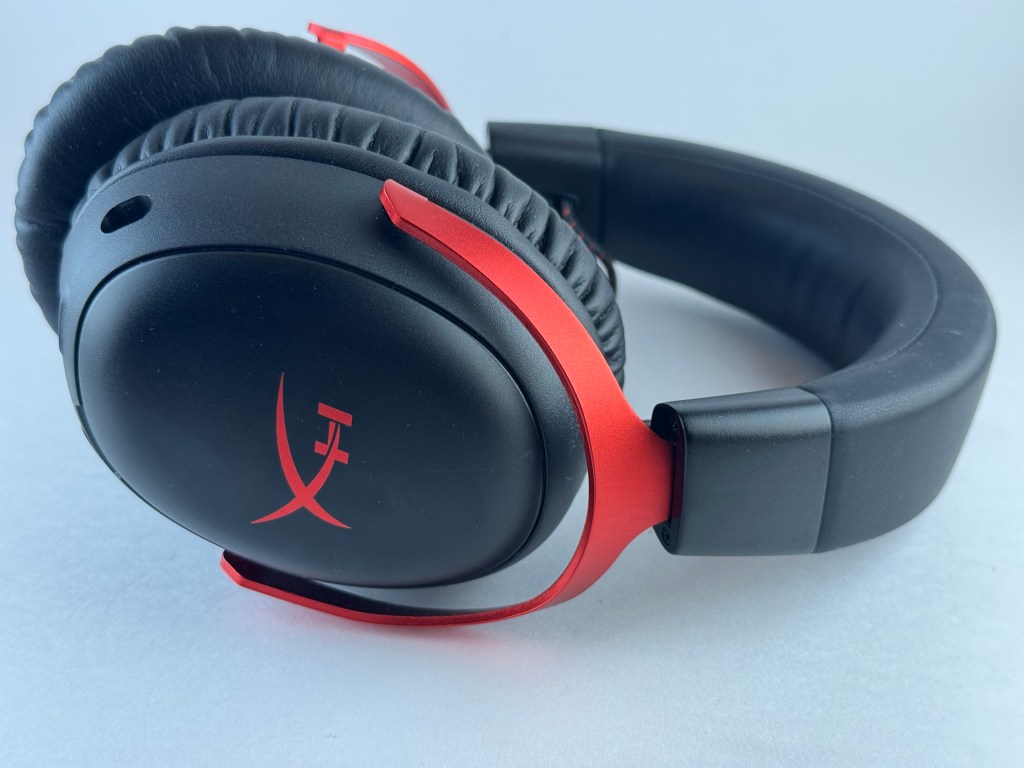
[ORIGINAL MSRP $179.99. Currently available on Amazon for $149.99 in May 2026. Purchased new on the TikTok shop sale for $110 + tax in February 2026.]
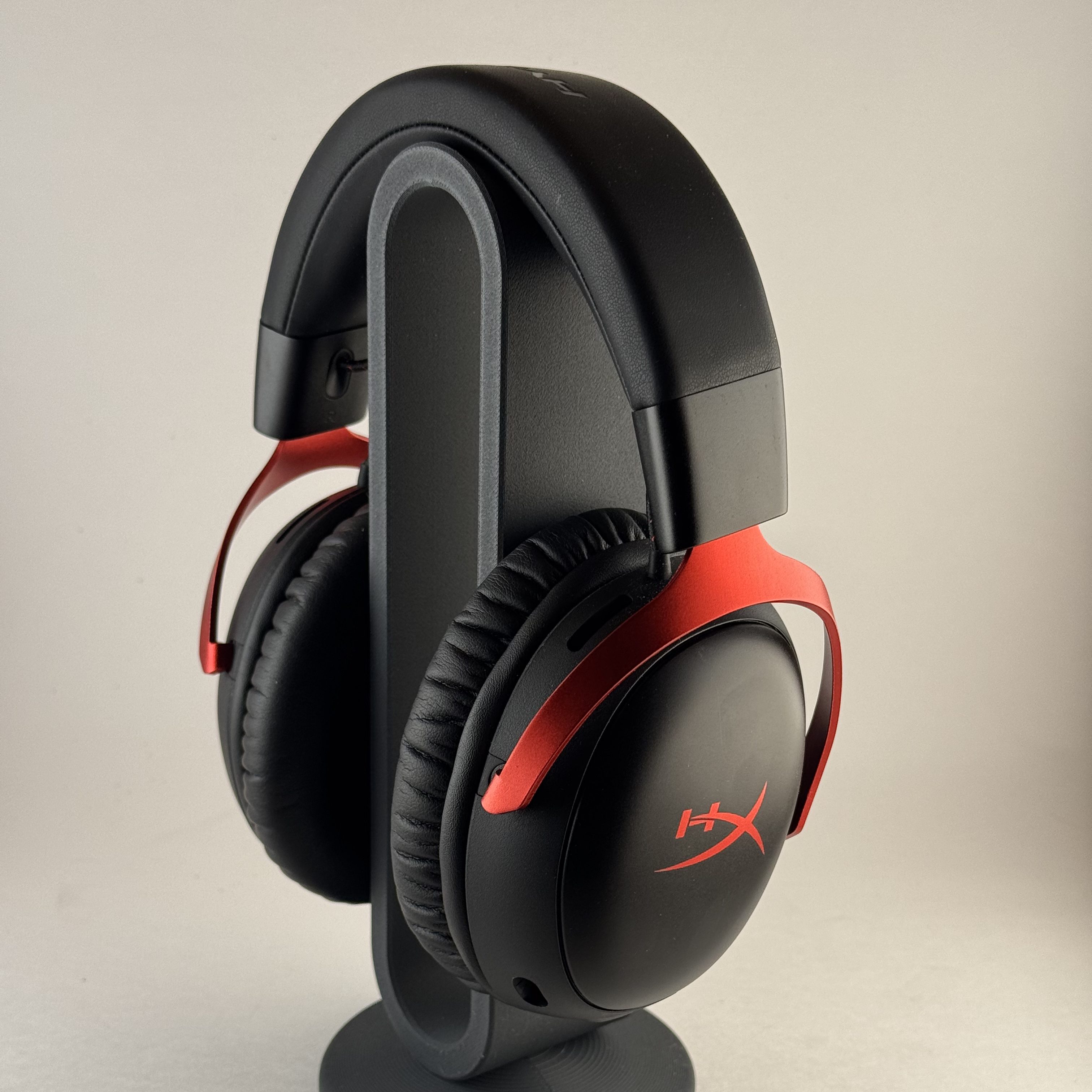
[Tl;dr: The HyperX Cloud IIIS are an impressively competent headphone, period, let alone gaming headset. I’m a pretty big fan and they’ve displaced basically all of my other options for FPS PC gaming. I do wish they were compatible with Xboxes, and the inclusion of a ten-band slider-based EQ instead of parametric EQ feels like a real miss in 2025/2026, but overall I’m very pleased with the performance of this headphone. They’re not what I’m going to ever grab for music, but they’re good enough sounding out of the box to be perfectly fine for even games with good music. And if you can find them around $100, they’re a pretty remarkable value.]
Cost-agnostic: 6 out of 10 Denalis

Cost-sensitive: 8 out of 10 Denalis

TABLE OF CONTENTS:
Introduction
Like most people who take audio reasonably (perhaps too?) seriously, I’ve long been a skeptic of gaming headsets. They’re usually … pretty bad. But, as I noted in my reviews of both the excellent Fractal Scape and (slightly-flawed) Audeze Maxwell, that’s increasingly changing.
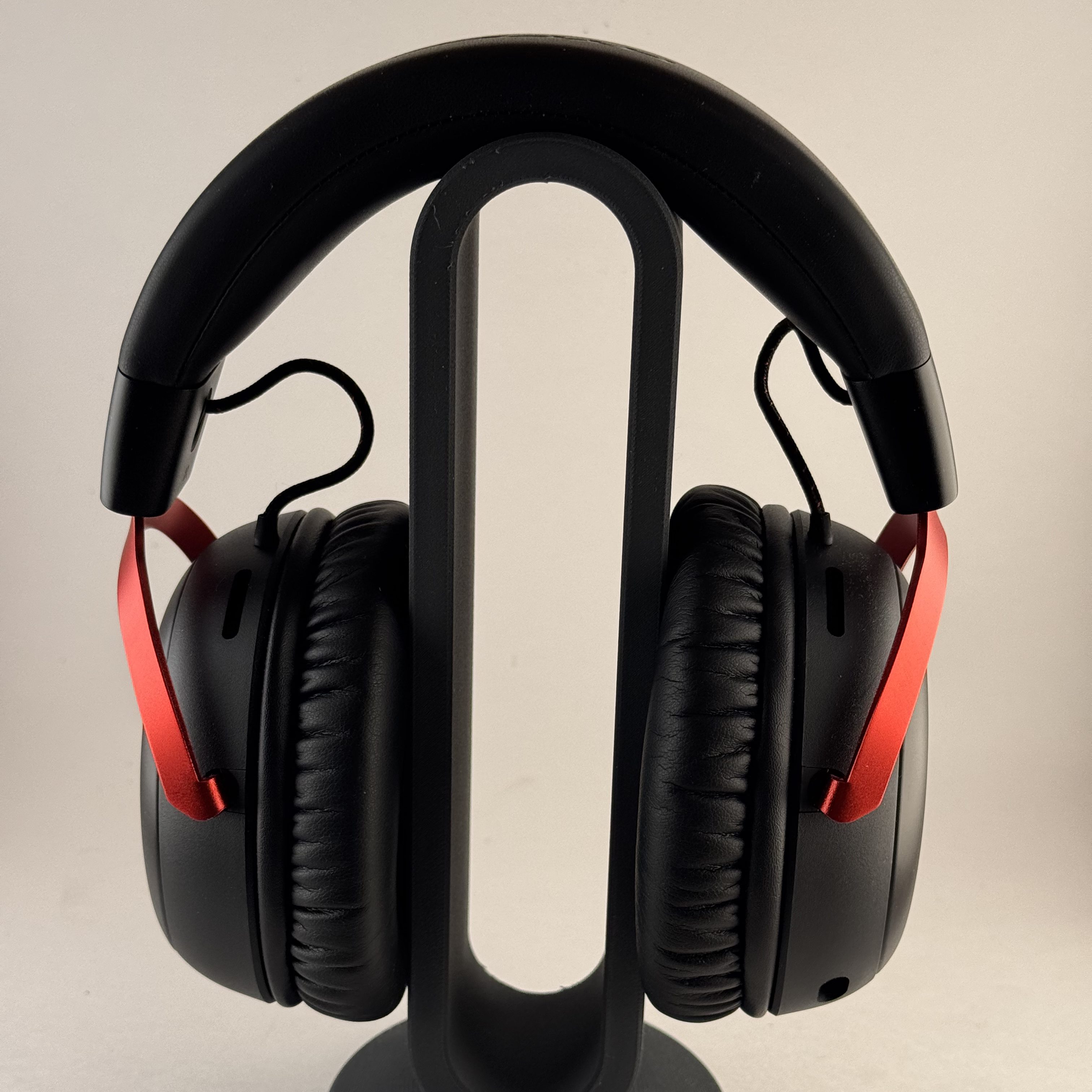
Enter the HyperX Cloud IIIS, a headphone that I would have never considered or taken seriously but for a combination of Resolve’s very favorable review a few months back and a pretty great sale on Tiktok.3 And I’ve been very pleasantly surprised; particularly for a consumer-focused and gaming-oriented headphone, it’s a really competent out of the box tune and a surprisingly good build quality, though you may want to tweak it a bit for your own preference (and if I were using this for music very much I definitely would make some adjustments).
Review notes
Testing rig
Here’s my basic testing protocol.
This is an active headphone, and my general rule of thumb is to not use active headphones any way other than actively. So the testing rig in this case is the Cloud IIIS’ dongle plugged in to either my gaming PC or my Mac Studio, playing via Roon. This means it’s a full-fat wifi signal rather than Bluetooth, so we get lossless audio.
EQ
As noted in the Bathys review, I mostly prefer to test headphones with their default tuning, assuming that most people won’t take the time or make the effort necessary to use a third-party EQ. And the Cloud IIIS are competent enough out of the box that they really don’t need EQ, particularly for gaming. If I were using these headphones a lot for music, I would definitely get into the weeds on EQ.
HyperX offers a ten-band EQ via their Windows-only app, Ngenuity. Unfortunately, those ten bands are all pre-defined and not necessarily where you would want them to be, which is a real missed opportunity for these headphones. However, the presets ARE stored on the Cloud IIIS itself, which means that you can use your EQ for basically any device you connect them to without having to set up a bunch of different apps on different devices.
These measure a bit more rollercoaster-y than they sound to me, at least my unit on my rig:
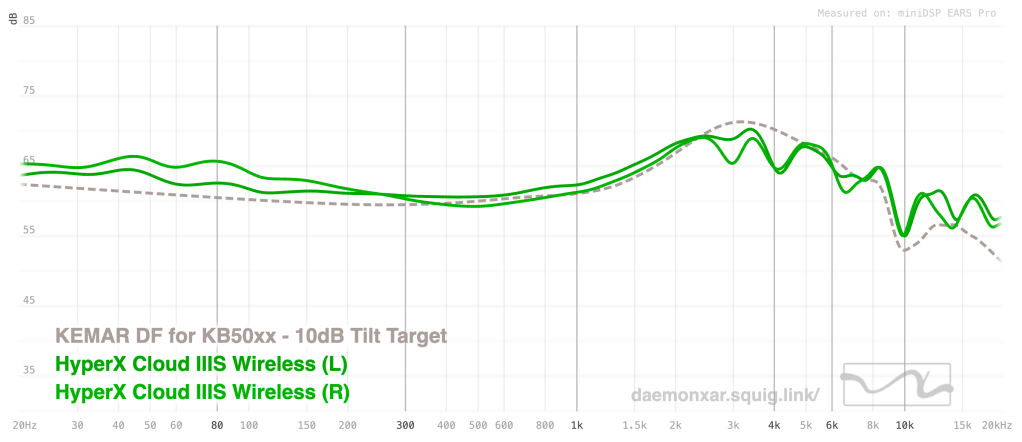
That’s … a surprisingly nice out of the box tune for a consumer-style headphone. All it really needs to hit my target is a little less bass and maybe a hair more in the ear gain region; overall pretty damned great.
Volume
These are active headphones using their own internal amplifiers to control volume. I find that I get a comfortable volume at around 30% of system volume on my gaming machine. Unless you’re really dedicated to wrecking your hearing, they’ll get plenty loud for you. When connected to my iPhone 15 via the dongle, a reasonable volume was around 50%. Connected to my iPhone via Bluetooth, a reasonable volume was more like 35%.
My torture testing list
The Basics
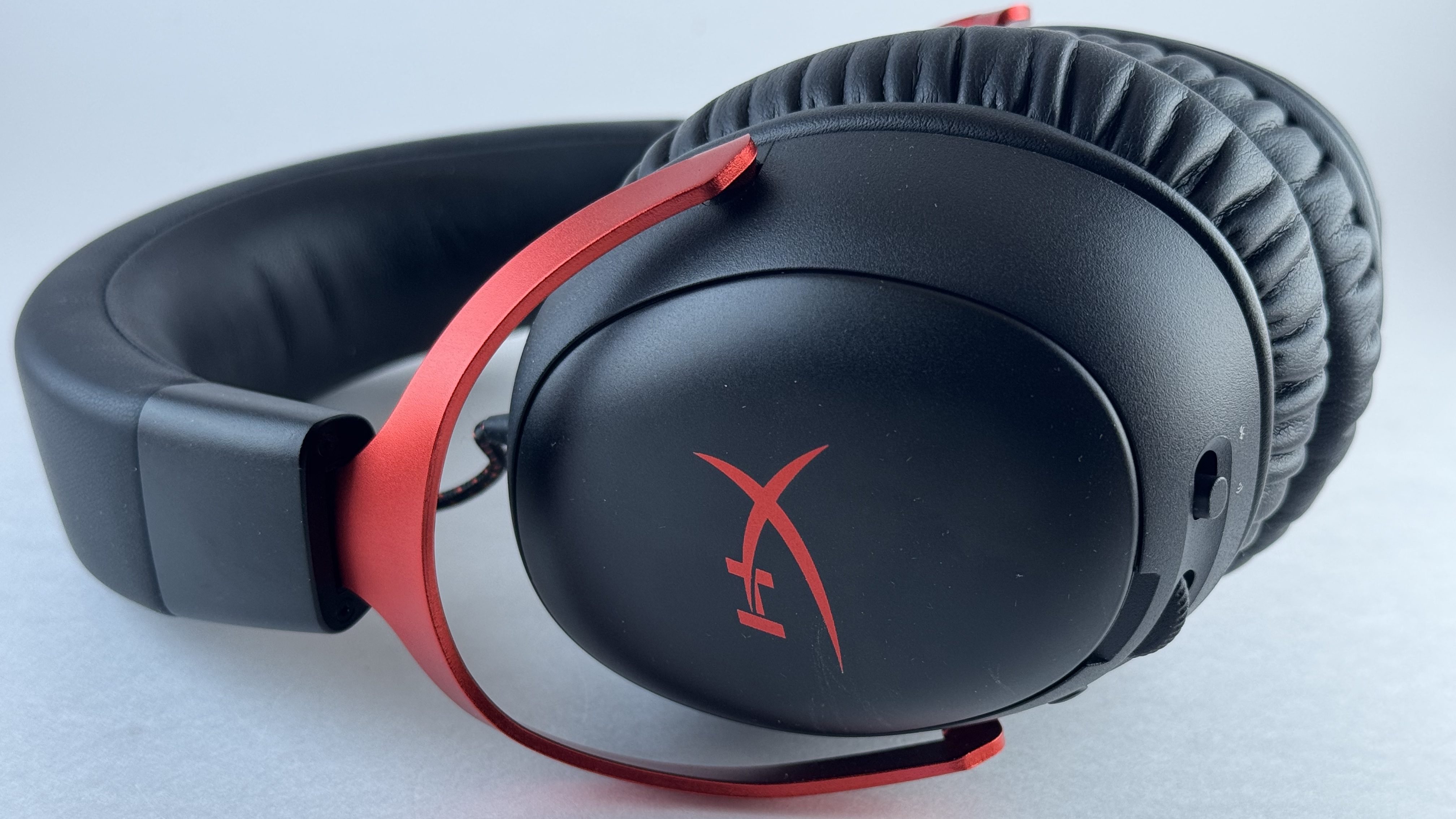
The Cloud IIIs is the latest iteration in HyperX’s active, closed back, dynamic driver gaming headset line. They are broadly compatible with just about every gaming system I could think of OTHER than the Xbox.4 They’re relatively light at 340 grams (and I was SHOCKED to discover they’re that heavy; they don’t feel it on my head), and have a surprisingly robust, mostly metal construction.
The Cloud IIIS can connect to a source three ways5: 1) via the included dongle (2.4 gHz wifi), 2) via a USB-C cable, or 3) via Bluetooth. You can probably guess, but the dongle and USB-C options are lossless-capable, and the Bluetooth option is lossy only (and limited to SBC and AAC). Needless to say, I wouldn’t recommend using Bluetooth for either music or gaming, except if that’s the only way you can use them. It also comes with a detachable boom mic, as well as a pair of built in internal mics in the left cup.
[Editor’s note: while I had heard on the internet that you could use these wired via USB-C, I couldn’t get it to work with my devices, so buyer beware.]
Sound
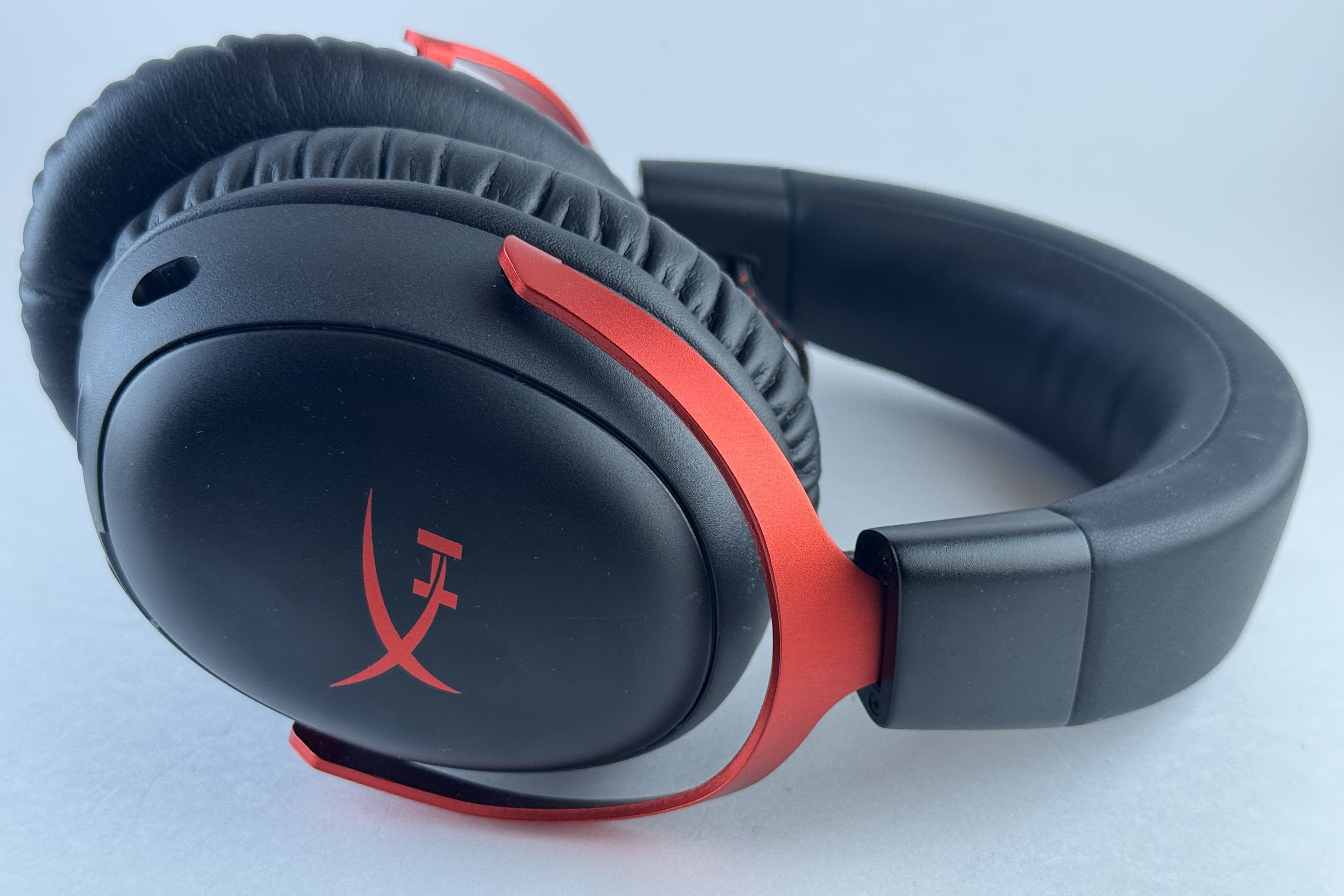
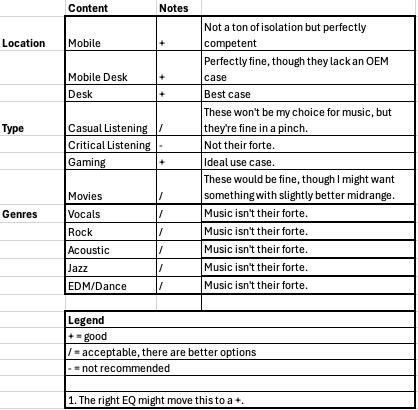
Overall, I’m pretty pleased with the sound on the Cloud IIIS for both music and movies. It’s not going to be my first choice for music (frankly, they’re just not designed for critical listening or even my more casual daily listening), but they’re absolutely fine in a pinch. If we think of music vs. gaming as a spectrum, with the Audeze Maxwell sitting on the music side of the line and the Fractal Scape somewhere in the middle, for me the Cloud IIIS sit pretty firmly in the middle of the gaming half. It’s not that they CAN’T be used for music, it’s just not their primary purpose.
Unsurprisingly for a headphone designed for gaming, the soundstage is pretty good. It’s reasonably wide, with pretty good imaging within it even if the layer and instrument separation isn’t necessarily up to snuff. On a track like “Chan Chan” you get the guitars pretty far out to the right and the left, the singers nicely centered, and the rest of the instruments in roughly the right places (though I’d like the guitar lines to blend together less). Soundstage is also pretty decent front-to-back; the guitar riffs at the beginning of “Love Can Damage Your Health (Laid Mix)” do a decent job of rotating around you in space. It’s also pretty good for gaming this way: in both “Death Stranding” and “State of Decay 2” it’s easy to place enemies and environmental sounds in space.
They’re not the most detailed or resolving headphone, but then that’s not what they’re designed for. I rarely notice anything missing from the mix, but there is a general sense of distance and maybe a little fuzz on particularly complex, layered tracks like “Easy” or “Just a Cloud.” You do get both the hiss at the beginning of “What Did I Do?” and the sounds of Ndgeocello’s fingers on the strings, and that’s my metric for acceptability of detail on quieter, more sparse tracks.
Microdynamics are acceptable but don’t stand out. The bass bell tones on “Angel (Blur Remix)” aren’t particularly crisp or accented, though you do get decent attack on the treble tones.
Bass
The bass is surprisingly moderate for a gaming, consumer-focused headset. It’s definitely substantially elevated, but not to the point where it’s overwhelming as I would have expected from a product in this category and price point. You get really reasonable, clean and present bass across tracks like “Superpredators” and “Violence” without the splattering I anticipated. Even on a track like “Out of My Hands” the bass line slips in smoothly around 2:48 without being too much, though occasionally the bass timbre gets a little funky, particularly as the engineer turns the volume up. When bass lines get complex you definitely lose a bit of resolution (particularly noticeable on a track like “Got ‘Til It’s Gone” (where the bottom notes dip out), but you get a satisfying brain wobble on “Limit To Your Love.”
If I were using this for a lot of music I’d probably add a small negative bass shelf (particularly below around 50 Hz) to clean it up a little, but this is perfectly competent for music and definitely for gaming; explosions won’t be washing out a lot of important detail in most situations, but you’ll still be able to hear and feel them.
Midrange
The midrange is really competently executed for a headphone, period, let alone a gaming headset with a broadly consumer target audience. It can get a little shouty at times (particularly at higher volumes) on tracks like “Drawn” or “Drream”, but not so much that it’s particularly problematic at least to my ears. Jill Scott’s backing vocals definitely fade into the background on “Calls”, but that happens on some substantially better headphones too and the Cloud IIIS can be forgiven for that. There’s a little unevenness on Christine Hoberg’s vocals on “Clair De Lune,” but it’s not particularly problematic at reasonable volumes. I’d consider EQ in the upper human vocal range if I were using these a lot for music, or I listened loudly.6
Treble
The treble on the Cloud IIIS is probably the most surprising part of it’s frequency response; it’s definitely a little hot compared to my preference, but it’s not bad. At all. Nothing in either “2021” or “Will O’ the Wisp” made it across the line into harshness (though they both came close at times), and it’s present enough to help with things like footsteps. I can definitely hear some spikes, particularly above around 10 kHz, but there’s just not that much information up there in the music I mostly listen to. I’m sure if I used them a lot for music I’d find some percussion instrument that strays into the problem areas, but consider me pretty impressed as it is.
Noise Isolation
These are closed back but not active noise canceling headphones. They do a pretty good job of blocking background noise (especially with music playing at a moderate volume), but you wouldn’t want to use them on a commute or in a particularly noisy environment. With them on and playing music I cannot hear my (relatively clack-y) Corsair keyboard but I do hear the fan currently blowing cooler air into my office.
Microphone
I will note that the microphone on this unit isn’t great; it’s certainly not bad, but it’s a little sibilant and sensitive to being too close to your mouth. I personally would prefer a better, separate mic, but it’ll do for most use cases as long as you’re careful not to set it too closely.
Here’s me testing it in a quiet office:
Build Quality & Appearance
I commented in my Fiio FT1 review that the FT1 looks and feels cheap, but fortunately doesn’t sound like it, and I’d say the same is true of the Cloud IIIS. If I just picked it up without knowing anything about it (for example if I found one on the shelf at Goodwill), I’d probably assume that it’s a very cheap knock off headphone. But, there’s more here than meets the eye.
Connectivity
The dongle has has zero issues throughout my months with the Cloud IIIS, and has even had a pretty impressive range in my lathe-and-plaster house where the chicken wire in the plaster walls makes individual rooms not entirely unlike Faraday cages. I can easily wear them as I walk around my house with very few issues, including when I go down into my basement to move laundry. The only place they really don’t work is in my kitchen, but I have had years of fighting to get anything with a wireless signal to work in there and they don’t disconnect, they just get … digital artifact-y.
I couldn’t get these to work at all via USB-C cable; the documentation isn’t great so it’s possible that I’m missing something important, but I wouldn’t buy these counting on being able to use them that way.
These seem to connect fine via Bluetooth, though I think they sound a bit hollow and more treble-y that way and I wouldn’t recommend it. Just use the dongle.
I’m delighted that HyperX did not include a 3.5 mm analog port. Active headphones shouldn’t be used passively except in emergencies, and I’m going to guess that these sound pretty awful without active DSP. Best not tempt people into using them that way.
Controls
The Cloud IIIS has reasonably well thought out controls that are, blessedly, all physical and not capacitance-based. The right cup has a multi-function button (click for pause/play, two clicks to skip forward, three clicks to skip back), a volume wheel (that mostly seems to control system volume on things connected via the dongle), and then a slider for Bluetooth vs. wifi dongle mode. The left cup has a mic mute button, a power button (and quick pressing it tells you the battery status), and the USB-C charging port.
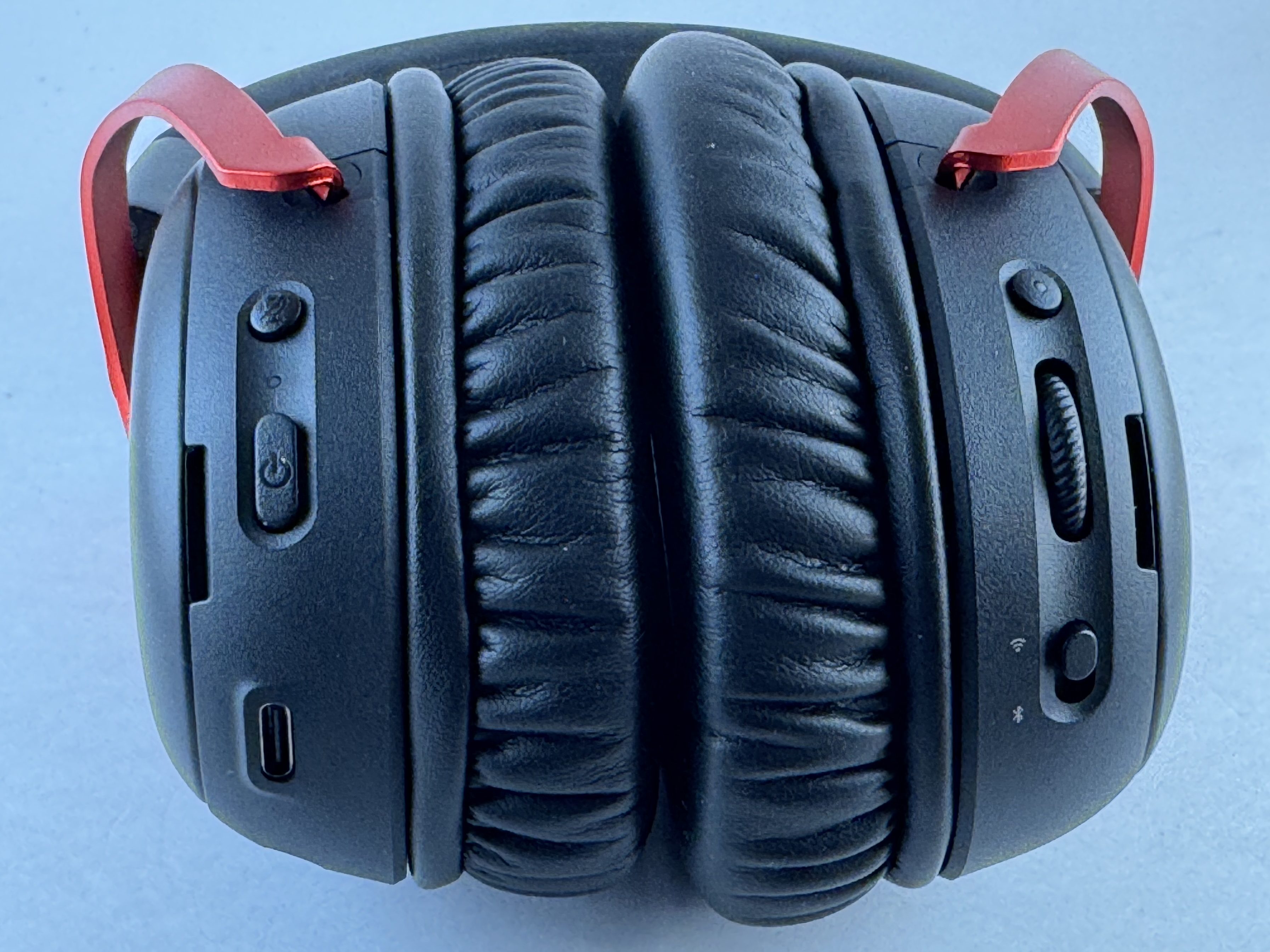
The removable mic inserts into a slot on the front of the left earcup; though the mic doesn’t have a flip-to-mute function, it’s a pretty flexible boom and is easy to mute via the button on the back of the cup OR to remove the mic.
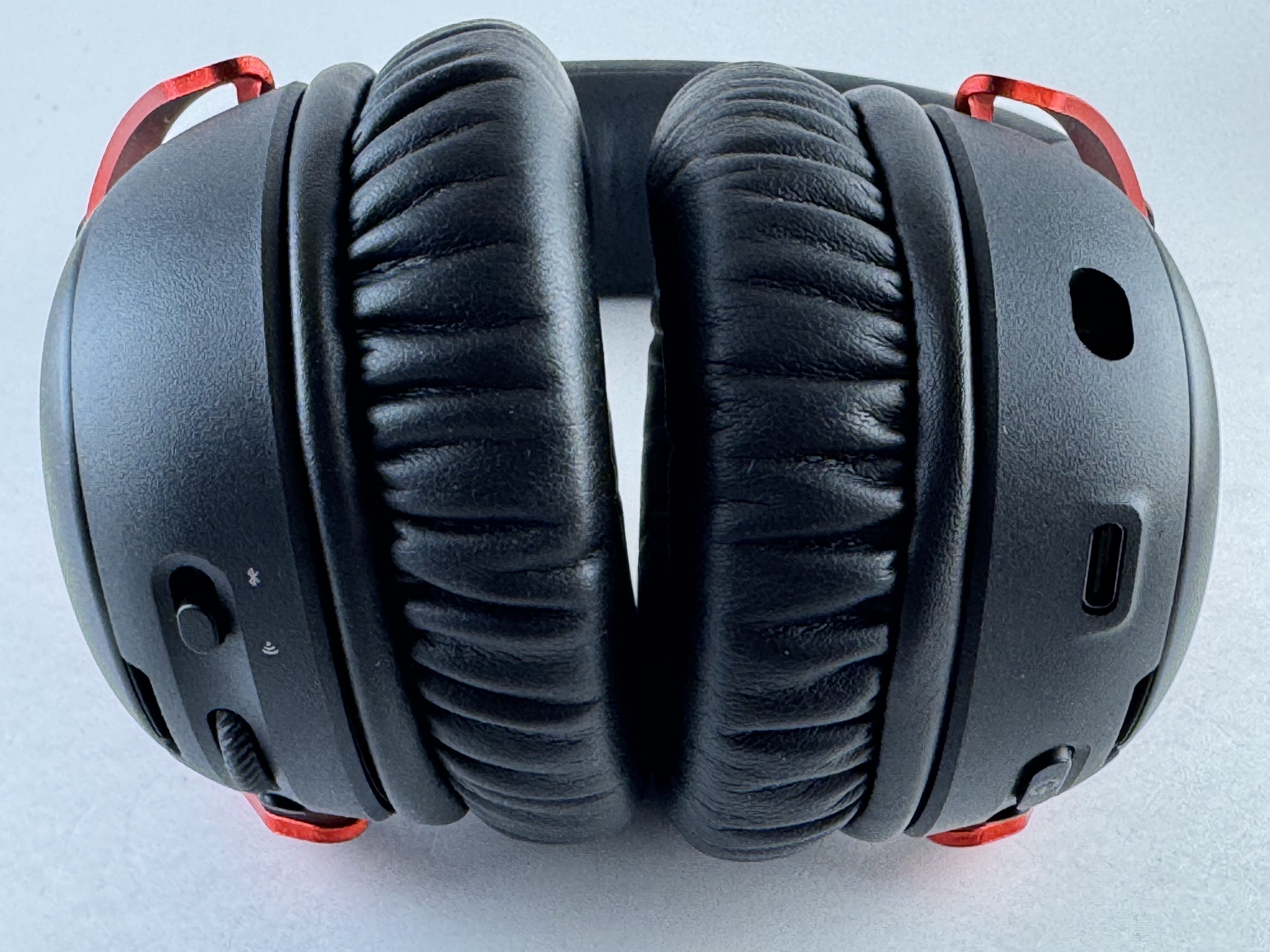
Construction
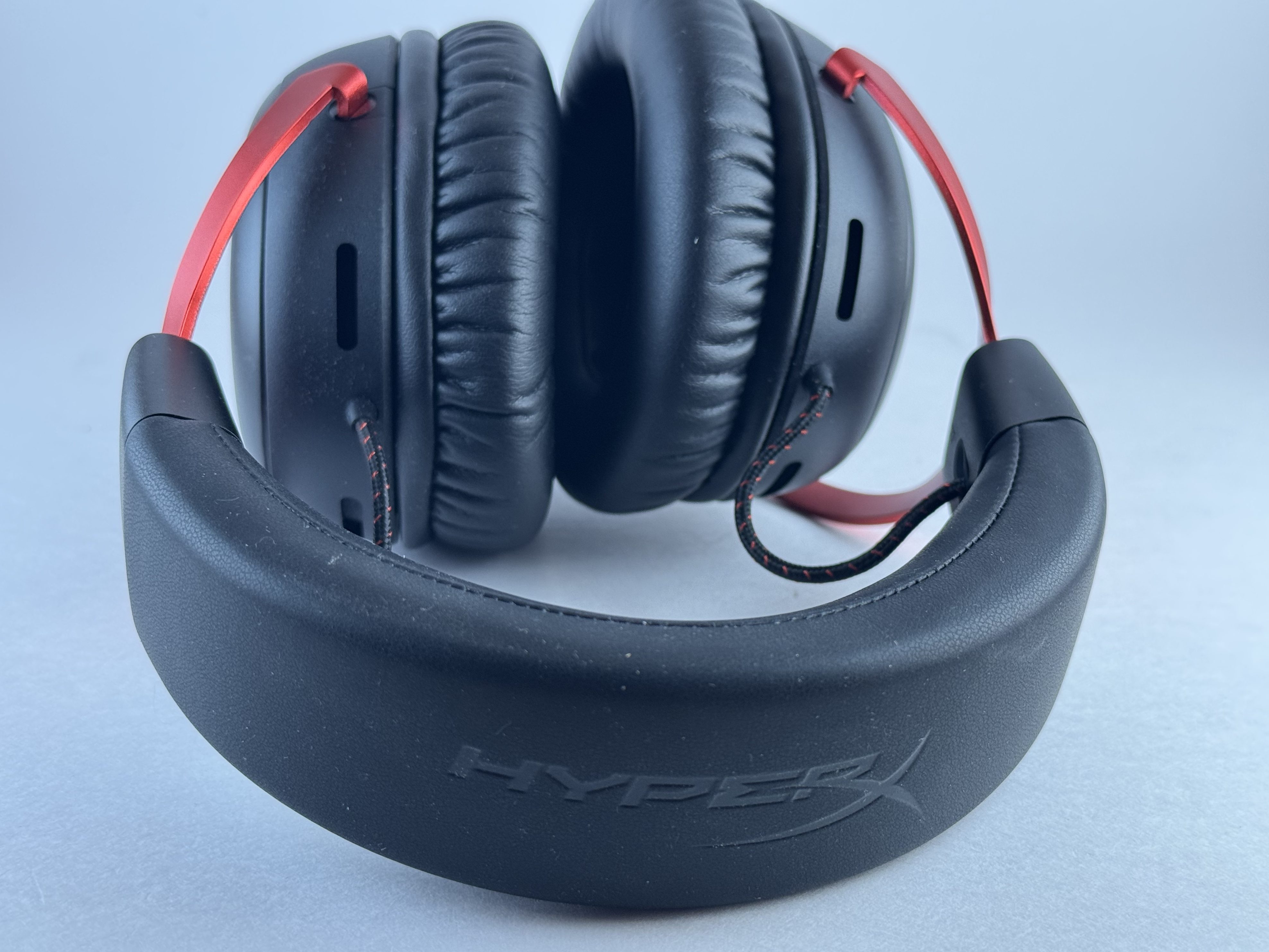
These are surprisingly well-built. While they look cheap, the yokes and band are constructed out of metal, as are the swappable, magnetic plates on the outside of the cups. The cups don’t swivel very much, but they do tilt around 45 degrees and the headband is very flexible. The earpads are VERY soft and conforming, making them easy to get a good seal.
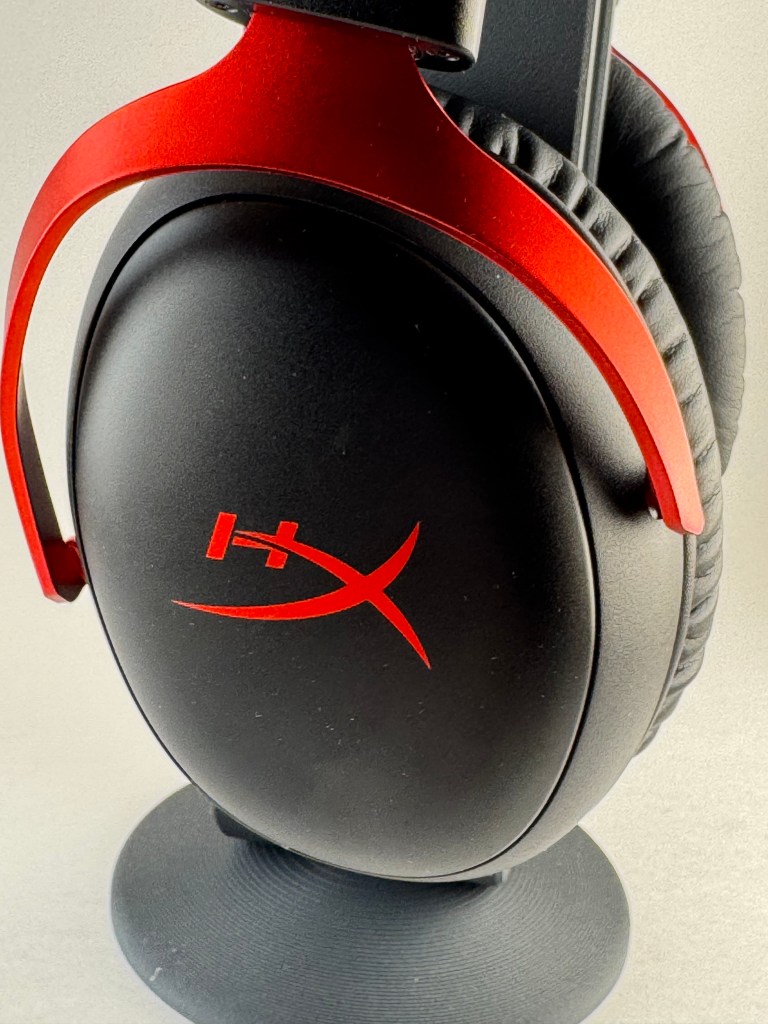
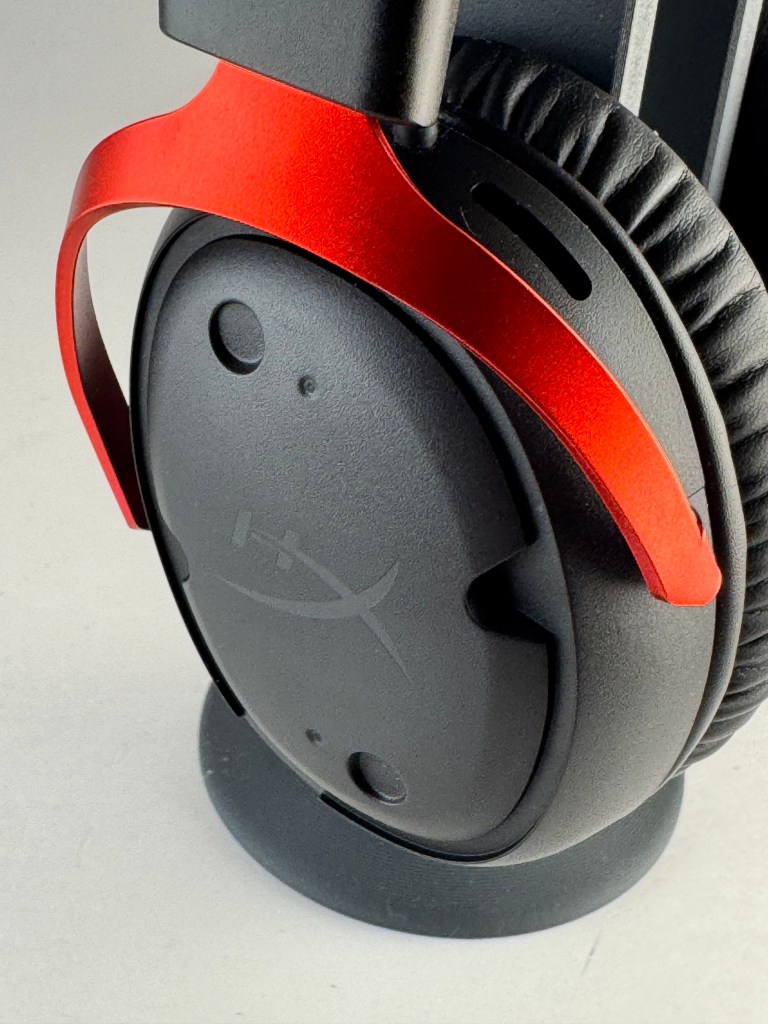
I’ll admit to not understanding the point of the swappable, magnetic plates on the outside of the cup. At first I thought they might be some sort of proto-unveiled concept, but they appear to be purely cosmetic.
Comfort
I’m genuinely impressed by how comfortable these are. They’re pretty well enclosed so they do get warm during long sessions (especially yesterday when it was over 80 in my home office), but that’s really my only complaint about them, comfort-wise. They’re extraordinarily light, the ears are appropriately clampy, and the band is sufficiently padded that unlike most headphones, there’s zero discomfort even after a few hours of wear.
Appearance
I definitely prefer the designs and aesthetics of other headphones more than the cheap, gamer-y look of these, but at least they aren’t covered in RGB. I definitely prefer this black colorway to the other white one, but these aren’t the kind of headphones I’m wearing out in public anyway.
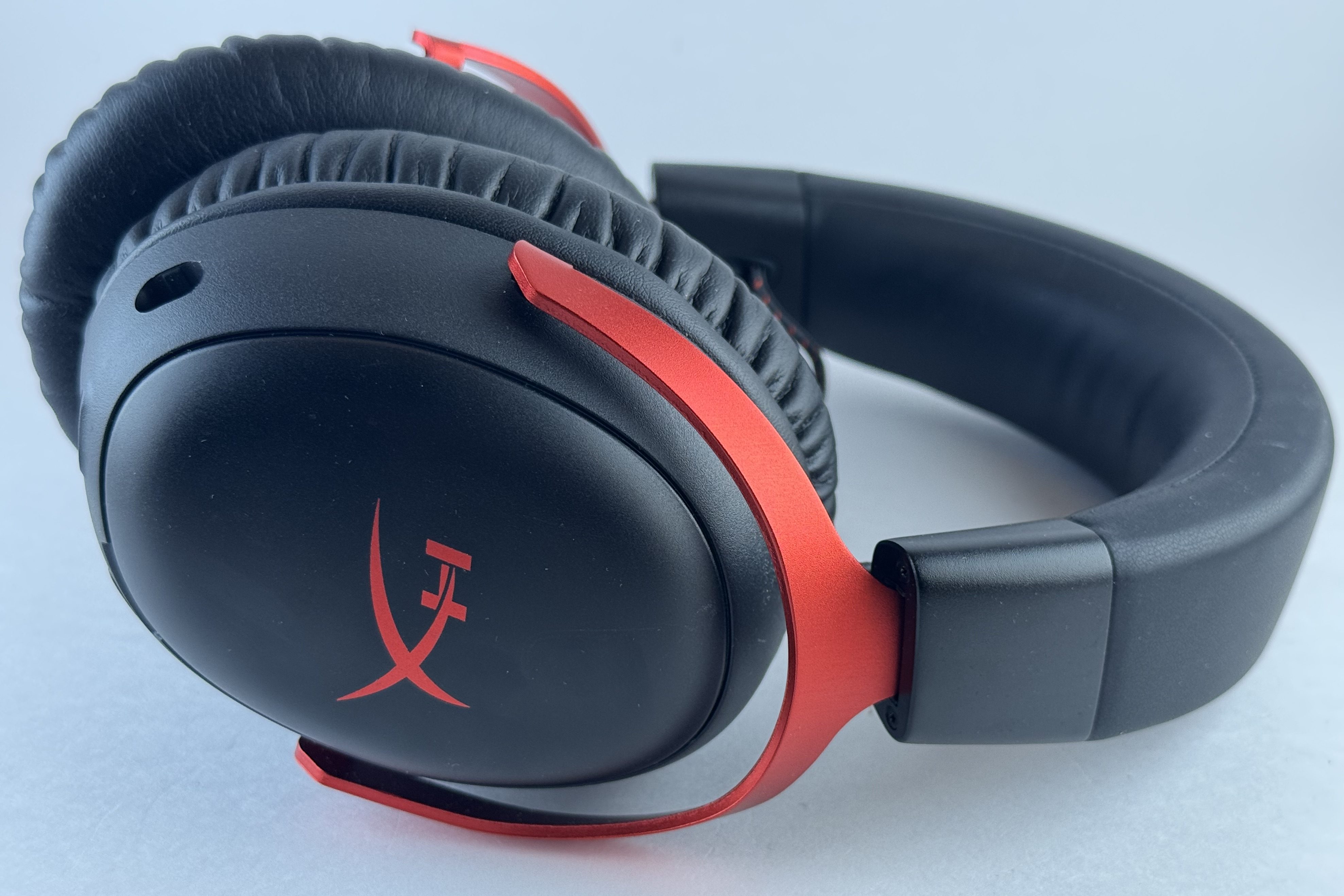
I think I’m mostly surprised at the discrepancy between their build quality and their appearance; they really do look like a cheap headphone but once you start feeling how solidly built they are it becomes a lot harder to square.
Value & Comparisons
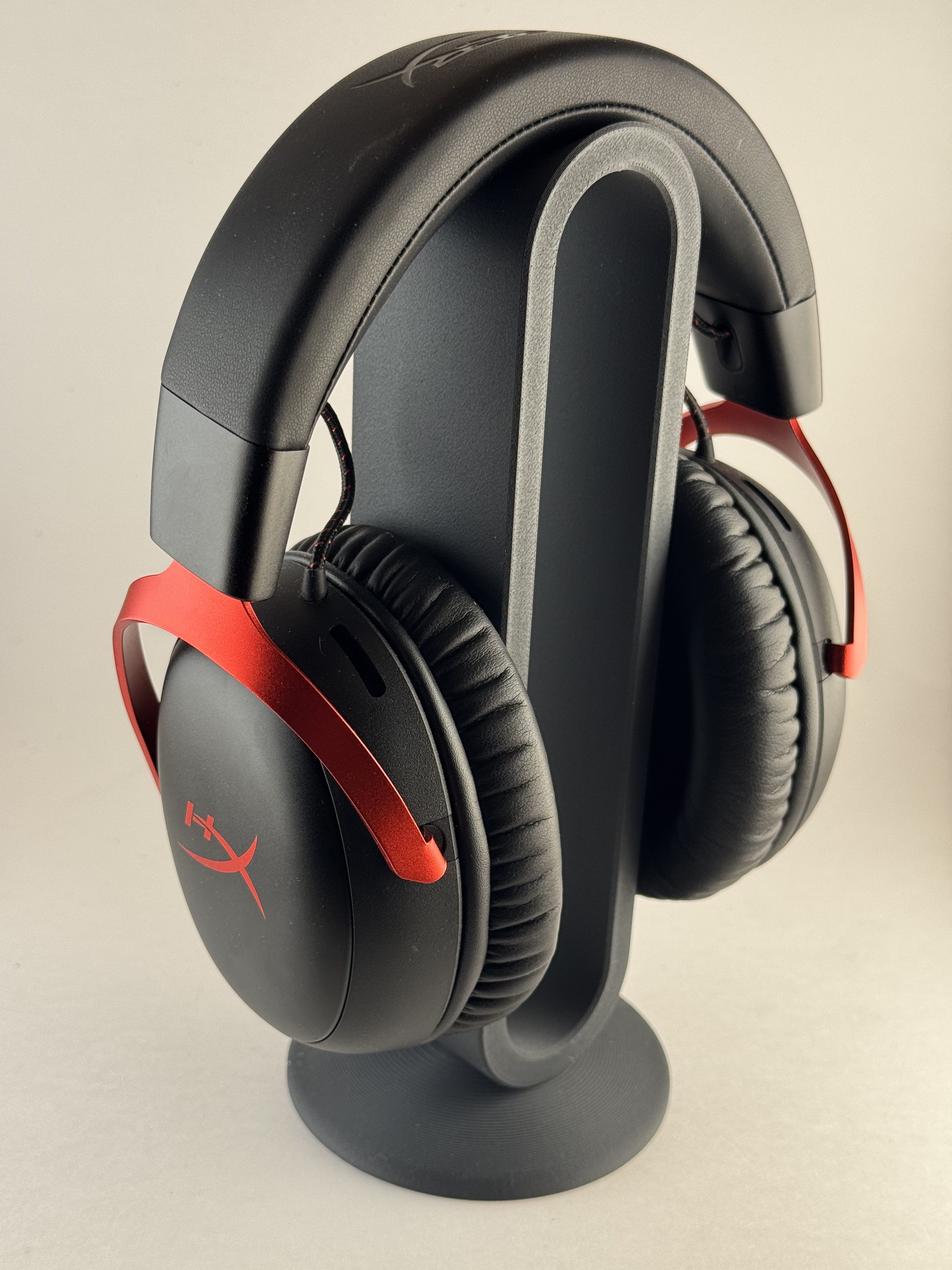
The Cloud IIIS is, I think, a shockingly good value at their current pricing (and even more so at the $110-120 they pop up for on various platforms on a regular basis). There are VERY few gaming headphones I’d choose to listen to, and they’re all substantially more expensive. If this were not marketed as a gaming headphone but as an audiophile one, with some slight aesthetic tweaks, I wouldn’t be surprised if people considered it a decent value at $250 or $300; at slightly north of $100, they’re a steal.
Fractal Scape
I’m a pretty big fan of the Fractal Scape. Particularly for a company’s first attempt at a headset, they’re really well thought out, with easy web-based parametric EQ, EQ profile switching on device, a charging cradle, and a flip to mute mic.
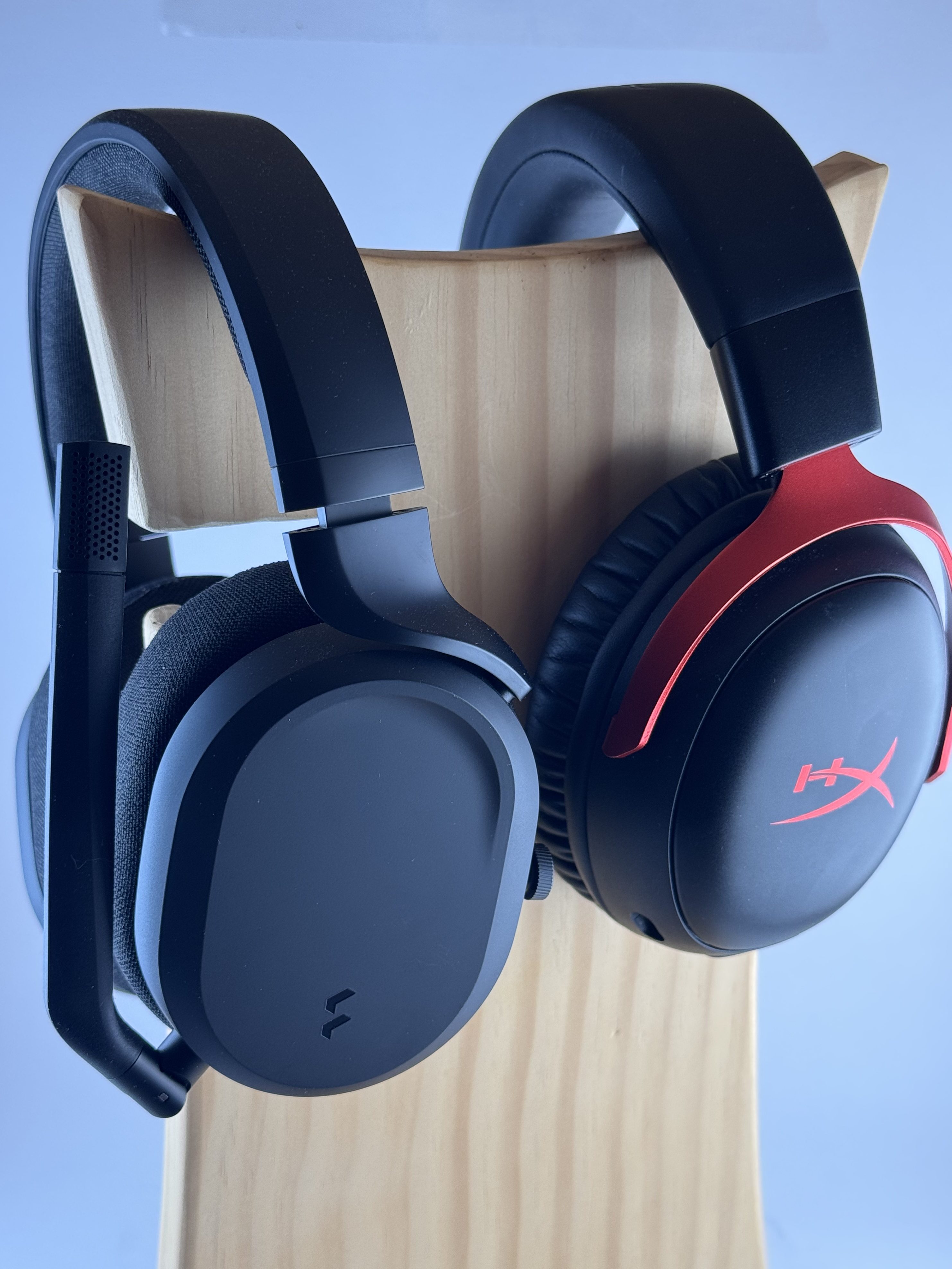
To me, it’s pretty clear that the Scape are better for music than the Cloud IIIS. The tune is just more neutral, and the EQ better designed to really maximize the sound quality. It’s also pretty clear to me that I prefer the Cloud IIIS for gaming; it’s just a more comfortable headphone for me.
The Scape is definitely a better all-around platform than the Cloud IIIS. It’s super easy to use, and because it lives in its cradle there’s almost no chance that it will ever be dead in a moment that I want to use it, unlike the Cloud IIIS, which lasts so long between charges that inevitably at some point I’m not going to remember that I have to charge them. That said, the Scape lives plugged into my Mac Studio and I find myself grabbing the Cloud IIIS pretty much anytime I spin up a video game on my PC. So that tells you something about my preference; while I might prefer the Fractal, it’s not by enough for me to both stand up and reach around my monitor to grab them. A quick glance at the graphs:
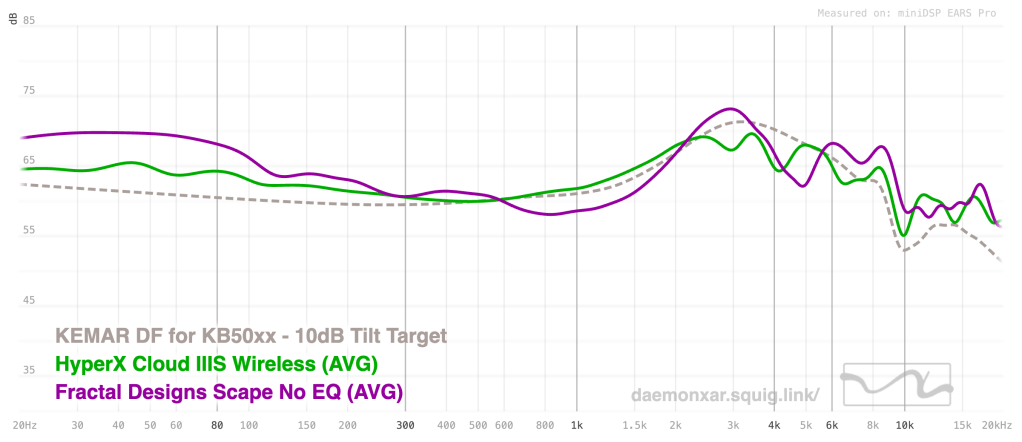
I’m a little surprised by how much bassier the Scape are, but I think that’s probably because I almost only use them with EQ and I’ve turned down that bass. Even out of the box, though, that midrange is distinctly better than the Cloud IIIS, and the treble is a pretty mixed bag for me (with neither being particularly great or particularly problematic).
Verdict: they’re both great, and either will work for most things. I prefer the Scape for music and apparently the Cloud IIIS for FPS gaming.
Audeze Maxwell
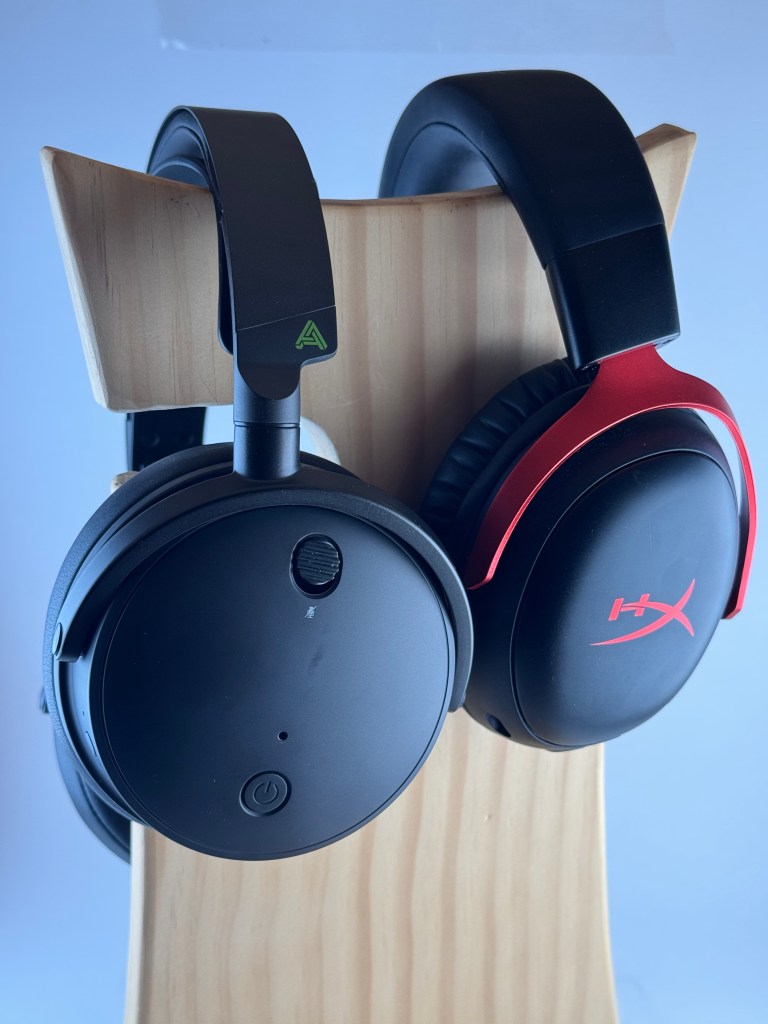
I am substantially less fond of the Audeze Maxwell than most reviewers who have taken it on; to me, the out of the box tuning is VERY boring and bland, with too little bass even for me. Once you add a little EQ they sound great … but the Audeze app is genuinely awful on iOS, MacOS, and Windows. It’s also god-awfully heavy; a full 150 grams heavier (almost 50% heavier than the Cloud IIIS), and the physical design of the Maxwell means that it feels every bit of it’s 490 grams, while I was surprised to learn how heavy the Cloud IIIS is.
Despite my issues with the Maxwell, after properly EQ’ing them they’re a great sounding headphone. If I were listening to music, they’d be my preference, and it’s not particularly close. And given that a lot of my gaming takes place on an Xbox Series X, I end up using them for gaming in my living room a fair amount of the time (basically anytime I need to be able to chat), but I’m never going to bother to connect them to my gaming PC (or Mac Studio, for that matter) when I have the Cloud IIIS sitting here.
The Maxwell is pretty clearly a better platform (particularly for people who use it regularly), but for my purposes the Cloud III is probably a better headset … or at least a more usable one, and I’ve got a wall of options for my music listening. Add in the fact that the Maxwell costs at least twice as much (more if you’re getting the Xbox compatible one), and it’s a pretty easy win for the Cloud IIIS for me. A quick glance at the graphs:
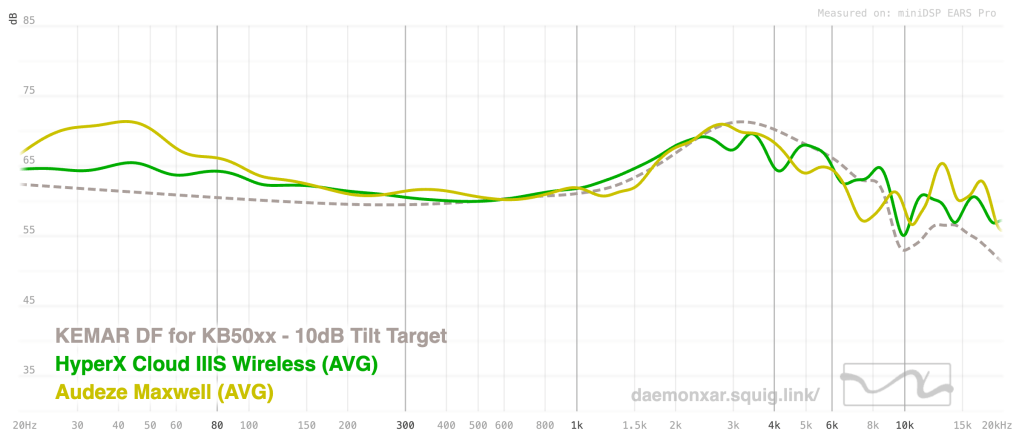
When I first put on the Maxwell, I really thought I had a bad unit becuase I didn’t get any bass until I added a bass shelf. I don’t know how that happened, given how this unit measures other than to say … this is one of the biggest differences between what I hear and what I measure. Makes me wonder now if I have a leakage issue with these when wearing glasses, or if I just happened to use testing tracks in those days with zero sub bass information.
Verdict: Maxwell is just irritating enough to use for me that I’ll default to the Cloud IIIS for anything other than Xbox gaming, where it’s my only real option at this point.
[Now, if I could only have ONE headphone for use at home … I’m probably taking the Maxwell, warts and all. It’s a more versatile option, but slightly less well-suited for my specific and intermittent use case.]
Microsoft Series X Headset
I’m a surprisingly big fan of this headset, but I have sadly passed them along to a friend so I can’t do a direct comparison, and right before I got my measurement rig too. Despite that, I’m pretty confident that I’d take the Cloud IIIS over the Series X every time … there’s a reason I passed them along.
Verdict: The Cloud IIIS is a better headset for everything except Xbox gaming, and only marginally more expensive.
Razer Kraken
No.
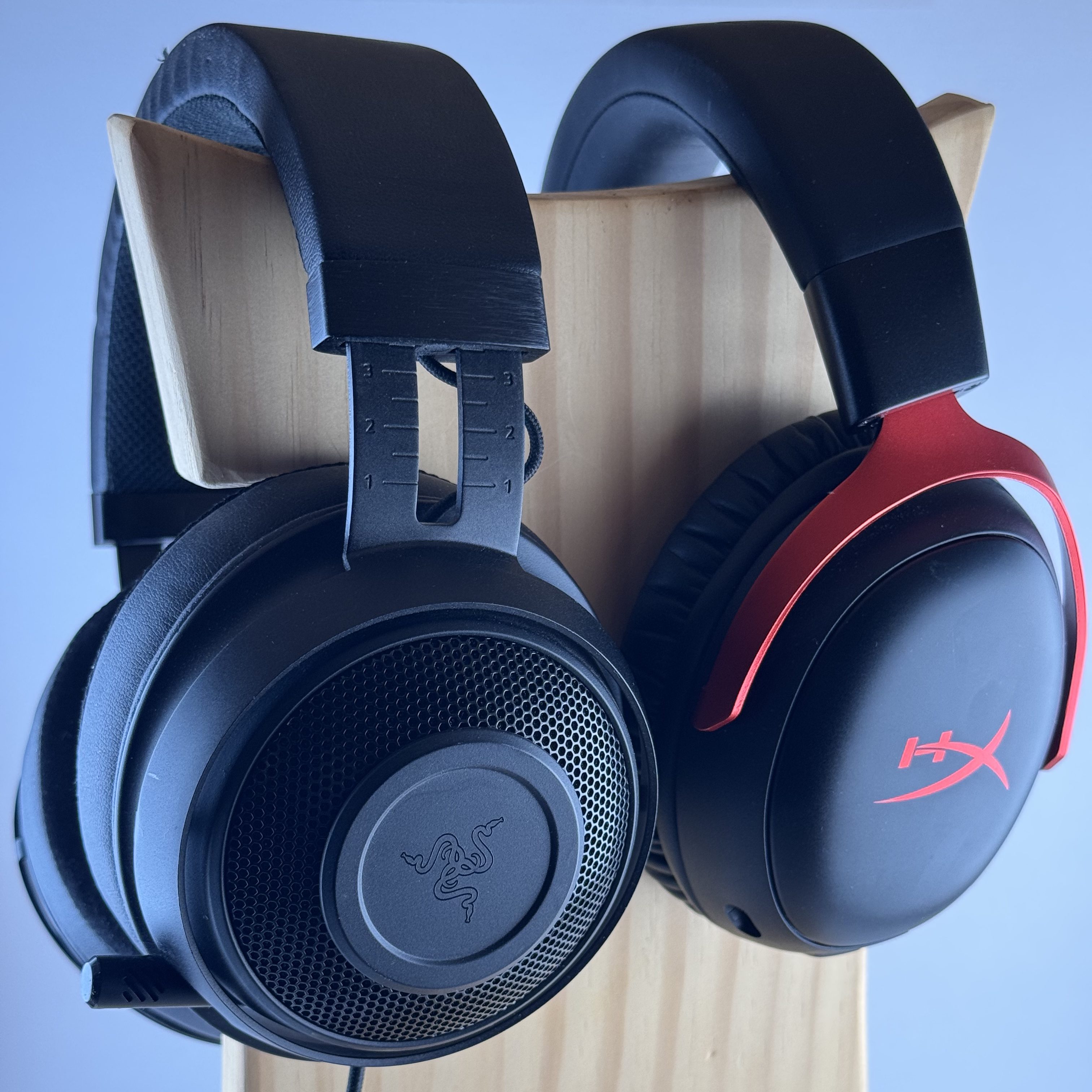
Just no.
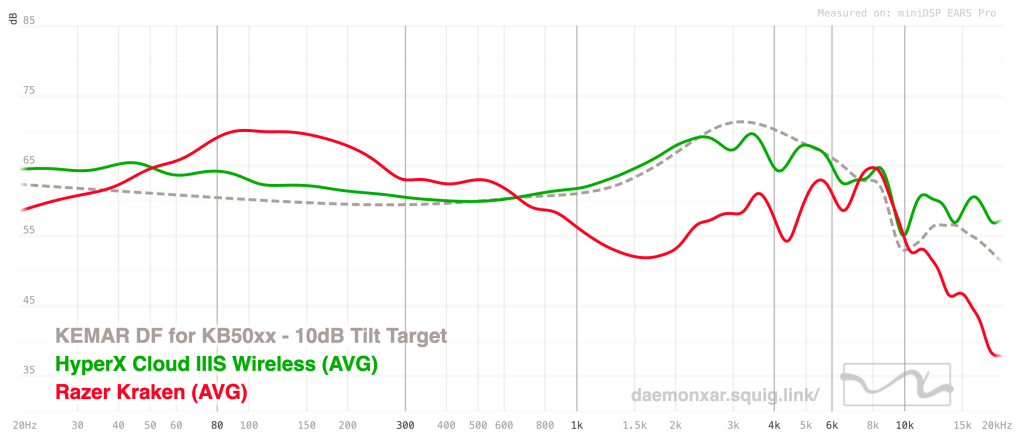
God that’s a weird tune.
Fiio FT1
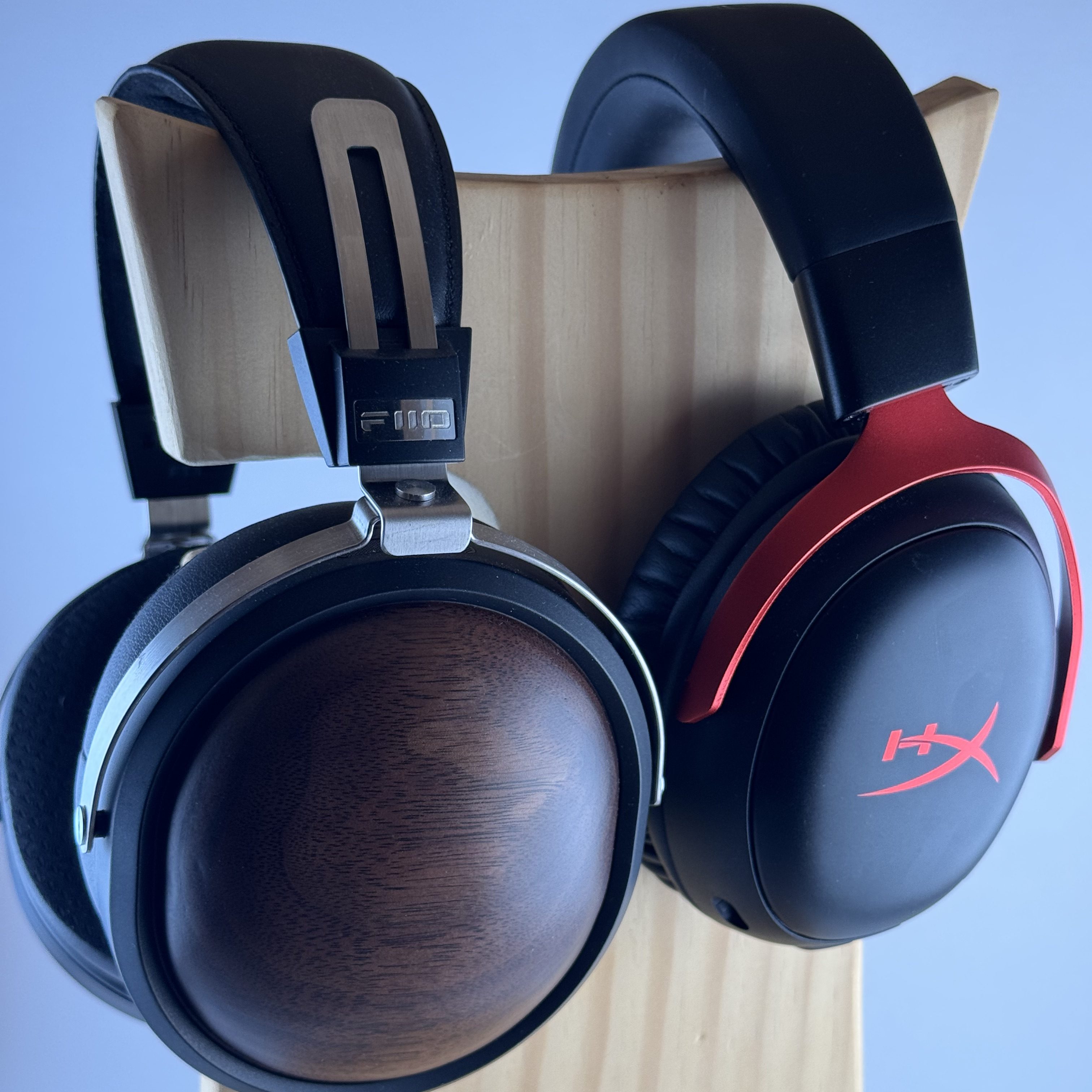
I noted in both my Maxwell and Scape reviews that while I prefer the out-of-the-box tuning of the FT1 over those wireless headphones for music, for gaming I prioritize the convenience of wireless and would basically be stopping my use of the FT1 (the only closed back under $500 I recommend without reservations at this point7) for gaming. That’s largely held true; I haven’t plugged the FT1 in for a gaming session in almost a year, and I think the sheer convenience of the Cloud IIIS living with its dongle plugged into my gaming PC will continue that trend. The FT1 is marginally better, sound-wise, but the delta isn’t enough to justify the (very minor) hassle of finding a cable, figuring out which amp is the active one, and plugging it in.
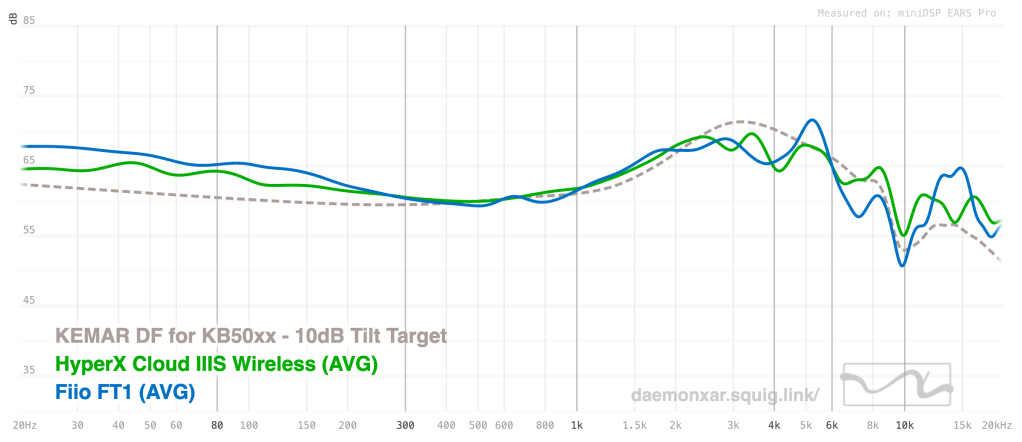
Verdict: Again, for music I’m taking the FT1 but for gaming it’s not particularly competitive and I’m grabbing the Cloud III.
Overall
Overall, I’m very impressed with and pleased by the Cloud IIIS. HyperX isn’t a company that I would have paid any attention to in the past, but now I’m curious to see if they add any higher-end options with more features (like parametric EQ!). These are going to live plugged into my gaming PC for the forseeable future, and that’s saying something given the variety of options I have at hand.
#reviews #headphones #sennheiser #6XX #anc #spatialaudio #meh #2025 #99noir #meze #sunglasses #overear #cans #hifiman #arya #stealth #editionxs #budget #hahahaha
- I score bass, mids, and treble on a two part scale: 1-5 for quantity (5 being the highest), and A-E for quality (A being best in class, E being laughably bad). For soundstage it’s also a two part scale, with the number representing the width and the letter the separation within it. ↩︎
- For comfort/fit, my scale is A-E with A being disappear entirely into the background and E being I want to tear my ears off to stop feeling these headphones on my head. I’ve had one E: the Koss PortaPro. ↩︎
- I know … I know. ↩︎
- To be fair to HyperX, this is 100% Microsoft’s fault for charging a $30 license to every manufacturer who wants Xbox compatibility and we should all be resoundingly criticizing Microsoft for that choice. ↩︎
- There is a fourth (“Instant Pair”), but only if you own specific models of laptops. Which I, shockingly, do not. ↩︎
- Don’t listen loudly. Don’t do it. Just don’t. ↩︎
- The Beyerdynamic DT 270 Pro might be changing that; watch this space!
Yeah, I’m as shocked as you are that I found a Beyer I (mostly) like. ↩︎
 Phil's Superpower of Enthusiasm
Leave a comment