
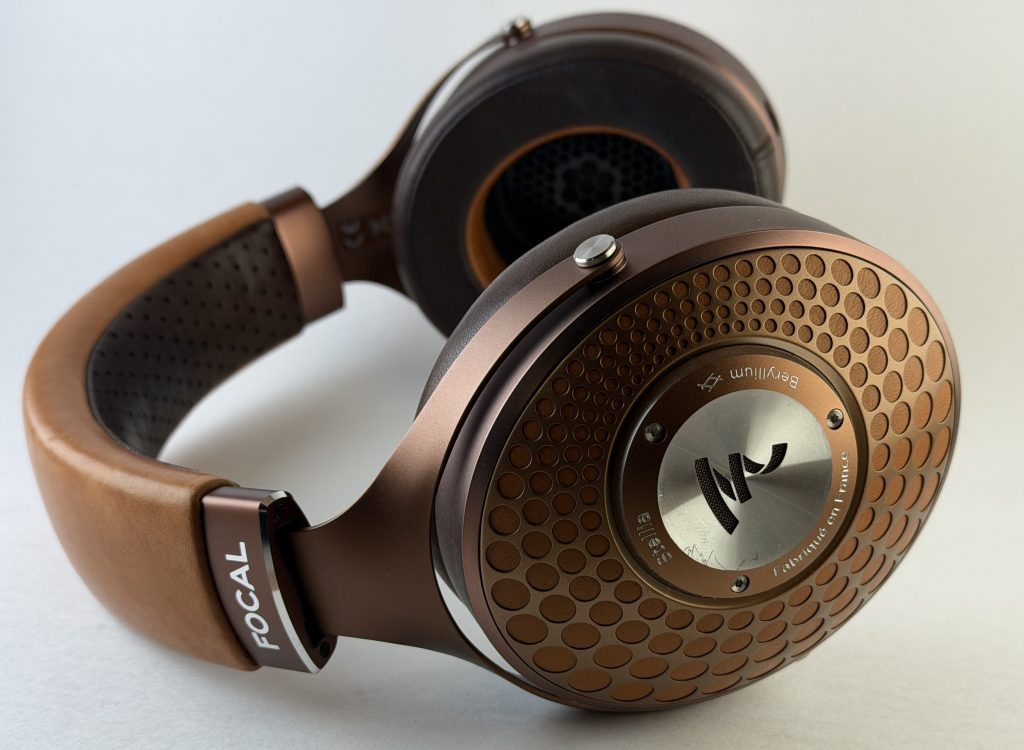
[ORIGINAL MSRP $2999. Currently available from Amazon for $2,299, and $2,299.99 new from Headphones.com in October 2026. Purchased lightly used from r/AVExchange for $1,225 in May 2026.]
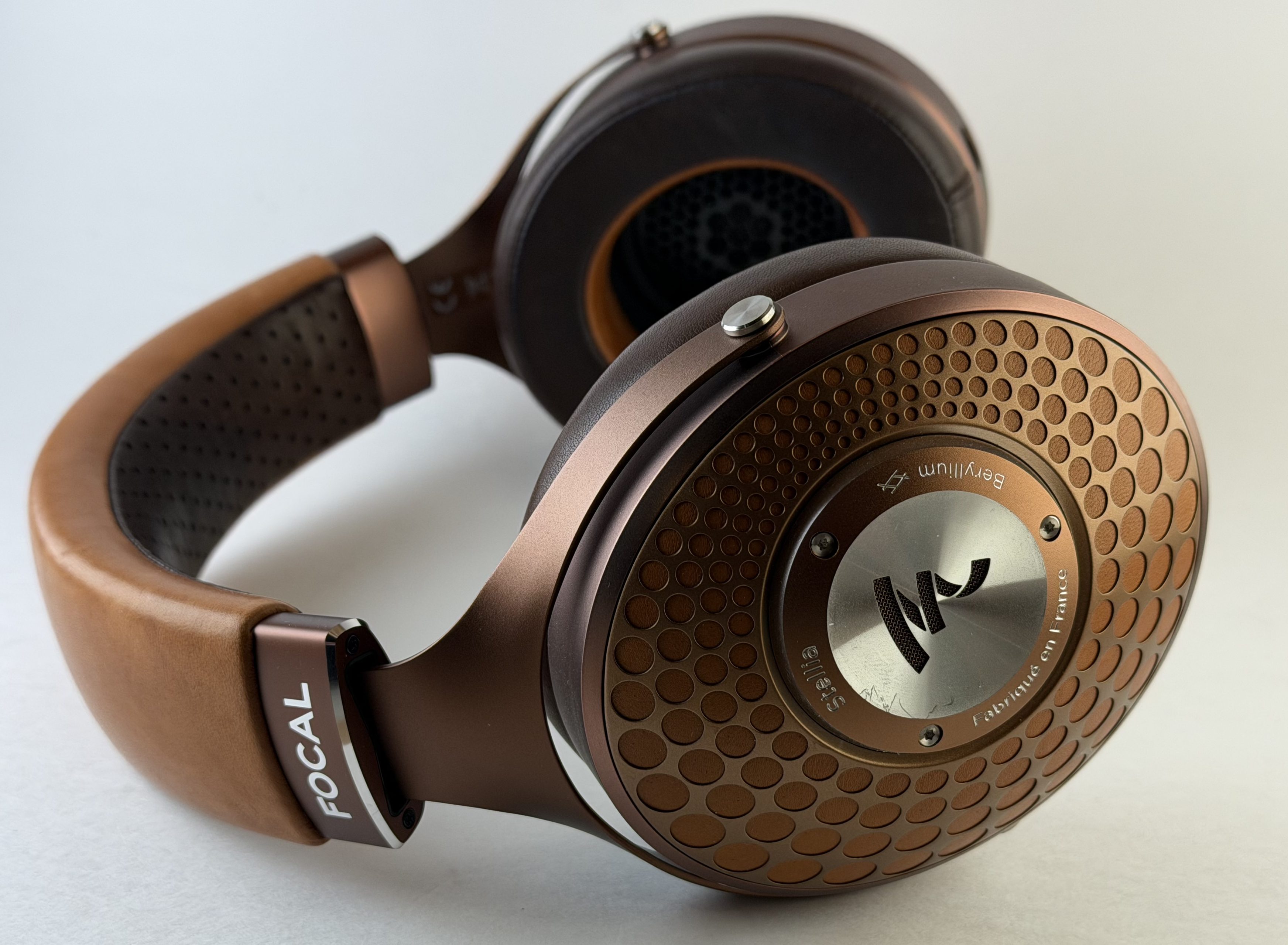
[Tl;dr: The Focal Stellia are a pretty incredible headphone, even by flagship headphone standards. The level of detail they pull out of well-mastered tracks is pretty exceptional, and they manage to do it while keeping treble well-controlled and deeply pleasant. They’re well-built, thoughtfully designed, and beautiful to look at (at least to me), and remarkably immersive for a closed-back on well-mastered and -engineered tracks.
The one downside of the Stellia: they’re in a price bracket where I can’t in good conscience recommend them to anyone who hasn’t spent a fair amount of time on headphones or who can’t afford to spend the cost of an at least semi-functional, running car on a pair of headphones. That said, if you like music, they’re worth a bit of hassle to get a listening session with.]
Cost-agnostic: 9 out of 10 Denalis

Cost-sensitive: 6 out of 10 Denalis

TABLE OF CONTENTS:
Introduction
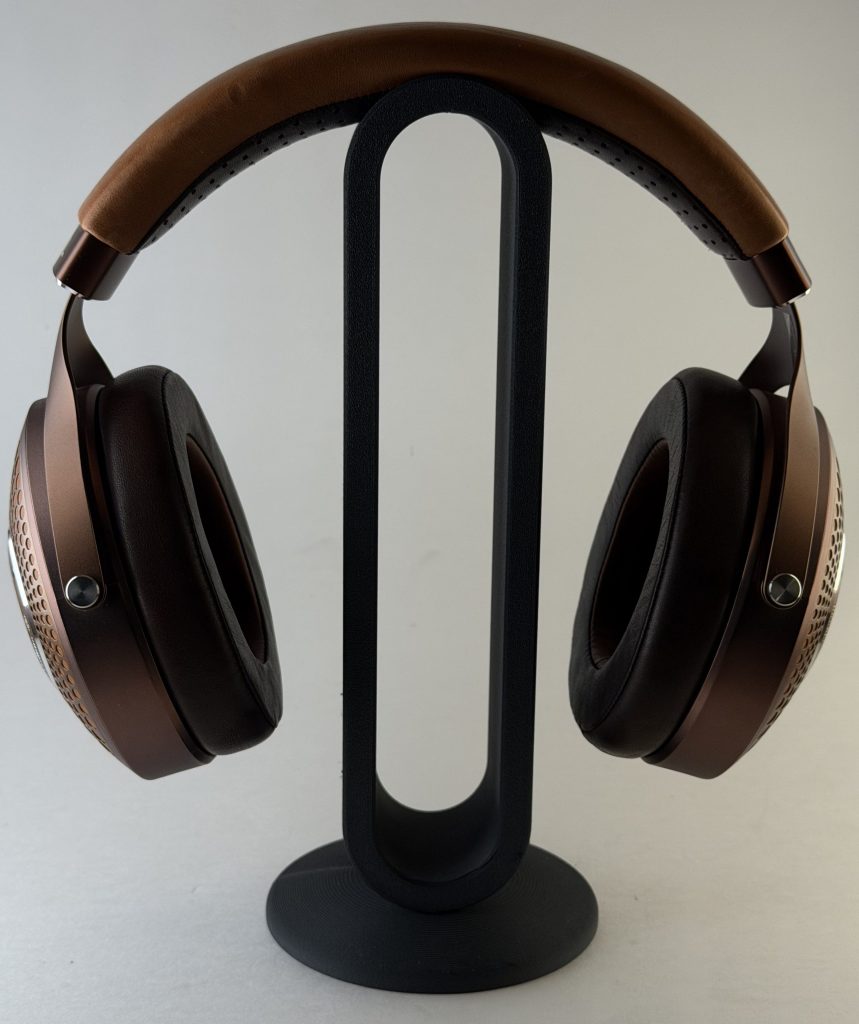
Behind Sennheiser and Hifiman, I think Focal is the headphone company that I have spent the most time with. They make the first really nice pair of headphones I spent a lot of time with, the Focal Elex that my dad bought back in the day (and which I snagged a new, backup pair of a few weeks ago when headphones.com got a few of the last production units), still one of my favorites. They make the headphones I still mostly use on planes, the Focal Bathys (though the excellent Bose QC Ultra has been giving them a run for their money over the last few months). Along the way, I’ve also reviewed the excellent (but not for me) Azurys and the excellent (but superfluous for me) Hadenys, and I’ve got a pair of the Celestee waiting in the wings for a review. And one of these days I’ll get around to reviewing the Clear I talked about in my Elex review. So it’s fair to say that I’m a fan of Focal; to me, they haven’t had a clear cut miss that I’ve heard, though I certainly have my preferences among their products. Based on the Stellia’s pricing ($2,999 at MSRP) and the fact that they’re rarely available lightly used for much less than $2,000, I was pretty sure that I wouldn’t ever try a pair. Enter r/AVexchange, and a random posting from a gentleman in Las Vegas. It was a pretty rocky transaction with all of the hallmarks of a fraud (the pictures were pretty generic at first, he wanted to rush the transaction and then sent me the money via Paypal instead of requesting it, then asked if I wanted to just send him double the amount, back, etc.), but at the end of the day I got me a pair of very lightly used Stellia (his backup pair) for $1225, full box and kit.
And they’re quite something.
Review notes
Testing rig
Here’s my basic testing protocol.
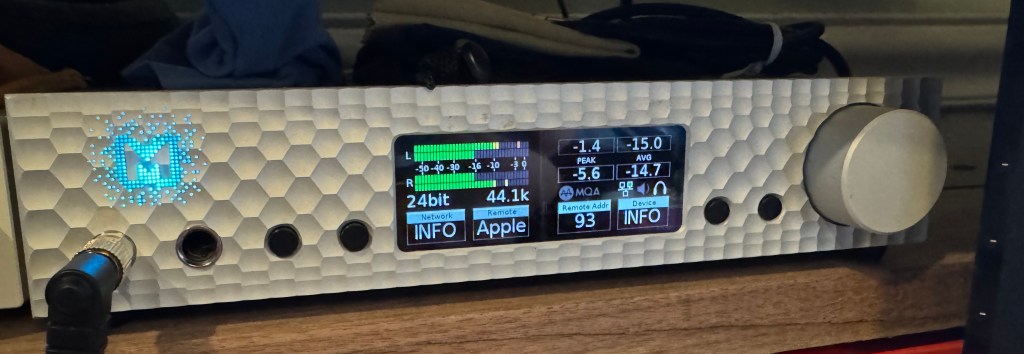
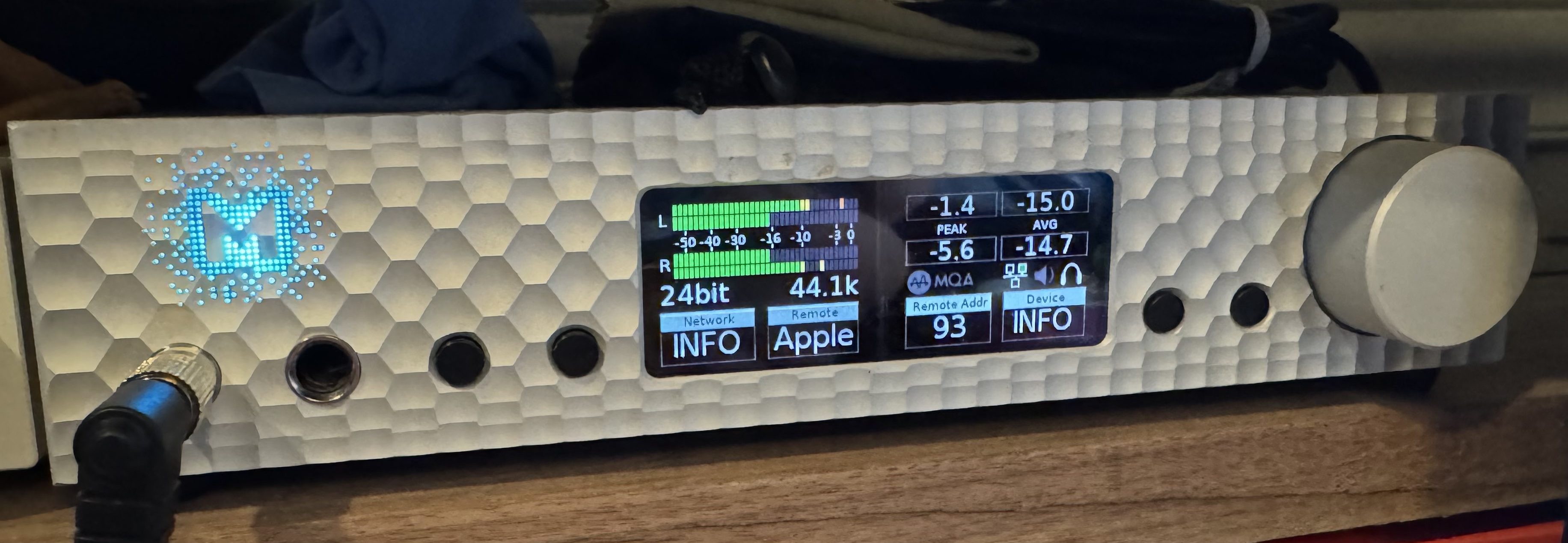
Based on my philosophy on the allocation of resources in headfi, I should probably be reviewing these with an amp around $1,500 and an DAC around $1,000 …. but I have no such things. I should probably at least be using one of my higher end setups (Mytek Brooklyn Bridge, Holoaudio Cyan 2/Bliss (Kitsune Tuned Edition), etc.), but I happen to be doing most of my listening with these headphones on board the Viking Venus3, so I did most of my listening via the Qudelix 5k connected to my iPhone 17, playing music via Roon Arc, and an iBasso DX170 DAP that happened to be in my bag. I suppose I ought to have at least brought the Mojo 2 … but this is where we’re at. Here in my office, I’ve been mostly using the Mytek Brooklyn Bridge as everything else is packed up for a move. I’ll update a bit later with higher end source gear if I feel like it. For listening, I’m using either the included Focal cable (not as awful as some of the other OEM Focal cables), or a nice 3.5 mm to 2.5 mm Meze cable I bought over the holidays last year.
EQ
As noted in the Bathys review, I mostly prefer to test headphones with their default tuning, assuming that most people won’t take the time or make the effort necessary to use a third-party EQ. The Stellia sound great to me out of the box, but I do think I get some better spatial qualities out of them after applying Amir’s presets via the Qudelix’s EQ. They’re definitely a value-add EQ, though, rather than a mandatory one.
EQ Update
[EQ Update: I’ve spent some time now with Oratory1990’s EQ preset available here, and I’ve only made two tweaks; I dropped both Band 1 (the low shelf) and Band 5 (the high shelf) by around 1 dB and have been pretty pleased with the results. Here’s what that looks like:
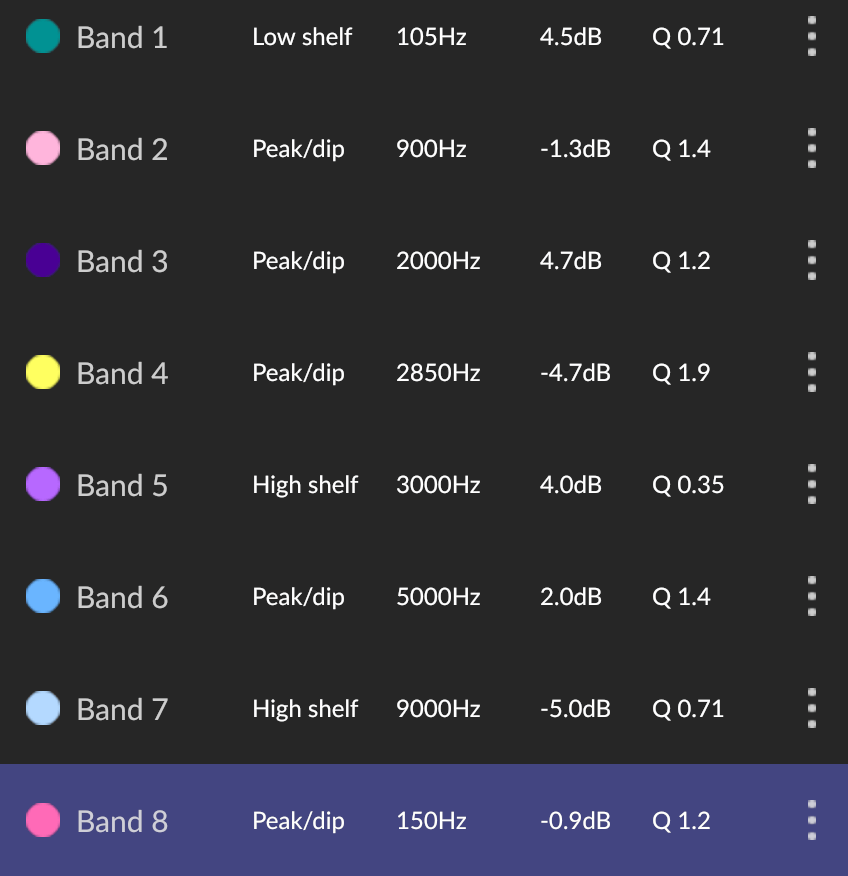
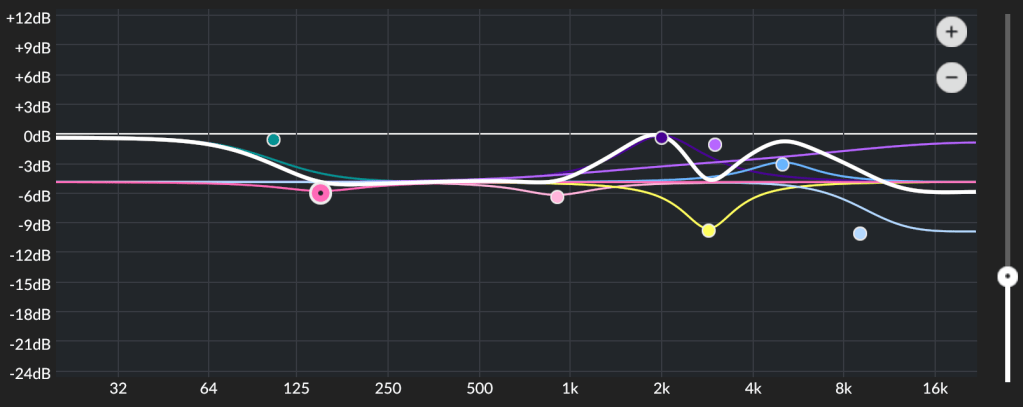
The Stellia sound really good out of the box, and unlike many closed backs, they don’t need any EQ at all. That said, this is one of those cases where EQ makes a good headphone a great one and I expect that I’ll mostly use them with EQ.]
Volume
Here are the volume settings4 I use with the Focal Stellia (unless otherwise noted, running via Roon with no headroom management, playing Daft Punk’s “Face to Face” from Tidal):
- Chord Mojo: blank, white, white, green
- Dongles:
- Apple: 40%
- Aune Yuki: 33% (max internal volume, single ended)
- Fiio KA11: 25%
- JCALLY JM12: 40%
- Qudelix 5k (device volume maxed then backed down four clicks): 33% (balanced), (single-ended)
- Holoaudio Bliss (KTE): -dB (Low-Z, balanced 4.4 mm)
- Mytek Brooklyn Bridge: 45%
My torture testing list
The Basics
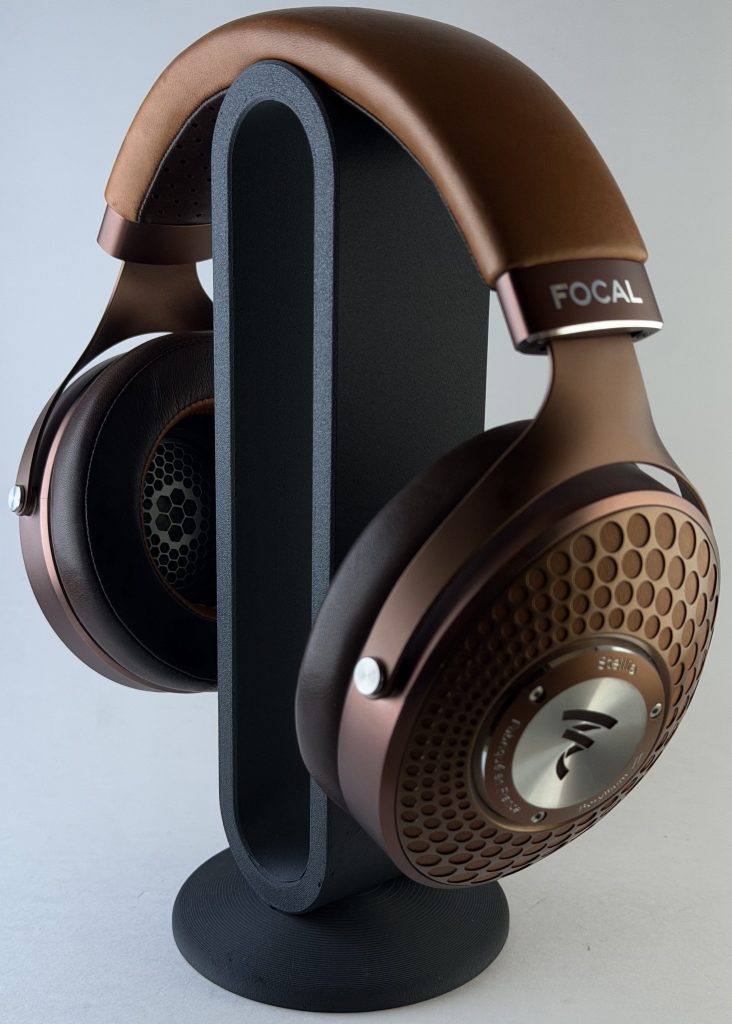
The Focal Stellia is a closed back, dynamic driver headphone from renowned French audiophile manufacturer Focal. It is, to date, as close to a flagship model as they produce on the closed back side of things, and I believe it’s the only remaining closed back Focal makes in the older, larger cup style. They appear to still be in production as of summer 2026, though with Focal’s transition to the new, smaller cup style I’ll be curious to see if they continue Stellia, Utopia, and Lensys.5 The Stellia look and feel like the luxury product they are, with real leather on the headphones and included in the accessories. Those accessories include a nice, semi-rigid carrying case (like those that come with most of their non-Drop headphones), a beautiful leather presentation box, and two cables: a traditional flat XLR Focal cable (incredibly stiff and microphonic) and a 4′ 3.5 mm single-ended cable (with an included, threaded 6.35 mm adapter), which appears to come in two different versions: one is a red, flat cloth cable like the included XLR, and the other is a round rubberized cable more like the one that comes with the Celestee (though it’s black and silver instead of blue and copper).
The Stellia are pretty easy to drive, with a nominal impedance of 35 Ohms and a sensitivity of 106 dB/SPL, meaning that they can be driven by basically any device I’ve tried to use them with. They’ll do fine with something like an Apple dongle, but as I’ll discuss below they’re also a very highly resolving headphone and I would prefer to drive them with something like a Chord Mojo 2 or the Mytek Brooklyn Bridge. In a pinch, though, that Apple dongle will be fine. They’re not a light headphone, coming in at around 430 grams without the cable, but they’re no Audezes (and are marginally lighter than some other Focal offerings).
The Stellia also share the Focal Utopia’s solid Beryllium m-shaped drivers, allegedly giving them additional potential for detail and resolution (and contributing greatly to their price tag). As a result, Focal pitches them as a “reference closed back.” So do they live up to that potential?
Sound
I’ll start by saying that overall, I’m incredibly impressed by the Focal Stellia. I’m not quite sure what I was expecting from a $3k closed back, but it wasn’t this. I’m not great about talking about technicalities, and they’re hard to quantify, but I can say this: these are among the most detailed and resolving headphones I own. Particularly in a loud, acoustically crowded environment like a lounge on a cruise ship, I’m stunned by the kinds of information and detail the Stellia can pull out of tracks, even on tracks that I know really well. Combine that with a frequency response pretty close to my ideal (but with the Focal 4 kHz dip) and call me a happy, happy man.6
[Editor’s note: I’ve been on a bit of a Kid A/Amnesiac kick lately (a friend’s kid is pretty far down the rabbit hole and I’ve been vicariously enjoying his journey of discovery) and HOLY HELL is that a great album. I hadn’t listened to either in years, and definitely not on a good system, and the Stellia’s remarkable detail and tuning is a near perfect match for those albums.]
Here’s how my pair measure on my rig:
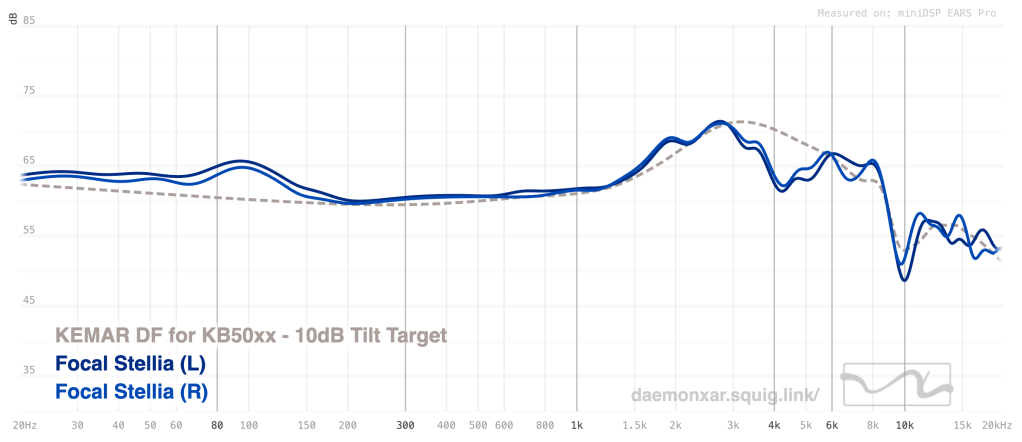
This is more or less how I hear them. They have the pretty classic Focal dip around 4 kHz which I don’t particularly hear (and that some have theorized is the magic behind their soundstage), but everything else seems more or less right. Given the bit of recession I hear in the midrange (particularly for vocals) I would expect a bit less energy in the mids, but just goes to show that you can’t predict how a headphone will sound just from measurements.
It’s worth noting how good that channel matching is on my unit; across the entire spectrum, it’s almost never more than 1 dB apart. This has mostly been the case with my Focals, with the exception of a weird bump on my pair of Clears.
Technicalities
The soundstage on the Stellia is nicely wide; on “Chan Chan” the bass is nicely off to the left, the vocalists are just slightly left of center (and the two are slightly separated), and the hand percussion is properly placed just right of center and slightly back. Layer separation is generally pretty excellent, with the various guitars on tracks like “Chan Chan” and “Garcia Counterpoint” clearly reproduced and separated in space, and I’m hearing things on tracks that I’ve never heard pulled out of mixes (for example, on “Chan Chan” there’s what sounds like a slide guitar in a few places that I’ve never identified). The stage isn’t particularly deep front-to-back, with the guitar riff at the opening of “Love Can Damage Your Health (Laid Mix)” more left-to-right panning than rotational. I talk about this a bit below but the relative recession in the mids mean that some things aren’t as clear as they might be (the tom pattern between verse/chorus on “Thunder Lightning”, for example), but overall a very impressive soundstage, particularly for a closed back.
The dynamics are fine but not particularly impressive. Setting the volume at the beginning of “It’s All So Incredibly Loud” had me reaching for the volume control around 3:15. The microdynamics are good but not great, particularly in the bass (they don’t quite have the Elex’s slam). On “Angel (Blur Remix)” I want a little more emphasis on the beginnings of the bass bell tones, though the tonality is incredible and you can hear the warble behind each note as they settle in perfectly. The treble bell tones are much more nicely accented, though I might want just a little more bite at the very beginning of each hit.
I am particularly impressed by the detail and resolution of the Stellia, and I don’t think that Focal is exaggerating when it calls these a reference closed back. It’s the sort of headphone where I find myself pulled out of background listening because I hear new things, which is particularly remarkable given that I’ve done most of my listening in a crowded, reasonably noisy cruise ship lounge. As an example, the beginning of “Only Here and Nowhere Else” has a snare drum on beats 2 and 4 for a bit, and I’ve never heard the snares rattling, just the strikes on the drum head. On a track like “Birds”7 you can hear every bend and tweak of the bass’s string, and hear the string striking the frame in a few places. And all over the place, you hear the tiny little imperfections; the strings rattle, people talking very fainty in the background, mic issues, the weird ominous presence on “Bassackwards” around :40, etc. They’re … really something. I definitely don’t always want this kind of detail, but it’s both damned impressive and really fun for some kinds of listening and some kinds of music, some of the time.

Timbre is also generally correct; nothing I’ve listened to on any of my sessions has sounded wrong or off, particularly compared to some of the other Focals which can have a little bit of metallic flavor on vocals in particular. (I initially thought that there was some timbral funkiness on San Holo’s “i am thinking of you”; guitars seemed slightly off. Turns out, it’s actually the recording.)
Bass
The bass response is really good. Clean, clear, and precise, though not emphasized (especially compared to many other closed back headphones). Bass, particualrly stringed instruments, are detailed and textured and rich and go down pretty close to the bottom. On “Got ‘Til It’s Gone” you get almost all of Q-Tip’ bass (just the last note or two really roll off, and even those you get a sense of if not a full note). “Limit to Your Love” has a really satisfying brain wobble, and even the lowest notes on Gorillaz’s “Welcome to the World of the Plastic Beach” gets a respectable reproduction (albeit a pretty rolled off version). You definitely lose a bit on the sub bass on particular tracks like “Saturnz Barz” where the bass sounds just a tiny bit hollow, but it’s not much and it’s not on very many tracks. And the trade is incredible detail and precision.
I started to say that this isn’t a headphone that I’d pick to listen to electronica on, then I threw on Massive Attack’s “Mezzanine” … and god, it’s really good on the Stellia, especially with just a little EQ. What I will say instead is that this isn’t a headphone to buy if you’re a serious bass head. I’ve played a bit with adding some additional sub bass via EQ and it seems to go pretty well so far, but there’s a limit and I’m skeptical that you’ll ever be able to get unhinged levels of bass out of them. I didn’t experience any distortion with them (and consensus seems to be they’re not subject to the same driver excursion issue that some of the other full-sized Focals are, or at least not to the same extent). But the bass you get is awesome, and perfect for 97% of my listening.

I have been playing a bit with EQ’ing up the sub bass just a bit; on a sweep I can definitely hear a bit of a hump in the mid bass and I’ll probably work on balancing that out, but other than a simple bass shelf below 65-70 Hz I really don’t feel compelled to EQ the bass. [Editor’s note: see above; I ended up with a bit of an EQ profile but it’s more of a want than a need.]
Midrange
The midrange on the Stellia is generally excellent, though sometimes it feels a little bit recessed compared to the bass and treble. On a track like “Blackbiird” I want a bit more from Beyonce’s voice compared to the guitar line out to the right. Timbreally damned near perfect, though. On “Calls,” Jill Scott is just slightly buried in the mix, particularly when Glasper really gets going in the middle, though interestingly the backup vocals and runs in the background end up slightly better balanced overall. Justin Hicks suffers a similar problem towards the middle of “What Did I Do?”, though that track is sparser enough that it’s less distracting. Similar notes on “Clair De Lune”; I’d like just a little more of Christine Hoberg, though the trade off here is that the words that get a bit sharp on some headphones (“don’t,” “light,” etc) are perfectly pleasant on Stellia.
The midrange also benefits from the overall detail and precision of the Stellia; while the distinction between Kevin Parks and Rihanna on the latter’s “Same Ole Mistakes” isn’t quite as clear as it is on something like the Heddphone D1, I’m also never confused about who is singing and what the relative balance between them is. Pretty remarkable, particularly for a headphone that seems to have a slight overall recess on the midrange. Johnny Cash ends up feeling just a little bit flat on “Hurt”, but that’s a challenging recording.
As far as midrange instruments, the Stellia’s detail continues to shine on a track like “Garcia Counterpoint,” with all of the complex and overlapping guitar lines laid out beautifully throughout the mix. It’s a little harder to hear separation on a track like “Only Here and Nowhere Else” just because of the overall congestion and recession, but even there the reproduction is really well done and this is is a pretty minor quibble with what is overall a really excellent tuning and balance.

I might spend some time in the future working on an EQ profile to bring forward the mids, but I do worry that it might mess with Stellia’s overall magic. The out of the box midrange tuning is certainly perfectly competent, though, so it doesn’t need any particular EQ.
Treble
The treble on the Stellia is really good, clear, crisp, and controlled throughout. Nothing has jumped out at me as problematic, even the tracks that usually do. The guitars on “2021” are clear, Miles Davis’ solo on “Will O’ the Wisp” shines through with incredible brassy timbre, and neither gets particularly close to the line of sharpness or harshness, even at pretty good volumes. Normally I associate this kind of sound with a bit of a roll off in the treble, but on the Stellia I feel like I get full, consistent, and well-balanced response across the upper mids and treble. The bells on “Coffee” (which can be a little hot on some headphones) are consistely clear but not oppressively so. And, as noted several times above, the overall detail and clarity on the Stellia are pretty remarkable.
I may be sold on this whole Beryllium driver thing.

I really have no notes on the treble response, and not only do I not feel a need to play with EQ, I’m honestly not sure where I would even start or what I might want to change. Legitimately, nothing has stood out to me as even a little bit problematic. A rare “A” on treble for me.
Amplifier Compatibility
As I’ve discussed ad naseum, I’m at the stage in this hobby where I am pretty convinced that modern, competent solid state gear is largely (or entirely) indistinguishable from each other. I’ve done the bulk of my listening with the Stellia with the really excellent Qudelix 5K portable DAC/amp, and …. color me impressed.
As for the Stellia, it’s a remarkably easy pair of headphones to drive, particularly for how detailed they are. They kind of put the lie to the myth that you need high impedance, insensitive headphones to get detail in your music. I have also done a fair amount of listening to them via the Mytek Brooklyn Bridge and the iBasso DX170 DAP, and they sound excellent via both of those sources as well. Hell, they even do remarkably well off of an Apple dongle, though part of me feels a little funny listening to such a beautifully designed, $3,000 pair of headphones from a $9 dongle. I do want to do some more listening with fancier sources, particularly the Holoaudio Cyan 2/Bliss (KTE) stack once I get it set back up in my new office.
Overall Impressions
Overall, I’m incredibly impressed by the Focal Stellia. My only complaint is about the slightly recessed midrange, and honestly I only notice that on some tracks, and particularly where I’m doing focused, critical listening. I could probably argue that for $3,000, a headphone ought to be damned near perfectly tuned … but this is about as close as I’ve ever heard with a closed back other than something like the Sennheiser HD 480 Pro. The details are unparalleled, and rival the very best open backs that I have experience with. That, plus the excellent acoustic isolation, is a really attractive package even at this price.
Unfortunately I haven’t had time to do positional variation measurements with my unit (the aforementioned move), and headphones.com doesn’t seem to have done it for the Stellia. I’ll update when I get my rig set back up.
Build Quality & Appearance
The Stellia share the same general physical design as the rest of the older style, larger Focals (albeit with more premium materials), so this will be familiar to anyone who has read my Elegia and Elex reviews.
Connectivity
Like most (all?) older style Focals, the Stellia connect to source gear via mostly standardized dual-entry 3.5 mm cables. I say “mostly” because Focal does use very thick barreled 3.5 mm connectors, so thick that they can make them difficult to use on other headphones that have their jacks recessed. The Stellia comes with two cables: a typical 6′ flat, ribbon style with a red and black checkered cloth covering terminating in XLR, and a ~4′ round, rubberized cable terminating in a 3.5 mm plug with a threaded 6.35 mm adapter. The XLR cable is classic OEM Focal, and here I’ll quote a bit of a rant from my Elex review:
For reasons surpassing all understanding, Focal is dedicated to providing the world’s best-built-but-somehow-still-terrible OEM cables: the cables themselves are cased in thick, woven fabric with THICCC barrel connectors at the headphone end. The casing is stiff and inflexible with a lot of memory, making them incredibly annoying to use at a desk. They’re the kind of cable that will resist being routed around a keyboard, mouse, or desk chair arm, and will work their way back into your way when given the slightest opportunity. They’re also, irritatingly, pretty microphonic: it’s much worse on the headphone side of the y-split, but even contact with the cable below the split is annoyingly loud in the ear cups; enough that I can heard it over moderately loud music.
At least Stellia somewhat ameliorates the right/left labeling issue on the XLR cable; the color contrast is enough that I can tell which is right and which is left without finding a flashlight and my reading glasses.
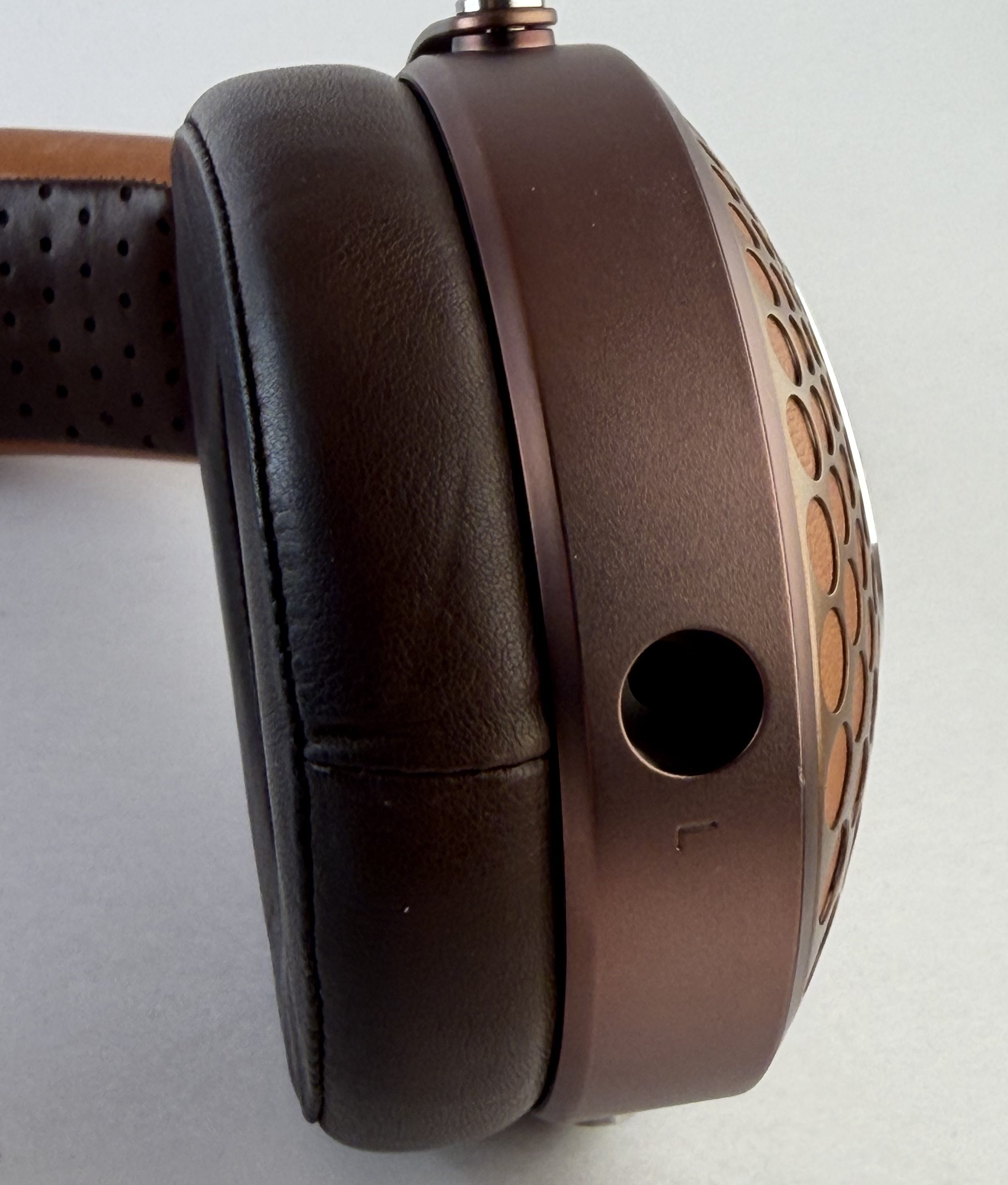
The single-ended cable is surprisingly … okay. If it didn’t have the classic Focal barrel connectors and trade dress I might confuse it with an inexpensive Hifiman cable. It is a little stiffer and thicker than I’d like, but comparatively quite competent. I actually initially thought that the seller had mixed up the single-ended cable from another headphone; there is a version of the Stellia that ships with red and black checkered flat cables for both balanced and single-ended but also this version, where the balanced cable is classic Focal and the single-ended more like the cables that came with the Elegia, down to the silver and black scheme.
Either way, the I’m not particularly inclined to use either of the included cables; the balanced because it’s awful, and the single-ended because it’s … fine, but the fact that Focal uses standard 3.5 mm jacks makes it easy to find aftermarket cables to use and I have a collection of high quality-of-life 3.5 mm cables.
Construction
Like all of the older-style Focals, the Stellia feels really well build, solid and stable. To quote my Elex review,
They’re solid, feel like they would survive a drop,8 and don’t move around on my head while listening. The yokes are made of a solid metal, the band has a nicely-strong feeling metal core, and the grills are a solid-feeling mesh that have certainly survived some impacts over the last few years.
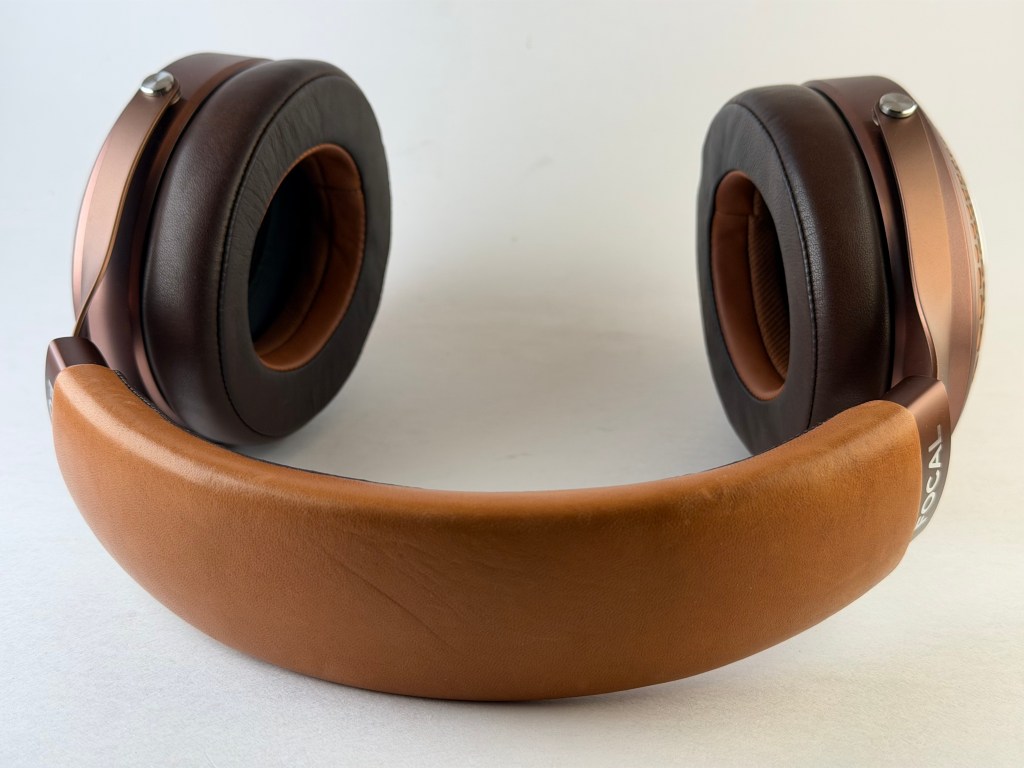
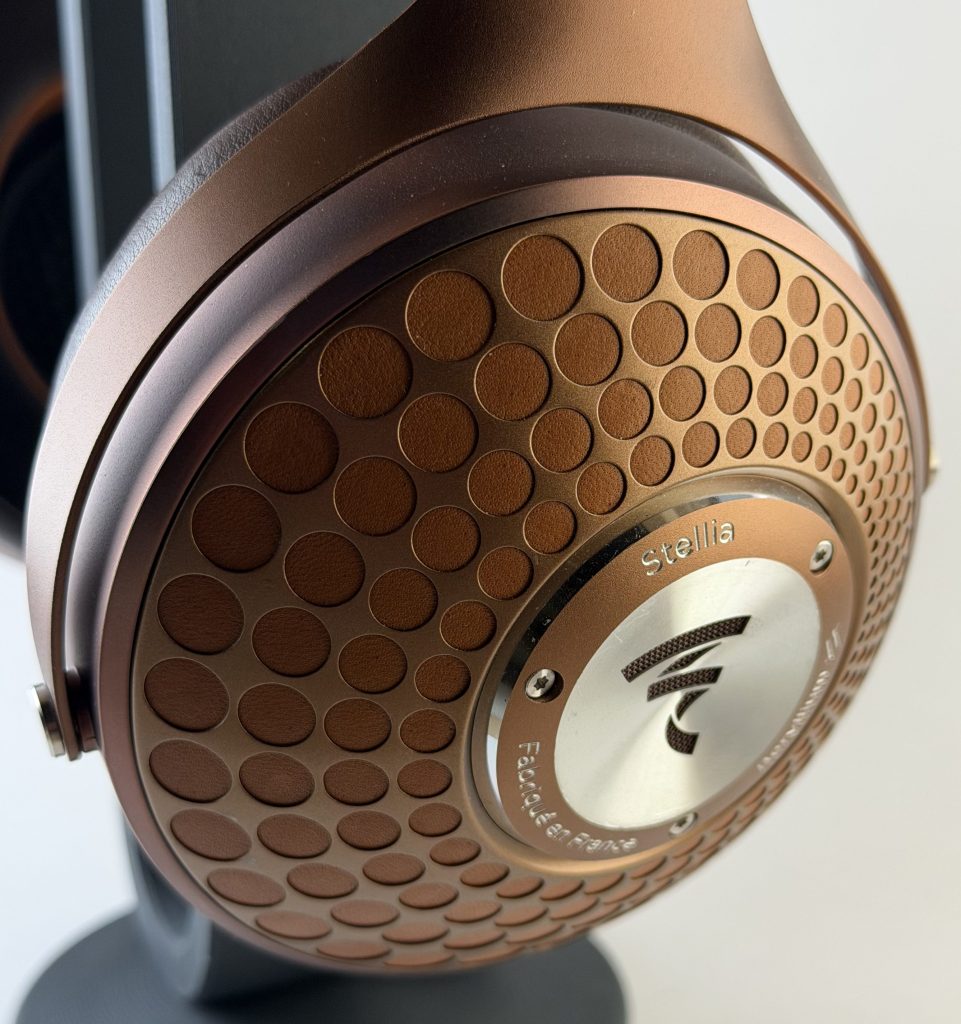
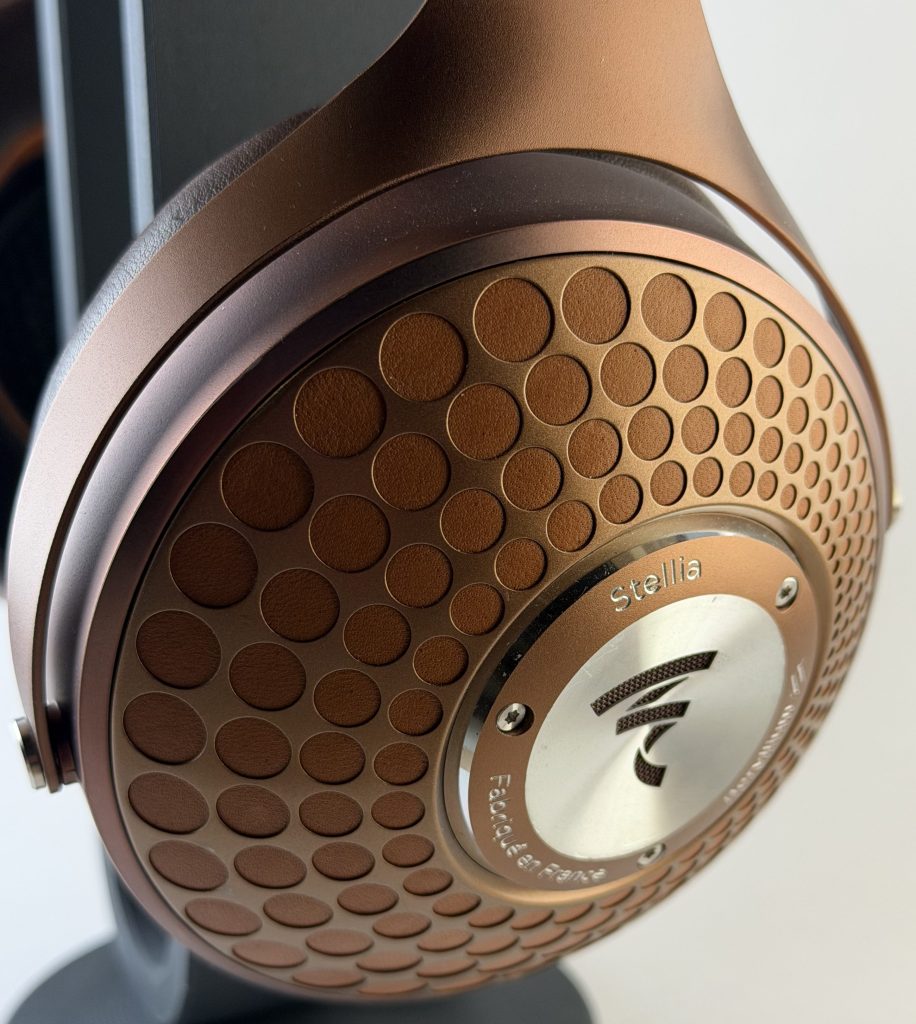
Stellia shares the same headband and yokes, plus cups that are a metal grid with leather-filled openings. The metal is a beautiful orange brown (Focal calls it “mocha”). The headband is wrapped in real leather. The earpads on the cups are nicely cushioned and wrapped in the same leather. It’s worth noting that like most Focals, the earpads are stupendously expensive to replace, in this case almost $300 a pair.9
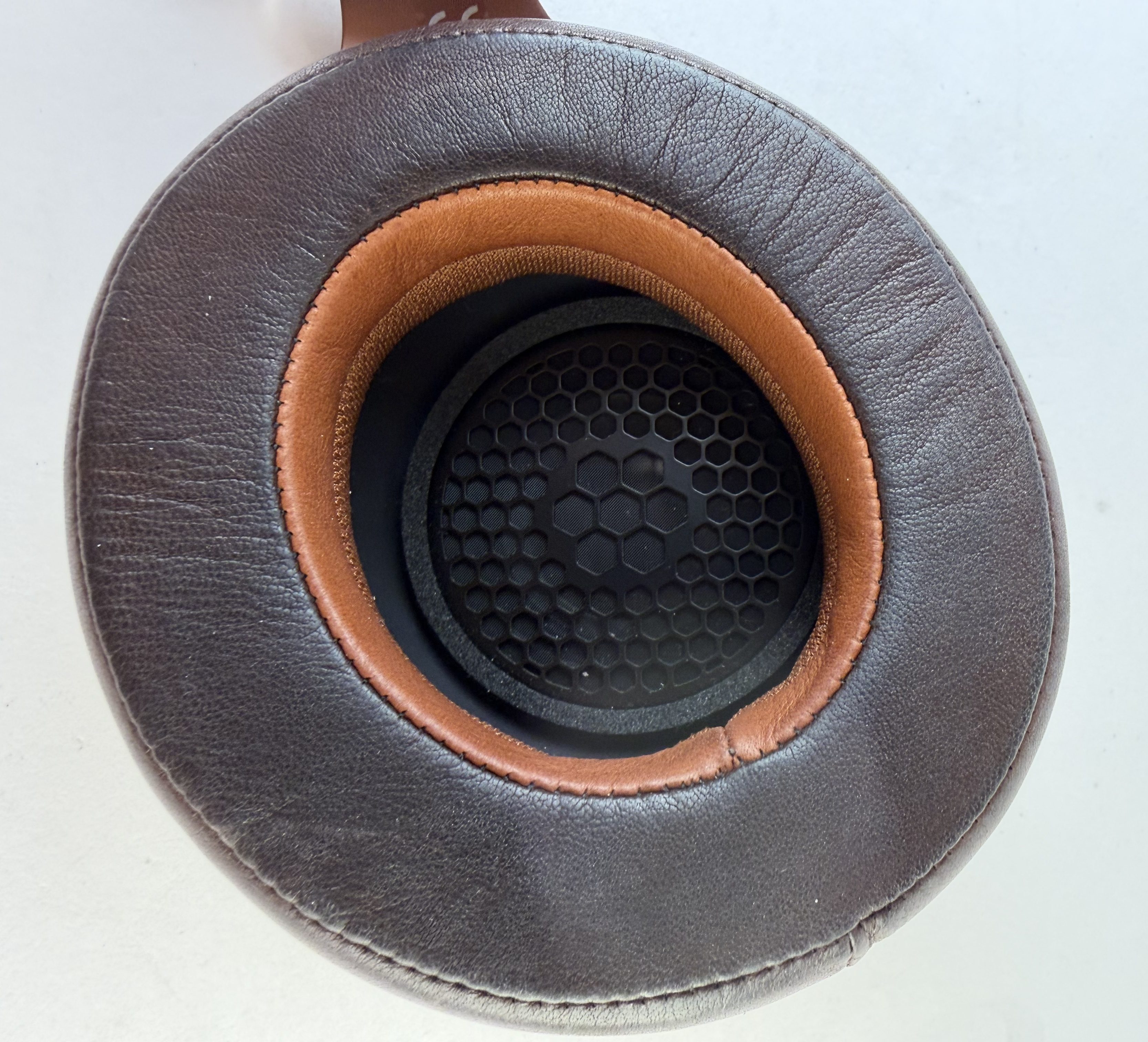
Reddit is full of complaints about Focal headbands breaking constantly, but I’m up to six pairs of full-sized Focals and I haven’t had any issues with them. I do think the frequency of the failures is probably somewhat exaggerated online, and people who have had them break are perhaps a bit over-represented in the forums, but it does seem to be a reasonably common issue. I talked a bit about the various failure states of the Elegia/Elex/Clear over in my Elex review, and as far as I can tell the same things potentially apply to Stellia. There are just a lot fewer of them out in the wild, so failures are overall less common and thus may be less talked about.
Comfort
I’m on record as finding the old-style Focals much more comfortable than the new, smaller frame (though those are no slouch either), and the Stellia continues that trend. The cups are well-sized for my ears, deep enough to have plenty of clearance, and soft/compliant enough to create a good seal without being uncomfortable. Same with the fit and clamp pressure; I can wear these for hours without hotspots or pressure points on the band. I don’t think that these are necessarily MORE comfortable than, say, the Elegia (premium materials don’t alway make things comfier; in most cases I’ll take microfiber over leather for anything touching my skin, after all!) but they’re still very comfortable.
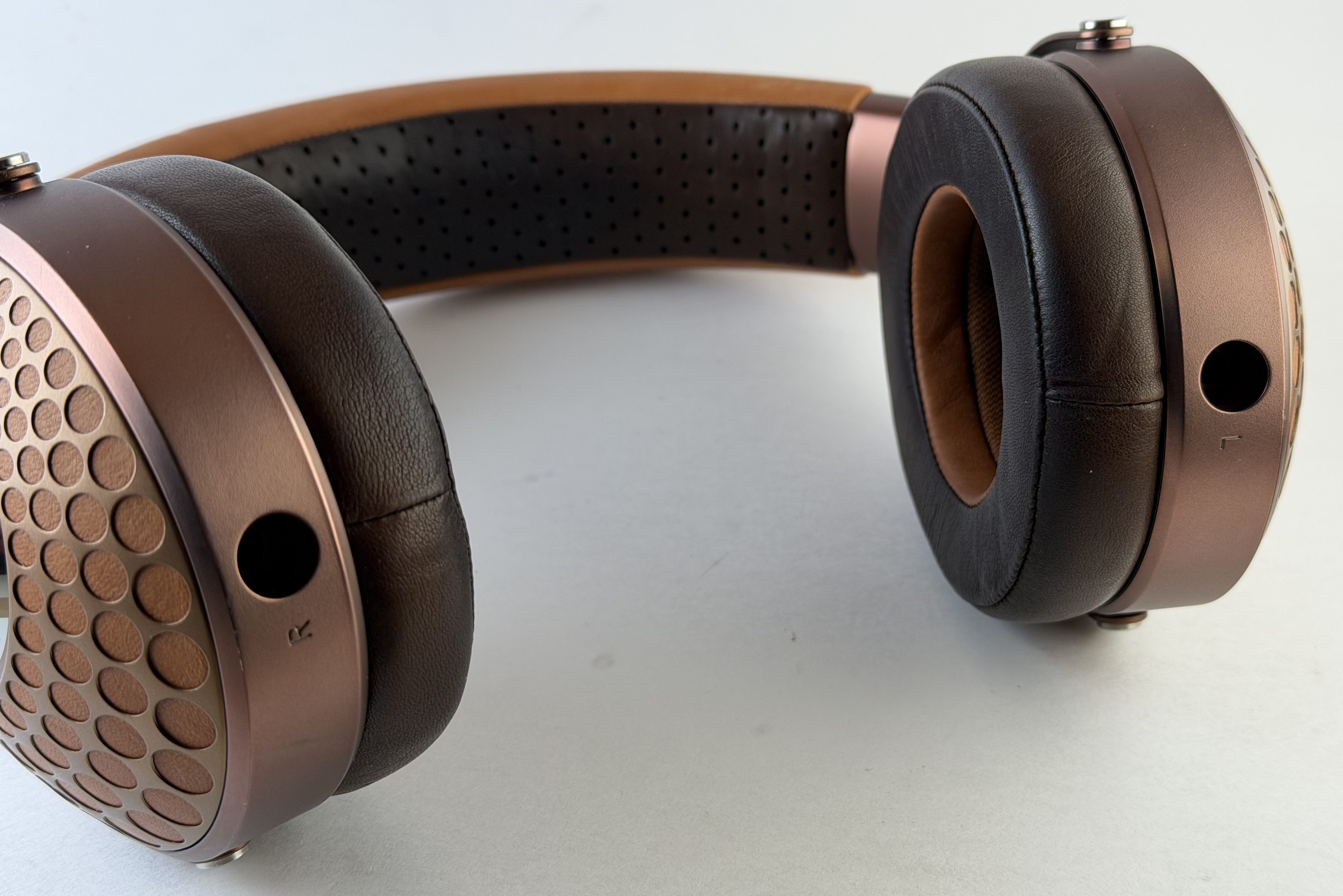
Like their fellow older-style Focals, the Stellia have pretty limited swivel and tilt for the earcups, so you’re more or less stuck with longer and shorter arms in terms of adjustments. There are people for whom that will present a challenge, but for me they fit very well.
The one downside of the Stellia is that leather can be pretty unpleasant when it’s warmer, and with leather on both the earpads and the headband this isn’t my first choice for a summer headphone. But that’s not uncommon for a closed back in general, and the Stellia is no worse than almost any other closed back.
Appearance
As I note regularly, I’m personally a big fan of Focal’s general aesthetics, and that extends to the Stellia. I wasn’t sure at first how I would feel about them; they’re a brown color that I don’t very often encounter and certainly don’t wear (they give me flashbacks to an “earth-toned” suit I was talked into in law school), but man … I think they’re quite striking and beautifully designed. The metal (cognac) and leather (mocha) are beautifully matched, with the silver accents standing out on the center of the cup and at the bottom of the headband. They’re definitely not small headphones, but I personally don’t worry a lot about the Cyberman problem with them, and have been wearing them in public for the last week or so.
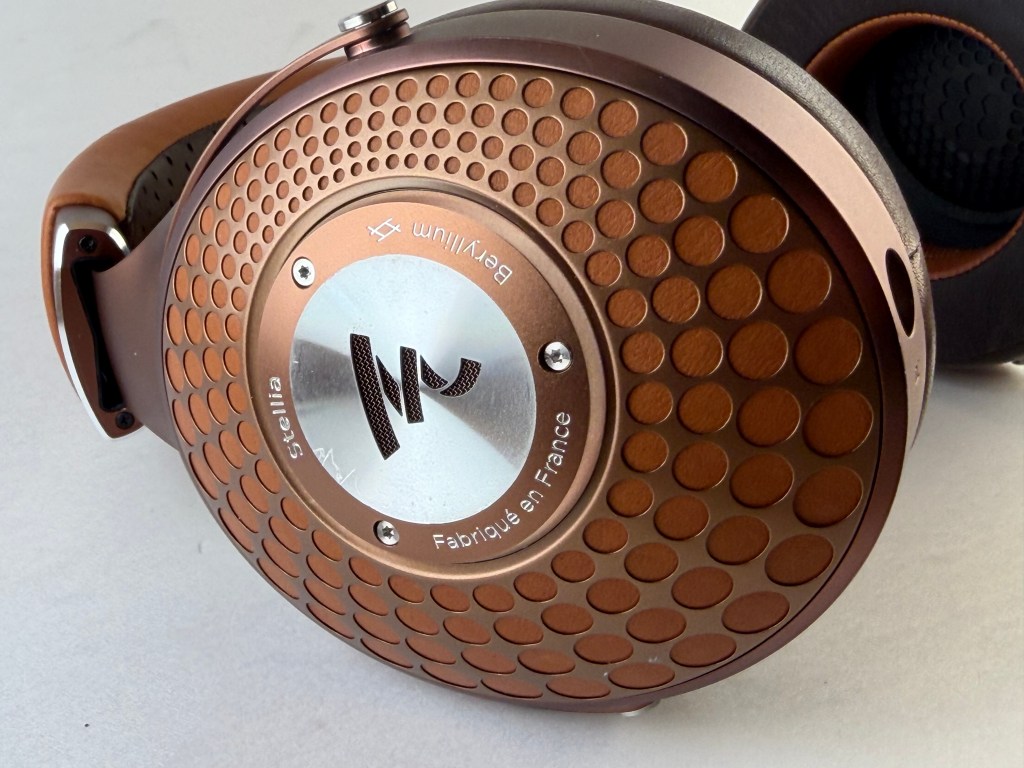
Your mileage may vary (taste is always personal, after all) but I think they’re beautiful.
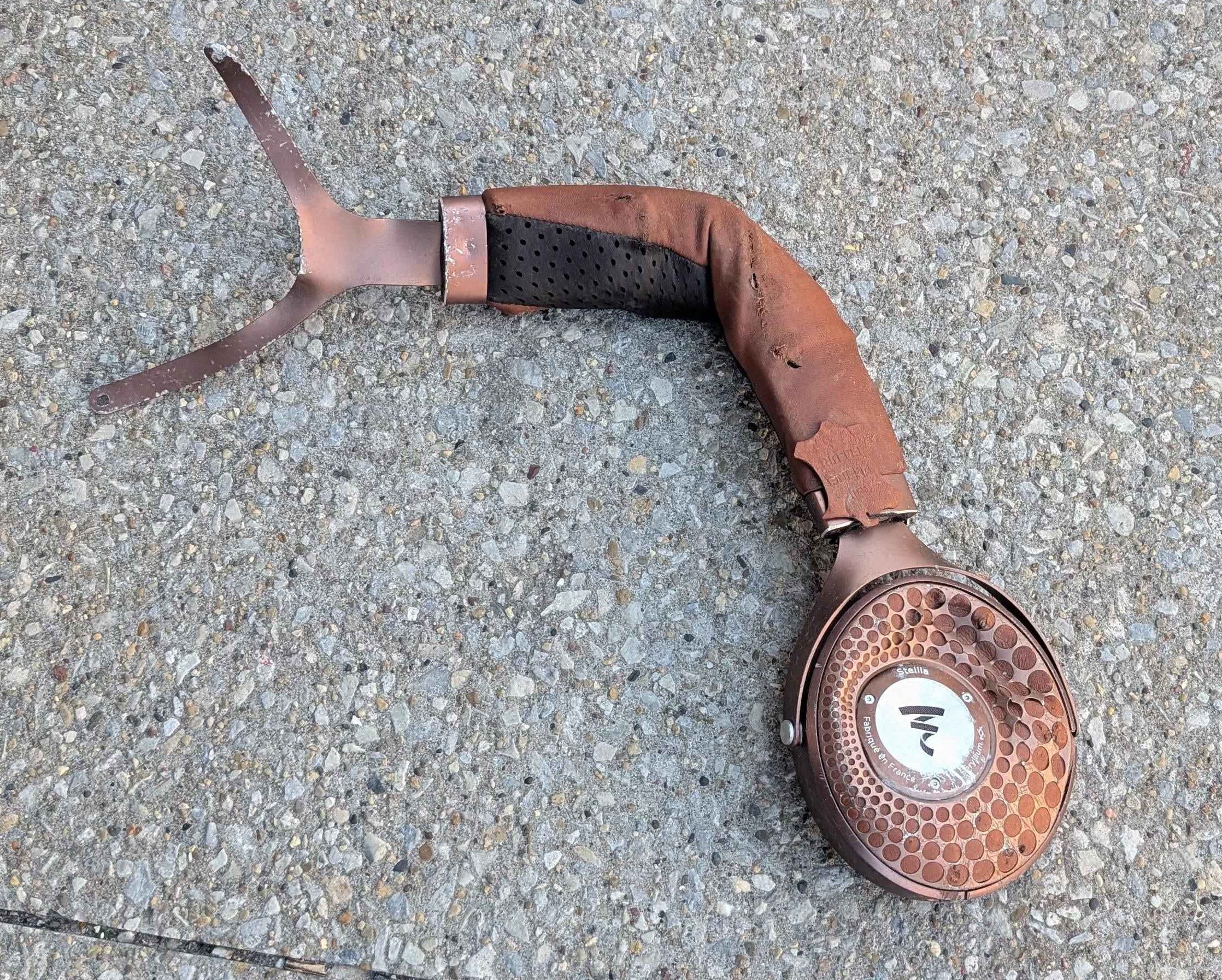
They will also, however, forever also be the escargot headphones in my brain because of this image from Reddit.:
Value & Comparisons
Every time I review something in the $800+ category, I struggle with whether it’s even possible for a headphone in this category to represent a good value, particularly given how good headphones in the sweet spot around $200-250 are these days. Fortunately, this is made easier in the case of the Focal Stellia, which ring up at almost $3,000 before tax, new. I can comfortably and safely say that no, the average person shouldn’t spend $3,000 on a pair of headphones, period, and that they’re not a good value.
That said, they’re really damned impressive, and I don’t think I have heard many (any?) closed backs that meaningfully compete with them in terms of sound quality or build. If these broke tomorrow, I definitely wouldn’t replace them at MSRP. BUT, I might very well start scouring r/AVexchange or reach out to a dealer to see if I could get a good deal10 on another pair; I’m very curious to see if I keep using these a lot over the next few months after I finish this review. My strong hunch is that I will; they’re just really quite something.
I started to compare the Stellia to a couple of headphones that don’t match up very well, and I ultimately decided it wasn’t a good use of either of our time. Let’s say that as much as I enjoy the Meze Strada and the Hifiman Audivina with EQ, neither particularly compete with the Stellia.
I’m hoping to get my hands on a pair of Focal Radiance at some point in the near future and will update this review with a comparison if I do.
ZMF Bokeh Closed
The Bokeh Closed were the first pair of really premium headphones that I bought for myself, and I love them. I probably also ought to revisit my review of them after a few years of listening to and reviewing headphones; I may have been overly kind with the first pair of closed backs that I really, really liked.
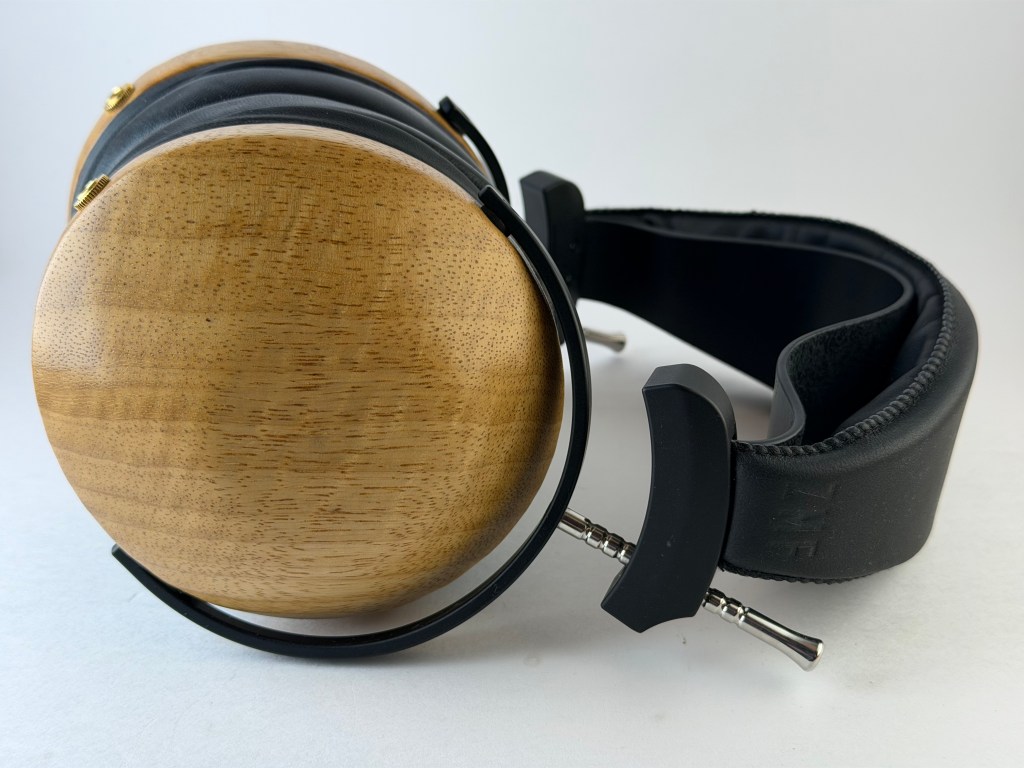
As far as sound goes, there’s not much comparison. I commented in my Aeolus review that you don’t necessarily come to ZMF looking for amazing value (or the most “accurate” tuning), and that’s as true of the Bokeh Closed as they are of that headphone. The Bokeh Closed are a fun, engaging listen, but they’re not necessarily a particularly resolving or detailed headphone. Stellia wins technicalities, hands down. As far as bass goes, I mostly prefer the Stellia’s overall balance though there are some tracks where the bass performance on the Bokeh really knock my socks off (especially on a tube amplifier). Mids are probably the weakest part of both, with generally good tuning but a bit of recessions particularly for vocals; here I’m going to give it to Stellia again just because there are a few artifacts with vocals (particularly female vocals) on the Bokeh that don’t appear on the Stellia. And Stellia wins the treble contest too; Bokeh is definitely a bit rolled off and relaxed at the cost of detail and precision, and Stellia manages to give you the entire frequency response range without going harsh. As far as comfort and build, I’m giving those to Stellia too. I like the way Bokeh feels on my head; it’s like a warm hug, but the design of the yokes means that they have a tendency to spin which can affect seal. By contrast, the Stellia lock in place on my head without being uncomfortable. I might revisit the build quality decision in the future if I have headband/yoke issue, but I’ve generally found these headphones rock-solid. Appearance-wise … well, as much as I like Stellia, I’m on record as thinking that my Bokeh Closed are among the most beautiful objects I own and I stand by that.
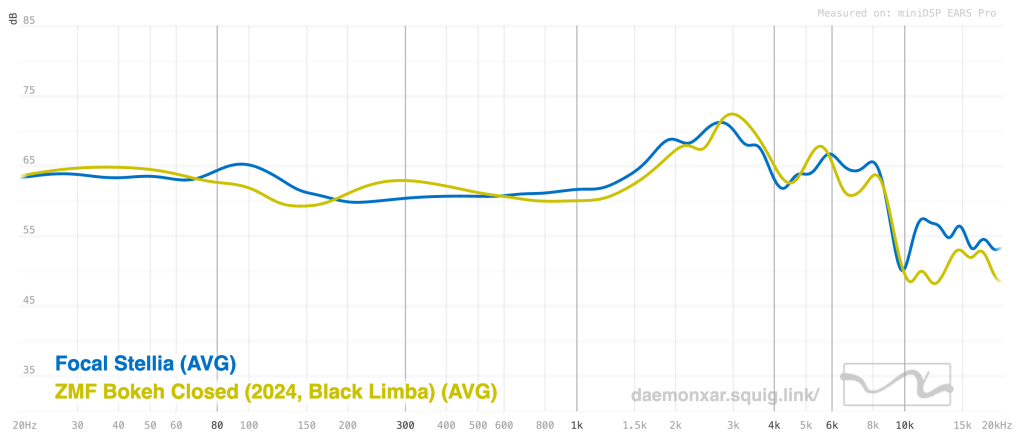
That looks about right; I don’t necessarily hear the Bokeh as having quite that roller coaster but the mid bass on the Stellia is definitely elevated compared to Bokeh.
Verdict: If you’re not considering pricing, the Stellia is clearly the better headphone and it’s not all that close. Are they three times better? Meh … probably not. If I’m buying one of them at MSRP it’s going to be Bokeh, but at the price I paid, I’m sticking with Stellia.
Sennheiser HD 480 Pro
I reviewed the new Sennheiser HD 480 Pro last month and declared them one of the best new products I’d heard this year, and remarked that they didn’t sound like a closed back to me (high praise indeed from this generally open back loving reviewer). And I stand by that; the 480 Pro are a really remarkable headphone and I’ve found myself using them more than expected over the last few months. They’re also dangerously close to reasonably priced, at an MSRP of $399. So how do they match up against a headphone nearly eight times more expensive?11
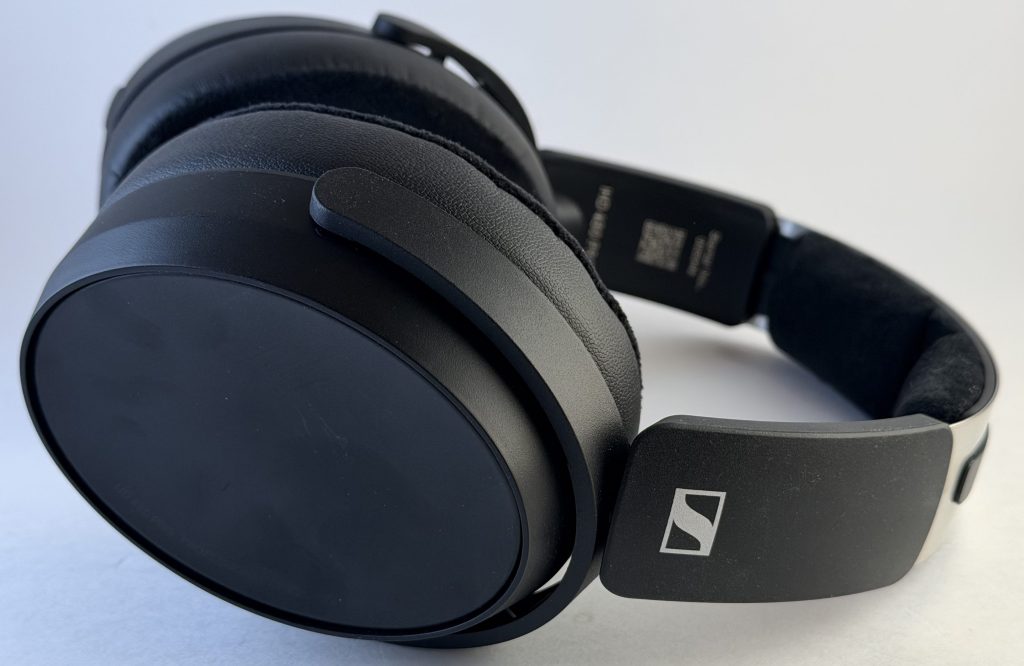
The answer is “surprisingly well.” I think the Stellia is a more technical headphone (better staging, better separation, better detail and resolution), but it’s surprisingly close. The bass is also surprisingly close, though I’ll give the edge to the Stellia just because it has overall more texture and richness throughout the bass. Mids are also pretty close, though I’ll give them to the 480 Pro by a hair, just because they’re slightly better balanced overall. Treble goes to the Stellia; as excellent as the treble on the 480 Pro is (and it is excellent), there are a few tracks where it crosses over into harshness and I have literally no complaints about the Stellia. Comfort is pretty similar as well, both getting a “B” from me, though the 480 Pro is substantially lighter (by more than a third!) if that’s a deciding factor for you. For me it’s not.
The elephant in the room is, of course, that at MSRP the 480 Pro is going to cost you $2,600 less than the Stellia. Even at the pretty excellent price I paid, I could have three pairs of 480 Pro for the price of one Stellia. The 480 Pro are a really excellent value for how good they are and the Stellia are … just not. In addition to the purely practical advantage of paying a functioning car’s value less, I’m also genuinely curious to see if I choose to take the Stellia anywhere with me given how expensive they would be to replace. By contrast, while $400 isn’t nothing, I routinely carry headphones out in the world that would cost me more to replace. In fact, I’ve enjoyed them enough that I might end up buying a case for them so I can throw them in my bag when I’m working out in public.
The 480 Pro are a great headphone. The Stellia are a special headphone. It’s up to you whether or not “special” is worth the cost of a long weekend at Disneyland.
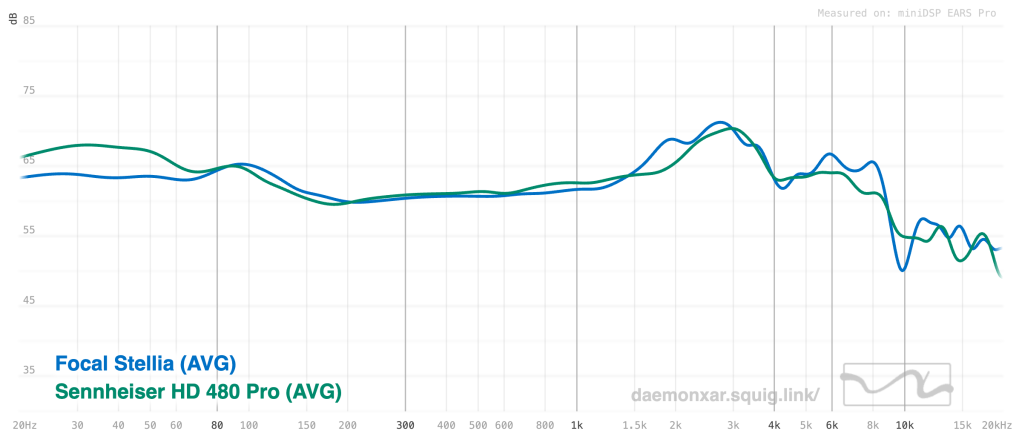
I’m genuinely a little surprised by how much more elevated the bass on the 480 Pro measures; it really does go to the fact that a lot of what I think of as bass in music is really specifically mid bass, and a lot less on the lower end. The rest of this makes sense, though I’m again a bit surprised to see how much more treble energy the Stellia has from 5-8 kHz.
Verdict: At the end of the day, these are headphones with different markets and audiences. The Stellia is pretty handily the better headphone in my book, but as noted above no one should really be spending $3,000 on a pair of headphones if it’s going to affect them in any meaningful way. I’m definitely going to point people to the Sennheiser 480 Pro, but if you have the extra cash burning a hole in your pocket (or you have a workplace stipend to use12), the Stellia are really something special. Genuinely curious to see if I end up using the Stellia more or less than the 480 Pro, all things considered.
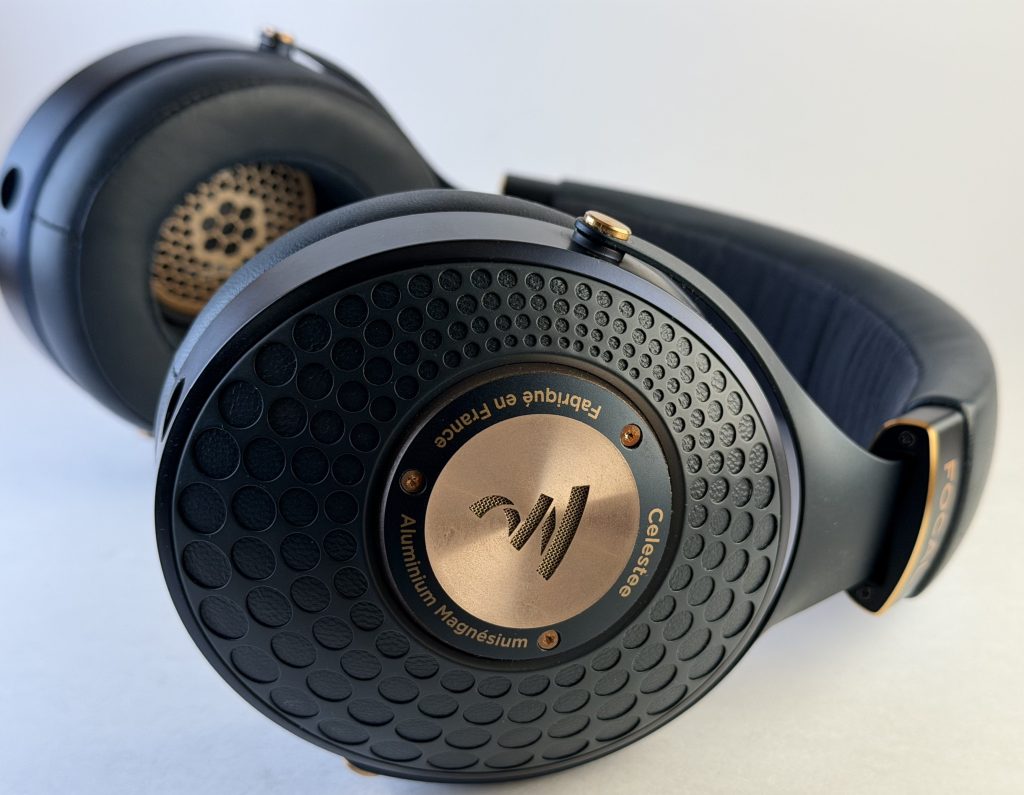
Focal Celestee
This is the most interesting matchup here, I think. I bought a pair of used Celestee on r/AVexchange for $415 in April 2026, and then got the Stellia shortly thereafter. As a result, they haven’t gotten as much listening time as they probably should. That said … I think I might marginally prefer the Celestee’s tuning? I’ll update this when I have done a lot more A/B’ing. [Editor’s note: I’ve done a lot more A/B’ing.]
I started this with a mild preference for the Celestee based solely on its tuning; it has distinctly more sub bass and a less forward treble which I honestly expected to work better on my head. To my surprise … I prefer Stellia, especially when I’m using the EQ discussed above.
First, a disclaimer: I’ve been in the process of moving basically since August and my listening time with the Celestee has been really limited (mostly because they’ve been sitting in a storage unit since June), and I haven’t had a chance to develop an EQ profile that I really like for them. It’s possible I’ll revisit this comparison when I do my Celestee review and do a complete 180°, though I’d be … surprised.
Stellia is a more technical headphone, and it’s not particularly close. Detail, layer seperation, staging … really, everything other than microdynamics goes to Stellia by a reasonable margin. The one place that Celestee wins out is microdynamics, particularly in the bass, aka the ever-elusive slam. One of the reasons I’m such a big fan of the Focal full-sized line (Elex, Clear, Elegia, etc.) is the dynamism and impact their drivers produce on the low end; there’s just something really magical about that thump. While Stellia brings a satisfying level, Celestee turns it up to eleven and it makes for a REALLY satisfying listen.
I actually, surprisingly, prefer the bass presentation on Stellia. It’s nicely warm, but without the slight overemphasis in some frequencies that I get off of Celestee, particularly in the transition into the midrange (where it can read as washing out some of the lower midrange frequencies for me). So far at least, I’ll take Stellia’s midrange as well; while Celestee is generally pretty good for vocals, I get just a hint of metallic character on a track like Sam Austin’s “Seasons” or “Same Ol’ Mistakes” by Rihanna. It’s not poor mids, just not as standout and the feel a bit recessed at times as well. I’m also going to take Stellia’s excellent treble. Celestee’s treble is perfectly nice and very well controlled throughout my testing, but Stellia is … well, exceptional. It definitely feels a little more forward on the Stellia than the Celestee, but not to the detriment of the listening experience. It’s the difference between Miles Davis standing five feet in front of you on “Will O’ the Wisp” (Stellia) versus standing twenty feet away (Celestee). It might also contribute to the sense of detail on the Stellia. This isn’t to say that Celestee don’t sound detailed, but rather to emphasize just how good Stellia is on my head.
Comfort-wise, the two are basically identical on my head. Both will get a little warm, but are VERY comfortable on my head. I also think the build quality is closer than you might expect given the more than 300% price jump from Celestee to Stellia; Celestee is well built from premium materials and feels very solid in my hands and on my head. Celestee’s cable is awful, typically for Focal, but the semi-rigid case is well made and a nicely complimentary color. Celestee lacks Stellia’s beautiful presentation box, but … well, sometimes you get what you pay for.
I come away from this review REALLY curious to track down a pair of Radiance to try out.
[Just for fun, I swapped these in a darkened room during my A/B’ing a little bit and I was surprised … I never confused the two. Even more surprising when I looked at the graphs and realized the differences aren’t that big.]
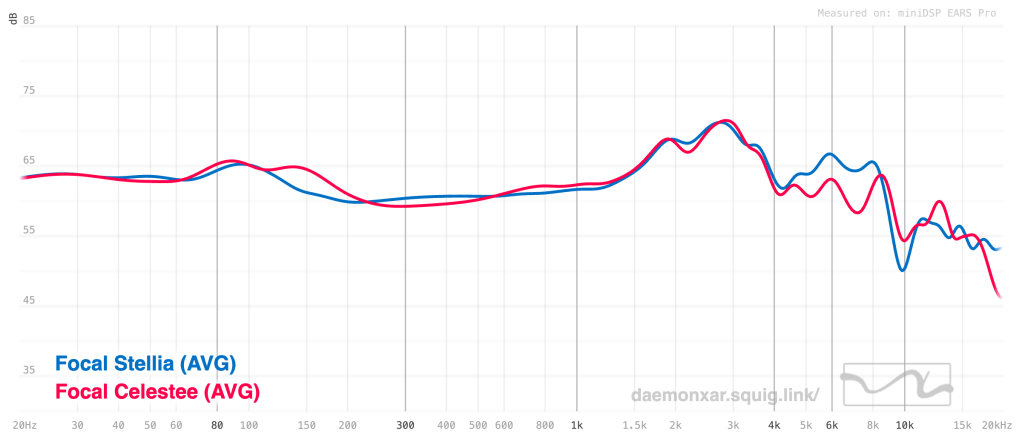
Verdict: Stellia, if you can afford it. Celestee are definitely the better value and get you most of what you get from Stellia, and with a more dynamic and intensive bass presentation. If you want the extra bass, or don’t want to shell out $3,000, the Celestee are a great option. If you want really premium closed-back sound, accept no substitute.
I’m very curious to spend more time with the Celestee and will link that review here when I have played with the EQ a bit more.
Focal Azurys
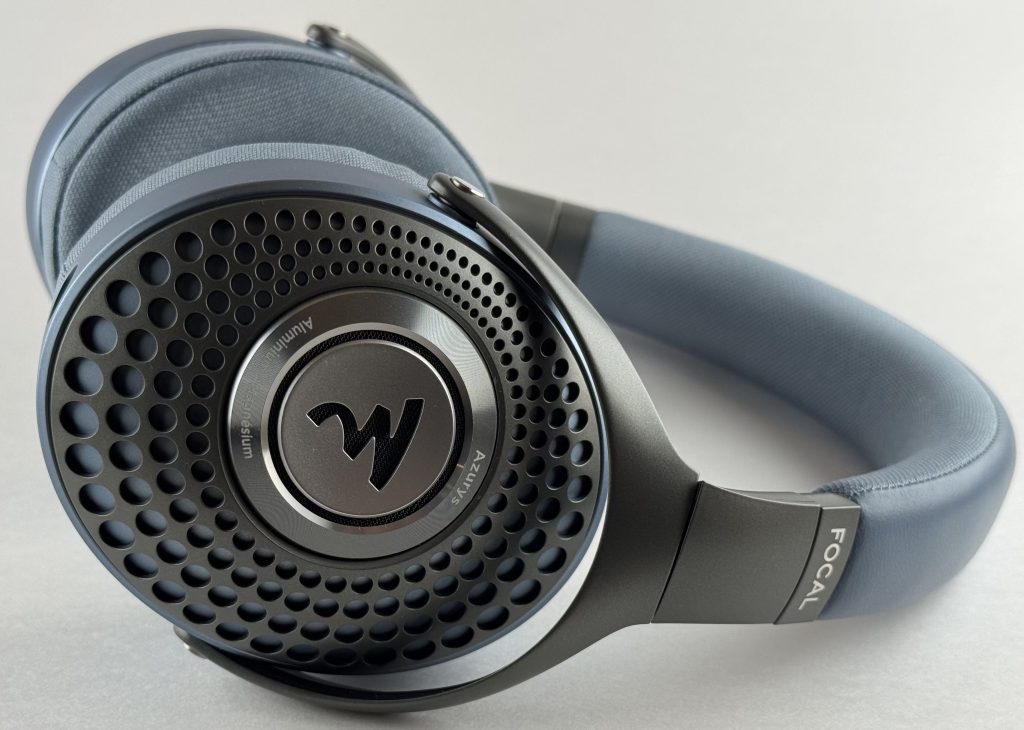
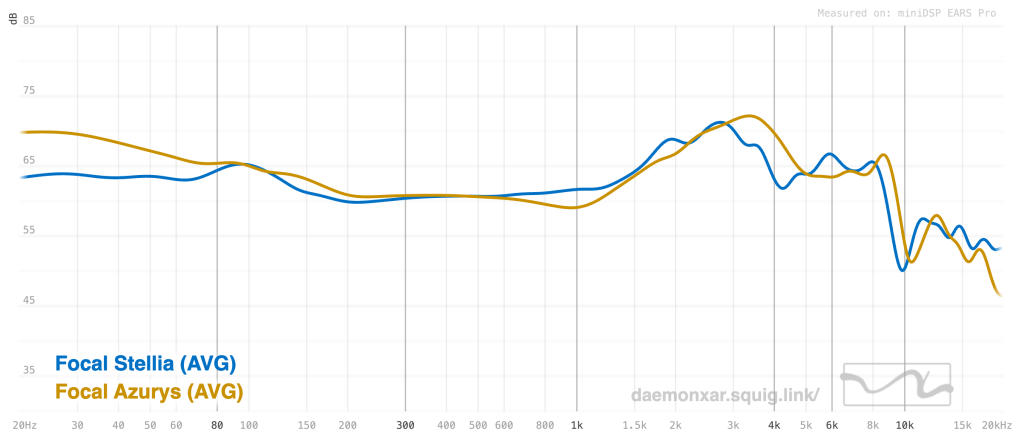
Per my general policy of not comparing two headphones unless I have them in my hands at the same time, I’m not going to do any direct comparisons here other than to say that my general bias towards the larger style Focals is hardly a secret, and as much as I thought the Azurys was a good headphone, it wasn’t necessarily for me. After all, there’s a reason I no longer have it (and I sold it for around $300). I’ll be keeping the Stellia for the forseeable future.
Meze Empyrean II
Yeah, I know it’s a bit of a fools errand to compare a closed back to an open back. BUT: these are arguably the two most resolving pairs of headphones that I’ve ever spent substantial time with, (and are hands down the most expensive headphones I’ve owned) and I think they’re worth a quick comparison.
I’m an open-back guy. I’m pretty clear about that; closed backs are (by and large) something I grab out of necessity, not really choice. And historically, I’ll tune out a whole lot of background noise before I reach for a closed back. Stellia is one of a VERY small handful of headphones that change that dynamic, so hear me when I say that despite similar price tags, build quality and aesthetics, this is … not really a fair comparison.
I really need to get around to writing my review of the Empyrean II soon, but in the short term I’ll leave you with what I wrote in my Meze 109 Pro review about the Empyrean II:
The Empyrean IIs are a genuinely extraordinary headphone, and it’s really hard to describe them in a way that will make sense to anyone, let alone to people who don’t spend a lot of time thinking about and listening to quality headphones. It’ll just sound like hyberbole. Everything I love about the 109 Pro, but dialed up to 11 and shipped in a custom-made suitcase with two sets of interestingly different pads. If you handed the 109 Pro to an engineer and told them to make it better, money no object, I think you’d get something pretty damned close to the Empyrean II.
The 109 Pro are detailed, layered, well-resolving headphones. The Empyreans are all of that, but with custom-built planar magnetic drivers with all the potential depth and precision that that upgrade can bring. The 109 Pro are rich, and deep, and beautifully tuned in the bass; the Empyreans (with the Duo pads) bring that and more, plus the more linear bass extension you can get from a really good planar. And then when you get bored (if you ever do!), there’s a second set of pads and a second tuning. The 109 Pro have incredible fidelity and clarity for the midrange, especially vocals, but at their best the Empyreans bring the singer directly to you. The 109 Pros bring energetic but not sharp treble, with all the detail and feeling that brings. The Empyrean somehow up that feeling, without trading or sacrificing anything. And like the Sennheiser HD 490 Pro, they offer you two different sound signatures, which you can easily swap using the magnetic pad mounts that I wish every headphone used.
The Meze 109 Pro, at their best, sound and feel like you’re sitting in a small club, halfway back, listening to a band you love playing the songs you want them to. The Empyreans, at their best, sit you in the front row at that same show.
It sounds like hyberbole, I know. I really do. I … just can’t describe it differently. The Empyrean II is the things I love about the 109 Pro, but better. The only thing that’s better on the 109 Pro is drivability; the Empyreans won’t run very well from a dongle or directly from a device. But that’s very rarely a problem for me, particularly with an open back that will live at my desk. And the Empyrean II is the epitome of a desk headphone: they do not leave my office. Period.
All of that applies to Stellia almost as well as the 109 Pro, though I will say that there are definitely circumstances where I’d prefer to listen to the Stellia than the 109 Pro (my favorite headphone under $1,000).
Stellia is a great headphone. A special one, even. Empyrean II is … spectacular. No one should spend $3,000 on a pair of headphones, but if you’re going to … Empyrean is the way to go, unless you NEED the isolation of a closed back. If you do need that isolation, this is as close as you’re going to get to Empyrean II in one.
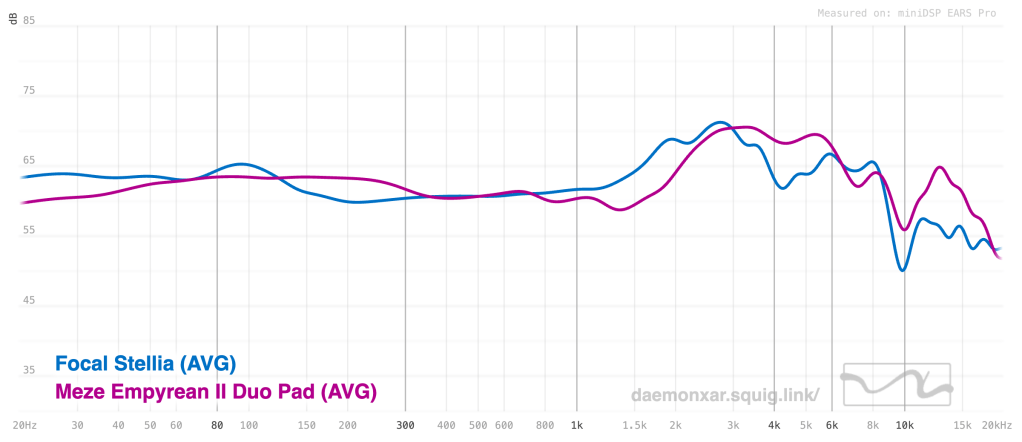
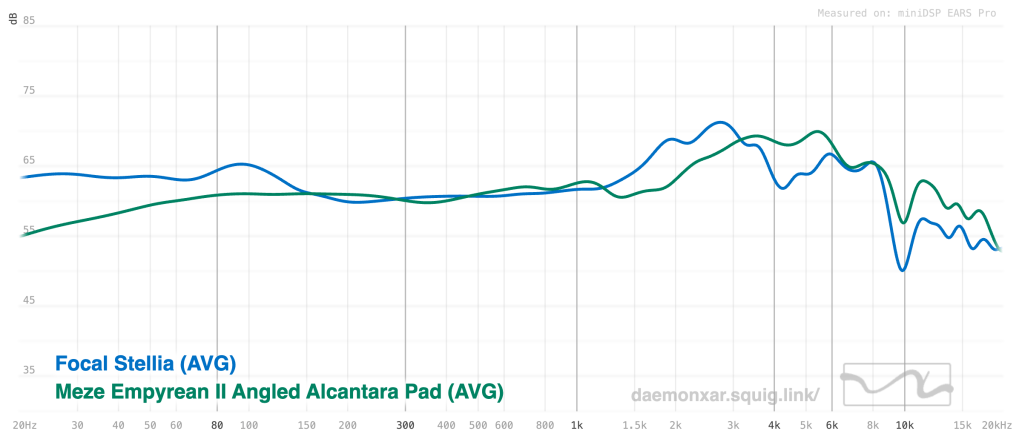
Verdict: If you’re hesitating for even a moment over spending $3,000 on headphones, don’t. If you’re eager, the Empyrean II is the right play here unless you need a closed back. If you do, the Stellia won’t let you down.
Overall
I don’t really know what I expected from the Focal Stellia. I think I had pretty low expectations, given the general tenor of most of the reviews of them that I’ve read/watched over the last few years, and maybe that contributed to a more charitable review, or maybe I’m just a contrarian (after all, I like Audivina more than almost anyone else), but I’m really quite pleased with this pair of headphones. I don’t always want a detail monster; there’s a reason the Arya Stealth hang on my wall pretty much all of the time I’m not using them to do an A/B for a review, but the Stellia manage to be both incredibly detailed and precise while also being FUN. I just really enjoy listening to them.
I’m not going to tell anyone they should spend the money to buy a pair of headphones like this. I’m not replacing them at MSRP if they break or I lose them. But my music world would be just a little bit worse off without them in the collection, and I’m curious to see how much I keep using them (particularly once I spend some more time with Celestee). I’m not much of a closed back headphone guy … but a couple of the things I’ve tried in 2026 might be bringing me around on them as a class of headphone.
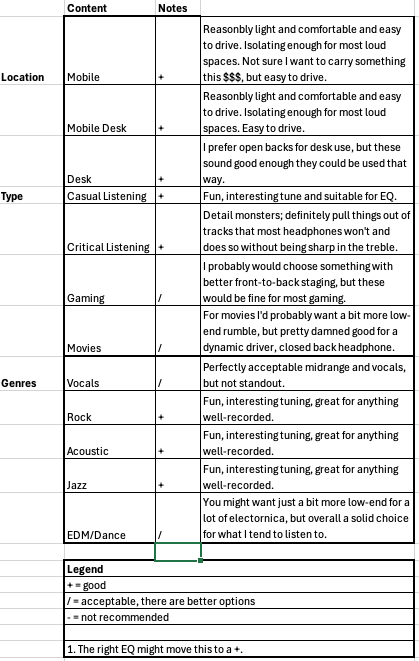
- I score bass, mids, and treble on a two part scale: 1-5 for quantity (5 being the highest), and A-E for quality (A being best in class, E being laughably bad). For soundstage it’s also a two part scale, with the number representing the width and the letter the separation within it. ↩︎
- For comfort/fit, my scale is A-E with A being disappear entirely into the background and E being I want to tear my ears off to stop feeling these headphones on my head. I’ve had one E: the Koss PortaPro. ↩︎
- I did an Alaskan cruise this summer, and against all odds ended up on the same ship we were on back in 2024 for Christmas. ↩︎
- With my temporary setup, I don’t have very many of my amps accessible so my ability to test around with them is somewhat limited. ↩︎
- God, I hope they do. As much as I love the Bathys, these are so much more comfortable on my head … ↩︎
- Though after a bit of time with the Celestee … hmm. Interesting matchup. ↩︎
- I know, I know … how “audiophile” of me. But seriously it’s a great track. ↩︎
- And having now dropped my Elex off of a shelf, I can report that they did! ↩︎
- There are, of course, non-OEM options available for substantially less money (though even those seem to start around $100). ↩︎
- You really, really shouldn’t pay MSRP for most headphones, especially ones in this price category. Markups are often quite substantial (25% or more), and it’s a matter of a few moments to e-mail three or four dealers around you to see if they’re willing to cut a deal to move a headphone. My experience trying that has been pretty good so far. ↩︎
- Yeah, I know that price and quality aren’t a direct correlation in headphones, but still. Both are marketed as professional reference grade closed backs. ↩︎
- Lucky you! ↩︎


Leave a Reply