
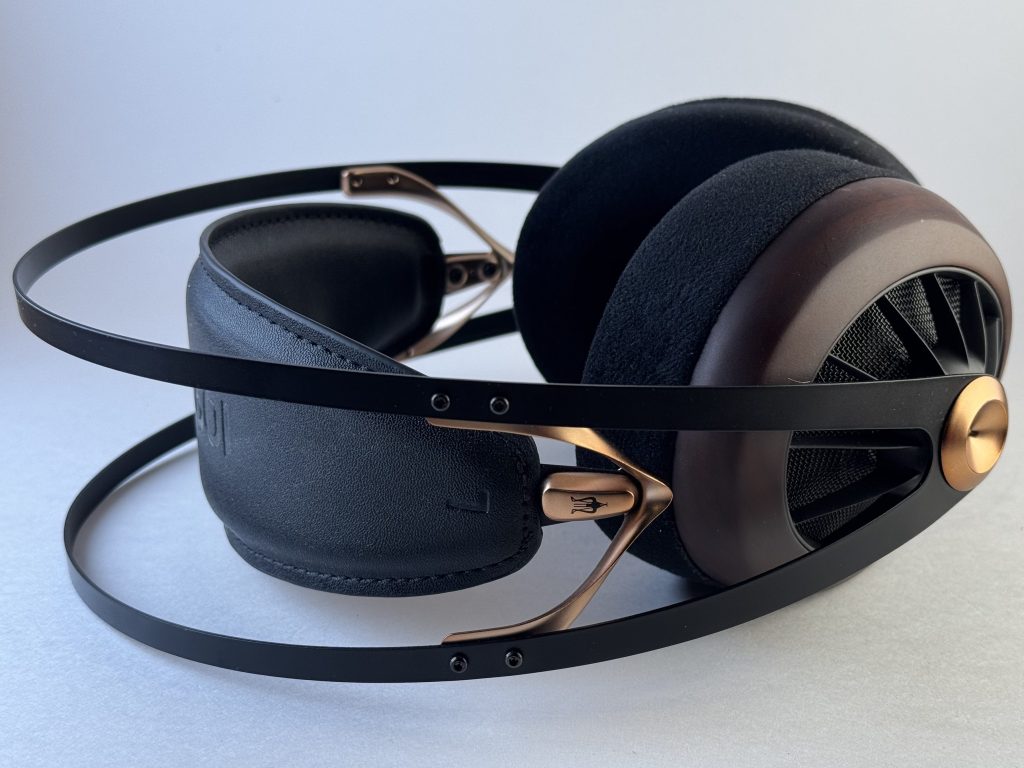
[ORIGINAL MSRP $799. Currently widely available from most hifi sources, including from Amazon for MSRP in June 2026. Purchased new from Amazon in January 2025.]
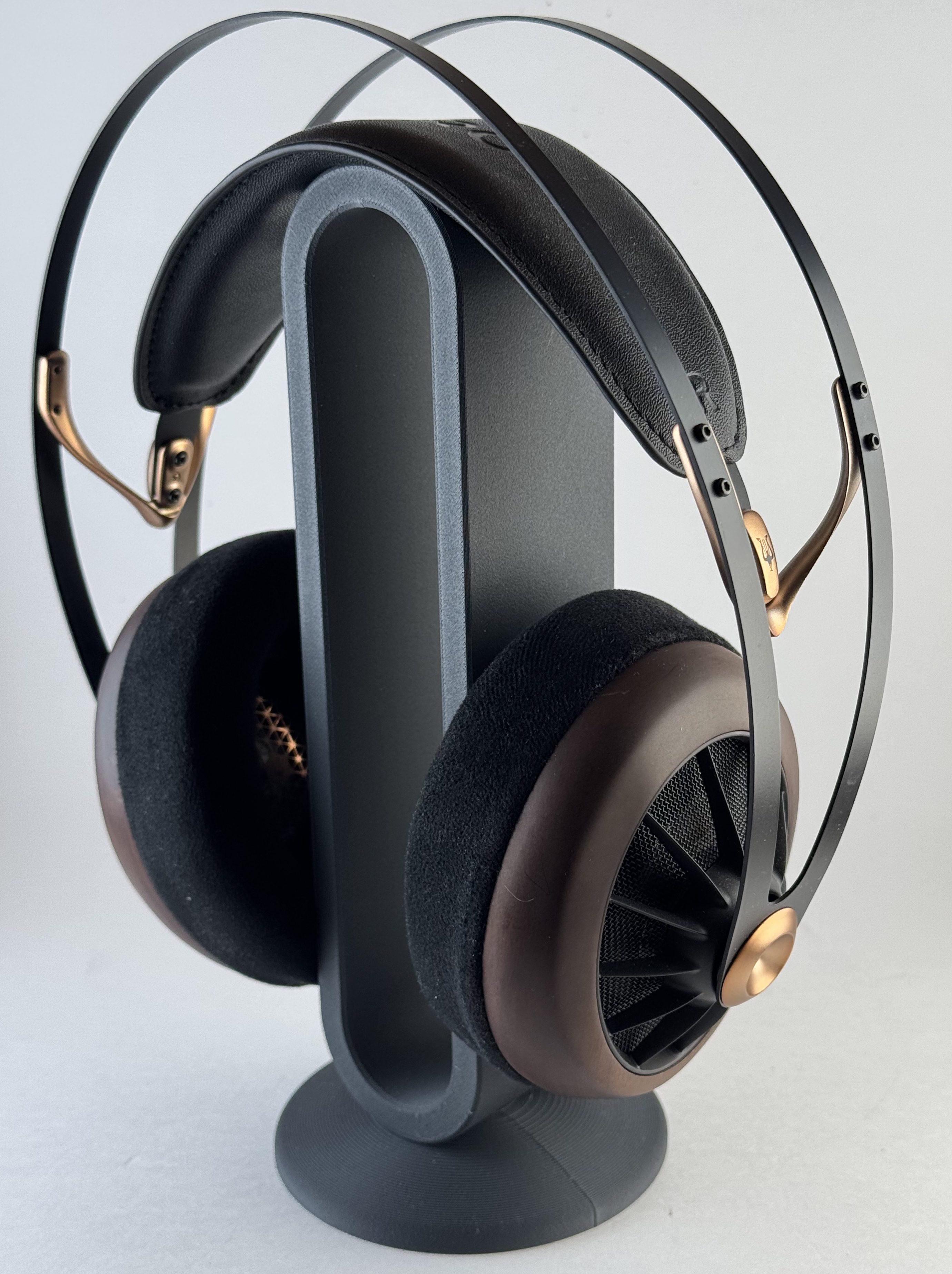
[Tl;dr: The Meze 109 Pro are my favorite headphone under $1,000, and have been since I first tried them out a year and a half ago. Warm, buttery magic. Great bass, really good midrange (including vocals), and lively but not fatiguing treble on my head. The single most comfortable headphones I own, and beautiful and well-built to boot. If you listen to headphones a lot and can afford the price tag, I recommend them to you wholeheartedly. Also easy enough to drive that they work really well with almost anything, including from a cheap dongle or any devices that still have audio jacks.
Meze really knocked it out of the park with these, and so far they’re holding up well against even a lot of more expensive options.]
Cost-agnostic: 10 out of 10 Denalis

Cost-sensitive: 9 out of 10 Denalis1

TABLE OF CONTENTS:
Introduction
One of the things that I, and I think other reasonably introspective casual(ish) reviewers struggle with occasionally is wondering if I really like a pair of headphones, or if I just want to like them. (Also the converse: do I dislike a pair of headphones, or do I just want to dislike them?) This was what had me holding off on reviewing the Focal Elex for so long; I love those headphones and have a real emotional attachment to them, and I worried that they might not hold up after listening to so many more headphones in the last few years. I was, thankfully, worried about nothing and I still really love that pair.
The Meze 109 Pro has achieved much the same status in my head; for the first year I had them I told people that they were my favorite headphone, and for the last six months (since I got the Meze Empyrean II) I’ve been calling them my favorite headphone under $1,000. I commented in my Elex review that as much as I love the Elex, I still thought that the 109 Pro was a better headphone. But then that doubt started to creep in again … did I really still like the 109 Pro as much as I thought, or was it just that I thought that I loved them? They were one of my first serious reviews (back in February 2025), and definitely among my first reviews of higher end products. Were my newbie ears up to my current standard?
I took the 109 Pro off the wall and I’ve been listening to them a lot over the last couple of weeks and, spoiler alert: I’m delighted to report that I still stand by basically everything in my original review. I’ve grown a lot as a listener and as a reviewer (and dear god, as a product photographer!) in the sixteen months since that original review (not to mention substantially revamping my scoring system and getting a quality headphone measurement rig!) so I thought it was worth giving them a fresh review at some point.
Last week when I sat down and started typing up my review notes for the Meze Strada, I found my fingers itching to instead switch over to the 109 Pro. So here we are.
Review notes
Testing rig
Here’s my basic testing protocol.
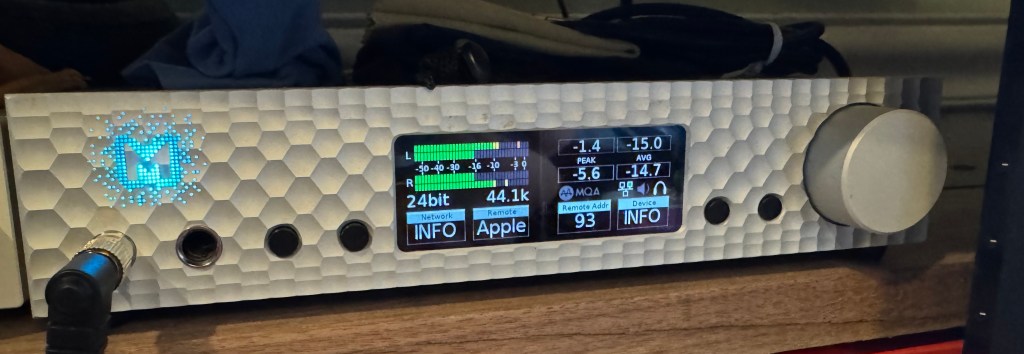
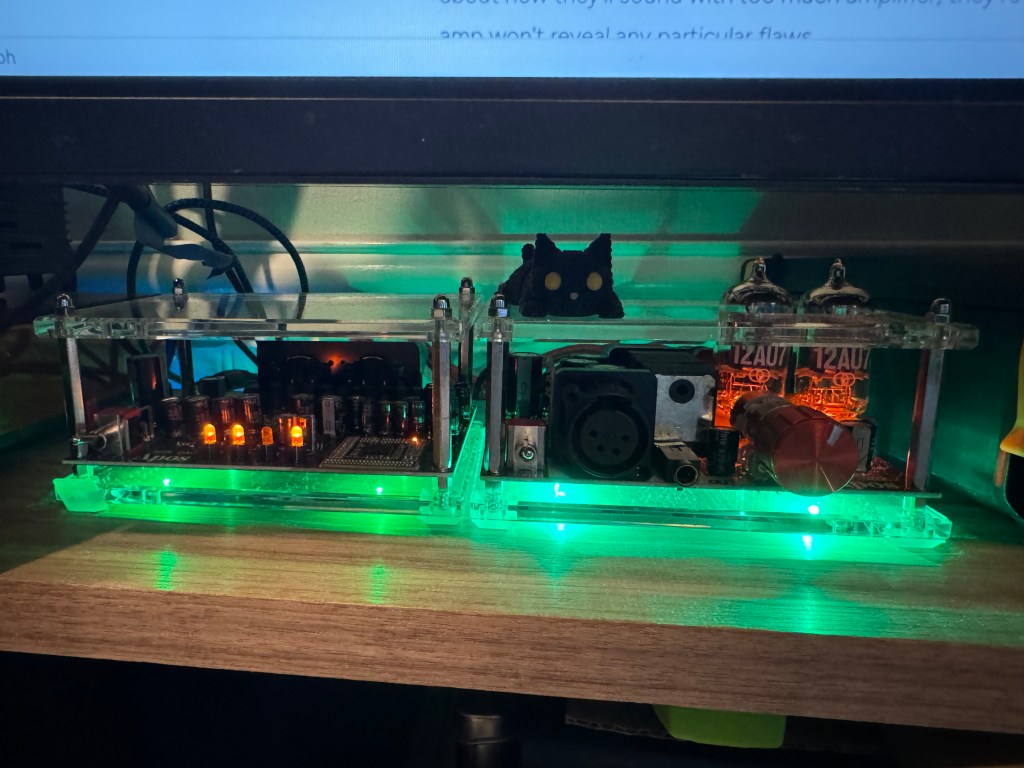
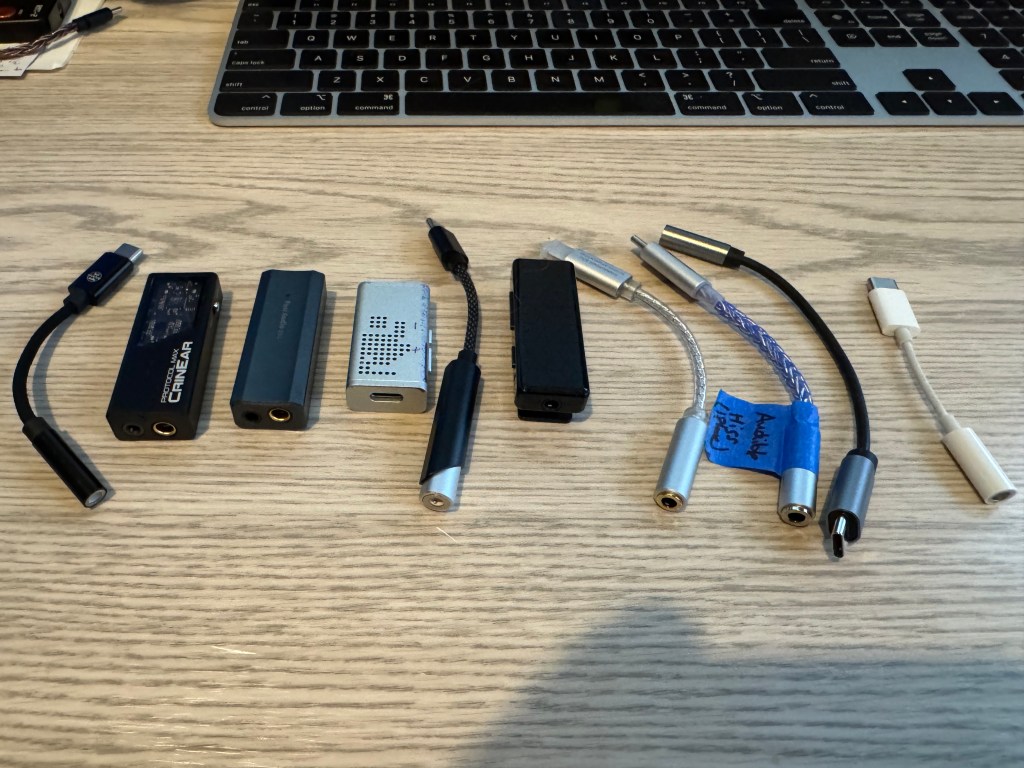
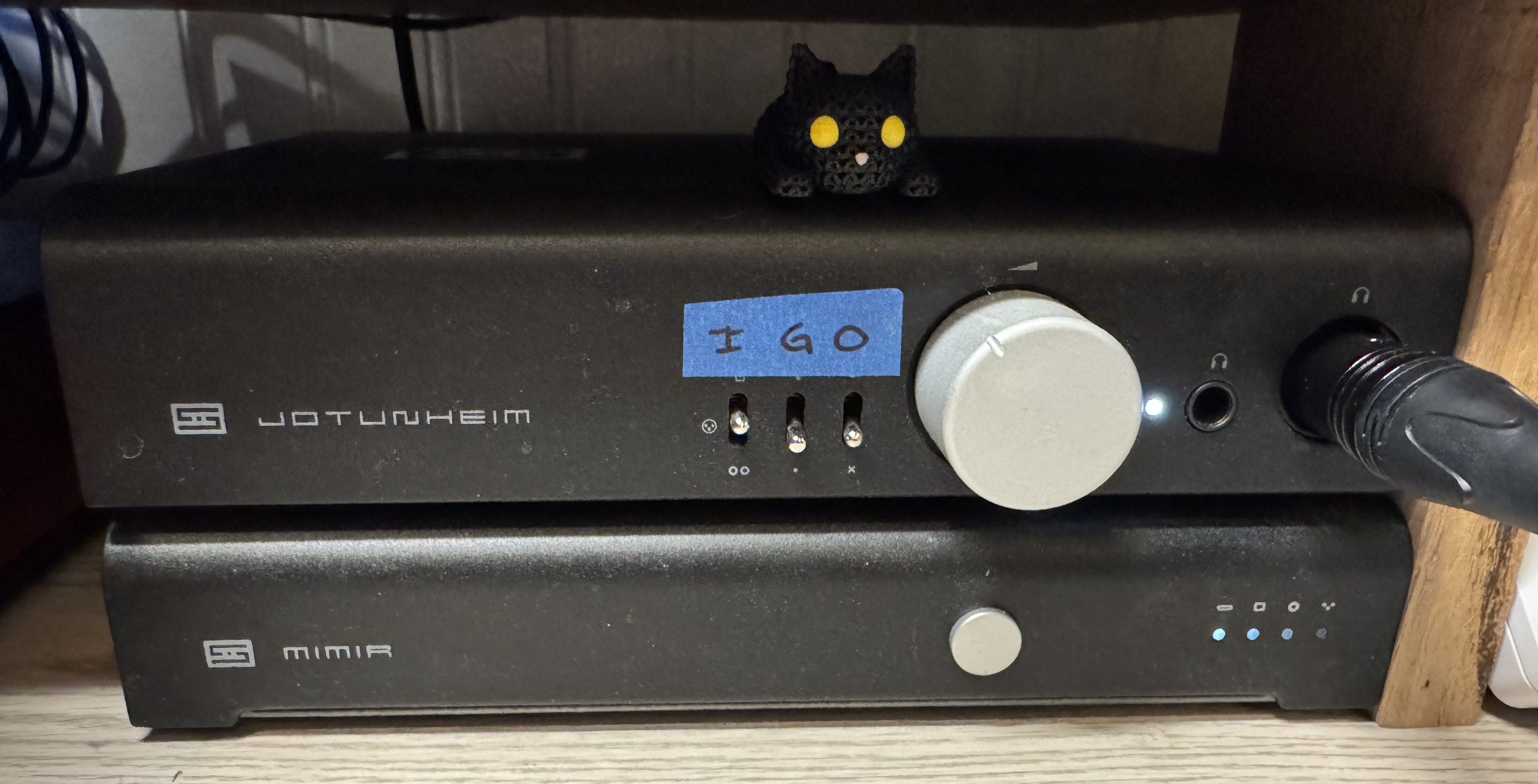
Based on my philosophy on the allocation of resources in headfi, except where otherwise noted I’m going to primarily be testing these with a Schiit Mimir and Jotunheim 2 stack, running balanced via an XLR-terminated Hart cable (my very second Hart cable,4 predating my interconnect addiction), and connected via USB-C to a Mac Studio running the Roon client. I have however used them with almost every DAC/amp I’ve ever owned, and I really love the way they perform with everything from the Brooklyn Bridge to the Gremlin/Druid stack to the $9 Apple dongle.
EQ
As noted in the Bathys review, I mostly prefer to test headphones with their default tuning, assuming that most people won’t take the time or make the effort necessary to use a third-party EQ. The 109 Pro sound great to me out of the box; I have basically never felt the desire (let alone need!) to apply EQ.5 There are folks (anecdotally, mostly under 40) that might have some issues with sections of the treble, but that’s just never been me.
EQ Update
Interestingly, as I completed the listening for this review, I started noting a few places where I was turning the 109 Pro’s volume up to get the resonance and richness that I wanted on the bass on some tracks, and it was pushing a few treble bits into … not uncomfortable territory, necessarily, but definitely suboptimal volumes. And I was getting just a tiny bit of splatter on the bass in some of those places, particularly in the midbass where the the 109 Pro is strongest. So I fiddled a bit with EQ, and came up with a profile that I think make the 109 Pro better without hurting what I love about them. Here you go:
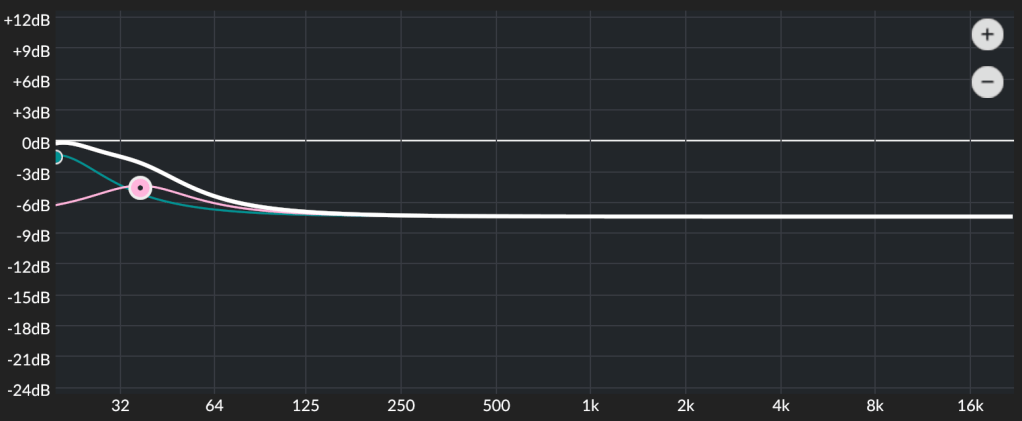

Just two bands, but bumping the lower end of the bass just a little (mostly in the roll off section) means that I can keep the volume more moderate while retaining the richness and resonance I was chasing with volume increases.
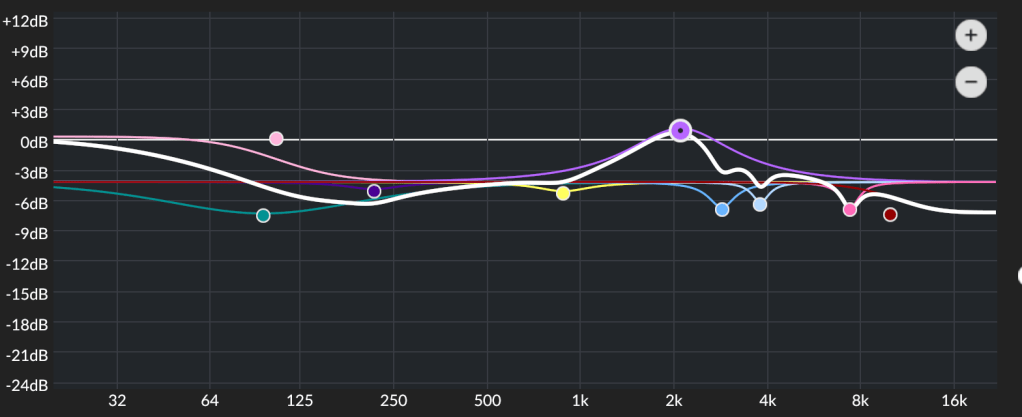
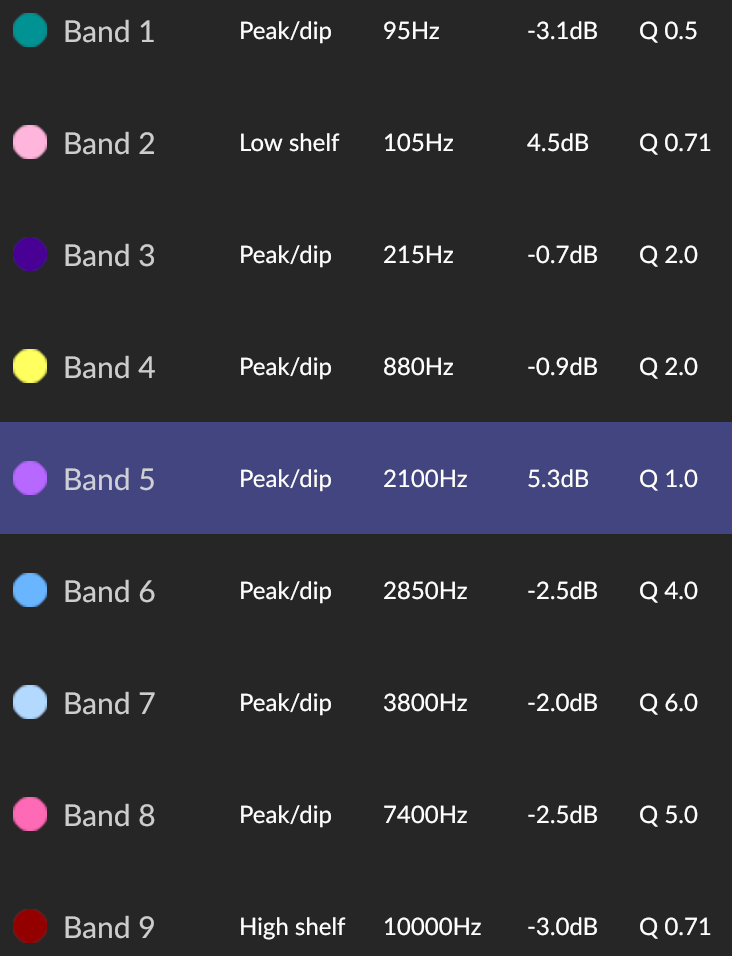
Now, if you do have issues with the 109 Pro’s treble, here’s the way that I have modified Oratory1990’s EQ preset available here (basically just turning down Bands 2 & 5 a small amount). There is an argument to be made that this addresses the little timbral issues that the 109 Pro can have, as well as a couple of the more noticeable peaks in the treble, but to me these come at the cost of the things that make the 109 Pro unique and lovely and I basically don’t use it.
Volume
Here are the volume settings I use with the Meze 109 Pro (unless otherwise noted, running via Roon with no headroom management, playing Daft Punk’s “Face to Face” from Tidal):
- Apos Druid/Gremlin (-20 dB applied via DSP): 11:00 (balanced XLR)
- Chord Mojo: white, dark, pink, red
- Dongles (Apple Music, iPhone 15):
- Apple: 50%
- Crinear Protocol Max (max internal volume): 45% (balanced), 55% (single-ended)
- Fiio KA11: 40%
- Fosi DS2: 25% (balanced, 33% (single-ended)
- JCALLY JM12: 50%
- Holoaudio Bliss (KTE): -38 dB (Low-Z, balanced 4.4 mm), -30 dB (Low-Z, single-ended 6.35 mm)
- Mytek Brooklyn Bridge: 50%
- Schiit:
- Mimir/Jotunheim 2 (Mimir has a -15 dB pregain applied via Forkbeard): low gain, 9:15 (balanced); low gain, 11:45 (single-ended)
- Modi/Magni 2: low gain, 11:00
- Modi/Piety: low gain, 8:45
- Modius/Magnius: low gain, 8:30 (balanced); low gain, 9:00 (single-ended)
- Topping DX5 II: -33 dB (single-ended), -39 dB (balanced, XLR)
My torture testing list
The Basics
The Meze 109 Pro are an open-back, dynamic driver headphone from Romanian headphone manufacturer Meze. They were released in 2022, and unusually for Meze at the time, dangerously close to reasonably priced at $799 (while Meze had cut their teeth in the audio world mostly white-labeling existing Chinese-manufactured products, their in-house products outside of the 99 Classics/Neo had mostly been VERY high end, starting in the multi-thousand dollar range).
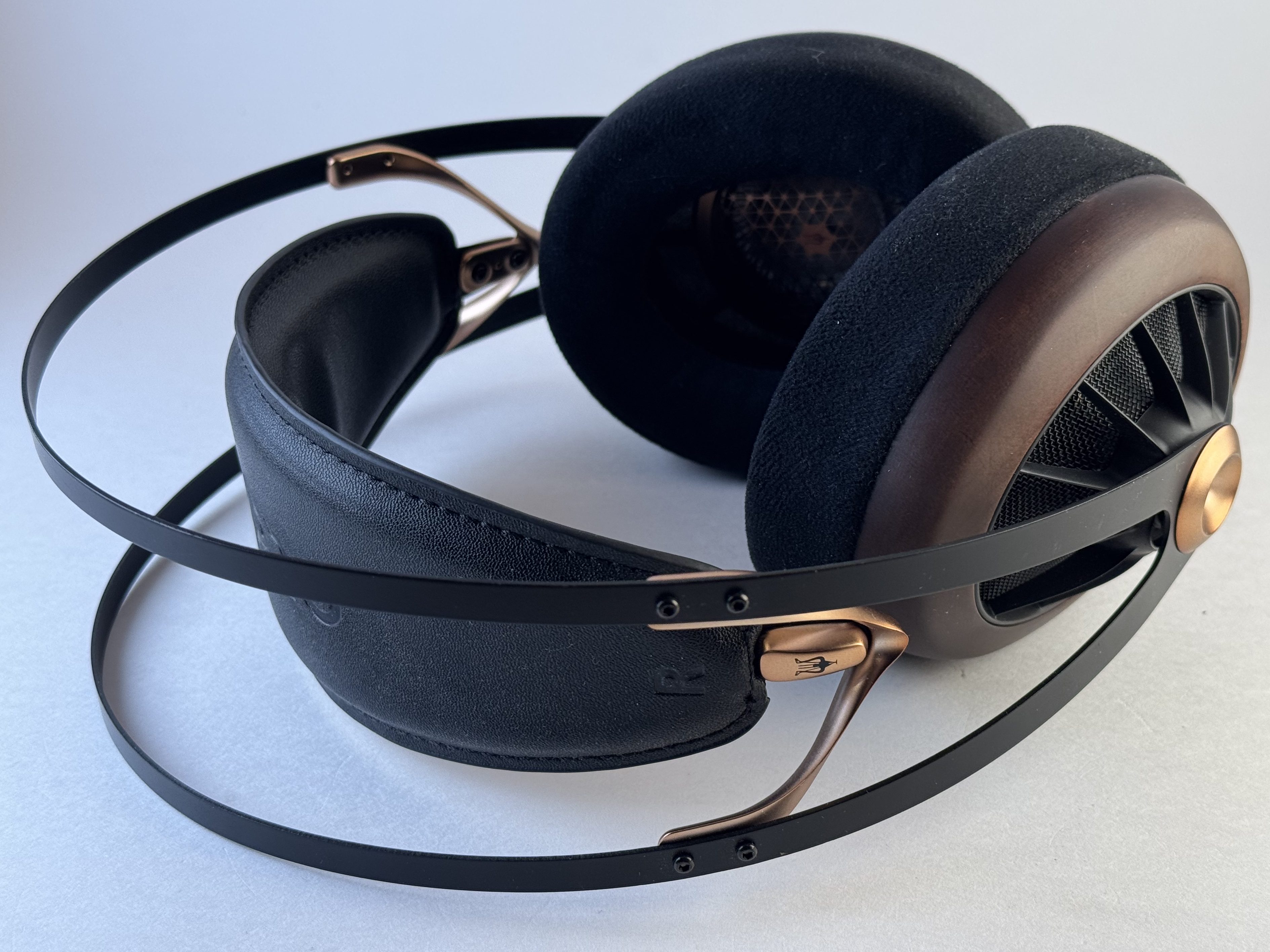
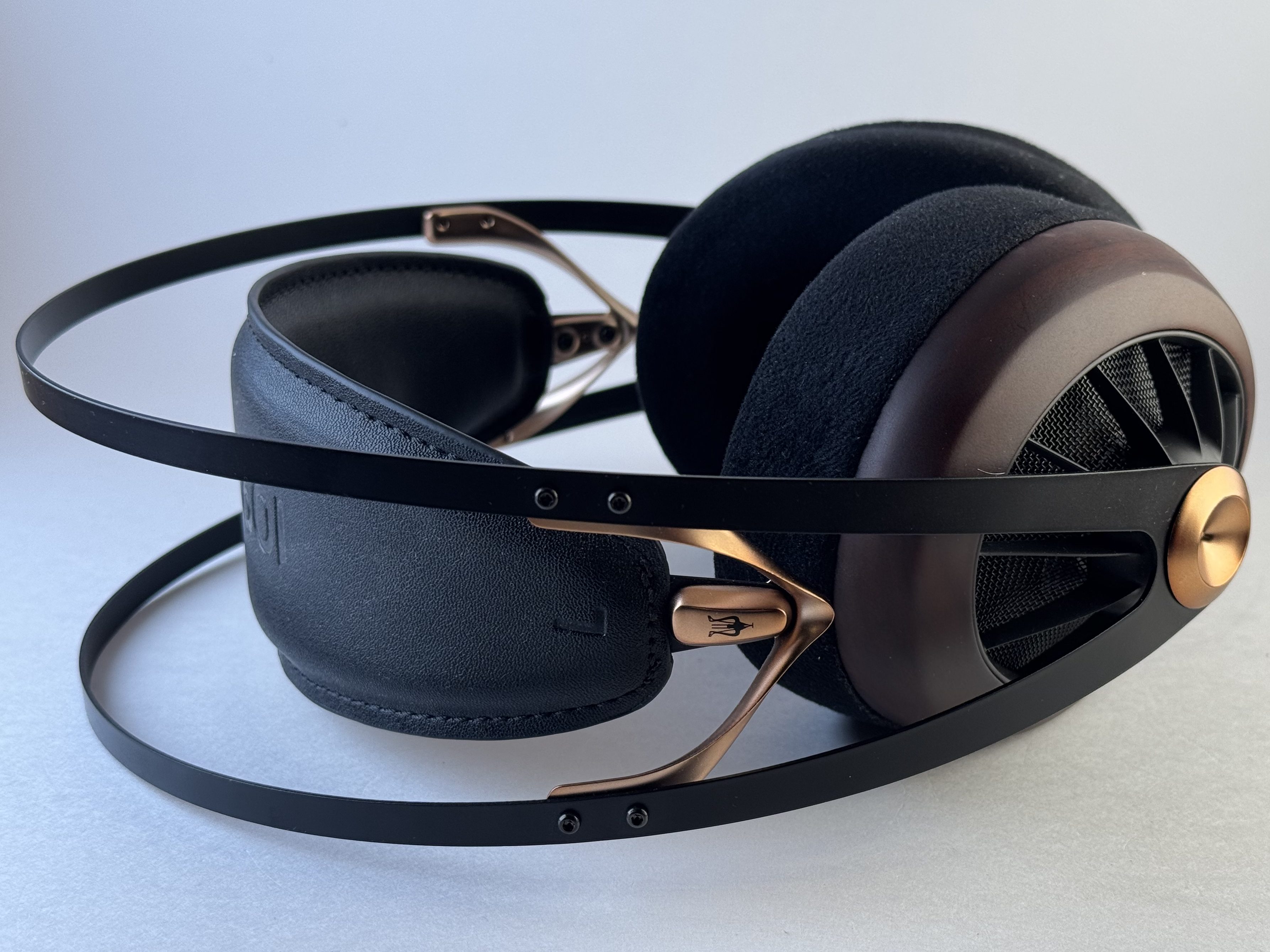
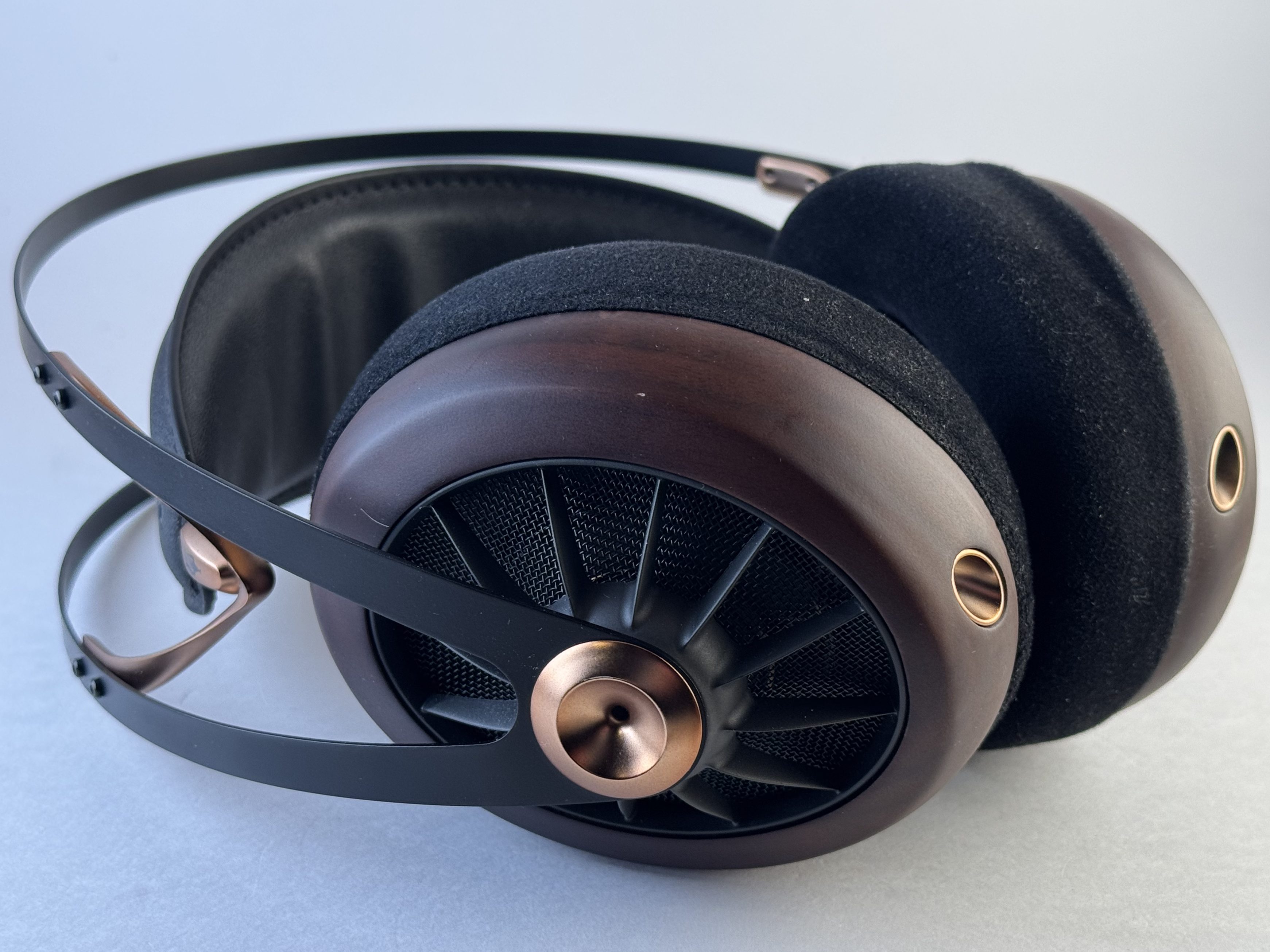
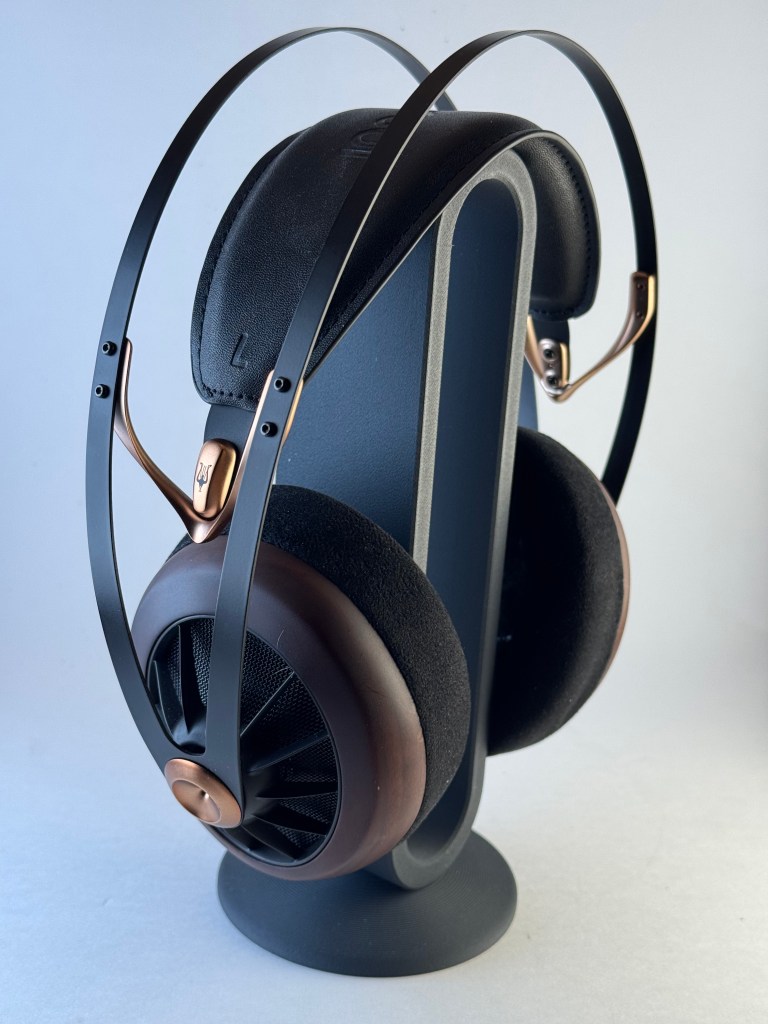
The 109 Pro are pretty easy to drive, with a nominal impedance of 40 Ohms and a sensitivity of 112 dB/mW, meaning they work pretty well from a simple dongle or the rare device that still has a native audio jack. They’re a moderate weight headphone at 375 grams without a cable; they’re not as light as the Sennheisers that hover in the low 200s of grams but nowhere near as heavy as most of the Hifimans or Audezes in this general price range. The 109 Pro follow the normal non-planar Meze design aesthetic of beautifully machined wooden ear cups with a spring steel cage, and like most of their products relies on a dual-entry, balanced-capable 3.5 mm cable system, making it very easy to source an aftermarket cable, should you so desire.6
Sound
The biggest change in the last one and a half years when it comes to my impression of the Meze 109 Pro’s sound is this: now I know that the Empyrean II exists. I have heard them. I own a pair. They’re sitting behind me. And this puts the lie to the first sentence in that section of my original review: the 109 Pro are simply no longer my favorite headphone.7
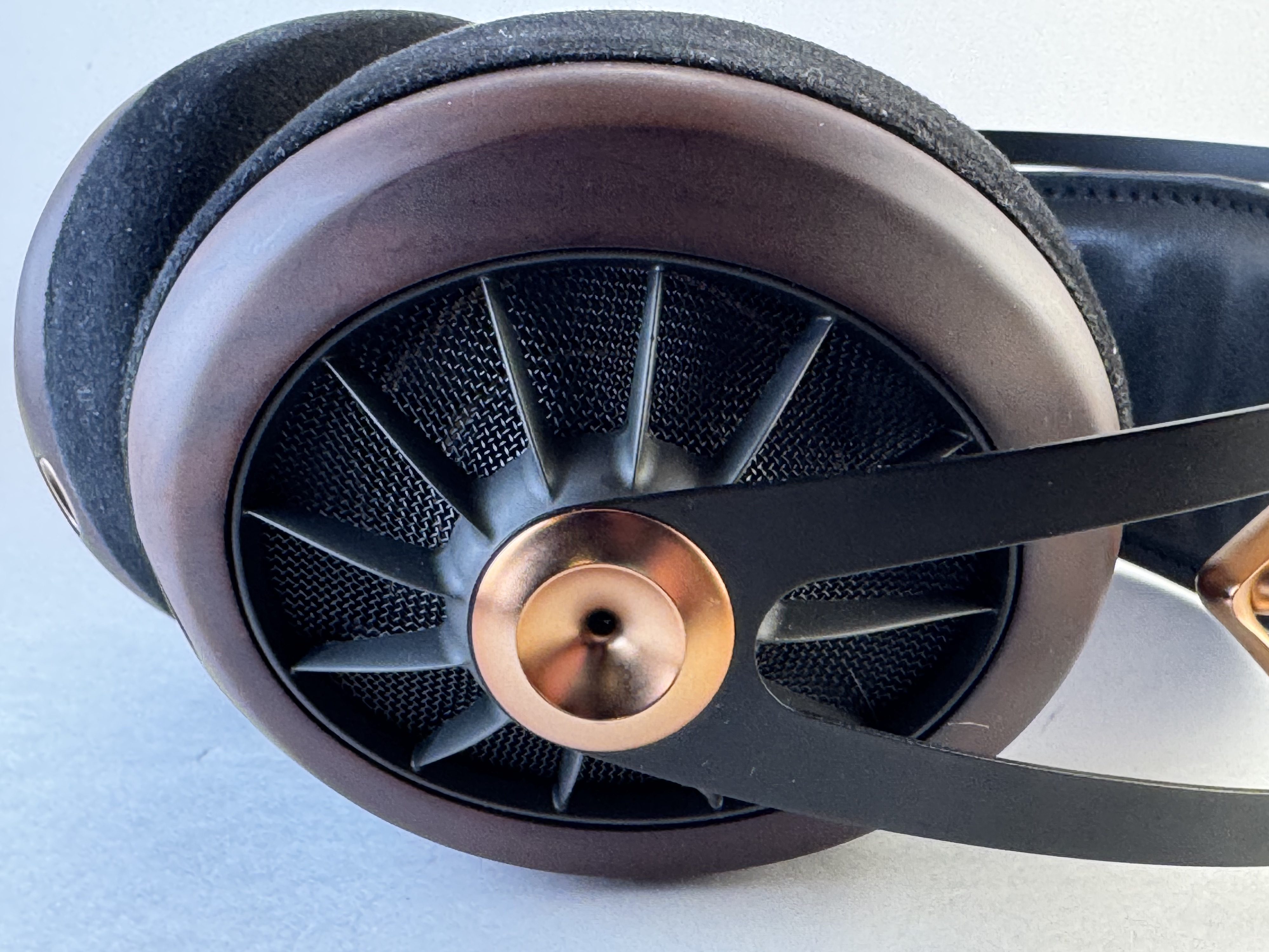
Beyond that, though, I stand by pretty much all of the things I said in there. These headphones are extraordinary on quiet, nuanced tracks like “What Did I Do?”, and equally good on complex, busy ones like “Face to Face” or “Garcia Counterpoint.” The bass is rich and deep without losing clarity or focus, the mids are almost up to 6X0 quality, and the treble just works on my head. They’re simply one of the most cohesive headphones I’ve ever heard.
Here’s how my pair measure on my rig:
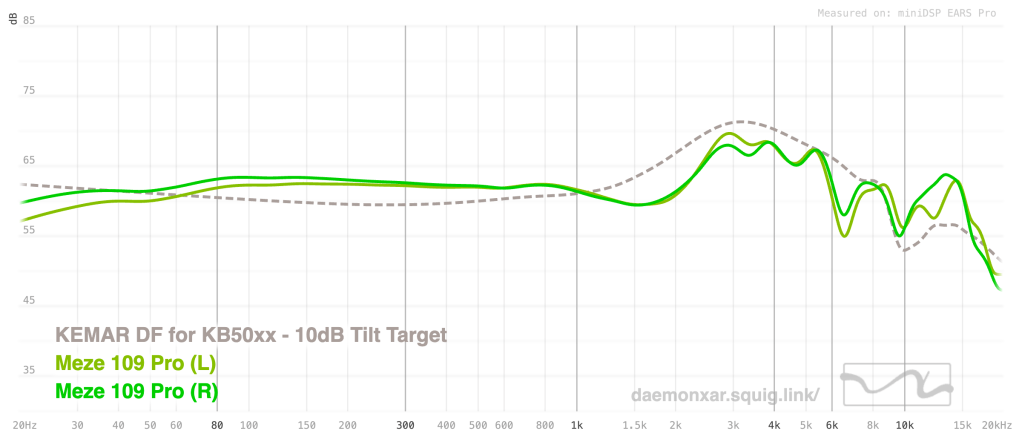
I’m genuinely a little surprised by that dip in the midrange, given my appreciation for their mids, and I definitely don’t hear that big ole spike at 13 kHz, but I guess even in the measurement it’s not much higher than the volume from 80 Hz to 1 kHz.
Technicalities
The soundstage on the 109 Pro is reasonably wide, but their biggest strength is the imaging and separation within it: it’s genuinely among the best I’ve heard, competing even with detail-focused planars like the Hifiman Arya Stealth and the Audeze LCD-2/2f.8 The guitars on “Chan Chan” are clearly laid out out right to left, with each instrument distinctly placed in space and separated, though the hand drums are a tiny bit recessed. Genuinely, I’m not sure I’d ever heard the secondary vocalist clearly separated out from the primary; they basically always sound so close together in space that I thought they were actually mixed together … but they’re not.9 Pretty solid front-to-back staging too; the guitar at the beginning of “Love Can Damage Your Health (Laid Mix)” really does rotate more clearly on the 109 Pro than on all but a handful of headphones I’ve spent time with. And, as noted in my original review, these are one of those headphones where pretty consistently I think I’m hearing something in the real world when it’s just a sound in the mix that I haven’t really heard before. Sometimes I think it’s Denali, and a lot of this afternoon I thought it was raining pretty hard but it turned out to just be in the music I was listening to.
The dynamics are pretty good; setting the volume at the beginning of “It’s All So Incredibly Loud” had me reaching for the volume control around 2:40. The microdynamics are almost (but not quite!) Focal-ian; it’s the one thing about the Elex that just beats the 109 Pro outright. Nothing slams quite like a Focal, and on the 109 Pro I have to turn the volume up on a track like “Angel (Blur Remix)” to get the hits I want on the bass bell tones (and I still don’t get quite enough warble on the back end of them). Turning it up works on a track like that with so little in the rest of the mix, but for more crowded tracks you just have to live with slightly less satisfying slam, even with EQ.
Overall, the detail and resolution on the 109 Pro is excellent. I commented above that they don’t quite matchup against a detail monster of a planar like the Arya Stealth or LCD-2, but they’re … not that far behind. They are a headphone where I regularly have my attention pulled away from what I’m working on to listen to and analyze a detail I hadn’t heard before (see, e.g., the comment above about the vocalists on “Chan Chan”). The hiss and finger slides on “What Did I Do?” are perfect, clear and clean, and the oppressive sense of presence around :40 on “Bassackwards” is there, if maybe a hair less intense than on some closed backs like the 99 Classics v2. A detail-heavy track like “Birds” sounds incredible on the 109 Pro. Notes start and end where they should, with clear breaks in sound where there should be on a track like “What Did I Do?”. It never feels like anything is missing in the mix.
Timbre is damned near perfect; in all of my listening, I didn’t hear anything that sounded particulalry wrong to my ears. And that’s rare; I can find a timbre issue with almost anything. [Editor’s note: I take it back; I found one thing. The snaps on “Remain Nameless” are just slightly off, and now I’m curious to go listen to other headphones to see if it’s actually the 109 Pro or just the track.]
At the risk of going full glaze, this is a headphone that I can’t really find any nits to pick about the technical performance. Maybe it’s possible that they could be slightly better resolving, or slightly wider, but if so I can’t find a track where anything else performs substantially better overall.10

Bass
This is the bass response that I judge other headphones against, so yeah, I’m a fan. I know there’s a little roll off in the sub bass, but as I’ve noted regularly on here, there’s just not that much information under 30 – 40 Hz in most of the music I listen to. “Superpredators” is clean and clear except where the mix is itself splattery. “Violence” is extraordinarily well-reproduced, though it’s one of the few tracks on my test mix where you occasionally feel that the sub bass lacks a little heft and impact unless you turn it up louder than I usually want to listen. And it’s great on the quiet, subtle stuff too; the bass slips in perfectly around 2:48 on “Out of My Hands.” The brain wobble on “Limit to Your Love” is not quite as strong as I might want it; it feels like the bottom half of the note is in the band where the 109 Pro starts to roll off. On a track like “Birds,” you can FEEL the strings on the bass bending and sliding in an incredibly satisfying way. The repeated low A on the bass guitar (55 Hz or so) on “Nobody Speak” is solid, though it’s also clearly on the edge of the roll off and bumping the bass via EQ a bit makes it sound clearer and more compelling.

If I had one criticism of the 109 Pro’s bass, it’s that it occasionally lacks a bit of the richness and resonance you get from a planar like the Edition XV; on a track like “Drawn,” when perfectly executed the low strings accelerating the track from the more acoustic first three quarters to the more hip-hop final bit are deep and powerful and feel somehow almost chest-vibrating, and on the 109 Pro they’re just … nice. Same on a track like “Remain Nameless”; the drums and bass that drive that song have an extra resonance and depth of tone on something like the 99 Classics v2 that are just a tiny bit lacking on the 109 Pro. It’s possible that this is fixable via EQ, but it doesn’t bother me that much.
[Editor’s note: the bass gets a tiny bit thumpy on “Calls” at times, but adding just a bit of sub bass via EQ fixes some of this by rebalancing the sub and mid bass and lets me leave the volume at a more reasonable level for regular listening.]
Midrange
The midrange on the 109 Pro is pretty excellent, if not quite as on the button as one of the 6X0s or even the Focal Elex. Vocals in particular are well-reproduced and -balanced; Jill Scott carries through beautifully on “Calls,” definitely in the main vocals and mostly in the backgrounds and runs she’s doing throughout the middle section. Johnny Cash is clear and intimate on “Hurt,” and the 109 Pro well-reproduces the section around 2:45 where the recording gets a little too hot. The vocals on “BLACKBIIRD” are incredible well done and balanced throughout the mix. Christine Hoberg’s vocals can spike into harshness on specific words in “Clair De Lune,” but on the 109 Pro they never quite cross over into problematic on my head.
Instruments in the midrange are also really well reproduced; the overlapping guitar parts on “Garcia Counterpoint” are clear, crisp, and well-laid out; like on “Chan Chan,” I think I’m actually hearing that one of the guitar tracks is either actually two, just a tiny bit separated off center, or they were mixed with individual notes slipping back and forth across the dead center line. Timbre on instruments in the midrange is also really excellent, with basically nothing standing out to me as even a little bit off.
The few criticisms I have are relatively small: on very busy tracks like “Cold War” and “Remain Nameless” the lead vocal can be a tiny bit recessed at times from where I might want it to be, though the balance is much better when the background vocals join in and it doesn’t detract from the overall listening experience. The same is true of “What Did I Do?” near the end, when the instruments start building volume; I would like a touch more of Hicks’ vocals, but this is a minor quibble.
Treble
The one criticism that I see of the 109 Pro on r/headphones or r/headphoneadvice is the treble, though anecdotally it appears to be more of a problem for people under 40 years of age than over. On my head, the treble on the 109 Pro is really excellently balanced, smooth and comfortable without being recessed or sanded off. Unlike some of Meze’s other headphones, I don’t get particular spikes on claps and other sharp percussion instruments, and my usual suspects for treble (“2021,” “Will O’ the Wisp”, “Coffee”) don’t cause me any problems, though Miles’ muted trumpet walks right up to the edge in a few places (as it is wont to do).
There are a few places hear or there where something stands out a bit more or less than I’d like in an ideal world. For example, there’s a quiet cymbal hit on the left side on beats 2 and 4 on “Only Here and Nowhere Else” throughout most of the track that’s a bit more elevated, and the plucked string notes on “Drawn” are just a bit less accented and crisp than you get on something like the Edition XV, but we’re really picking nits here.

Gaming
I’ve used the 109 Pro a bit this week while replaying State of Decay 2, and I stand by what I said in my original 109 Pro review; the soundstage is consistent and well executed enough, if not overwhelmingly large, that they’re fun for most of my gaming. I will add that the imaging and separation with the 109 Pro is also standout, and given how comfortable they are on my head overall, these are something I would happily use for long game sessions for everything but sweaty FPS play. They’re particularly strong for games like Cyberpunk 2077 or Death Stranding, where music matters almost as much to me as gaming cues.
Amplifier Compatibility
As noted in my original review, the 109 Pro are pretty amp agnostic and sound good with basically everything; they’re both easy to drive (40 Ohms, 112 dB/mW) and scale really well, with everything from a $9 Apple dongle to the $5,000 Holoaudio Cyan 2/Bliss (KTE) stack. As a headphone with really good imaging and layer separation they do bring out the best in something like the Chord Mojo 2, and as a warm-tilted headphone with a full, rich bottom end they play really well with the euphony of something like the Apos Gremlin tube amplifier.
Personally, I think my favorite combination is the 109 Pro and Chord Mojo 2; my favorite headphone under $1,000 and my favorite DAC/amp period; throw them together and you’ve got an amazing end-to-end, potentially end-game level headphone system for about $1200 at MSRP.11 Do a little value hunting on r/AVExchange, and you can probably get it together for less than $800.
I’d say the one place I do differ from my original opinion re: amplifier compatibility is that I’ve grown more skeptical of the impact of running balanced vs. single-ended; there are definitely amplifiers where the manufacturer skimped on one or the other, and a few edge cases where it matters on my head,12 but by and large these sound amazing out of just about anything (including the Fiio CP13 cassette deck). I use balanced cables a lot of the time, but honest to god it’s because XLR is just satisfying to plug and unplug, and I don’t feel bad when I swap to something like the Mytek Brooklyn Bridge or the Mojo 2 that are single-ended-only.
Overall Impressions
I love the Meze 109 Pro. I’ve been saying for more than a year that they’re either my favorite headphone, period (before December 2025) or my favorite headphone under $1,000 (since December 2025), and I’m delighted to confirm that they really, really are. Headphone choice is pretty personal and everyone has their own preferences, but for me, these are a goddamn delight and I should listen to them more. Not only do I really enjoy their bass, midrange, and treble, but they’re also one of the more cohesively tuned headphones I’ve ever experienced. Nothing stands out that shouldn’t, the detail and imaging are great, and … they’re just great. All around great. Plus they’re the most comfortable headphones I own, and beautiful. I have very few notes.
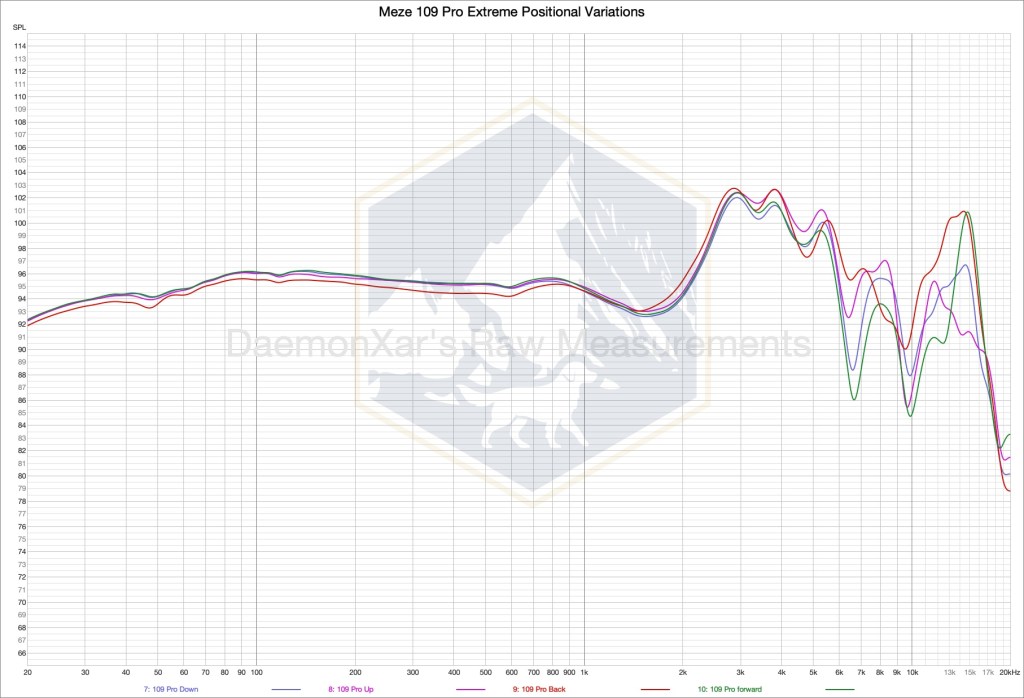
Just an FYI, they also don’t show a huge amount of positional variation on my headphone measurement rig; pushing them to the extremes forward, backward, up, and down generated very little deviation up until around 6 kHz, which is where you should start to get pretty skeptical of whether a particular rig will measure in a similar way to your own head/torso anyway.
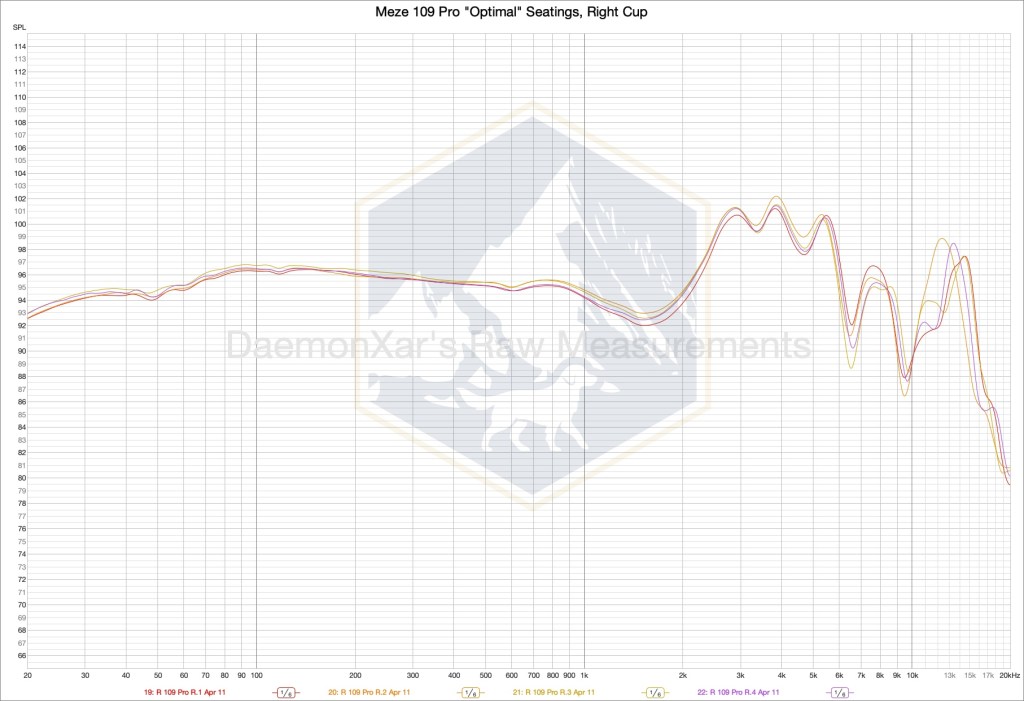
Variation in “optimal” seatings was even smaller; this is a VERY consistent headphone that’s pretty easy to get seated the same way on your head, as long as you put them on then quickly adjust them.
Build Quality & Appearance
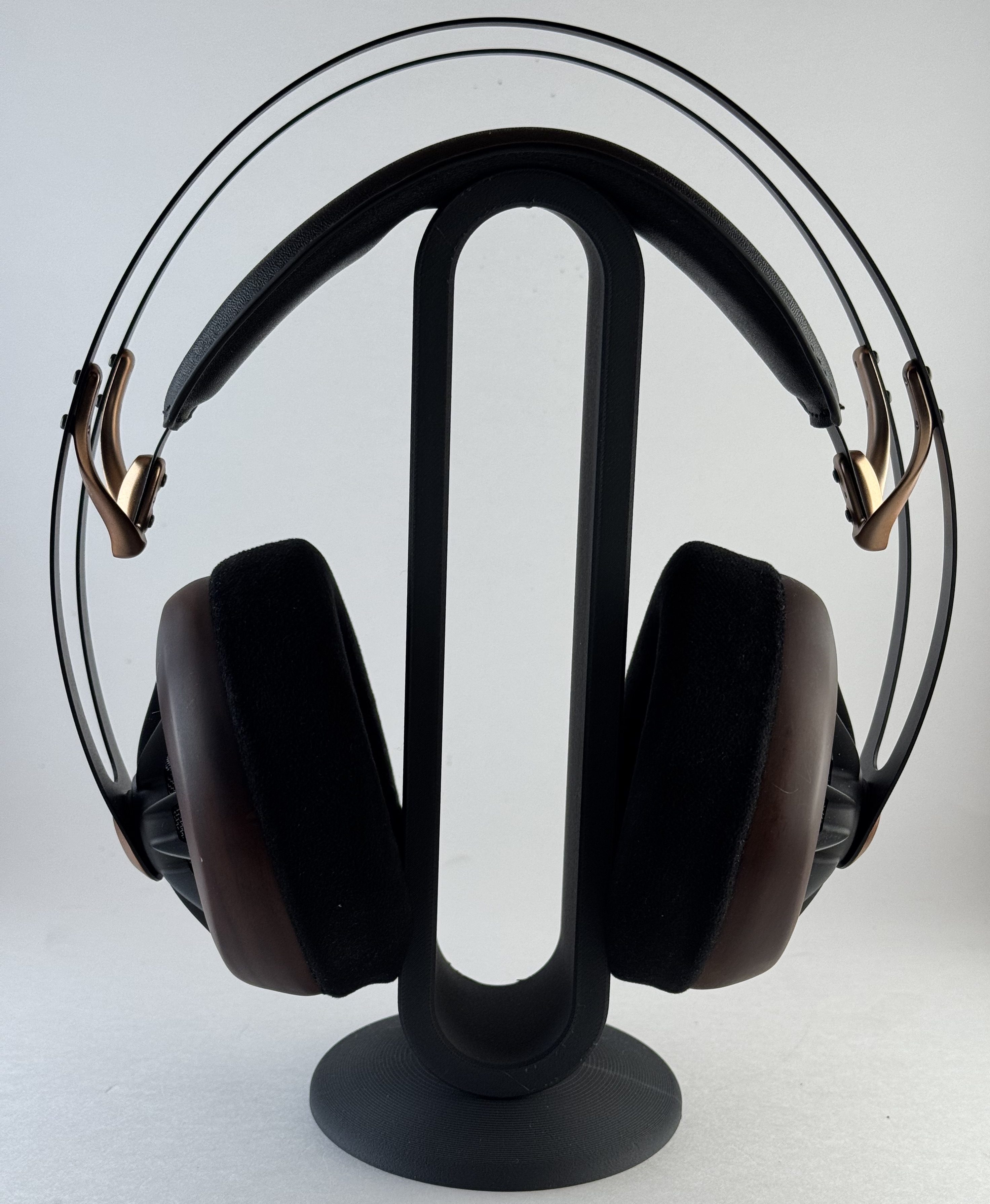
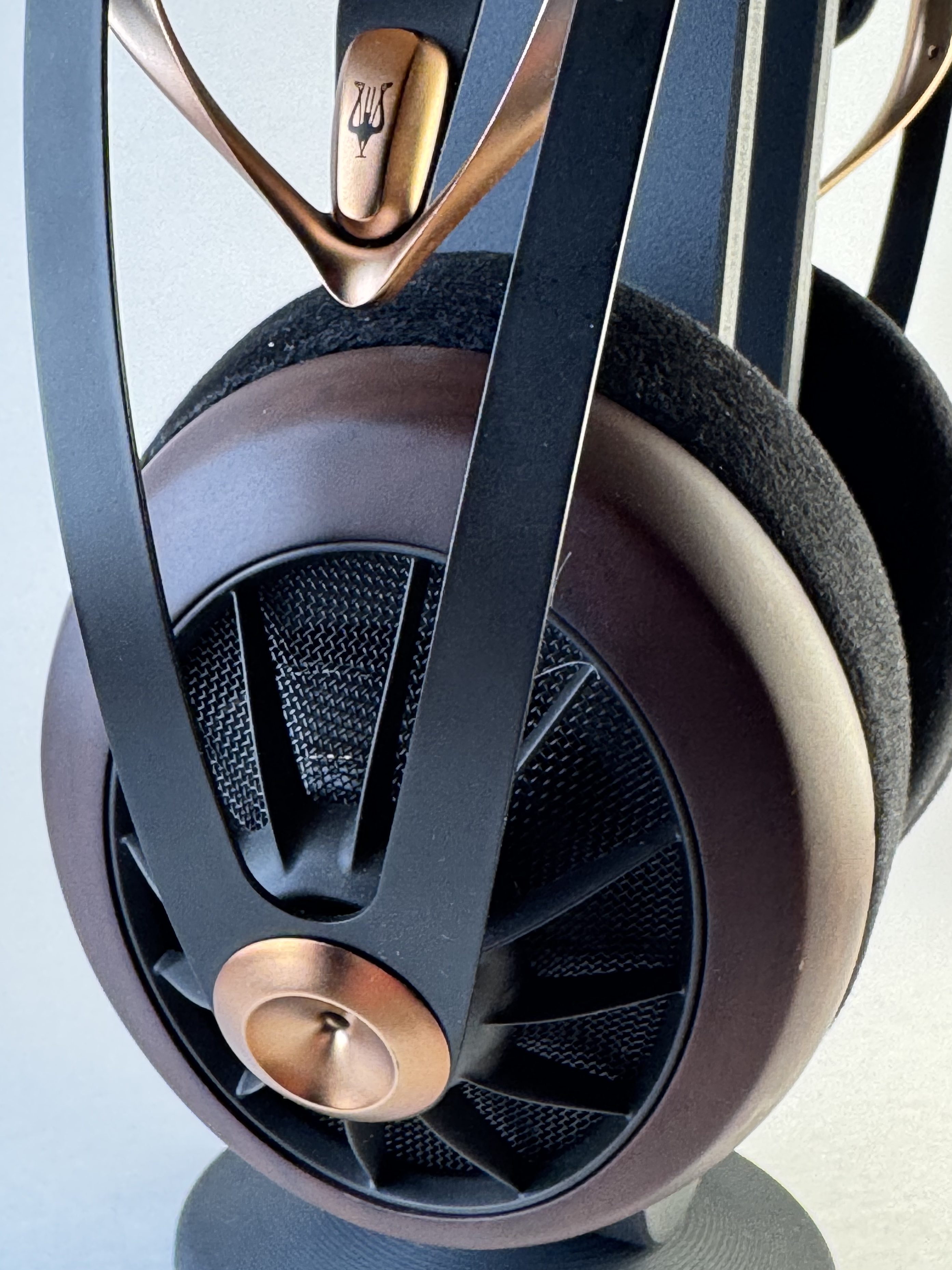
In addition to being one of the best sounding headphones I’ve ever experienced, they’re also one of the best designed and built headphones I’ve had, from the choices they made about connectivity to the build and construction, to the comfort, to the steampunk-y design aesthetic.13
Connectivity
Like I noted in my original review, the 109 Pro eschews the mini-XLR connectors Meze uses for their higher end stuff (Empyrean, II, Elite, etc.) and sticks with a standard dual-entry, balanced capable, 3.5 mm jack running into the cups, which means that there is a wide array of aftermarket cable options if you want to upgrade over the OEM cable. The Meze 109 Pro ship with two 3.5 mm-terminated cables (1.5 m and 3 m) and a non-threaded 6.35 mm adapter. These cables are … fine. They’re rubberized, not super microphonic, but have a little bit too much shape memory for my preferences, and I really do wish they shipped with either a balanced option or a threaded connector. When I pulled them out of the case for this review, I remembered why I used a $20 aftermarket cable for my original review. I guess I’m spoiled with the genuinely excellent cables that Meze is shipping with their newer products like Strada and the 99 Classics v2? I already gave away the 3 m cable that came with the 109 Pro, and I’ll probably offer to throw the 1.5 m one in with my next headphone sale or if I give someone a pair of 3D printed headphones.
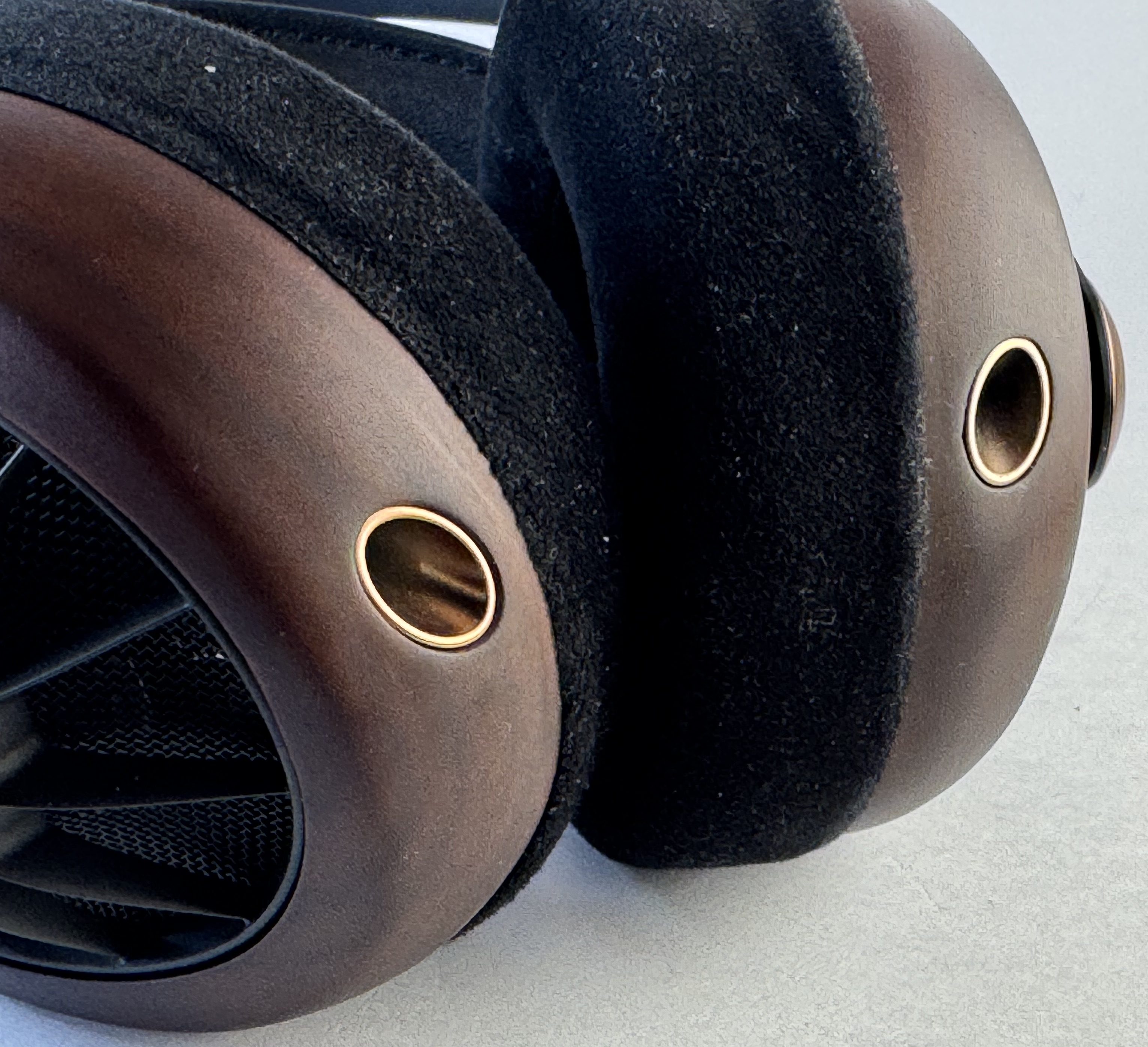
Be aware that like the 99 Classics v2 and unlike the 109 Pro’s more moderately priced sibling the 105 AER, the 109 Pro’s jacks are pretty heavily recessed and a full 25 mm of a cable’s jack will need to fit into the relatively hole in the cup. This does mean that the cables are unlikely to snap if you drop them,14 but will mean you’ll need to check compatibility on any aftermarket cable, or cables from other manufacturers.15
[If you order from Hart Audio, you’ll want the HC-9 or -14 lines of cables, as the HC-9-THK won’t work with the 109 Pro’s jacks.]
Construction
As noted in my original review, the 109 Pro feels like a premium product should feel: solid without being heavy, soft and flexible where they should be, rigid where they should be. They’re the more typical Meze design for dynamic driver headphone, with beautifully machined dark walnut ear cups connected to a pair of spring steel bands with a rather clever adjustment system on a very slightly stiffened, slightly padded pleather suspension strap. The cups have probably 15-20 degrees of both tilt and swivel, but it’s enough that I don’t have a hard time getting a good seal. The earpads are soft, plush, and covered in a really nice velour. I expected them to be less comfortable in hot weather than they actually are; they’re open enough that they get pretty good airflow even when my office is getting warm. After a year of intermittent use, I haven’t noticed any degradation in the pads.
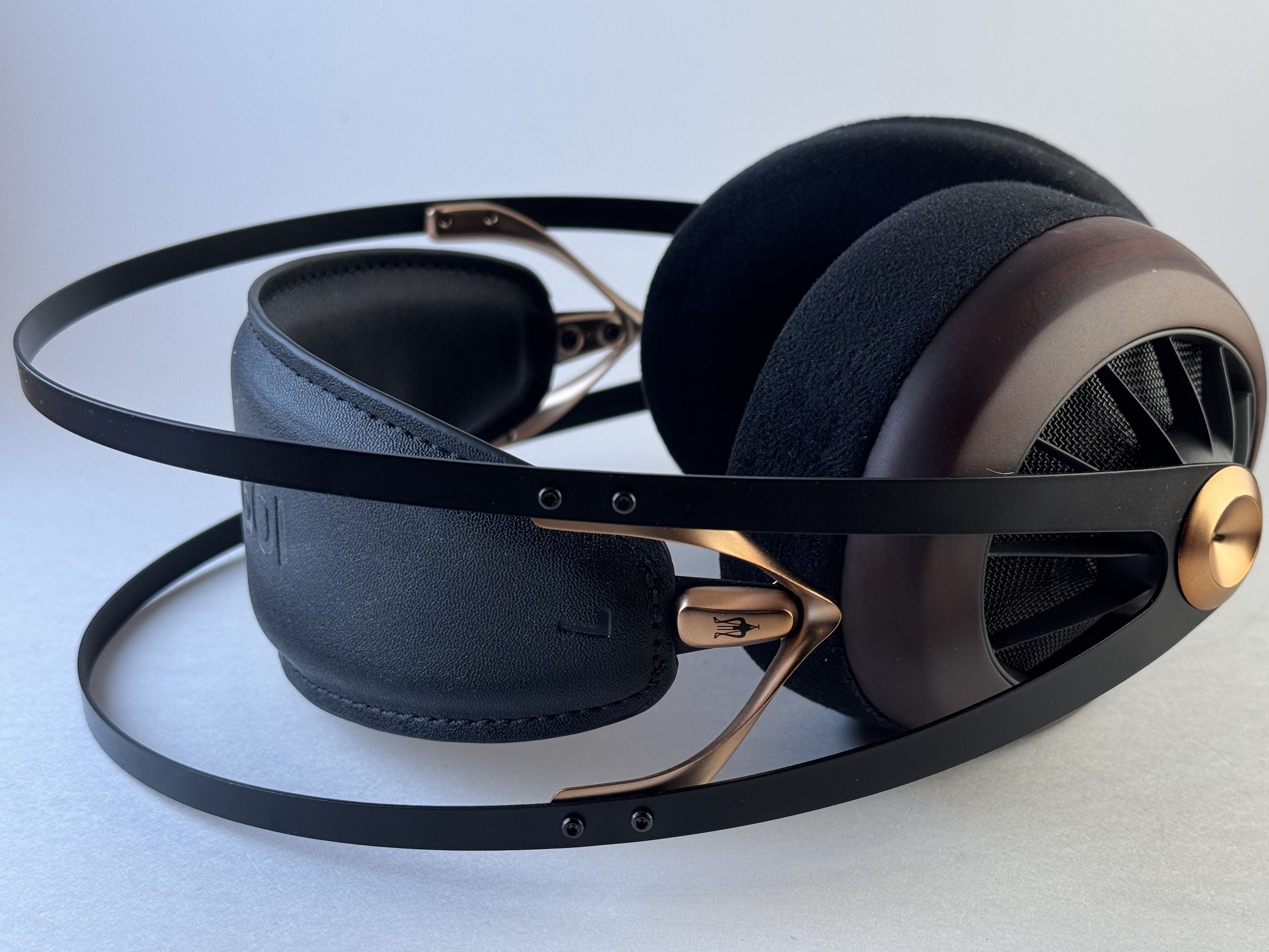
Unusually for an open back, the 109 Pro ship with a velvet-lined, semi-rigid case. Add in the two cables and a reasonably nice leather pouch for the cables, and you have a pretty nice little package for a mid-tier headphone.
If I had any criticism of the build its that because of how the suspension strap attaches, every time I put the 109 Pro on I have to gently pull the cups down a little too low and then raise them back up, but that’s pretty normal for headphones with adjustmentable head straps. Once they’re in place, the seal is great, and they don’t move around on my head at all.
Comfort
The Meze 109 Pro is I think the only A rating I’ve ever given for comfort. After a few minutes they just sort of disappear on my head. They’re not an ultra-light headphone, but the combination of the steel band’s clamp, the great suspension strap, and cushy earpads means that they really do just fade into the background during a long listening session.
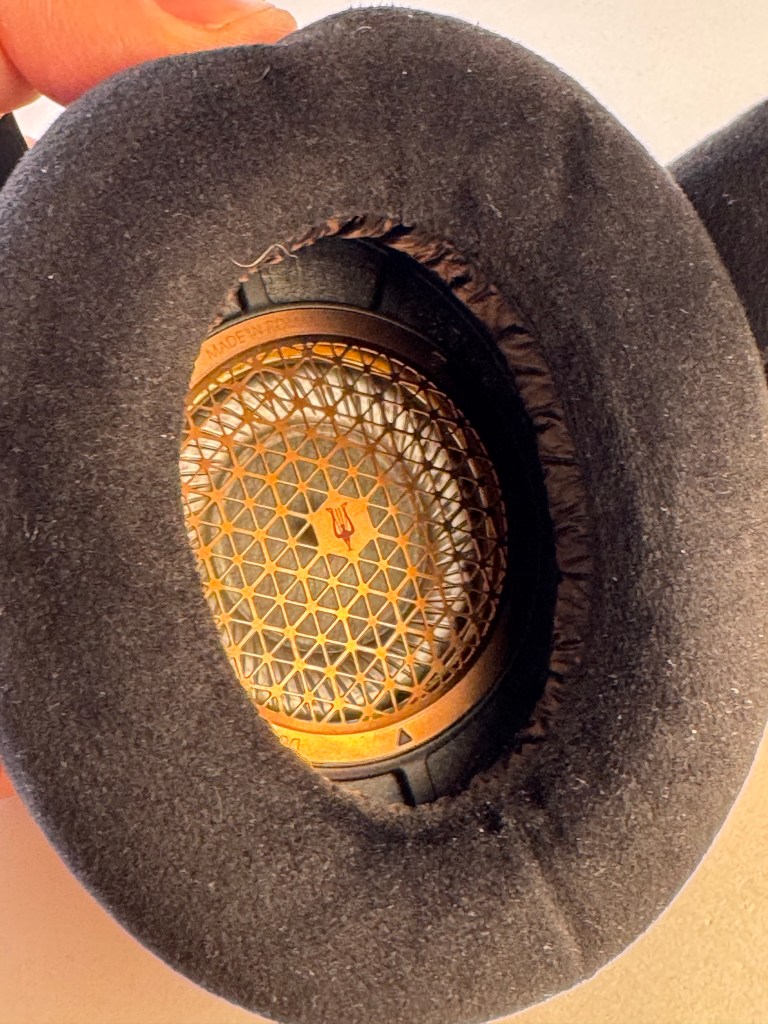
Genuinely no notes; great job by Meze in building an incredibly comfortable product.
Appearance
I talk about this a lot, but I’m a real sucker for Meze’s aesthetic. It’s steampunk-adjacent, but with natural (or at least natural-appearing!) materials, in mostly not super intense colors that I wouldn’t have an issue wearing in public. Beautiful, but not flashy. The 109 Pro is almost certainly my favorite of the ones I’ve owned, though I do love the patterning on the Empyrean II and the coloration and contrast between the green metal and dark wood on the Strada.
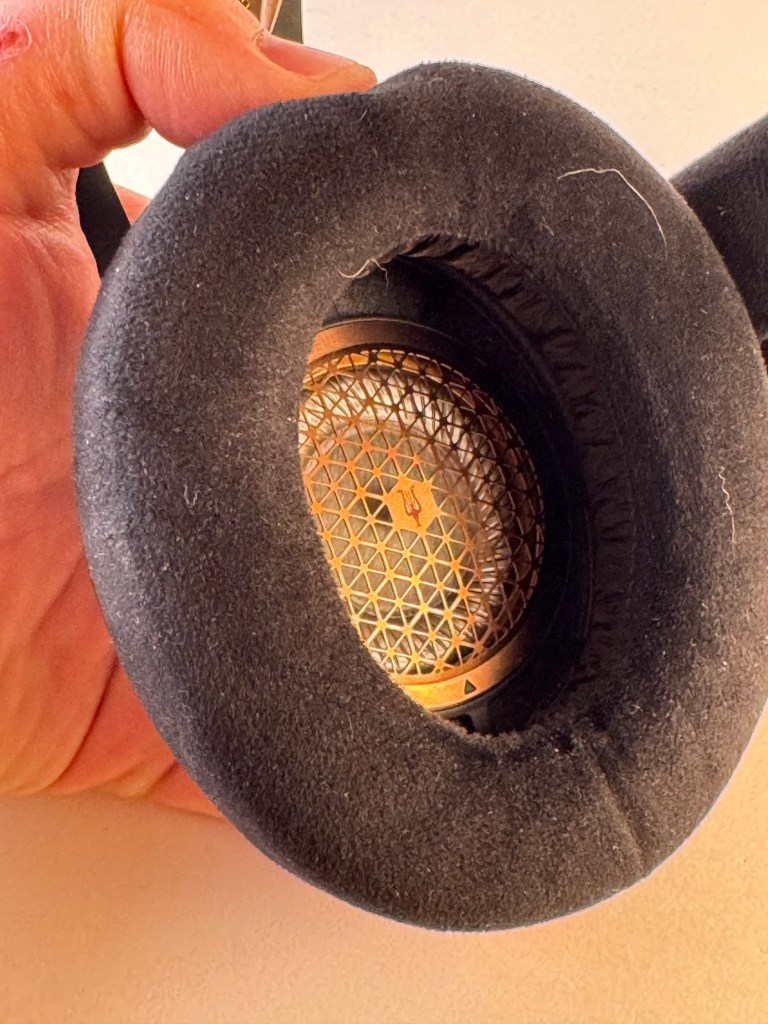
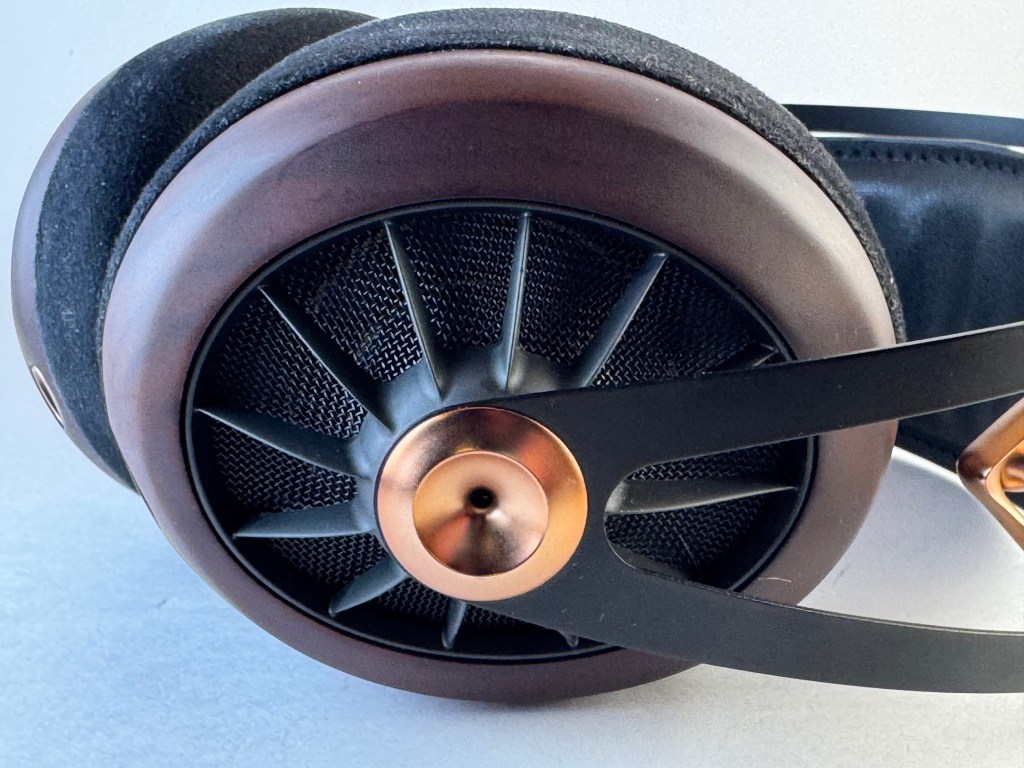
Your mileage may always vary, particularly when it comes to aesthetics, but the 109 Pro is absolutely my jam and I love them and their appearance dearly.
Value & Comparisons
I feel pretty weird about calling a $799 headphone a good value, but … that’s where I’m at. Most people shouldn’t spend almost $800 on a headphone. There are better uses for that money. But you can also spend a lot more money to get a lot less headphone, and I’d have a hard time arguing that anything that costs less is actually better. If you’re the kind of person who wears headphones a lot of the time, the comfort proposition they offer starts to matter a whole lot more than any given tuning, and at least last Black Friday Meze offered some pretty compelling deals on the Meze 109 Pro (up to 25% off). They’re often available lightly used on r/AVExchange for $500-600 if you’re open to the used market, and the markup on a headphone like this has enough of a markup that you might have luck reaching out to local dealers and asking what they can offer, pricing-wise. Some of them might be willing to beat the minimum advertised price to move a unit, if there even still is one on the 109 Pro.
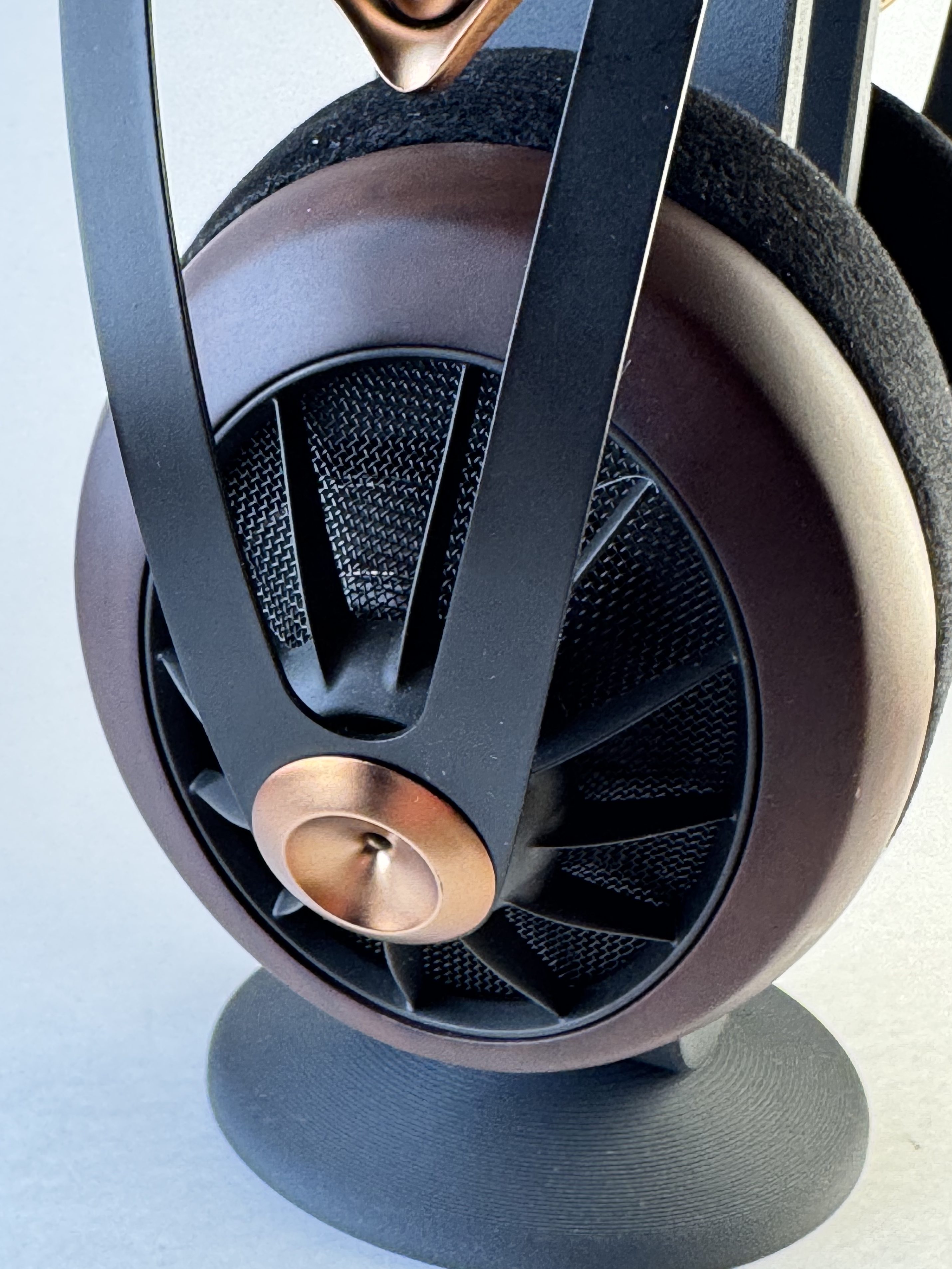
If these were lost, stolen, or broken tomorrow, I’m replacing them without question. And there are few headphones in my collection that I say that about.
As far as comparisons, for better or for worse, I now have a LOT more comparison points in a similar price category than I did for my original review. Because these are my very most favorite headphone under $1,000, I’m going to do a lot more comparisons here than I would usually, as they are my benchmark open back, and I’ll be updating some comparisons that I’ve done in other reviews.
Fair Comparisons
There are a number of things in my collection that seem like pretty reasonable comparisons to the 109 Pro. Spoiler: I’m not picking any of them over the 109 Pro, but some of them definitely offer better (or at least different) capabilities for some use cases.
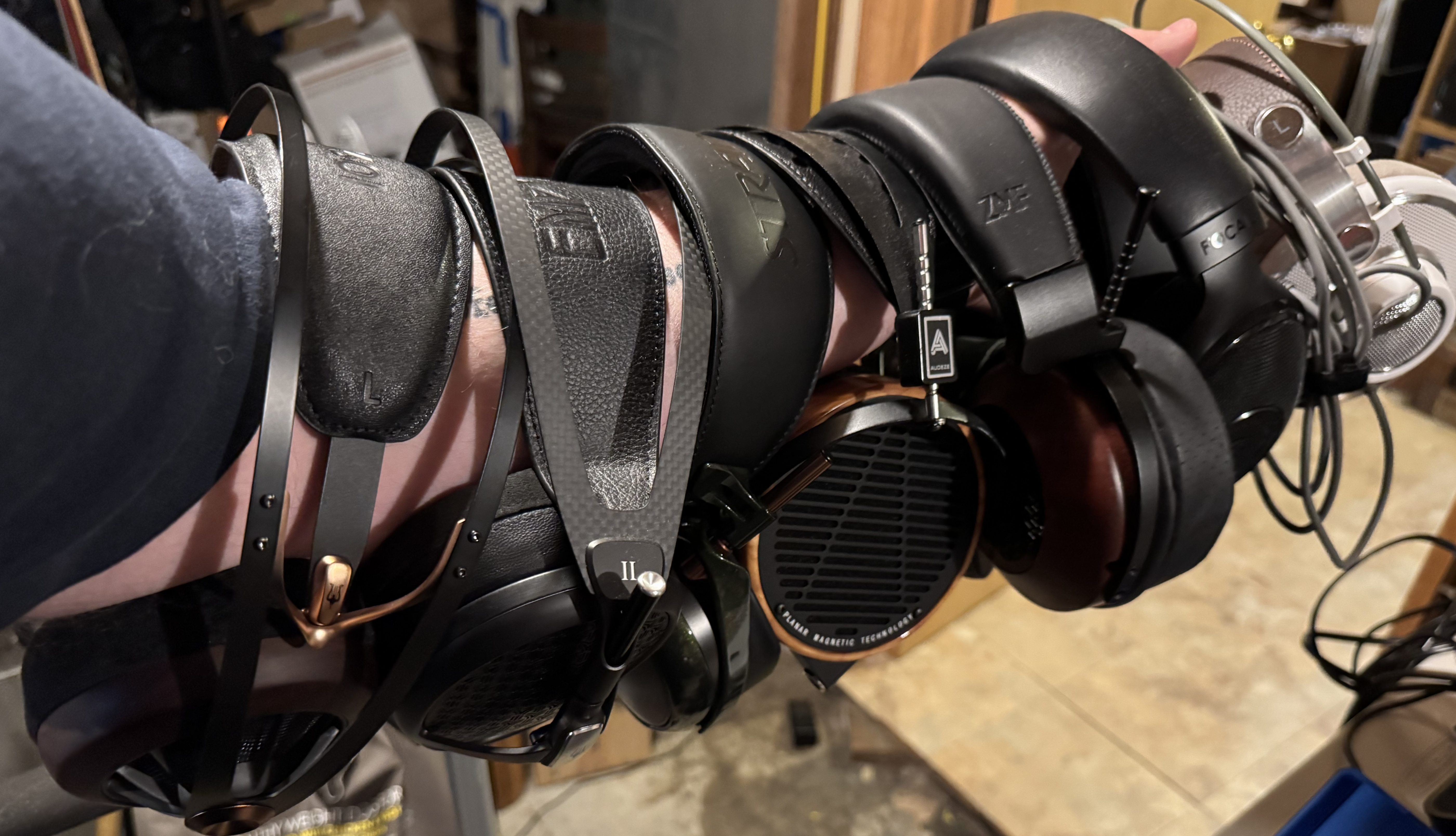
Audeze LCD-2.2pf/LCD-2f
[Reviewer’s note: This is an interesting one; in the interest of time I’m going to talk about the LCD-2.2 Pre-Fazor (the 2011-2012 release version) rather than the post-2016 Fazored version that I picked up a few weeks ago; I haven’t had as much time to spend with them as I want and this a case where I want to talk about best case scenarios … aka EQ’d.]
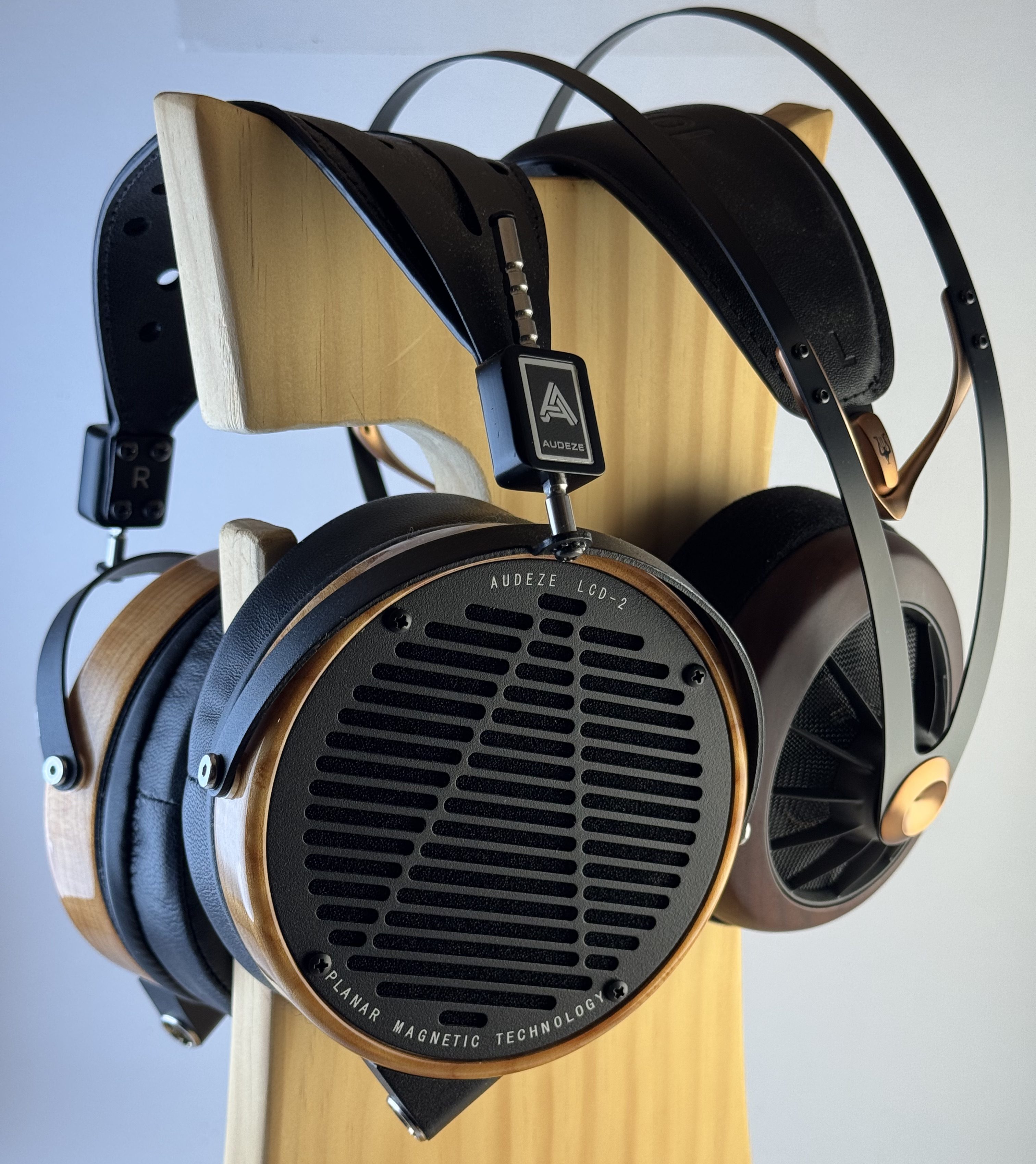
I commented in my review of the LCD-2.2pf that I enjoyed the tuning out of the box, but as I was finishing up my review, and particularly over the last few months, I’ve come to realize how much better they sound with some judicious EQ. To the point where they ran the very real possibility of displacing the 109 Pro as my favorite under a grand (as the current production model just squeaks in under the wire at $995).
Out of the box, the 109 Pro is a much better headphone. The LCD-2.2pf is a more linear headphone, with slightly better sub bass extension, but pretty much the rest of the rest of the frequency response favors the 109 Pro for me: mid bass, midrange, treble, all of it. The LCD-2.2pf have what is either among the best or the actual best sound staging and separation in my collection, solidly beating even the pretty excellent 109 Pro, but the 109 Pro are worlds more comfortable on my head and the Audezes are HEAVY. If you’re not going to use EQ, or don’t want to take the time to personalize an EQ profile, or you’re sensitive to head weight, get the 109 Pro and call it good.
IF you are interested in EQ, and are willing to invest the time and energy in getting a tune that works very well for your preferences, take a look at the LCD-2. It is just an incredible platform for EQ, and after EQ, … man, it’s real close, tuning-wise. The LCD-2 has pretty remarkable bass slam; it’s about as close as I’ve ever heard to a Focal’s bass punch in a planar magnetic headphone. Even with my EQ, the mids favor the 109 Pro, but the treble … the treble is super interesting. I think the LCD-2 is more relaxed, but doesn’t give up a lot of perceived detail in exchange for that relaxation and I could really go either way between the 109 Pro and the LCD-2. They’re a pretty exceptional pair.
This version of the LCD-2 has also been out of production since at least 2016, and I haven’t spent enough time with the post-2016 Fazored version to know if it’s going to be as remarkable, but so far I’m pretty impressed. They do measure slightly differently, but to the best of my understanding the changes to the headphone shouldn’t impact their ability to shine with EQ–you’d just need to adjust some of the bands accordingly.
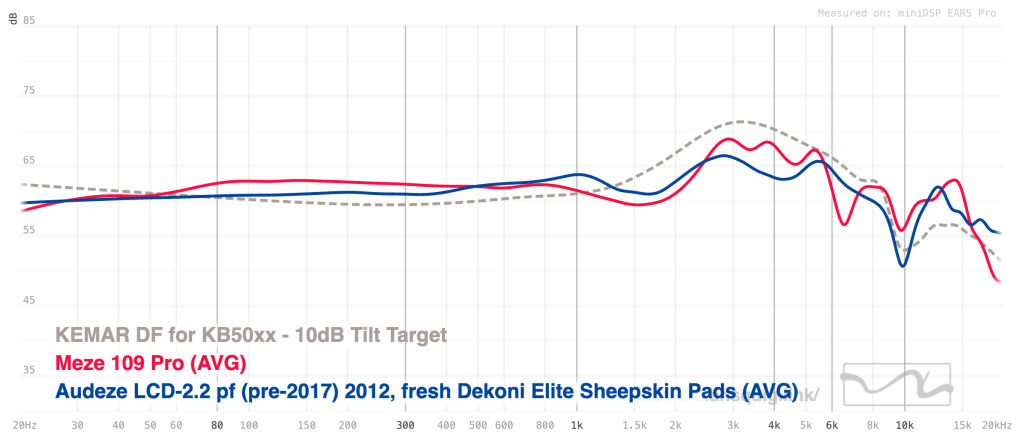
Verdict: For most people, the 109 Pro is going to be the better headphone by a solid margin. For people with an interest in and time to play with EQ, you can get the LCD-2 pretty close to parity, if not even better. For me …

Focal Elex/Clear
While the 109 Pro was the first really nice headphone I bought for myself, the Focal Elex was the first really nice headphone I ever got to spend time listening to. And I … love them. They’ll always have a special place in my heart, and they’re a genuinely incredible headphone. For awhile, I referred to the Focal Clear as my Elex upgrade pick, but after spending a lot of time with both while reviewing the Focal Elex, I revised that opinion and came down on the side of their being more similar than different. I then did a decently detailed comparison between them and the 109 Pro.
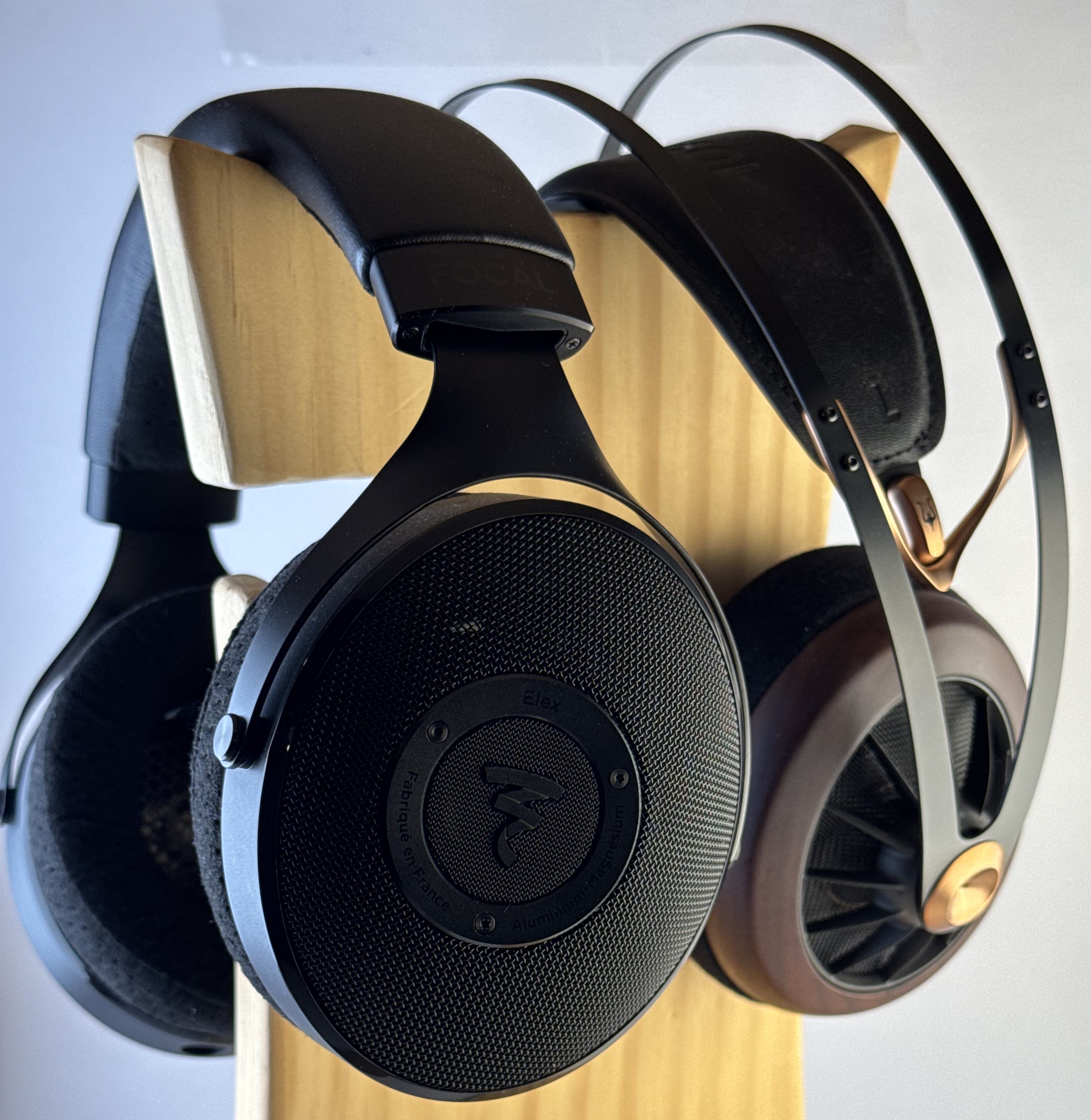
I’m still taking the 109 Pro over either; I think the Clear has pretty similar technical performance to the 109 Pro, but I slightly prefer the overall tuning on the 109 Pro. The Clear (and Elex!) have that magical Focal punch and slam in the bass, but the 109 Pro brings some extra richness and depth to their bass performance, especially at the bottom end. I could probably EQ the bass on the Clear/Elex to get it up to the 109 Pro’s level, but if I’m choosing between these out of the box I’m going 109 Pro.
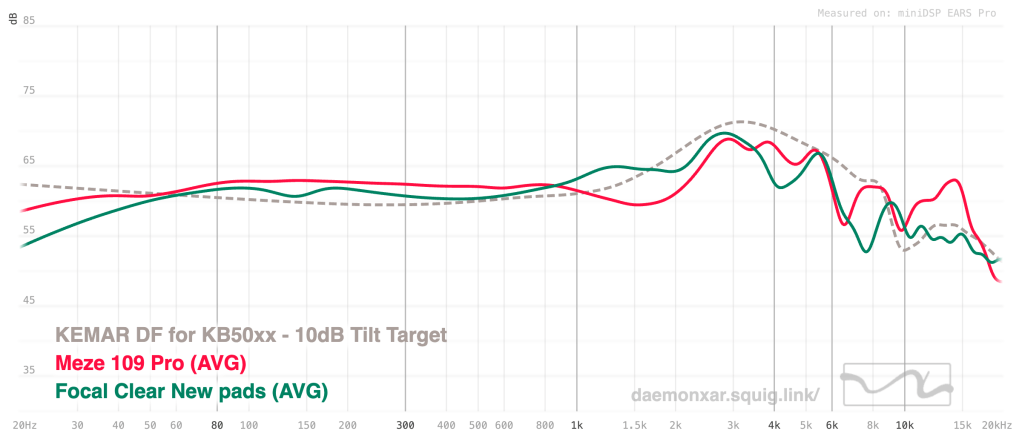
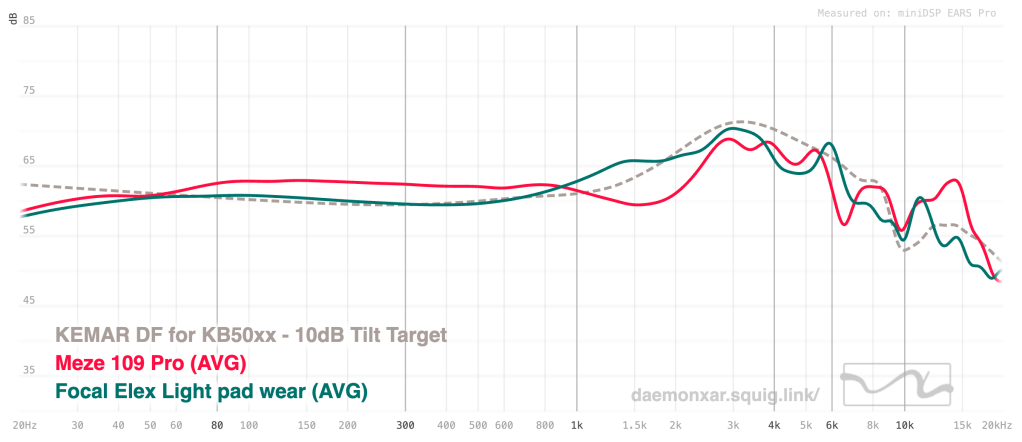
I’ve commented a few times that I don’t hear the Focals the way they measure on my rig; for whatever reason, I just don’t get some of the treble spikes that my rig does, and I’m pretty happy about that. The rest of this looks more or less like what I’m hearing; I’m genuinely a little surprised by how much more you get from the 109 Pro from like 60 Hz to around 1 kHz, but they are a genuinely warmer headphone.
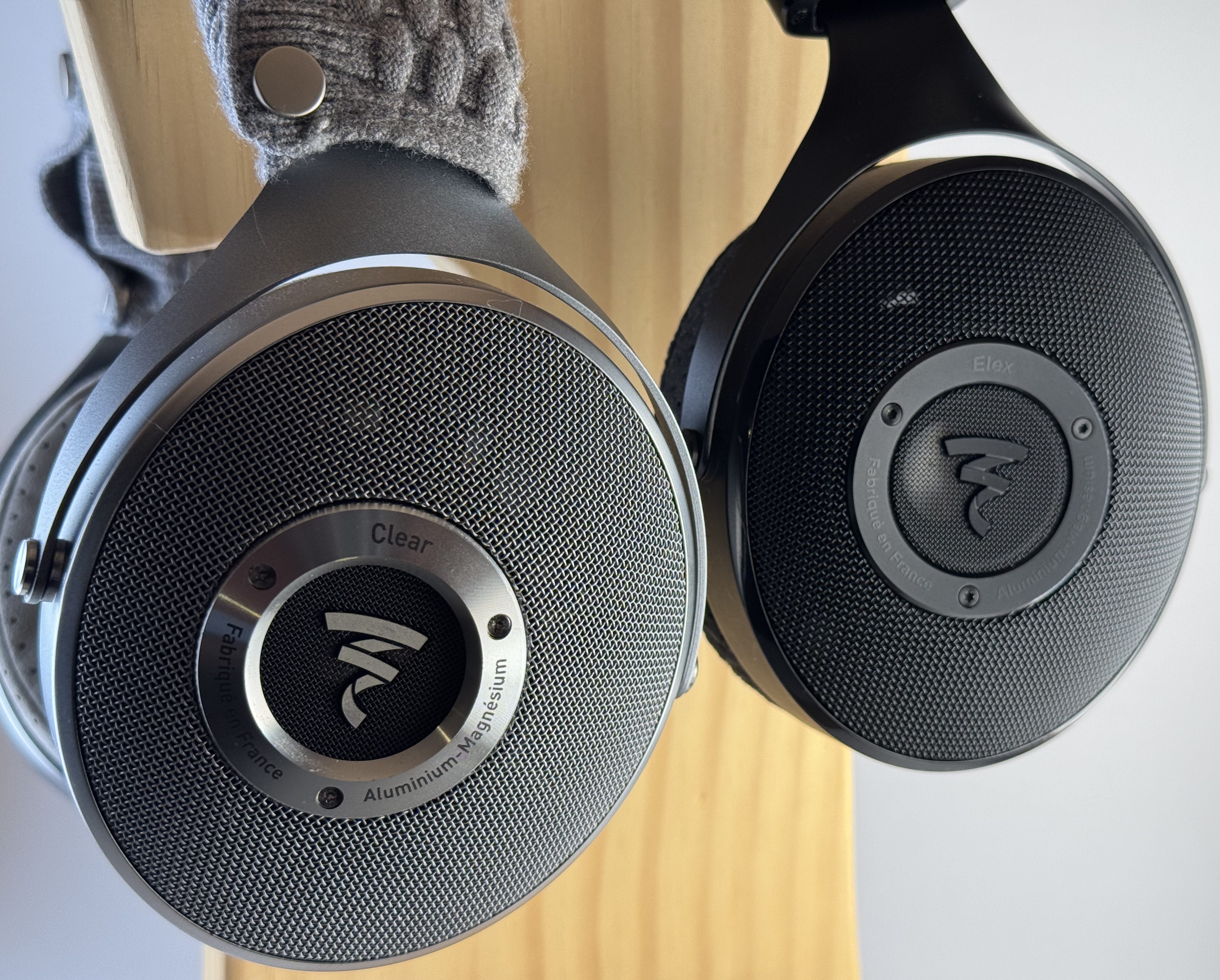
Verdict: Meze 109 Pro, but this is one of the closest comparisons I can make. The Elex/Clear are just that good, and there are probably even some kinds of listening where I might take the Elex over the 109 Pro. They really do fill a similar niche, though, and I’m glad I’m in a position where I don’t have to choose between them.
Hifiman Arya Stealth
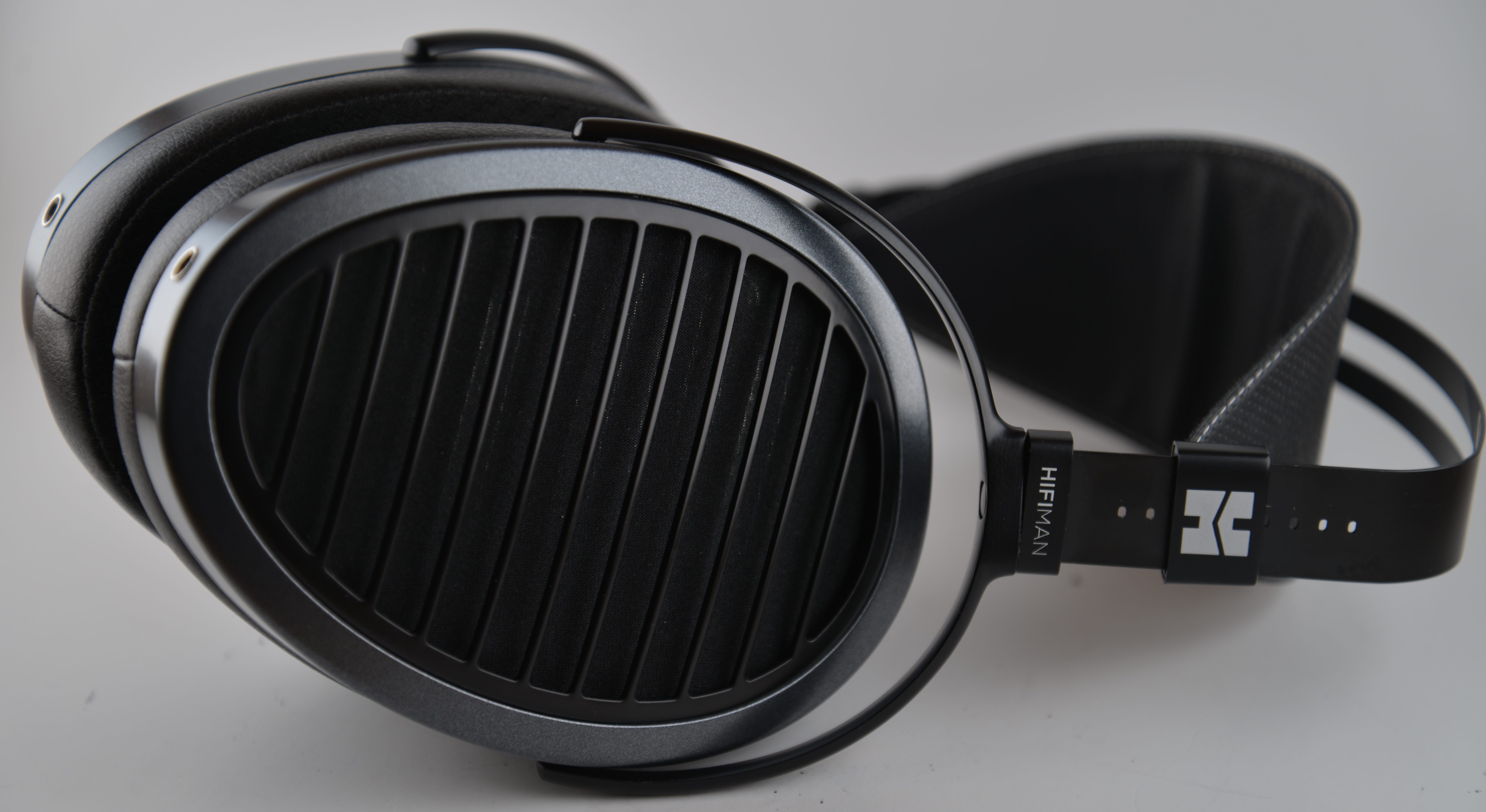
I got the Arya Stealth a day or two before the 109 Pro back in 2025, and they were the two headphones that I bought when I decided to start taking reviewing seriously as a hobby. They were one of the first serious comparisons I did, and I had this to say (me, quoting me, quoting me):
‘[T]he 109 is my new favorite headphone. And as good as the Arya is, it’s not particularly close. The Aryas are a very objective headphone with a focus on faithful reproduction, but the 109s are … magic. They’re tuned more towards my personal preference (warm, buttery, and smooth), and even with substantial EQ applied to the Aryas the 109s just sound better to me. They’re also more clearly a luxury product, with a beautiful dark wood-and-copper steampunk sensibility and incredible build quality, and shipping with a really nice, custom-designed semi-rigid case. The one place that the Aryas beat the 109 is in terms of the open feeling; because of the design of the 109’s ear cups (and maybe because they feel a lot like the closed-back 99 Noirs I’ve had for a few years), you hear a
lotbit16 less of the world around you than you do with the Arya. Your mileage may vary about which of those you prefer.’
I still think that’s true; there are a lot of people who are going to disagree with me and think the Arya Stealth is a better headphone than the 109 Pro (and some will do so QUITE strenuously). They’re entitled to their opinion, even if it’s wrong.17 Ultimately, they’re headphones with different goals and for different use cases. If I were doing intensive critical listening, I’d more likely to take the Arya Stealth, even if over time I find them a bit fatiguing and clinical. For more casual listening, I’m going to gravitate towards the warm, buttery magic of the 109 Pro. And while the Arya is certainly better suited to critical listening, the 109 Pro is plenty resolving and detailed to do it too, and the Arya is a fun enough listen for more casual use too.
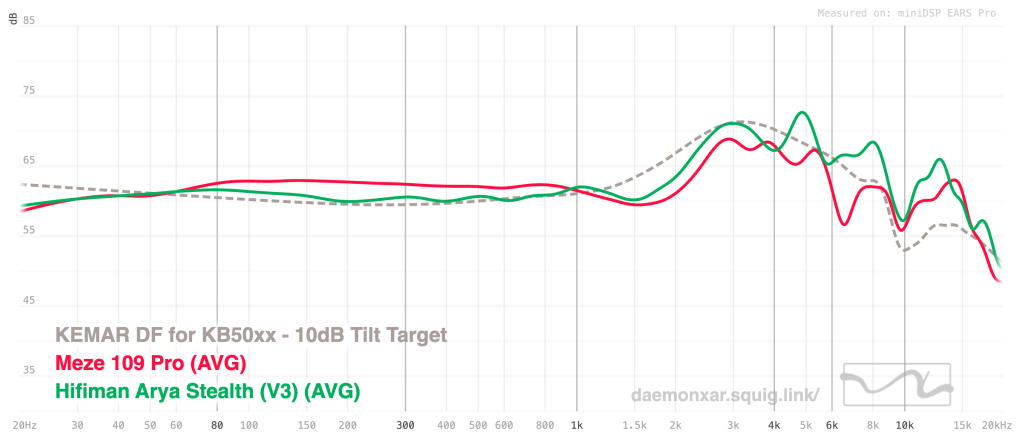
This all looks more or less right to me; I think I actually hear the very low end bass on the 109 Pro a little more clearly than the Arya but that might be an artifact of the 109 Pro’s much stronger mid bass and relatively mellowed treble.
Verdict: If you want a more fun headphone, or want a pair for longer sessions (including gaming), I’m going to point you to the 109 Pro if you can afford the extra $200 or so.
ZMF Aeolus
I talked about this in my review of the ZMF Aeolus a couple of months ago, but as much as I enjoy the Aeolus (and I really do, especially after some EQ), the 109 Pro are pretty clearly a better headphone for me. The bass is pretty similar, overall (maybe a hair cleaner on the 109 Pro, a hair stronger on the Aeolus), I prefer the mids and the treble on the 109 Pro, and the comfort on the 109 Pro is plainly better on my head. The one place that I preferred the Aeolus in that review was the sound staging and imaging, but upon additional, careful listening, I’m not sure I still think that’s the case. It might be slightly wider on the Aeolus, but I think the imaging and separation is pretty similar.
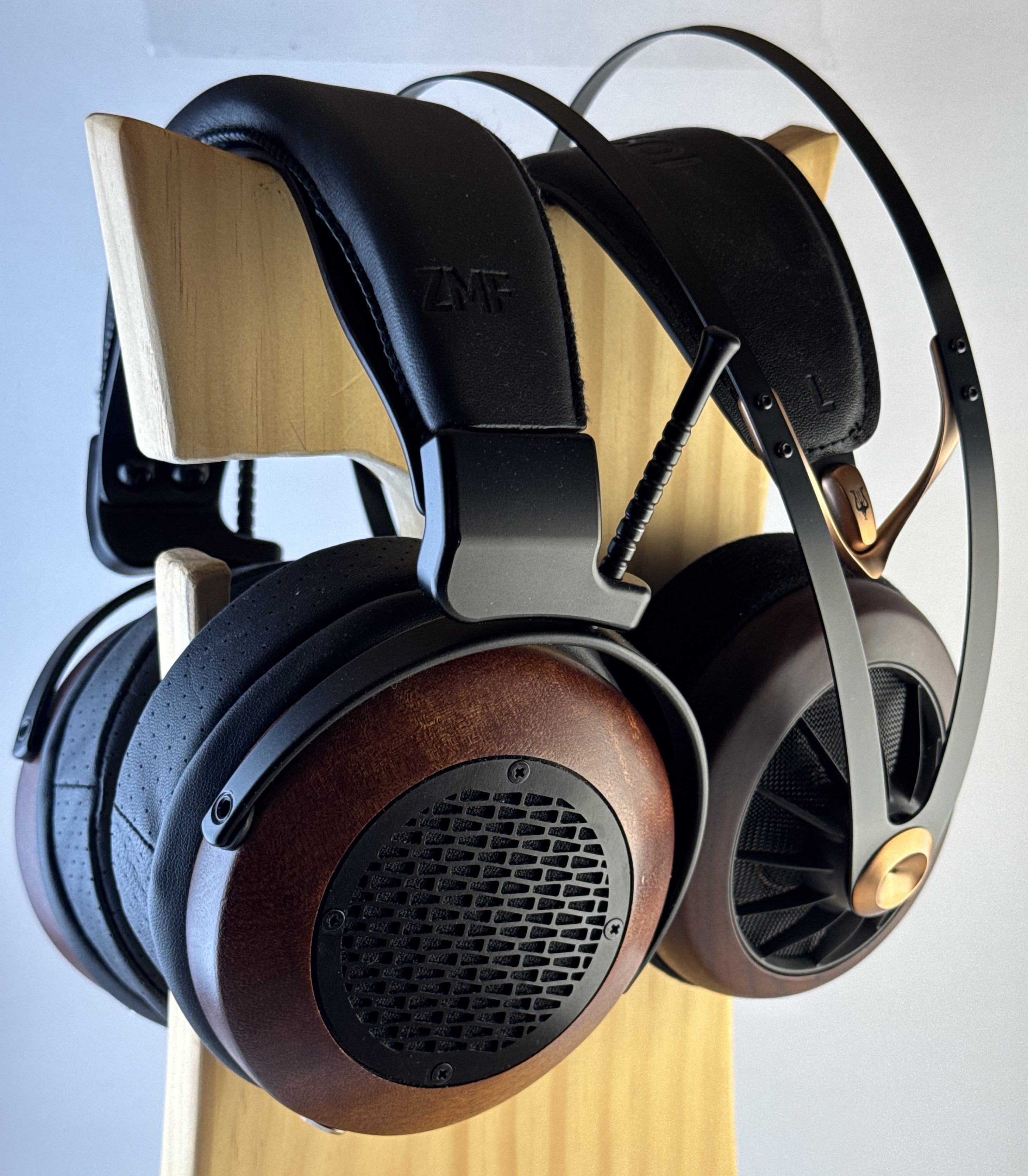
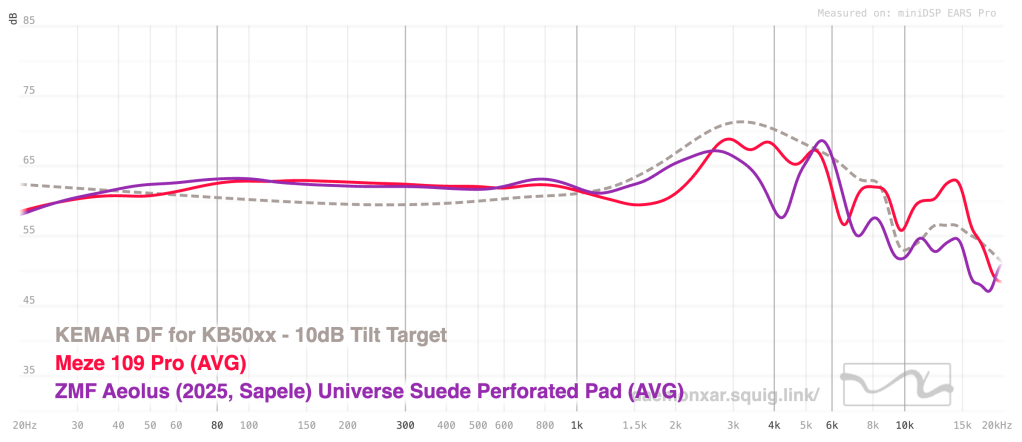
I’d forgotten how stark that 4 kHz dip is on the Aeolus. I’ve heard it theorized that it’s part of why the Aeolus (and some Focals) have such perceived soundstage width. I do hear it on a sweep but not during music playback; I’m sure it’s there but none of my test tracks seem to have a lot of information in that spot or elements that bridge that dip. Overall though, it looks right; there’s a reason I add some bass (particularly sub bass) on both via EQ.
Verdict: Surprise surprise, I’m taking the 109 Pro. I think it’s a better headphone all around, and it’s at least $100 cheaper depending on whether you buy the Aeolus new or on B-stock/clearance. The 109 Pro is also one of a small handful of headphones that I think are more aesthetically pleasing than the Aeolus. I talked about this in my review, but the Aeolus aren’t a headphone you necessarily always by just for listening.
Forthcoming: Heddphone D1 & Hifiman HE600
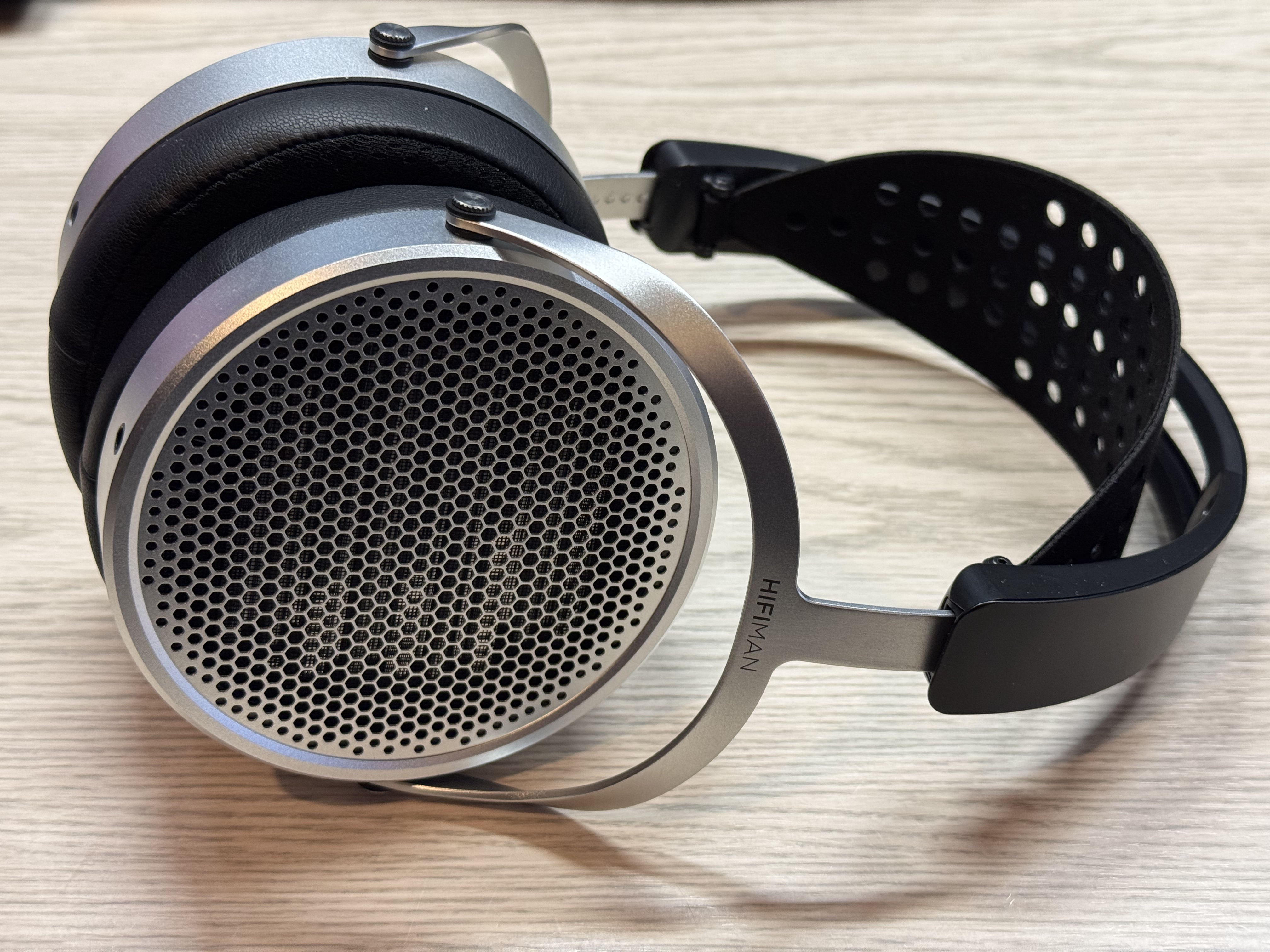
There are two more pairs of headphones in my collection that I should compare against the Meze 109 Pro, but I haven’t had time to complete my review of one (the Heddphone D1) and the other just arrived today (the Hifiman HE600). I’ll update this when I have had the time to do the comparison justice.
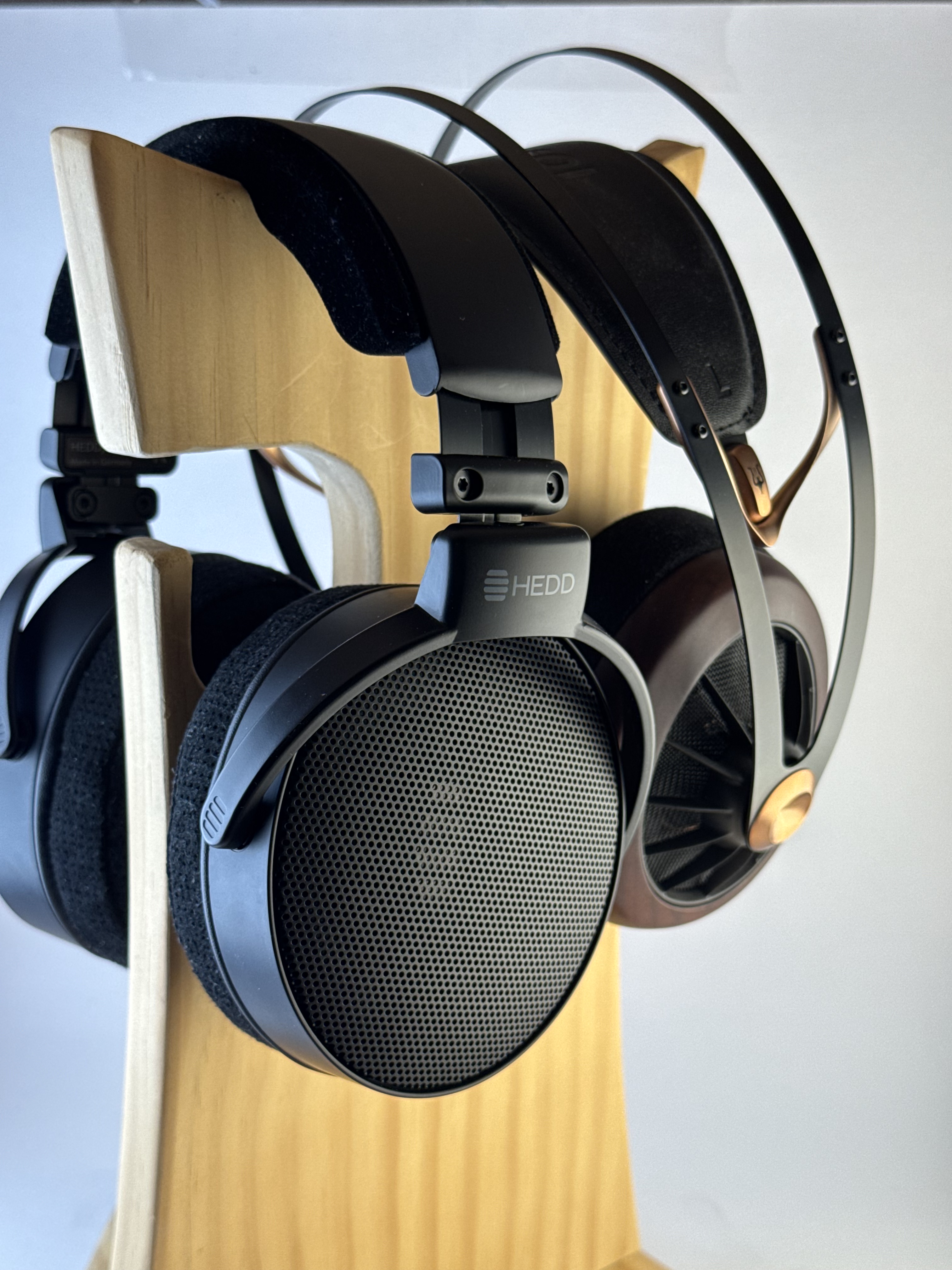
For now, I’ll say … I’m a little worried that the D1 might knock off the 109 Pro. It’s not as comfortable, or as aesthetically pleasing, but man is that a great sounding headphone.
Unfair Comparisons
There are also some things that people often ask about in comparison to the 109 Pro … I’m not sure how helpful some of these comparisons really are, but might as well have something to point people to!
Meze Empyrean II
The Meze 109 Pro are my favorite headphone under $1,000. The Empyrean II are my favorite headphone, period. And as much as I love the 109 Pro, they’re not particularly competitive. I talk about the 105 AER as being 90% of the performance of the 109 Pro at half the price … but I don’t make that comparison with the Empyrean IIs. And that’s part of why I haven’t reviewed them yet.
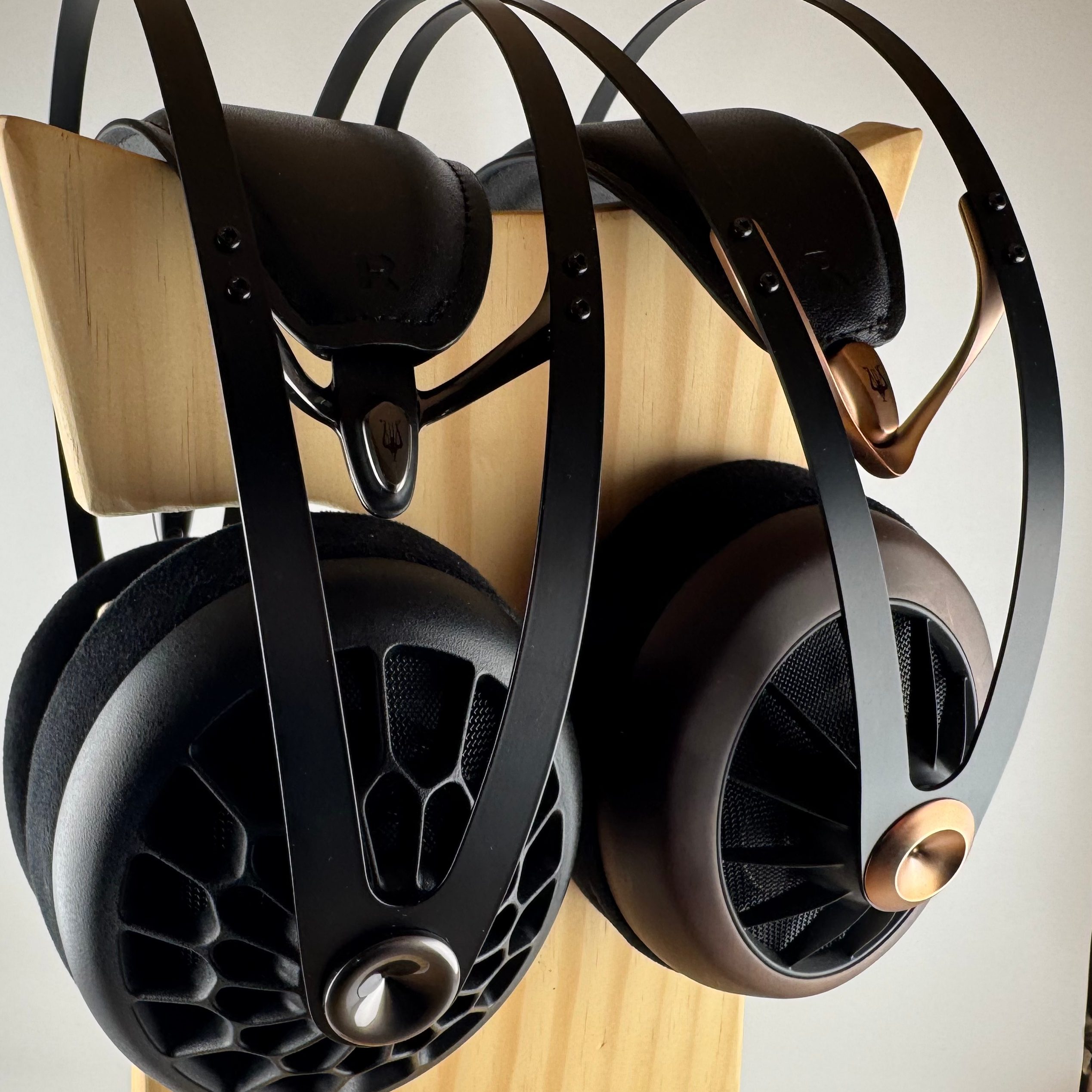
The Empyrean IIs are a genuinely extraordinary headphone, and it’s really hard to describe them in a way that will make sense to anyone, let alone to people who don’t spend a lot of time thinking about and listening to quality headphones. It’ll just sound like hyberbole. Everything I love about the 109 Pro, but dialed up to 11 and shipped in a custom-made suitcase with two sets of interestingly different pads. If you handed the 109 Pro to an engineer and told them to make it better, money no object, I think you’d get something pretty damned close to the Empyrean II.
The 109 Pro are detailed, layered, well-resolving headphones. The Empyreans are all of that, but with custom-built planar magnetic drivers with all the potential depth and precision that that upgrade can bring. The 109 Pro are rich, and deep, and beautifully tuned in the bass; the Empyreans (with the Duo pads) bring that and more, plus the more linear bass extension you can get from a really good planar. And then when you get bored (if you ever do!), there’s a second set of pads and a second tuning. The 109 Pro have incredible fidelity and clarity for the midrange, especially vocals, but at their best the Empyreans bring the singer directly to you. The 109 Pros bring energetic but not sharp treble, with all the detail and feeling that brings. The Empyrean somehow up that feeling, without trading or sacrificing anything. And like the Sennheiser HD 490 Pro, they offer you two different sound signatures, which you can easily swap using the magnetic pad mounts that I wish every headphone used.
The Meze 109 Pro, at their best, sound and feel like you’re sitting in a small club, halfway back, listening to a band you love playing the songs you want them to. The Empyreans, at their best, sit you in the front row at that same show.
It sounds like hyberbole, I know. I really do. I … just can’t describe it differently. The Empyrean II is the things I love about the 109 Pro, but better. The only thing that’s better on the 109 Pro is drivability; the Empyreans won’t run very well from a dongle or directly from a device. But that’s very rarely a problem for me, particularly with an open back that will live at my desk. And the Empyrean II is the epitome of a desk headphone: they do not leave my office. Period.
A quick glance at the graphs18:
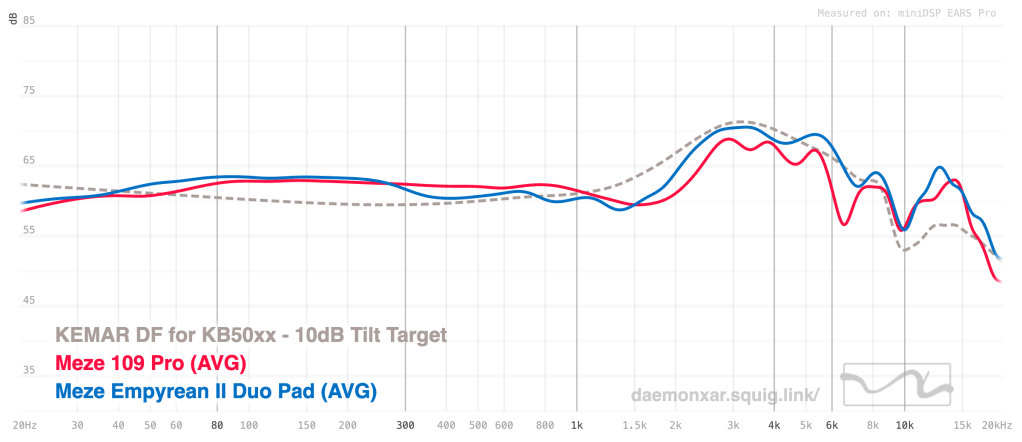
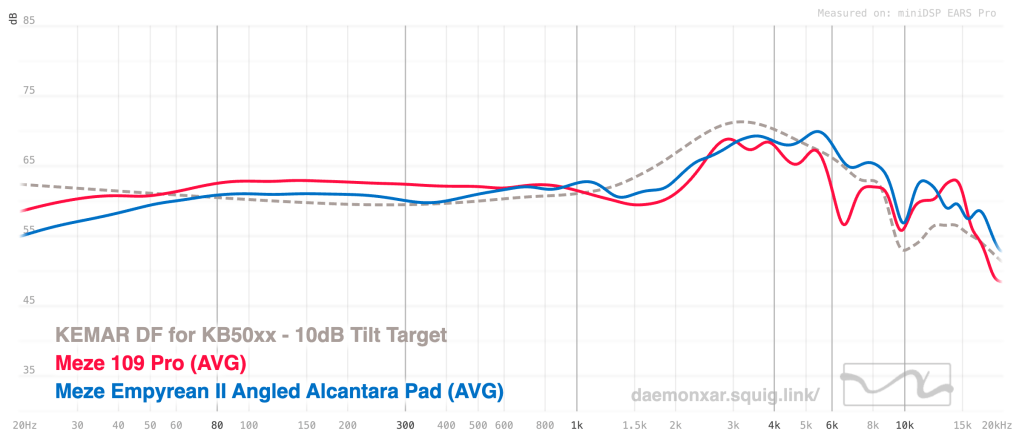
This is more or less how I hear these headphones, though even more than most the graphs don’t capture what’s so special about the Empyrean II. You really do need to hear them.
Verdict: I’m never going to tell anyone that they should spend $3,000 on a pair of headphones.19 You can get a decent, functional car for that kind of money. I also can’t tell you that the 109 Pro are anywhere as good as the Empyrean IIs; I’ve never heard anything in my life that I think competes meaningfully with them and I can’t bring myself to feel even a little bit bad about owning them.
Should you buy the Meze Empyrean II? No. If you’re asking that question, the answer is an emphatic no.
But you should definitely listen to them once or twice in your lifetime, given the opportunity.
Meze Strada
I’m still working on my review of the (funky but fun!) Meze Strada. It’s a comparison that comes up quite a lot on Reddit, probably because they share the same driver, but I think it’s a pretty hard comparison and not a particularly useful one. I can say this, though: the Strada are NOT a closed-back 109 Pro.
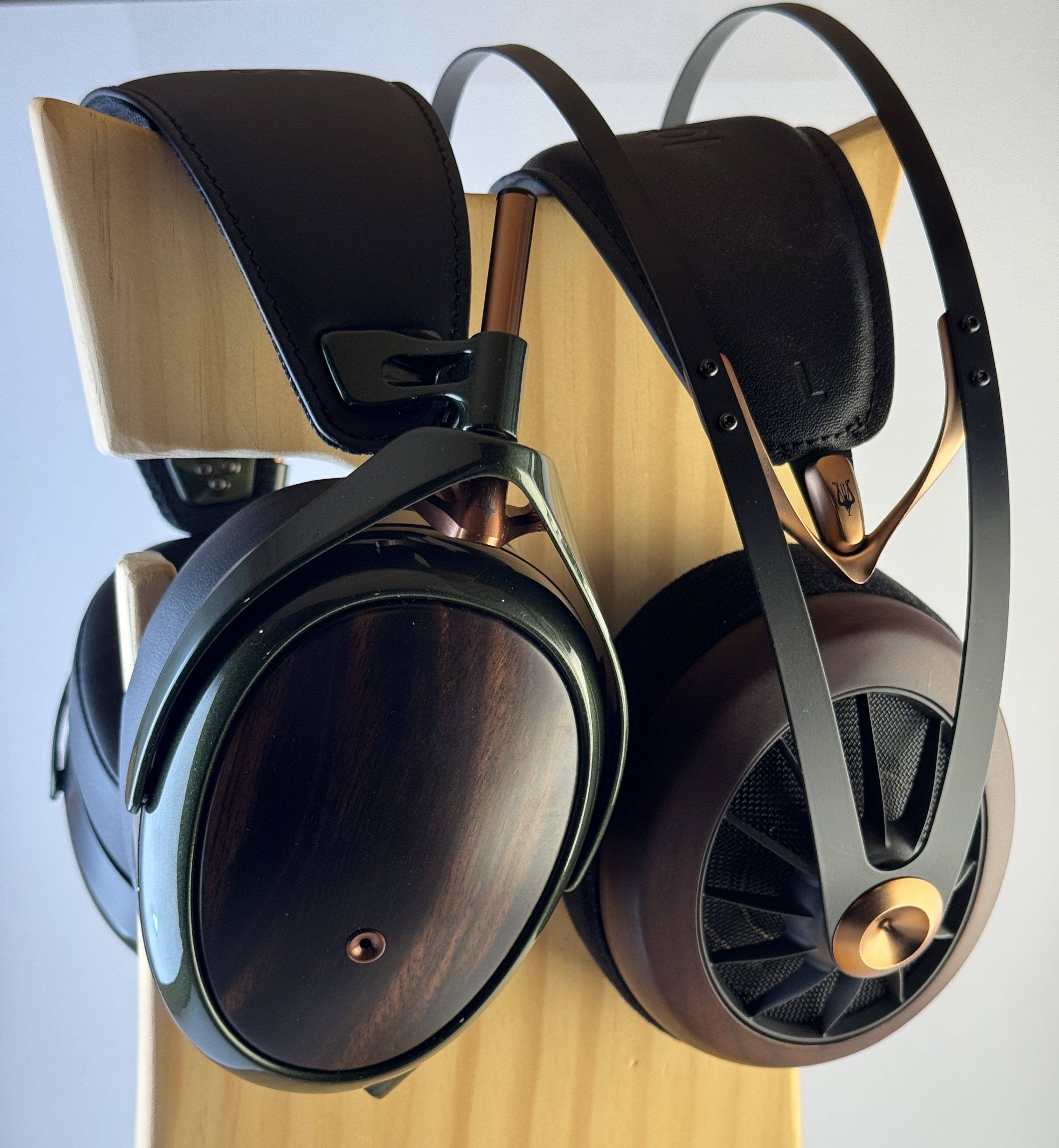
Strada is a closed, hard U-shaped headphone, while 109 Pro is an open, mild- to moderate-v-shaped headphone. Based on tuning alone, I’d be waaaay more likely to compare the 109 Pro to something like the Sennheiser HD 480 Pro (review forthcoming!) than Strada if you wanted a closed-back comparison. If you need noise isolation in your listening environment, the Strada is the better choice. If you don’t, the 109 Pro is, I think, a substantially better headphone overall; it’s definitely more consistent and cohesive, and way more fun to listen to out of the box.
Just for fun, a quick glance at the graph:
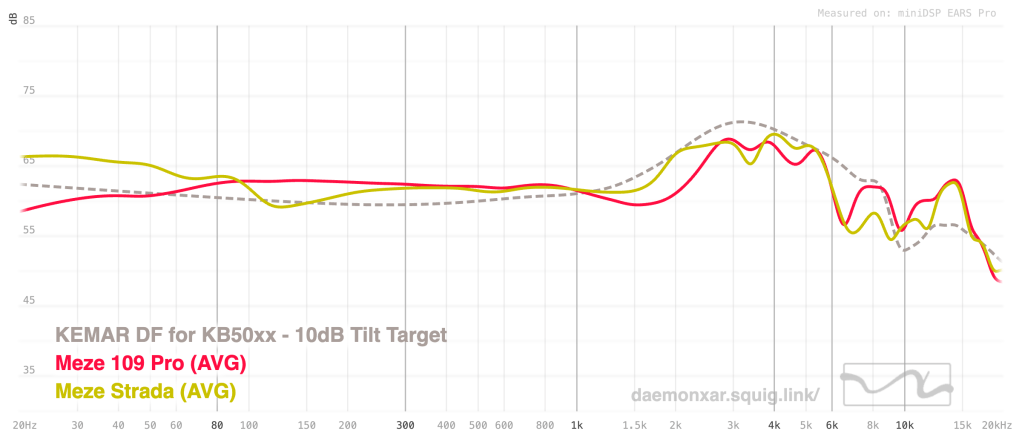
This is a good example of why the driver is only part of how a headphone is going to sound; running the same driver can result in very different frequency responses depending on all the other choices you make around the edges, even if you have really competent engineers (the same engineers?) working on both. This looks about right, though I’m going to be doing a lot more listening as I keep working on the Strada review.
Verdict: 109 Pro, obviously. The 109 Pro is my favorite headphone under $1,000; as much as I enjoy it (and I do), the Strada is not. Strada is also likely to be a pretty polarizing headphone for a lot of listeners; folks will probably either really like it or really hate it and not a lot will fall in the middle.
AKG K701
In my Mini Review of the AKG K701, I talked about how surprised I was by the K701 both with and without EQ, and they’re among the closest headphones I’ve ever tried to the 109 Pro in terms of sheer comfort. They also technically still retail around $600, making it not a CRAZY comparison, and I’ve seen a couple of questions specifically asking about picking between them. And on my head … I actually see why someone might consider the two of them even if I don’t think it’s particularly close.
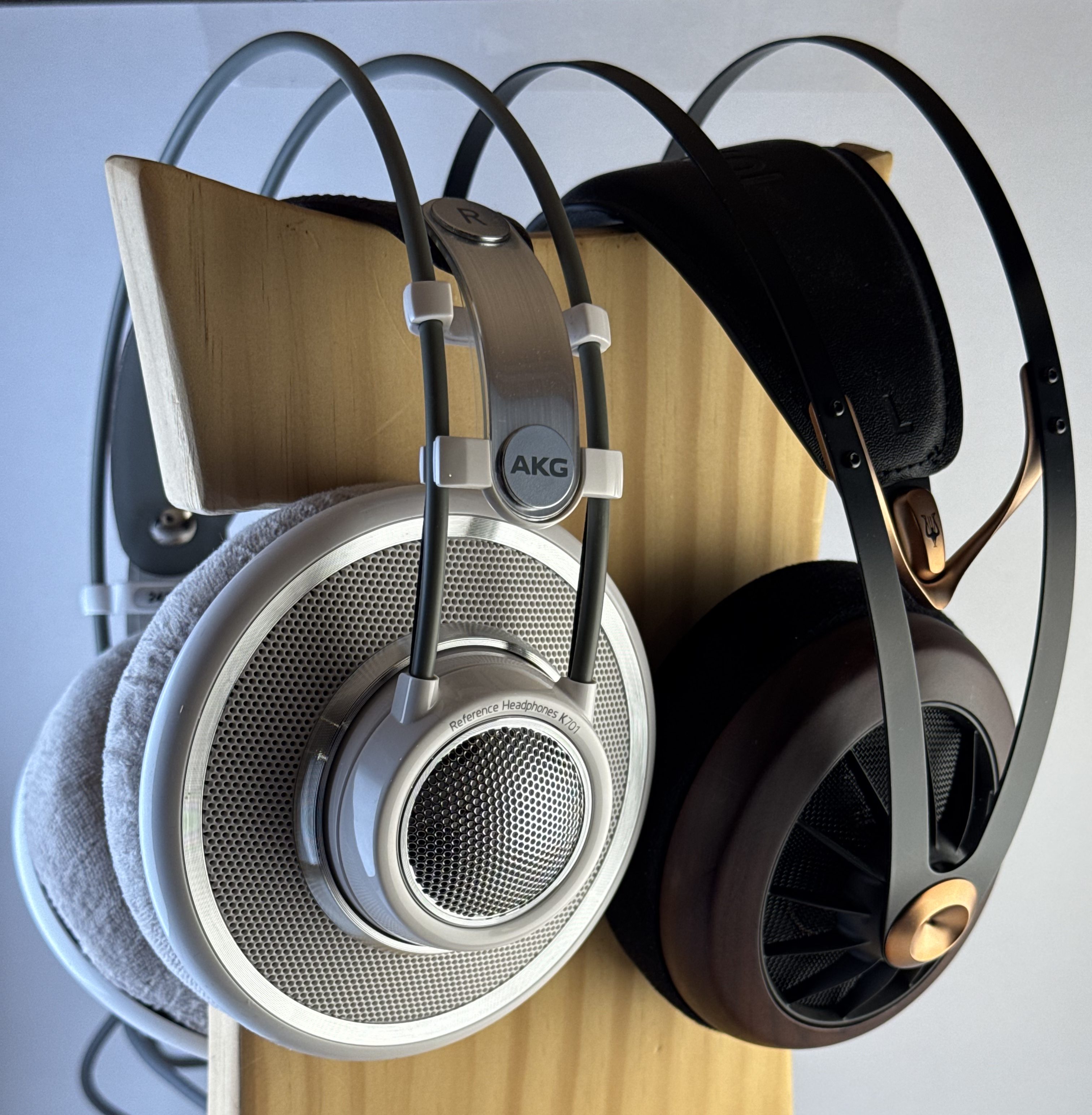
Let’s be clear; the 109 Pro is a MUCH better headphone in just about every possible way than the K701. Better bass, better treble, better stage and separation, slightly better comfort, MUCH better convenience (the cable on the K701 is just … bafflingly bad). The midrange on the K701, particularly for human vocals, is probably objectively a little better than those on the 109 Pro (it’s the one place they’re a little inconsistent), but there’s just no world in which I’m picking the K701.
A quick glance at the graphs:
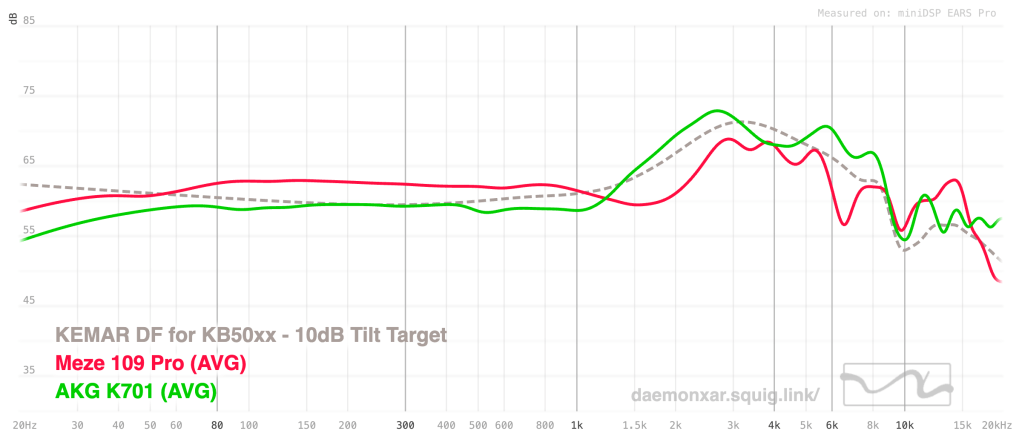
This is more or less what I hear; my specific unit of the K701 seems to be a little less spikey than other folks who have measured them, but it’s definitely a substantially brighter, lighter sounding headphone with a much more pronounced midrange.
Verdict: 109 Pro by a country mile. Or a city mile. Or an extraterrestrial mile. The K701 are a pretty good headphone at $150, but the 109 Pro is just one of the very best headphones I’ve spent time with.
Overall
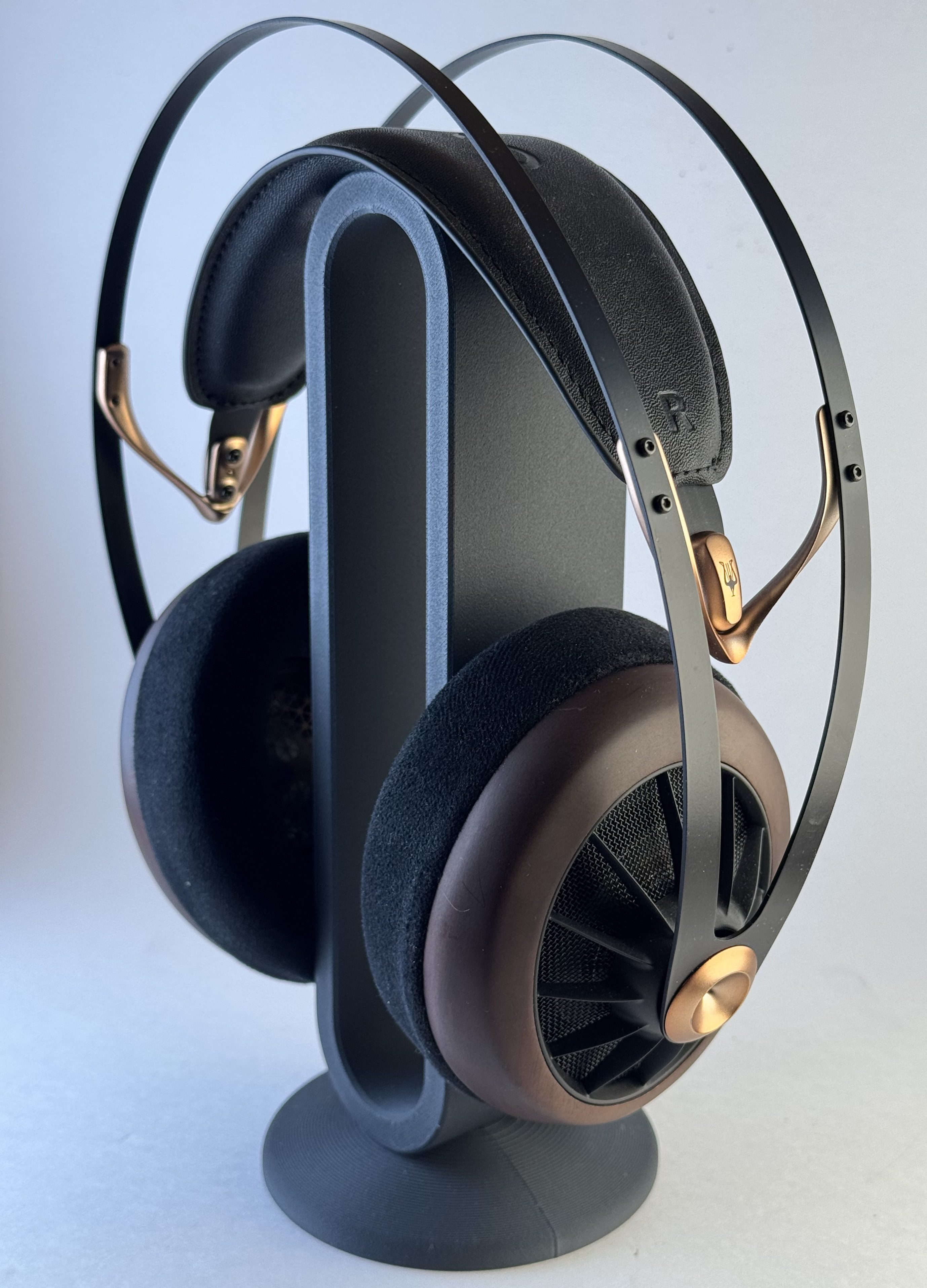
I love the Meze 109 Pro. They’re my favorite headphone under $1,000. And I’m actually quite pleased to discover that’s still the case, many many pairs of headphones later. They’re not a perfect headphone; there are a few little things here and there that I’d change (a little more sub bass, less recessed jacks, slightly springier suspension strap), but I’ve never encountered a product that didn’t have at least a few bits to criticize. In fact, the only reason it’s not my favorite headphone is that … the same engineers and designers built it a big brother that they sell for $3,000. That’s just better.
Do I recommend the Meze 109 Pro? Yes. Dear god yes. If you like music, if you like headphones, if you have an interest in design … you should spend some time with the Meze 109 Pro. They’re great. If I had to pare my collection down to a single pair, I’d have a hard time picking anything other than the 109 Pro (while I love the Empyreans and think they’re a better product, I also really don’t want to be using anything that expensive on a regular basis. I’m constantly worried I’ll knock them off a table, or Denali will). I always feel weird about recommending a product this expensive, but if you’re a person who uses headphones a lot, and can afford it, a genuinely comfortable pair of headphones that you can throw on for hours without having to think about it is a hell of a thing. Add in the fact that they sound incredible, and you get a weirdly good value even at $799.
These really are worth giving some time to for everyone in this hobby. They might not be for you (particularly if you’re young, or have treble sensitivity), but if they work for you … warm, buttery magic in a box.
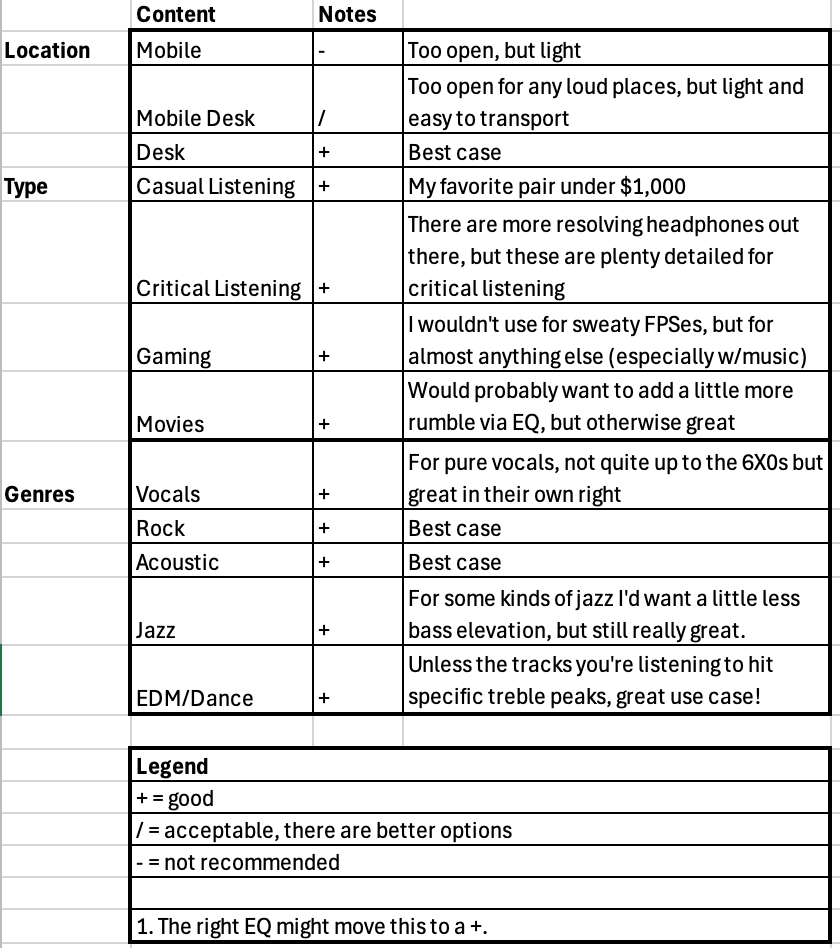
- I still feel weird about marking an $800 product a 9/10 for cost-adjusted, but they’re better than a lot of more expensive headphones. They’re also pretty widely available used, and have been on sale regularly over the last six or seven months. ↩︎
- I score bass, mids, and treble on a two part scale: 1-5 for quantity (5 being the highest), and A-E for quality (A being best in class, E being laughably bad). For soundstage it’s also a two part scale, with the number representing the width and the letter the separation within it. ↩︎
- For comfort/fit, my scale is A-E with A being disappear entirely into the background and E being I want to tear my ears off to stop feeling these headphones on my head. I’ve had one E: the Koss PortaPro. ↩︎
- The first cable I ordered from Hart was, in fact, for the 109 Pro and in Oregon Duck colors, but had fat-barreled 3.5 mm Focal-type connectors at the cup end. Those, it turns out, don’t fit in the recessed jacks Meze uses for the 109, 99, etc., and I had to order a second one. ↩︎
- Oops. ↩︎
- Meze also makes really excellent cables; while the OEM cable for the 109 Pro is … fine, both their upgrade cable options AND the cables they ship with their newer products like the Strada or 99 Classics v2 are really great quality of life cables. ↩︎
- To be fair to the 109 Pro, the Empyreans are also almost four times the price, and for most companies would qualify as a flagship product. ↩︎
- This is maybe the section of the original review that’s actually changed the most, and it’s really just because my understanding and appreciation for staging has evolved a lot over the last year and a half. I find these days that I care a lot more about the ability to separate out things in a track than I do about perceived width of soundstage, and that’s what the 109 Pro really excel at. ↩︎
- Seriously, holy shit. This is blowing my mind. ↩︎
- There’s a reason they’re my favorite headphone under $1k. ↩︎
- I do wish it had a volume dial, but not quite enough to use the Meze boom mic over the nice, silver-plated Meze cable I’m mostly using these days. ↩︎
- The HD 6XX have never sounded so good to me as running balanced from the Moondrop Dawn Pro, and I have no reasonable explanation. But I’ve picked it out of a blind four times. ↩︎
- I know, I know … Meze fanboi. But at least I own it? ↩︎
- Or an eager golden retreiver catches a cable and pulls them off a table. ↩︎
- Your mileage may vary, but I’ve generally had pretty good luck with Hifiman cables but not those from Fiio or Focal, both of which tend to have thicker barrels on their jacks. ↩︎
- A lot of this was just carryover from the 99 Noir, I think. More feeling isolated than actually isolated. ↩︎
- Kidding.
Mostly. ↩︎ - I know I frequently say that you need to take graphs with a grain of salt, but that’s particularly true here. ↩︎
- I’m bougie, but I’m not recommend $3,000 headphones bougie.
You also shouldn’t spend $3,000 on a pair of Empyrean IIs either, to be clear; the markup on a headphone like this is quite substantial and it’s worth seeing if any of your local dealers will cut you a deal to move some inventory. ↩︎


Leave a comment