
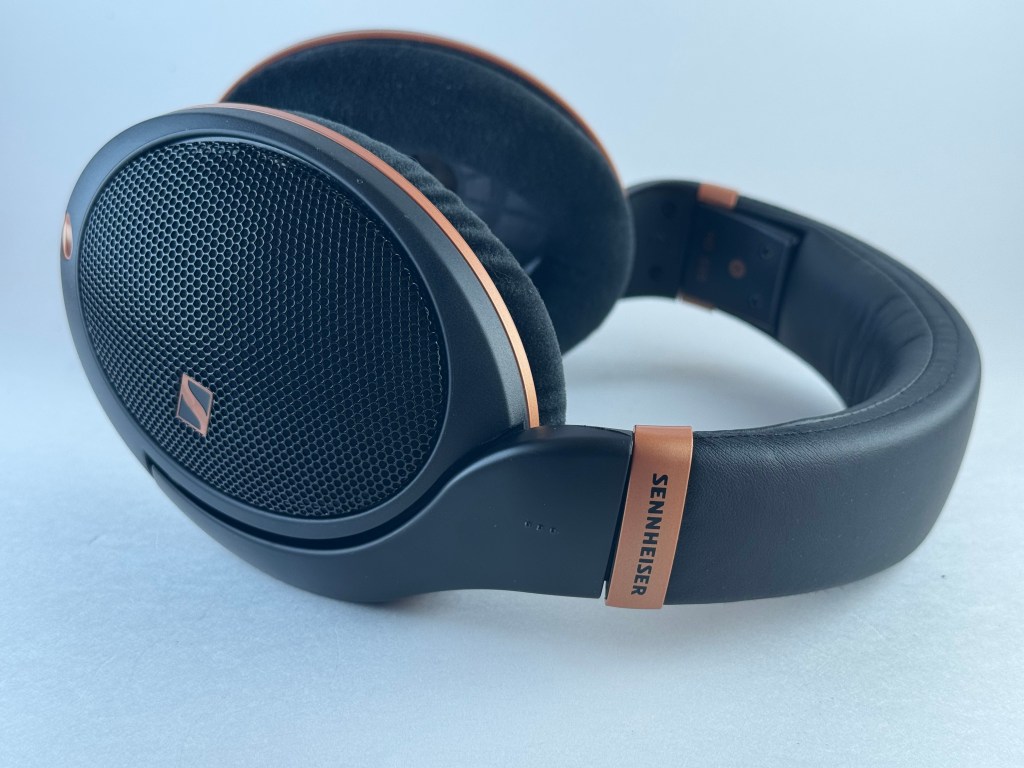
[ORIGINAL MSRP $279.95. Currently available from Amazon for $189.95 in May 2026.]
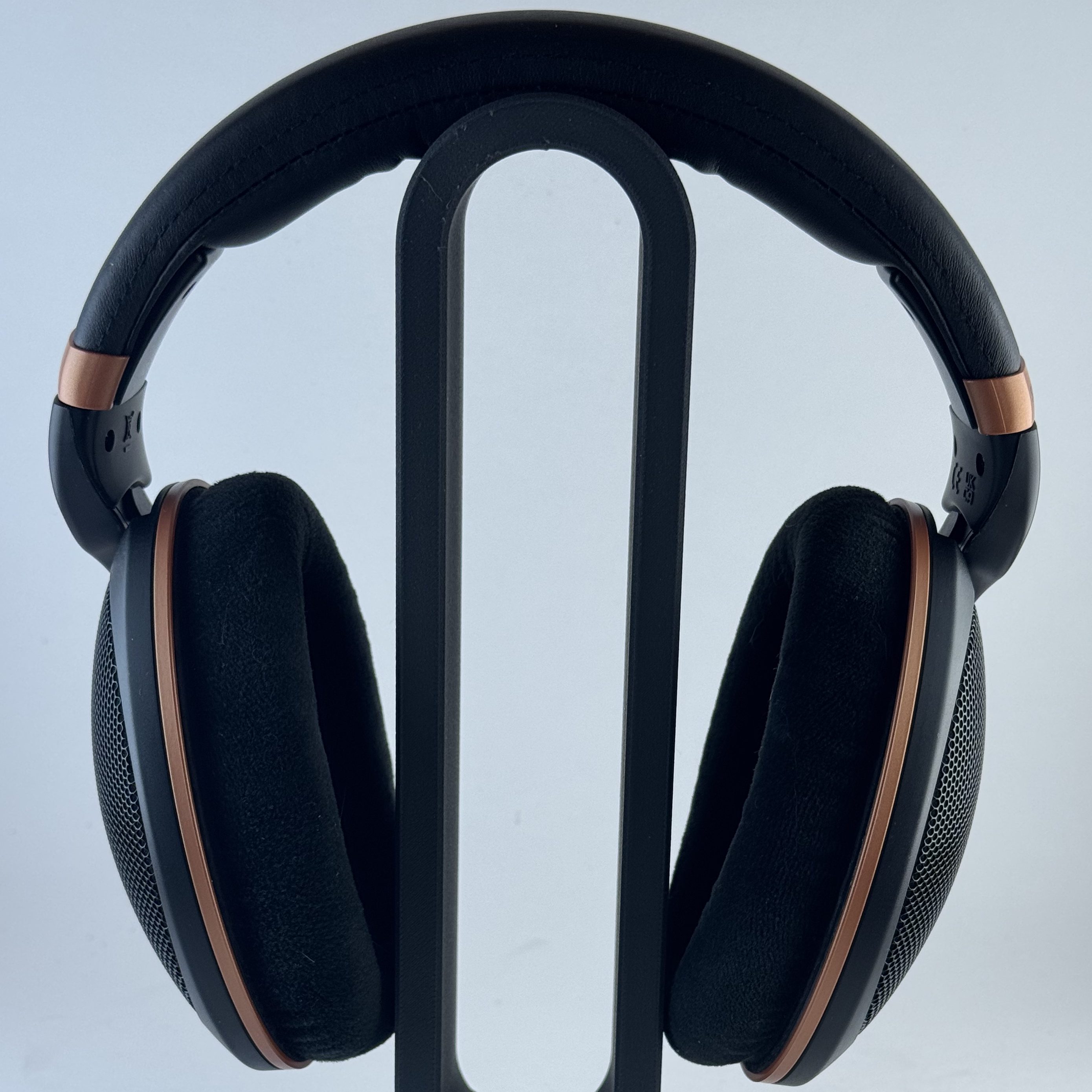
[Tl;dr: The Sennheiser HD 505 is not a bad headphone, but it’s definitely not my cup of tea. The bass is really solid (if a little muddy at times), the mids are … weird and inconsistent, and the treble is fine but not exceptional. Pretty comfortable, though, and well designed/manufactured. In 2019, I’d probably have recommended these. In 2026, there are a lot of great open backs on the market at similar (or lower) price points, and even Sennheiser itself makes a couple of headphones that are substantially better for $10-30 more.
In the end, I’m largely indifferent to the HD 505. They’re not an awful deal at their current $190, but they’re not something I’d choose to listen to and these will be moving on rather than staying in the collection. You can do better, and deserve better.]
Cost-agnostic: 4 out of 10 Denalis

Cost-sensitive: 5 out of 10 Denalis (at $190; maybe a 3 out of 10 Denalis at MSRP)

TABLE OF CONTENTS:
Introduction
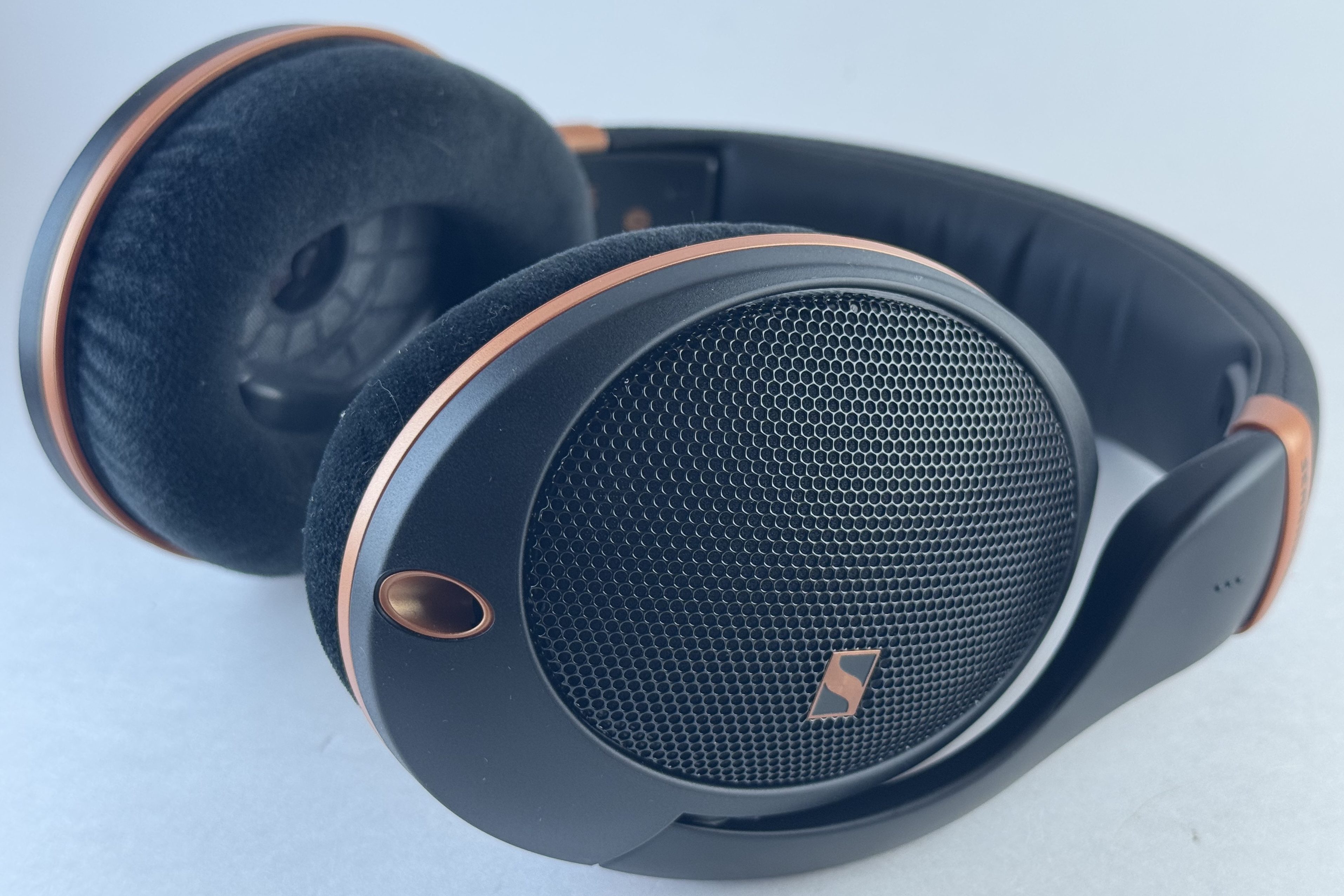
[Reviewer’s note: An awful lot of this will sound familiar to anyone who has read my HD 550 review, and that’s no accident; the HD 505 is basically a 550 that swapped a little bit of bass for a little more midrange. They are more similar than not; to the extent there are tuning differences they’re a few dB here and there, and that could potentially be unit variation as much as anything else.]
As I noted in my review of the disappointing HD 560S and my generally happy review of the HD 550, while Sennheiser is perhaps most famous for its excellent 600-series, it has another long-running and many-iterated series with designations in the 500s. One of my first real headphones (which I still have!) was the very strangely-tuned HD 515.
I got these headphones after experiencing the whipsaw in quality between the HD 560S and the HD 550, and I wondered if there was a happy middle ground between the two that I could recommend for people considering the disappointing (to me!) HD 560S but not wanting to spend quite enough to get the generally pretty great HD 550. They’re sort of the redheaded stepchild of the Sennheiser 500 lineup; rarely talked about or recommended, but generally well-regarded. Amazon put them on pretty decent sale at a moment where I had some credit to spend, and here we are.
Review notes
Testing rig
Here’s my basic testing protocol.
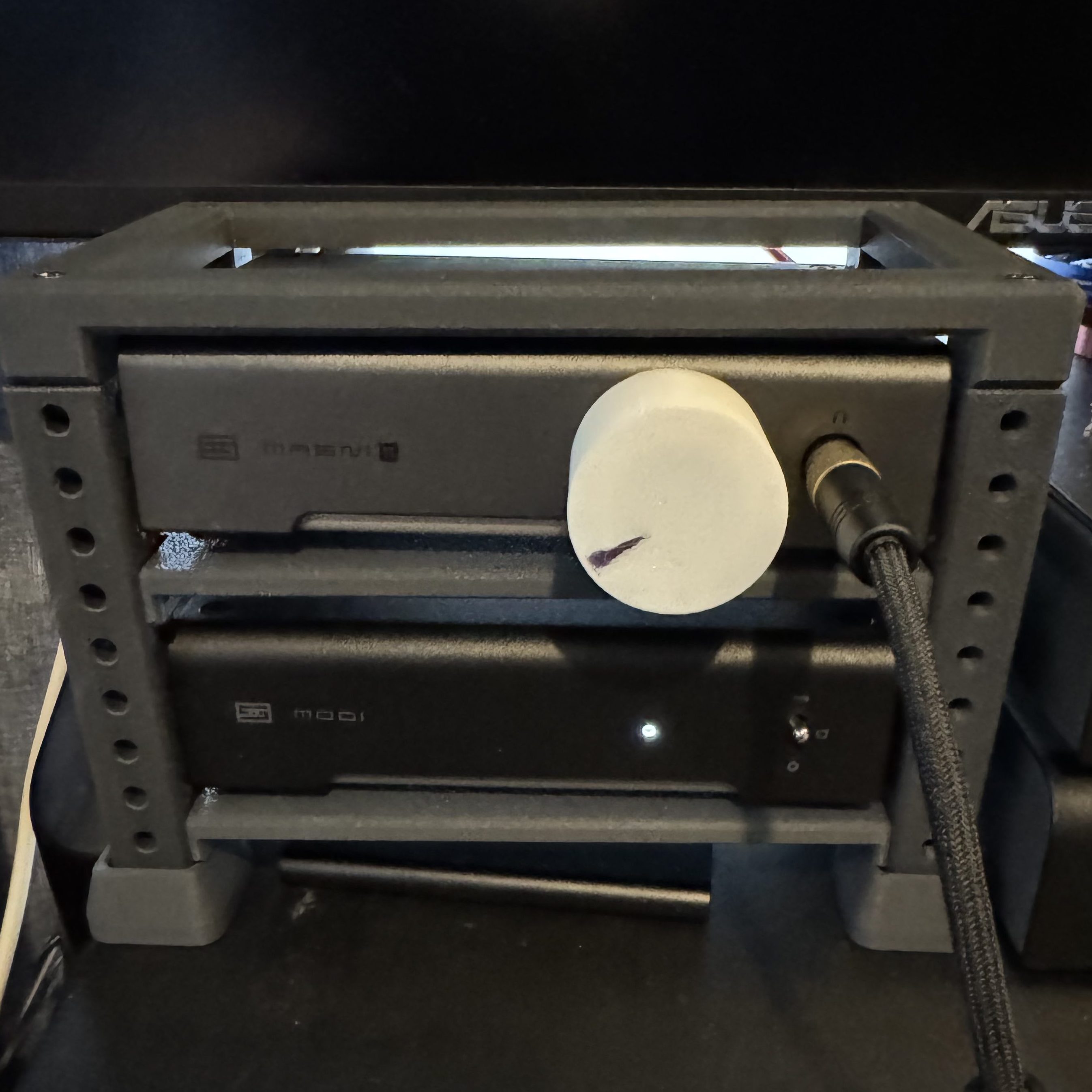
Based on my philosophy on the allocation of resources in headfi, except where otherwise noted I’m going to primarily be testing these with a Schiit Modi/Magni stack, running single-ended via the OEM Sennheiser cable and connected via USB-C to a custom gaming PC running the Roon client.
EQ
As noted in the Bathys review, I mostly prefer to test headphones with their default tuning, assuming that most people won’t take the time or make the effort necessary to use a third-party EQ. And the HD 505 really don’t need EQ; they sound mostly fine to me out of the box and the issues I have with them are particularly challenging to address via EQ. I have played with EQ a bit and haven’t come up with anything that I think is a noticeable improvement over the basic tuning or didn’t produce additional issues.
EQ Update
I don’t even recommend Oratory1990’s tuning for the HD 505. At least with my pair and on my head they create some weird treble issues that I dislike quite a lot.
Volume
Here are the volume settings I use with the Sennheiser HD 5053 (unless otherwise noted, running via Roon with no headroom management, playing Daft Punk’s “Face to Face” from Tidal):
- Chord Mojo: white, red, orange, red
- Dongles:
- Apple: 66%
- Crinear Protocol Max: 66%
- Fosi DS2: 45%
- JCALLY JM12: 70%
- Moondrop Dawn Pro: 90%
- Holoaudio Bliss (KTE): Lo-z, -28 dB (single-ended)
- Mytek Brooklyn Bridge: 59%
- Schiit:
- Mimir/Jotunheim 2 (Mimir has a -15 dB pregain applied via Forkbeard): ; low gain, 12:30 (single-ended)
- Modi/Piety: low gain, 8:45
- Modi/Magni+: middle gain, 11:00
- Modius/Magnius: low gain, 10:00 (single-ended)
- Topping:
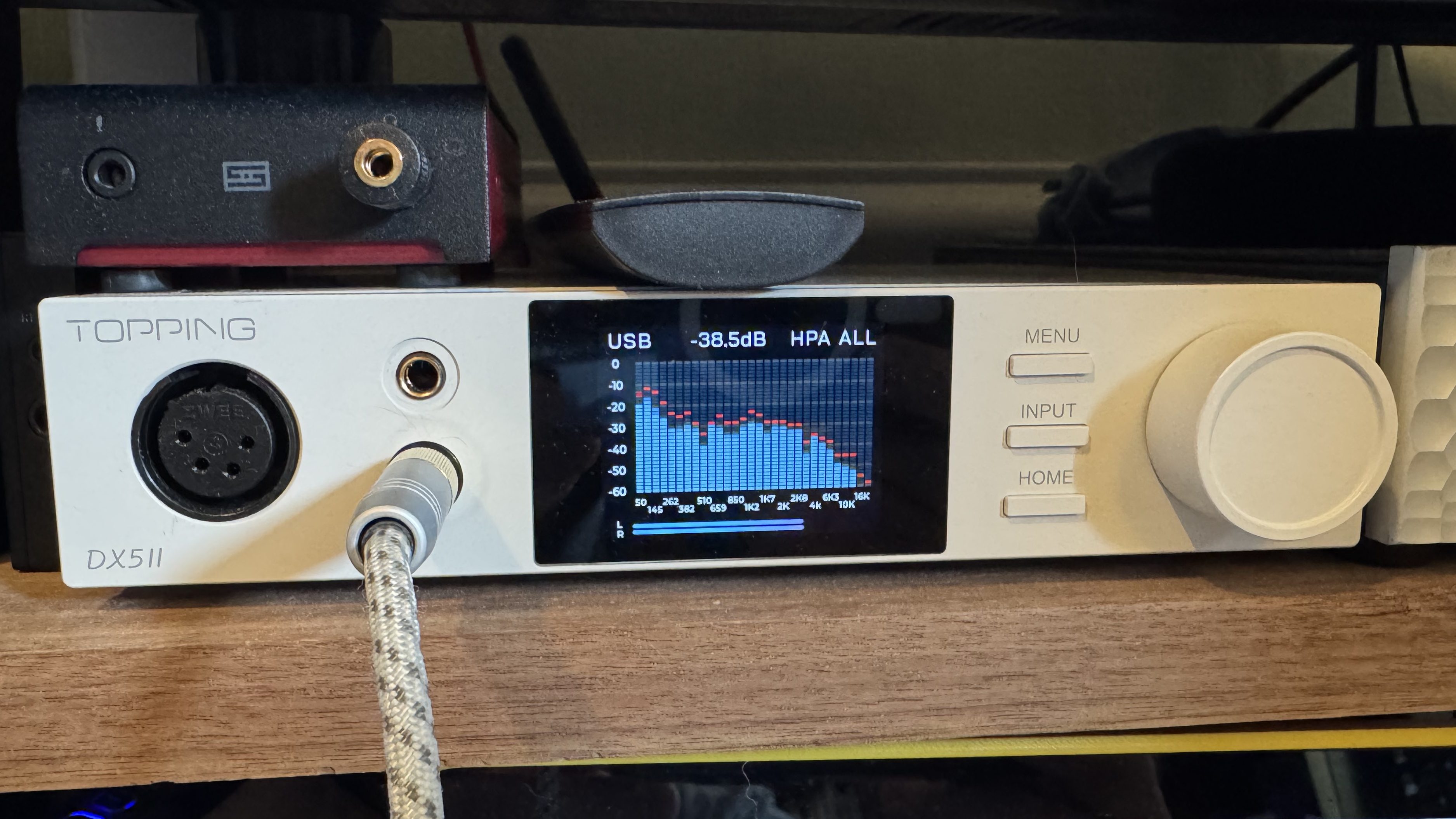
- DX5 II: -24 dB (low gain)
My torture testing list
The Basics
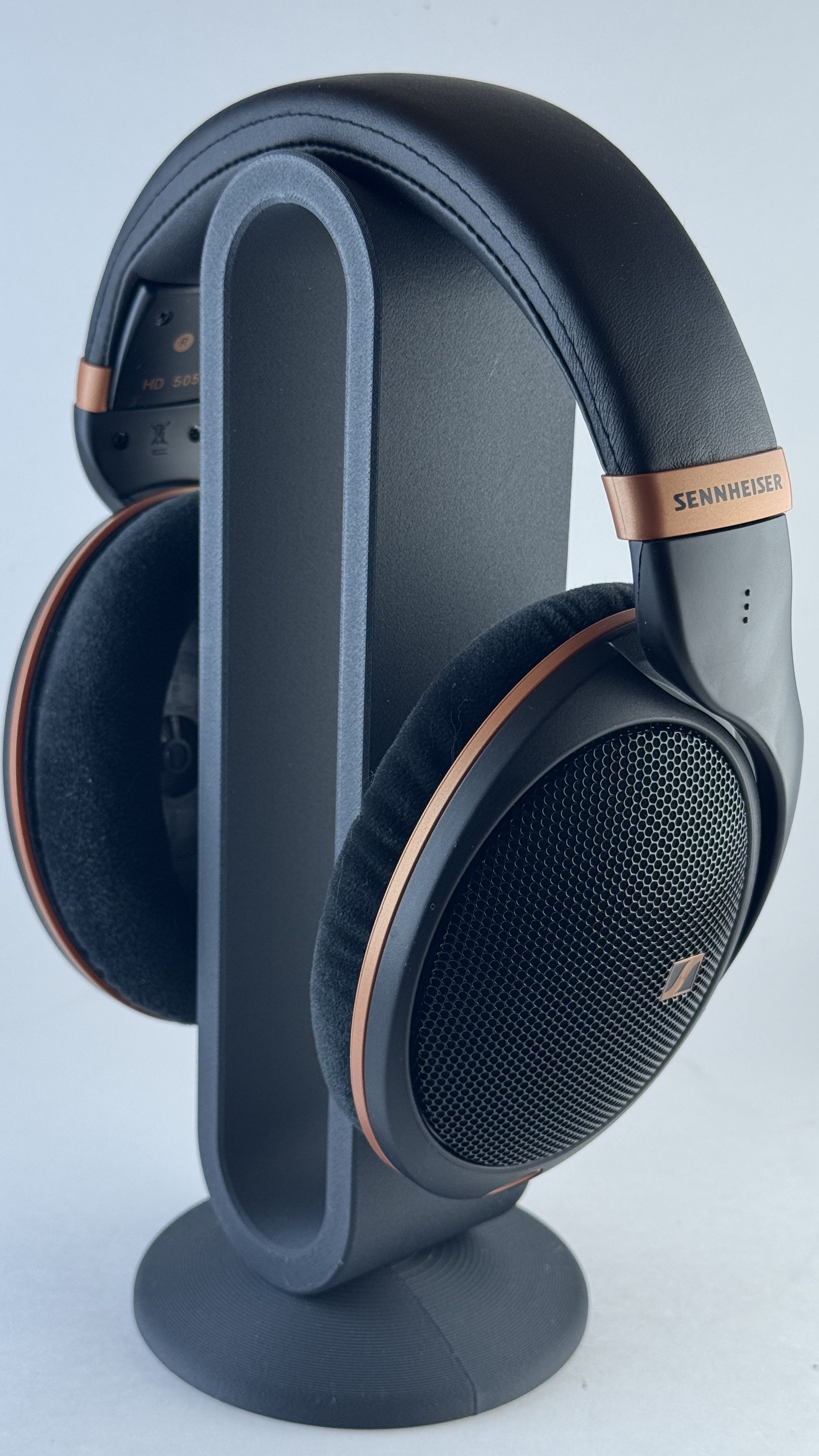
The Sennheiser HD 505 are a passive, open back, dynamic driver headphone from well-loved audiophile manufacturer Sennheiser. They’re a pretty easy headphone to drive, with a nominal impedance of 120 Ohms4 and a sound pressure level of 107 dB/1Vrms. This means they should work reasonably well from a variety of devices with a standard 3.5 mm audio jack, as well as not requiring anything more than a $9 Apple dongle5 for those without a headphone port. They’re a member of Sennheisers 500 series, meaning that they have yokes that integrate into the cups and use a single-entry, twist-lock 2.5 mm cable. They are internally wired to be balanced-capable, if you get a balanced-capable 2.5 mm to 4.4/XLR cable (either Sennheiser’s or an aftermarket one).
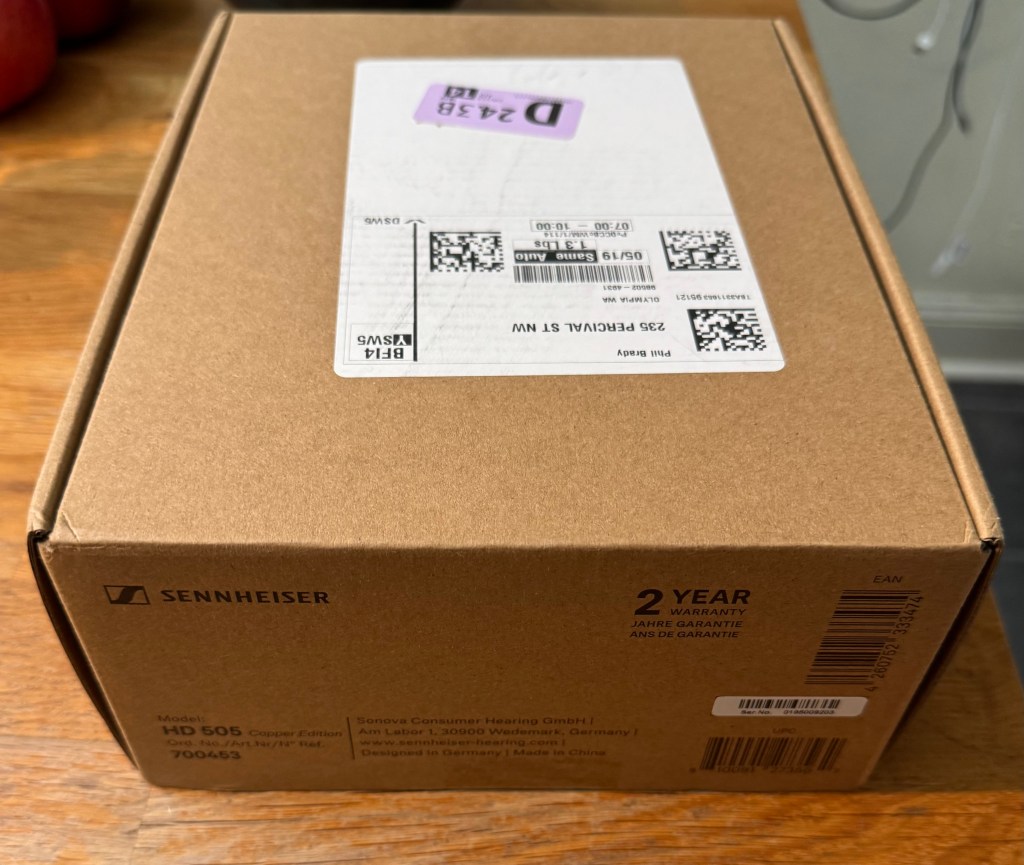
They’re built mostly out of plastic but with a metal spring steel band, and they weigh in at a pretty light 237 grams without a cable. The HD 505 ship in an interestingly simple brown cardboard box with a single-ended, 2-m rubberized cable terminating in a 3.5 mm jack with a threaded 6.35 mm adapter included:
Sennheiser markets the HD 505 as a blend of “analytical tuning, precise detail, and enduring comfort” for both listening and gaming, so let’s see how they did!
Sound
I’m generally okay with the general sound and tuning of the HD 505. Overall, I would say the listening experience is similar to that of the HD 550 but with a lot less consistency; they definitely measure with a lower bass and higher mids, but they’re different enough that I can pretty easily tell which one I’m wearing with most songs. In the treble, though, the 505 is much more apt to present as harsh.
Like the other Sennheiser 500s, the HD 505 is particularly well-suited for more acoustic-leaning, quieter and sparser music than really complex, layered tracks. Think The Grateful Dead or Little Dragon instead of Takuya Nakamura or oskar med k. They’re also definitely not my favorite headphone in this crowded price category, but I’d be perfectly happy to use them for most of my listening they were what I had available. In a world in which I have the HD 550 on my desk I don’t think I’ll be using them very much, but that has more to do with the HD 550’s strengths more than any weaknesses on the part of the HD 505.
Here’s what my unit looks like, on my measurement rig6:
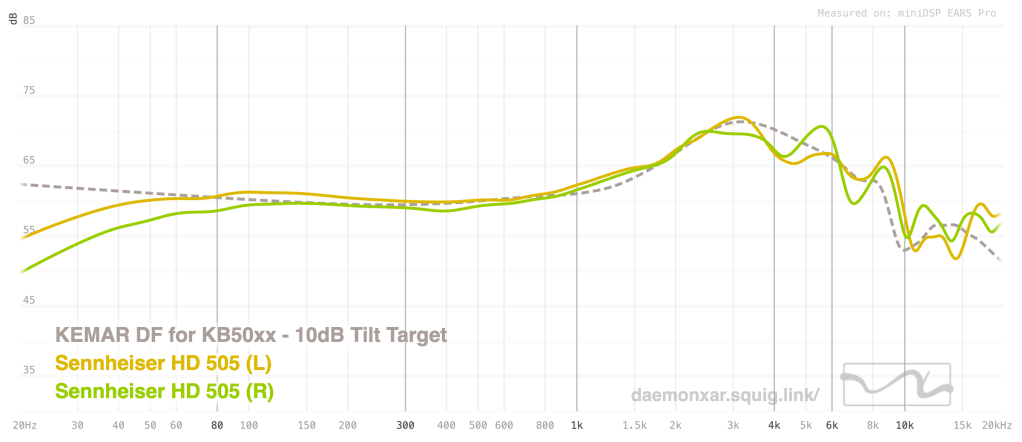
I definitely hear a couple of those peaks, here and there, but none of them are TOO piercing.
The soundstage is decently wide, certainly better than the 6X0s. The imaging and layer separation are a little inconsistent; they’re really strong on a track like Little Dragon’s “Brush the Heat” (particularly towards the end) where they do an excellent job of placing instruments with substantially different frequency ranges in space, but the HD 505 struggles a bit more with a track like “Chan Chan” or “Garcia Counterpoint,” where there are a lot of instruments playing overlapping and similar frequencies. They definitely get a bit muddled there. Front-to-back staging is not particularly strong, with the guitar riff at the beginning of “Love Can Damage Your Health (Laid Mix)” feeling less like a rotational effect than a panning one.

The dynamics are pretty reasonable; starting “It’s All So Incredibly Loud” at a reasonable volume became unpleasant around 2:50. Like the HD 550, the microdynamics on the 505 are pretty good for a non-Focal dynamic driver though I think they have a little less slam; the bass bell tones at the beginning of “Angel (Blur Remix)” have a little heft to them, but not as much as I would like. Ditto with the warble after the bells. Surprisingly, the treble bells are a little disappointing as well; I would like more accenting and impact there and that’s not something I’ve really encountered before.
The detail and resolution of the HD 505 are fine but nothing special. Definitely feels stronger on sparser, more isolated tracks like “Birds” and substantially weaker on more crowded tracks with more overlapping instruments and melodies. Decent hiss and fingers sliding on “What Did I Do?”, though the sense of presence around :40 on Kurt Vile’s “Bassackwards” is somewhat lacking. I rarely felt like anything was missing in my listening sessions, but neither did I notice anything new.
Bass
The bass on the HD 505 is a bit inconsistent; there are a number of tracks where it feels rich and deep and cohesive, and then the occasional one where things feel a bit muted or distant. “Drawn” sounds mostly pretty good but there are a few places during the transition from the (Little Dragon-esque) opening to the the last 45 seconds or so (that’s pure De La Soul) where the strings lack the resonance I want from them. The bass also feels a bit thumpy there at the end. Extension into the sub bass is decent, but not stellar, and I’d probably add a little more down there via EQ for regular listening. As it is, if I turn the volume up enough to get really satisfying bass on something like “Remain Nameless,” I start to hit treble artifacts and balance issues.
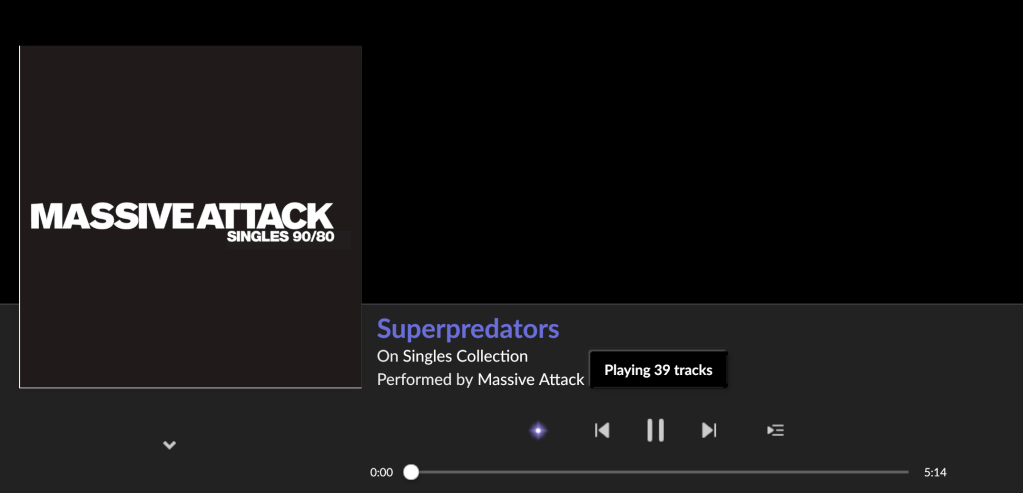
If I were using this for a lot of listening, I’d probably add a bit of mid bass and definitely some sub bass via EQ, but the bass tuning out of the box is perfectly satisfying; probably the HD 505’s biggest strength.
Midrange
The vocals on the HD 505 are mostly pretty good, classic Sennheiser, though they also struggle a bit with inconsistency. They’re not the HD 600, but they’re mostly pretty damned good for a more budget-oriented option. Jill Scott’s melody is mostly front-and-center on “Calls,” though here and there she feels a hair recessed and I’d actually like substantially more of her background vocals and runs. Ditto on “Hold Up” (at times, Beyonce feels almost a little recessed) and “Cold War”, where the bassline is deep and satisfying, and Cautious Clay’s backgroud vocals shine, while the main melody is a bit too far back in the mix at times.
The lack of background vocals as a negative actually became something of a theme with these; on a track like “Remain Nameless” the background vocals are both a little weak AND … wrong, I guess? Hard to put a finger on it other than that on several playthroughs they pulled me out of background listening by being somehow off.
[Editor’s note: Man, the background vocals on “Drawn” are just weird: crackly, inconsistent in volume, and highly distracting in ways that they aren’t on anything else. Oratory’s EQ settings make it a little less annoying, but … yeah. Not for me.]
Timbre is also a bit funky on some tracks, though it’s mostly limited to vocals; Johnny Cash’s voice is a bit compressed around 2:40 on “Hurt.” Now, admittedly that’s not the best recording, but I’ve never noticed that particular quibble on other headphones. Some of the guitar lines on “Fresh Tendrils” get a little jangly and glare-y at times too, though that’s a pretty jangly track to start with so it’s not the end of the world.
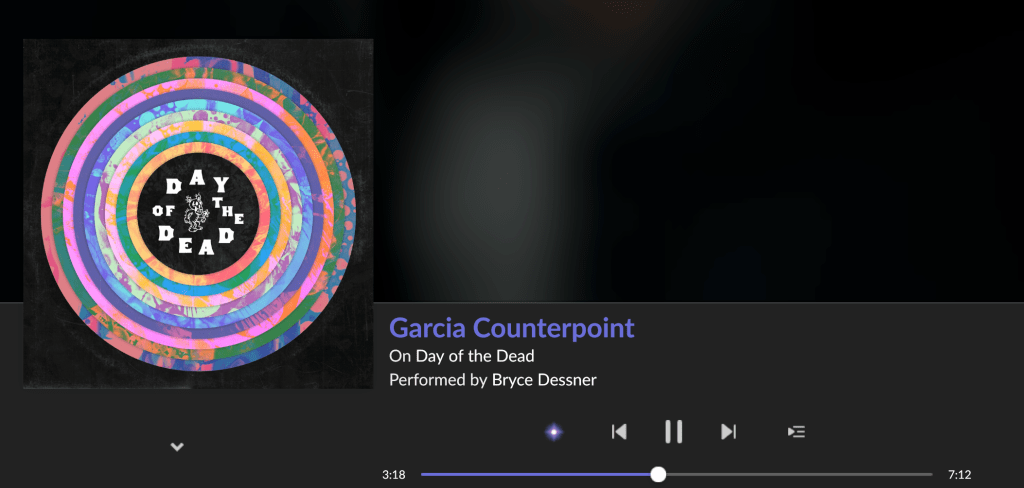
If this were a headphone I was going to be listening to music on a lot, I’d probably look at rebalancing the upper part of the midrange and the transition to the treble a bit to see if I could tease out a little more of the vocals though honestly with these I’m not quite sure where to start.
Treble
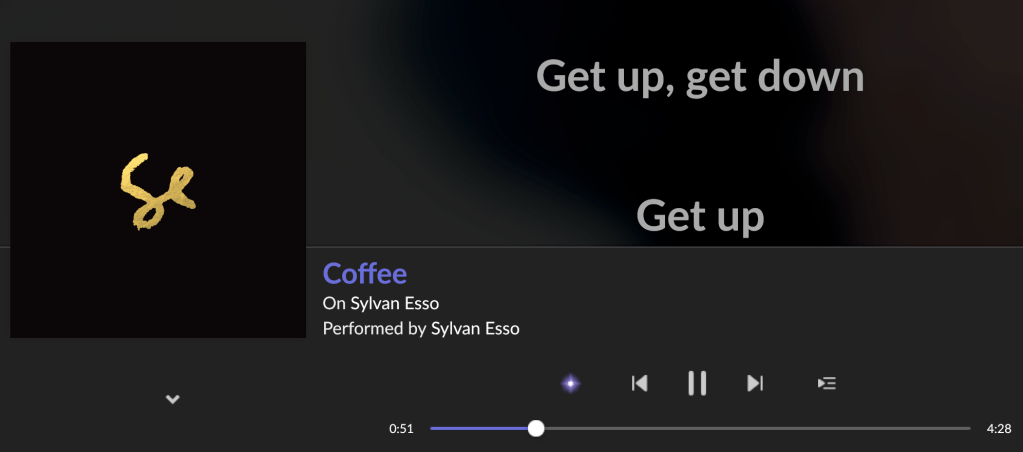
The treble is mostly fine on the tracks and in the places where I often have issues, though like the Meze 99 Classics v2 it finds a few of its own little issues. Both the guitar and the vocals on “2021” are fine and reasonably balanced for the most part, and the muted trumps on “Will O’ the Wisp” don’t come particularly close to being too sharp or harsh. This is mostly also true of the bells on “Coffee” (which can run a little hot); they’re clear and bright without biting. Some of the mid-to-treble transitions can be a bit sharp on a track like “Roses (feat. ROZES)”, but that was relatively uncommon in my listening sessions with the 505.
My biggest issue with the treble on the 505 was when I turned the volume up to get a satisfying level of bass, I created additional issues in the treble, and when I turned down the volume to reduce treble issues I started losing things in the bass and midrange. Inconsistency, thy name is 505.
Gaming
I haven’t done much gaming with the HD 505, and while they seem competent, they’d not be one of my top choices for it based on the lack of layer and instrument separation and some of their timbral funkiness.
Amplifier Compatibility
Like most Sennheisers I’ve reviewed, the HD 505 appears to be largely amplifier agnostic, though anecdotally I noticed more timbre artifacts when I plugged them into the Holoaudio stack.
These aren’t amazing headphones, and I don’t think higher-end systems bring out the best in them. I probably wouldn’t recommend them with higher end amps and DACs, though I continue to be largely skeptical about magnitude of the impact of source gear on sound.
Overall Impressions
The HD 505 are a pretty interesting headphone all around. I think the biggest theme from my listening sessions is one of inconsistency; this is one of those rare headphones where it can be hard to make generalizations about their tuning because for every example there’s a counter example. I could say that the lead vocals are pretty good but the background vocals too recessed (“Calls”), but then I listen to “Cold War” and it’s the main vocal line that’s recessed and the background vocals are great. I can say I want more resonance and richness from the bass (“Drawn”), but then I start “Remain Nameless” and my feet start tapping of their own accord.
I do find myself thinking about the 560S from time to time though; this feels like another headphone where the tuning isn’t quite cohesive or unified; if I turn the volume up enough to really enjoy the bass, the treble gets too much, and if I turn it down to accommodate the treble I start losing either the main or background vocals, etc.
I think at the end of the day, these suffer a little bit as a result of popping up in my review queue after the HD 550. They’re not bad headphone by any measure; I’d happily listen to a lot of my music with them. BUT, the HD 550 is such a good, well-balanced and -thought through headphone that the HD 505 falls a bit flat by comparison. They might have fared a bit better in a few weeks or months when I haven’t worn the 550 so recently.
Build Quality & Appearance
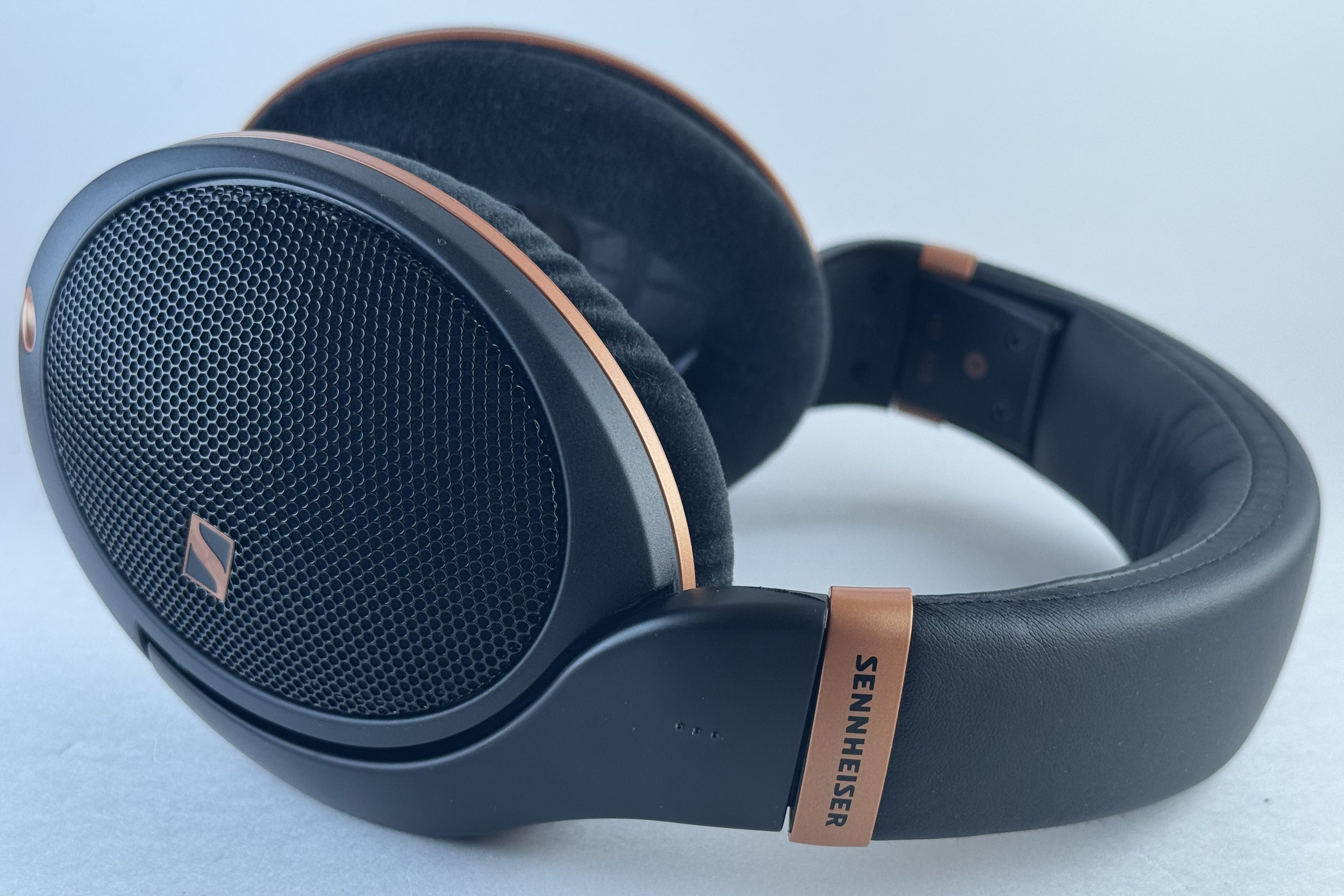
I’m generally pretty pleased with the design, build, comfort, and appearance of the HD 505; they compare favorably to a lot of the options in this general price point. To paraphrase my 560S and 550 reviews, while the 505 may be made primarily of plastic, that means they’re light (237 grams without a cable) while remaining quite sturdy. Sennheisers tend to be built to last, and the 505 fits right in that way.
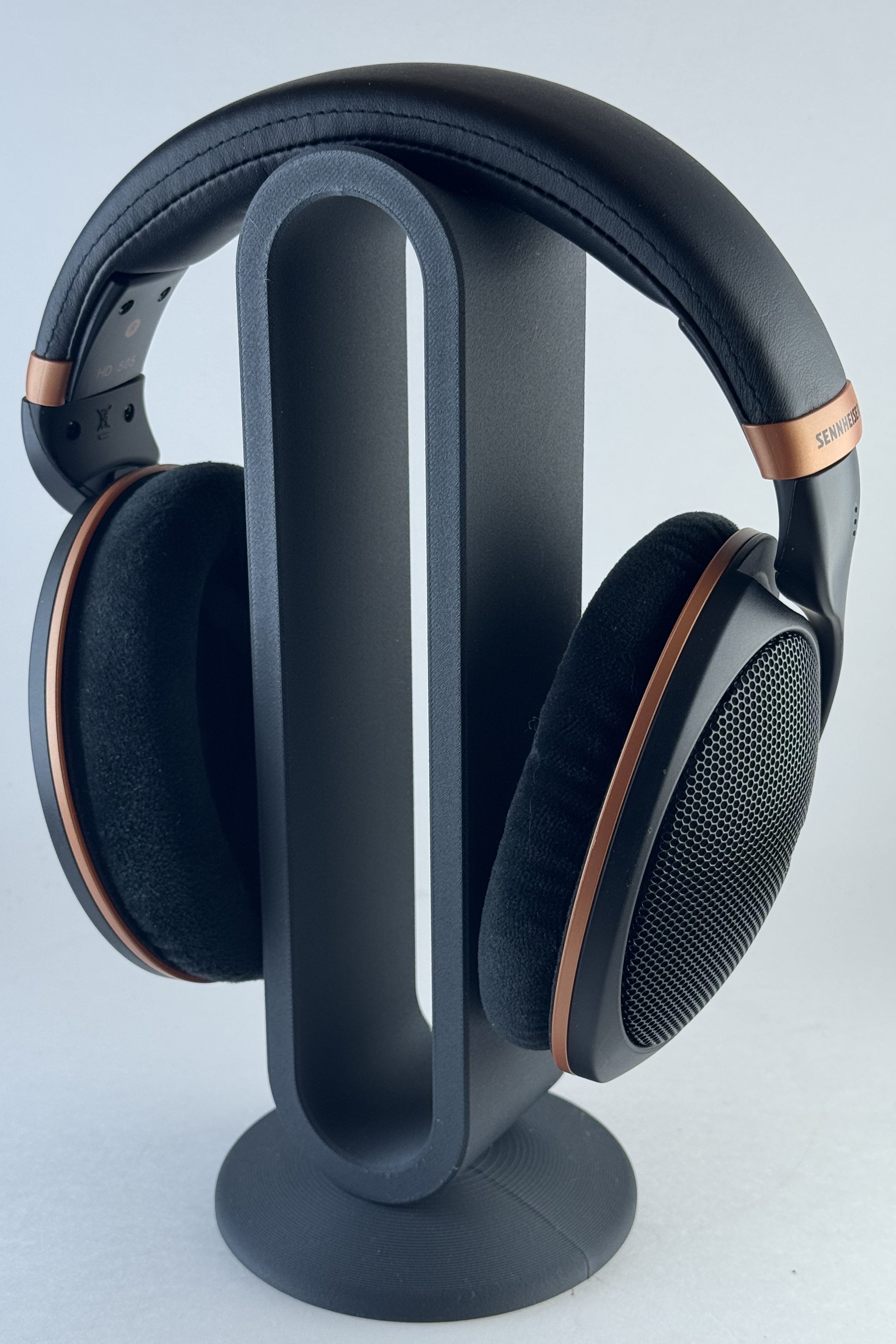
[If any of this sounds familiar, it’s because these are almost completely physically identical to the HD 560S/550 and I cribbed liberally from those reviews.]
Connectivity
I have written a number of times about how much I loathe proprietary cables, and the HD 505’s cable is no exception. It’s a super dumb, single-entry, locking, 2.5 mm cable that connects to the left earcup. These headphones are internally wired for a balanced connection, if you buy Sennheiser’s cable for around $100 or an aftermarket version for around $50.7 The OEM cable is a little microphonic, but not as bad as a lot of headphones in this general price range. Overall, it’s … fine, and perfectly functional. Rubber coated, not great, but arguably better than the OEM HD 6XX cable, and worlds better than the Hifiman surgical cable nonsense they include with their $1k+ headphones.
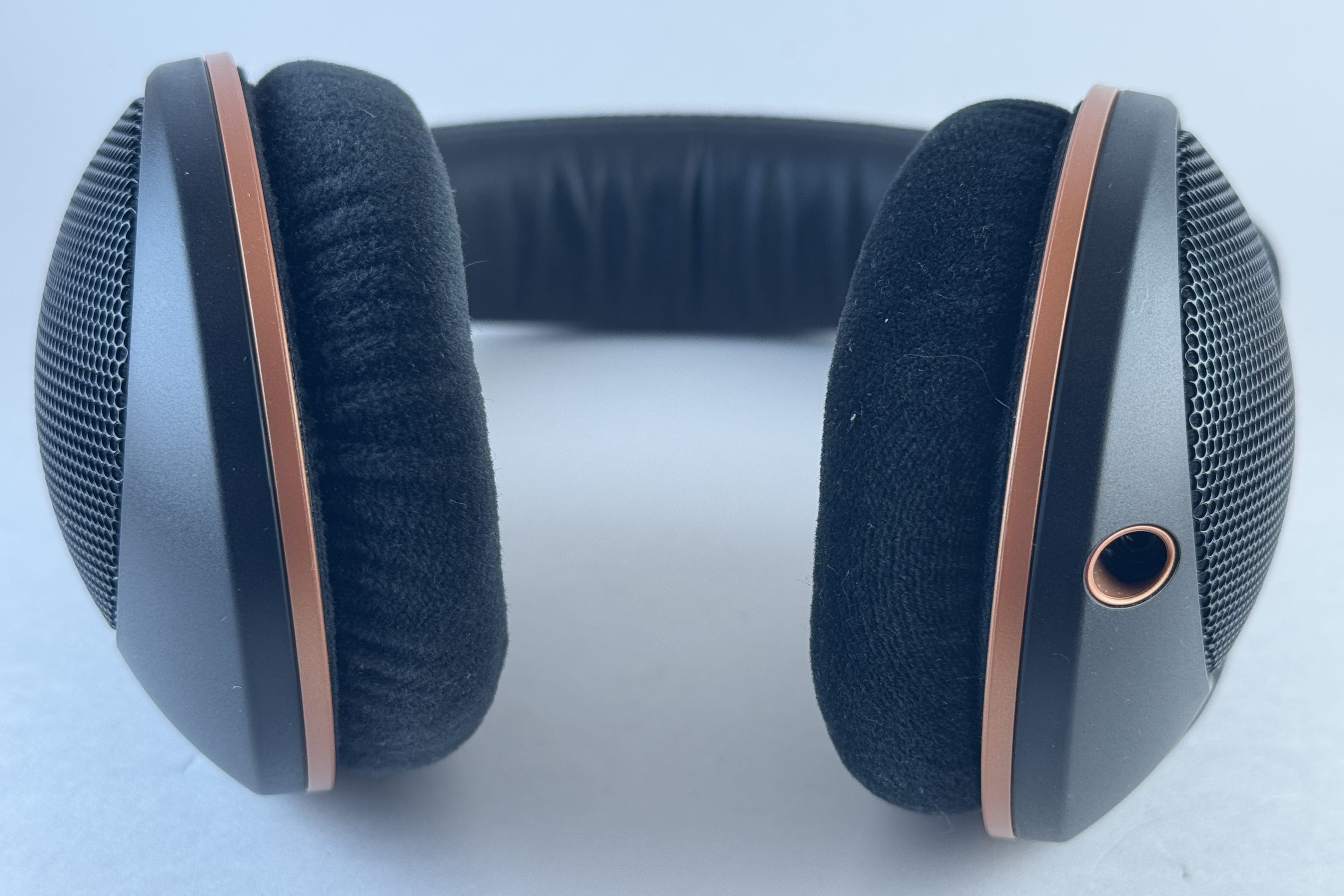
Like most of the 500 series, the jack on the left cup is pretty deeply recessed, and the recess is just wide enough to make it possible to insert the plug at the wrong angle to go all the way in. Hopefully they’ll fix it in the new generation. As it is, just be careful and go slow when inserting it, and make sure to rotate the barrel once it’s in to get a good lock (and it doesn’t rotate as much as you might expect, even when fully inserted).
Construction
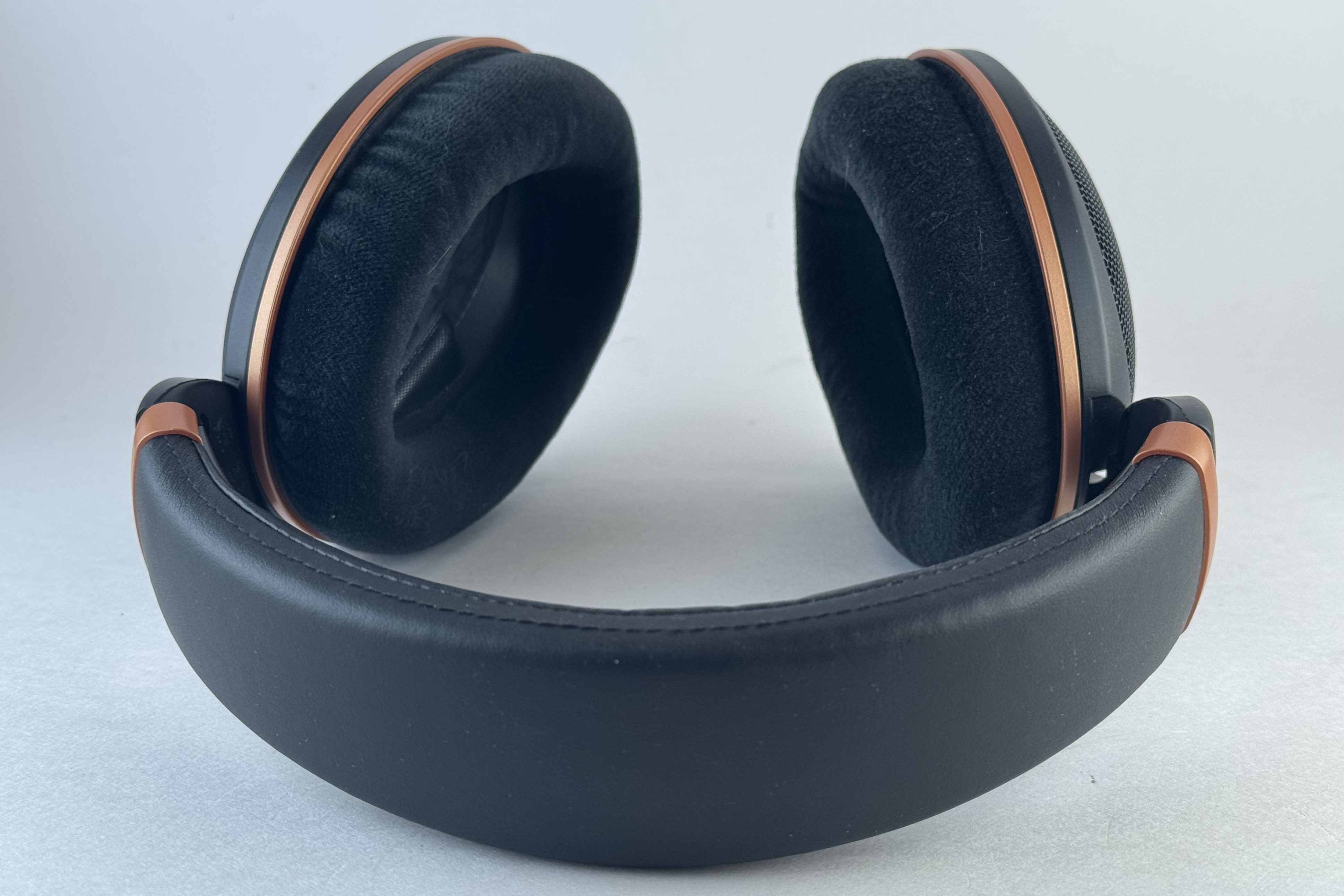
Light, sturdy, but relatively inflexible. Sennheiser’s 500-series design gives you probably 30 degrees of rotation and maybe 30 degrees of tilt, but it’s a pretty clever design and between the angle of the tilt and the flexibility of the band you should be able to get a reasonable seal on most heads. The mesh on the cups is reasonably microphonic (as you might expect), as is the headband with anything that’s a little scrape-y. It’s a plastic headphone. This is to be expected.
Comfort
These are almost physically indistinguishable from the HD 550 when it comes to comfort. I’d be pretty surprised if they’re not the same pads, in fact.
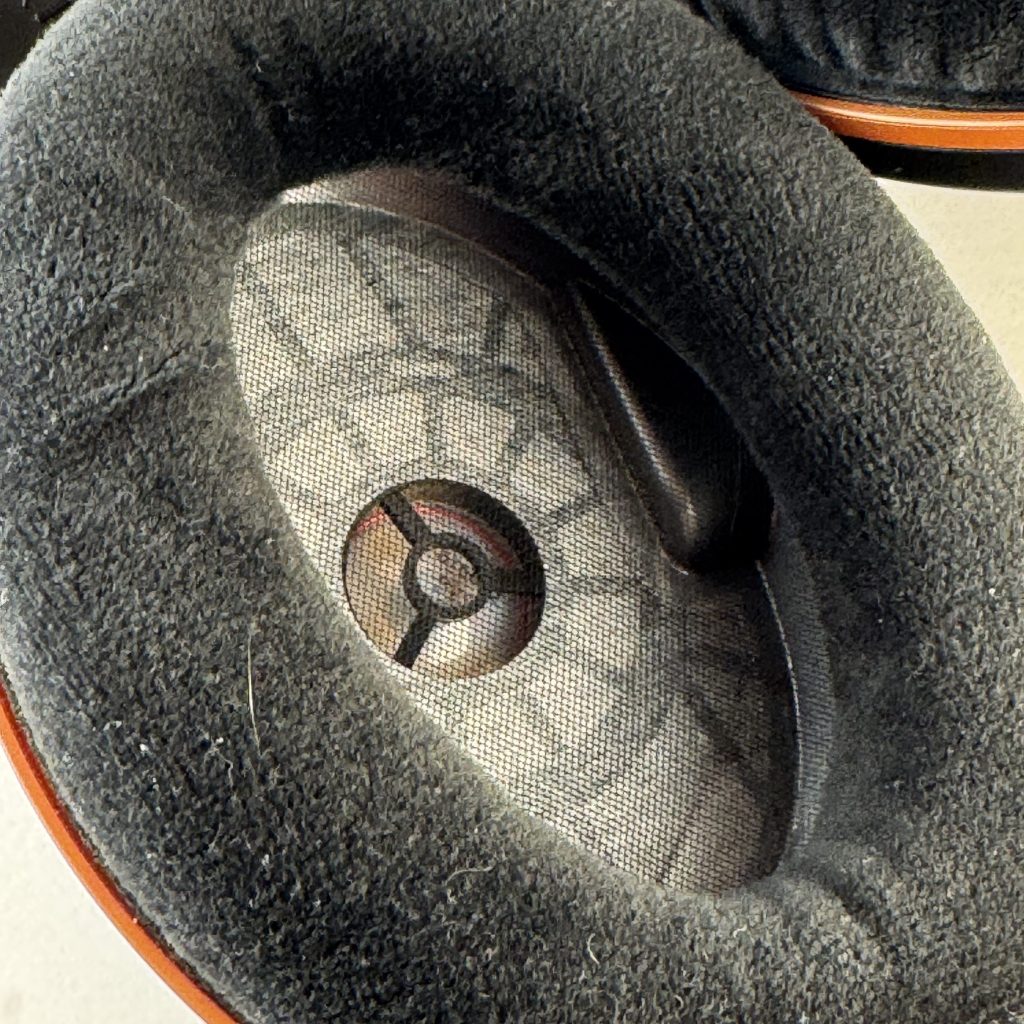
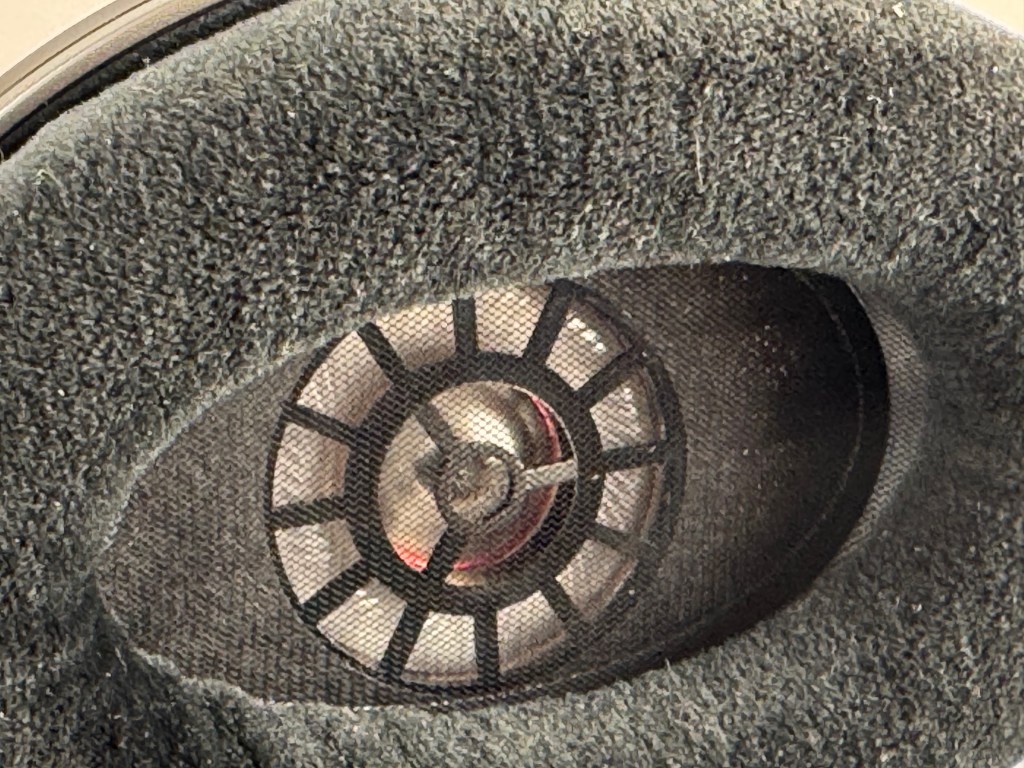
What I said about the HD 550 applies here as well: “They’re not incredibly comfortable, but they’re perfectly fine. About what I expect from a headphone in this general price range, and I scored them accordingly.”
Appearance
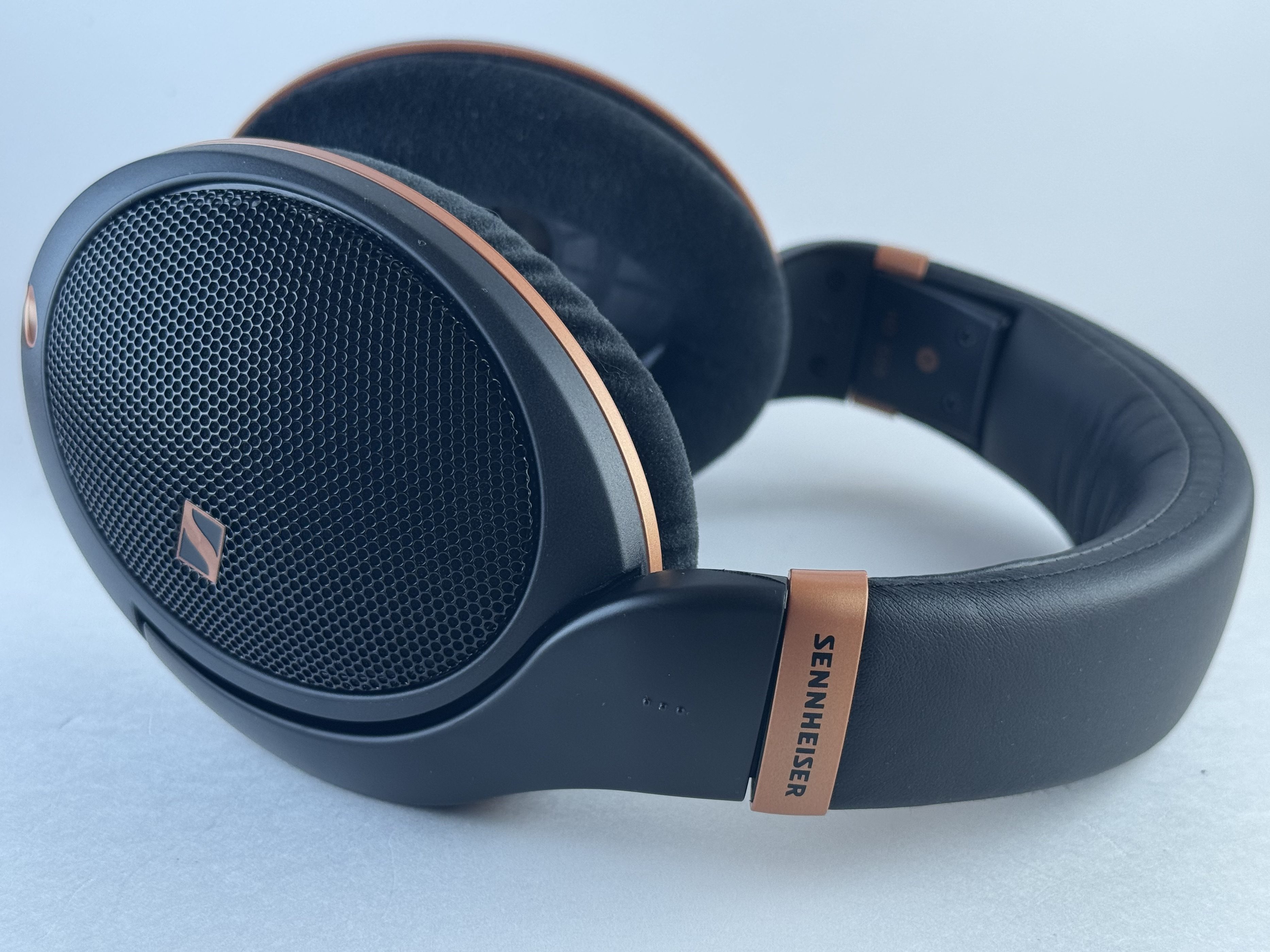
The 505s are a pretty typical Sennheiser 500 series in black, but unlike their siblings the logos on the cups and Sennheiser text running along the band on the left side are all in copper, like the HD 660S2. You either like this style or not, and I personally think they’re pretty sharp looking and they’re definitely less Cyberman-ish than a lot of options out there.
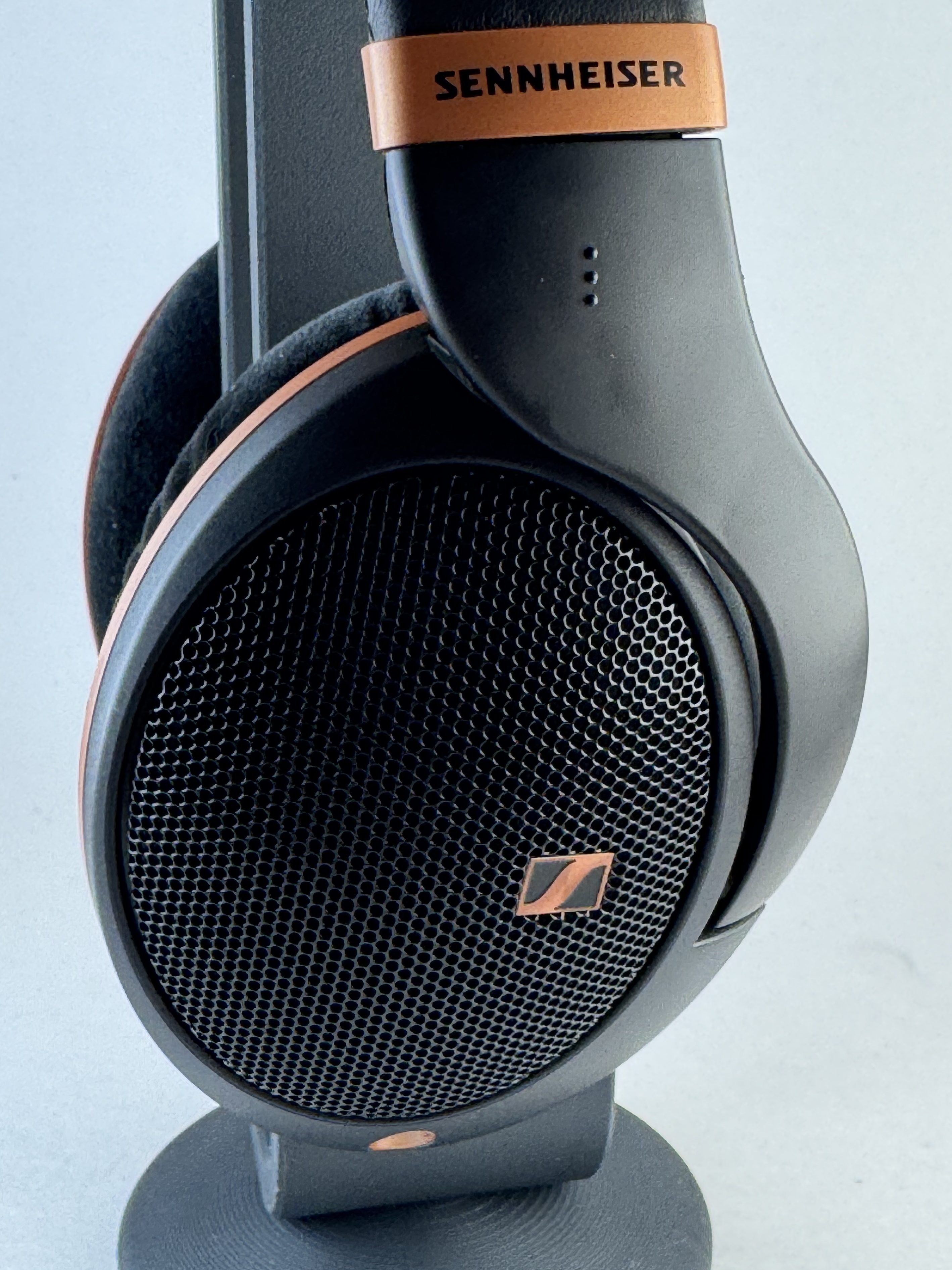
This is, in fact, the one place where I think the HD 505 cleanly beats out the HD 550. I was a big fan of the HD 660S2’s copper-colored accents, and I like them a lot here too. They’re a handsome headphone, and at least visually distinct from the rest. I can easily pick them out of a pile of my 500-series Sennheisers, and I do appreciate that I won’t mistakenly grab them when I want to grab the 550 the way I do with the 560S.
Value & Comparisons
I’m struggling a bit with the HD 505 and my valuation for it. It’s certainly a competent headphone, but I definitely wouldn’t pay $280 for them. In fact, I don’t think I’d pay $190 for them again. There are just a lot of really good headphones near that price that I like more and have a more cohesive, pleasant overall tuning (including a couple of offerings from Sennheiser itself!), and you’re only $50 or $60 away from what I really think is the sweet spot for open back headphones in 2026.
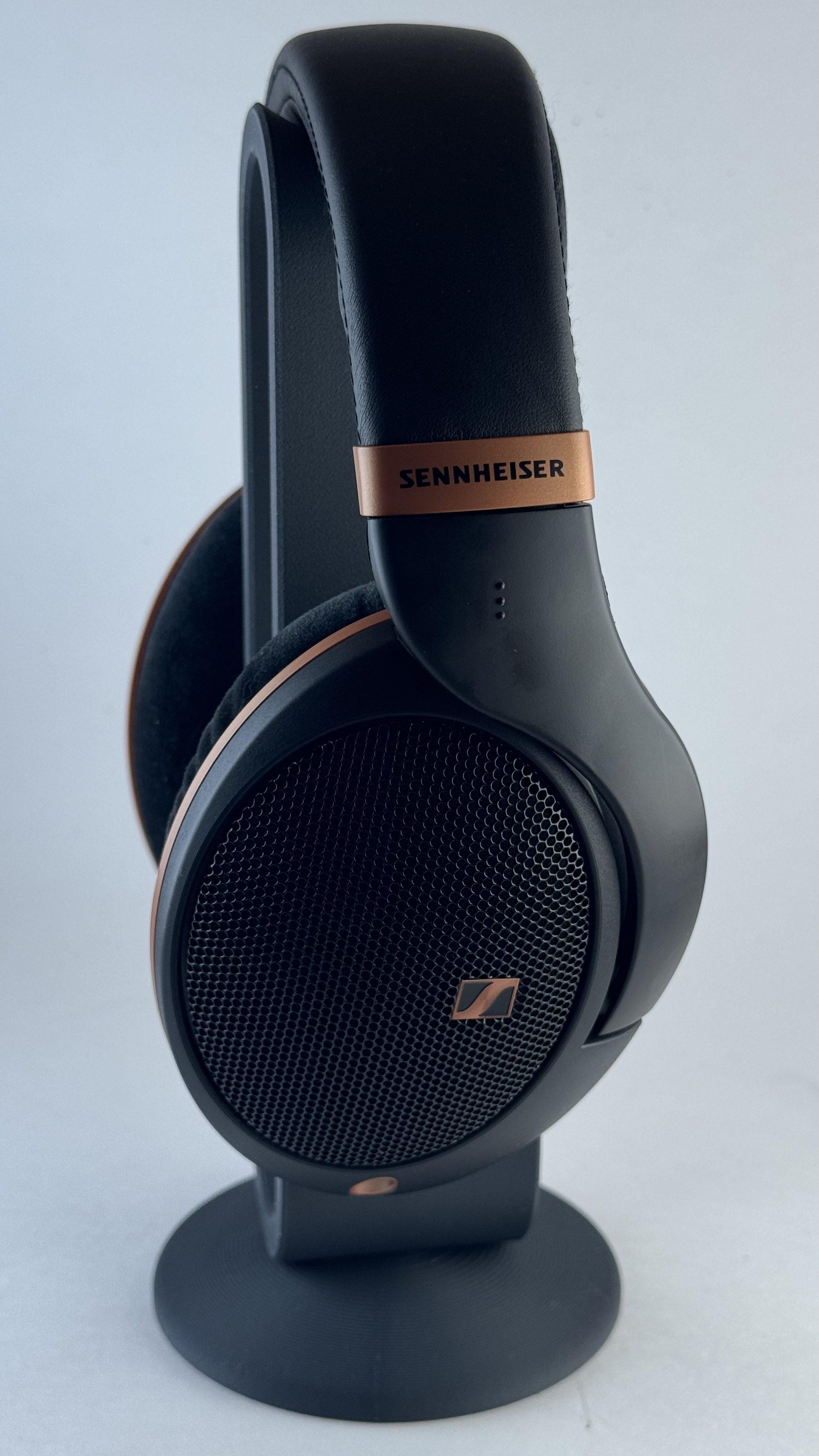
I’m not sure I can recommend the HD 505 at their current price of $190, and definitely would not at their MSRP of $279.95. There are just so many better headphones in that price range even without taking the used market into account.
Direct Comparisons
Because this is a really competitive market segment, there are a lot of potential comparisons I could make, so I’m going to try to focus on things that are currently widely available and in similar price ranges.
Sennheiser HD 560S
The HD 505 are definitely a better headphone than the HD 560S, at least on my head. I talked about this in both my HD 560S review and in the comparison section of my HD 550 review, but the HD 560S just don’t work for me at all–to the point where I could tell in twenty or thirty seconds whenever I grabbed them on accident instead of the HD 550. As inconsistent as the HD 505 is on my head, they’re never as unpleasant as the 560S are most of the time I’m wearing them.
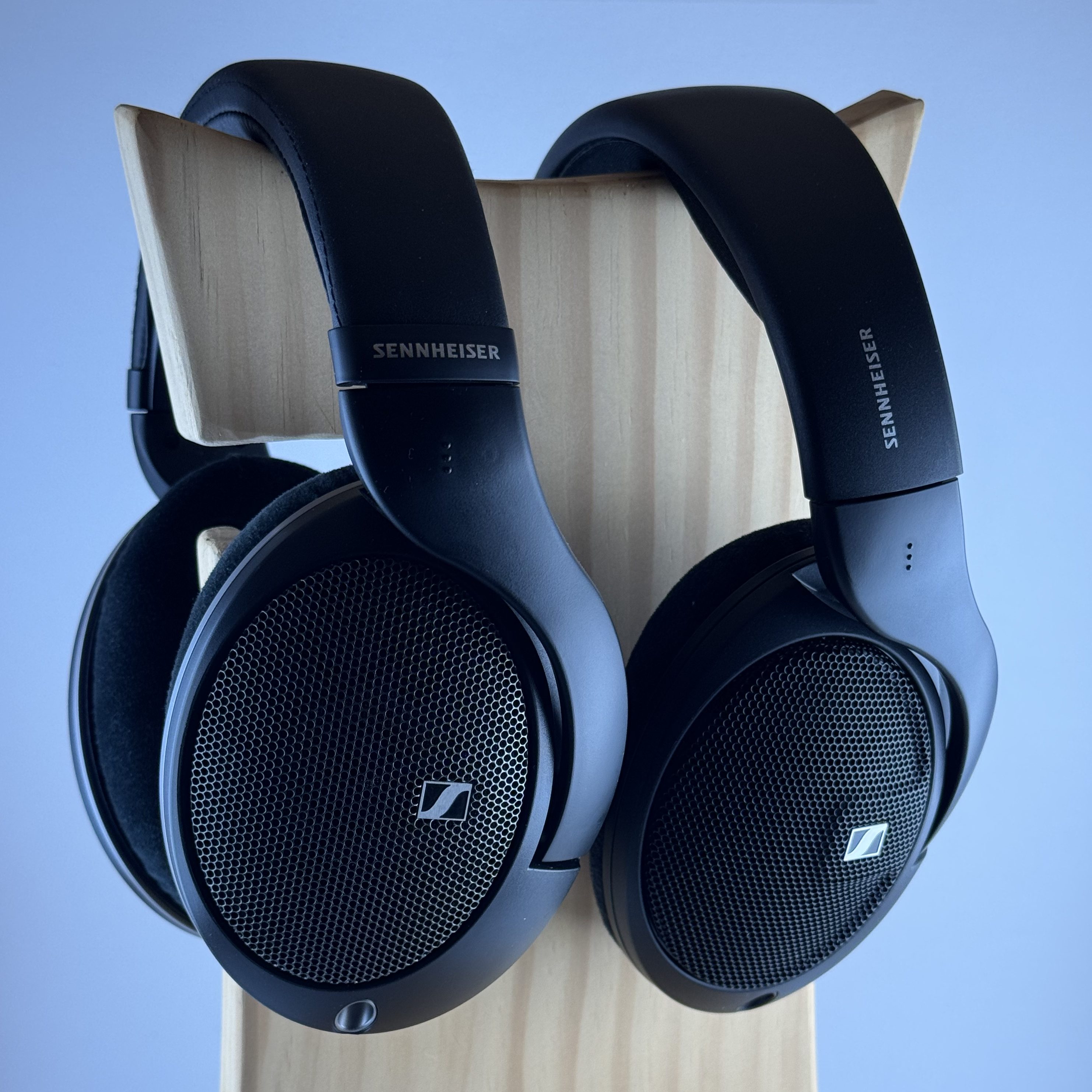
A quick glance at how my units measure:
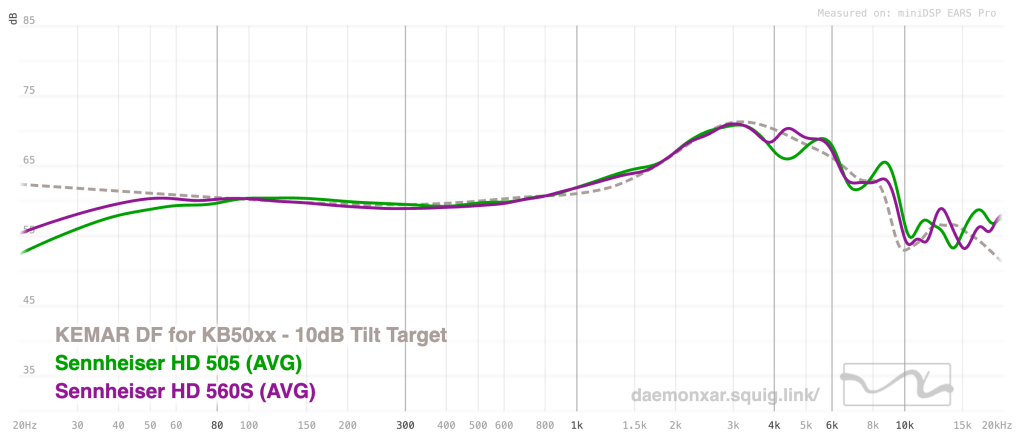
I made a similar comment in the comparison section of my HD 550 review, but looking at this graph I would have assumed that these headphones would sound pretty similar on my head, but … no. They really don’t. To my ears, the mids on the 560S are noticeably scooped, and the treble … just doesn’t work on my head. I can’t find a volume on them where I can both hear everything AND tolerate the treble. I have a tiny bit of that problem with the 505, but not enough to compromise my ability to listen to them.
Verdict: HD 505 all day. I recommend the 505 for some people, and will never recommend the 560S to anyone who doesn’t actively want intense and poorly balanced treble,
Sennheiser HD 550
For the most part, the HD 550 and 505 are pretty similar headphones, particularly on paper. The 505 is very slightly easier to drive (120 vs 150 Ohms, 107 dB/Vrms vs 106.7 dB/Vrms), but very similar in both build and overall tuning. The place they differ is the price: at MSRP, the 550 is $349.95 and the 505 $279.95, and the 505 is also on more substantial sale at the moment ($189.95 for the 505, $199.95 for the 550).
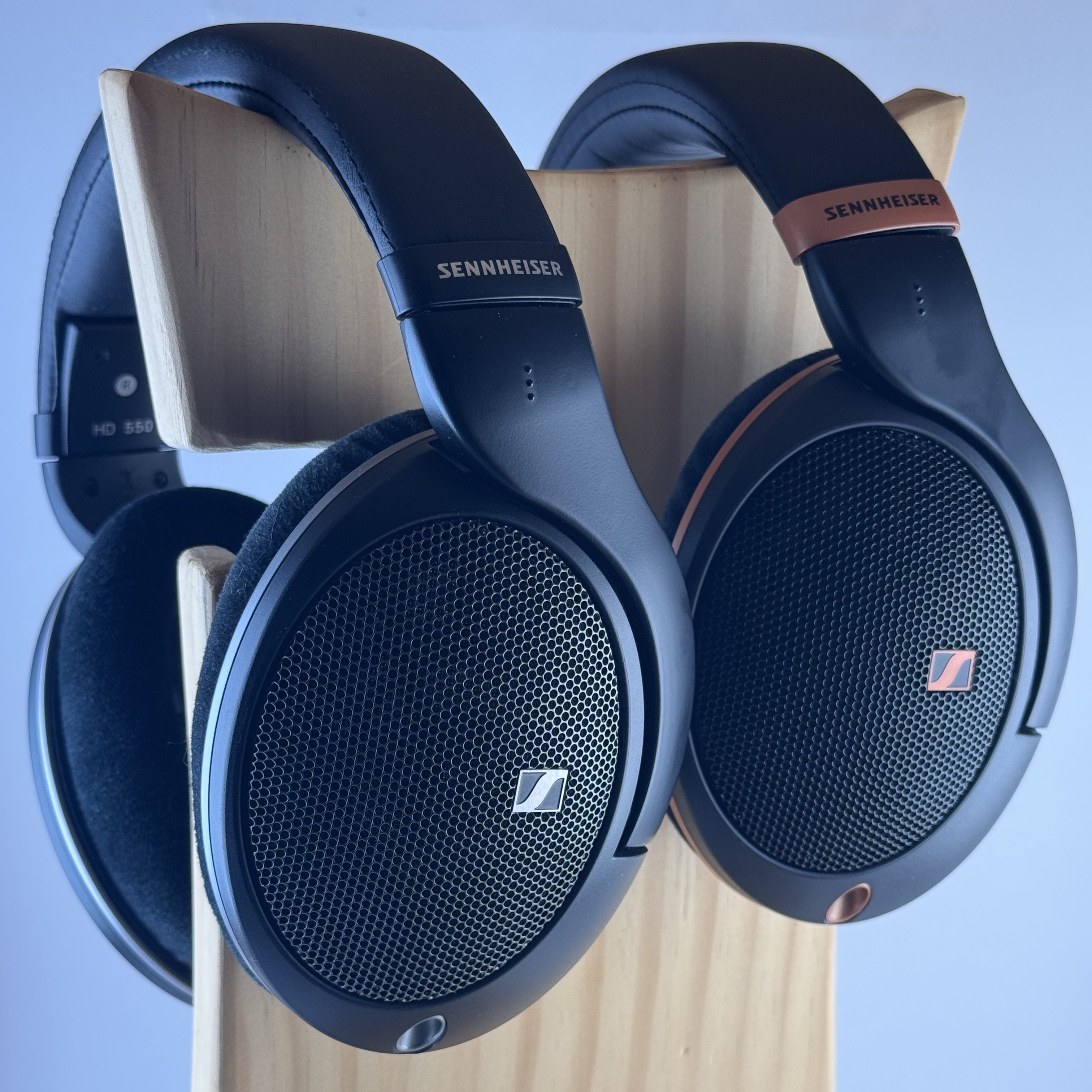
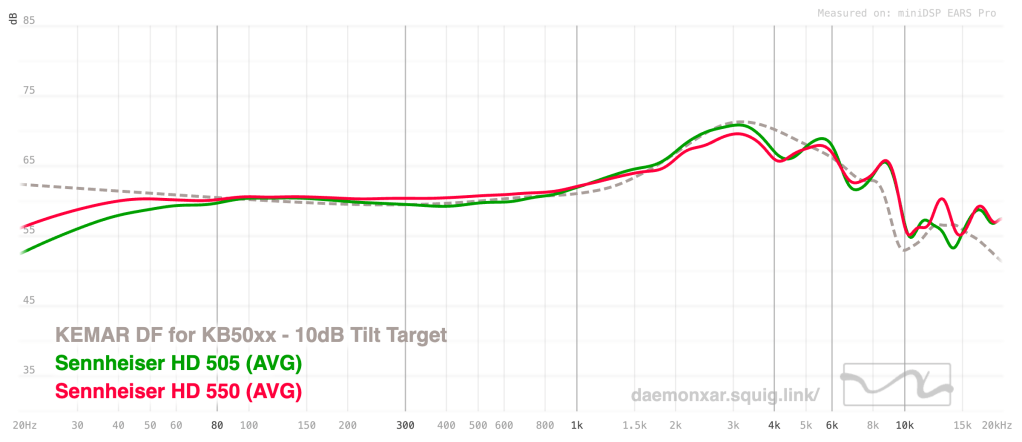
While the bass is slightly stronger on the HD 550, I think I actually prefer the bass on the HD 505; it feels both richer and slightly better textured at the beginning of “Paradise Circus.” The mids are better on the HD 550; while I know that the 505 is suppose to be more mids-forward than 550, for whatever reason the inconsistency between the main and background vocals, combined with a little bit of timbral funkiness makes the 550 a better midrange headphone on my head. As an example, around 1:30 the background vocals on “Remain Nameless” are clear and crisp on the 550 but really faded on the 505. For treble, the 550 is also just cleaner. The claps on “Paradise Circus” are crisper and more present on the 550, where they’re a little faded into the background on the 505. Soundstage is pretty similar, and differences in imaging/layer separation are minimal but slightly tilted in the 550’s favor.
To me, the biggest difference between the two is the overall cohesiveness of the tuning. While the 505 is less inconsistent than the HD 560S, I do find myself changing the volume frequently to balance getting a full, rich bass, sufficient volume for vocals, and manageable treble. On the 550, I can mostly set it and forget it, and for me that’s reason enough to choose the 550.
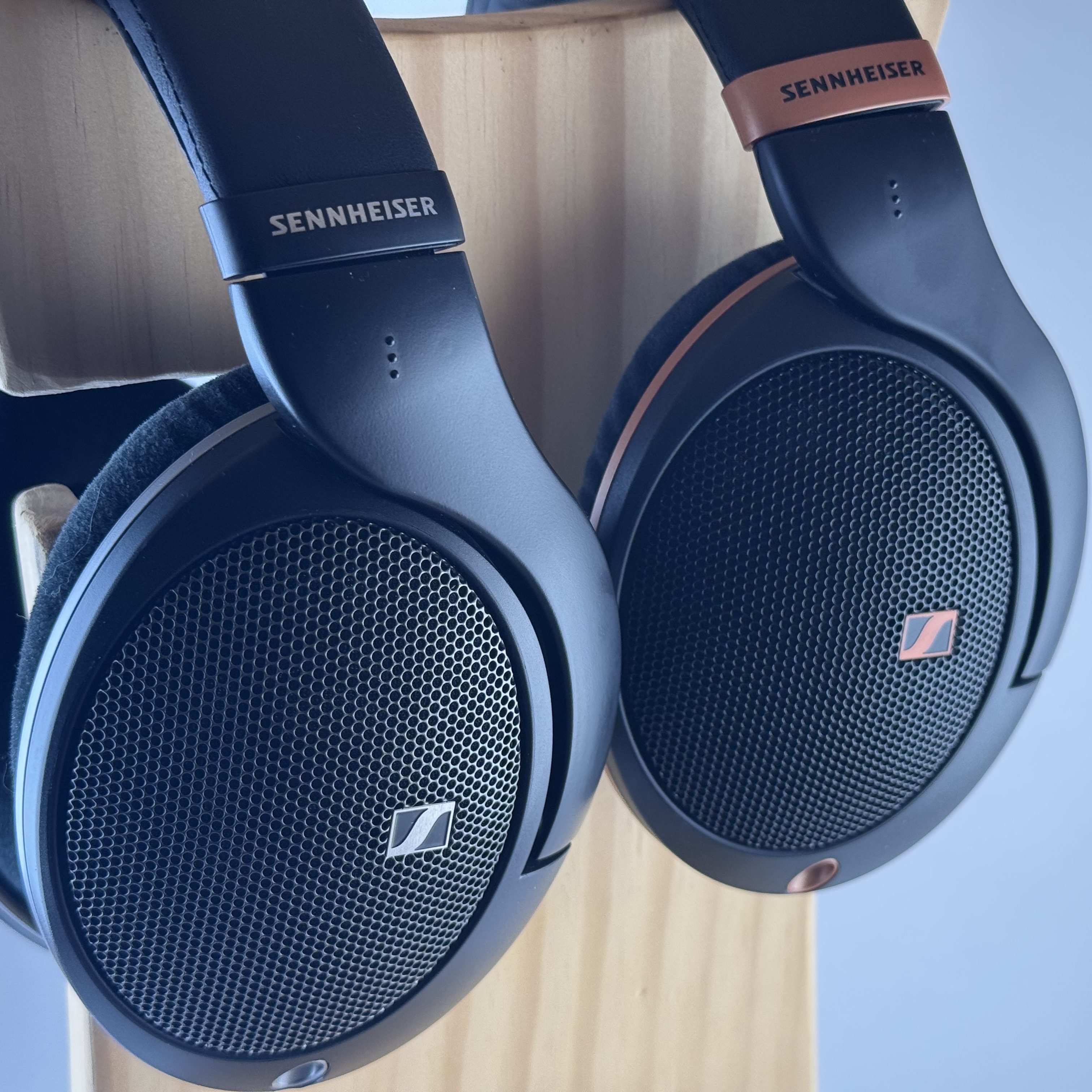
I do really prefer the look of the HD 505, and I hope Sennheiser considers doing more copper variations on their regular black-and-silver designs.
A quick glance at how my units measure:
Verdict: HD 550. This is an easy call for me; while I can listen to the HD 505, I enjoy listening to the HD 550 and it’s, at least to my ears, a substantially better headphone. At current prices, the extra $10 to upgrade from the 505 to the 550 might be the best-spent $10 in headfi, though at MSRP I’m probably not picking either in a world where the HD 6XX is $220.
Sennheiser 600 Series (HD 6X0s)
The HD 6X0s (specifically the HD 6XX) are the stick by which I measure all other open-back headphones, regardless of pricing. In this case, though, they’re even more appropos as the pricing is pretty similar in the US.
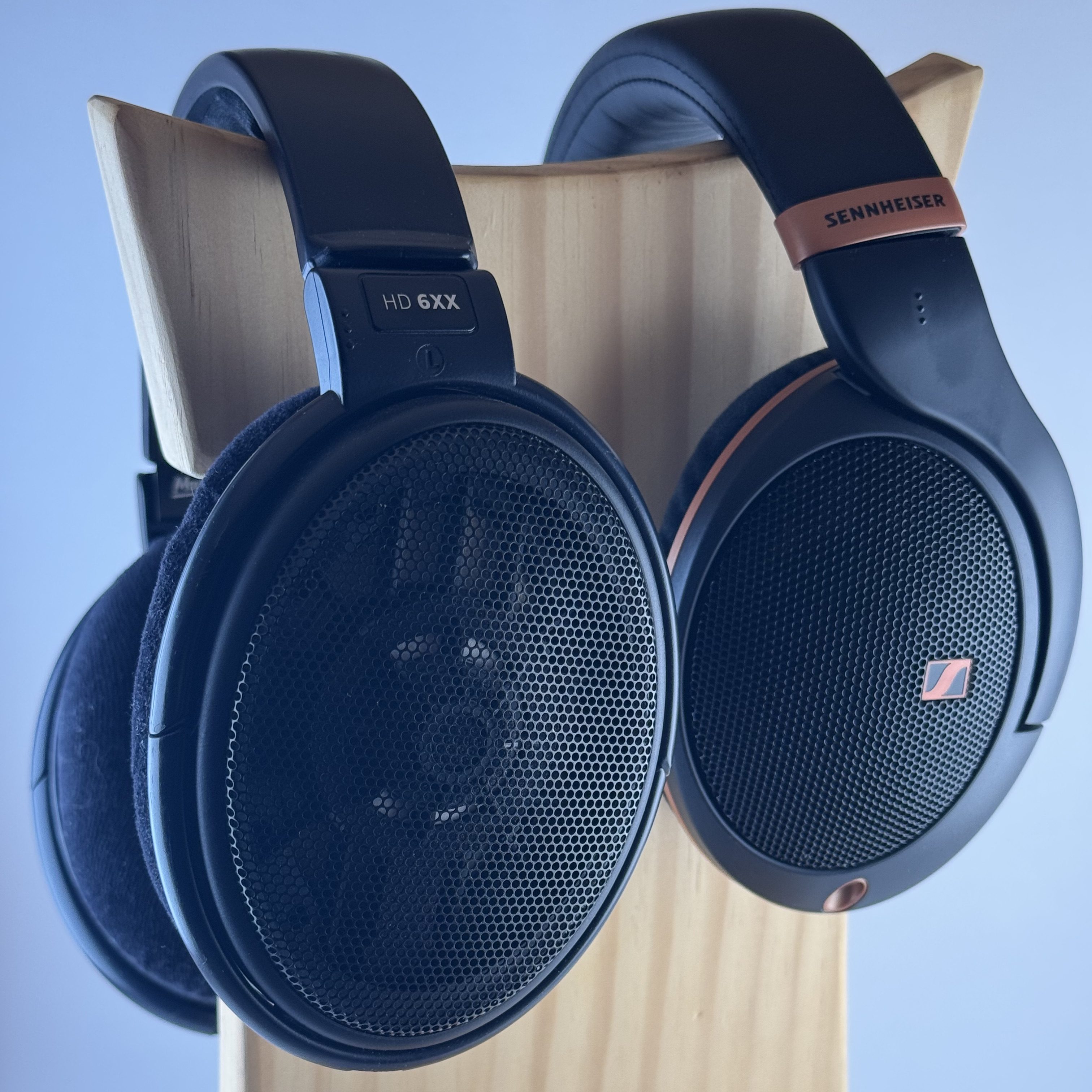
After several weeks of waffling between the 550 and the 6XX, I came down firmly on the side of the 6XX for music, though I left the window open for the 550 for gaming. I think it’s even more clear with the 505; as fine a headphone as the 505 are, they struggle even more to compete with the 6XX’s genuinely impressive overall design and cohesive tune.
The 505 arguably does two things better than the 6X0s. The first is soundstage; the 6XX is for better or worse a very intimate headphone, though (also like the 550!) I think the 6XX has substantially better staging and separation within that narrower stage. The 6XX is really good at placing each instrument in its right place around the listener, whereas the 505 gets a bit muddled and muddy, particularly on more complex and crowded tracks with more than one instrument or vocalist in a particular frequency range. The second is comfort; while I am generally a fan of the fit and comfort of the 6X0s, it is remarkable to me how clampy even my seven year old 6XX feels when swapping back and forth between it and the 505.
As far as the overall tuning, the bass is fuller on the 505 but much less clean; coming from the 6XX while doing rapid A/B’ing I was struck by how muddy the bass on a track like “I Saw” felt. Midrange is similarly better on the 6XX; on some tracks it’s a little more recessed and on others a bit more in the front compared to the 505’s inconsistent performance, but it’s so much more consistent track to track that it’s definitely my preference. Treble is pretty similar, but the 6XX is just pretty damned close to ideal for me.
Now to the graphs:
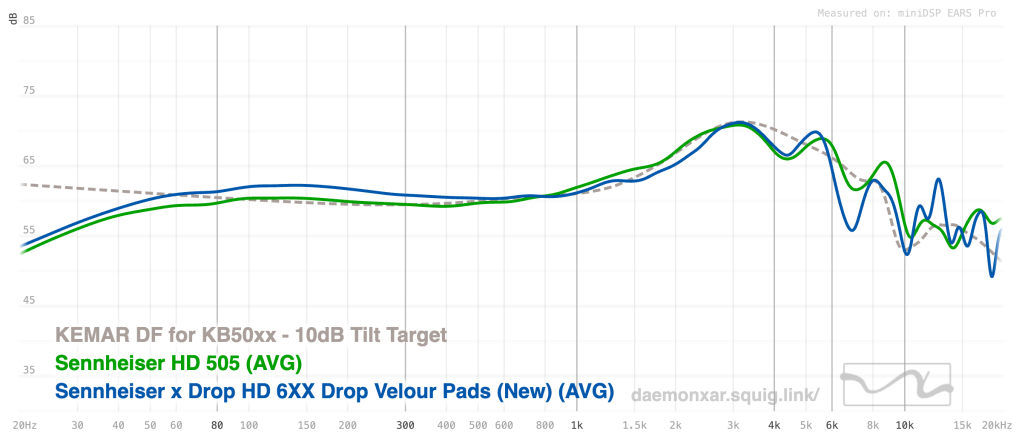
I’m genuinely a little surprised by this; based on my listening I would have guessed that the 505 would have relatively higher bass response than the 6XX. The mids make more sense; it may be that I particularly like that little carvout between 1.5 kHz and 3 kHz; curious to look at some other similar things. The treble is more or less what I expected, with the repeated caveat that I don’t hear the spikes on the 6XX that my measurement rig does.
Verdict: The 6XX maintains its reign as the king of the ~$200 Sennheisers: it’s just an incredibly well designed and thought-out headphone and the 505 is just a little wonky on my head. I’d pay the extra $30 to get the 6XX right now over the currently-$190 505s, and I would absolutely go with the 6XX when the 505 snaps back to its MSRP of $280.
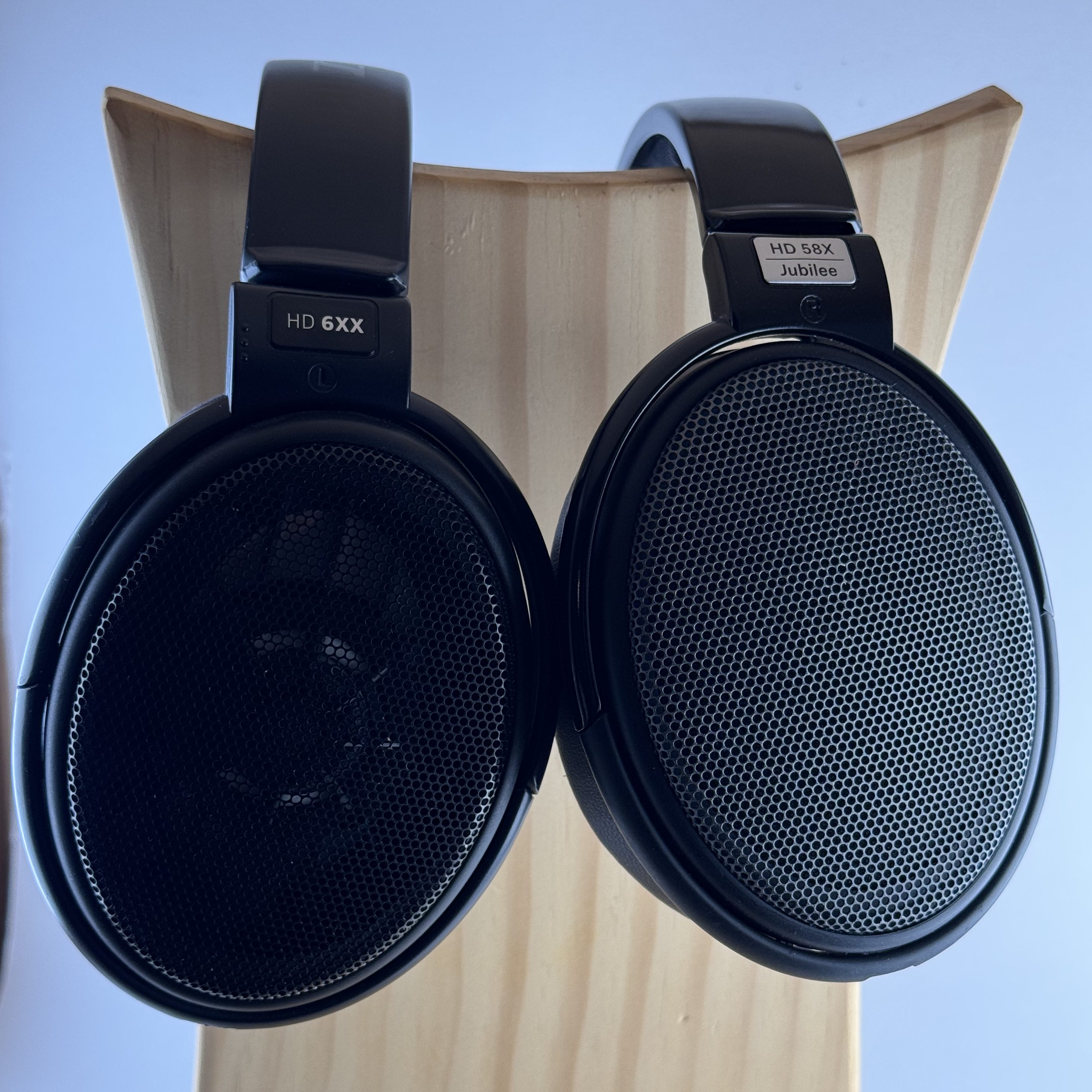
The rest of the 6X0s:
- HD 58X: I’m taking the 58X here; while it was a bit of a tossup against the 550, the 58X is a more cohesive tune.
- HD 600: I’m picking the 600 for pretty much everything.
- HD 650: is the 6XX with a different chassis and colorway, so I’m taking it over the 505 too unless you’re buying new, in which case that MSRP is crazy. Find it at a similar price point, or at least within $50? Probably 650.
- HD 660S: Oof. Neither? The 550?I guess in the end probably the 660S; it’s not a bad headphone, just an indifferent one, and I feel like it’s going to be easier to fix with EQ than whatever is going on in the midrange on the 505.
- HD 660S2: Discounting costs, I ever so slightly prefer the 660S2 to the 6XX/650 so I’m taking it over the 505 if we’re not taking cost into account. That MSRP is also crazy though, and you shouldn’t pay it unless you’ve got money to burn. I paid $250 for my lightly used S2 and I’ll take that over the 505 without hesistant; I wouldn’t pay more than about $50 more for the S2 than the 505 and if I’m spending $300 I’m buying a different pair of headphones.
Sennheiser HD 490 Pro
I really like the HD 490 Pro, and I’m pretty indifferent to the 505 so it should come as no surprise that this is an easy call in the 490 Pro’s favor. Every bit of it is better: tuning, comfort, soundstage, versatility, etc.
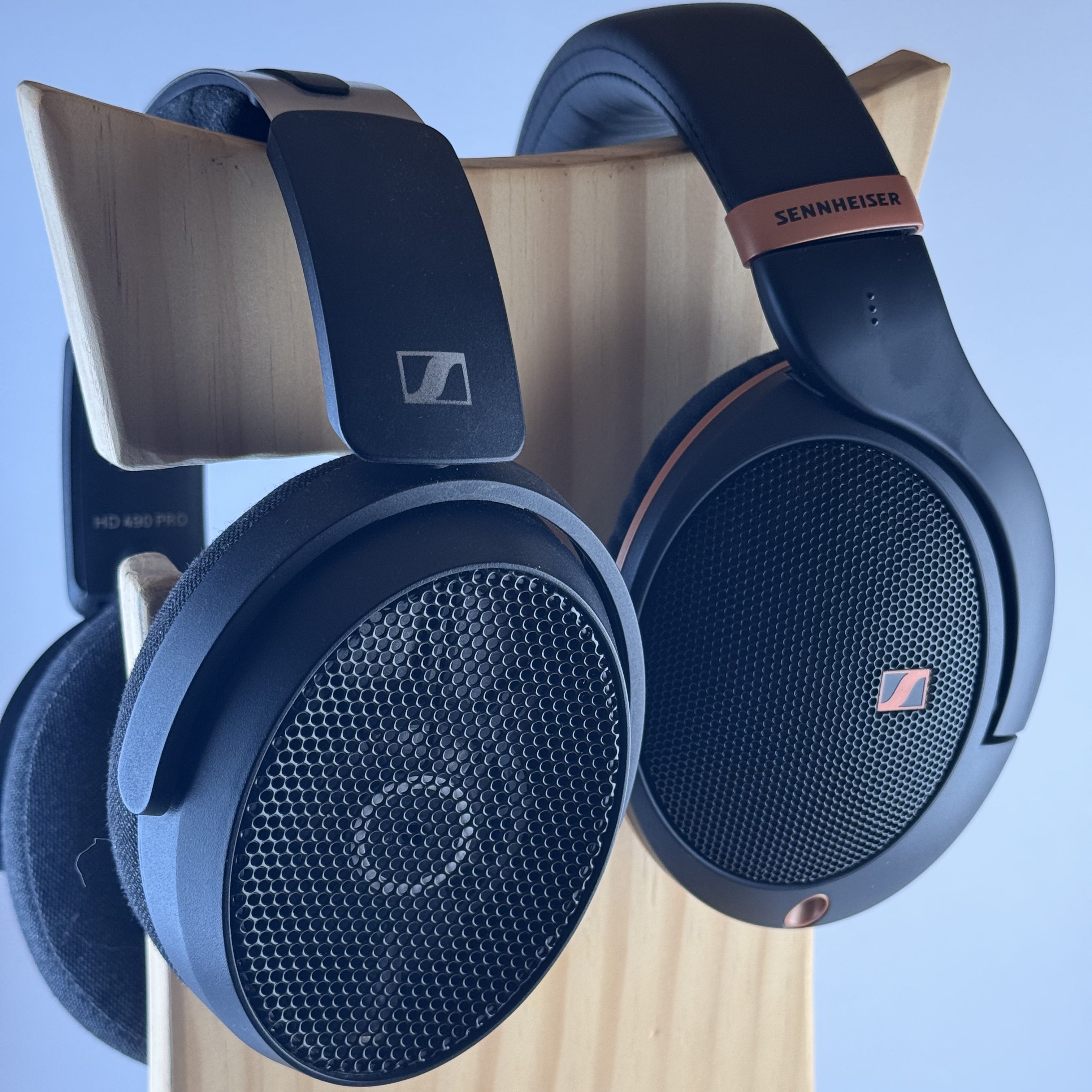
A quick glance at the graphs:
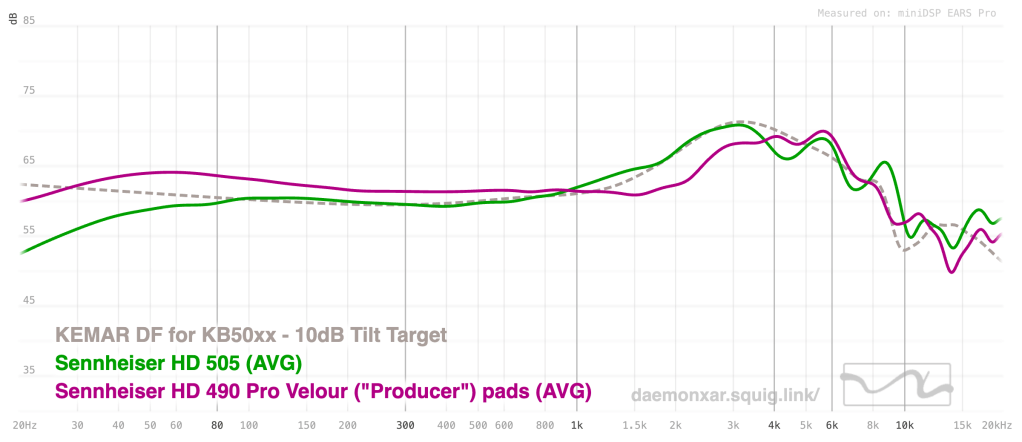
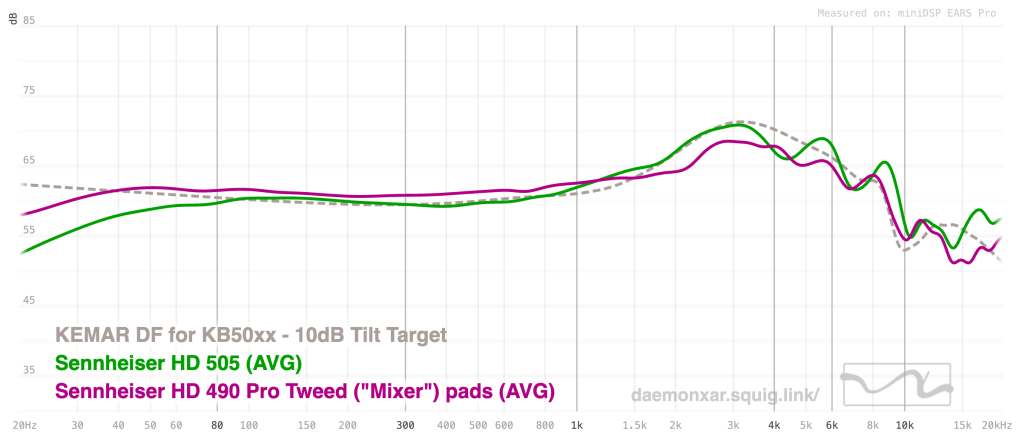
Verdict: 490 Pro all day, every day. They’re definitely more expensive but I’d rather spend the additional money to get a headphone that I want to listen to, even if it meant waiting a bit or selling some other headphones.
Fiio FT1 Pro
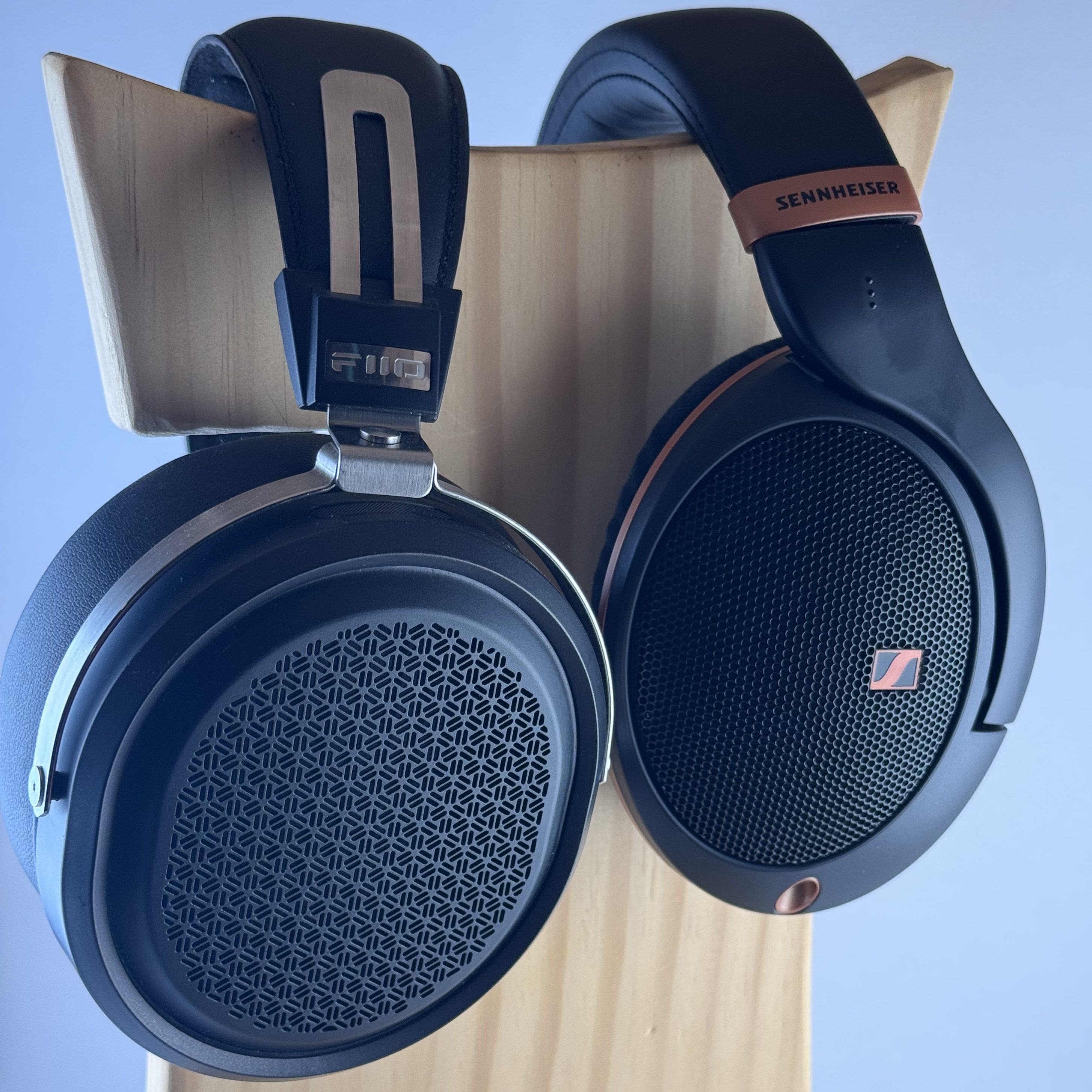
This is a pretty easy call for me as well; the Fiio FT1 Pro is a really good, really fun listen with a well-balanced and cohesive frequency response. Bass and treble are both better on my head on the FT1 Pro, and the soundstage is similar. The 505s are marginally more comfortable, but I really don’t think there’s any kind of listening where I’d prefer them except maybe isolated vocals. The issue with the 505’s vocal inconsistency seems to be worst where there are other things going on in the midrange, though I have no complaints about the FT1 Pro’s mids and I might still prefer it over the 505. A quick glance at the measurements:
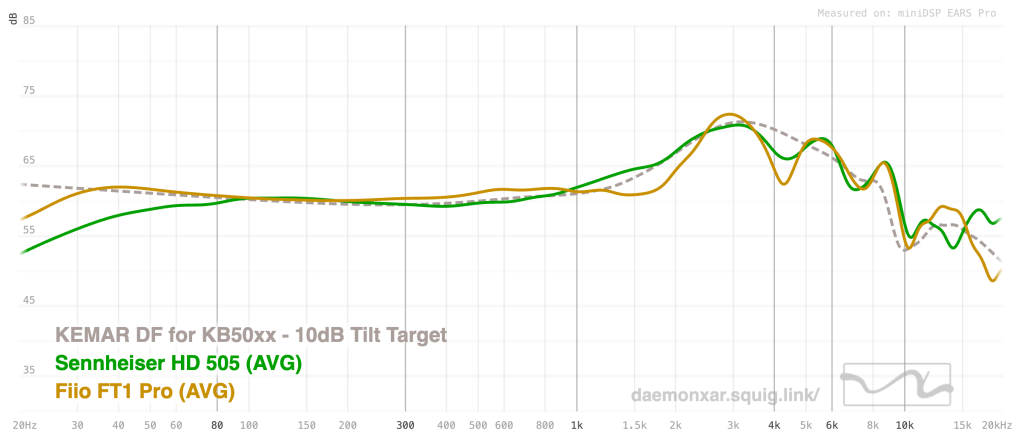
Verdict: I’m taking the FT1 Pro for pretty much everything. The 505 might be a hair better for some kinds of isolated, sparser tracks that the FT1 Pro struggles a little with, but I think I’m still taking the FT1 Pro anyway overall.
Overall
Overall, the HD 505 aren’t a bad pair of headphones, just an inconsistent one. The more headphones I listen to, the more I’ve been convinced that one of the things I value most in a headphone is consistency and cohesiveness; I’m comfortable enough with EQ at this point to be able to ameliorate sections that disagree with me, but it’s much harder to try to affect the balance between entire sections without causing more harm than good.
I noted above that Sennheiser markets the HD 505 as a blend of “analytical tuning, precise detail, and enduring comfort” for both listening and gaming. Did they achieve that?
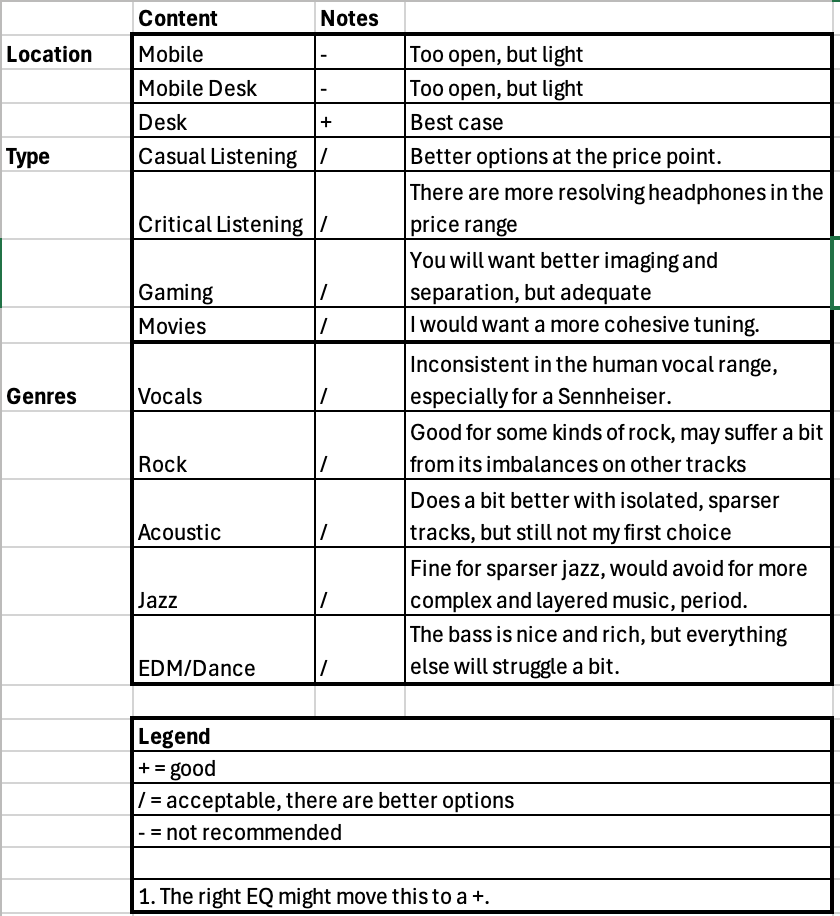
Not really; to me, these headphones aren’t nearly detailed enough for me to use for critical listening, though they are reasonably comfortable. I’m not going to choose them for either gaming or listening, though I understand why they might work for some.
There are people who will really like the HD 505. I’m just not one of them. At this price, pay a little more and get something better (+$10, HD 550; +$30, HD6XX/Fiio FT1 Pro, etc.).
#reviews #headphones #sennheiser #6XX #anc #spatialaudio #meh #2025 #99noir #meze #sunglasses #overear #cans #hifiman #arya #stealth #editionxs #budget #hahahaha
- I score bass, mids, and treble on a two part scale: 1-5 for quantity (5 being the highest), and A-E for quality (A being best in class, E being laughably bad). For soundstage it’s also a two part scale, with the number representing the width and the letter the separation within it. ↩︎
- For comfort/fit, my scale is A-E with A being disappear entirely into the background and E being I want to tear my ears off to stop feeling these headphones on my head. I’ve had one E: the Koss PortaPro. ↩︎
- While the HD 505 is, like its siblings in the 500-series, balanced-capable, the single-entry locking 2.5 mm cable is about the only common connection that I don’t have a Hart audio interconnect for, so I can’t try these balanced. ↩︎
- Mine measure at 123.4 Ohms. ↩︎
- Or, outside North America, a JCALLY JM6 Pro (if you don’t use IEMs) or JM12 (if you do). ↩︎
- I’m a little skeptical of the channel imbalance there; I’ve noticed a distinct pattern in the measurements I’ve been getting off my rig, especially lately, and I only get a tiny bit of wobble on the channel matching test. ↩︎
- The HD 560S, HD 550, and HD 505 are the first headphones I’ve owned that use this system, so I don’t currently have a Hart Audio interconnect for it. If I keep the HD 550, I’ll fix that. ↩︎


Leave a Reply